Buyer Fit Snapshot
| Best fit | custom magnetic closure boxes for packaging buyers comparing material specs, print proof, MOQ, unit cost, freight, and repeat-order risk where brand print, material, artwork control, and repeat-order consistency matter. |
|---|---|
| Quote inputs | Share finished size, material target, print colors, finish, packing count, annual reorder estimate, and delivery region. |
| Proofing check | Approve dieline scale, logo placement, barcode or warning zones, color tolerance, and any recyclable or compostable wording before bulk production. |
| Main risk | Vague material claims, crowded artwork, or missing packing details can create delays even when the unit price looks attractive. |
Fast answer: Custom Magnetic Closure Boxes: Design, Cost, and Use should be specified like a repeatable production item. The safest quote includes material, print method, finish, artwork proof, carton packing, and reorder notes in one written spec.
What to confirm before approving the packaging proof
Check the product dimensions against the actual filled item, not only the sales mockup. Ask for tolerance on folds, seals, hang holes, label areas, and retail display edges. If the package carries a logo, QR code, warning copy, or legal claim, reserve that space before decorative graphics fill the panel.
How to compare quotes without losing quality
Compare board or film grade, print process, finish, sampling route, tooling charges, carton quantity, and freight assumptions side by side. A lower quote is only useful if the supplier can repeat the same color, closure quality, and packing count on the next order.
I’ve watched a hidden magnet do more for perceived value than a thousand words of brand copy, and I mean that quite literally. I remember standing in a packaging sample room in Dongguan, turning a plain rigid lid in my hands, and then hearing that little click as it shut; the whole room felt a little more expensive afterward. That’s why custom Magnetic Closure Boxes keep showing up in client meetings, factory floor samples, and premium shelf programs: they make product packaging feel considered before a customer even sees the product, whether the box is built from 1200gsm chipboard or wrapped in 157gsm art paper laminated matte.
That first “snap” carries weight. A lid that closes with a clean magnetic pull signals precision, care, and a certain level of confidence. Honestly, I think that matters more than a lot of brands want to admit. I’ve seen a $12 skincare set feel like a $40 gift because the custom magnetic closure boxes did the heavy lifting on presentation, especially when the box measured 210 mm x 160 mm x 55 mm and the interior tray held the product within a 1.5 mm tolerance.
Custom Logo Things works with brands that want packaging to do two jobs at once: protect the product and sell the experience. That’s where custom magnetic closure boxes stand out. They combine rigid structure with a tactile closure, which is why they’re so common in cosmetics, electronics, apparel, subscription kits, and high-end retail packaging. I’ve handled plenty of box formats over the years, and these are the ones that tend to make people slow down for half a second longer before opening them. That half-second is not nothing, especially when a 5,000-piece run in Shenzhen can be quoted at around $1.75 per unit for a mid-tier spec and still feel premium in hand.
What Are Custom Magnetic Closure Boxes? Why Brands Use Them
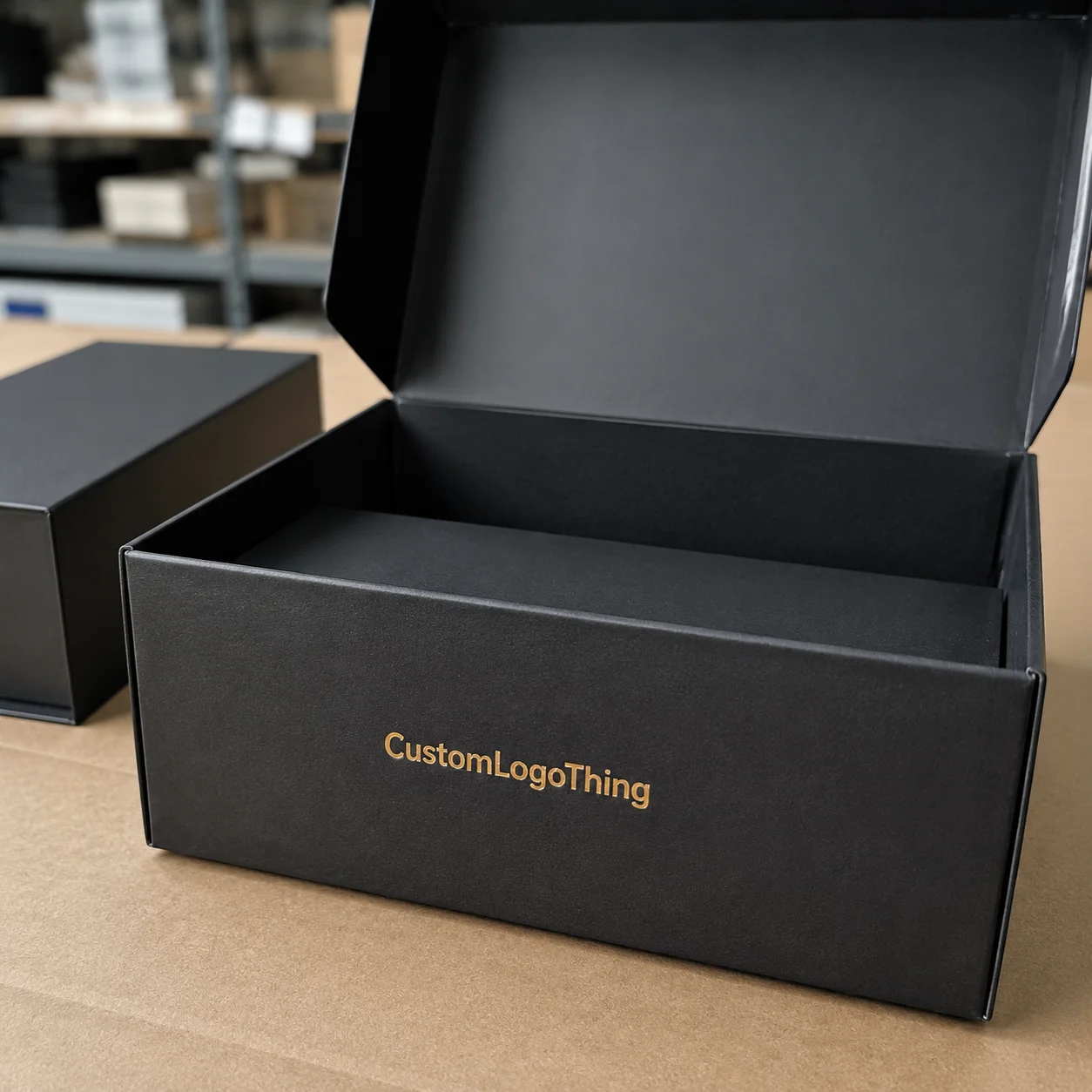
Custom magnetic closure boxes are rigid boxes built with embedded magnets, usually hidden inside the lid and front wall, so the box shuts with a neat, controlled snap. In plain English: they’re sturdy presentation boxes that feel premium because the closure is built into the structure, not added as an afterthought. I’ve always liked that about them. The box is doing its job without shouting about it, which is more than I can say for some packaging trends I’ve seen come and go, especially the ones that look dramatic on a render and fail after the first 20 open-close cycles.
That hidden magnet changes the rhythm of the unboxing. Instead of a flap flopping open, the customer experiences a deliberate reveal. I’ve seen this improve package branding for everything from fragrance sets to Bluetooth accessories, especially when the outer print is minimal and the closure becomes part of the story. There’s a kind of quiet drama to it, and if you’ve ever sat through a packaging line review in Dongguan with three people arguing about “premium feel,” you know how rare that is. A single 8 mm diameter neodymium magnet, placed correctly, can change the entire impression.
Brands use custom magnetic closure boxes for a few practical reasons too. They hold shape better than folding cartons, they stack well in back-of-house storage, and they create a stronger “giftable” impression. In my experience, that matters most in categories where the packaging is part of the purchase decision, not just the shipment. A customer may forgive a plain mailer for an everyday refill, but for a launch kit or luxury set, they notice the box first. Sometimes that’s unfair. Sometimes that’s just commerce, and sometimes a box built with 1500gsm greyboard makes the difference between “nice” and “worth keeping.”
You’ll find custom magnetic closure boxes in:
- Cosmetics and skincare kits
- Luxury apparel and accessories
- Electronics and tech accessories
- Corporate gifting and VIP mailers
- Subscription box inserts and member welcome kits
- Premium retail packaging and seasonal gift sets
Compared with tuck boxes, sleeve packaging, or standard folding cartons, custom magnetic closure boxes feel heavier, more durable, and more deliberate. A tuck box says “functional.” A sleeve says “efficient.” A rigid magnetic box says “this product was worth planning.” That’s not fluff; that’s consumer psychology, and it shows up fast in product packaging surveys and in the way customers handle the box at the shelf or in unboxing videos. I’ve watched shoppers pick up a box, open it, then close it again just to feel the magnet one more time, especially when the closure sits flush within a 2 mm front panel recess. I don’t blame them. It’s oddly satisfying.
One client meeting in Shenzhen comes to mind. The brand owner had been debating a foil-heavy sleeve pack versus custom magnetic closure boxes with a single debossed logo. We opened samples side by side, and the simpler structure won. Not because it was louder. Because it felt more credible. The magnet closed with a firm click, and the customer’s hand did the rest. That was one of those rare meetings where the sample table did more convincing than the sales deck ever could, and the winning sample was priced at roughly $2.40 per unit on a 3,000-piece run.
“The box is part of the product experience.” That sentence came from a cosmetics buyer I worked with in a line review in Guangzhou, and it stuck with me because it was true. With custom magnetic closure boxes, the structure itself becomes part of the brand promise.
How Custom Magnetic Closure Boxes Work
The basic structure of custom magnetic closure boxes is simple, even if the finish can look sophisticated. The core is usually rigid chipboard, often 1200gsm to 1500gsm, wrapped in printed paper or specialty paper, with small magnets embedded in precise positions so the lid aligns and seals. You can think of it as a rigid shell with a hidden mechanical moment. I know that sounds slightly poetic, but after enough packaging samples, you start noticing how much of “luxury” is really just disciplined construction, especially when the wrap is a 128gsm coated art paper with a soft-touch laminate.
The alignment matters more than people expect. If the lid is off by even 1–2 mm, the closure can feel sloppy. If the magnet sits too shallow, it loses grip. Too deep, and the snap feels weak. During one supplier negotiation in Dongguan, I insisted on a second prototype because the front panel magnet was placed 3 mm higher than the drawing. That tiny error made the box open unevenly. On paper it looked fine. In hand, it felt cheap. And yes, that kind of thing can make everyone in the room stare at a sample like it personally insulted them, especially after a 45-minute QC review.
Custom magnetic closure boxes usually rely on one of four common construction styles:
- Book-style boxes — open like a hardback book, often used for gift sets and electronics.
- Flap-lid boxes — the lid lifts from the front and closes against a magnetic front wall.
- Shoulder boxes with magnetic closure — add a stepped inner tray for a more dramatic reveal.
- Foldable magnetic boxes — ship flat, then assemble into a rigid box to reduce freight volume.
Each format changes the opening feel. Book-style custom magnetic closure boxes feel ceremonial. Flap-lid versions are easier to use on a retail shelf. Foldable versions help brands control freight and warehouse space, which is a real advantage if you’re importing large runs of custom printed boxes from overseas. I’ve seen teams underestimate freight until the cartons arrive and suddenly the logistics spreadsheet starts looking like a crime scene. A foldable box can save 35% to 45% of cubic volume in transit, which is a very real line item when your shipment is moving from Shenzhen to Long Beach or Rotterdam.
Finishes interact with the structure in ways that are easy to underestimate. A soft-touch lamination makes the outside feel velvet-like. Foil stamping adds reflective detail on the logo or edge panel. Embossing raises the artwork by around 0.3–0.6 mm, depending on the die and board. Spot UV can create contrast on a matte wrap. On custom magnetic closure boxes, these effects work best when they support the opening sequence instead of fighting it. If the finish is competing with the closure for attention, the box starts feeling overworked. A clean foil mark on a 200 mm lid often outperforms three decorative effects stacked together.
Structural engineering matters too. A box designed for a 150g serum bottle is not the same as one built for a 1.8 kg candle set. The board thickness, magnet count, insert depth, and wall height all affect how the box feels in storage, during shipping, and in the customer’s hands. I’ve watched a lightweight box bow slightly after three weeks on a humid warehouse shelf because the board spec was too thin for the climate. That kind of issue is avoidable, but only if the spec sheet is treated like a real document instead of a decorative suggestion. In southern China, where humidity can sit above 80% in summer, a 1200gsm board may be the minimum, not the luxury option.
For production standards, reputable suppliers often reference testing and sourcing frameworks such as ISTA for transit performance and FSC for responsible paper sourcing. I like seeing those references because they signal that custom magnetic closure boxes are being treated as engineered packaging, not just decorated board. That distinction matters in the factory, where a pretty mockup still has to survive the practical reality of glue, pressure, and people moving faster than they probably should. On a typical line in Guangdong, a quality check can catch 2–3 mm tolerance drift before it becomes a shipment problem.
Key Factors That Affect Quality and Cost
The price of custom magnetic closure boxes is shaped by more variables than most first-time buyers expect. Board thickness, wrap paper choice, magnet count, size, print coverage, inserts, and assembly method all pull on the final number. I’ve seen two boxes that looked nearly identical on a render differ by more than 30% in unit cost because one used a standard wrapped paper and the other used a textured specialty stock plus foil and a molded insert. That’s the sort of budget surprise that makes people suddenly very interested in the phrase “spec clarification,” especially when the quote from a Guangzhou factory comes back at $0.15 per unit for 5,000 pieces on a simplified build versus $0.29 on a more elaborate one.
Board comes first. A 1000gsm chipboard box may work for lightweight apparel or cosmetics, while a 1500gsm or even thicker build is often better for heavier items or larger formats. Stronger board usually means better shape retention, but it also adds material cost and sometimes assembly complexity. The same is true for magnet strength. A larger lid needs stronger magnets, and that can add a small but real cost. The box does not care about your spreadsheet optimism; gravity still shows up to the meeting. In a rigid box line in Shenzhen, a 10 mm x 2 mm magnet can cost more than a 6 mm x 2 mm magnet, and that difference scales quickly across 10,000 units.
Print coverage is another big driver. A one-color logo on black wrap is usually far less expensive than a full-coverage CMYK design with metallic foil, embossed details, and spot UV. The more passes a box requires, the more setup and labor it absorbs. If your brand wants custom magnetic closure boxes that feel luxurious without blowing the budget, restraint can work in your favor. I honestly think this is where many brands overcomplicate things—they confuse “more decoration” with “more value,” and those are not the same thing. A minimalist box with one foil-stamped logo often leaves a stronger impression than a crowded lid panel.
Here’s a practical comparison I use with clients during packaging design reviews:
| Option | Typical Build | Visual Impact | Approx. Unit Cost at 5,000 pcs | Best Fit |
|---|---|---|---|---|
| Basic rigid magnetic box | 1200gsm board, 1-color print, standard wrap | Clean and restrained | $1.10–$1.60 | Startups, samples, internal gifting |
| Mid-tier custom magnetic closure boxes | 1200–1500gsm board, matte lamination, foil logo, paper insert | Premium without overcomplication | $1.75–$2.80 | Cosmetics, apparel, retail kits |
| High-finish presentation box | Thicker board, specialty paper, embossing, spot UV, custom tray | High tactile and visual presence | $3.10–$5.20 | Luxury launches, VIP sets, gifting |
Those numbers are not universal. They depend on supplier location, tooling, freight, and carton efficiency. They still give a realistic framing. Smaller runs almost always cost more per unit because setup costs are spread across fewer custom magnetic closure boxes. A run of 500 might feel manageable, yet the per-box cost can be 2x or 3x what you’d pay at 5,000 or 10,000 pieces. That math has a way of humbling everyone eventually, particularly when air freight from Shenzhen to Los Angeles adds another $0.20 to $0.60 per unit depending on season and carton weight.
Hidden cost drivers matter too. Tooling for embossing and foil dies can add $60 to $250 per design element. Proofing can add time and sample charges. Specialty coatings can create extra spoilage if the print shifts. Manual assembly is expensive as well. A worker gluing and aligning magnet strips on a rigid box line in our Shenzhen facility can only move so fast, and any rework ripples through the schedule. I’ve watched a beautiful box design become a not-so-beautiful production delay because someone thought “just one more finish” would be harmless, and that extra finish turned a 12-day schedule into 15 business days from proof approval.
I’ve had buyers ask why foldable custom magnetic closure boxes cost more than a flat folding carton even though they ship flat. The answer is simple: the assembly, board rigidity, and magnet placement add labor and precision. You save on freight, not on engineering. That distinction catches people off guard more often than it should, especially when a foldable magnet box still needs a 350gsm C1S artboard wrap, 1200gsm grayboard, and hand alignment at the hinge.
For brands making packaging decisions, I usually recommend comparing three things side by side: unit cost, freight impact, and perceived value. That last one matters more than people think. A box that raises the perceived product price by $5–$10 can justify a $0.40 increase in packaging cost very quickly if the retail margin supports it. I’ve seen this play out in Singapore and Los Angeles alike, where a better box helped a product move from promotional to premium almost overnight.
If you want to browse structure options while you compare specs, our Custom Packaging Products page is a useful starting point for matching materials and formats to your product.
Step-by-Step Process for Designing Custom Magnetic Closure Boxes
Good packaging design starts with the product, not the artwork. I’ve seen too many custom magnetic closure boxes designed around a mood board when the first question should have been: what exactly is going inside, and how does the customer use it? I’m not against pretty mockups—far from it—but if the insert is wrong, the box is just an expensive way to store disappointment, especially when the box cost is $2.20 per unit and the tray is cutting into usable cavity space by 4 mm on each side.
Step 1: Measure the product accurately. Record length, width, height, and weight. Add clearance for inserts, tissue, and any protective sleeve. If the product has fragile corners or a pump top, factor that in too. A serum bottle that measures 45 mm by 45 mm by 130 mm may still need a 52 mm by 52 mm by 140 mm cavity once you account for the tray and closure pressure. In Dongguan and Guangzhou, the best factories will ask for a physical sample plus CAD dimensions before quoting, and that extra step prevents a lot of costly guesswork.
Step 2: Choose the structure. Decide whether the box should open like a book, a flap, or a shoulder-style reveal. The choice depends on customer experience and product handling. For premium retail packaging, I often lean toward book-style custom magnetic closure boxes because they create a strong reveal. For fulfillment-heavy programs, a foldable option may be smarter. A book-style layout with a side-opening hinge can feel more ceremonial, while a flap-lid build is often easier to run on a line in Shenzhen or Yiwu.
Step 3: Select board thickness and wrap. A 1200gsm board is a common baseline, but heavier products may need more. Wrap paper can be coated art paper, textured stock, kraft, black paper, or specialty finishing paper. If the brand identity is minimalist, a black soft-touch wrap with a single foil mark can look cleaner than full-color art. That’s a packaging design choice, not just a style preference, and I’ve got a soft spot for the understated versions because they usually age better. A 350gsm C1S artboard wrap can work for certain presentation layers, but rigid structure still needs greyboard underneath to hold its shape.
Step 4: Build the visual brief. Define logo placement, color codes, finish preferences, and the brand story the box needs to tell. On custom magnetic closure boxes, the outer lid, inner lid, and tray all offer different storytelling zones. Don’t waste them all on busy artwork. Sometimes the inside reveal is more memorable than the outside print, especially if the customer sees a short message or a clean branded panel tucked inside. I’ve seen a single line of copy printed inside the lid in Shenzhen outperform three extra exterior design elements.
Step 5: Review dielines and request a sample. A dieline is the technical map of the box. It shows the folds, glue areas, magnet locations, and wrap margins. I always advise clients to request a white sample or printed prototype before approving full production. That sample should be tested with the real product, not an empty cavity. Empty boxes are polite liars; they always look easier than they are. A sample approved in Guangzhou on Tuesday can reveal a lid seam issue by Friday if the magnet placement is off by even 2 mm.
Step 6: Check the fit and closure behavior. Open it 20 times. Close it on a flat table and while holding it in one hand. Shake it lightly. Put it in a master carton. If the magnets grab too hard, the customer may struggle to open the box. If they grab too weakly, the closure feels unfinished. You want balance. You want the kind of closure that feels intentional, not stubborn. I often tell clients to test the box after 12 openings and again after 30, because a closure that feels fine once may feel tired after repeated use.
Step 7: Confirm production and shipping timing. A typical timeline for custom magnetic closure boxes might look like this: 2–4 days for artwork and dieline confirmation, 5–7 days for sampling, 12–15 business days from proof approval for production, and then freight time based on destination. Rush jobs are possible, but they usually cost more and leave less room for revision. I’ve done rush packaging projects, and they tend to age you a little faster than you’d prefer. If the shipment is leaving Yantian Port for the U.S. West Coast, add another 12–18 days for ocean freight, plus customs clearance.
One supplier meeting taught me an expensive lesson: a beautiful mockup is not enough. The brand had approved a velvet-coated sample, but they had not checked how the coated surface reacted to fingerprinting under retail lighting. After two hours on a showroom table, the box looked smudged. We switched to a matte wrap with spot UV on the logo, and the final result aged better in customer hands. That little detour saved the brand from a packaging finish that looked gorgeous for exactly twelve minutes, and it kept the final unit price closer to $2.05 instead of moving up near $2.60.
Common Mistakes Brands Make With Custom Magnetic Closure Boxes
The first mistake is magnet mismatch. Some brands choose magnets that are too weak for the lid size or too strong for the customer’s opening force. I’ve seen both. A weak closure leaves the box drifting open on a retail shelf. A strong one frustrates the user, especially if the box is opened repeatedly for refills or routine use. With custom magnetic closure boxes, the magnet should support the experience, not dominate it. Otherwise the box starts acting like it has opinions, which is charming only for the first two seconds.
The second mistake is prioritizing style over fit. A box can look stunning in a render and still fail in real use because the product shifts inside or the insert compresses unevenly. That’s common with electronics and glass bottles. I always tell clients: if the insert is wrong by even a few millimeters, the whole custom magnetic closure boxes program feels off. The customer may not know why it feels off, but they’ll know something is off, and that’s enough to sink the experience. In a sample room in Shenzhen, a 3 mm insert error can be obvious the moment the lid closes.
The third mistake is ignoring shipping realities. Rigid packaging looks premium, but it still needs outer cartons, internal spacing, and transit testing. Standards like ISTA are useful because they simulate vibration, drop, and compression conditions. If your custom magnetic closure boxes are headed into e-commerce fulfillment, You Need to Know how they behave inside a shipper, not just on a showroom table. I’ve seen a box survive beautifully on a table and then get absolutely bullied by a parcel line. Reality is rude like that, especially when cartons are stacked 8 high in a warehouse in Foshan or Los Angeles.
The fourth mistake is overdesign. More foil, more embossing, more spot UV, more colors—some brands add effects until the packaging no longer has a clear focal point. I’ve seen a product get buried under its own decoration. The irony is that the more effects you stack onto custom magnetic closure boxes, the less premium they can feel if the design loses discipline. Luxury usually looks calm, not frantic, and a box with two precise effects often beats one with five competing ones.
The fifth mistake is skipping sample approval. Color shifts happen. Magnet alignment drifts. Paper wraps can show seam placement you didn’t notice on a screen. The fastest way to regret a packaging order is to approve artwork without touching the sample. In one factory-floor review in Dongguan, a buyer caught a lid seam crossing the logo by 4 mm. That saved 8,000 boxes from a very awkward print run. I still remember the sigh of relief from the production manager—one of the few times I’ve seen relief spread faster than panic in a factory.
Here are the warning signs I look for before sign-off:
- The lid closes unevenly on one corner.
- The insert compresses the product too tightly.
- The outer wrap wrinkles at the hinge area.
- The logo sits too close to the magnetic line.
- The box can’t survive a basic drop or compression test.
Packaging is unforgiving that way. A small miss becomes a large bill. With custom magnetic closure boxes, the margin for error is smaller because the customer expects a premium result from the first touch. Honestly, that’s fair. If the box is supposed to feel elevated, then it has to perform like it, whether it is leaving a factory in Guangdong or arriving on a boutique shelf in New York.
Expert Tips for Better Results and Smarter Budgeting
My strongest advice is this: spend where customers actually notice. On custom magnetic closure boxes, that usually means the lid, the closure, and the first reveal. The inside of the tray matters too, but the outer shell and opening experience carry most of the perceived value. I’ve seen brands obsess over the underside of the insert while ignoring the lid seam. That’s backward, and a little funny in a painful kind of way, especially when a $0.08 change to the lid panel could improve the box more than a $0.30 insert upgrade.
One way to control cost is to use design restraint. A single tactile effect—say, soft-touch lamination plus a blind deboss—can look more sophisticated than four competing finishes. I know brands sometimes want to “show everything they can do,” but packaging is not a mood board contest. The strongest custom magnetic closure boxes often look almost quiet. Quiet packaging, when it’s done well, tends to feel expensive in a way loud packaging rarely does, and it keeps the production process simpler at factories in Shenzhen or Dongguan.
Another tip: match the box to the customer journey. If the product is sold as a gift, the unboxing moment should feel theatrical. If it’s a refill system, the box should be easy to reopen and store. If it’s a premium retail item, the structure should survive shelf handling and repeated customer interaction. A luxury cream and a business-card set do not need the same packaging design, even if both use custom magnetic closure boxes. A skincare kit shipped monthly from Guangzhou may need a foldable version, while a VIP retail launch in Singapore may deserve a heavier book-style build with 1500gsm board.
Ask suppliers for alternatives, not just quotes. For example:
- Standard paper insert instead of EVA foam
- One-color print instead of full-coverage artwork
- Standardized dimensions to reduce setup time
- Foldable structure to cut freight volume
- Fewer finishing passes on secondary panels
Those substitutions can move the number in a meaningful way. I once helped a client reduce unit cost by 18% simply by simplifying the insert and switching the outer wrap from a custom textured paper to a high-grade coated art paper with soft-touch lamination. The box still looked premium. It just stopped trying to do six things at once. That sort of restraint is harder than it sounds, which is probably why so few packaging decks actually manage it. On that project, the unit cost fell from $2.45 to $2.01 at 5,000 pieces.
If your order is likely to repeat, design for scale now. That means using artwork files that can be resized cleanly, choosing a structure your supplier can reproduce consistently, and avoiding highly specialized finishes that are hard to match across multiple runs. I’ve seen brands fall in love with one sample, then struggle to duplicate it six months later because the paper stock was discontinued. Consistency is a real part of package branding, even if nobody puts it on the glamorous slide. A repeatable spec from a factory in Dongguan or Huizhou can save weeks on the second and third reorder.
For suppliers and brand teams serious about sustainability, consider paper sourcing and end-of-life decisions early. The EPA has helpful waste and materials guidance at EPA recycling resources, and that matters because premium packaging should not ignore disposal behavior. If your custom magnetic closure boxes include mixed materials, make sure the customer knows how to separate or recycle them where local rules allow. A paper wrap and chipboard structure are easier to recycle than a box buried under laminated plastic and mixed inserts.
Good budgeting comes down to one question: what will the customer remember 10 seconds after opening? If the answer is the lid action and the reveal, then invest there. If the answer is the insert or inner print, then move money inside. Not every surface deserves equal spend, even if the spreadsheet makes that tempting. I’ve argued that point more than once over coffee in a factory cafeteria in Guangzhou, and I’ll keep arguing it because it keeps budgets sane and keeps the unit cost aligned with the brand’s actual priorities.
If you’re also building a wider line of branded packaging, it helps to keep the box system modular. One master structure can support multiple SKUs with new inserts or changed outer graphics. That’s cheaper than starting from scratch every time you launch a new product family. A modular system can save a brand 10 to 15 days of development time on the next release, which matters when a launch window is tied to a trade show or retail reset.
What to Do Next Before Ordering Custom Magnetic Closure Boxes
Before you request quotes for custom magnetic closure boxes, gather the specs that actually matter. Product dimensions. Weight. Quantity. Budget range. Finish preferences. Shipping method. Target market. If you can tell a supplier all six, the quote will be sharper and the recommendations will be more useful. A factory in Shenzhen can usually respond within 24 to 48 hours when the brief includes board thickness, magnet size, and target destination, and that saves everybody from needless back-and-forth.
I’d also compare at least two or three suppliers with the same brief. Same board thickness. Same magnet count. Same insert type. Same print coverage. Otherwise, pricing comparisons are meaningless. One quote may look low simply because it excludes a finish or uses a thinner board. That happens more often than brands like to admit, and it has the same energy as a restaurant menu with suspiciously cheap “market price” seafood. On a true apples-to-apples comparison, a Guangzhou supplier might quote $1.82, a Dongguan supplier $1.95, and a Vietnam-based factory $2.10 depending on labor and freight.
Ask for a prototype or sample box, then test it with the real product. Close it. Reopen it. Pack it into an outer carton. Shake it gently. If the box will be used for retail packaging, hold it under store lighting and check for fingerprints, seam visibility, and reflection around the logo. Those tiny checks can save a full run of custom magnetic closure boxes from expensive rework. A five-minute test can prevent a five-figure headache, and I wish more teams believed that before the purchase order went out. If possible, approve the sample in the same lighting conditions your customers will see it in, whether that’s a boutique in Seoul or a warehouse club in Texas.
It also helps to set expectations on timing. A realistic project schedule includes revision time, proofing, and a buffer for freight. If you’re coordinating a launch or seasonality window, build extra days into the plan. A rushed packaging order usually ends up being an expensive one. For many standard jobs, production on custom magnetic closure boxes typically takes 12–15 business days from proof approval, and air freight or ocean freight can add anywhere from 3 to 25 more days depending on your route.
My final recommendation is simple: make the box earn its keep. A well-made rigid box should do more than hold a product. It should tell the customer what the brand values. It should protect the item. It should feel right in the hand. That’s what the best custom magnetic closure boxes do, and that’s why they keep showing up in premium product packaging programs across cosmetics, gifts, electronics, and retail, from factories in Guangdong to shelves in London, Toronto, and Sydney.
If you’re ready to compare structures, finishes, and production options, start with your dimensions, then review sample builds, then approve only after testing the box with the real product. That sequence sounds basic. It isn’t. It’s the difference between packaging that looks good online and custom magnetic closure boxes that work in the real world, with a quote that actually matches the build you approve.
FAQs
How do custom magnetic closure boxes compare to other rigid packaging?
They usually feel more premium because the hidden magnet creates a clean snap-shut closure, which changes the opening experience right away. Compared with tuck boxes or sleeve packaging, custom magnetic closure boxes generally offer stronger presentation value for gifting and unboxing, though they can cost more because of the rigid board, magnet placement, and assembly work. In a 5,000-piece run from Dongguan, that premium experience may add only $0.25 to $0.60 per unit over a basic rigid presentation box.
What affects the price of custom magnetic closure boxes the most?
The biggest drivers are box size, board thickness, print coverage, finish complexity, insert type, and order quantity. In my experience, smaller runs cost more per unit because setup and assembly costs are spread across fewer custom magnetic closure boxes, while larger orders usually reduce the unit price. A simple 1200gsm build with one-color print might land near $1.10–$1.40 per unit at 5,000 pieces, while a specialty finish can push that well past $3.00.
How long does it take to produce custom magnetic closure boxes?
Timeline depends on design approval, sampling, and the supplier’s workload. A typical project includes proofing, prototype checks, production, and shipping time. I always recommend building in time for revisions because a sample stage can catch closure issues, seam placement problems, or color shifts before full production begins. For many suppliers in Guangdong, production typically takes 12–15 business days from proof approval, and sampling can add 5–7 days before that.
Can custom magnetic closure boxes be made for heavy products?
Yes, but the board thickness, magnet strength, and internal support need to match the product weight. A heavier item may need stronger chipboard, a deeper insert, or reinforced walls. Testing the actual product inside the sample box is the best way to confirm whether the custom magnetic closure boxes will hold up properly. A 1.8 kg candle set, for example, may need 1500gsm board plus a custom insert rather than a standard 1200gsm build.
What should I prepare before requesting a quote for custom magnetic closure boxes?
Have product dimensions, quantity, branding files, finish preferences, budget range, and shipping requirements ready. The clearer your specs, the easier it is for suppliers to price accurately and recommend the right structure for your custom magnetic closure boxes. That preparation also helps you compare quotes on equal terms, especially when one supplier is quoting from Shenzhen, another from Guangzhou, and a third from a regional converter in Vietnam or Malaysia.