Why custom mason jar stickers punch above their weight
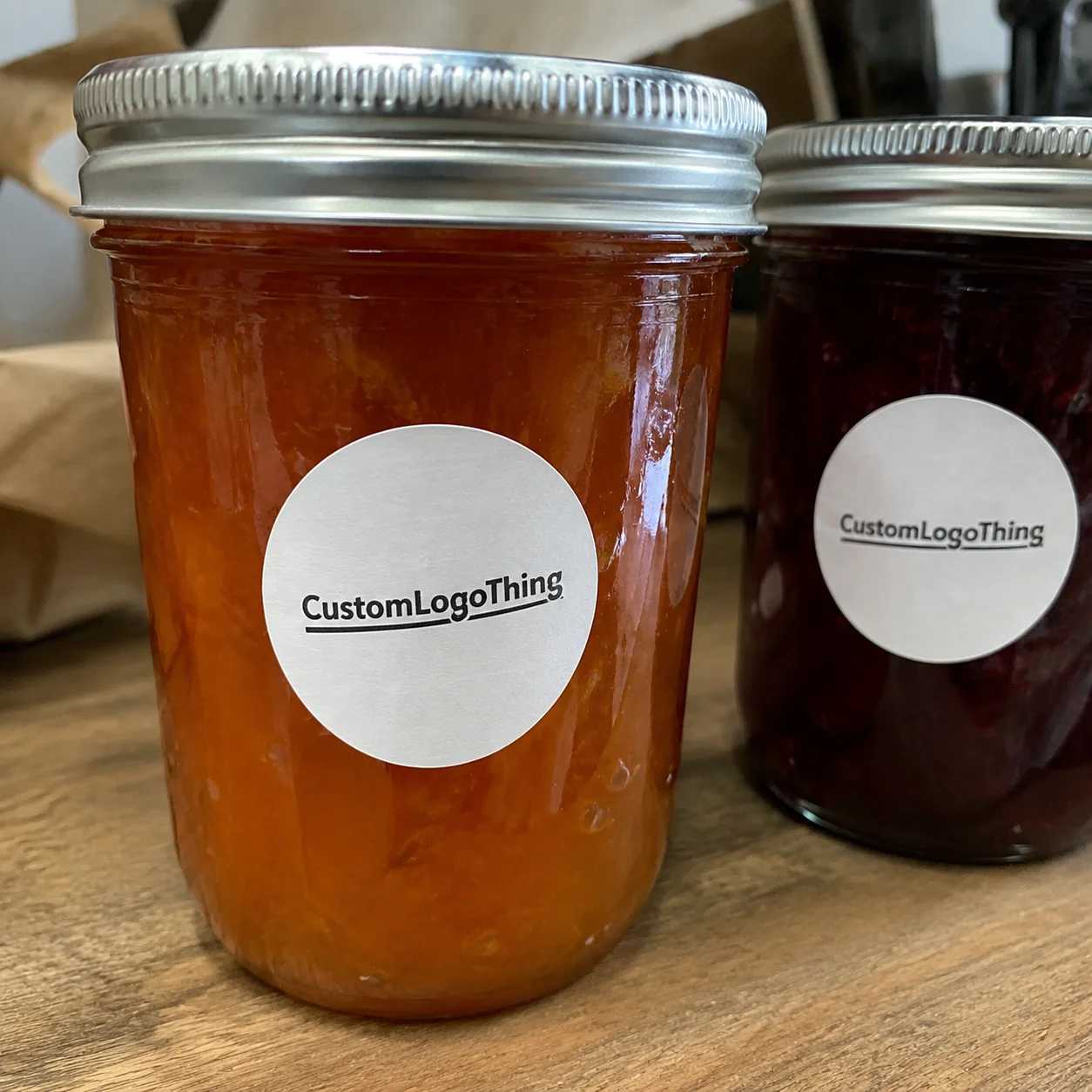
A small jar leaves very little space, so the label has to carry a lot: product name, brand, price signal, and sometimes compliance copy. Done well, it makes the jar feel finished instead of improvised.
That is why these labels show up on jam, honey, candles, spices, bath salts, and wedding favors. They are flexible, relatively affordable to test, and easy to revise when a product line changes.
These stickers are adhesive labels sized for curved glass and other tight surfaces commonly used on mason jars. They can serve as front labels, wrap labels, lid seals, or decorative accents. The useful versions stay adhered through handling, refrigeration, humidity, oils, and shipping.
For buyers comparing product packaging choices, labels balance cost and presentation. They are less expensive than fully printed jars, but they still create strong package branding and a clear retail signal. That matters in retail packaging, where a small package has to communicate quickly and still protect margin.
How the sticker process works from artwork to application
The ordering process is straightforward, but the order of decisions matters. Start with jar dimensions and usable label area, then choose material, adhesive, finish, and shape before finalizing the artwork. If the design comes first and the specs follow later, the label can wrap into the shoulder, cross a seam, or fight the curve of the glass.
Most suppliers want a dieline, vector artwork, or print-ready files at high resolution. Proofing is where expensive mistakes are caught. A useful proof checks trim size, bleed, safe area, barcode placement, ingredient copy, color expectations, and any special cut lines. A digital proof confirms layout. A physical sample confirms how the label actually behaves on glass.
The standard flow looks like this:
- Measure the jar and confirm label placement.
- Select the stock, adhesive, finish, and shape.
- Review the dieline and submit artwork.
- Approve the proof or sample.
- Print, finish, cut, pack, and ship.
Die-cut labels are cut to a custom outline, which helps when the design needs a specific silhouette or a cleaner presentation. Roll labels are often better for machine application and larger runs. Sheets still make sense for hand application or very small quantities. The right format depends less on aesthetics than on labor, volume, and how the label will be applied.
For brands that also manage broader Custom Labels & Tags or a full set of Custom Packaging Products, the jar sticker should fit the larger system. Repeating the same color palette, typography, and visual rhythm across jars, cartons, and inserts keeps the packaging line coherent.
Materials, finishes, and sizing that actually matter
Paper labels are the most economical option and work well for dry goods or products kept away from moisture. They print cleanly and keep Unit Cost Low, but they are more vulnerable to condensation, scuffing, and oil exposure.
Film labels, usually made from BOPP or a similar plastic film, hold up better. They resist water, oils, and cold storage more reliably than standard paper, and they tend to keep their appearance longer. BOPP is a practical choice for food, candle, and bath labels because it adds durability without unnecessary expense. Vinyl can solve certain durability problems, but it is not a universal upgrade.
Finish changes the feel of the package. Matte reads softer and more natural, which works well for artisanal or food-forward products. Gloss gives color more punch and can make a label feel brighter and more retail-driven. Soft-touch has a velvety feel that fits premium gift sets or gourmet jars. The right finish depends on the message the jar needs to send.
Size deserves more attention than it usually gets. Mason jars often use one of three label styles:
- Front labels for a centered product name and logo.
- Wrap labels for more information and a wider visual field.
- Lid seals for tamper cues, gifting, or seasonal branding.
Adhesive choice matters as much as stock when jars are chilled or handled in damp conditions. A cold-temperature or high-tack adhesive helps the label bond to glass and stay down when condensation forms. If the product may be stored in a refrigerator, test the label after 24 to 48 hours in the actual environment, not just on a dry sample jar.
For buyers with sustainability goals, FSC-certified paper can support sourcing requirements, and paper labels may fit certain eco claims better than films. Still, the whole package system matters. A recyclable label on top of a wasteful shipping setup does not carry much weight. For general material and waste guidance, the FSC and EPA resources are useful starting points: fsc.org and epa.gov.
Cost, pricing, MOQ, and unit cost basics
Sticker pricing is shaped by material, finish, shape complexity, quantity, adhesive type, and whether special effects like foil are involved. A simple paper label in a standard shape is inexpensive to produce. Once the job includes a Custom Die Cut, specialty film, or premium finish, the price moves up enough that the margin should be planned carefully.
For rough budgeting, small runs of Custom Mason Jar stickers often land around $0.18 to $0.45 per label, while larger quantities may fall closer to $0.04 to $0.15 per label as setup costs get spread across the run. That range is wide because the details matter. A 2-inch round paper label is not the same job as a 3 x 4-inch waterproof film label with a custom outline and specialty finish.
MOQ, or minimum order quantity, is the smallest quantity a supplier will produce efficiently. Lower MOQs are useful for product tests, holiday variations, and flavor trials. Higher MOQs usually lower unit cost. The practical question is not which label is cheapest. It is which label meets the storage conditions, brand standard, and production volume without creating waste later.
| Option | Typical Use | Relative Cost | Durability |
|---|---|---|---|
| Paper label | Dry goods, gifts, low-moisture jars | Lowest | Basic |
| BOPP film label | Food, candles, bath items, chilled storage | Mid | High |
| Custom die-cut film label | Premium retail packaging, branded sets | Higher | High |
| Foil or specialty finish label | Gift sets, premium lines, holiday SKUs | Highest | Varies by stock |
When comparing quotes, ask for total run cost instead of only the per-label figure. A low unit price can be misleading if setup charges, rush fees, or reprint risk are ignored. A label that fails in use is never cheap in the end.
Production steps and turnaround: what to expect
Turnaround usually begins after proof approval, not after the first inquiry. A typical order moves through artwork review, proofing, printing, finishing, cutting, inspection, packing, and shipping. Simple jobs with locked specs move faster. Orders with custom shapes, special adhesives, or multiple revision rounds take longer.
For digital label production, a common turnaround window is about 7 to 12 business days after approval, depending on queue length and quantity. Larger or more complex runs can stretch to 12 to 20 business days or more. Rush service may be available, but it often narrows the finish options, tightens the file requirements, or increases the price.
The most common delays come from missing dielines, low-resolution images, late copy changes, or barcode issues. Food labels deserve extra attention here. Ingredient statements, net weight, and regulatory text should be checked before signoff, because an error on a large run is expensive to correct. Once the run is printed, the mistake becomes inventory.
Reorders go more smoothly when specs stay stable. Same dimensions, same stock, same adhesive, same finish. That consistency shortens proofing, reduces color drift risk, and makes forecasting easier. It also helps operations teams keep packaging replenishment under control instead of treating every reorder like a new project.
If the product line also uses custom printed boxes or related packaging components, keep the master artwork organized from the start. When the jar sticker, carton, and insert sheet are all built from the same files, the whole packaging system is easier to manage.
How to design labels that look good on curved glass
Curved glass changes the way type and layout behave. Copy that looks balanced on screen can feel compressed once it wraps around the jar. The smaller the diameter, the more careful the design needs to be about font size, line spacing, and how much information is trying to fit on the face.
For smaller jars, keep the product name large and easy to read. Flavor, scent, or use case should follow, while legal copy, ingredients, and social handles sit lower in the hierarchy. A clean front panel with breathing room often works better than a crowded wrap label.
A few practical rules help:
- Use at least 6 pt for secondary copy, and larger if the jar sits below eye level.
- Leave at least 0.125 inch of safe margin from the cut edge.
- Avoid seams, embossing, and sharp shoulder curves unless the label is designed for them.
- Test a printed mockup on the actual jar, not only on a flat proof.
Shape can carry part of the brand language. A round lid seal feels familiar and tidy. A tall rectangle can suggest pantry utility or a more traditional product. A custom shape can help the package stand out, but only if it still fits the jar and does not fight the curve.
For brands balancing retail packaging and e-commerce, the label has to work in two places at once. On shelf, it needs visual pull. In transit, it needs to handle motion, pressure, and temperature changes. The same sticker can serve both uses if the design is disciplined and the material choice matches the product conditions.
Common mistakes with custom jar labels and how to avoid them
The most common mistake is choosing the wrong material for the environment. A label for refrigerated salsa, cold brew, or humid bath products needs a moisture-resistant film and a suitable adhesive. Standard paper may look fine when the jars are dry, then fail as soon as condensation shows up.
Oversizing is another frequent problem. If the label runs into the shoulder, seam, or rib of the jar, it can wrinkle, distort, or lift after application. Measure the flat usable area carefully and leave room for a clean edge. Mason jars vary more than people expect, even within the same general style.
Proofing mistakes are expensive and avoidable. Before approval, check:
- Ingredient copy and net contents.
- Barcode contrast and quiet zone.
- Brand colors and logo alignment.
- Expiration or batch fields if needed.
Application conditions matter too. Cold jars, dusty surfaces, rushed hand-labeling, and uneven pressure can all cause bubbles or edge lift. For manual application at scale, a simple placement jig or guide helps keep labels straight. For machine application, roll direction and label spacing need to match the equipment spec.
Shipping should be part of the spec, not an afterthought. Packaging groups such as ISTA publish test methods that help identify transit problems before a customer does. A basic understanding of temperature, humidity, vibration, and compression testing is enough to catch many failures early. The Institute of Packaging Professionals and ISTA are useful references for that wider packaging work: ista.org and packaging.org.
Next steps: order the right sample, test, then scale
Before placing a full order, gather the basics: jar diameter, label placement, product conditions, quantity, finish, and application method. Then order a sample or short proof run and test it on the real jars under real storage conditions. Fridge, shelf, shipping carton, hand oils, condensation, and temperature swings all tell a different story than a mockup does.
During testing, pay attention to three things: adhesion, readability, and shelf impact. If a label sticks well but disappears visually, the branding is weak. If it looks strong but lifts after a day in a cooler, it is not ready. If it is durable and clear but still feels awkward on the jar, the design needs another pass.
Once the specs are locked, keep them consistent. Same dimensions, same stock, same adhesive, same finish. That makes reorders easier and keeps unit cost more predictable. It also reduces the chance of a packaging surprise when a few hundred jars become a few thousand.
“The best label is the one that fits the jar, survives handling, and helps the product sell itself. If it only looks good in a mockup, it is decoration, not packaging.”
custom mason jar stickers work best when they are treated as part of the product rather than a last-minute add-on. Choose the Right stock, test the adhesive, and verify the design on the actual jar before scaling.
What are the best materials for custom mason jar stickers on refrigerated jars?
Choose a moisture-resistant film such as BOPP rather than standard paper. Pair it with a cold-temp or high-tack adhesive so the edges stay down when condensation forms.
How much do custom mason jar stickers usually cost per label?
Cost depends mostly on quantity, material, finish, and die-cut complexity. Small runs usually cost more per label, while larger orders lower unit cost because setup gets spread across more pieces.
What size should custom mason jar stickers be?
The right size depends on jar diameter, placement, and how much text you need. Measure the flat panel carefully and leave safe margins so the sticker does not wrap into seams or curve too hard at the edges.
How long does production usually take for mason jar stickers?
Turnaround depends on proof approval, print method, and finishing. Simple orders move faster; custom shapes, specialty materials, and revision cycles add time.
Can custom mason jar stickers be applied by hand?
Yes. Small and medium runs are often hand-applied without issue. Use clean, dry jars and a consistent placement guide to keep labels straight and bubble-free.


