Custom Moving Boxes solve a plain problem that standard cartons keep creating: too much empty space, too much shifting, and too much damage. Size the box to the item instead of forcing the item into the nearest random carton, and packing gets faster, stacking gets cleaner, and filler stops doing work it was never meant to do.
That is the actual value. Not cardboard theater. Better fit, better protection, fewer surprises on move day.
What Custom Moving Boxes Actually Solve on Move Day
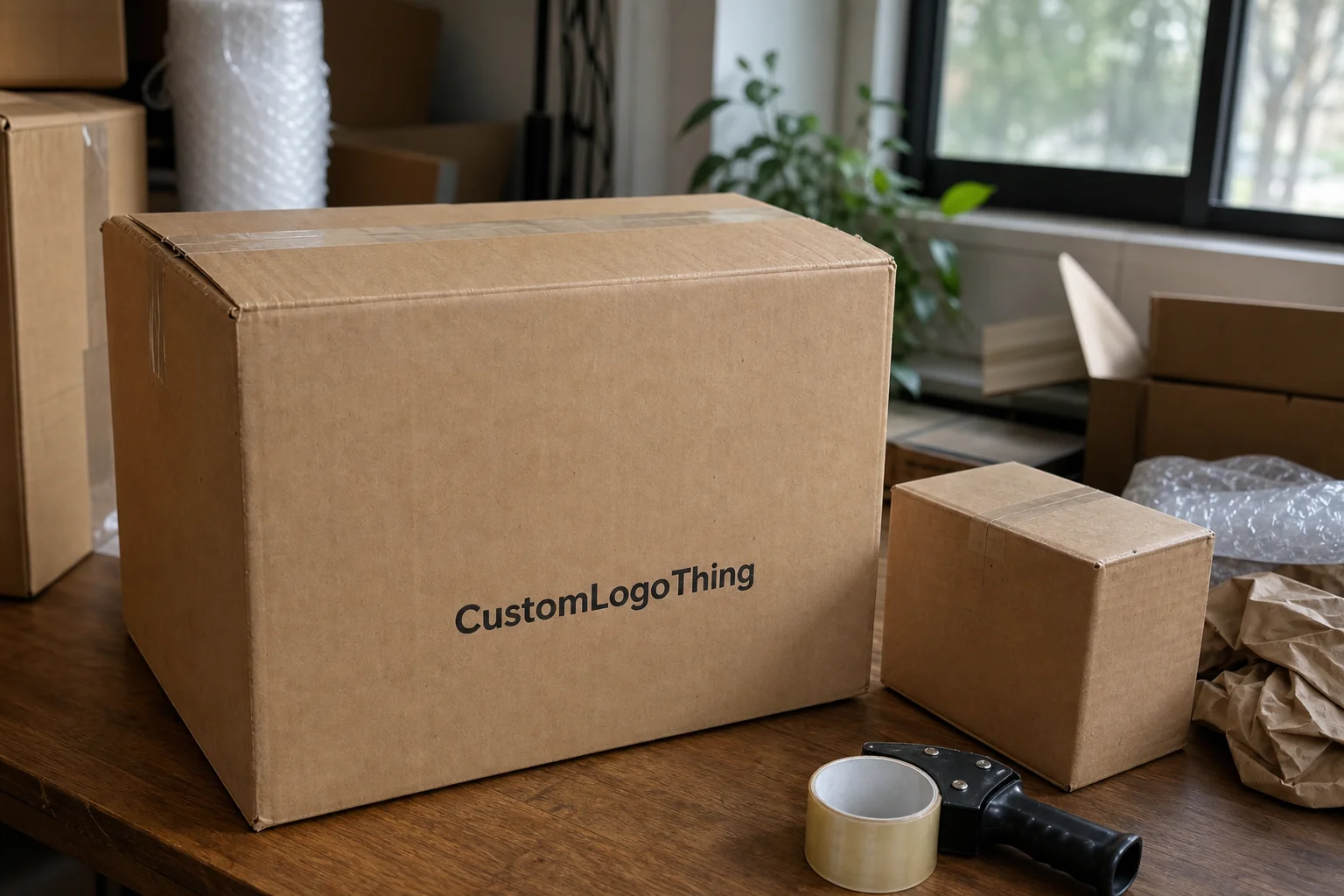
Most move-day problems start with slack space. A carton that is two inches too large on each side gives fragile items room to drift, lets corners take the hit, and asks tape to compensate for weak structure. That is why custom moving boxes matter. They reduce internal movement so the load behaves like one package instead of a pile of pieces waiting to collide.
From a buyer’s point of view, there are three different categories here: stock cartons, made-to-size boxes, and fully printed custom boxes. Stock cartons are cheap and easy to source, but they were built for general use, not for a specific item mix. Made-to-size cartons follow the actual dimensions more closely, so you need less void fill and get better stack performance. Fully printed versions add branding, handling instructions, or room labels, which becomes useful for premium home goods, retail fixtures, or any move that needs a cleaner handoff.
| Option | Best For | Main Upside | Main Tradeoff |
|---|---|---|---|
| Stock cartons | Simple, low-risk items | Lowest upfront cost and quick availability | More filler, more shifting, more repacking |
| Made-to-size boxes | Fragile or awkward items | Better fit, less damage, cleaner stacking | Higher setup cost than stock options |
| Fully printed custom boxes | Branded handoffs and premium goods | Useful labeling, stronger presentation, better control of packaging | More art prep and usually a higher per-unit price |
In practice, this matters most for fragile household goods, lamps, framed art, kitchen glass, premium decor, and anything with an awkward profile that hates standard sizing. It also matters if the destination needs a cleaner unpacking experience. A box can do double duty as protection and presentation, which is why a lot of teams now treat the carton as part of the item, not just the thing holding it.
Buyer payoff, plain and simple: fewer breakage claims, faster packing, better cube utilization, and less corrugated waste headed straight to the bin. If the box is the right size, the rest of the process gets less stupid.
Measure the item first. Then design the box. Ordering the carton before you know the actual dimensions is how people end up buying cardboard air.
How the Box Design Process Works From Size to Print
The process starts with measurements, but not just the outer dimensions of the item. You need the usable size after protection is added. A ceramic vase that measures 10 by 10 by 14 inches may need another half inch to one inch on each side if it is going into a single-wall carton with paper cushioning, and more if it needs inserts or a divider set. The right fit is usually snug, not crushed. Tight enough to control movement, loose enough to avoid pressure points.
Board choice matters as much as dimensions. Single-wall corrugated with a 32 ECT rating can work for lighter contents, while heavier or denser items usually need stronger board, a better flute profile, or double-wall construction. For compression resistance, buyers often ask for guidance tied to ASTM D642-style load expectations, which is more useful than guessing based on thickness alone. If the boxes will be stacked in transit or stored for a while, that compression rating matters more than a clean mockup on a screen.
Print comes next. Some buyers want plain kraft because the move is internal and cost matters more than branding. Others want one-color logos, handling marks, room labels, orientation arrows, or barcodes. A few need full Custom Printed Boxes because the carton is part of the brand handoff. That is where packaging design stops being decoration and starts being function. The print should help the pack-out, not fight it.
If sustainability is part of the brief, ask about FSC-certified paper options and chain-of-custody documentation. For independent guidance on packaging tests and fiber sourcing, these references are useful: ISTA testing standards and FSC certified materials. Nobody needs a speech, but good sourcing and realistic transit testing save money later.
Then the manufacturer turns the brief into a dieline, structural spec, and sample. The sample is where weak ideas get exposed. Fold sequence, seam placement, closure method, and print alignment all show up in the prototype. If the carton has vents, dividers, or inserts, this is also where you find out whether those parts actually fit together without turning into a corrugated puzzle nobody asked for.
Sometimes the smarter answer is not a fully custom outer box. A standard carton with custom inserts can outperform a bespoke box if the item is delicate but the outer size is already close. That is a normal packaging decision, not a compromise. Good packaging design picks the simplest structure that still protects the item.
Size, Strength, and Print Choices That Change Performance
There are three sizing strategies that come up again and again: exact fit, slightly oversized, and modular pack sizes. Exact fit is ideal for fragile, high-value items that should not move. Slightly oversized can work if you need cushioning around the product, but the extra space should be intentional, not accidental. Modular sizes are useful for mixed inventory or multi-room moves because they simplify packing labor and let crews learn a small set of carton dimensions instead of guessing every time.
Heavier contents need more than a bigger box. They need stronger board, tighter tolerances, and better closure details. A large carton with weak board just becomes a larger failure. For many moving programs, I would rather see a correctly sized double-wall carton than an oversized single-wall box stuffed with paper until it looks sturdy. It usually is not.
Print affects more than branding. Handling marks, room names, fragile icons, and even simple write-on panels can reduce confusion during loading and unpacking. That matters in moves where multiple people are packing at once and nobody wants to play detective later. If the job involves product packaging for resale, labels can also support barcodes, SKU tracking, and faster destination sorting. That is not glamorous. It is useful.
Inserts, dividers, and edge protection change the equation for glassware, framed pieces, electronics, and oddly proportioned goods. A divider set can keep bottles from clanking together. Corner protection can keep frames from punching through the board. Foam or molded pulp inserts help when the item is expensive and the risk of contact damage is real. The point is to match the protection to the failure mode.
Here is the tradeoff nobody likes to hear: overbuilding can be just as wasteful as underbuilding. Too much board adds freight cost, labor, and material cost. Too little board creates damage, repacking, and claims. The sweet spot is usually the lightest structure that still survives handling, stack pressure, and the actual route your goods take.
Production Process and Timeline: From Spec Sheet to Delivery
The production path is straightforward, but every weak spec turns it into a delay. The normal sequence is inquiry, spec review, sampling, approval, production, packing, freight, and delivery. If the item dimensions are incomplete or the artwork is messy, the job slows down immediately. Nobody gets extra points for optimism.
For simple custom moving boxes with a known size and a one-color print, the process often moves in a fairly tight window once the proof is approved. More complex printed or structural jobs take longer because the sample stage can reveal fit problems, print placement issues, or closure changes that need another round of review. In practice, a straightforward run might take roughly 10 to 15 business days from final approval, while more involved work can stretch to 3 to 5 weeks depending on volume, tooling, and freight distance.
The biggest schedule killers are predictable: unclear dimensions, missing artwork, slow signoff, and sample revisions that force a restart. Rush orders can work, but they change the economics fast. Faster production usually means less flexibility on materials, print coverage, or freight options. If the move date is fixed, build the box schedule backward from that date instead of pretending the carton will appear because the calendar is inconvenient.
And yes, freight matters. Bulky corrugated ships by volume as much as weight. A quote that looks cheap on paper can get expensive once truck space and delivery region are added. That is why stable specs and fast approvals matter more than vague intent. The calendar does not care what the move date means to you.
Cost, Pricing, and Quote Factors Behind Unit Price
Price is driven by size, board grade, print complexity, quantity, and whether the job needs custom tooling. Those are the obvious factors. The less obvious ones are artwork prep, inserts, sample charges, and freight. If the carton requires a new die, setup cost gets added once, then spread across the run. If the quantity is small, that setup cost hits hard.
As a rough buyer range, simple made-to-size runs in moderate quantities can land somewhere around $0.85 to $2.40 per unit before freight, depending on board strength and print. Smaller orders often sit higher because setup is being divided across fewer boxes. Larger runs can drop meaningfully, but not always as much as people hope if the print is heavy or the carton is oversized. Short-run custom printed boxes can look expensive until you compare them with breakage, labor, and waste.
MOQ changes the math fast. A 500-unit order is not priced like a 5,000-unit order, and a 5,000-unit order is not priced like a 20,000-unit run. If a supplier offers a lower unit price at a higher quantity, ask whether the savings survive freight and storage. A cheaper box is not cheaper if it sits in a warehouse for a year or gets damaged before use.
For a clearer quote, ask for landed cost, sample cost, and any extra charges tied to artwork changes or rush production. If you need custom packaging products for several item types, it can also help to compare one carton family against another so you are not buying a dozen slightly different sizes that all create their own setup cost. Our Custom Packaging Products range is the kind of place where that comparison usually starts.
| Quote Factor | How It Changes Price | What To Ask For |
|---|---|---|
| Size | Larger cartons use more board and ship with higher freight volume | Confirm internal and external dimensions |
| Board grade | Heavier board raises unit cost but can prevent damage | Ask for ECT rating or equivalent strength guidance |
| More colors, coverage, or finishing increase setup and press time | Request a one-color and full-print option if you are comparing | |
| Quantity | More units usually lower the unit price by spreading setup cost | Ask for breakpoints at 500, 1,000, and 5,000 units |
| Tooling | Custom cutting and inserts add one-time cost | Separate tooling from recurring box pricing |
That table is why I always say to compare landed cost, not just unit cost. The box price only tells part of the story. Freight, damage risk, and pack-out labor are part of the bill too.
Step-by-Step Ordering Guide for a Move Without Guesswork
Start with a real item list. Not a vague summary. List dimensions, approximate weight, fragility level, and how each item will be handled. A framed mirror, a small electronics unit, and a stack of ceramic dishes do not want the same carton logic. If the handling is rough, the box needs to assume it.
Next, choose the protection strategy before you choose the art. That means deciding whether you need inserts, dividers, reinforced corners, or just a tighter fit. A lot of bad orders happen because someone picks the print first and the structure second. That is backwards. Structure protects. Print supports the process.
Then request a sample or prototype if the item is valuable, awkward, or breakable. Guessing is a terrible production strategy. A sample tells you if the item slides, whether the closure holds, and whether the labels land where the pack crew actually needs them. If you are ordering custom moving boxes for premium home goods or a move that will be handled by multiple teams, skipping the sample is an expensive way to save a little time.
Approve artwork and structural details together. That matters more than people think. A logo can land right on a seam. A label can block a vent. A die line can change fold behavior and make a nice graphic look sloppy. The print file and the structural file should agree with each other, not fight in silence.
Finally, build time into the schedule for approvals, production, and freight. If the move date is fixed, your job is to reduce uncertainty, not add it. Keep one spec sheet per carton type, note the exact board grade, and store the final proof so the same box can be reordered without rediscovering the entire project later. That is how packaging programs stop becoming emergencies.
Common Mistakes, Expert Tips, and Next Steps
The biggest mistakes are easy to spot. People order by guess. They ignore freight weight. They choose a style before they know the structure. They skip a prototype for high-value items. And then they act surprised when the box does exactly what the wrong spec told it to do.
Here are the habits That Save Money:
- Standardize box sizes across similar items so packers are not learning a new format every day.
- Keep one spec sheet per SKU, including dimensions, board grade, closure method, and artwork version.
- Use labels for room, fragility, and orientation so crews can sort quickly.
- Check stack test expectations and compression needs if cartons will sit more than one day.
- Ask whether the box can be reused if the move involves returns, staging, or internal transfer.
One more practical point: do not overcomplicate the order if the problem is simple. Sometimes a stock carton plus a custom insert is enough. Other times the right answer is a made-to-size box with no print at all. A clean spec beats a flashy one. Every time.
If you are comparing options, start with the top three item types, request two quote paths, and compare landed cost against damage risk. Then order a small pilot run, pack a real sample load, and see how the cartons behave under actual handling. That is the only test that matters. Once the fit is proven, scale the spec with confidence and keep the same logic for future custom moving boxes.
How do I choose custom moving boxes for fragile items?
Start with item weight, exact dimensions, and the amount of cushioning it needs. Then choose stronger board, a tighter internal fit, and inserts or dividers if the item can shift or touch another surface. If it is breakable, ask for a sample. A spec sheet does not show crush, wobble, or bad closure behavior.
Are custom moving boxes more expensive than standard boxes?
Usually yes on a per-unit basis. The better comparison is total landed cost plus damage, labor, and repacking waste. If the box reduces filler, prevents breakage, or speeds packing, the higher unit price can still be the cheaper move.
What MOQ should I expect for custom moving boxes?
MOQ depends on whether the job is printed, die-cut, or built from a standard structural format. Simple custom sizing often starts lower than fully bespoke work, but tooling and setup still set the floor. If you only need a test run, ask for a prototype or short-run option first.
How long does production usually take?
Simple specs move faster; more complex printed or structural jobs take longer because sampling and approval add steps. Delays usually come from missing dimensions, slow artwork approval, or prototype revisions. If your move date is fixed, leave room for freight and do not wait until the last minute to lock the spec.
What do I need to get an accurate quote for custom moving boxes?
Provide dimensions, estimated quantity, target board strength, print needs, and whether you need inserts or dividers. Include the destination ZIP or delivery region so freight can be estimated properly. State whether you want a sample, rush service, or a landed-cost quote, because those change the number quickly.


