Plain corrugated cartons disappear the second they enter a warehouse, truck, or storage room. Custom moving Boxes with Logo do the opposite. They get identified faster, sorted faster, and handed off with less confusion. That sounds minor until a crew is moving hundreds of cartons and every minute lost becomes a cost someone has to eat.
The logo is not the whole story, though. A branded box that crushes, bulges, or prints poorly is still a bad box. Structure comes first. Then board grade. Then print. If those pieces are off, the branding just makes the mistake easier to spot.
That is the practical appeal here. Custom printed moving cartons can help with operations, customer presentation, and inventory control at the same time. They are not a luxury add-on. Used properly, they are part of the packaging spec.
Why custom moving boxes with logo get noticed in transit
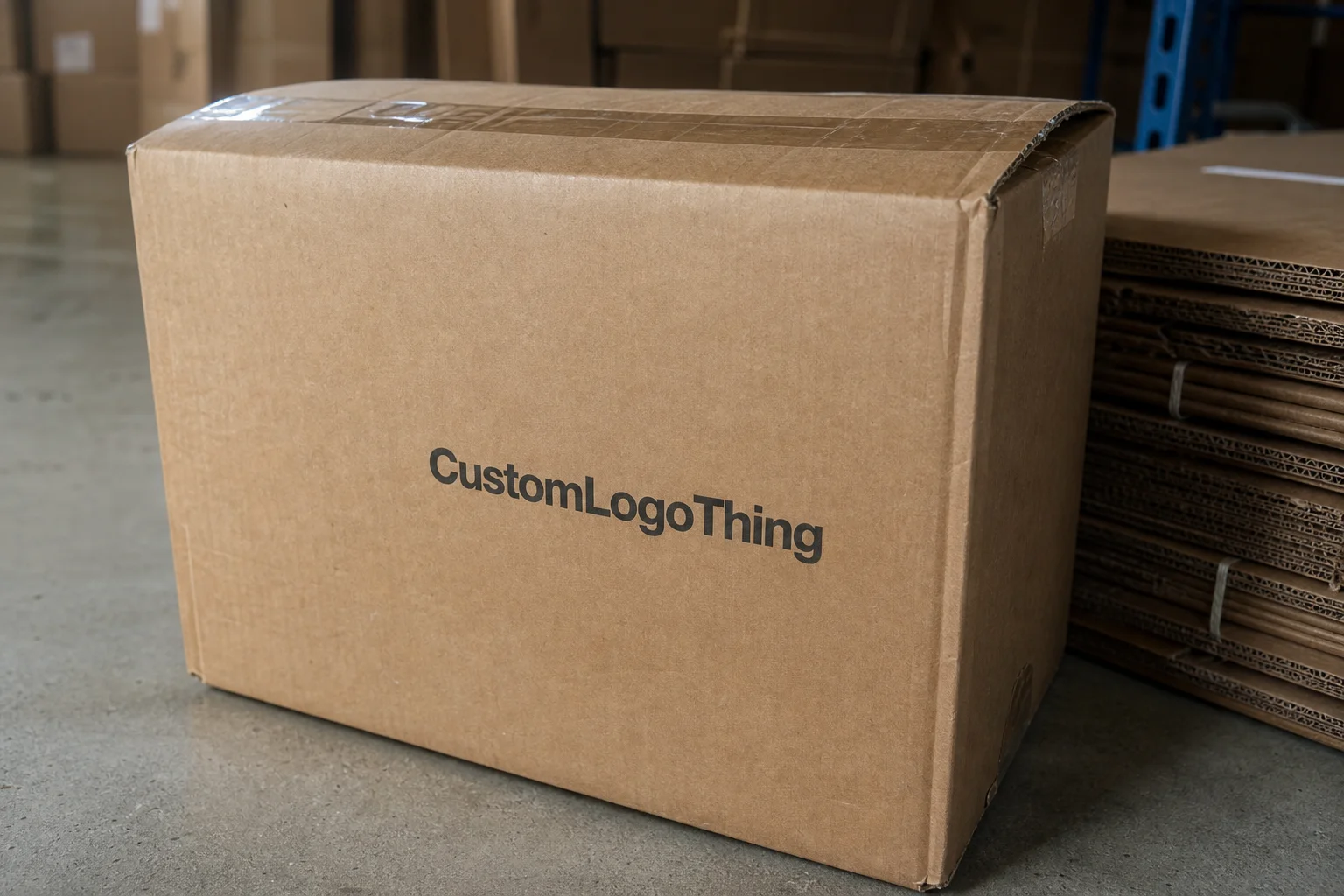
In transit, plain cartons blur together. Branded cartons do not. That matters in warehouses, at staging areas, in delivery vans, and on crowded job sites where there are ten nearly identical boxes stacked in a row. A clean logo or handling mark can save a worker from opening the wrong case, which is a small error that turns into a stupid amount of wasted time.
For movers and logistics teams, recognition is not decoration. It is organization. A printed box can flag priority items, show a department or route, or identify a client order without relying on a handwritten label that smears the moment humidity shows up. If the box goes through several hands, visible branding gives the team one more layer of clarity.
There is a perception benefit too. Customers notice when a move, delivery, or storage handoff looks deliberate. A carton printed with a brand mark signals that the business has a process. That does not make the load safer by itself, but it does make the operation look less improvised. And in packaging, “looks improvised” is usually another way of saying “nobody checked the spec.”
A logo helps with recognition. The carton still has to survive compression, stacking, and rough handling. If the box fails, the branding is just expensive trim.
The right approach is simple: choose the box for the load first, then use branding to improve identification and presentation. For moving companies, storage providers, relocation services, and brands that want a cleaner customer handoff, that order matters. It avoids the common trap of treating print as a fix for weak packaging.
For buyers comparing options, the current Custom Packaging Products range is a useful place to start before locking in dimensions and print style. That is especially true if the pack-out is still changing. Guessing from a spreadsheet is how people end up with a carton that looks fine in a mockup and wrong in a warehouse.
What custom moving boxes with logo actually include
At the simplest level, these are corrugated moving cartons printed with a company logo, handling instructions, contact details, or a short brand message. The structure can stay basic or get more refined depending on the job. A one-color flexographic print on kraft board is common. So is a white exterior when the buyer wants sharper contrast and a cleaner presentation.
The useful options usually break down like this:
- Single-wall corrugated for lighter loads and general moving use.
- Double-wall corrugated for heavier contents, longer transit, or rougher handling.
- Kraft exterior for lower cost and a utilitarian look.
- White exterior for cleaner branding and better print contrast.
- One-color print for cost control and clear readability.
- Multi-panel print for a more finished custom printed boxes look when the budget allows it.
The box style matters as much as the design. Regular slotted cartons, telescoping styles, and specialty moving boxes all have different print limits because folds, flaps, and seams eat into usable space. If a design ignores those constraints, the logo lands on a crease, gets cut off by a flap, or sits too close to an edge. That is how a box goes from branded to sloppy in one production run.
Typical buyers include moving companies, storage operators, real estate teams, relocation services, and brands that want the box itself to look like part of the product experience. In all of those cases, the carton has two jobs. It protects the contents. It also presents the business. If either side is weak, the result feels unfinished.
One detail people skip too fast: board choice affects how the print looks. A rough kraft liner absorbs ink differently than a smoother white face. That changes contrast, line sharpness, and how well small text survives. If the logo has thin strokes, small type, or fine rules, the substrate choice can matter as much as the print method.
How the printing and box setup works
The production flow is not complicated, but every step has consequences. First the buyer confirms the box style and size. Then the board grade gets chosen. After that comes artwork prep, proofing, and final approval before the run starts. Skip any of those, and the order usually pays for it later in rework or delays. Packaging manufacturing is not magical. It just punishes sloppy inputs.
Logo placement usually lands on side panels, end panels, or top flaps. Some buyers want a repeat pattern on multiple faces. Others only need one mark and a handling instruction. The right layout depends on how the cartons will be stacked and viewed. If the boxes are going into tight storage, side panels usually provide the best visibility because they stay readable even when the top flaps are hidden.
Print method matters too. One-color flexo is common for moving boxes because it is cost-effective and readable at a distance. It also keeps setup simpler, which helps when the order needs to move quickly. Spot-color branding can clean up the look without pushing the job into full retail packaging territory. Complex graphics are possible, but they add cost and more chances for something to drift out of spec. Pretty is fine. Readable is better.
Artwork should be supplied as vector files whenever possible. That keeps edges sharp at scale and avoids cleanup work before print. A supplier will usually confirm dielines, print-safe margins, and any fold zones that might distort the mark. Those checks are not busywork. A design that crosses a crease will always look worse than it did on screen.
Proofing deserves real attention. A good proof is where you catch scale issues, placement problems, and text that turns unreadable once the box is folded. Ten minutes spent checking a proof is cheaper than scrapping a full pallet of misprinted cartons. That is not dramatic. It is just math.
For buyers who need a better handle on test language or transit expectations, the standards resources at ISTA are useful. They help separate real performance requirements from sales talk that sounds smart and solves nothing.
One more practical point: if the packaging will be handled by multiple teams, consider adding plain handling text alongside the logo. A brand mark is useful. A brand mark plus “fragile,” “this side up,” or a route code is better. That is especially true when the carton passes through a warehouse where nobody has time to decode the branding.
Cost, pricing, and MOQ: what changes the quote
The quote moves for a few predictable reasons. Box size, board grade, number of print colors, print locations, and order quantity do most of the work. Tooling or plate setup can also matter if the design needs new production assets. None of this is mysterious. It is manufacturing cost dressed up as custom pricing.
Here is the short version. Larger boxes cost more. Heavier board costs more. Tight deadlines cost more. Standard sizes with one-color print are usually the most controlled option. Custom dimensions and multi-panel branding push the price up because they require more setup time and more checks before production starts.
| Option | Typical Use | Approx. Unit Cost | Notes |
|---|---|---|---|
| Stock size, one-color flexo | General moving and storage | $0.45-$0.90 | Best for higher quantities and simple branding |
| Custom size, one-color flexo | Fit-specific moving kits | $0.75-$1.35 | Custom dimensions usually add setup cost |
| Heavier board, branded print | Dense or fragile contents | $1.10-$2.10 | Better compression strength, higher material cost |
| Premium presentation build | Client-facing handoff or retail packaging | $1.80-$3.50+ | More print coverage, cleaner exterior, tighter QC |
Those numbers are directional, not a promise. A run of 5,000 units with simple print can land near the lower end. A smaller quantity, a rush order, or a double-wall spec can push pricing up fast. Freight often gets ignored too, which is strange because shipping a bulky stack of cartons is never free. The box unit price is only part of the bill.
Buyers also underestimate the side costs. Artwork cleanup, sample revisions, plate charges, split shipments, and rush fees can all show up. Sometimes they are obvious. Sometimes they are buried in the wording until the final quote lands and everyone suddenly discovers a new definition of “budget.”
If you are comparing Custom Printed Boxes across several programs, ask for the quote to separate box cost, print cost, freight, and any setup charges. That makes it easier to compare suppliers without pretending every line item works the same way.
MOQ is another place where the real number matters more than the marketing number. Some suppliers will accept a lower test run if the design is simple and the size is stock. Others will push the minimum higher because custom dimensions or special print placements increase waste and setup time. If a supplier avoids the question, that is usually a sign the answer is not friendly.
Process and lead time: from artwork to delivery
A clean order usually follows the same path. Choose the size. Confirm the board. Send artwork. Review the proof. Approve the purchase order. Schedule production. If one of those steps gets skipped, the order tends to pay for it later in rework, delays, or cartons that do not fit the real use case.
Standard stock sizes usually move faster than fully custom dimensions. That is not because the supplier is dragging its feet. It is because nonstandard cartons need more setup, sometimes new tooling, and more internal checks before the run can begin. A simple branded stock carton might turn in roughly 10 to 15 business days after proof approval. A fully custom size with printed panels can stretch into the 15 to 25 business day range, and that is before freight.
The proof stage is often where orders slow down. Logos need to be checked against the dieline. Type needs to stay readable. Margins need to stay inside the print-safe area. If the supplier has to chase corrected artwork, the clock stops. That is why vector files matter and why “we sent a JPG, should be fine” is not a production strategy.
Build cushion into the schedule. A move, launch, or customer delivery program that depends on packaging arriving the same week is asking for a mess. If cartons need to arrive in multiple drops, confirm split delivery up front. If the goods will be validated or tested, ask for sample approval before mass production. It is a little slower. It is also cheaper than fixing a truckload of wrong boxes.
For sourcing and documentation around fiber claims, the FSC site at fsc.org is useful if your buyer needs traceability language. It does not replace a spec sheet, but it keeps the paperwork cleaner.
One thing I would not ignore: lead time is measured from approval, not from the date someone says they are “Ready to Order.” Those are different events. If a team is still changing artwork or debating board grade, the clock has not really started.
Common mistakes that waste money and weaken branding
The first mistake is guessing box size. A carton should be chosen from the actual pack-out dimensions and load weight, not from the amount of room left on a shelf. Too much empty space drives up void fill, shipping cost, and damage risk. Too little space causes overstuffing, bulging, and crushed corners. Neither one looks professional.
The second mistake is trying to print a weak box into becoming a strong one. That does not work. If the carton wall collapses or the seams split, the logo never gets a chance to matter. Structure beats decoration every time. A branded carton that fails in transit is just expensive recycling with better typography.
Artwork errors are just as common. Low-resolution files print badly. Tiny logos disappear after folding. Too many colors increase setup complexity for no useful return. Ignoring the print-safe margin causes trim issues. If the design is built like a poster instead of a corrugated layout, the final result will show it.
Another expensive mistake is ordering too few units. Buyers often test a small run and then reorder later under pressure. The second order usually costs more because the timing is worse and the quantity is smaller. That is a classic budget problem created by avoiding a larger initial commitment.
People also underestimate the presentation problem. A carton that is too large for the contents can cost more to ship and look less polished than a properly sized one. In retail packaging or customer-facing product packaging, oversized boxes signal waste even when the contents are fine. Customers read that immediately. They may not know the board spec, but they know when a pack-out looks lazy.
One more: some buyers use branding to cover up spec uncertainty. That is backwards. If the route is rough, the contents are heavy, or the box will be stacked high, those conditions should drive the build first. The logo does not deserve first place. The carton earns that.
Expert tips and next steps for a cleaner order
Start with what the box has to carry. Weight, fragility, stack height, and handling conditions should drive the spec before anybody talks about color or logo size. That sounds basic because it is. It is also the step buyers skip most often.
If the goal is speed and clarity, keep the branding simple. One-color print, a clean logo, and a short handling note usually outperform a busy layout that tries too hard. For custom moving Boxes with Logo, simple often looks more expensive than cluttered because it reads faster and survives rough handling better. Fancy art is not a substitute for legibility.
Use a pre-production proof. Confirm the dimensions in writing. Ask whether the artwork needs to be supplied as vector. If there is a print limit on the panel, verify it before sending approvals. Those checks save more money than almost anything else in the process.
Here is the checklist I would use before requesting a quote:
- Confirm box size and inside dimensions.
- Choose the board grade and wall construction.
- Define print area, print colors, and logo placement.
- Ask for MOQ and setup charges.
- Get the lead time after proof approval, not a generic production window.
- Confirm freight terms and split delivery if needed.
- Ask whether the design needs changes for folds, seams, or score lines.
If you are still building the packaging spec, review the current Custom Packaging Products options first and compare them against actual handling needs. That is usually faster than reverse-engineering the right carton from a price quote alone.
Done properly, custom moving Boxes with Logo are not just branded cartons. They are an operational tool, a cleaner customer handoff, and a more credible version of your product packaging program. Get the size right, keep the print readable, and the rest becomes straightforward.
How do I choose the right size for custom moving boxes with logo?
Start with what goes inside the box, not the shelf space you have left. Match the carton size to weight and fragility so you avoid overstuffing, wasted void fill, and crushed corners. Smaller boxes work well for books and dense items, medium boxes for mixed contents, and larger boxes only for lighter goods.
What affects the price of branded moving boxes the most?
Size, board grade, print colors, and order quantity usually move the price the most. Custom dimensions and special artwork setups can add tooling or setup charges, and rush production or freight can push the total above the box unit price.
What is a normal MOQ for printed moving boxes?
MOQ varies by supplier and box style, but custom printed runs usually start higher than stock cartons. Standard sizes with simple one-color print are usually easier to approve at lower quantities. If you need a very specific size or layout, expect the MOQ to rise.
How long does production usually take for custom moving boxes with logo?
Standard stock boxes with simple print move faster than fully custom dimensions. Artwork approval is often the slowest part, especially if the logo or dieline needs changes. Plan extra time for shipping if the order is large or the delivery point is far from the factory.
What artwork do I need to get a clean print result?
Vector files are best because they stay sharp at any print size. Keep the logo simple, readable, and far enough from fold lines and seams. Ask for a proof before production so you can catch spacing, color, and placement issues early.


