Custom nylon tote bags look straightforward, but the versions worth buying are built more like lightweight utility gear than throwaway shopping carriers. That distinction matters because these bags are asked to do several jobs at once: carry weight, hold up to repeated folding, keep a logo legible, and still feel worth keeping after the first use.
For buyers, the decision is rarely about the bag alone. It is about whether the item will be reused, whether the branding still reads cleanly after handling, and whether the overall presentation matches the product or event it supports. That is where custom nylon tote bags separate themselves from basic promo items and from ordinary branded packaging.
Why nylon tote bags punch above their weight
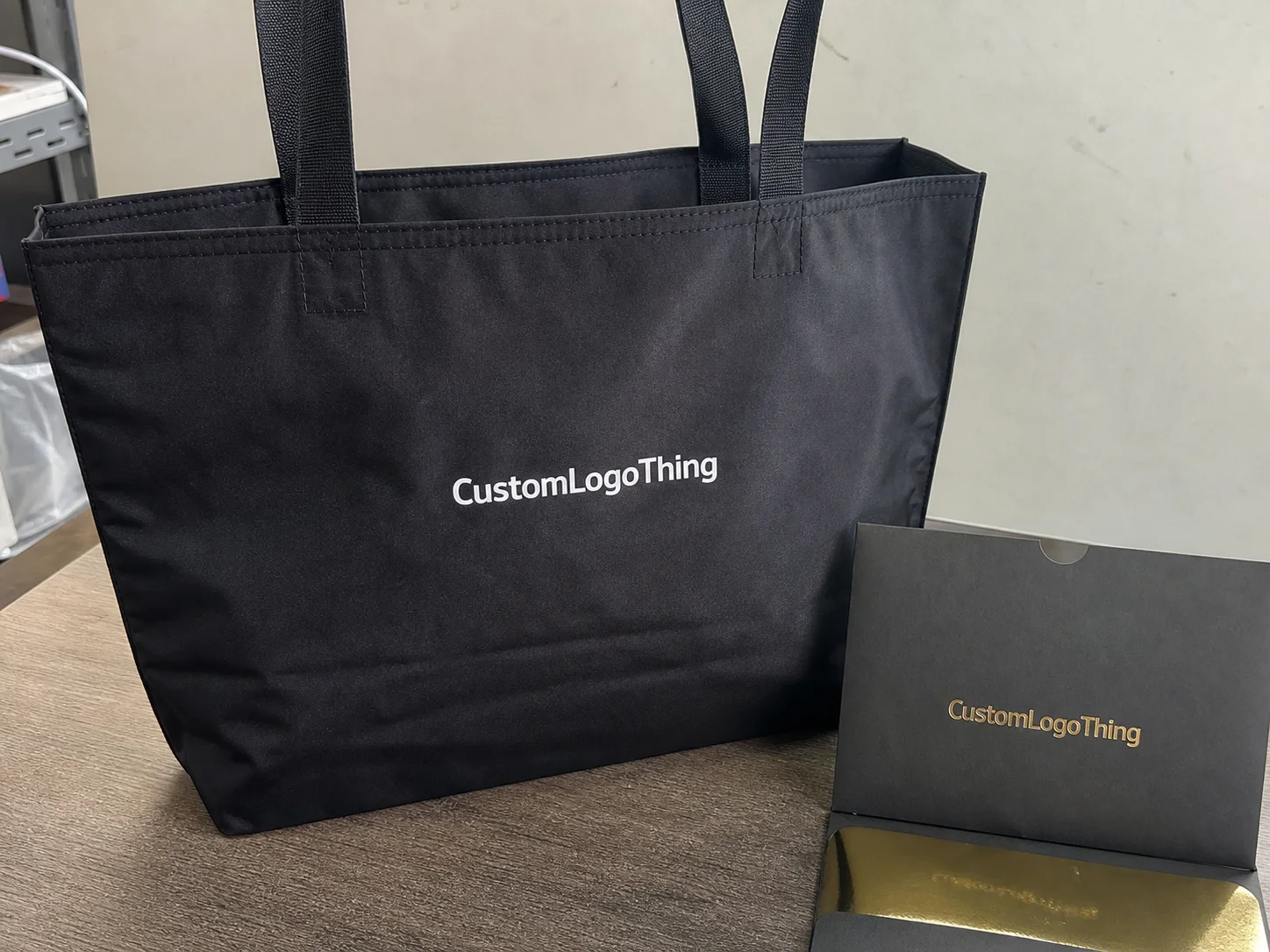
Nylon has a practical kind of versatility. It stays light in hand, folds down easily, and resists abrasion better than many low-cost alternatives, which is why it shows up in travel gear, reusable carry bags, and promotional programs that need more than one trip out of the office. A tote made from nylon can feel modest at first glance and still outperform bags that appear more substantial on a spec sheet.
Compared with cotton, nylon typically dries faster and packs smaller. Compared with nonwoven polypropylene, it often has a smoother, more finished handfeel, especially if the weave is tighter and the surface is matte rather than shiny. Compared with thin plastic carriers, it is much more likely to be kept in a drawer, backpack, or glove compartment for future use.
That is the real value: not just the first impression, but the number of times the bag stays in circulation. A tote is part utility, part presentation, and part package branding. If the design is right, the bag keeps working for the brand long after the original purchase or event has passed.
Custom nylon tote bags are commonly used for:
- Retail giveaways and purchase-with-purchase promotions
- Conference kits and event handouts
- Employee welcome packages
- Convenience-store or grocery reuse programs
- Light product packaging for folded apparel, beauty items, or accessories
The part many buyers underestimate is that nylon totes are not interchangeable. A 190T bag with basic stitching behaves very differently from a heavier denier tote with reinforced seams, a zipper, and a sewn pouch. The fabric, stitching, and handle construction matter more than the logo file.
A tote can still perform well if the structure is right, even when it looks simple or inexpensive on paper. The reverse is also true: strong artwork cannot rescue weak seams, awkward proportions, or handles that dig in under load.
For most packaging programs, the useful questions are durability, brand visibility, packability, and perceived value. Unit price comes after those boxes are checked, not before.
How the material, construction, and print process work
A nylon tote is the sum of several decisions, and each one affects performance. The shell fabric determines feel and strength. Coating or lining changes water resistance and handfeel. Seams determine how much stress the bag tolerates. Handles shape comfort. Closures and pockets influence convenience. Once those parts are viewed together, the cost difference between two nearly identical-looking samples becomes easier to explain.
Fabric weight is usually discussed in denier or weave density. Higher denier fabrics feel more substantial and usually resist tearing better, while lower denier fabrics fold more easily and cost less. That tradeoff is familiar across retail packaging and product packaging: if the item needs to feel premium and last longer, the structure has to carry more of the work.
Decoration method is the next major variable. Custom nylon tote bags are commonly finished with:
- Screen print for bold logos, solid colors, and lower cost at higher quantities
- Heat transfer for detailed artwork, gradients, or smaller runs
- Embroidery for a textured, premium effect, especially on thicker fabric
- Woven labels when the brand wants a subtle but durable mark
Each method changes both look and price. Screen print is the most familiar route for promotional bags because it handles strong contrast well and stays efficient on volume orders. Heat transfer can reproduce finer detail, but it depends heavily on artwork quality and correct placement. Embroidery adds tactile value, though it can be too heavy for very light nylon. Woven labels are refined, yet they do not replace a full logo print if the goal is maximum visibility.
Artwork setup matters more on fabric than on paper-based packaging. Thin strokes can disappear when the bag flexes. Small text can become hard to read once the tote is folded or filled. If a brand usually works with Custom Packaging Products such as cartons or mailers, it is easy to reuse the same layout scale and expect the result to translate. Fabric has movement, so the art needs room to survive that movement.
Nylon also brings a few practical considerations around finish and sustainability. Some buyers want water resistance for commuting or weather exposure. Others prefer lower sheen for a quieter, more restrained look. Recyclability depends on the exact construction, local collection options, and whether coatings or trims complicate recovery. It is better to ask for the full build than to assume that “nylon” means a single environmental profile. For buyers comparing shipping performance and transit stress, standards and testing frameworks from groups such as ISTA can provide a more disciplined way to think about packaging and distribution.
Key factors that determine durability, branding, and fit
If the tote needs to perform in real use, size and structure should be decided before color. The bag has to fit the actual load. A compact event handout bag should not be specified like a grocery carrier, and a retail tote meant for regular commuting needs more reinforcement than a one-day conference piece.
Fabric weight and denier come first. Lighter bags fold smaller and usually cost less. Heavier bags carry more, resist snags better, and feel more substantial in hand. That does not mean heavier is always better. It means the use case should determine the spec.
Then comes size and gusset depth. A shallow bag with a narrow gusset works well for flat items such as brochures, apparel, or small boxed goods. A deeper gusset suits groceries, water bottles, or mixed handouts. If the tote is being used as a form of Custom Packaging Products in a retail setting, dimensions should be matched to the actual product stack rather than estimated from a photo.
Handles deserve more attention than they usually get. Short handles favor hand carry. Longer handles support shoulder carry and repeat use. Reinforcement stitching at stress points matters because that is where failure usually starts. Buyers often notice the fabric first and the handles later, but in actual use the handles are often what determine whether the bag gets kept.
Branding choices influence how expensive the tote feels. A large logo can work if the artwork is clean and centered, but it can look crowded if the surface curves too much or the print area sits too close to a seam. Color choice matters too. Neutral tote colors such as black, navy, charcoal, and cream usually make brand marks read more clearly than busy patterns. A restrained palette often feels more premium than a loud one.
There are also practical constraints if the bag will be used around food, cosmetics, or customer-facing merchandise. In those settings, buyers often care about wipe-clean surfaces, low linting, odor, and whether the tote presents a product neatly rather than just carries it. That is where the line between tote and packaging gets blurry, and useful.
For most brands, the right spec is not the cheapest one. It is the bag that looks intentional, survives normal handling, and avoids the “throwaway promo item” feel. That balance is what keeps custom nylon tote bags in circulation longer than a typical giveaway.
Cost and pricing: what changes the unit price most
Unit price is driven by a small set of predictable variables: fabric weight, bag size, number of print colors, decoration method, accessories, and packing configuration. A plain open-top bag with a one-color print is usually much less expensive than a zippered tote with reinforced handles, a sewn pouch, and multi-step decoration. That sounds obvious, but it is still where many quote comparisons go wrong.
The hidden issue is that two samples can look nearly identical in a photograph and still sit in very different cost brackets. One may use thinner nylon, simpler stitching, and a basic print method. The other may use more material, tighter tolerances, and more labor in finishing. A buyer should ask for a costed spec sheet, not just a single line price.
Small runs usually cost more per piece because setup fees are spread over fewer units. Larger runs tend to reduce unit cost because screen prep, machine setup, and labor preparation are amortized over volume. MOQ matters too. If a supplier sets a minimum of 500 or 1,000 pieces, that threshold affects pricing, freight planning, storage, and how much cash is tied up before the bags are put to use.
For reference, buyers often see broad pricing bands like these, though actual quotes vary by region, construction, and decoration complexity: a light nylon tote with a simple one-color screen print may land in the lowest tier, a midweight bag with reinforced handles and two-color print usually sits in the middle, and a heavier tote with zipper, pouch, or embroidery can move into a significantly higher bracket. The more the bag behaves like a reusable utility item rather than a promotional carrier, the more the price reflects that build.
Here is a useful comparison for buyers reviewing custom Nylon Tote Bags:
| Option | Typical Use | Relative Unit Cost | Best For |
|---|---|---|---|
| Light nylon, one-color screen print | Event handouts, short-term promotions | Lower | Volume-driven campaigns |
| Midweight nylon, two-color print, reinforced handles | Retail giveaways, employee kits | Medium | Balanced cost and presentation |
| Heavier nylon, zipper, pouch, embroidery or heat transfer | Premium gifting, repeat-use retail programs | Higher | Stronger brand perception |
Budgeting works best when the goal is defined clearly. If lowest landed cost matters most, keep the design simple and the construction basic. If perceived value matters most, spend more on fabric, seams, and finishing before adding complex artwork. If long-term reuse matters most, prioritize comfort and durability over decorative extras.
A slightly more expensive tote that lasts three or four times longer often delivers better brand exposure than a cheaper bag that disappears after one use. That is not a design opinion; it is packaging math.
Process and lead time: from brief to delivery
The ordering sequence is fairly consistent, but delays appear when buyers skip the less exciting parts. A clean order usually moves through brief, specification review, artwork confirmation, sampling, approval, production, inspection, and shipping. Each stage has a purpose. If one is vague, the rest slows down.
The first source of delay is incomplete information. Missing vector files, unclear logo rules, and uncertain dimensions force extra back-and-forth. The second is revision churn. If the buyer keeps changing closure style, pocket layout, or print placement after sampling begins, the schedule slips quickly. The third is unrealistic expectations about decoration complexity. A one-color screen print is one thing; a more intricate build with multiple decoration steps is another.
Lead time depends on whether the bag is stock-based or fully custom, and on how much work the decoration adds. A straightforward order may move quickly once artwork is approved. A tote with custom construction, special finishing, or multiple print locations can take noticeably longer. For event-driven purchases, that gap often matters more than a small unit-price change.
In practice, buyers should plan around proof approval first and shipping second. A final pre-production proof reduces the risk of expensive surprises once production is underway. If the sample is wrong, slowing down to correct it is better than trying to fix a layout issue after cartons are packed.
Quality checks should continue after production starts. A reliable supplier should inspect stitch quality, print alignment, color consistency, and handle reinforcement before shipment. If transit testing is part of the program, ask how the goods are packed and whether carton performance is checked in a way that fits your distribution route. Packaging groups and industry testing references can be useful here, especially when the tote is being shipped nested or packed with other branded items.
Packaging configuration affects the finished order more than many buyers expect. Bag counts per carton, folding method, and polybagging all influence shipping efficiency and how the goods arrive. That matters most when the tote has to look clean and presentable the moment it is opened.
Step-by-step guide to ordering custom nylon totes
- Define the use case first. Is the bag for retail, events, employee onboarding, or reusable shopping? That answer should drive size, fabric, and closure choices.
- Set the core spec. Decide dimensions, fabric weight, handle style, closure, and finish before asking for quotes.
- Prepare artwork properly. Use clean vector files, confirm Pantone references where needed, and simplify the design if the logo has thin strokes or tiny text.
- Request samples or digital proofs. Compare them against real use, not just a monitor. A design that looks fine on screen can feel awkward in hand.
- Confirm quantity and logistics. Check pricing breaks, shipping method, carton counts, and delivery address details before production starts.
- Inspect the first batch carefully. Review stitching, print placement, color, and handle comfort. If the load test or overall finish feels off, address it immediately.
That sequence sounds basic, but it prevents most of the avoidable problems. It also keeps the buyer in control of the spec instead of letting the quote determine the spec. For many brands, that is the difference between a bag that supports the campaign and a bag that quietly weakens it.
Common mistakes buyers make with nylon tote specs
The most common mistake is buying the cheapest version and assuming all nylon bags are functionally similar. They are not. Low-denier material, weak seam reinforcement, and poor handle construction show up fast once the bag is actually used. The failure mode is predictable: the tote looks fine in a product shot and tired in the field.
Another frequent error is overdesigning the logo. Large marks can work, but only if the layout respects seams, folds, and curves. Oversized artwork often looks crowded, especially on smaller bags or panels that do not stay flat during use. Clean branding usually performs better than busy graphics, particularly in Custom Printed Boxes-style brand programs where the tote needs to sit alongside other packaging and still feel coherent.
Buyers also confuse display use with daily carry use. A bag that works for a trade show handout may fail in a commuter setting if the handles are too short or the gusset is too shallow. If the brand wants repeat use, the spec should assume real weight, real movement, and real wear. A tote only earns lasting brand value if someone keeps reaching for it.
There is also a false assumption that all suppliers use the same print process and quality standard. They do not. Even when product photos look almost identical, the actual output can differ in opacity, stitch density, color accuracy, and finishing. That is why sample approval matters. Skipping it is expensive optimism.
Sheen can matter as much as color. A glossy nylon may look lively under studio lights but too shiny for a restrained retail program. A matte finish usually reads more polished. The wrong finish does not ruin the bag, but it can push the brand tone in the wrong direction.
Expert tips and next steps for a better order
Choose the bag around buyer behavior, not around the catalog image. A quick grab-and-go shopper needs a different tote than a premium retail customer or an employee attending a conference. That sounds obvious, yet many orders still start with color and end with disappointment.
Keep the print simple if the construction is already doing the heavy lifting. A clean logo on a well-made tote usually outperforms a crowded design on a flimsy bag. Let the structure carry credibility and let the art support it.
Ask for a quote that separates material, decoration, and shipping. That makes comparisons meaningful. A lower headline price can hide a weaker build, a more limited print method, or higher freight. Once those are split out, the quote becomes much easier to evaluate.
If sustainability is part of the brief, ask how the bag is intended to be reused, repaired, or eventually recovered in your market. Nylon is not automatically the answer to every sustainability question, and pretending otherwise does not help. In many cases, the longer service life of the tote matters more than the material label alone.
Before placing an order, shortlist two sizes, request quotes with exact specs, review a sample, and approve production only after confirming artwork and timeline. That process is methodical because the mistakes it avoids are expensive. It is also the best way to keep a project from drifting into guesswork.
My practical conclusion is simple: custom nylon tote bags work best when function comes first, branding comes second, and budget comes third. If the order is built in that sequence, the result usually feels more credible, lasts longer, and represents the brand better than a looser, cheaper spec ever could.
FAQ
What makes custom nylon tote bags different from other reusable bags?
Nylon usually gives you a lighter feel with strong abrasion resistance, so the bag is easier to carry and more likely to be reused often. It also tends to look more polished than thin nonwoven options. The best choice still depends on whether the tote is for shopping, events, retail, or employee gifting.
How much do custom nylon tote bags usually cost per unit?
Price depends on size, fabric weight, decoration method, color count, accessories, and quantity. Lower quantities usually cost more per piece because setup is spread across fewer bags. A useful quote should separate product cost, decoration, and shipping so you can compare options properly.
What is the typical turnaround for custom nylon tote bags?
Turnaround depends on whether the tote is stock-based or fully custom and how complex the decoration is. Proof approval, sampling, and artwork changes can add time before production starts. For event deadlines, it is smart to confirm the lead time before the order is placed.
What artwork works best on custom nylon tote bags?
Simple logos with strong contrast usually reproduce most cleanly. Vector files help keep edges crisp, especially for small text or thin lines. The decoration method matters too, because screen print, heat transfer, and embroidery each suit different kinds of art.
What should I check before approving a sample or proof?
Check dimensions, handle length, closure style, print placement, and color accuracy. Inspect stitching, seam reinforcement, and overall finish in hand rather than relying on photos. Most important, make sure the sample matches the real use case and expected load.


