Custom Pharmacy Labels: Order the Right Roll Stock Faster
custom pharmacy labels have a simple job on paper and a much harder job in practice: stay readable after refrigeration, hold up to alcohol wipes, wrap cleanly around curved bottles, and keep moving through dispensing without smearing or lifting. The artwork can be correct and the proof can look polished, yet the label still fails if the stock, adhesive, and roll format do not match the actual container and workflow.
That is why the strongest label specs start with the real environment rather than the screen proof. A prescription bottle, compounded cream jar, sample vial, warning flag, or patient-facing package each asks for a different balance of durability, cost, and readability. In packaging terms, the label is part of the product packaging system, and it should support the same discipline you would apply to Custom Labels & Tags, Custom Packaging Products, or broader branded packaging and package branding work.
Pharmacy teams usually feel the pain in the same places. Labels curl after cold storage, small text disappears under bright lighting, barcode scans fail because the surface is too reflective, or a roll that looked fine on paper stalls the applicator because the unwind direction was never specified. Those are production problems, not design problems, and they are usually preventable.
What Custom Pharmacy Labels Need to Survive
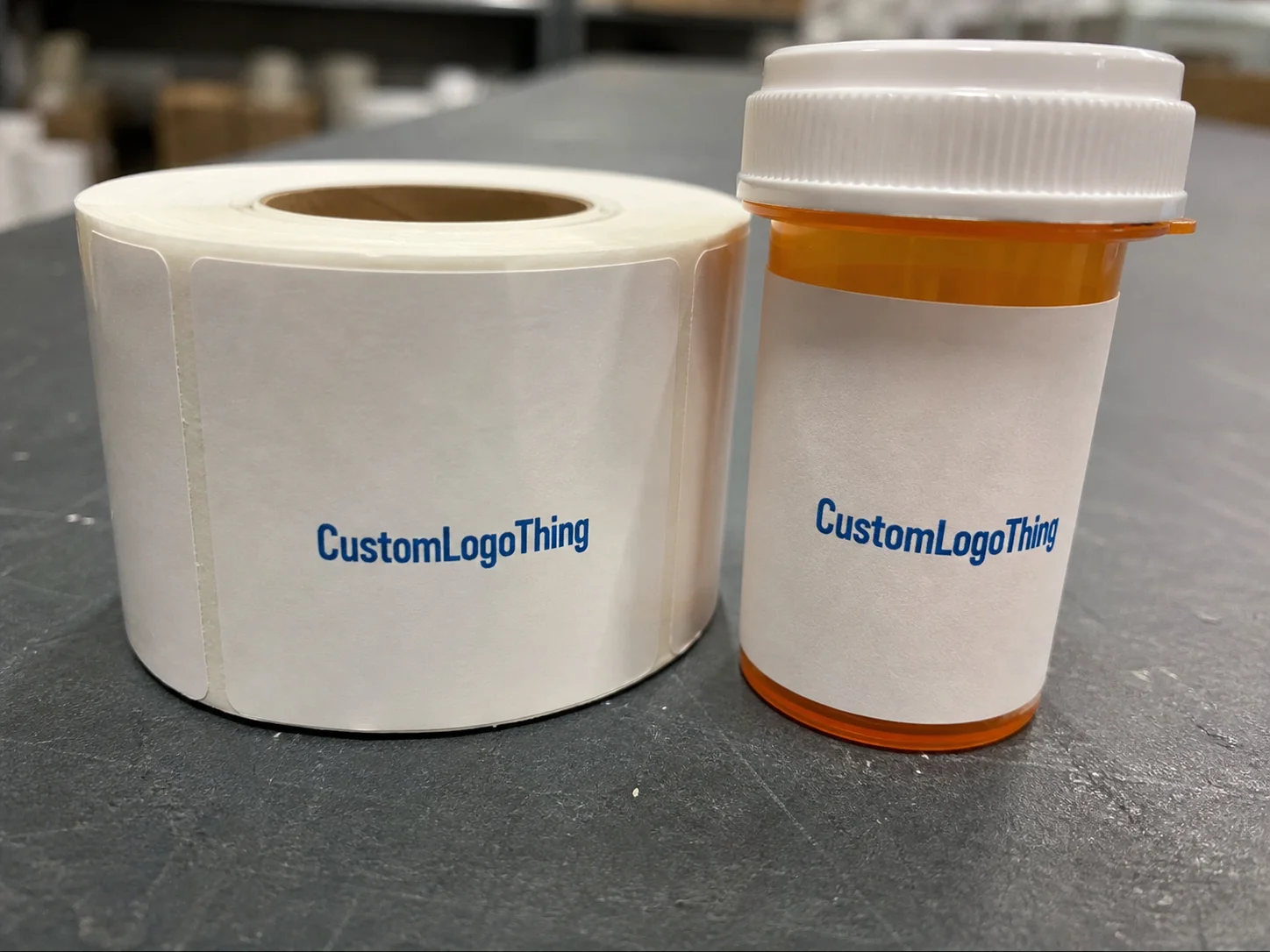
The first mistake buyers make is treating a label like a simple printed face with adhesive on the back. In a pharmacy setting, it is a working surface. It gets touched, scanned, wiped down, stacked, shipped, refrigerated, and sometimes handled by multiple people before it reaches the patient. If the substrate is too soft, the ink can scuff. If the adhesive is too aggressive, a narrow bottle can wrinkle. If the finish is wrong, a barcode can stop reading cleanly under overhead light.
That is why custom pharmacy labels fail for performance reasons more often than for design reasons. The text may be correct, the color may match the proof, and the layout may look clean, but the label still has to survive a real handling cycle. Alcohol pads, condensation, cold storage, curved surfaces, and repeated dispensing create a practical stress test that a flat proof sheet never shows.
These labels are used across prescription bottles, unit-dose packs, compounding containers, sample vials, warning strips, and patient instruction panels. Some are simple identity labels. Others carry lot codes, expiration data, barcode data, or cautionary text that must remain legible through the whole use cycle. In that sense, the label is doing the same quiet work that a well-planned retail package or a carefully built custom printed box does: it protects clarity, trust, and handling efficiency at the same time.
A label that looks clean on a PDF can still be wrong for the job if it lifts on a cold bottle or smears after a wipe. In pharmacy work, function beats appearance every time.
The core decision is straightforward: Choose the Right combination of substrate, adhesive, ink, and finish for the container and the workflow. Generic specs are where orders go sideways. A construction that works for a dry shelf label may not hold on a refrigerated vial, and a stock that looks premium can still be the wrong choice if the label has to pass through thermal transfer equipment or a high-speed dispensing line.
Surface shape matters more than many buyers expect. A round amber bottle behaves differently from a square HDPE container, and a cap label has different demands than a front-panel label. A container with a shoulder, taper, or molded ridge can turn a technically correct label into a poor fit if the die cut does not respect the geometry.
How the Production Process and Timeline Works
Most label runs follow the same basic path: spec review, proofing, print setup, finishing, slitting, packing, and shipment. The sequence sounds routine, but every handoff is a place where delay can creep in. If the size is unclear, prepress stops to ask. If the barcode file changes late, proofing starts over. If the roll direction or core size is missing, production cannot be set correctly for the equipment.
For a typical custom run, the faster jobs usually move in about 12 to 15 business days from proof approval. Special materials, variable data, or tighter schedules can change that. The main point is that turnaround speed depends less on promises and more on readiness. When the final copy, dimensions, quantity, and roll format are complete before the quote is approved, the job moves much faster.
The slowdowns are usually predictable:
- Missing container measurements or an unclear wrap width.
- Last-minute edits to warnings, directions, or barcode data.
- Approval delays between operations, compliance, and purchasing.
- Unconfirmed roll specs such as core size, unwind direction, or label-per-roll count.
- A sample that looks good visually but has not been tested on the actual container or printer.
That last point matters more than people expect. A proof can look fine on a desk and still misfeed, curl, or lift once it hits the line. If a label has to run through thermal transfer equipment or apply against a tight-radius bottle, sample approval becomes the gatekeeper. Testing should happen on the same surface, at roughly the same temperature, and with the same handling pattern the label will see in use. ISTA guidance is useful when the label sits inside a larger shipping or distribution workflow: ISTA.
One practical note: if the wider packaging program also includes cartons, inserts, or shelf-facing components, keep the label spec aligned with the rest of the package branding system. Mismatched fonts, colors, or barcode formats create more friction than they save. That is especially true in a brand family that uses both labels and retail packaging elements across multiple SKUs.
Production teams also need clear expectations around file types and variable data. A logo file with missing vector paths, a barcode image dropped into the layout at low resolution, or a list of serialized numbers that has not been checked for duplicates can slow a run more than any material issue. Clean files save more time than last-minute formatting requests.
There is also a difference between a quote-ready file and a production-ready file. A quote can be based on a rough concept if the size and general construction are known. A production release needs the exact container, exact copy, exact variable fields, and exact roll configuration. The more complete the handoff, the fewer surprises later.
Materials, Adhesives, and Finish Choices That Matter
Material selection is where a lot of quote conversations get too vague. Paper is not the same as film, and all films are not equal. For dry, short-life applications, a coated paper label can be cost-effective and easy to print. For moisture, frequent handling, or refrigeration, synthetic materials such as polypropylene or polyester are often a better fit because they resist tearing and hold up under abrasion.
In practical terms, paper stock tends to be the lower-cost option, usually around $0.03 to $0.07 per label at mid-range quantities depending on size and print coverage. Polypropylene often lands higher, roughly $0.05 to $0.12 per label, because the material itself and the conversion process cost more. For labels that need extra durability, freezer-adjacent performance, or a more resistant finish, the price climbs again. If the paper portion of the program needs to support sustainability goals, an FSC-certified source may matter; the FSC explains chain-of-custody and responsible sourcing clearly at FSC.
Paper Versus Film
Paper gives a familiar look and usually prints well, especially for simple text labels and straightforward warning copy. It can be a strong fit for labels that live on a dry shelf and do not face much abrasion. Synthetic film, by contrast, is better when the label needs to flex, wipe clean, or survive temperature swings. It is the safer choice for curved bottles and containers that are handled many times a day.
Film also tends to tolerate handling better during packing and storage. A label that might scuff in a cart or transfer tray can survive longer if the face stock has more tear resistance and the finish is designed for repeated contact. That matters in a pharmacy where labels are often touched more than once before use.
Adhesive Match
The adhesive has to match the surface, not just the label face. Standard permanent adhesive works on many dry containers, but cold storage, plastic blends, and curved bottles can demand a colder, more aggressive adhesive system. If the label may see sanitizer, condensation, or repeated touching, test the bond on the actual container material. A strong adhesive on one plastic can still fail on another.
Removable adhesive has a place, but it is not the default answer for pharmacy work. If the label needs to stay on for the life of the product, permanent adhesion is usually the safer route. If the bottle surface has a coating, texture, or curvature that reduces surface contact, the adhesive choice becomes even more important. A few degrees of temperature difference during application can also change how well the bond develops.
Finish and Print Method
Matte finishes usually improve readability and barcode contrast, which matters for scanning and small text. Gloss can improve abrasion resistance and color pop, but it can also create glare under pharmacy lighting. Film constructions often carry better durability, while some paper labels work nicely with a protective coating or varnish. The print method matters too. Thermal transfer, flexographic, digital, and other methods each behave differently with tiny text, variable data, lot codes, and expiration data. If the copy includes a barcode, ask for a scan test before the run is locked.
The right choice depends on the workflow. If labels are applied by hand, a matte face with a reliable adhesive may be enough. If they are running in volume, the die cut, unwind direction, and roll pack all need to be tuned so the operator does not fight the label every few minutes. That is where packaging design thinking becomes useful: the best label is the one that disappears into the process and does its job without calling attention to itself.
Color strategy matters too. High contrast is more useful than decorative richness for most pharmacy applications. Dark text on an uncluttered background is easier to read, easier to scan, and less likely to be compromised by glare or low-light conditions. If color coding is part of the system, keep the palette disciplined so the labels remain understandable at a glance.
Custom Pharmacy Label Pricing: What Drives Unit Cost
Pricing is easier to understand once you break it into the parts that truly move the number. Material is one driver. Adhesive is another. Size, color count, finishing, and quantity all matter as well. If a quote looks too high or too low, it is usually because one of those variables is not being compared correctly.
At smaller quantities, the unit cost is naturally higher because setup work is spread across fewer labels. A 1,000-piece order might cost noticeably more per unit than a 10,000-piece order, even if the design is identical. The larger run lowers the per-label price, but it also requires more storage discipline and better demand forecasting so you do not sit on inventory that is no longer current.
| Label Build | Typical Use | Relative Durability | Typical Unit Cost at 5,000 |
|---|---|---|---|
| Paper + permanent adhesive | Dry shelf labels, simple prescription copy | Moderate | $0.03-$0.07 |
| Polypropylene + standard permanent adhesive | Handled bottles, general pharmacy labeling | Higher | $0.05-$0.12 |
| Film + cold-temp adhesive + matte finish | Refrigerated storage, curved containers | High | $0.08-$0.16 |
| Durable film + variable data + specialty finishing | Serialization, lot control, extended handling | Very high | $0.12-$0.22 |
Special die cuts, tamper-evident construction, sequential numbering, and variable data all add cost because they add complexity. So does a tighter tolerance for barcodes or small text. If a buyer wants a simple apples-to-apples comparison, the quote needs to match the actual label dimensions, core size, roll count, unwind direction, and application method. Otherwise, two quotes can look similar while covering very different production realities.
That is also why it helps to compare label quotes the way you would compare broader packaging quotes for custom printed boxes or branded kits: the lowest line item is not always the cheapest outcome. A label that feeds poorly or needs rework costs more than a slightly higher-priced label that runs cleanly the first time.
There are also hidden costs on the buyer side. If the label requires manual sorting because the rolls are packed incorrectly, or if staff has to stop and relabel a batch because the barcode will not scan, the printed price stops being the whole story. Quote comparisons should account for those operational costs as well.
Step-by-Step: Build a Quote-Ready Label Spec
A strong spec starts with the container. Measure diameter, height, panel space, and the exact area the label must wrap or sit on. If the surface is curved, measure the usable flat width after allowing for overlap or seam clearance. If the label needs to avoid seams, ridges, or molded text, note that up front.
Next, describe the use case in plain language. Does the label need to withstand refrigeration, repeated handling, shipping friction, or wipe-downs with sanitizer? Will it stay on the bottle for a day or for the life of the product? That answer changes the material and adhesive choice fast.
Then gather the print requirements. The more complete this section is, the fewer proof cycles you will need.
- Exact text copy, including warnings and directions.
- Barcode format, if any, plus scan requirements.
- Logo files and approved color references.
- Variable data fields such as lot code, date code, or patient-facing variables.
- Any compliance language that cannot change without review.
After that, lock the production details: quantity, roll size, core size, unwind direction, and whether the label is die cut or continuous. These details matter because they define how the job is packed and how it runs on your equipment. A spec that ignores the hardware is not really complete. It is just a design file with a quantity attached.
For teams that manage multiple packaging formats, it helps to keep the pharmacy label spec in the same document family as the rest of the package branding system. That way the label, carton, insert, and shelf-facing materials stay coordinated instead of drifting apart. If your order includes other packaging components, tie the spec back to your broader product packaging standards so reorders stay consistent.
A practical spec packet usually includes one other item that gets overlooked: a photo of the actual container next to a ruler or measurement reference. That single image helps avoid a surprising number of shape and fit mistakes, especially when the bottle looks standard but has a shoulder, taper, or panel break that changes the usable label area.
Common Ordering Mistakes That Cause Reprints
The most common mistake is choosing a stock by appearance alone. Glossy does not automatically mean better. White does not automatically mean compliant. A label can look clean in a sample book and still fail in a real pharmacy environment because temperature, moisture, and handling were never part of the decision.
Artwork problems cause a second wave of pain. Tiny fonts, low-resolution barcodes, missing bleed, and cramped layouts can all create avoidable reprints. If the barcode has to scan at a distance or through a handheld process, the quiet rule is simple: give it room. Crowding small type into a narrow panel is usually where legibility breaks down first.
Measurement errors are just as expensive. A label that looks right flat can wrap badly on a round container, and a design that fits one bottle size may overhang or wrinkle on another. That is especially true when the container has a shoulder, a tapered neck, or molded ribs. Measure the actual surface, not the nominal package size on a spec sheet.
Internal approval mistakes create their own mess. One team signs off on a proof while another expects slightly different copy, a different shade, or a different barcode sequence. By the time the issue surfaces, the job may already be queued for production. The cleanest fix is to define one owner for final approval and make sure every stakeholder is reviewing the same version.
If the proof changes after approval, treat it as a new spec. That discipline saves money, time, and a lot of unnecessary rework.
One more trap: ordering labels without thinking about the rest of the package. The label must support the bottle, carton, insert, and fulfillment flow. If the full system is loose, the label has to carry too much of the burden. That is not a label problem alone. It is a package design problem.
Another source of reprints is inconsistent version control. A file saved as “final2” or “updated_revised_new” is rarely final. Use a clear naming convention and archive the approved proof so future reorders match the same artwork, dimensions, and variable data rules. That small habit prevents a lot of avoidable confusion months later.
Temperature at application also matters more than many teams realize. A label applied to a cold container may not achieve full adhesion right away, even if the adhesive is technically suitable for refrigerated storage. Allowing the surface and the label to reach the recommended range before application can make a measurable difference.
FAQ
What materials work best for pharmacy labels that need to last?
Synthetic films usually hold up better than paper when the label faces moisture, abrasion, or cold storage. The best choice depends on the container, how often it is handled, and whether you need a matte reading surface or a more durable coated finish.
How long does the label production process usually take?
Timeline depends on proof approval, artwork readiness, and whether the job needs special finishing or a custom die. Most projects move faster when the final size, roll specs, and copy are approved before production begins, because that removes the back-and-forth that usually slows the queue. A straightforward run often lands in the 12 to 15 business day range after approval.
What affects the price of custom pharmacy labels the most?
Material selection, adhesive type, size, color count, and quantity are usually the biggest cost drivers. Special requirements like variable data, tamper evidence, or high-durability construction can raise the unit cost, especially on smaller runs.
Do these labels need special adhesive for cold storage?
Yes, refrigerated or freezer-adjacent environments often need an adhesive built to stick at lower temperatures. Testing on the actual container surface matters, because a strong adhesive on paper may still fail on plastic or on a curved package surface.
What should be confirmed before approving a pharmacy label proof?
Check size, text, barcodes, color, warnings, and the exact roll format that will run on your equipment. Also confirm the container fit and the final application method so the proof matches how the label will be used in production. That is the final gate before custom pharmacy labels go into the run.
Can one label spec work across every container size?
Usually not without compromises. A label that performs well on one bottle diameter may wrinkle or lift on another, especially if the container shape changes from round to square or includes a shoulder. A shared visual system can still work, but the physical construction often needs small adjustments for each package family.
What is the cleanest way to reduce reorders later?
Keep the approved spec, print file, and packaging notes together in one controlled record. Include the container dimensions, material, adhesive, roll configuration, and the exact revision of the artwork. That makes reorders far less dependent on memory and far more consistent from batch to batch.


