A custom drawstring pouch can make a small product look finished instead of tossed into packaging as an afterthought. That sounds minor. It is not. For compact items, the pouch often does half the branding work before the customer ever touches the product inside. If the fabric, size, and closure do not match, the whole thing feels off. Usually fast.
The mistake buyers make most often is treating the logo as the main decision. It is not. Structure decides whether the pouch feels premium, practical, or cheap. A clean print on the wrong fabric still looks wrong. A better pouch with simple branding usually wins because the form does the heavy lifting.
That is why this format shows up everywhere: retail packaging, jewelry, cosmetics, supplements, event kits, sample sets, and small promotional programs. The pouch protects the item, softens the presentation, and reduces the need for extra layers of packaging in some cases. For brands that do not want to jump straight to rigid boxes, it is a useful middle ground.
The tradeoff is simple. Push too hard on cost and the pouch loses body, print clarity, or repeat-use value. Chase presentation too hard and you may end up with a pretty sample that slows the packing line. The right question is not whether a pouch is cheap or expensive. It is whether the specification fits the product and the job it has to do.
For broader packaging programs, a pouch can sit next to labels, inserts, hang tags, and other branded packaging components that carry the same visual language. It is often the piece that makes the rest of the set feel intentional. Without it, the product can look unfinished.
“A pouch only feels premium when it behaves well in the hand. If the cord drags, the seams twist, or the opening fights you, the material stops mattering.”
What a Custom Drawstring Pouch Is and Why It Sells So Well
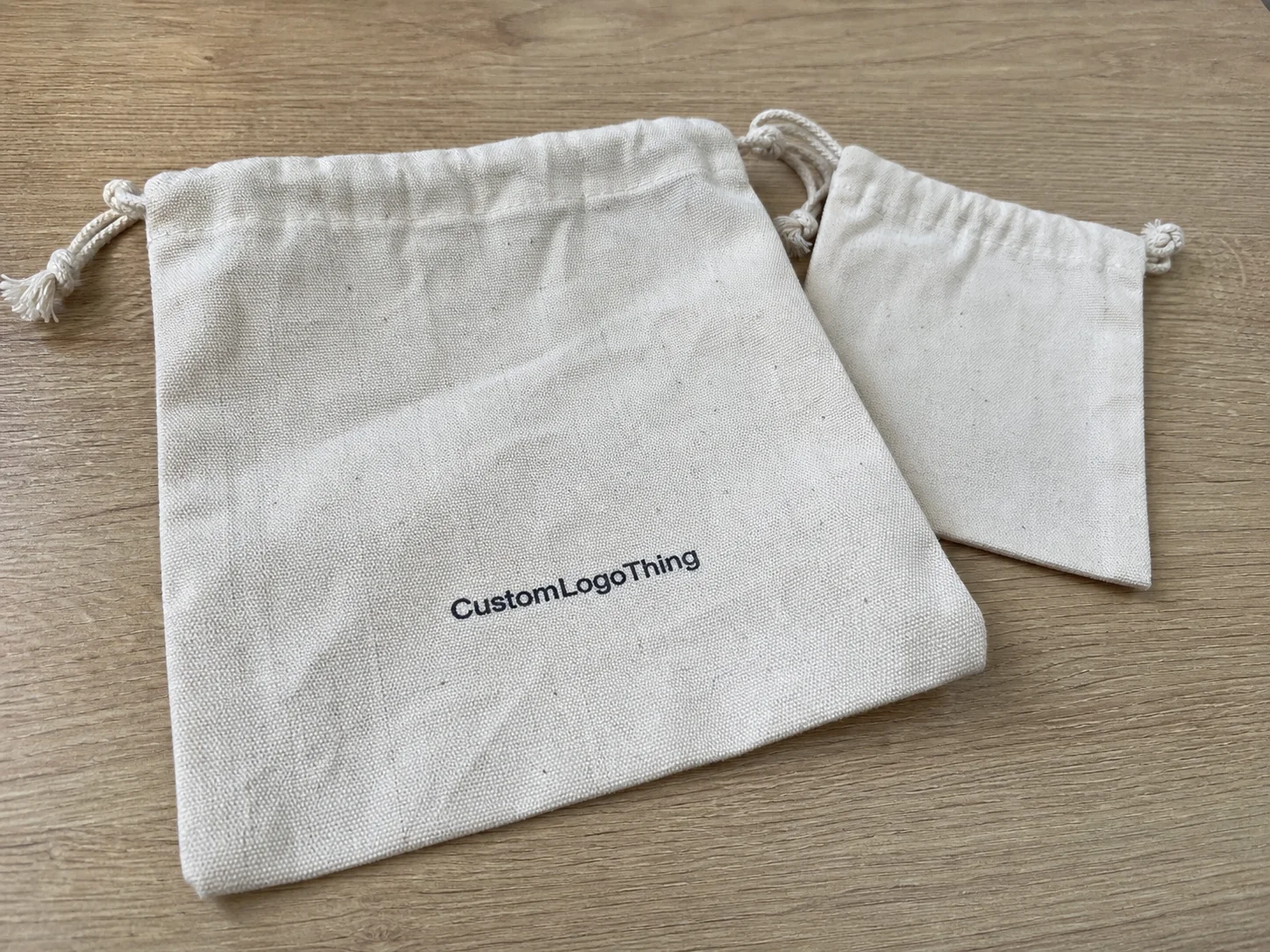
At the most basic level, a drawstring pouch is a soft bag with a gathered top that closes by pulling cords, ribbons, or a cinch channel. The construction is straightforward. The use case is not. It can act as product packaging, a storage sleeve, a gift wrap substitute, or a branded add-on that stays with the customer after purchase.
The reason it sells so well is that it gives a finished look without much visual noise. Buyers do not need to decode flaps, tabs, or complicated folds. The pouch opens quickly, closes quickly, and feels familiar. That matters for products that are handled often or given as gifts. It also matters for fulfillment teams, because packaging that slows down packing gets noticed very quickly.
There is also a perception effect that should not be ignored. A modest cotton or nonwoven pouch can look far more valuable than the material cost suggests if the seams are straight, the proportions are right, and the print sits cleanly in the available space. Packaging is a cue. If the pouch feels careful, the product feels cared for.
That said, not every product benefits from the same style. A velvet pouch makes sense for jewelry or premium samples. A nonwoven pouch might be the better move for large giveaway volumes. Organza is decorative and lightweight, but it protects very little. It is fine for presentation. It is weak for anything that needs real shielding.
How the Closure, Fabric, and Print Work Together
The body material, drawcord, and print method need to match. If they do not, the pouch looks improvised. A thick cotton bag with a skinny cord looks underbuilt. A soft velvet pouch with a rigid, shiny cord can look mismatched. Even the hem or channel width changes the feel. Too narrow and the opening is awkward. Too loose and the top collapses badly.
Cotton usually gives a natural, approachable look and works well for simple branding. Polyester and nylon offer better durability and more consistent surfaces. Nonwoven polypropylene is the budget-friendly option for high-volume promotional use. Velvet gives a richer surface for jewelry, cosmetics, and gift sets. Organza is decorative and light, but it should be chosen for appearance first and protection second, or third.
Print method matters just as much. Screen printing is still dependable for simple logos and bold shapes. It usually gives a clean result on many pouch materials, especially when the design stays restrained. Heat transfer is better for more detailed artwork in some cases, but it needs checking for texture, adhesion, and wash or rub durability. Woven labels and sewn tags are worth considering when the brand wants a more elevated finish without covering the pouch in ink.
Small artwork can disappear fast on textured fabric. Fine lines, tiny fonts, and low-contrast colors are the usual casualties. If a logo depends on subtle detail, ask whether the fabric can actually carry it. Most of the time, a simple layout performs better. That is not a design compromise. It is packaging reality.
Size changes the closure behavior more than many buyers expect. A pouch sized for flat jewelry cards will not behave the same way once you drop in a bottle, a set of accessories, or a shaped object with hard edges. If the pouch is too tight, it will cinch unevenly and strain the opening. If it is too loose, the product shifts around and the whole package looks careless.
For shipping or transit testing, it is worth thinking beyond the pouch itself. If the pouch is part of a larger packing system, methods from organizations like ISTA can help frame durability checks. A pouch does not need to survive every abuse test a shipping carton would, but it should hold up to realistic handling.
For buyers comparing materials, this table keeps the decision grounded:
| Material | Look and Feel | Typical Use | Cost Level |
|---|---|---|---|
| Cotton | Natural, soft, approachable | Retail, gifting, cosmetics, jewelry | Mid |
| Polyester | Smooth, durable, consistent | Promotional kits, storage, travel items | Mid |
| Nonwoven polypropylene | Light, economical, tidy | Events, giveaways, high-volume programs | Low |
| Velvet | Soft, rich, premium | Jewelry, luxury samples, gift packaging | High |
| Organza | Sheer, decorative, delicate | Wedding favors, gifts, light presentation | Low to mid |
If sustainability is part of the brief, think about the pouch as one element in a wider packaging system. Recycled content, reusable construction, and paper-based inserts can all matter. For certified paper components in the rest of the pack, FSC is the usual reference point. The pouch itself may not solve a sustainability claim on its own. It needs to fit the broader packaging story.
Key Specification Factors Buyers Should Compare
Start with size, but measure the product the right way. Use the longest, widest, and thickest points, then add room for insertion and a clean cinch. Do not guess from the flat footprint alone. That is how you end up with a pouch that technically fits but behaves badly once the product is inside. If the item is irregular or packaged as a kit, give yourself more breathing room.
Fabric weight matters next. Thin fabric keeps cost down, but it may not hide the product well or hold shape under stress. Heavier fabric helps with opacity, structure, and perceived quality. If the item has sharp corners or a more rigid profile, extra weight usually pays off. For premium retail presentation, a lining can improve opacity and make the pouch feel less flimsy in hand, though it also raises cost and complexity.
Logo placement needs more care than most quotes give it. The usable print area is constrained by seams, folds, and the draw channel. Centered artwork is common because it is safe, but safe does not always mean ideal. If the pouch has a wide hem or thick closure area, the visible area shrinks faster than buyers expect. That is where proofs help. They show the real print zone, not the optimistic one.
Finish details often decide whether a pouch feels ordinary or well made. Reinforced side seams, clean hem stitching, and a cord that does not fray immediately all matter. Cord style also changes the feel. A thicker cord usually reads better on a heavier pouch, while a lighter cord can work on small, low-cost pieces. If the closure uses a toggle or bead, check that it does not create an awkward bulge or snag during packing.
Quality-control checks should be practical, not decorative. Look at seam straightness, stitch consistency, drawcord symmetry, print registration, and color match against the approved proof. Check whether the pouch opens smoothly and whether the product can be inserted without wrinkling the fabric. A sample that passes only in a static photo is not enough.
A useful way to sort options is this:
- Lightweight giveaways: nonwoven or thin cotton, simple one-color print, basic cord finish.
- Retail packaging: better fabric weight, cleaner stitching, stronger logo placement, color matching.
- Protective storage: denser fabric, better opacity, reinforced seams, wider opening.
- Premium gifting: velvet, woven label, richer cord detail, careful proportioning.
Custom Drawstring Pouch Cost, MOQ, and Quote Factors
Pricing depends on material, size, decoration, and quantity. No surprise there. What matters is how quickly the price moves when one of those variables changes. The low end of a run is usually where unit cost looks worst, because setup and labor overhead are spread across too few pieces. Once the order reaches a more efficient production range, the curve tends to flatten.
As a rough market reference, simpler promotional pouches can land around $0.18 to $0.45 per unit at higher quantities, depending on material and print coverage. Premium fabrics, tighter construction, or more detailed decoration can move that well upward. Mid-range retail pouches often sit closer to $0.45 to $1.20 per unit. Those are not fixed numbers. Freight, customs, sampling, and packaging extras can change the landed cost more than people expect.
MOQ depends on whether the supplier is working from an existing pouch style or building a fully custom spec. Stock-based programs usually support lower minimums because the pattern and base material are already established. Fully custom sizing, uncommon fabric, special cord, or unusual finishing usually pushes MOQ higher. If you want metallic ink, embroidery, or a very specific shade match, the minimum may rise again. That is not a sales tactic. It is production math.
Hidden costs are usually the ones buyers forget to ask about. Sampling may be free, or it may not. Printing screens, embroidery digitization, special tooling, or rush scheduling can add costs quickly. If the pouch is part of a larger packaging system, ask for the full landed number early. A good unit price means very little if the freight or approval delay eats the margin.
When you compare quotes, ask for pricing at several quantities. For example, 1,000, 3,000, and 5,000 pieces. That shows whether the pricing is genuinely efficient or just dressed up to look competitive at one point in the curve. It also helps answer a simple question: is it better to order a little more now, or pay more later for a smaller run?
Lock the spec before you ask for final numbers. Every change to size, print method, fabric weight, or cord style can shift the quote. If the pouch needs to match other packaging pieces, send the supplier the reference artwork and any color targets up front. Guessing saves nobody time. It just creates revisions later.
Production Steps, Timeline, and Lead Time Expectations
The workflow is usually straightforward. Inquiry first. Spec confirmation next. Then a proof or sample. After approval, the order moves into bulk production, inspection, packing, and shipment. The annoying part is that most delays happen before production starts, not during sewing. Missing artwork details and unclear dimensions are the usual offenders.
A realistic timeline for a straightforward custom drawstring pouch is often 12 to 20 business days after proof approval. Special fabrics, custom color matching, embroidery, or heavy order volume can stretch that. If the design needs revisions, add time. If a material has to be sourced specifically for the project, add more. Freight choice matters too. Air freight is faster and more expensive. Sea freight is cheaper for larger runs but adds transit time.
Proof approval is where schedules are won or lost. If the final layout, spelling, and proportions are checked carefully, bulk production usually moves cleanly. If the buyer notices a problem after the run starts, the fix is expensive or impossible. That is why proof review should be treated like final artwork sign-off on a carton or label sheet. The pouch may be soft, but the mistakes are very real.
A practical planning sequence looks like this:
- Confirm product dimensions and intended use.
- Choose material, print method, and cord style.
- Review the proof and sample if needed.
- Approve the final specification sheet.
- Allow production time plus transit time.
For launch schedules, work backward from the ship date and leave a buffer. Trade shows, seasonal launches, and retail resets expose weak planning fast. A one-week delay in proofing can turn into a missed event if nobody builds in slack. Packaging rarely gets the extra time it deserves, then everybody acts surprised when it needs extra time. Predictable.
Common Mistakes That Make Pouches Look Cheaper Than They Are
Bad sizing is the fastest way to ruin the result. If the pouch is too small, the product strains the opening and distorts the silhouette. If it is too large, the item slides around and the package looks loose. Neither feels premium. A pouch should fit the product with enough tolerance to be usable, but not so much room that the contents float inside.
Artwork mistakes are next on the list. Low-resolution files, logos too close to seams, and colors that vanish on dark fabric all make the pouch feel careless. Tiny text is another common problem. It may look fine on screen and collapse in production. If the artwork depends on gradients or fine detail, ask how the print method will reproduce it before anything is approved.
Material mismatch is another expensive lesson. A very shiny, very thin fabric may look good in a mockup and then arrive with poor opacity or a cheap hand feel. A premium velvet pouch may look right for a gift set but be wrong for a product that needs repeat handling and storage. Good packaging design is honest about use. Pretty is not the only goal.
Operational issues matter too. If the pouch opens too slowly, packing gets inefficient. If the opening is too tight, workers wrinkle the fabric or fight the cord. If the closure snags, the customer notices. That is not a tiny issue. It is the difference between a pouch that feels intentional and one that becomes a nuisance.
Then there is the final proof check. Spelling errors, wrong thread color, upside-down logo placement, and unexpected sheen all happen when nobody reviews the approved sample properly. A well-made pouch can still disappoint if the final appearance does not match the expectation. Once sewn, the cost of correction climbs fast. That is why the proof stage exists.
Expert Tips for Better Presentation, Reuse, and Performance
Match the pouch to the product category instead of forcing a trendy look onto everything. Earth-toned cotton works for natural or wellness-oriented products. Black velvet or deep navy usually fits jewelry and premium gifting better. Those combinations are not subtle tricks. They are just sensible pairing. The packaging should look like it belongs next to the product.
Contrast helps more than most buyers expect. White or metallic printing on dark fabric is usually easier to read than tone-on-tone artwork, especially on smaller pouches. Woven labels help too when the brand wants a richer finish without covering the whole surface. You do not need to overdecorate the pouch to make it feel considered.
Comfort matters if the pouch will be reused. Stronger cords, smoother channel stitching, and dimensions that are slightly generous all make the pouch easier to fill and easier to open. Reuse extends brand exposure, and repeated handling is a good test of whether the design actually works. A pouch that lives in a drawer, a travel kit, or a jewelry box continues doing the branding job long after the original sale.
For fragile or irregular products, sample testing is worth the time. An empty pouch can look perfect and still behave badly once filled. Test how it cinches, whether the print remains visible, and whether the closure still feels secure after insertion. That is the difference between a packaging concept and a packaging solution.
There is also a simple cost argument. If a better pouch protects the product, improves the opening experience, and gets reused, the extra cents are justified. That is not true for every category. It is true often enough that buyers should test before they dismiss the upgrade.
Next Steps to Order the Right Pouch for Your Product
Before you ask for quotes, gather the exact product dimensions, target quantity, artwork files, preferred material, and deadline. If the item is sold as a kit, include all components in the measurement. Empty size is not enough. Filled size is what matters. That is where many specs go wrong.
Ask for at least two size options and, if useful, two decoration methods. A small shift in size or print technique can change cost, appearance, and turnaround in ways that are hard to predict from a spreadsheet. If the pouch is customer-facing, request a sample or a clear proof before approval. It is cheaper to reject a bad sample than to explain a bad production run.
Be honest about the pouch’s job. A giveaway can usually tolerate a simpler build. A retail item may need heavier fabric, cleaner stitching, or a more refined finish. Storage pouches sit somewhere in the middle, where durability may matter more than decoration. Once the use case is clear, the spec gets easier. Magic, but not really.
Before production starts, lock the final specification sheet. Size, material, print placement, cord style, quantity, and any special finish should all be set. A well-specified custom drawstring pouch supports the product, protects the brand image, and avoids the usual round of preventable surprises.
FAQ
What size custom drawstring pouch should I order for my product?
Measure the longest, widest, and thickest points of the product, then add room for easy insertion and a clean cinch. If the item is irregular or sold as a kit, leave extra space so the pouch closes without distorting the contents. If the fit matters, test two sizes before you commit.
Which material is best for a custom drawstring pouch?
Cotton is a strong choice for a natural, premium feel. Polyester and nylon are better when durability matters more. Nonwoven polypropylene is usually the budget option, while velvet and organza skew decorative. The right material depends on protection, reuse, print appearance, and the image you want to project.
How much does a custom drawstring pouch usually cost?
Price depends on size, material, print colors, decoration method, and quantity. Simpler promotional pouches can be very affordable at higher volumes, while premium materials and detailed branding raise the unit cost. Sampling, setup, and freight can change the landed number, so compare the full cost, not just the unit quote.
What is the typical turnaround time for custom drawstring pouches?
A straightforward order often takes 12 to 20 business days after proof approval. Revisions, special materials, and busy production periods can extend that. If your deadline is fixed, submit finalized artwork and dimensions early and leave transit time in the schedule.
Can I print a full-color logo on a custom drawstring pouch?
Yes, but the best method depends on the fabric and the finish you want. Some materials handle multi-color decoration better than others, while textured or porous fabrics may work best with simpler branding. Ask for a proof or sample so you can check color, placement, and legibility before bulk production.