Custom Poker Chip Stickers: Order Better Game Sets
A poker chip may be touched 40, 60, or 100 times during one game night. It gets stacked, shuffled, counted, dropped, splashed, and rubbed against other chips. That makes custom poker chip stickers more than decoration. Each label is a small durability test with a logo on it.
A well-specified sticker can make a plain blank chip look organized, branded, and surprisingly premium. A poor one can curl at the rim before the first tournament break. Small circle. Big consequences.
What Custom Poker Chip Stickers Really Do
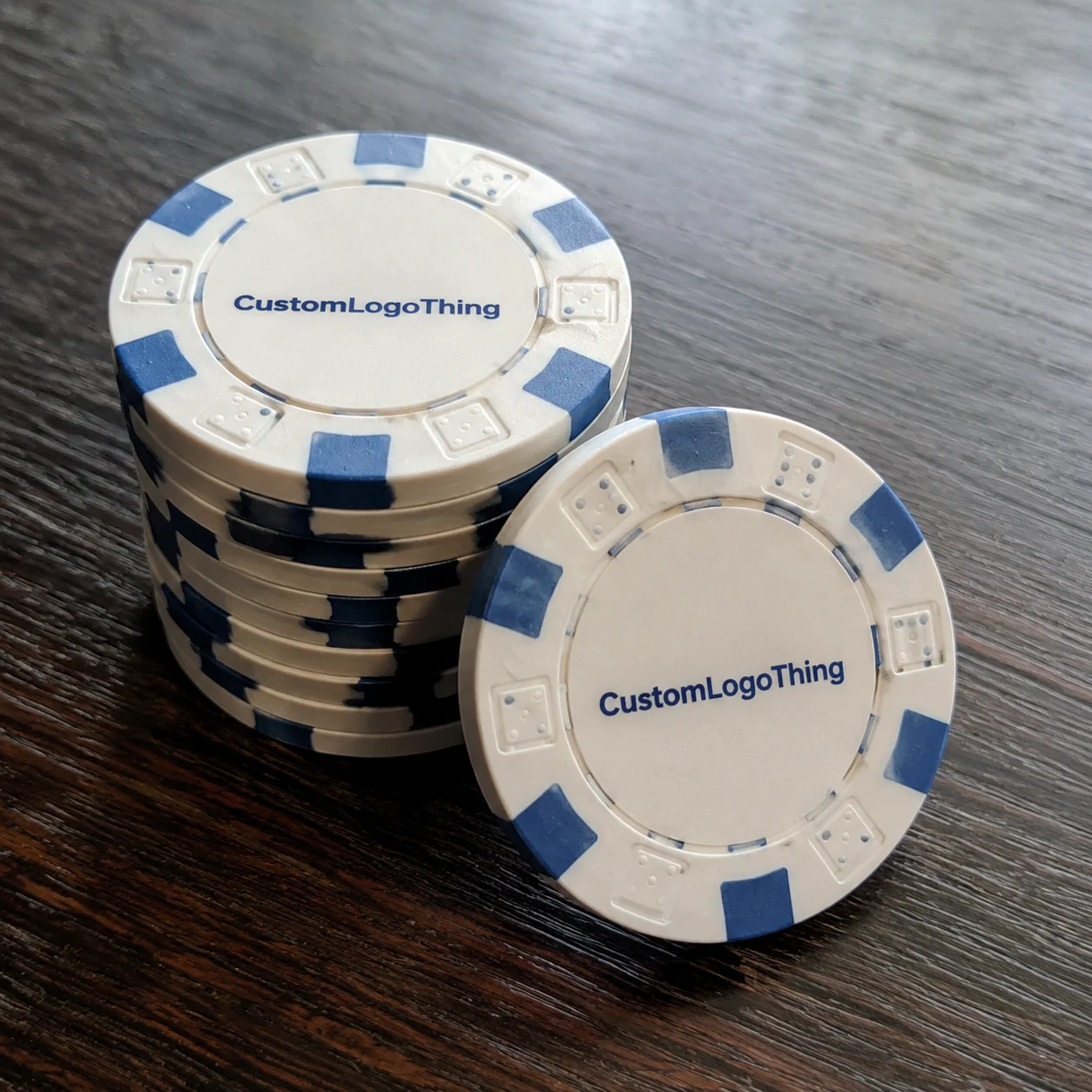
Custom poker chip stickers are printed adhesive labels sized for the recessed center area of a poker chip. They are commonly applied to blank chips, clay composite chips, ceramic-style chips, metal-core chips, and lightweight plastic promotional chips. The artwork might show a logo, denomination, event name, sponsor mark, monogram, QR code, or themed illustration.
The basic idea sounds simple. The measurement is not. A standard casino-style chip is often about 39mm in diameter, but the center recess may be closer to 22mm, 24mm, 25mm, or 26mm depending on the mold. If a buyer measures the full chip instead of the recessed center, the sticker overlaps the raised rim. Once that edge is exposed, shuffling and stacking do the rest.
There is also a practical difference between stickered chips and fully printed chips. Fully printed chips can be excellent for high-volume, permanent sets where every face is the same and the budget supports direct printing. Stickers are usually faster, more flexible, and easier to version by denomination, guest name, event, logo, or campaign. For a 150-chip wedding favor order or a 300-chip corporate casino night set, that flexibility often matters more than the theoretical advantage of direct printing.
Common uses include wedding favors, charity tournaments, bachelor parties, board game upgrades, bar promotions, school fundraisers, corporate events, branded gift sets, and sample kits. In some orders, the chip is the product. In others, it is a small tactile reminder inside a larger packaging system: a pouch, box, mailer, sleeve, or event kit.
Production reality check: the sticker alone does not create quality. The finished chip depends on the match between chip surface, adhesive, print method, laminate, artwork, cut tolerance, and application process.
That combination is where many orders succeed or fail. A glossy film label can look sharp on a smooth promotional chip. A matte laminated paper label may feel better on a clay-style chip with a rustic face. A bold one-color logo can survive the tiny circular format beautifully. Six sponsor logos, a date, a slogan, a denomination, and a QR code? Usually not.
The useful question is not “Can this be printed?” Most designs can be printed. The better question is: “Will this still look intentional after repeated handling?”
How Poker Chip Labels Work on Real Chips
A poker chip has several physical zones: the outer edge, molded face pattern, raised rim, and center inlay area. For stickered chips, the recessed center is the critical zone. It protects the label edge from direct abrasion and gives the sticker a shallow seat so stacked chips stay flatter.
Different chip materials behave differently under adhesive. Smooth plastic chips usually accept standard permanent adhesive well if the surface is clean. Clay composite chips can be less predictable because molded texture, surface dust, and tiny pores reduce adhesive contact. Metal-core chips feel heavier and more premium, but the face material still needs testing. Ceramic-style promotional chips vary widely; some are slick and easy to label, while others have coatings that need stronger tack.
Label thickness is easy to underestimate. A thin paper face stock may conform nicely, but it can show texture underneath and feel temporary. A thicker film label with laminate resists scuffing better, but if it rises above the recess, it may catch during shuffling. The target is a label that feels durable without creating a noticeable lip.
Finish changes the personality of the chip. Gloss looks bright and event-ready, though it shows fingerprints and glare. Matte reduces reflection and can improve readability on small text. Soft-touch feels premium in a gift set, but it can scuff if the coating is not protected. Metallic and holographic films bring casino-night flash, VIP energy, and strong shelf impact, yet they can bury fine lines. Clear labels can work on colored chips, but the chip background will affect color accuracy.
Lamination is the protective layer most buyers should consider. It helps resist fingerprints, light moisture, abrasion, and repeated handling. For one-night indoor use, unlaminated paper may be acceptable. For bar tables, souvenir sets, resale packaging, or chips that will travel in pockets and bags, laminated vinyl, BOPP, or polyester is safer.
Even small tolerances show up on a circle. A sticker that is 1mm too large can look wrong. A label applied 1mm off-center can look careless because the eye reads uneven circular borders quickly. For that reason, many suppliers recommend leaving a narrow margin inside the recess instead of filling the space edge to edge.
There is a packaging angle as well. If chips ship as gift sets, the sticker finish should coordinate with the box, insert, sleeve, or pouch. A matte black chip label in a soft-touch carton feels deliberate. A holographic label inside a plain kraft sleeve can feel mismatched unless the contrast is part of the concept. For larger programs, connect the chip artwork to the broader Custom Packaging Products plan before the labels are already printed.
Key Specs That Decide Fit, Feel, and Durability
The first spec is diameter. Measure the recessed center, not the full chip. A digital caliper is ideal, but a clear ruler photo is better than a guess. If the recess measures 25mm, a 24mm sticker may apply more cleanly than a full 25mm sticker because it leaves breathing room inside the raised rim.
Adhesive comes next. Permanent adhesive is the default for long-term use and repeated handling. Removable adhesive can work for temporary denominations, rentals, or short campaigns, but it may lift sooner. Stronger adhesive may be needed for slick plastic, coated ceramic-style chips, or textured clay composite chips. The exact chip surface decides the answer, not the product description alone.
Material choice shapes durability and feel. Paper is economical and can work for dry, short-term indoor events, especially with laminate. Vinyl handles fingerprints and light moisture better. BOPP is popular for labels because it is thin, clean-looking, and water-resistant. Polyester is tougher and more dimensionally stable, often used for premium or longer-life labels. Metallic and holographic films cost more, but they can justify the spend for high-impact promotions.
Print quality has hard limits on a small circle. Logos should be vector files when possible. Fine lines under roughly 0.25pt may break or disappear depending on the print method. Type under 5pt can become a blur, especially on textured, metallic, or high-gloss backgrounds. Dense black, bright red, and small reversed-out text need proofing because ink spread and contrast shift quickly at chip scale.
Cut format affects labor. Die-cut circles on sheets are easy for small batches. Kiss-cut sheets let users peel each label without chasing loose pieces. Roll labels can speed up higher-volume application, especially when hundreds or thousands of chips need labeling. The right format depends on quantity, labor plan, and whether the supplier or buyer is applying the labels.
| Label Material | Best Use | Typical Strength | Watch-Out |
|---|---|---|---|
| Paper with laminate | Indoor favors, short events, budget sets | Lower cost, clean print surface | Less moisture resistance than film |
| Vinyl | Bar promos, keepsakes, repeated handling | Flexible and moisture-resistant | Can feel thick if over-laminated |
| BOPP film | Corporate sets, product packaging, smooth chips | Thin, durable, neat edge profile | Needs the right adhesive for textured chips |
| Polyester | Premium gifts, resale kits, long-term use | Strong, stable, scuff-resistant | Higher unit cost |
| Metallic or holographic film | VIP sets, casino themes, launch events | High visual impact | Can reduce readability of fine text |
The main durability risks are edge lift, scuffing, and stacking friction. Edge lift usually points to oversizing, weak adhesive, contaminated chip surfaces, or labels that are too thick for the recess. Scuffing often comes from unprotected ink or a finish that does not match the handling environment. Stacking friction is quieter but constant; chips rub against each other during counting, shuffling, storage, and transport.
For paid events, resale products, or high-visibility brand activations, request a physical sample or at least a production proof. A digital proof confirms layout. A sample confirms feel, adhesion, sheen, cut accuracy, and real-world color. Those are different tests.
Pricing, MOQ, and Unit Cost Variables
Pricing for custom poker chip stickers is usually driven by quantity, material, finish, laminate, print method, number of artwork versions, proofing, and supply format. Sheets tend to suit smaller hand-applied runs. Rolls may suit larger quantities. Supplier-applied labels add labor cost, but they can reduce waste and improve centering.
MOQ, or minimum order quantity, is less mysterious than it sounds. Very small batches are possible from some suppliers, but setup time does not shrink much just because the order is tiny. A 100-label order can still require artwork review, proofing, print setup, cutting, packing, and shipping. Those fixed steps are spread across fewer units, so the unit price rises.
As a rough planning range, simple paper or film labels may land around $0.08-$0.25 per sticker at moderate quantities. Specialty finishes, multiple versions, premium films, or tight color requirements can push higher. Supplier-applied labels may add roughly $0.05-$0.20 per chip depending on quantity and centering expectations. These are planning ranges, not promises; material availability, rush timing, and artwork complexity can move the number.
Consider four common buying scenarios. A one-off party might need 100-200 labels with one design and a basic gloss laminate. A 300-chip event set may require 600 stickers if both sides are labeled, perhaps split across five denominations. A charity tournament may involve multiple sponsor logos and color-coded values. A recurring branded order may justify better film, tighter color control, and coordinated package branding because the chips will represent the organization more than once.
Multiple artwork versions raise cost because each denomination, sponsor mark, name, or QR code needs its own proofing and production control. Even if the sticker size is identical, version management takes time. One missing zero on a denomination can ruin a batch. So can an old sponsor logo.
Hidden cost factors include rush production, metallic effects, exact color matching, physical samples, split shipping, application labor, and packaging. If the chips are sold as kits, evaluate the label cost alongside inserts, sleeves, pouches, or Custom Labels & Tags used on the outer package.
Ask for price breaks at several quantities: 250, 500, 1,000, and 2,500 labels, for example. Unit cost often drops once setup time is spread across a larger run. The cheapest sticker becomes expensive if it peels, misfits the recess, or makes the finished chip look like a throwaway.
Process and Timeline From Artwork to Finished Chips
A clean order sequence looks like this: measure chips, choose material and finish, prepare artwork, request a proof, approve production, print, cut, pack, and ship. If the supplier is also applying the labels, add surface prep, application, inspection, and repacking.
- Measure the full chip and the recessed label area.
- Confirm chip material and surface texture.
- Select label material, adhesive, laminate, and finish.
- Prepare artwork with safe margins and a clear cut line.
- Review digital or physical proofs before production.
- Plan application, packing, inspection, and shipping time.
Artwork preparation should be disciplined. Use vector logos when available. Keep important text and marks at least 1.5-2mm away from the cut edge. Avoid hairline circular borders unless the supplier confirms cut tolerance; a tiny shift can make the border look uneven. QR codes are possible, but they need enough size and contrast to scan after printing and lamination.
Digital proofs confirm layout, spelling, cut line, and color intent. Physical proofs reveal more: whether matte is too muted, gloss is too reflective, metallic stock hurts readability, or adhesive struggles on the chip surface. For brand-sensitive orders, ask how color is managed. Exact Pantone-style matching may add cost, but sponsor marks and retail packaging sometimes need that control.
Standard production for straightforward labels is often around 5-10 business days after proof approval. Specialty films, large quantities, supplier application, or many artwork versions can extend production to 12-20 business days. Shipping adds another variable. For overseas freight, multi-location delivery, or trade show deadlines, build in a buffer. Industry groups such as ISTA publish transit testing standards that are useful reminders: packaging has to survive movement, compression, temperature changes, and handling, not just look good in a studio photo.
Lead time should also include application time if the buyer is applying the stickers by hand. Labeling 100 chips is a small evening task. Labeling 1,000 chips on both sides means 2,000 placements, plus inspection. Crooked labels are much easier to fix before the chips are packed into boxes.
Order earlier for weddings, fundraisers, trade shows, and resale kits. Reprints are hard to absorb at the last minute because labels are only one part of the chain. Chips, stickers, Custom Printed Boxes, inserts, sleeves, and shipping all need to arrive in the right order. If the chips go into a gift box, schedule label production alongside packaging design so finishes and colors do not drift apart.
Common Mistakes That Make Chip Stickers Look Cheap
The most common mistake is measuring the whole chip instead of the recessed area. A 39mm chip does not need a 39mm sticker. It may need a 24mm or 25mm center label. Oversized labels ride up the raised rim, catch during stacking, and curl at the edges. The result looks improvised.
Artwork overload is the next offender. Too many words, tiny sponsor logos, complicated borders, faint gradients, or low-contrast color combinations can turn a clean idea into visual noise. A chip face is not a flyer. It is closer to a lapel pin: small, handled closely, and judged fast.
Ignoring chip texture creates preventable adhesion problems. Dusty clay-style chips, oily plastic surfaces, or heavily molded recesses reduce contact between adhesive and surface. Wiping a test chip with a dry microfiber cloth may help, but some surfaces need a different adhesive or a different chip.
Finish mismatch is subtler. A high-gloss sticker on a rustic clay composite chip may look out of place. A flat matte label may undersell a casino-night theme that needs shine. Soft-touch can feel expensive in a branded gift set, but it may not suit sweaty hands and crowded bar tables. Match the finish to the use, not only to the screen mockup.
Poor application habits create avoidable waste. Touching the adhesive weakens tack. Rushing through hundreds of chips increases off-center placement. Pressing from one edge can trap bubbles. For hand application, work on a clean flat surface, peel carefully, center the label over the recess, press from the middle outward, and inspect every small batch before continuing.
Skipping proof review is risky, especially for denominations, names, dates, QR codes, sponsor marks, and legal text. A digital proof is not paperwork for its own sake. It is the last inexpensive correction point. After cutting, packing, and shipping, mistakes become expensive.
One more buyer trap: using indoor paper labels for rough use. If the chips will sit on bar tables, travel in pockets, handle sweaty hands, or become souvenirs, a paper-only label can reduce the perceived value of the whole set. Durable film with laminate usually costs more, but it protects the impression the chip is supposed to create.
Next Steps Before You Request a Quote
Before asking for a quote, gather the basics. Suppliers can price faster and more accurately when the request includes chip diameter, recessed label diameter, chip material, quantity, number of designs, deadline, finish preference, and packaging needs. Missing measurements lead to assumptions. Assumptions create rework.
- Chip size: full diameter and recessed center diameter, preferably in millimeters.
- Chip surface: plastic, clay composite, ceramic-style, metal-core, smooth, or textured.
- Quantity: number of chips, number of labeled sides, and spare stickers.
- Versions: denominations, logos, guest names, sponsors, or color variants.
- Finish: gloss, matte, soft-touch, metallic, holographic, clear, or undecided.
- Deadline: event date, shipping location, and time needed for hand application.
- Packaging: boxes, sleeves, inserts, pouches, or retail display requirements.
Create a quick mockup with actual chip photos. It does not need to be polished. A phone photo with a ruler beside the chip can help a supplier spot fit issues before production. If artwork already exists, place it roughly inside the recess so everyone can judge scale.
Order extra stickers. For hand application, 5-10% overage is a sensible range. Extra labels cover placement mistakes, replacements, sponsor changes, and last-minute additions. If the event has named guests or teams, keep a few blanks or generic logo labels as backup.
Choose between DIY application and supplier-applied labels based on quantity, deadline, labor, and finish expectations. DIY works well for small and medium runs when the labels are kiss-cut and the recess is easy to center. Supplier application may be worth it for 500+ chips, premium gift sets, resale products, or any order where a perfectly centered look affects perceived value.
Think beyond the chip face. If the set is a gift, retail item, or event keepsake, coordinate the labels with matching inserts, sleeves, bags, or custom printed boxes. Better packaging makes the chip set feel intentional instead of assembled from unrelated parts. Sustainability can also affect material choice; for paper-based boxes or inserts, FSC certification may be relevant if responsible sourcing is part of the brand standard.
The practical move is simple: measure one chip, photograph the recess, choose two finish options, and ask for pricing at three quantities. With measurements, artwork, and deadline details ready, comparing quotes for custom poker chip stickers becomes easier—and the final game set is far more likely to feel like a keepsake, not a rushed giveaway.
FAQ
What size should custom poker chip labels be?
Measure the recessed center area of the chip, not the full chip diameter. Leave a small margin inside the raised rim so the sticker does not rub, curl, or look oversized. If possible, send a chip photo with a ruler or caliper measurement to confirm the best die-cut size.
Are vinyl poker chip stickers better than paper stickers?
Vinyl or film labels usually handle fingerprints, light moisture, and repeated use better than paper. Paper can work for short-term indoor events or budget favors, especially when laminated. For keepsakes, resale sets, bar promotions, and casino-night use, a durable film with laminate is usually the safer choice.
Can custom poker chip stickers be applied by hand?
Yes. Hand application works well for small and medium runs if the stickers are kiss-cut and the chip recess is easy to center. Use clean hands, a flat surface, and a repeatable placement routine to reduce bubbles and crooked labels. For large orders or premium gift sets, supplier-applied labels may save time and improve consistency.
How much do custom poker chip stickers cost?
Cost depends on quantity, material, finish, laminate, number of designs, proofing needs, application labor, and turnaround speed. Simple labels may be inexpensive at moderate volume, while specialty films and multiple versions cost more. Ask for pricing at several quantities and include packaging or application services in the same quote.
How long does it take to produce poker chip stickers?
Straightforward label orders often take about 5-10 business days after proof approval. Specialty finishes, many artwork versions, supplier application, or large quantities can extend production to 12-20 business days. Build in extra time for shipping and hand application before an event date.


