A coffee roaster can hand-apply 200 jar labels in an afternoon. Push that run to 2,000 units, and the wrong sticker format becomes a labor problem before it becomes a design problem. That is the practical reason buyers look at custom rolls of stickers: rolls fit repeated labeling work better than loose stickers or sheets.
The format sounds simple. Printed labels sit on a continuous liner, peel one at a time, and feed cleanly through a dispenser or labeler. The details underneath that simplicity—adhesive, liner, gap, core size, winding, finish—decide whether the label applies quickly or creates a pile of relabeling work.
What Custom Rolls of Stickers Are—and When to Order Them
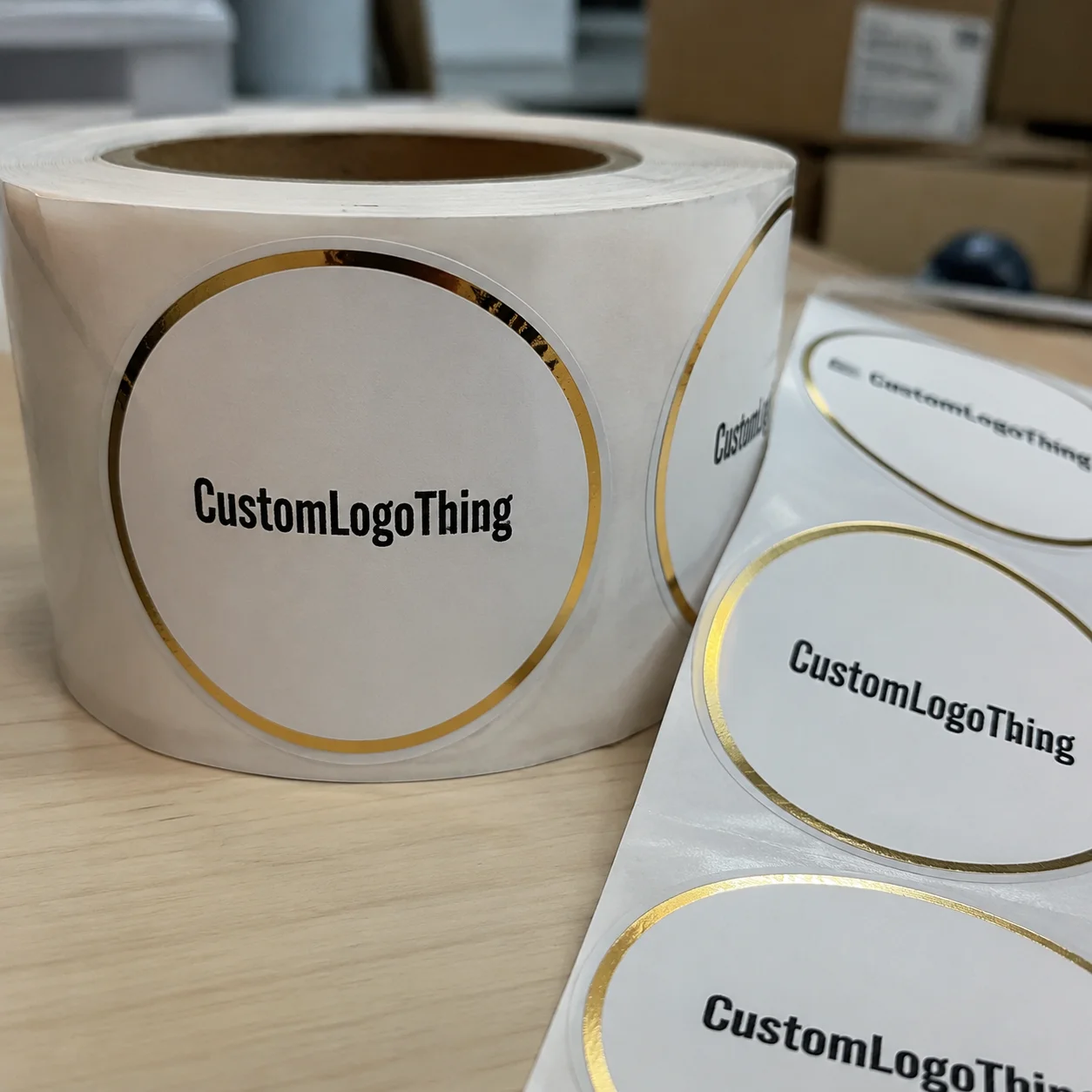
Custom rolls of stickers are adhesive labels printed on a continuous backing, die cut to shape, and wound onto a roll. The sticker peels away while the liner stays intact. That structure supports hand application, desktop dispensers, semi-automatic labelers, and automated packaging lines.
Sheets still have a place. They work for event handouts, small craft batches, planner stickers, inserts, and low-volume promotional use. Individually cut stickers can feel substantial as giveaways. But product packaging is different. Repeated peeling and placement expose every extra motion.
A stack of loose stickers gets messy on a packing bench. Sheets require extra handling and often leave operators hunting for the next label. Rolls store compactly, feed in sequence, and reduce paper shuffle during fulfillment.
Typical uses include food jars, beverage bottles, cosmetics, candles, barcode labels, compliance labels, tamper seals, promotional stickers, shipping labels, subscription boxes, and retail packaging. Roll labels also sit beside broader branded packaging elements such as custom printed boxes, sleeves, tissue, and hang tags. If you are building a full packaging system, pair roll labels with Custom Labels & Tags so the sticker spec supports the package rather than fighting it.
The decision should start with workflow. Are labels applied repeatedly? Will rolls sit in bulk storage? Will operators use a tabletop dispenser? Does a labeler require a specific core size, gap, roll outside diameter, or unwind direction? If yes, rolls usually outperform sheets.
Premium finishes are still available. A roll label can use textured paper, clear BOPP, metallic film, matte lamination, soft-touch coating, spot varnish, or a Custom Die Cut. The goal is not to choose a fancier format. It is to match material, adhesive, finish, and roll construction to the product’s actual environment.
How Roll Sticker Printing Works From File to Finished Label
Roll sticker production usually moves through artwork review, material selection, proofing, printing, finishing, die cutting, rewinding, inspection, packing, and shipment. Each step removes a different kind of risk. Skip one, and the problem often lands on the buyer as delay, rework, or Labels That Look fine in a PDF but fail on the real package.
Digital printing is often the practical choice for shorter runs, multiple designs, variable data, or seasonal packaging. It can reduce setup cost because plates are not usually required. Flexographic printing tends to make more sense at high volume, especially when the same artwork repeats across tens of thousands of labels. Flexo setup costs more, but the per-label cost can drop once press speed and material use are optimized.
Die cutting creates the final shape while the sticker stays on the liner. Circles, ovals, rectangles, rounded rectangles, and custom contours can all peel cleanly if the cutline is designed with production tolerance in mind. Very tight shapes need more caution. A blade that runs a fraction of a millimeter off target can crowd tiny type, expose a sliver of background color, or make a delicate point hard to peel.
Then comes winding. It sounds boring. It is not.
A beautiful label wound the wrong way can stall an entire packing station. Automatic applicators may require labels to feed left-edge leading, right-edge leading, top-edge leading, or bottom-edge leading. Core size matters too; 1-inch and 3-inch cores are common, but equipment manuals should be checked before ordering.
Gap spacing, label orientation, roll outside diameter, and repeat distance can be just as specific. Some applicators read the gap between labels. Others need a black mark or sensor-compatible liner. If machinery is involved, send the equipment requirements with the quote request, not after proof approval.
Production callout: Proofing is not a courtesy step. It catches color shifts, tiny type, barcode scan issues, missing bleed, incorrect unwind direction, and cutline errors before material is printed and wound.
Key Specs That Decide Material, Adhesive, and Finish
A useful quote request does not start with “How much for stickers?” It starts with specs. Buyers should know the label size, shape, quantity, material, adhesive, finish, roll direction, application method, and use environment. That sounds like a lot. In practice, it saves days.
Paper labels are economical and work well for dry retail packaging, cartons, candle boxes, paper bags, and many shelf-stable products. Coated paper gives cleaner color than uncoated stock, while textured paper adds a tactile feel but can soften fine detail. Kraft paper creates a natural look, though darker fibers reduce color brightness and can make small text feel less crisp.
BOPP, short for biaxially oriented polypropylene, is a common film choice for moisture resistance. White BOPP gives an opaque, clean base. Clear BOPP works for a no-label look on glass or clear plastic, although white ink may be needed behind artwork so colors do not disappear. Silver BOPP can mimic a metallic effect without using foil, but it changes how colors appear. Vinyl adds durability for outdoor or rougher handling, although it may be more than a simple jar label needs.
Adhesive selection deserves the same attention. Permanent adhesive is the default for many product labels. Removable adhesive suits temporary promotions, reusable containers, or surfaces that should not tear. Freezer-grade adhesives are designed for cold storage, but condensation and application temperature still need testing. High-tack adhesive helps on rough corrugated mailers, low-energy plastics, and textured boxes. Repositionable adhesive can make hand application easier, though it may not deliver the same long-term grip as a stronger permanent option.
Finish changes both appearance and performance. Gloss boosts color saturation and shelf impact. Matte feels quieter and more refined. Soft-touch adds a tactile effect that can support premium package branding. Laminate protects against scuffs, hand oils, condensation, and abrasion during shipping.
Surface energy is the hidden variable. Glass, coated cardboard, flexible pouches, metal tins, HDPE bottles, and kraft boxes do not behave the same. Temperature changes widen the gap. A label that sticks cleanly to a room-temperature glass jar may wrinkle on a chilled bottle or lift from a curved cosmetic tube.
Shape changes application speed too. Rectangles align easily on flat panels. Circles hide slight rotation errors but can be harder to place consistently by hand. Ovals look polished on bottles, yet crooked placement shows fast. Custom die cuts create personality but may peel slowly if they have narrow points, tight notches, or delicate edges. Across 3,000 units, a few extra seconds per label becomes hours.
Cost, Pricing, and MOQ Factors Buyers Should Compare
Sticker pricing is not a tiny printed piece multiplied by quantity. The quote reflects setup, material, print method, ink coverage, finishing, die cutting, rewinding, packing, and shipping. For roll labels, it also reflects core size, roll count, orientation, number of versions, and whether each design needs separate handling.
Unit cost usually falls as quantity rises because setup time, press calibration, proofing, and material waste are spread across more labels. A short digital run may be possible at 250 or 500 labels, but the unit price can look high. Move to 2,500 or 5,000 labels and the economics often change sharply.
Typical digital roll label projects might range from about $0.08 to $0.35 per label for moderate sizes, depending on stock, coverage, finish, and quantity. Small barcode labels can land lower at scale. Large waterproof labels with laminate, Custom Die Cutting, and heavy ink coverage can run higher. These are planning ranges, not guarantees; freight, artwork complexity, rush timing, and material availability can shift the final number.
| Spec Choice | Best Fit | Cost Impact | Risk if Chosen Poorly |
|---|---|---|---|
| Paper label | Dry boxes, bags, jars, and indoor retail packaging | Lower to moderate | Wrinkling or staining around moisture and oils |
| BOPP film | Bottles, bath products, chilled items, and wipeable surfaces | Moderate | Overbuying if the product never faces moisture |
| Permanent adhesive | Most product labels and package seals | Standard | Residue or tearing if removability is needed |
| Freezer-grade adhesive | Frozen food, cold-chain products, and refrigerated goods | Moderate to higher | Label lift if condensation or application temperature is ignored |
| Matte or gloss laminate | Labels needing scuff, oil, or moisture protection | Higher than uncoated | Scanner glare or unnecessary spend if protection is not needed |
Minimum order quantity is partly supplier policy and partly production reality. Very low quantities may be possible digitally, but they rarely deliver the best per-label economics. A buyer asking for 300 labels, 12 versions, metallic stock, and rush shipping should expect setup and handling to dominate the quote.
Ask for price breaks at nearby quantities: 1,000, 2,500, and 5,000 labels, for example. The most economical run size is often just above the original estimate. Also compare landed cost, not only unit cost. A cheaper paper label becomes expensive if it peels from textured boxes, wrinkles on cold bottles, or forces staff to relabel inventory by hand.
If stickers are part of a larger launch, coordinate them with Custom Packaging Products so labels, boxes, inserts, and mailers arrive in a workable sequence. A label that arrives early is useful. A label that arrives before final ingredients, barcode numbers, or packaging dimensions are locked can become obsolete inventory.
Process, Timeline, and Lead Time Before You Place an Order
The ordering timeline usually looks like this: gather specs, submit artwork, receive a quote, approve the proof, enter production scheduling, print, finish, rewind, inspect, pack, and ship. The catch is simple. Lead time generally starts after proof approval, not after the first email.
That gap creates buyer surprises. Someone sends a logo on Monday and expects production to start immediately. Then the supplier asks for a dieline, higher-resolution artwork, roll direction, barcode confirmation, or adhesive choice. Two days disappear. If a physical sample is needed, add more time.
For many standard digital roll label jobs, production may take roughly 5 to 10 business days after proof approval. More complex runs, specialty stocks, foil effects, laminate, or higher volumes can push that to 10 to 20 business days. Shipping adds its own window. International freight, split shipments, and multi-location fulfillment add more variables.
Common blockers are predictable: missing dielines, low-resolution logos, unclear unwind direction, untested adhesives, late proof approvals, and artwork changes after scheduling. Tiny compliance edits can slow a job if ingredient panels, net weight statements, warnings, or barcode data are still moving.
Plan differently for first orders than reorders. A first run often reveals small but important details: the label is 3 mm too tall for a tapered jar, the matte finish mutes a brand color, or hand application takes 12 seconds longer per unit than expected. That sounds minor until a team applies 3,000 labels.
For a product launch, trade show, retail test, or subscription box drop, build in buffer time. Two to four extra weeks can protect the schedule if materials need testing or packaging arrives late. Rush production may be possible, but it can limit material choices, raise freight costs, and compress the time available for proper sampling.
Common Mistakes That Cause Reprints, Delays, or Poor Adhesion
The biggest hidden risk is ordering from artwork alone. A label can look polished on screen and still fail on the container. Surface texture, curve, storage temperature, filling conditions, hand oils, and application pressure all affect performance.
Skipping samples is the classic trap. Refrigerated bottles collect condensation. Oily jars can contaminate the bond area. Curved tubes stress label edges. Flexible pouches bend and recover. Rough corrugated mailers need more aggressive adhesive than smooth folding cartons. None of that appears in a flat proof.
Artwork errors cause another layer of reprints. Tiny type may fill in during print. Weak contrast hurts readability. Missing bleed leaves white edges after die cutting. Low-resolution images print soft. Important text placed too close to the cutline can look off-center even if the press runs within normal tolerance.
Barcodes and QR codes need discipline. Leave adequate quiet zones. Use strong contrast. Avoid placing codes across tight curves. Be careful with high-gloss finishes because glare can interfere with scanners. For barcode quality, many packaging teams refer to standards such as GS1 barcode guidance, while transport testing programs from ISTA help frame how packages survive distribution stress.
Roll direction mistakes are especially painful for machine application. Left-edge leading, right-edge leading, top-edge leading, and bottom-edge leading are not interchangeable. If the wrong edge feeds first, staff may need to rewind rolls or apply labels by hand. That can erase the efficiency that justified custom rolls of stickers in the first place.
Inventory planning can backfire from both directions. Order too few labels before a seasonal launch and replenishment may miss the sales window. Order too many before ingredients, brand claims, or compliance details are final and you may be sitting on obsolete stock. One of the most undercounted costs in package branding is not the label price itself; it is trapped inventory after a small copy change.
Build a Roll Sticker Spec That Prints Correctly
Before asking for a quote, build a short spec. It does not need to be elaborate. It does need to be complete enough for a supplier to price the real job instead of guessing.
- Product surface: glass, plastic, metal, paperboard, pouch film, corrugated, or another material.
- Label size and shape: exact width, height, radius, oval, circle, rectangle, or custom die cut.
- Quantity and versions: total labels, number of SKUs, and whether each design changes text, color, barcode, or ingredients.
- Material preference: paper, kraft, white BOPP, clear BOPP, vinyl, metallic film, or supplier recommendation.
- Adhesive needs: permanent, removable, freezer-grade, high-tack, repositionable, or tested sample request.
- Finish: uncoated, gloss, matte, soft-touch, laminate, varnish, or another protective treatment.
- Roll details: core size, roll outside diameter, label gap, unwind direction, and dispenser or machine model if used.
- Deadline: in-hands date, launch date, packaging arrival date, and any freight constraints.
Photograph the package. Measure the application area with a ruler or caliper. Note whether labels will be applied by hand, with a tabletop dispenser, or on an automatic labeler. If the label wraps around a curved bottle or tube, test the size on the real container before approving a full run.
Artwork should be supplied as AI, EPS, or print-ready PDF whenever possible. Vector files keep logos, text, and cutlines sharp. Include bleed, safe margins, outlined or embedded fonts, and clear notes for spot colors, white ink, metallic effects, or special finishes. If sustainability claims matter, confirm material certifications rather than assuming them; resources from the Forest Stewardship Council can help buyers understand FSC-related paper sourcing language.
For higher-risk applications, request a material sample or small pilot run. Freezer labels, bath products, oily food jars, outdoor uses, and textured mailers all deserve testing. Apply the label under normal production conditions, then check it after 24 hours, after temperature change, and after handling. Adhesive performance depends on pressure and dwell time, not just the sticker spec on paper.
Compare quotes by total landed cost and fit-for-use. A price that excludes shipping, rewinding needs, proofing, or material testing is not the same as a quote that includes everything required to get labels onto products correctly. The lowest unit price can be the most expensive option if it creates scrap, delays, or uneven shelf presentation.
Handled well, roll stickers become part of the packaging system rather than decoration added at the end. They apply faster, reorder more cleanly, and hold up better across storage, shipping, and retail conditions. The difference comes from the unglamorous specs: adhesive, face stock, liner, unwind direction, finish, and enough testing to prove the label works where it will actually live.
FAQ
What are custom sticker rolls best used for?
They work best for repeated application tasks such as product labeling, package sealing, barcode labeling, promotional stickers, and shipping or fulfillment workflows. They are especially useful when labels need to be stored compactly, peeled quickly, or used with a dispenser or labeling machine.
How much do custom rolls of labels cost?
Cost depends on size, quantity, material, adhesive, finish, number of designs, die shape, roll requirements, and shipping. Unit cost usually drops at higher quantities, so buyers should request price breaks rather than quoting only one order size.
What artwork file is best for roll sticker printing?
Vector files such as AI, EPS, or print-ready PDF are usually preferred because they keep logos, text, and cutlines sharp. Artwork should include bleed, safe margins, embedded or outlined fonts, and clear notes for spot colors, white ink, or special finishes.
How long does it take to produce sticker rolls?
Timeline depends on proof approval, material availability, production method, finishing needs, and shipping distance. Many standard digital roll label jobs take about 5 to 10 business days after proof approval, while complex jobs can take longer.
Can custom roll stickers be waterproof or freezer-safe?
Yes, but the right combination of face stock, adhesive, ink, and laminate is required for moisture, condensation, freezing, or outdoor exposure. Testing on the actual container is recommended because cold, curved, oily, or textured surfaces can change adhesion performance.


