Custom printed Self Adhesive Labels do a lot of work for a very small item. They identify product, carry barcodes, close packaging, carry care notes, and quietly shape the first physical impression a customer gets. A label that costs a few cents can make a folded shirt feel organized and deliberate. The wrong label can make an expensive pack look assembled in a hurry.
That contrast is why buyers keep coming back to the same decision: which label spec survives the real job, not just the proof? On paper, most labels seem simple. In production, they are influenced by surface texture, humidity, transport friction, adhesive chemistry, print method, and how fast the pack line moves. A label that looks perfect on screen may peel on textured kraft, scuff on a polybag, or shift color once it hits a glossy finish.
For clothing and retail packaging, the label is rarely a standalone purchase. It sits inside a wider system that includes bags, sleeves, tissue, cartons, and inserts. If the packaging stack is inconsistent, the label will expose that inconsistency immediately. If the stack is coherent, the label helps everything feel tighter. That is the practical value of custom printed self adhesive labels: they are a small component with a measurable effect on handling, presentation, and error control.
Why these labels matter
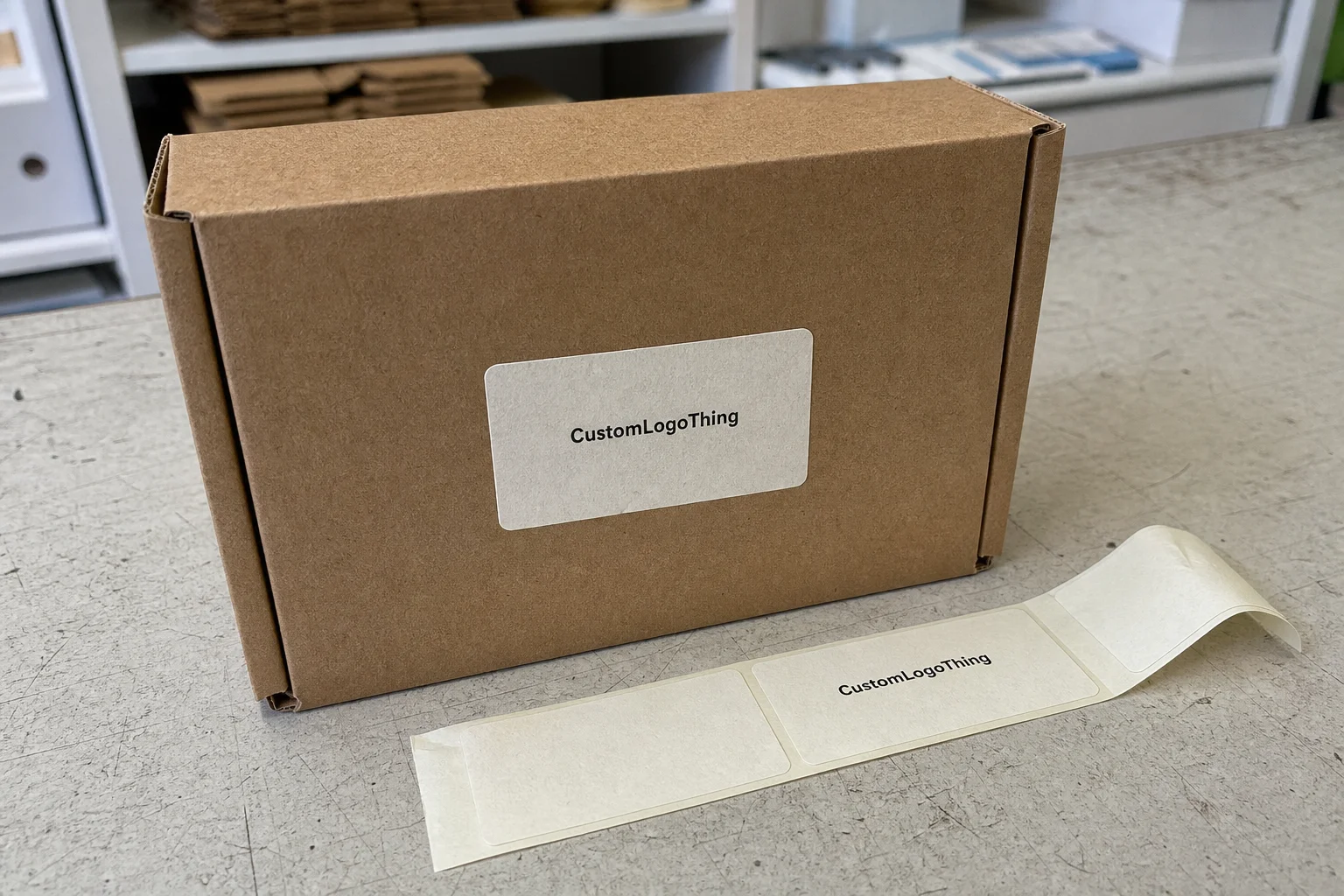
Labels are useful because they are flexible. A garment line might need a short-run size label for a seasonal drop, a barcode for warehouse scanning, a promo seal for a gift pack, and a branded sticker for a tissue wrap. One format can cover all of that without forcing a change to the product itself. That is a real advantage over sewn-in labels, hang tags, or direct print when speed and variety matter.
They also carry operational information without making the main pack crowded. SKU, size, batch code, price, QR code, and compliance text all fit comfortably if the layout is planned properly. Buyers often underestimate how much friction disappears when the identifying information is visible at a glance. A warehouse team spends less time checking packs. A store associate spends less time re-sorting mixed stock. A customer sees a package that appears to have been handled with care.
There is a pricing angle too. A label does not need to be expensive to protect value. If it prevents rework, reduces mis-picks, or keeps a retail presentation consistent, it can pay for itself quickly. That does not mean the cheapest option is the right one. A label that fails on arrival is not cheap. It is just inexpensive up front.
Most label problems start with fit, not print. The usual failures are adhesive mismatch, surface mismatch, or a spec that was too vague to hold up in production.
That is why the conversation should begin with use case. A label for a dry insert card is not the same as a label for a polybag that will rub against other cartons in transit. The more the label is treated like a production component, the better the result tends to be.
How the construction and adhesive system works
Every pressure-sensitive label is built from three basics: face stock, adhesive, and release liner. Many orders also add a varnish or laminate. That sounds like a small technical detail, but each layer changes performance. If the stack is wrong, the label may curl, lift, or scuff before the customer ever sees it.
The face stock is the visible layer. Paper is the usual low-cost choice for short-life, dry applications. Coated paper gives sharper print and a cleaner retail finish. Polypropylene film is more resistant to moisture and rubbing. Vinyl is tougher again, though for clothing packaging it is often more material than the job actually needs. Material choice should follow handling conditions, not habit.
Adhesive selection is the part that gets rushed most often. Permanent adhesive is the default when the label needs to stay in place for distribution and sale. Removable adhesive works when the label should peel cleanly from packaging. Repositionable adhesive is useful for placement-heavy jobs, but it is not a universal answer. Smooth coated cartons, tissue wraps, textured kraft sleeves, and polybags all behave differently under pressure.
That difference matters more than many teams expect. A label that holds well on a glossy insert card may fail on a dustier kraft sleeve, and a label that looks fine on a clean sample may lose grip once the pack line adds handling stress. Surface prep matters too. Film, paper, and fabric do not present the same bonding conditions, even if they look similar in a mockup.
Print method also changes the economics. Digital printing fits short runs, variable data, and faster approvals. Flexographic printing becomes attractive at higher quantities, especially when artwork is stable and the same label will repeat across a season. If you need changing SKUs, serial numbers, or batch codes, variable data should be planned early. Leaving it until the end usually creates file cleanup and proof delays.
This is the point where labels stop being interchangeable with hang tags or garment labels. They solve a different problem. A peel-and-stick label is the right tool when the pack needs speed, a temporary identifier, or a branded surface without altering the product itself.
Cost, pricing, and MOQ factors
Price is usually driven by six variables: size, quantity, material, adhesive type, print complexity, and finish. Once shape, special inks, or variable data enter the job, the quote shifts again. Small runs almost always look expensive per label because setup costs are spread across fewer pieces. Larger runs bring the unit price down, sometimes sharply, but only if the specification stays fixed.
The buyer question should not be “What is the cheapest label?” It should be “What is the least expensive label that will survive the use case?” A paper label on a dry insert card is one thing. A film label on a polybag that gets moved through a warehouse is another. Choosing the wrong spec often costs more in waste and reprints than the original savings.
| Option | Typical use | Indicative unit cost | Notes |
|---|---|---|---|
| Economy paper, standard shape | Short-run garment packs, insert cards, promotional seals | $0.03-$0.08 at higher volumes; $0.07-$0.18 on small runs | Best for dry indoor handling and simple artwork |
| Coated paper, full color | Retail packaging, branded sleeves, cleaner shelf presentation | $0.05-$0.12 at higher volumes; $0.10-$0.22 on small runs | Better image quality and a more polished finish |
| Polypropylene film | Moisture-prone packs, polybags, handling-intensive workflows | $0.08-$0.20 depending on coverage and quantity | More durable, usually better for scuff resistance |
| Custom shape with special adhesive | Premium branding, removable promotions, textured surfaces | $0.10-$0.30+ depending on setup and testing | Higher setup risk, but often worth it on difficult applications |
On small orders, setup is the part buyers feel most. A $40 setup fee on a 500-piece run adds 8 cents before material or print is even considered. That is why tiny changes can matter so much. A second proof revision, a custom die charge, a late color correction, or a special adhesive request can change the landed unit cost fast.
MOQ is the other pressure point. A supplier may accept 500 pieces, but that does not mean the economics are attractive. Ask for tiered pricing at 1,000, 2,500, 5,000, and 10,000 pieces so you can see where the real break point sits. In many categories, the cheapest total cost is not the lowest order quantity. It is the quantity that avoids a second rush order three weeks later.
When labels are part of broader packaging sourcing, it helps to quote them in the same language as the rest of the pack. A supplier should be able to explain how the label spec interacts with bag material, sleeve coating, carton finish, and application method. If they cannot, the quote is probably too shallow to be trusted.
Process and timeline
The order process is straightforward, but delays usually come from missing information. A usable brief should include dimensions, quantity, substrate, adhesive preference, finish, artwork files, application surface, and any variable data such as barcodes or batch codes. The more precise the brief, the faster the quote and proof cycle generally move.
A standard workflow looks like this: quote, proof, revision if needed, approval, production, and shipping. In many cases, standard orders land in the 10-15 business day range after proof approval. That number moves with queue length, print method, quantity, and shipping lane. Simple artwork and standard sizes move faster. File cleanup, dieline revisions, and shifting requirements slow everything down.
Sampling is not a luxury. It is the cheapest way to catch a bad adhesive match, a barcode issue, or a finish that behaves differently from the mockup. If labels need to survive transit with garments in cartons or mailers, test them under realistic handling. The [ISTA](https://ista.org/) test methods are useful here because they push thinking beyond print quality and toward transport behavior.
Freight time sits outside production, but it still affects launch. A domestic print run can finish quickly and still miss a launch if shipping is slow or the order is held up in approvals. Rush production works best when artwork is final, the spec is simple, and nobody is still changing the size after proofing. That is where schedules slip.
Material and finish choices for clothing packaging
For clothing packaging, the practical material choices are usually paper, coated paper, polypropylene, or vinyl. Paper is economical and easy to print. Coated paper improves color and sharpness. Polypropylene is better when moisture, rub, or rough handling are part of the journey. Vinyl is durable, but in many apparel use cases it is heavier than necessary and adds cost without adding much value.
Finish changes the perception of the pack even when the structure stays the same. Matte suits restrained, premium-looking packaging and tends to feel less commercial. Gloss increases contrast and can help color stand out from a distance. Soft-touch or specialty coatings can work well, but only if the brand uses that tactile language elsewhere in the pack. A single glossy label on otherwise uncoated packaging can look accidental rather than deliberate.
The real test is adhesion on the actual surface. Polybags are usually straightforward if they are clean. Tissue wrap is more delicate because the surface can tear or shift under pressure. Kraft sleeves are unpredictable because texture varies by supplier and fiber content. Folding cartons are more stable, but coatings can still change bond strength. A proof photo does not reveal that. Only a physical sample does.
That is why the label should be considered alongside the rest of the package branding system. The label, insert card, and carton should speak the same visual language. The same logic applies to custom printed boxes, where finish alignment and color consistency affect how polished the final pack feels. Even a small mismatch is visible once multiple packaging elements sit together on a table or shelf.
If sustainability criteria are part of the sourcing decision, the [FSC](https://fsc.org/en) framework is a useful reference for paper-based materials. For broader packaging standards and industry context, the [Packaging Corporation of America industry resources](https://www.packaging.org/) can help teams compare label choices against wider packaging priorities rather than treating them in isolation.
A simple decision rule helps reduce noise:
- Use paper when the pack is dry, short-life, and price-sensitive.
- Use coated paper when print sharpness and shelf appearance matter more.
- Use polypropylene when moisture, abrasion, or repeated handling are likely.
- Use removable adhesive for temporary or promotional labels.
- Use permanent adhesive when the label must stay in place through distribution.
Ordering checklist for first-time buyers
Start with the job, not the format. Decide whether the label is identifying a product, carrying a barcode, sealing a pack, adding promo copy, or supporting compliance text. That one decision determines most of the rest of the spec.
Then write the spec sheet properly. Include dimensions, bleed, shape, corner style, adhesive type, finish, quantity, and whether the labels should be supplied on rolls or sheets. If the order is roll-fed, also note core size and unwind direction. Three-inch cores are common, but common is not automatically correct. Applicator setup and storage space matter.
Artwork deserves the same discipline. Use vector logos where possible. Keep barcode art high contrast and sized for reliable scanning. If the label carries care text or legally sensitive copy, verify it before sending the proof out. A barcode that looks fine on a screen can still fail when it is scanned in a warehouse or at a retail desk.
Read the proof line by line. Check spelling, dimensions, color notes, adhesive callout, quantity, and placement. If the proof includes a dieline, make sure the artwork stays inside the live area and the bleed is correct. A proof is not the final product, but it is the last place where errors are still cheap.
Test a sample on the actual surface before committing to the full run. If the label goes on a polybag, test that exact film. If it goes on textured kraft, test that surface. That step catches most of the expensive problems before they become inventory. It also tells you whether the supplier understands label and tag specifications well enough to be useful beyond the first quote.
- Define the use case in one sentence.
- Write down the exact surface and environment.
- Lock the size, shape, and finish.
- Prepare print-ready artwork and barcode files.
- Approve a proof only after checking it against the spec sheet.
- Test a sample before placing the full run.
Common mistakes that create peeling, waste, and reprints
The largest source of failure is guessing on adhesive. A label that works on one packaging surface can fail on another, even if the samples look similar. Humidity, dust, coating, cold storage, and repeated handling all change the way adhesive behaves. That is why “it looked fine on the proof” is not a useful quality standard.
Artwork problems follow close behind. Low-resolution logos, missing bleed, incorrect dielines, and barcodes that are too small or too tight can turn a routine order into a reprint. If the labels are doing operational work, not just visual work, those mistakes have a direct cost. One bad barcode can slow an entire packing lane.
Vague specifications create another layer of waste. “Standard label” is not a specification. The supplier needs actual size, finish, adhesive behavior, substrate, quantity, and expected handling. Without that, the quote is only as good as the assumptions behind it. The result may still be printable, but it is unlikely to be correct.
Late changes are expensive because they force proof revisions, extend lead time, and can trigger new setup costs. That is true on almost every print job, but it matters more on small runs where the economics are already tight. If the brand is also ordering cartons, sleeves, or inserts, a label change can throw off the whole packaging schedule.
Most reprints begin with a missed detail: an untested finish, a barcode that was never scanned, or a surface nobody handled before approval.
Handling is the other mistake buyers underestimate. A label that survives a bench test may still fail once garments move through warehouses, stores, or pop-up events. The solution is not always a stronger adhesive. Sometimes the better fix is a different material, a smaller label, or a cleaner pack design that reduces friction in the first place.
Practical tips before you place an order
Use a small test matrix before volume production. Compare one adhesive, one material, one finish, and one surface. Real-world testing usually tells you more than a polished render ever will. A good sample should survive handling, not just photograph well.
Ask for quantity tiers every time. You need to know where the price drops, not just the headline quote. Sometimes a slightly larger order lowers the unit cost enough to justify extra inventory. Other times it does not. The numbers should decide that, not assumptions.
Keep the full customer journey in view. A label that works in the warehouse may not be right for retail display, unboxing, or disposal. Strong packaging design connects those stages rather than treating them separately. The label should help the pack travel well, read well, and stay honest about what it is.
Document the approved spec. Save the artwork, adhesive type, finish, substrate, and quantity break so repeat orders do not drift. If a future order changes, you will know exactly what changed and why. That habit does more for consistency than most teams expect.
For Clothing Brands That need visual consistency without overbuying packaging, custom printed self adhesive labels work best when they are specified like a production component, not treated like a decorative afterthought. The best versions are the ones nobody notices because they simply do their job.
What are custom printed self adhesive labels used for in clothing packaging?
They can identify products, carry barcodes or care information, promote a brand, or seal temporary packaging where sewn labels are not practical. They are especially useful on polybags, boxes, tissue wraps, sleeves, and insert cards where peel-and-stick application is faster than sewing or tagging.
How do I choose the right adhesive for custom printed self adhesive labels?
Match the adhesive to the surface and conditions: permanent for long-term hold, removable for temporary branding, repositionable for placement adjustments. Test the label on the actual packaging material, because smooth coated surfaces and textured kraft behave very differently.
What affects the price of custom printed self adhesive labels the most?
Quantity, material, finish, size, color complexity, and custom shape usually drive the biggest price differences. Setup fees, proof revisions, special adhesives, and variable data can also move the quote, especially on small runs.
How long does production usually take for custom printed self adhesive labels?
Standard orders often depend on proof approval, production queue, and shipping distance, so lead time is usually a mix of all three. Rush jobs are possible, but they usually require final artwork, fast proof approval, and fewer custom changes.
What should I check before approving custom printed self adhesive labels?
Verify size, spelling, barcode readability, color references, adhesive type, finish, and quantity. It is also worth testing a sample on the actual clothing packaging surface to confirm adhesion and appearance before the full run.


