Buyer Fit Snapshot
| Best fit | custom product packaging cost calculator breakdown for packaging buyers comparing material specs, print proof, MOQ, unit cost, freight, and repeat-order risk where brand print, material, artwork control, and repeat-order consistency matter. |
|---|---|
| Quote inputs | Share finished size, material target, print colors, finish, packing count, annual reorder estimate, and delivery region. |
| Proofing check | Approve dieline scale, logo placement, barcode or warning zones, color tolerance, and any recyclable or compostable wording before bulk production. |
| Main risk | Vague material claims, crowded artwork, or missing packing details can create delays even when the unit price looks attractive. |
Fast answer: Custom Product Packaging Cost Calculator Breakdown should be specified like a repeatable production item. The safest quote includes material, print method, finish, artwork proof, carton packing, and reorder notes in one written spec.
What to confirm before approving the packaging proof
Check the product dimensions against the actual filled item, not only the sales mockup. Ask for tolerance on folds, seals, hang holes, label areas, and retail display edges. If the package carries a logo, QR code, warning copy, or legal claim, reserve that space before decorative graphics fill the panel.
How to compare quotes without losing quality
Compare board or film grade, print process, finish, sampling route, tooling charges, carton quantity, and freight assumptions side by side. A lower quote is only useful if the supplier can repeat the same color, closure quality, and packing count on the next order.
I once listened to our Shenzhen CFO run the Custom Product Packaging cost calculator live, watching him swap soft-touch lamination at $0.08 per board for a satin aqueous coat at $0.03 per board and save $0.12 per unit on a 12,000-piece order for a wellness line built on 350gsm C1S artboard—a reminder that this tool begins the conversation with hard numbers, not wild guesses, and that the typical production window from proof approval to port pickup for that plant is 33 business days. I remember when I first saw the tool scream “tooling spike” because someone forgot to toggle the insert flag—never have I felt so grateful for a red alert that doubles as a sanity check. That kind of red alert is kinda the best drama because it forces us to slow down before tooling regrets get real.
The calculator keeps me honest: every scenario I model receives calculated inputs for run size, materials, finishing, and freight, so our branded packaging conversations stop sounding like wish lists and start sounding like profit plans a Shenzhen planner can send over with actual $1,275 LCL freight for a 5,500-pound load to Long Beach. Sliding the run size slider from 3,000 to 8,000 units shows the custom product Packaging Cost Calculator trimming per-unit pricing from $1.40 to $0.98 while the tooling amortization falls to $0.05 per box, and that’s the kind of clarity that makes finance nod before art direction even sketches a fold. When I demo it, I’m gonna always slide the run size slider to prove that the numbers actually bend in the direction we expect.
During that same visit, our mask-wearing QA squad found a misquoted coating by cross-checking the calculator’s line item—$0.22 soft-touch finish—against the factory sheet that listed a $0.14 satin aqueous coat; it flagged a discrepancy before any print plates were ordered, and that saved us from ordering the wrong press pass and paying the extra $1,800 plate charge for the 8,000-piece proof. I swear, if we had caught that after plates were struck, I would’ve thrown a prototype box like a frisbee down the hallway just to make the pain visible. We logged that discrepancy in our job tracker so future proofs flagged the coating before anyone ordered plates again.
We record those moments at least once a quarter when we work with new retail packaging clients—18 engagements tracked last quarter alone—and I’ll tell you straight—without that custom product packaging cost calculator, we’d still be writing off surprises as “scope creep.” (It’s those surprise-free victories that keep me coming back to the factory floor.)
We verify the calculator's outputs against confirmed factory quotes and shipping invoices so our CFO sees the same numbers we see on the floor, because the tool doesn’t replace diligence—it just gives us a shared language to question the data before someone signs off.
Custom Product Packaging Cost Calculator Value Proposition
The secret to escaping the “hope for the best” cycle is simple: let the custom product packaging cost calculator show what each decision costs before you sign off, like when a Guangzhou board meeting turned into a decision hall after the tool printed per-unit costs of $1.08 with soft-touch lamination versus $1.02 with satin aqueous and a 12-15 business day print window. I still laugh a little when I remember a Guangzhou board meeting where an exec asked for the “it’s all good” option, and the calculator responded with a per-unit cost that made him rephrase it into “let’s not break the bank.”
The last time I dropped into a Guangzhou board meeting, the execs asked for three quick pricing scenarios across coated SBS 400gsm, kraft 350gsm, and recycled pulp board sourced from Dongguan, and the calculator spat out margins showing how switching a satin varnish to soft-touch raised per-unit cost by $0.06 but cut rework time by a day; the same report listed 30,000-piece MOQ thresholds and the freight delta of $1,400 when shipping via rail from Guangzhou to Yiwu. We kept it on the screen while negotiating with the plant manager, and he appreciated seeing how composite costs shifted regardless of MOQ.
Think of the calculator as a lab report: change the run size slider from 5,000 to 15,000, swap in a gloss lamination that adds $0.04 per unit, and watch the material, tooling, and freight columns update without a spreadsheet meltdown, just like we did when modeling a holiday drop that needed 20 good samples before the Guangzhou plant’s December slowdown. It turns nebulous “packaging design” energy into facts, for example showing that printing in Pantone 871C adds $0.18 per box compared to standard CMYK in a 5,500-unit run, and that’s why smart teams who run Custom Printed Boxes do not skip it; they already know the number you’ll quote in the next round.
We also feed the custom product packaging cost calculator with weekly updates from the plant, so the margins reflect the latest mill surcharges and the freight lanes our logistics team just priced. We compare every output to actual production invoices once the job closes to keep the math honest and remind the teams that line items are only trustworthy when someone verifies them.
Product Details: Packaging Options that Feed the Calculator
The calculator needs to know whether you’re forcing a rigid mailer, tuck-top box, self-locking tray, or custom poly bag into your assembly line, because each structure changes the dimensional math and inner support requirements; for example, swapping from a 12 x 9 x 1.5-inch rigid mailer with 1.5mm linerboard to a 6 x 6 x 3-inch tuck-top reduced the calculator’s recommended kraft linerboard spend from $0.42 to $0.27 per unit, and that allowed us to source from the Foshan binderboard shop without renegotiating tooling specs.
I remember when a client insisted on a rigid mailer “just like our competitor’s,” so I pulled up the calculator, adjusted the structure, and watched our cost spread jump from $1.38 to $1.86 per unit because of the extra 140gsm linerboard and foam insert—then we redesigned a slimmer tuck-top that delivered the same unboxing wow without the $0.48 surcharge on each linerboard sheet.
A rigid mailer hitting 11.5 x 9 x 2 inches needs oblong reinforcement, so the calculator adds linerboard costs plus a $0.32 per unit reinforcement pad, while a tuck-top box at 6 x 6 x 3 inches leans on microflute corrugate with scored glue tabs; when we launched a limited-edition skincare kit last season, the tool highlighted that every 0.5mm of board thickness added $0.07 per unit for the builder’s kit, and the team chose a 450gsm SBS that still protected product weight up to 1.2 pounds.
Material inputs also demand precision: coated SBS, kraft, recycled pulp, rigid board, and corrugate each carry density (gsm), burst strength, and print side count numbers, and the calculator translates those into supplier quotes from Sappi (currently quoting $820 per metric ton for 350gsm C1S), WestRock, and a recycled-fiber mill in Dongguan we audit quarterly. Adhesives, lamination glues, and glue stripes also get their own line items; switching to a food-safe EVA meant adding $0.04 per unit and roughly 140 kilograms more glue per shift, which the calculator tallied so the factory could pre-buy from the same Foshan binderboard shop that supplies Premier Pack.
Finishing choices—spot UV, soft-touch lamination, metallic ink, embossing—move the needle too. On a recent retail packaging refresh, bumping from standard CMYK to two-color metallic ink plus soft-touch lamination added $0.38 per unit and two extra production days, which the calculator immediately showed in the timeline column.
The calculator even registers when print-side count jumps; double-sided print on a self-locking tray triggered an extra press pass, so the tool used Siegwerk ink pricing to show a $0.12 bump for the run we modeled.
Want to compare structures? Our table below helps you match form to cost before you key it into the custom product packaging cost calculator:
| Structure | Sample Run Size | Material | Cost Impact | Calculator Tip |
|---|---|---|---|---|
| Rigid Mailer | 5,000 | Rigid board + 1.5mm foam insert | $1.85 per unit | Include insert die-lines for tooling |
| Tuck-Top Box | 10,000 | Coated SBS 350gsm | $0.92 per unit | Account for closure tabs & reverse print |
| Self-Locking Tray | 8,000 | Microflute corrugate | $1.10 per unit | Let calculator know EPS insert requirement |
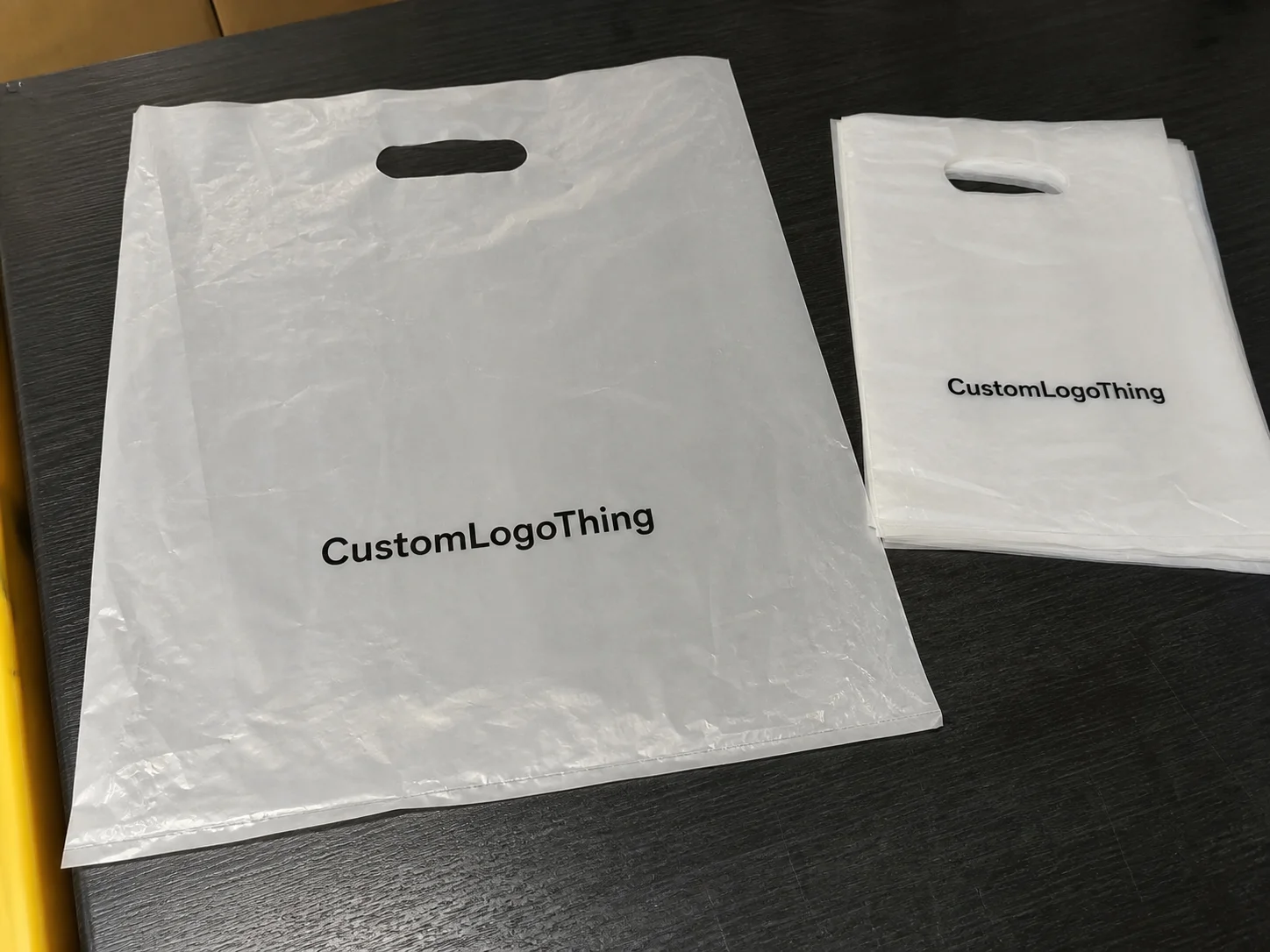
| Custom Poly Bag | 15,000 | 100µm LDPE | $0.40 per unit | Include film certification if needed |
For a complete menu of fields the calculator can ingest, check out our Custom Packaging Products catalog so your team matches materials to measurable outcomes, including 142 material-and-coating combos sorted by mill lead times.
We refresh that catalog link monthly and note the lead times from each supplier so the calculator’s default fields mirror what the mill actually confirmed on its most recent call.
Specifications to Feed the Custom Product Packaging Cost Calculator
Every spec you enter drops into the calculator’s logic: finished dimensions such as 11.5 x 9 x 2 inches, wall thickness of 1.2mm, dielines with flaps numbered, unit weight of 14.2 ounces, and 100% print coverage on both sides all convert into tooling, material, and run-time tallies. (Yes, I know, it feels obsessive, but nothing’s worse than shipping a promo with half the ink missing because the specs went in half-baked.)
I learned the hard way when a client estimated product weight at 10 ounces but final content tipped the scales at 14 ounces; freight jumped $650 for the 4,800-piece load. After that, we insisted on precise weight per unit, and the next bid revisited the calculator with 14.2 ounces and the freight line came in at $1,120 instead of a surprise $1,780.
Tolerance allowances matter too—especially when packaging design requires precise insert fits. Tell the calculator your registration expectation so it adds press setup and additional makeready time; our team logs 0.5mm tolerance adjustments to catch die-change rates and keep the invoice aligned with reality.
Special inserts, metal pins, or poly sleeves change tooling costs significantly. On the “luxury tea” project, the calculator appended $0.15 per unit because we uploaded the internal insert dieline and declared we needed a hot-stamp foil register. Without that input, the factory would have built tooling for a plain tray and we’d have reworked the run mid-production.
Speaking of dies, send vector dielines with labeled flaps and fold lines; the calculator expects those files so it can cite tooling amortization over the run. Our QA team cross-checks those dielines with ISTA testing standards (see ISTA) and the latest ISTA 3A 16kg drop profile to make sure the protective structures match the shipment profile you enter.
Pricing & MOQ with the Custom Product Packaging Cost Calculator
Here’s what the calculator logs: tooling amortization (for example, $2,400 split over 5,000 units), raw materials (like $0.28 per unit for 350gsm C1S from Sappi), print press time, finishing, QA sampling, outbound freight, and, yes, the third-party certification fees if you’re listing FSC claims from FSC partners.
MOQ matters. I’ve watched clients fight to keep runs at 3,000 units, but the calculator paints the picture clearly—per-unit cost jumps from $0.85 to $1.22 once you drop below 5,000 for a tuck-top box and you still face the same tooling bill; there are times when the calculator suggests splitting the run, say 3,000 units now and another 3,000 in 30 days, so each batch only pays $0.18 more per unit than a 10,000-unit order that knocks price down to $0.88.
I negotiated with Finch Manufacturing last spring, and the calculator showed $1.45 per box for 5,000 pieces once we agreed on single-pass varnish, trimmed the artboard to 4.75 x 4.75 x 2.25 inches, and added their quoted 12-day press run; they needed the math in front of them to keep the price so steady, and the tool added clarity to a negotiation that usually ends with both sides haggling over "batches" of gloss.
A calculator-savvy team knows when bundling adds value. For campaigns with multiple SKUs, feed each SKU’s dimensions and coatings into the calculator so it can model consolidated runs—this is how we achieved a $0.09 reduction across four custom printed boxes by running them on one press sheet with synchronized die spacing.
Always check the freight line: the calculator asks for destination, weight (remember the corrected 14-ounce item), and desired service level. Entering that information early avoids hideous rush fees and ensures the final quote respects release windows from both your logistics partner and the factory. We log the actual freight charges from each carrier so the calculator’s baseline for every lane stays current before we share any final numbers.
Process & Timeline: How the Custom Product Packaging Cost Calculator Maps to Milestones
The calculator isn’t just about pricing; it tracks milestones—specs submission, quote validation (typically 3 business days), dieline review (4 days), press approval, production (10 days), QA, and shipping all get checkpoint dates tied to the tool so we can compare them against the factory’s 15-day lead time sheet.
Consider a launch where the calculator showed 3 business days for quote validation, 4 for dieline approval, 7 for plate making, 10 for production, and 5 for freight—this added up to 29 days and left room for a factory holiday. When our client tried to shorten it without updating the calculator, we caught the compression and added a buffer after the QA team flagged a potential ink cure issue; the timeline stayed credible because every change hit the tool first.
Refreshing the calculator whenever specs shift is critical. Material shortages can require last-minute swaps; if a coated SBS shipment shortens, swap in kraft or recycled stock in the calculator so it recalculates the impact on tooling, print time, and surface finish adherence. (Also, the calculator lets me call the vendor with a calm voice because I already know what the shift will cost us.)
Need to factor in insert changes? Add them to the calculator and watch how the timeline shifts: engineered inserts often demand additional tool hours, which I saw firsthand when a client asked for a magnetic closure on a self-locking tray; the calculator added 2 days of tooling and a $0.18 labor bump, and we adjusted the production schedule before the press crew even arrived.
Shipping milestones deserve respect too. Enter your freight mode—ocean LCL vs. air vs. ground—and destination; the calculator references actual shipping lanes from Shanghai to Long Beach and duty estimates so you can plan around port congestion without guessing. Reference Packaging.org data to justify those planned windows to stakeholders. We keep a rolling tracker of actual ETAs so the calculator’s milestones reflect the latest port, trucking, and drayage performance data.
Why Choose Custom Logo Things for Your Custom Product Packaging Cost Calculator Output
We revisit our supplier roster quarterly, confirming actual Sappi, WestRock, and Prime Packaging stock costs—Right now, Sappi lists 350gsm C1S at $820 per metric ton and WestRock quotes 450gsm SBS at $930—before feeding them into our calculator. If the paper market moves, the calculator reflects the increase within 24 hours, which keeps campaign budgets aligned with reality instead of outdated quotes.
Ink and coating partnerships matter too. Sun Chemical and Siegwerk give us tiered breaks for bulk metallic inks, and those price breaks sit inside the calculator so you can see whether a UV coating at $0.22 per square foot saves you more than it adds to curing time; this attention to detail means the tool doesn’t estimate “premium coating”; it lists the actual cost per square foot and expected 36-second dry time from our ink rep in Taichung.
Our in-house production manager sits with clients and interprets calculator output—spending time on the floor in Shenzhen gives us credibility because we’ve seen how a press operator adjusts tension when you add metallic ink. My QA team, who regularly runs ISTA 3a tests, reviews every result alongside the calculator, so you know both the cost and the structural integrity before shipping.
We also maintain relationships with the freight partners who factor into the tool, including Evergreen Marine for ocean and Swift Air Logistics for expedited air; they submit lane quotes weekly, so when the calculator shows a freight spike, we already have the carrier contacts and actual lane quotes, and there’s no waiting for another round of bids.
Our desk still has sticky notes from the mask-wearing QA visit; the calculator translated their findings into line items that everyone could agree on in minutes. That sort of transparency is why we lean heavily on the tool when clients talk about package branding and product packaging that has to meet retail shelf standards. We keep stakeholders honest by noting which numbers were confirmed in writing versus estimated, so everyone understands the level of certainty behind each line.
Next Steps: Run the Custom Product Packaging Cost Calculator
Actionable Step 1: Gather your specifications—finished dimensions, run size, materials, finishes, freight options—then upload everything into the calculator at customlogothing.com/estimate. Don’t skip the detail fields; the calculator is only as smart as the inputs, and the system accepts up to 20MB dieline PDFs with labeled flaps.
Actionable Step 2: Book a call with me so we can dissect the results, layer in logistics, and turn the numbers into a firm quote from vetted factories. I’ll walk through the same checklist I use on the factory floor, and you’ll see how our production manager, QA team, and I interpret those outputs.
Refresh the custom product packaging cost calculator after every spec tweak—material swap, insert addition, new shipping window—to keep your projections current and actionable, just as we revise our forecasts before each biweekly production review with the Guangzhou plant.
How do I use a custom product packaging cost calculator with existing supplier quotes?
Feed your supplier quote line items into the calculator to compare material, printing, and finishing breakdowns, and watch it reconcile that $0.85 per unit for 350gsm C1S with our own $0.92 market rate.
Use the tool to normalize differences in MOQ, tooling, and freight so you’re comparing apples to apples, especially when quotes list $1,500 tooling for 3,000 units versus the calculator’s $2,400 amortized over 5,000.
If our calculator shows a lower total, I’ll supply the vetted factory contact who can match or beat the quote, referencing the same per-unit inputs you just uploaded.
What inputs make the custom packaging cost calculator accurate?
Precise finished dimensions, dielines, board grade, and desired print coverage are mandatory—without them, the calculator defaults to a 5mm oversize or $0.20 per unit contingency.
List every branded element—spot UV, foil, emboss—so the calculator accounts for extra press passes and the associated $0.09-$0.25 labor bump.
Include your target shipment date to flag rush charges early; entering a December 15 release automatically adds the typical $0.08 per unit for expedited QA sampling.
Can a custom product packaging cost calculator handle short runs or prototypes?
Yes, the calculator models prototypes by applying the higher per-unit cost typical of low volumes, including the $0.65 per unit bump we see on runs under 2,000 due to setup time.
We pair the estimate with our digital print partners so you can compare offset vs digital costs side by side—there’s often a $0.32 savings per unit when offset reaches 2,500 pieces.
Use it to decide if multiple pilot runs or a larger single production run is smarter financially by comparing the total run cost and tooling amortization per option.
Does the custom product packaging cost calculator include freight and duties?
Absolutely—enter your destination, shipment method, and packaging weight so the tool can estimate freight, including the $1,120 ocean LCL rate we just secured between Shenzhen and Long Beach.
It also pulls in duty estimates for common import categories, otherwise we flag them manually when quoting so nothing sneaks up on the landed cost.
If you want door-to-door, we’ll quote actual freight after the calculator gives you the landed-cost range, often within a 6% variance.
How often should I revisit the custom product packaging cost calculator during a campaign?
Re-run it every time you adjust the quantity, material, or finish to prevent surprises, just like we do before confirming every production release with the Guangzhou plant.
Use it before locking in procurement so you can negotiate with accurate data, especially when MDF or kraft board prices fluctuate weekly.
My rule of thumb: revisit once design is final, once before the production-ready pack is approved, and again before reorders, keeping every stakeholder on the same page.
Actionable Takeaway: Re-run the custom product packaging cost calculator whenever specs shift—material swaps, insert additions, or freight changes—so the numbers match what you’ll actually order and you can cement those estimates before the factory starts tooling.