Gallery Shop Paper Bags Foil Stamping Cost: What You Are Really Buying
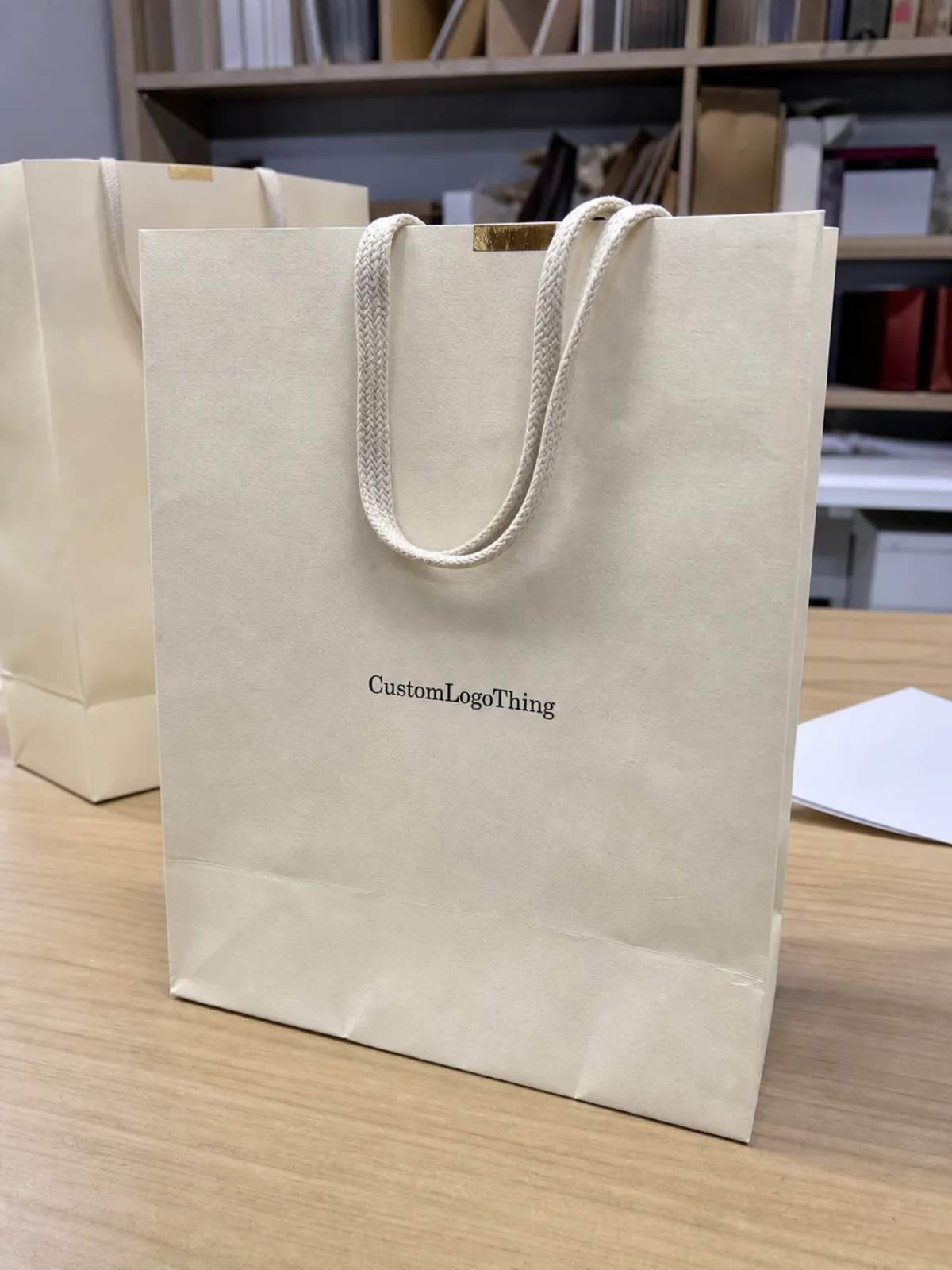
A customer may spend 45 minutes choosing a $38 print, then judge the purchase by the bag they carry out. Fair? No. Real? Absolutely. Gallery shop Paper Bags Foil Stamping cost is not only the price of pressing metallic film onto paper. It includes paper strength, handle comfort, logo tooling, waste allowance, freight, storage, and whether the bag still looks composed after three subway stops.
Foil stamping suits gallery shops, museum stores, artist boutiques, design bookstores, print sellers, and exhibition merch counters because it signals value without making the bag shout. A small matte gold mark on white paper can feel more deliberate than a full-color logo spread across the front. Quiet often sells better in cultural retail.
Gallery packaging has to serve an odd range of purchases. One bag may carry a postcard set. The next may hold a heavy catalog, a limited-run print in a sleeve, or a wrapped ceramic object with tissue and board. The finish should feel curated, but the structure still has to survive counter storage, stacked cartons, impatient checkout lines, and customers who carry everything from one handle while answering their phone. People do that constantly.
Foil stamping gives a premium cue with restraint. Gold, silver, copper, black, white, clear gloss, and holographic foil all have uses, but the best gallery bag usually starts with one controlled brand mark. You are choosing between a throwaway carrier and a branded object that may pass through a hotel lobby, opening reception, airport terminal, or collector’s home.
Good specs protect the budget. Bad specs create surprise setup charges, weak handles, muddy artwork, and a unit cost that sends the team back to “revisit the brief.” The practical quote conversation starts with size, quantity, paper weight, handle type, foil color, artwork, and deadline. Not vibes. Vibes do not fit into a carton.
Best Paper Bag Styles for Gallery Shops and Museum Retail
The best bag style depends on what the shop sells most often, not what looks nicest in a brand presentation. Start with the heaviest and widest regular item. If the bag fails on a book stack or mounted print, nobody will admire the foil.
- Twisted handle kraft bags: Practical for postcards, books, catalogs, small gifts, and higher-volume checkout. They usually offer the lowest cost per piece.
- Rope handle luxury paper bags: Better for premium gallery purchases, VIP gifts, framed print sales, ceramics, and collector-facing retail.
- Ribbon handle gift bags: Polished and photogenic. They cost more, pack more slowly, and need careful carton handling.
- Flat merchandise bags: Useful for lightweight prints, stationery, postcards, programs, and slim goods that do not need a gusset.
- Reinforced art print bags: Best for wider, shallow formats where the product needs support across the bottom and side panels.
Handles change the read of the entire bag. A cotton rope handle on 180-210 gsm white or dyed paper feels closer to a collector purchase. A twisted paper handle is still useful, especially for museum stores with hundreds of daily transactions, but it reads more everyday retail than premium object.
Structure is not cosmetic. A bottom board helps heavier products sit flat. A top fold strengthens the opening and supports handle attachment. Side gussets create room for books, folded textiles, boxed jewelry, and wrapped objects. Reinforced handle patches reduce tearing around the holes, especially when customers carry catalogs, glassware, or ceramics.
Foil behaves differently on each substrate. White paper gives clean contrast. Black paper looks dramatic. Natural kraft feels handmade and warm. Dyed specialty paper can look expensive quickly, especially with antique gold, matte black, or white foil. Dark papers with pale foil can be beautiful, but they show fingerprints, scuffs, and dust more easily. Beautiful, yes. Magic, no.
Foil Stamping Specs That Change the Final Look
Foil stamping is a physical impression process, not ink. A heated die presses metallic or pigment foil into the paper surface, which is why the mark can look sharper and richer than simulated metallic print. That pressure is also why artwork, paper texture, and die quality matter so much.
The main variables are foil color, logo size, stamping position, die size, paper texture, pressure, and registration tolerance. A clean vector file gives the die maker a crisp edge. A fuzzy JPEG pulled from an old website header does not. That problem is more common than anyone wants to admit.
Popular foil choices for gallery retail include matte gold, bright gold, antique gold, silver, copper, rose gold, black, white, clear gloss, and holographic. Gold and copper feel warm and collectible. Silver feels cleaner and more contemporary. Black and white foil can feel restrained, editorial, and less souvenir-shop. Holographic can work for contemporary exhibits, music merchandise, or design-led pop-ups, but it needs a confident visual system behind it.
Logo size is a trap. Small marks often look more premium, but too tiny can fill in, lose line detail, or make serif text muddy. Fine art branding needs breathing room. Ultra-thin lines, delicate signatures, tiny serif text, gradients, shadows, and detailed seals usually need adjustment before stamping. Foil is elegant. It is not a laser printer with an ego problem.
Placement changes the mood. Centered front-panel stamping is classic. A lower-right gallery mark feels quieter. Vertical side placement looks more editorial. A small top-center stamp above a printed exhibition title can work for limited-run show packaging. One-sided stamping is usually the sensible default because it controls cost and still gives the buyer the premium moment.
Two-sided stamping has a place: event bags, sponsor bags, launch merchandise, or retail counters where the bag will be photographed and carried in crowds. It also adds impressions, handling time, and potential rejects. The second side should earn its cost.
Practical rule: if the logo needs to look refined, reduce the detail before increasing the foil area. Bigger foil does not automatically mean better packaging. Sometimes it just means louder packaging.
Digital mockups help with layout, but production samples or pre-production photos are more useful when finish matters. A foil strike-off can confirm shine, pressure, and color on the selected paper. For gallery Shop Paper Bags foil stamping cost, sampling affects both budget and timing. It also prevents expensive disappointment.
Paper Weight, Sizes, Handles, and Reinforcement Choices
Paper weight should match the load. For lighter retail bags, 120-160 gsm can work. For premium gallery shop bags, 180-210 gsm is usually safer. For rigid luxury bags or heavier gifts, 230-250 gsm may be appropriate, especially with rope handles and a reinforced top fold.
Thicker is not always smarter. Heavy paper feels premium, but it increases freight cost, storage space, and sometimes the MOQ. It can also make folding and forming more demanding. If the bag only carries postcards and small catalogs, 250 gsm may be overkill. Nice overkill, but still overkill.
Common sizing should follow actual products. Small bags work for jewelry, postcards, magnets, folded scarves, and small objects. Medium bags suit books, catalogs, boxed items, and standard retail purchases. Wide shallow bags are better for prints, flat art goods, archival sleeves, and presentation folders. Tall narrow bags fit bottles, rolled posters, and vertical gift items.
Measure the product. Do not guess. Record width, height, depth, and extra clearance for tissue, sleeves, bubble wrap, foam corners, backing boards, or protective envelopes. A 12-inch-wide print sleeve does not belong in a 12-inch-wide bag unless the staff enjoys wrestling at checkout.
| Specification | Typical Range | Best Use | Cost Impact |
|---|---|---|---|
| 120-160 gsm paper | Light to medium weight | Postcards, programs, small goods | Lower unit cost |
| 180-210 gsm paper | Premium retail weight | Books, catalogs, gallery merchandise | Moderate unit cost |
| 230-250 gsm paper | Rigid luxury weight | VIP gifts, heavier objects, premium launches | Higher unit cost and freight |
| Twisted paper handle | Standard retail | High-volume museum shops | Budget-friendly |
| Rope or ribbon handle | Premium finish | Gallery openings, luxury retail, gifts | Raises labor and material cost |
Handle choice should match weight and brand tone. Twisted paper handles are economical. Cotton rope feels upscale. Ribbon feels boutique. Die-cut handles can work for flat bags, but they are risky for heavier items unless the paper and reinforcement are designed for the load.
Reinforcement is not decoration. Bottom boards help books, ceramics, and boxed products sit flat. Top fold reinforcement improves handle strength. Thicker side gussets handle bulkier goods. If the bag carries art, books, ceramics, or glassware, test load strength before ordering thousands. Gravity is undefeated.
Sustainability options are available, but claims need discipline. Recycled paper, FSC-certified paper, soy-based inks for printed areas, water-based glue, and recyclable mono-material designs can support a better spec. Do not call a laminated, rope-handled, multi-material bag “fully recyclable” unless the actual construction supports that claim in the buyer’s local recycling stream.
Cost, Pricing, MOQ, and Quote Factors for Foil Bags
Gallery shop paper bags foil stamping cost moves based on bag size, paper thickness, handle type, foil area, number of stamping positions, foil color, order quantity, custom die, freight, and sampling. That is the real list. Anyone giving a serious quote without those details is either guessing or leaving room for a correction later.
Many Custom Foil Stamped paper bag orders start around 500-1,000 pieces. Better bulk pricing usually appears around 2,000-5,000 pieces and above because the setup cost spreads across more bags. A 500-piece order can have a painful unit cost. A 3,000-piece order often looks much more reasonable. That is not drama. That is math.
Custom Foil Stamping usually requires a metal die. The die is a tooling charge, often treated as a one-time fee if the logo size and artwork do not change. Change the logo size, and the old die may no longer work. Change the artwork entirely, and new tooling is usually required. Metal tools do not resize themselves.
Larger foil areas cost more because they use more foil, need tighter pressure control, and can create higher reject rates on textured paper. One small front logo on a twisted handle kraft bag is the budget-conscious premium route. Thick dyed paper, cotton rope handles, two-sided stamping, specialty foil, embossing, and custom inserts push the price up quickly.
| Configuration | Typical Quantity | Estimated Cost Direction | Best Fit |
|---|---|---|---|
| Kraft twisted handle, one small foil logo | 1,000-5,000 pieces | Lowest premium option | Museum shops, books, postcards |
| White 180-210 gsm bag, rope handle, one foil stamp | 1,000-3,000 pieces | Mid-range premium | Gallery retail, catalogs, gifts |
| Dyed specialty paper, ribbon handle, two-sided foil | 2,000+ pieces | Higher unit cost | Exhibitions, VIP packaging, launches |
| Rigid luxury bag with foil, inserts, and reinforced structure | 2,000-5,000 pieces | Highest cost tier | Premium objects, boxed art, collector gifts |
Freight deserves its own warning. Paper bags are bulky, even when they are not heavy. A low unit price can become less attractive once cartons ship across the country. Ask for carton dimensions, carton weight, and estimated pallet count if storage, elevator access, or delivery scheduling is tight.
For an accurate quote, send bag size, quantity, paper color, paper weight, handle type, foil color, artwork file, delivery location, and target in-hand date. If you are comparing vendors, compare the same spec. Otherwise you are comparing one real quote against three creative writing exercises.
Production Steps, Lead Time, and Approval Timeline
A clean production process usually follows this order: spec confirmation, artwork check, quote, digital proof, optional sample, deposit, die making, paper cutting, printing if needed, foil stamping, bag forming, quality control, packing, and shipping. Skip steps and risk rises. Simple.
Standard custom foil stamped paper bags often take about 3-5 weeks after proof approval, depending on quantity, material availability, and finishing complexity. Sampling adds time. Specialty paper adds time. Large orders add time. Peak season adds time. Your opening reception date does not care, unfortunately.
Rush orders can move faster if the paper is in stock, artwork is clean, the die is straightforward, and the buyer approves proofs quickly. Rush work is a production constraint, not a personality trait. If six people need to approve logo placement, do not circulate the proof while half the committee is on vacation.
Vector artwork is preferred: AI, EPS, or clean PDF. Foil dies need scalable lines, clean edges, and controlled detail. Raster logos, low-resolution screenshots, gradients, shadows, and textured artwork are poor starting points. They can sometimes be rebuilt, but that adds artwork time and may add cost.
Sampling can mean a digital proof, blank structure sample, foil strike-off, or full pre-production sample. A digital proof confirms position and scale. A blank structure sample confirms size and feel. A foil strike-off confirms finish and impression. A full sample confirms nearly everything, but it usually takes longer and costs more.
Quality control should check logo placement, foil coverage, stamping pressure, handle attachment, glue seams, bottom strength, carton count, and packing condition. For transit testing guidance on packed goods, the International Safe Transit Association publishes useful packaging test standards. A retail bag is not the same as an export shipper, but the mindset is similar: packaging should survive the journey it is actually taking.
Order early for exhibitions, holiday retail, artist launches, museum shop refreshes, and private previews. Port delays, paper shortages, proof revisions, and freight bottlenecks are boring problems. They are also real problems.
Mistakes That Make Foil Stamped Paper Bags Look Cheap
The first mistake is an oversized logo. A massive foil mark can turn refined gallery packaging into mall kiosk packaging very quickly. Scale is everything. A 2.5-inch logo may look expensive on a small bag, while a 7-inch logo can feel desperate on the same surface.
Another mistake is choosing foil color in isolation. Gold foil on cream paper, black paper, white paper, and raw kraft creates four different moods. The bag should match the gallery’s brand, lighting, and merchandise, not someone else’s Pinterest board.
Low contrast can also disappoint. Matte black foil on dark charcoal paper may look elegant in person, then disappear under dim retail lighting. White foil on pale gray can feel quiet and smart, or it can look like the printer forgot to finish the job. Test subtle combinations before committing.
Artwork problems are common and preventable. Raster logos, fuzzy edges, tiny text, gradients, shadows, hairline strokes, and overly detailed seals do not translate well into foil stamping. Simplify the mark. Increase spacing. Convert tiny text into a larger secondary print detail if needed.
Under-specifying the paper weight is another bad move. A beautiful foil mark on a flimsy bag is like serving champagne in a paper cup. Technically possible. Still wrong. If the bag carries catalogs, books, or wrapped objects, 180 gsm or higher is often the safer conversation.
Overcomplicating the bag can also backfire. Full-color print, foil, spot UV, embossing, ribbons, custom inserts, and specialty lamination can look stunning, but only when there is a real reason. Pick one hero detail, usually the foil logo, then make everything else support it.
Storage gets ignored until cartons arrive. Ask for carton dimensions and storage estimates before ordering. Retail back rooms are not infinite, despite what procurement seems to believe. A 5,000-piece order may reduce unit cost, but it still has to live somewhere.
Next Steps Before You Order Custom Gallery Bags
Start with the real purchase range. Pull three sample products from the shop: the smallest common item, the average purchase, and the largest or heaviest item. The bag should work for actual transactions, not fantasy inventory from a mood board.
- Choose the product size range the bag must handle.
- Decide the bag style: twisted handle, rope handle, ribbon handle, flat, or reinforced print bag.
- Select paper color and paper weight, usually 180-210 gsm for premium gallery retail.
- Pick the handle type based on load, brand tone, and budget.
- Choose foil color and stamping position.
- Confirm quantity, delivery location, and in-hand deadline.
- Send vector artwork and any brand notes upfront.
If the gallery sells both small merchandise and larger prints, consider two bag sizes. One bag size for everything usually means half the products fit badly. Small goods swim around. Large goods jam in at the corners. Neither outcome feels premium.
A conservative first run can be smart when testing a new brand identity, logo scale, or retail format. Order enough to get usable pricing, but not so much that the shop is married to the wrong size for three seasons. Once the finish and dimensions are proven, reorder at a higher quantity for better pricing.
Custom Logo Things can quote custom paper bag size, foil stamping, handle options, paper stock, sample choices, production timeline, carton packing, and freight. Send the practical details early: logo file, paper preference, foil color, quantity, delivery location, and whether the look should feel quiet, bold, archival, contemporary, or luxury.
For gallery shop paper bags foil stamping cost, the fastest useful number comes from a complete spec: size, quantity, logo file, foil color, handle type, paper weight, and deadline. Guesswork is free. Rework is not.
FAQs
What affects gallery shop paper bags with foil stamping cost the most?
The biggest cost drivers are order quantity, bag size, paper weight, handle type, foil area, number of stamped sides, custom die charge, and freight. A small one-color foil logo on one side is the most cost-efficient premium look. Two-sided stamping, thick luxury paper, rope handles, and large foil coverage raise the unit cost.
What is the usual MOQ for custom foil stamped gallery paper bags?
Typical MOQs start around 500-1,000 pieces, depending on bag construction and material availability. Unit pricing usually improves noticeably around 2,000-5,000 pieces because setup and tooling costs spread across more bags. Very small runs are possible in some cases, but the unit cost can be ugly.
How long does foil stamping production take for gallery shop bags?
Standard production often takes about 3-5 weeks after artwork approval and deposit. Sampling, specialty paper, complex finishing, large orders, or peak season timing can extend the timeline. Fast approvals and clean vector artwork help keep the job moving.
Which foil color looks best on paper bags for galleries?
Matte gold, antique gold, silver, copper, black, and white are the safest premium choices. Gold and copper feel warm and collectible; silver feels clean and contemporary; black or white foil feels restrained and editorial. The best choice depends on paper color, gallery branding, lighting, and the mood of the retail space.
Do I need a sample before ordering foil stamped paper bags?
A sample is strongly recommended for a major exhibition, premium retail launch, or high-value artwork packaging. A digital proof confirms layout, but a physical sample or foil strike-off shows texture, shine, scale, and paper feel. Skipping samples can save time and money, but only when the specs are simple and the buyer is comfortable with normal production tolerance.


