The Small Bag Detail That Changes the Shelf Read
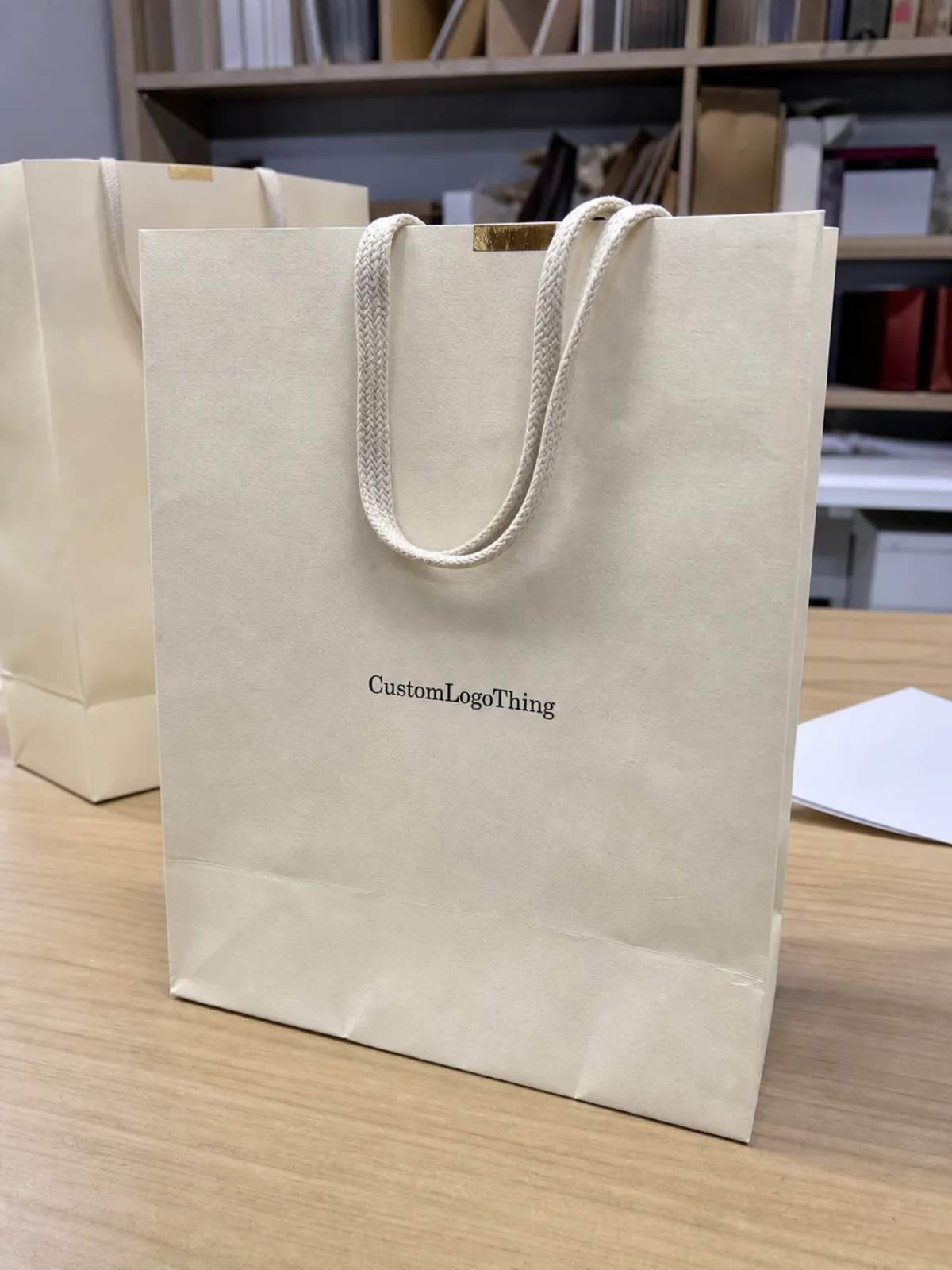
Put two boutique bags on the same counter. Same size. Same product. Same price point. The one with a clean metallic mark usually reads as the premium option before anyone touches it. That is why Boutique Paper Bags foil stamping cost should be treated as a production decision, not a decorative afterthought. The quote is tied to paper texture, foil coverage, die size, handle build, and how much setup the artwork demands.
Foil stamping gives a paper bag a dense, sharp mark that ink cannot always match. Gold on matte black feels different from copper on kraft or silver on navy. Even a black foil on charcoal stock changes the way the bag looks under store lighting, in product photos, and in a customer’s hand.
There is a practical reason buyers keep coming back to this finish. Retail bags do not disappear after checkout. They get carried down the street, reused, photographed with the purchase, and sometimes kept with the product for gifting. That extra visibility is hard to pin to a single number, but it matters more than most spec sheets admit.
Foil is still a process, not a filter. The final price depends on choices that live far away from the glamour shot: bag size, paper gsm, handle type, foil area, number of foil colors, die size, packing method, and shipping destination. The smartest spend is usually visible spend. The hidden details should be stable, not extravagant.
Practical rule: if the bag is part of the selling experience, foil can earn its place. The goal is not the fanciest bag in the catalog. The goal is the one that fits the product, the brand, and the shelf.
What Foil Stamping Adds to Boutique Paper Bags
Foil stamping transfers a thin metallic or pigmented layer onto paper with heat, pressure, a custom metal die, and a carrier film. The mark sits on the surface differently from ink. It is more opaque, more reflective, and more exact when the paper and pressure are matched correctly.
It works best when restraint leads the design. Logos, monograms, short store names, seal graphics, slim borders, and small pattern accents are the safest bets. Full-panel foil can be done, but it raises setup sensitivity and invites scuffing, especially on converted bags that will be folded, glued, and packed by hand or machine.
Common foil colors include gold, silver, rose gold, copper, holographic, matte metallics, black, and white. Buyers often picture foil as bright and shiny, yet some of the strongest results are quieter. A matte black foil on black stock can create a tone-on-tone mark that feels expensive without shouting. White foil on dark green paper can look almost editorial.
Paper changes the result more than many first-time buyers expect. Smooth coated paper usually produces cleaner edges because the surface is even under pressure. Textured paper can look richer, but tiny type, thin strokes, and delicate reversed-out details may fill in or lose shape. The logo that looks fine on a monitor may need a simpler build on press. That is normal, not a defect.
Foil stamping also sits beside other finishing methods rather than replacing them. Embossing raises the paper. Debossing presses it down. Spot UV adds gloss to selected areas. Ink printing lays down color through offset, flexo, or digital methods. Hot foil plus embossing can look excellent on premium bags, but it also adds tooling and setup costs. Use it for a reason, not because the sample board made it look irresistible.
Paper, Handles, Sizes, and Finish Specs That Affect the Quote
The base bag spec sets the floor for the quote before foil is even discussed. Typical boutique choices include white kraft, brown kraft, coated art paper, uncoated specialty paper, black card stock, and laminated paperboard for heavier retail use. For small jewelry or cosmetics bags, 157gsm to 210gsm is often enough if the construction is sensible. For apparel, candles, boxed gifts, and heavier retail items, 250gsm to 350gsm is more common.
Size affects paper consumption, carton count, freight, and the visual balance of the logo. Small portrait bags around 5 x 3 x 7 inches fit jewelry boxes, skincare jars, soaps, and small accessories. Medium sizes around 8 x 4 x 10 inches are common for apparel, candles, folded textiles, and gift sets. Wider gusset bags suit rigid boxes, shoes, and heavier goods. Tall formats work for wine, florals, rolled scarves, and narrow gift packaging.
Handles change both feel and cost. Twisted paper handles are economical and familiar. Cotton rope feels more substantial and supports heavier loads. Ribbon handles tilt toward gift presentation but need careful attachment and packing. Die-cut handles give a cleaner silhouette and remove the cord cost, though they are less comfortable when the bag carries weight. Reinforced patch handles add strength where the contents have real heft.
Surface finish also matters. Matte lamination gives a smooth retail look and usually supports crisp foil transfer. Gloss lamination adds shine, but can feel louder than some brands want. Soft-touch film feels velvety and photographs well, though it can show fingerprints and may need testing for foil adhesion. Uncoated paper has a natural handfeel, but its open surface can soften fine edges. Flood printing adds color control and a custom backdrop, but it also adds ink coverage, drying time, and one more place for color drift.
| Specification Choice | Typical Use | Cost Impact | Foil Consideration |
|---|---|---|---|
| Brown kraft, 180-220gsm | Natural retail, soaps, small gifts | Lower to moderate | Copper, black, or matte gold usually reads well |
| Coated art paper, 210-300gsm | Fashion, cosmetics, gift retail | Moderate | Smooth surface supports sharper foil edges |
| Black card stock, 250-350gsm | Luxury apparel, jewelry, premium launches | Moderate to higher | Gold, silver, white, and tone-on-tone foil are common |
| Soft-touch laminated board | Premium gift packaging and rigid product sets | Higher | Foil adhesion should be confirmed before production |
For sustainability claims, be specific. If a brand needs certified material, ask for FSC-certified paper and chain-of-custody documentation rather than making a loose eco claim. The Forest Stewardship Council explains the certification framework, and that is the level of proof buyers should expect when the claim matters.
Boutique Paper Bags Foil Stamping Cost, Pricing, and MOQ
Boutique Paper Bags foil stamping cost comes from several moving parts working together: bag dimensions, paper type and thickness, handle style, foil area, number of foil colors, die size, print coverage, finishing, packing method, freight, and order quantity. A small one-color logo on standard kraft carries a very different cost profile from a large gold foil mark on soft-touch laminated black board with rope handles.
There are fixed costs and variable costs. The custom die, press setup, proofing, and alignment are fixed or semi-fixed. Paper, handles, foil film, labor, cartons, and freight scale with quantity. That is why unit cost usually falls as the run gets larger. Once the die and press are ready, the next bags mainly add material and running time.
As a planning range, a simple custom paper bag with a small foil logo may land around $0.70 to $1.80 per piece at higher quantities. More structured boutique bags with heavier paper, lamination, rope handles, and larger foil placement can move into the $1.80 to $4.50+ range depending on size and freight. Small runs often look expensive per piece because the setup cost has fewer units to absorb it.
MOQ is not just a sales preference. Foil-stamped bags require die making, press alignment, sheet handling, bag conversion, handle installation, inspection, and carton packing. A practical minimum keeps production efficient and helps maintain quality. Simpler projects may be possible at lower quantities, while specialty paper, multiple foil colors, or complex finishing can push the sensible minimum higher.
For buyers comparing quotes, quantity breaks are often the clearest way to see the economics. Ask for 1,000, 2,500, and 5,000 pieces if the bag will be reordered. If the die is being made anyway and storage is available, the jump from a starter run to a replenishment run can reduce unit cost enough to change the decision.
| Order Scenario | Typical Specification | Pricing Behavior | Best Fit |
|---|---|---|---|
| Starter run | Standard size, one foil color, limited logo area | Higher cost per piece because setup is spread over fewer bags | New boutique, soft launch, market test |
| Mid-volume order | Custom size, upgraded paper, one finish, one foil die | Better bulk pricing and more room for premium materials | Seasonal retail, established product line, gift packaging |
| Large replenishment | Consistent repeat spec with approved die and artwork | Lowest unit cost if production and freight are planned well | Ongoing store supply, multi-location retail, high-traffic events |
To quote accurately, prepare finished bag dimensions, quantity, paper preference, handle type, foil color, foil artwork size, print colors, finish preference, delivery ZIP code or country, and any hard deadline. A rough visual direction is enough to start, but the price tightens once those inputs are defined.
Artwork, Die Setup, and Production Steps That Protect the Finish
Clean foil starts with clean art. Vector files such as AI, EPS, or editable PDF are preferred because the production team can check line thickness, stamp area, and die size without guessing. JPG and PNG files help as references, but they usually need conversion before die making, and that step can expose weak curves, tiny type, or details that were too thin to stamp well.
Fine lines need enough width to hold under heat and pressure. Tiny reversed-out spaces can fill in. Very large solid foil panels can show pressure variation, dust, or scuffing more readily than a compact logo. This is one place where brands sometimes overbuild the design. A strong mark at 2 to 4 inches wide on the front panel often looks better than a large, busy layout that fights the structure of the bag.
The production flow is usually straightforward, but each step protects the result: specification review, artwork check, quote confirmation, proofing, die making, material prep, printing or lamination if needed, foil stamping, bag forming, handle installation, quality control, packing, and shipment. If die cutting is part of the handle or a custom structure, that needs to be aligned with the bag layout before conversion begins.
A digital proof confirms placement, size, construction notes, foil color reference, and print colors. A physical pre-production sample is worth considering for high-value launches, new paper stocks, unusual foil combinations, or soft-touch films where adhesion needs confirmation. Samples add cost and time. They also save money when the presentation matters more than speed.
Registration tolerance should be understood before approval. Paper moves. Sheets become bags. Foil is applied with mechanical pressure. A realistic tolerance keeps frustration low, especially if the design tries to align foil tightly with printed lines, borders, or panel edges. If the brand mark can breathe on the panel, the finished bag usually looks cleaner and production is less fragile.
Quality control should focus on what the customer actually sees and feels: foil adhesion, edge sharpness, visible scuffing, handle strength, bottom reinforcement, color consistency, carton packing, and the way the foil reads under normal retail lighting. Extreme magnification can find flaws on almost any decorated paper product. The real test is whether the bag presents correctly in use.
Lead Time and Turnaround Planning for Store Launches
Custom Paper Bags with foil stamping need time for quoting, proof approval, die creation, material procurement, production scheduling, decoration, forming, inspection, packing, and freight. A straightforward order with standard material and clean artwork can move efficiently. Specialty paper, physical sampling, multiple decorations, or high quantities add steps.
Production time and shipping time should be separated in planning. A bag can be finished and packed, yet still need transit, customs clearance if applicable, appointment delivery, warehouse receiving, and internal distribution before it is usable in store. For retail launches, the useful date is not the ship date. It is the date the bags are counted, received, and ready for packing.
Common delays are predictable. Late artwork changes can trigger a new proof. Switching foil colors after approval can affect material availability and press setup. Unclear dimensions slow estimating because width, gusset, height, and handle style all change the construction. Specialty paper may not be stocked in the chosen weight. A sample can add several business days or more depending on the build.
Order ahead for seasonal packaging, grand openings, trade shows, gift-with-purchase programs, and holiday assortments. Foil-stamped bags often become part of the merchandising plan, so they should not be treated like a last-minute supply item. For shipping performance and packaging distribution testing, standards from groups such as the International Safe Transit Association can be useful when heavier retail goods or e-commerce kits need better transit protection.
Rush jobs are possible in some cases. Standard paper, a common bag size, one foil color, and approved vector artwork give the best chance. Custom dies, specialty films, imported materials, multi-location freight, or unclear approvals limit how much time can be compressed safely. A rushed bag that arrives with scuffing or a weak impression is not a bargain.
What a Quote Needs to Be Accurate
Start with the physical job. Choose the bag size, estimate the quantity, decide what goes inside, pick the handle style, choose a paper direction, select the foil color, and send vector artwork if available. If the exact size is unclear, measure the product and leave room for tissue, box corners, garment folds, or rigid gift packaging.
If the spec is still fuzzy, share the product weight, product dimensions, brand colors, desired look, and retail use. “Matte black with gold foil for a jewelry launch” leads to a very different quote than “natural kraft with copper foil for handmade candles.” Both can work. They simply sit in different material and cost bands.
One of the fastest ways to control cost is to make the design earn its footprint. A compact foil logo often looks stronger than a crowded front panel. If the paper is doing its job, the bag does not need to advertise every design decision at once. Reducing foil area can lower die size, speed setup, and preserve the premium effect.
Ask for more than one quantity break. Comparing 1,000, 2,500, and 5,000 pieces often shows whether the immediate need is enough or whether a larger run gives a better unit price. Also ask whether the die can be reused for a repeat order if the logo size and placement stay the same. Reusable tooling can help future orders, although storage and condition depend on the production arrangement.
To get the most accurate boutique Paper Bags Foil Stamping Cost, send the bag dimensions, quantity, artwork, foil preference, paper or finish direction, handle choice, delivery location, and deadline. That gives the quote a real base: materials, setup, tooling, labor, packing, and freight instead of a loose estimate that changes after proofing.
FAQ
What affects boutique paper bag foil stamping cost the most?
The biggest drivers are bag size, paper weight, handle style, foil stamp area, number of foil colors, die size, order quantity, finishing, and shipping destination. The custom die and setup are fixed costs, so higher quantities usually reduce unit cost because those costs are spread across more bags. Specialty paper, soft-touch lamination, rope handles, and large foil coverage can raise the quote compared with a simple kraft bag and small logo stamp.
What is the MOQ for custom boutique paper bags with foil stamping?
MOQ depends on the bag construction, paper selection, decoration method, and production schedule. Foil-stamped custom bags usually need a practical minimum because tooling and setup are involved. If you need a smaller launch quantity, ask about a standard bag size, one foil color, and limited foil coverage to keep the run efficient. For better unit cost, request several quantity breaks so you can compare the starter run with a larger replenishment order.
Is foil stamping more expensive than printing on paper bags?
Foil stamping is usually more expensive than simple ink printing because it requires a custom die, heat, pressure, setup alignment, and foil material. It can be worth the added cost when the bag is part of the retail presentation, gift experience, boutique branding, or customer reuse strategy. A cost-conscious approach is to print the bag in one color and reserve foil for the logo or a small accent rather than covering a large area.
How long does it take to produce foil-stamped boutique paper bags?
Lead time depends on artwork approval, die making, material availability, bag complexity, quantity, production capacity, quality inspection, and freight. Standard materials and clean vector artwork help shorten the process, while specialty paper, physical sampling, or late artwork changes can add time. For store openings, product launches, and seasonal packaging, build in extra time so the bags arrive before merchandising and packing begins.
What artwork file is best for calculating foil stamping pricing?
Vector artwork such as AI, EPS, or editable PDF is best because it lets the production team confirm line thickness, foil area, die size, and placement accurately. Raster files such as JPG or PNG may be useful for reference, but they often need conversion before die making and may not show whether small details will stamp cleanly. Send the logo, desired foil color, approximate stamp size, and preferred location on the bag so the quote can include accurate tooling and setup costs.
Can I reduce boutique paper bags foil stamping cost without making the bag look cheap?
Yes. Keep the foil area focused, use one foil color, choose a standard bag size, avoid unnecessary lamination, and compare quantity breaks before ordering. A compact foil logo on a well-chosen 210gsm to 250gsm paper can look better than an oversized foil layout on a bag that is overbuilt for the product. The smartest cost decisions usually come from matching the decoration to the retail purpose, not from adding every premium option at once.

