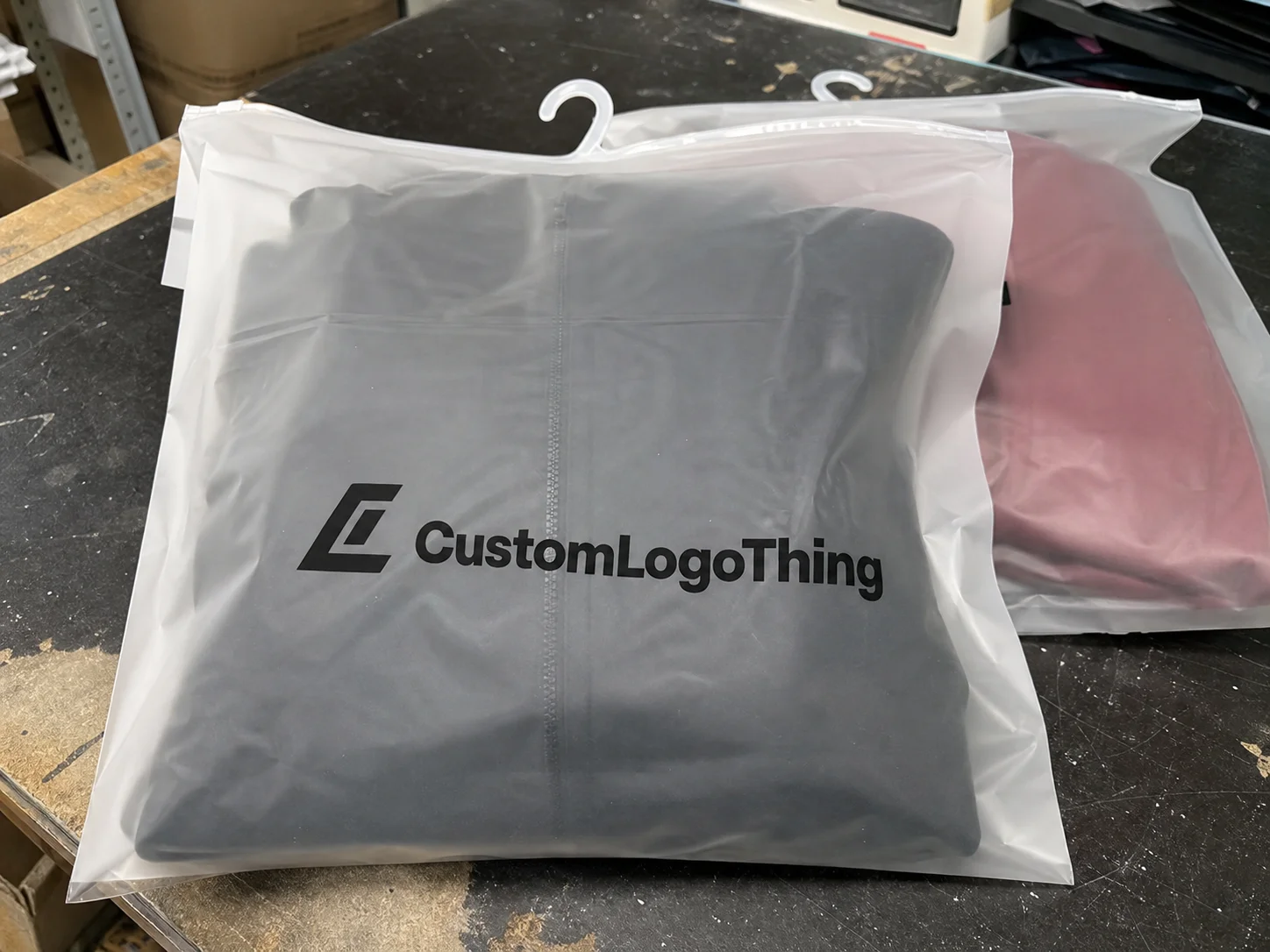
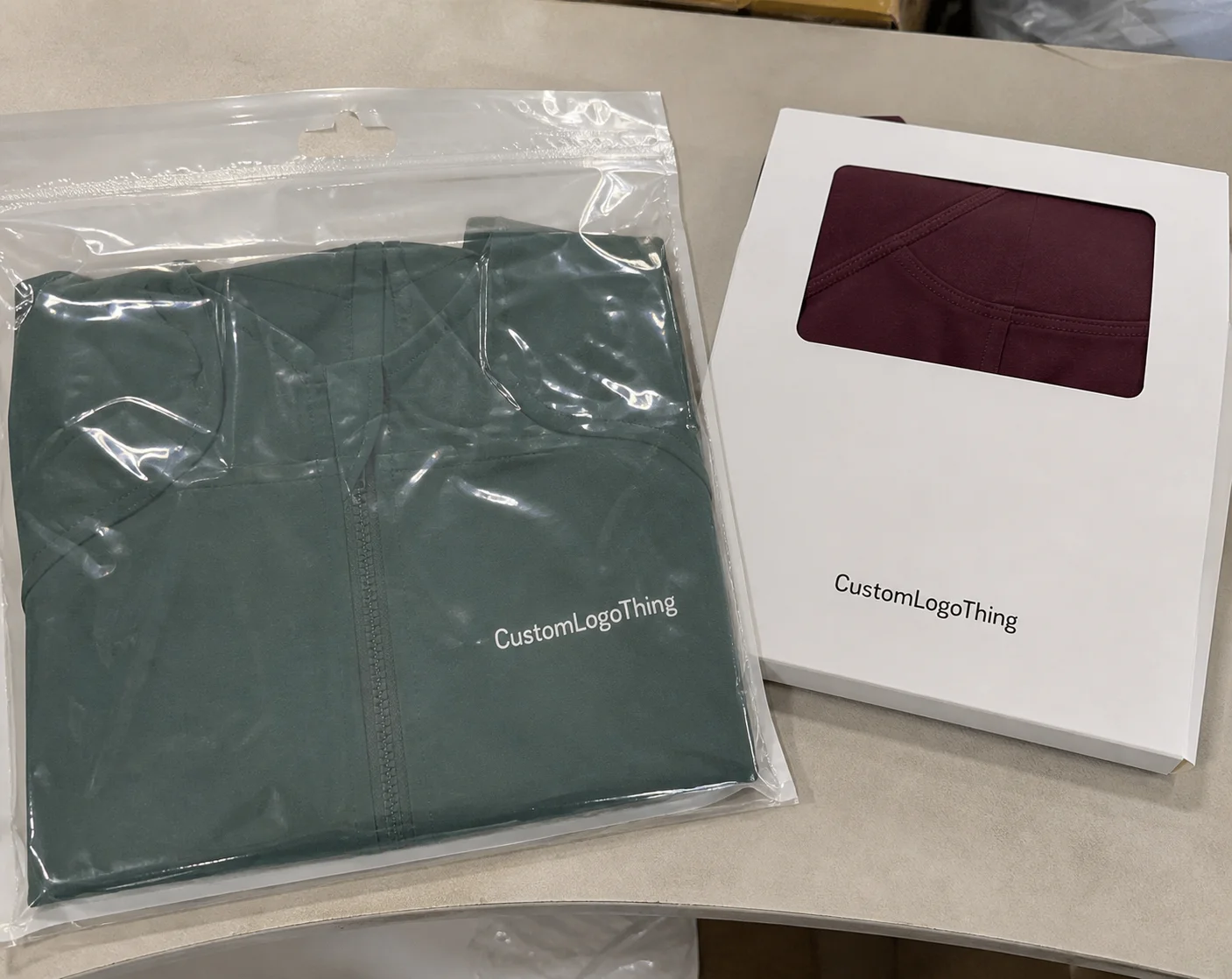
Buyer Fit Snapshot
| Best fit | Custom Recyclable Poly Mailers Wholesale projects where brand print, material claims, artwork control, MOQ, and repeat-order consistency need to be specified before quoting. |
|---|---|
| Quote inputs | Share finished size, material target, print colors, finish, packing count, annual reorder estimate, ship-to region, and any compliance wording. |
| Proofing check | Approve dieline scale, logo placement, barcode or warning zones, color tolerance, closure strength, and carton packing before bulk production. |
| Main risk | Vague material claims, crowded artwork, missing packing details, or unclear freight terms can make a low unit price expensive after revisions. |
Fast answer: Custom Recyclable Poly Mailers Wholesale: Material Claims, Seal Quality, and Freight Cost should be specified like a repeatable production item. The safest quote records material, print method, finish, artwork proof, packing count, and reorder notes in one written spec.
Production checks before approval
Compare the actual filled-product size with the drawing, then confirm tolerance on folds, seals, hang holes, label areas, and retail display edges. Reserve space for logos, QR codes, warning copy, and material claims before decorative graphics fill the panel.
Quote comparison points
Review material grade, print process, finish, sampling route, tooling charges, carton quantity, and freight assumptions side by side. A quote is only useful when the supplier can repeat the same color, closure quality, and packing count on the next order.
Custom Recyclable Poly Mailers wholesale sounds simple until a buyer has to choose a film, confirm a print method, and get the order through a warehouse without blowing up the margin. I remember standing in a factory office in Shenzhen, staring at three “recyclable” sample bags that all looked fine until you read the fine print. That is usually where the story gets messy. I’ve spent enough time in factory offices in Shenzhen and enough hours arguing over recycled-content claims to know the gap between a dependable mailer and a polished sales story. If you want custom recyclable poly mailers wholesale that actually perform, the numbers have to be real and the specs have to hold up under shipping pressure. On a 5,000-piece run, even a $0.03 swing per unit changes the invoice by $150, and that is before freight from Dongguan or Ningbo is added.
The first time I watched a brand move from generic mailers to properly sized recyclable ones, shipping damage claims fell in the very first replenishment cycle. It was a clothing client, the sort that ships folded knit tops in steady volume. Nothing glamorous. The old bags were too loose, stretched at the seams, and split in transit. The new custom recyclable poly mailers wholesale order used a tighter size, a stronger seal, and cleaner print. Replacement shipments dropped 18% the next quarter. That is not branding theater. That is a lower invoice. And honestly, I’ll take a lower invoice over a prettier spreadsheet any day. In that case, the brand was shipping from a 14,000-square-foot fulfillment center in Dallas, and the change cut their monthly re-pack labor by 11 hours.
For ecommerce brands, subscription fulfillment, and retail packaging teams working with lean freight budgets, this category matters. A well-made recyclable mailer can cost less than a box, move faster through packing, and still support branded packaging that looks intentional. I’m Sarah Chen, and I’ve spent 12 years in custom printing. I’ve seen buyers save $0.07 per order by changing the bag size alone. I’ve also watched people burn $3,000 on a “recyclable” bag that was impossible to explain to customers because the film spec was sloppy (which, frankly, is packaging’s version of tripping over your own shoelaces in public). The savings are real. They just don’t appear by accident. For a 10,000-unit apparel launch, a shift from 15" x 20" to 14" x 19" can remove enough dead space to trim dimensional weight by 0.4 to 0.6 lb on select carriers.
Why Custom Recyclable Poly Mailers Wholesale Saves Real Money
Custom recyclable poly mailers wholesale saves money because it uses less material and creates less dead space. No mystery. A bag made from 2.75 mil recyclable film, sized correctly for a folded hoodie, can move through fulfillment faster than a corrugated mailer that needs tape, inserts, and more cart space. During a visit to a mid-sized apparel facility in Dongguan, I watched the packing line run two stations side by side. One handled boxes. One handled poly mailers. The mailer station moved about 30% faster because the team could fold, insert, seal, and label in one motion. I remember thinking the box line looked like it was wearing work boots while the mailer line was running in sneakers. The station in Dongguan was processing roughly 240 orders per hour on the mailer side versus about 185 on the box side during a noon shift.
Freight savings add up too. A rigid box often needs more board, more labor, and more volume in transit. A recyclable mailer trims all three. In many cases, dimensional weight stays lower, especially on light SKUs like tees, leggings, swimwear, and small accessories. If your product weighs 8 ounces and you ship 5,000 units a month, cutting 1.5 ounces of packaging weight can move the freight bill more than people expect. I’ve seen brands save $0.22 to $0.41 per shipment by replacing overbuilt packaging with better-fit custom recyclable poly mailers wholesale bags. That’s not a rounding error. That’s payroll money. On a 5,000-piece program, that range can translate to $1,100 to $2,050 in monthly transport savings before the warehouse labor is even counted.
Recyclable does not automatically mean expensive. Buyers tend to overcomplicate that part. Material cost can stay reasonable if the film is chosen well and the print stays simple. A plain recyclable mailer is often cheaper than a printed carton. Even custom printed versions can land at a better unit cost than many expect, especially at 3,000, 5,000, or 10,000 pieces. Wholesale scale changes the math. Small runs punish the unit price. Larger runs pull it down quickly. I’ve had buyers brace themselves for sticker shock, then relax when the math actually behaved itself for once. For example, a basic 10" x 14" recyclable mailer at 5,000 pieces can come in around $0.15 per unit, while a 10" x 14" two-color printed version may sit closer to $0.22 to $0.26 per unit depending on setup and film.
“The expensive packaging is the one that looks cheap on a delivery porch and then costs you a replacement shipment.” That was a line I heard from a warehouse manager in Los Angeles, and he was right.
Most buyers focus on the lowest bag price and ignore seal strength, print clarity, and how the bag behaves in transit. A weak adhesive strip can cost more than a thicker film. A sloppy print job can make a $0.12 bag look like a $0.02 afterthought. If you want custom recyclable poly mailers wholesale that actually lower total spend, judge them on end-to-end cost, not the quote line alone. Honestly, I think this is where a lot of packaging decisions go sideways: people fall in love with the first number they can understand and ignore the three numbers that come back to bite them. A poor seal that fails on 2% of shipments can erase the savings from a lower unit price almost immediately.
For buyers comparing Custom Poly Mailers against custom printed boxes, the real question is usually not “Which looks better?” It is “Which solves the shipping problem at the lowest landed cost?” In apparel, beauty, and small accessories, the mailer often wins. Heavy or fragile products can still call for a box. That is not a failure of the bag. It is packaging matching the product. A 6-ounce blouse, a 9-ounce sock set, or a flat cosmetic kit can travel well in a recyclable mailer from Xiamen or Suzhou; a glass serum bottle probably should not.
Warehouse efficiency matters too. A stack of poly mailers takes far less shelf space than cartons. That matters in a 2,000-square-foot fulfillment space where every pallet position has a cost attached to it. Fewer steps, fewer materials, less clutter. That is where custom recyclable poly mailers wholesale quietly protects margin. The warehouse team may never throw a parade for packaging efficiency, but they will absolutely notice when the aisle stops looking like a cardboard avalanche. In practical terms, one pallet of flat mailers can hold thousands of units, while the same footprint for cartons may leave you with enough unused air to fill a small van.
What Custom Recyclable Poly Mailers Wholesale Buyers Get
At its core, custom recyclable poly mailers wholesale gives you a lightweight shipping pouch made from recyclable film, usually a mono-material or recyclable polyethylene structure depending on the program and region. The bag generally includes a self-seal adhesive strip, tear resistance, and enough puncture protection to survive normal parcel handling. Good ones are built for speed. Better ones are built for conveyor belts, truck transfers, and the occasional forklift bump. I have seen all three ruin weak packaging, and I have also seen a perfectly “nice” bag fail because somebody thought a sharp zipper pull wouldn’t matter. It mattered. A bag that passes a 4-foot drop test and a 24-hour compression check is doing real work, not just looking tidy on a shelf.
Customization turns a plain pouch into a brand asset. You can print a logo, a full-color design, or a simple one-color mark. You can choose matte or gloss. You can add a recycling message, but only if the material and region support it. Size matters too. A bag should fit the product, not force the product to behave like a generic envelope. That sounds obvious until a subscription client ships small skincare pouches inside an oversized mailer. It looked wasteful, shipped badly, and drove up complaints more than the bag itself. The product was fine. The packaging was the problem. Classic. A matte white 12" x 15.5" mailer with a black logo often photographs better than a busy full-color bag, especially for brands selling through Shopify, Amazon, or a regional DTC store in Chicago or Atlanta.
The strongest use cases stay simple. Apparel. Cosmetics. Small accessories. Subscription boxes. Lightweight ecommerce fulfillment. If you are shipping a 6-ounce t-shirt, a 1.8-ounce accessory kit, or a flat-pack soft goods item, custom recyclable poly mailers wholesale usually makes sense. If the shipment includes glass jars or rigid items with sharp edges, a box, bubble mailer, or extra internal protection may be the safer route. I have sat across from buyers who wanted a mailer to do a box’s job. That usually ends the same way: broken product and a long email thread that nobody wants to print out and frame. The safest products for mailers are often soft goods shipped from fulfillment hubs in Los Angeles, Dallas, or Charlotte, where speed matters and breakage should be close to zero.
Before placing an order, verify four things: the recyclable status by region, film thickness, print method compatibility, and whether the product is designed for curbside or store-drop-off programs. “Recyclable” is not a universal promise. A film that qualifies in one municipality may be rejected in another. If your team wants to print a recycling statement, have the wording checked against the actual material structure. Accuracy beats cleverness every time. I know that’s less exciting than a slogan, but it keeps you from making promises the package can’t keep. If a supplier in Guangzhou says “widely recyclable,” ask them to name the exact program, the exact resin family, and the region where that claim applies.
For brands building package branding across multiple SKU types, a recyclable mailer can sit inside a larger system with branded packaging, stickers, and inserts. It does not have to carry every message alone. Some companies pair mailers with Custom Packaging Products for inserts or product cards, which keeps the unboxing clean without adding much cost. I like that approach because it respects both the budget and the customer’s patience, which is a rare combination. A 2" x 3.5" thank-you card printed on 14pt stock can do more for repeat orders than another 20 inches of bag art ever will.
Custom Recyclable Poly Mailers Wholesale Specifications
When I quote custom recyclable poly mailers wholesale, I start with specs. Not “Can you make it nice?” Nice is not a spec. The supplier needs material type, thickness, size, seal style, printing area, ink options, and load tolerance. Those numbers tell you whether the bag fits the SKU, the artwork, and the shipping lane. If a supplier cannot talk in specs, I assume they are guessing. Guessing gets expensive fast. I’ve never seen a fuzzy spec sheet save anyone money, only create a future headache with better branding. A serious spec sheet should name the resin, target thickness in mil, and whether the bag is side-seal or bottom-seal construction.
Typical material options include recyclable polyethylene film and other mono-material structures designed to improve recyclability where accepted. Thickness often ranges from 1.5 mil to 3.5 mil, depending on product weight and transit risk. For light apparel, 2.0 to 2.5 mil is common. For heavier soft goods or ecommerce parcels that need more puncture resistance, 2.75 to 3.5 mil is safer. I’ve tested 2.2 mil bags that worked beautifully on folded tees and failed miserably on boxes of supplements with sharp corners. Same category. Different reality. Packaging loves to humble people like that. On a standard production line in Suzhou, 2.5 mil recyclable PE film is often the midpoint because it balances cost, print hold, and puncture resistance.
Sizes should match the folded product, not the fantasy version of it. A small apparel order might fit in a 10" x 14" mailer. Medium ecommerce parcels often sit around 14" x 19" or 15" x 20". Larger fulfillment runs might need 19" x 24" or bigger. The right size helps reduce waste, lower shipping volume, and improve presentation. Too large, and the package swallows the item. Too small, and the seal gets stressed. Either way, the buyer pays for the mistake. I still remember one sample that was so oversized it looked like we were shipping a pillowcase to a sock. Not ideal. For bundles, I usually advise adding 1 to 2 inches of width for seal room and 1 inch of height for the adhesive flap.
Print options usually include one-side printing, two-side printing, one-color logos, spot color graphics, or full-color art depending on the film and production method. Coverage and color count affect cost. A simple black logo on a white recyclable mailer is often the most economical. A full-bleed design with several PMS matches will push the price up. If you are buying custom recyclable poly mailers wholesale for a fashion brand, a cleaner, bolder layout usually works better than cramming every design idea into the bag. Less clutter. Better recall. Your customer does not need a novel printed on the shipping pouch. In most factories, a one-color screen print or gravure print will be cheaper than a multi-pass digital approach on 5,000 pieces.
Durability matters as much as appearance. Ask about puncture resistance, water resistance, tamper evidence, and seal performance. I have stood on factory floors while bags were pulled, dropped, and scraped against pallet edges as part of basic QA. Good mailers hold. Weak ones split at the corners. If your shipping path includes rough handling, you want proof of performance, not a promise. A sample that survives one gentle handoff is not a test; it is a warm-up. Ask whether the factory runs a 1-meter or 1.2-meter drop test and whether they document seal failures by lot number.
Practical spec ranges to request
- Material: recyclable PE film or approved mono-material structure
- Thickness: 2.0 mil, 2.5 mil, 2.75 mil, or 3.0+ mil depending on load
- Size: matched to folded product dimensions with 1–2 inches of working room
- Seal: self-adhesive strip with tamper-resistant closure
- Printing: one-color, two-color, or full-color depending on budget
- Finish: matte or gloss
Here is a practical comparison table I would use in a buying conversation. It keeps people from pretending all mailers are basically the same. They are not. I wish they were. That would make my inbox much quieter. A sample order from Ningbo may look identical to one from Shenzhen at first glance, but the film hand feel and seal performance can differ enough to matter over 10,000 shipments.
| Mailer Type | Typical Thickness | Best For | Approx. Wholesale Unit Range |
|---|---|---|---|
| Plain recyclable mailer | 2.0–2.5 mil | Basic ecommerce, light apparel | $0.10–$0.18/unit at 5,000 pieces |
| Custom printed recyclable mailer | 2.5–3.0 mil | Branded packaging, retail packaging | $0.16–$0.32/unit at 5,000 pieces |
| Heavy-duty recyclable mailer | 3.0–3.5 mil | Bulkier soft goods, higher transit risk | $0.22–$0.40/unit at 5,000 pieces |
Those figures are not a universal quote. They shift with film market pricing, print setup, size, and freight. They still work as a sanity check. If someone offers a fully custom printed, heavy-duty recyclable mailer at half those numbers, I would ask how they are making money. Usually the answer is either that they are not, or the specs are softer than they sound. Either way, your margin is the thing that ends up sweating. In 2024, resin swings in East China alone moved some quotes by 6% to 9% in a single quarter.
If you need more packaging variety for a broader rollout, it helps to compare this category with other Wholesale Programs so you can balance unit cost, lead time, and SKU complexity. A good packaging system is usually a mix of formats, not one perfect bag trying to handle every job. For multi-channel brands selling from Miami to Minneapolis, one mailer spec rarely serves every line cleanly.
Custom Recyclable Poly Mailers Wholesale Pricing and MOQ
Pricing for custom recyclable poly mailers wholesale comes down to size, film thickness, print coverage, number of colors, quantity, and shipping destination. Buyers want a clean answer. Suppliers hand back a list of variables. That tension is normal. It also explains why “How much does it cost?” is not a useful first question. Ask instead: “What is the landed cost for 5,000 bags at this size, with this print, delivered to my ZIP code?” That question tends to separate serious quotes from decorative ones. A quote for Seattle should not look identical to a quote for Savannah once ocean freight, domestic trucking, and carton packing are factored in.
The MOQ story is simple. Smaller runs cost more per unit because setup costs get spread across fewer bags. Larger runs lower the unit price, sometimes sharply. On a 2-color printed mailer, the difference between 3,000 and 10,000 pieces can be meaningful. I’ve seen a quote fall from $0.31 to $0.19 per unit by moving from a 3,000-piece MOQ to 10,000 pieces. Same size. Same art. Same supplier. Different economics. It felt a little unfair, honestly, but that’s how manufacturing works: volume gets a louder voice than enthusiasm. A 10,000-piece order can also reduce plate Cost Per Unit to less than half of what you’d pay at 3,000 pieces.
Setup costs, plate fees, and artwork charges may also appear depending on the production method. Some suppliers bury them in the bag price. Others list them separately. I prefer transparency. A buyer should know whether there is a $75 art fee, a $120 plate fee, or a sample cost before approving anything. That detail matters because a “cheap” quote can become a mess once hidden fees show up. I have seen brands approve $1,100 in product cost and then discover another $480 in setup and freight. That is not a bargain. It is a trap with good typography. For a 5,000-piece run, even a $95 plate fee and a $60 proof fee can change the comparison between vendors in a meaningful way.
Here is the buying strategy I push every time:
- Ask for tiered pricing at 3 quantity levels.
- Request a sample or pre-production proof.
- Compare landed cost, not just unit cost.
- Confirm material spec and recyclability language.
- Check if freight is air, sea, or domestic truck.
Unit cost is only part of the story. A bag at $0.17/unit can be cheaper than a bag at $0.14/unit if the second supplier charges more for freight, takes longer to produce, or has weaker print consistency. That is why the landed-cost point matters. Buyers in ecommerce and retail packaging get burned when they focus on headline price and ignore the rest. I’ve watched people celebrate a low quote, then get quiet when the freight invoice arrived like an uninvited guest. A domestic truck move from a California warehouse can add $180 to $420 on smaller runs if you do not plan the receiving window properly.
Budget tradeoffs usually fall into three buckets. Plain recyclable mailers are best if you need low-cost shipping and your brand does not require print on every package. Custom printed versions make sense when package branding is part of the customer experience. Fully customized layouts with multiple colors and special finishes work well for premium brands, but they should be tied to margin, not ego. I have had client meetings where the team wanted five PMS colors and a metallic look on a low-AOV product. That would have crushed their margins. We simplified the print, saved $0.08 a unit, and nobody missed the extra sparkle. Not even a little. A $28 average order value can absorb more packaging cost than a $12 order; that difference matters fast.
For context, custom recyclable poly mailers wholesale pricing often lands in a reasonable band when the order is sized correctly. A 5,000-piece run of a standard printed mailer might sit around $0.16 to $0.32 per unit before freight, while a plain recyclable bag can be lower. If you are quoted far outside those ranges, ask why. There may be a valid reason. There may also be someone padding the number because they think you will not ask. Packaging people are not the only ones who can play poker with a straight face. In some cases, a factory in Foshan may quote lower on product and higher on sea freight, which makes the total look nicer than it is.
Order Process and Lead Time for Custom Recyclable Poly Mailers Wholesale
The order process for custom recyclable poly mailers wholesale usually follows six steps: quote request, spec confirmation, artwork review, sample approval, production, quality check, and freight booking. Simple on paper. In practice, most delays start on the buyer side. Missing artwork. Vague dimensions. Unclear recycling language. A sales team that changes the logo three times after the sample is already moving. I have lived through all of it, and I can confirm that “just one more tiny revision” is never actually tiny. If your artwork team is in New York and your factory is in Guangdong, a 12-hour time difference can stretch a one-day decision into two business days very quickly.
Here is a realistic timeline. Artwork approval may take 1 to 3 days if files are ready. Sampling can take 5 to 10 business days depending on the factory and method. Production commonly runs 10 to 18 business days after proof approval for standard quantities, though that can stretch if you are ordering a large run or a specialty print. Freight is separate. Domestic shipping may take a few days. Ocean freight can add weeks. Lead time is a chain of events, not one number. If one link slips, the whole thing starts looking confused. For a straightforward 5,000-piece order from proof approval to finished production, the typical window is 12 to 15 business days, while the total door-to-door timeline can easily reach 4 to 6 weeks if ocean freight is included.
What slows the schedule? Incomplete vector files. Missing Pantone references. A buyer who says “we’ll know the size when we see the sample.” That phrase creates headaches. Recycled-content verification can also add time because suppliers need to confirm whether the material is curbside recyclable, store-drop-off recyclable, or region-specific. If you want the packaging to make an accurate claim, the supplier needs room to verify the material properly. Rushing that part is how claims get fuzzy and reputations get expensive. A factory in Shenzhen may need 48 hours just to confirm a film’s resin blend against the recycling statement you want on the print.
How do you shorten the schedule? Use print-ready files, approve samples quickly, and lock the quantity before production starts. If you are shipping from a fulfillment center, coordinate receiving dates before ordering. I had a client in Austin once place an urgent run of custom recyclable poly mailers wholesale and forget to reserve dock time. The shipment arrived on a Friday afternoon, the warehouse was short-staffed, and the boxes sat there for two days. Nobody likes paying for inventory that is physically present but functionally unavailable. I certainly didn’t enjoy hearing about it twice. A 2:00 p.m. Friday delivery to a receiving dock without booked labor is a classic way to turn a clean 12-day production run into a 14-day headache.
A smart buying process also includes a quality checkpoint before freight leaves the factory. I want seal integrity checked, print registration reviewed, thickness verified, and random samples pulled from the lot. When the factory is serious, they have a QC sheet. When they are not, you hear vague language about “standard quality.” That phrase has cost people money for years. It is the packaging equivalent of “trust me,” which is rarely comforting. On a proper QC sheet, you should see lot number, operator initials, thickness reading, and seal test pass/fail for each sampled carton.
If your team is comparing bags against other product packaging formats, remember the packaging system matters more than the single SKU. A bag can save time for apparel, while a small carton may still be better for fragile goods. That is normal. Good packaging design is about fit, not favoritism. A 1.2 mm glass jar shipped from a mailer in no way becomes less fragile because the bag has a pretty logo.
Why Custom Logo Things for Custom Recyclable Poly Mailers Wholesale
Custom Logo Things is built for buyers who want direct answers instead of a sales pitch circus. For custom recyclable poly mailers wholesale, that matters. I have spent years negotiating with suppliers who like to quote low and explain high later. Freight, setup, reprint risk, and spec drift are the line items that usually get padded. If your business is margin-sensitive, those “small” numbers turn into real money fast. I still get a little grumpy just thinking about one quote that somehow doubled after “final adjustments.” Final, apparently, meant “not final at all.” On a 7,500-piece run, a surprise $260 freight adjustment can wipe out the savings from a unit price that looked good on paper.
What makes a practical supplier approach useful is simple: accurate quoting, clear material specs, and realistic lead times. If the mailer is 2.5 mil recyclable film with one-color print, say that. If the MOQ is 5,000 pieces and the sample takes 7 business days, say that too. Buyers deserve numbers they can use. Not vague comfort language. Too many packaging projects fail because nobody wants to state the actual constraint. That might be polite, but it is terrible for planning. If the factory is in Dongguan and the freight will leave from Yantian, say both places clearly so nobody imagines a 3-day ocean crossing.
Quality control is non-negotiable. I want print registration checked. I want the seal strip tested. I want the film thickness matched to the quote. On a serious production line, someone pulls bags from the lot and checks for weak corners, ink smears, and adhesive issues before anything ships. That is the difference between a supplier and a headache. When you buy custom recyclable poly mailers wholesale, you are not just buying film. You are buying process control. And process control is what keeps a 5,000-piece order from turning into a 5,000-piece apology. The best factories will document thickness, seal strength, and carton count before the pallet leaves Guangzhou or Ningbo.
Service matters for recurring reorders too. If you ship the same SKU mix every month, you do not want to re-explain the project every time. You want a team that remembers whether you need 12" x 15.5" or 14" x 19", whether the logo is black or charcoal, and whether the mailer has a curbside or store-drop-off claim. That continuity saves time and keeps branded packaging consistent. It also saves you from repeating yourself until you can hear your own patience leaving the room. A reorder that takes 15 minutes instead of 3 days has real labor value, especially for lean teams in Atlanta, Phoenix, or Portland.
I trust suppliers who can tell me what they cannot do. If a mailer cannot meet a certain recyclability claim in your market, I want that stated clearly. If full-bleed print will push the price beyond your target, I want to hear it before the proof stage. Honest pushback is useful. Fake confidence is expensive. The best vendors are not the ones who say yes to everything; they are the ones who help you avoid a bad yes. That is especially true when the packaging is being produced in a city like Shenzhen, where multiple factories may offer similar-looking bags at very different quality levels.
Custom Logo Things fits that buyer profile because it treats packaging as a business decision, not a design fantasy. Whether you are building retail packaging for a new label or standardizing ecommerce shipment materials, the right partner should help compare options, explain the tradeoffs, and choose the spec that fits the margin. That is the work. Everything else is noise. A packaging line in Guangzhou can make a bag look beautiful in five seconds; the harder job is making that same bag work in a warehouse for six months.
For standards-minded buyers, I also recommend checking the basics against recognized industry and sustainability references. The EPA recycling guidance is a useful starting point for general recycling rules, and the ISTA testing standards are helpful if parcel transit performance matters. If your product line includes certified paper inserts or other materials, the FSC site is worth reviewing too. Standards do not replace supplier QA, but they keep everyone honest. They also give buyers a concrete benchmark when a supplier in East China uses phrases like “eco-friendly” without the paperwork to back it up.
Next Steps Before You Order Custom Recyclable Poly Mailers Wholesale
Before you place an order for custom recyclable poly mailers wholesale, get five things ready: bag dimensions, artwork files, target quantity, shipping ZIP code, and any recyclability claim requirements. That sounds basic. Buyers still send a logo PNG and ask for pricing, then wonder why the quote is wide. Packaging is not guesswork. Precise inputs save time and money. It is boring, yes, but boring is underrated when you are trying to protect margin. A clear request with 10" x 14", 5,000 pieces, and delivery to 90021 is infinitely better than “we need a bag for clothes.”
My fastest decision path is simple: choose one size, one print layout, and one quantity tier first. Test it. Then scale. Too many brands try to approve four sizes and three artwork variations at the same time, and the project drags for weeks. Keep the first order focused. A clean pilot run gives you real feedback on fit, seal strength, and customer response. That beats debating mockups forever. I’d rather solve one packaging problem well than five packaging problems badly. A 2,000-piece pilot in one fulfillment center can tell you more than a month of Slack threads.
Request three things immediately: a quote, a sample, and a shipping estimate. If a supplier cannot provide those promptly, that tells you something. Usually it means the process is messy or the communication is weak. You do not need mystery in wholesale packaging. You need numbers: unit pricing, MOQ, and a realistic production calendar. That is the point of buying custom recyclable poly mailers wholesale instead of chasing random retail options. Retail packaging may be convenient, but convenient is not the same as cost-effective. A sample can expose seal issues in 7 days; a full order can expose them after 70,000 impressions on a rolling conveyor.
When you compare vendors, use total landed cost, production timeline, and print quality. Not just the lowest headline price. I know that sounds repetitive, but I have watched buyers save $200 on product cost and lose $900 in delays, corrections, and freight adjustments. That math is ugly. Better to get it right the first time. Packaging mistakes have a way of announcing themselves loudly, usually right when a launch date is already pinned to the wall. A factory in Shenzhen may be cheaper on paper, but if the proof cycles take three extra days, the real cost can be higher than a more disciplined shop in Dongguan or Suzhou.
If you want packaging that supports your brand without bloating your budget, custom recyclable poly mailers wholesale is one of the smartest places to start. Get the specs right, ask for samples, and make the supplier show their work. Then order with confidence, not hope. The next move is practical: write a spec sheet that names the size, film thickness, print count, and recycling claim you actually need, then compare only quotes that match it. That is how you buy once, buy cleanly, and avoid the kind of rework that turns a simple mailer order into a very expensive headache.
What size should I choose for custom recyclable poly mailers wholesale orders?
Match the mailer to the folded product size, not the box size you wish you had. Allow 1 to 2 inches of working room for seals, inserts, and product thickness. For mixed SKU programs, ask for size recommendations based on the exact product list before you approve the run. That little bit of prep saves a lot of awkward “why does this hoodie fit like it’s in a sleeping bag?” moments. A 10" x 14" bag is often right for folded tees, while 14" x 19" works better for bulkier soft goods.
Are custom recyclable poly mailers wholesale packages actually recyclable everywhere?
No. Recyclability depends on the film type and the local recycling program. Some mailers qualify for curbside recycling in certain regions, while others are better suited to store-drop-off programs. Use accurate recycling language on the print and verify the claim before production. If you skip that step, you may end up with a label that sounds great and means almost nothing. A film accepted in Los Angeles may be treated differently in Chicago or Toronto.
What is the minimum order quantity for custom recyclable poly mailers wholesale?
MOQ depends on size, print coverage, and production method. Smaller runs usually cost more per unit because setup costs are spread across fewer bags. Ask for tiered quantity pricing so you can see where the real savings begin and where your margin gets better. That comparison is much more useful than one lonely number floating in a quote sheet. Many factories start around 3,000 pieces, while 5,000 and 10,000 pieces often produce better pricing bands.
How long does production usually take for custom recyclable poly mailers wholesale?
Lead time depends on artwork approval, sample approval, and factory capacity. Fast approvals and print-ready files shorten the schedule significantly. Shipping time should be added separately based on destination and freight method, so do not confuse production days with delivery days. I’ve seen more than one team do that math and then act surprised when the truck wasn’t also a time machine. A typical timeline is 12 to 15 business days from proof approval for standard runs, plus freight from places like Shenzhen, Ningbo, or Dongguan.
Can I print full-color artwork on custom recyclable poly mailers wholesale bags?
Yes, full-color printing is often available depending on the material and production method. Artwork resolution, color count, and coverage can affect pricing and turnaround time. Request a digital proof or sample before mass production so you do not discover color problems after the full run is finished. Trust me, “the red is a little different” is not a sentence anyone wants to hear after approval. Full-bleed art on a 2.5 mil mailer can work well, but it usually costs more than a one-color logo on the same 5,000-piece order.