Custom recycled tote bags: what they are and why buyers notice them
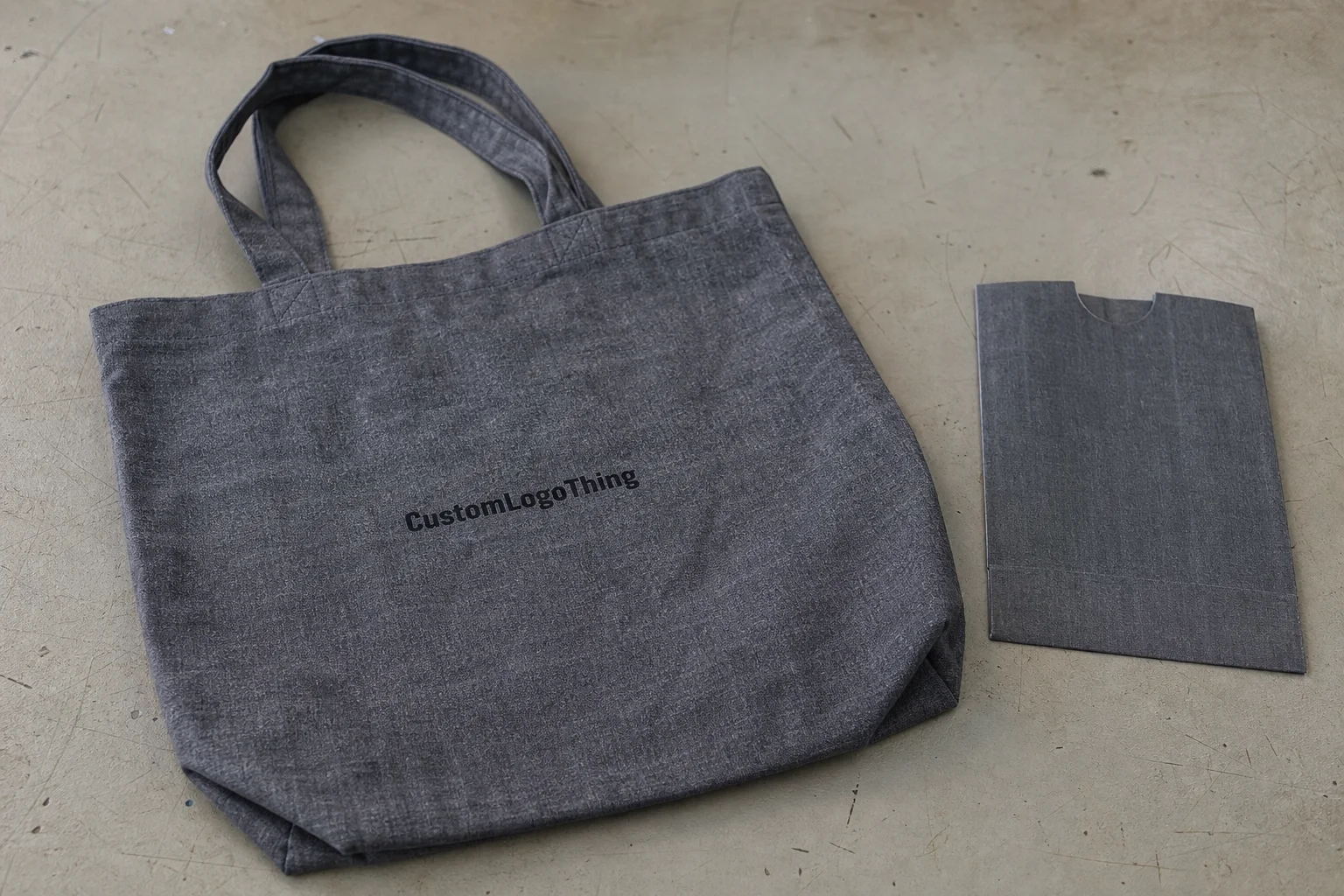
Custom recycled tote bags do quiet but effective work for a brand. On a retail counter, at a trade show, in a grocery line, or folded into a welcome kit, they appear simple enough at first glance, yet they keep carrying a logo long after the first handoff. That repeat use is the real value: the tote becomes a practical object that travels through daily life, and the brand goes with it.
These bags are usually made from recycled PET from recovered plastic bottles, recycled cotton blends, or post-industrial fibers and nonwovens that have been reprocessed into usable fabric or sheet stock. The material choice changes everything from hand feel to print quality. A sewn recycled PET tote has a different structure than a lightweight nonwoven grocery bag, and buyers usually notice that difference the moment they compare samples.
There are three practical reasons people order them. They offer repeated brand visibility, they serve a useful purpose, and they support a sustainability story that is easier to explain when the item itself is reusable and visibly made with reclaimed content. A tote that gets used dozens of times communicates more than a disposable bag ever could.
There is also an important distinction between recycled, recyclable, and post-consumer. Recycled means the material has already been recovered and processed into something new. Recyclable means the item may be accepted again by local waste systems, depending on the region. Post-consumer content comes from products used by end users, while post-industrial content comes from manufacturing scrap and offcuts. Buyers who understand that difference usually avoid confusing claims later, especially when the tote is part of retail packaging or a branded gift program.
Texture is another detail that surprises first-time buyers. Recycled fibers can show slight shade variation, slubs, or a less uniform surface, particularly in natural-toned or blended materials. That is not necessarily a defect. In many cases, it is part of the appeal, because it gives the tote a more authentic material story than a perfectly flat synthetic finish.
How the material and printing process work
Production begins with sourcing and reprocessing the recycled material. Recycled PET is melted and respun into fiber or filament, then woven or formed into usable stock. Recycled cotton follows a different route: old garments or production waste are shredded, blended, and reprocessed into yarn or webbing. The result is functional and dependable, but it is not identical to virgin material, and that difference shows up in weight, drape, and print behavior.
Construction style matters as much as the base material. A sewn tote usually has stitched side seams, hems, and reinforced handles, which gives it a more retail-ready look and better load performance. A heat-sealed nonwoven bag is lighter and generally less expensive, which makes it useful for events and short-term promotions. Gusseted shopping bags carry bulkier items more comfortably, while reinforced handles improve comfort when the bag is meant for repeated daily use. Those details may seem small on a spec sheet, but they are often what separates a tote that gets reused from one that gets tossed aside.
Decoration should follow the surface, not just the artwork file. Screen printing is common because it is cost-effective and holds bold color well on many tote surfaces. Heat transfer can work for finer detail or smaller quantities, though the finish may feel less natural on textured fabric. Woven labels and sewn patches are useful when the bag surface does not accept ink cleanly or when the brand wants a more premium look. On rough recycled materials, simpler art with stronger contrast usually prints cleaner than thin type or detailed gradients.
Recycled content can affect shade consistency from lot to lot. That does not mean the bag is poor quality; it means the material has more character than a virgin substrate. Buyers who need precise brand color should ask for a proof and, when the order is high visibility, a pre-production sample. That extra step is often the difference between a good-looking approval and a warehouse full of bags that miss the mark.
Key factors that affect quality, durability, and branding
The biggest driver of tote quality is fabric weight. A lighter nonwoven may be perfectly fine for a handout bag, but if the tote needs to hold books, groceries, catalogs, or sample kits, the material needs more body and the stitching needs more support. Buyers often focus on the outside appearance and miss the internal performance. That is how a bag ends up looking acceptable in a mockup and failing in real use.
Handle design deserves as much attention as the print. Short handles work for quick hand carry, while longer shoulder-length handles improve comfort for retail or event use. Reinforcement at the handle base is not visually exciting, yet it is one of the strongest indicators that the tote will hold up. Gusset depth matters too: a 4-inch gusset makes a bag far more functional than a flat profile when the contents are bulky or awkwardly shaped.
Branding depends on print area, logo placement, and contrast. Dark logos on natural recycled fabric usually read well. Thin reverse-out typography often does not. If the fabric is textured, the cleanest artwork usually uses larger type, fewer colors, and enough margin from seams and folds. That same principle applies across package branding: the artwork has to work on the substrate, not just in a digital mockup.
For sustainability claims, ask for specifics in writing. A seller should be able to state the recycled content percentage, the source type, and any documentation that supports the material claim. Depending on the order and market, buyers may ask for certification references where paper components are involved, or for testing records that align with standard industry expectations. Public resources such as the EPA’s recycling guidance can help frame general language, while transit-focused standards such as ISTA are useful for thinking through handling and shipping stress. The point is not to overcomplicate the order; it is to make sure the claims and the product match.
Finishing details can lift a budget tote more than many buyers expect. Clean hems, consistent seam allowances, internal binding, and better handle attachment all affect how the bag feels in hand. A tote with decent print but sloppy construction can still feel cheap, while a well-finished bag with modest branding can feel surprisingly premium.
| Option | Typical Use | Approx. Unit Range | Strength Profile |
|---|---|---|---|
| Lightweight nonwoven recycled tote | Events, giveaways, short-term promos | $0.45-$1.10 | Good for light carry, lower cost, fast production |
| Recycled PET sewn tote | Retail, welcome kits, repeated use | $0.95-$2.40 | Better structure, cleaner print, stronger perceived value |
| Recycled cotton blend tote | Premium gifting, lifestyle branding | $1.60-$4.20 | Higher hand feel, often more desirable for retail packaging |
Cost, MOQ, and what drives unit price
Pricing for custom recycled tote bags usually comes down to a few predictable inputs: material, size, print colors, print locations, and extras such as pockets, zippers, lining, or reinforced gussets. A simple tote can stay in the lower range. Once you add custom construction or full-coverage branding, the number moves quickly. A one-color front print on a standard recycled tote is a very different job from a two-sided layout with special reinforcement.
The MOQ, or minimum order quantity, exists because setup takes time and equipment changes cost money. Printing screens, fabric cutting, seam adjustment, and inspection all require labor that has to be spread across the run. That is why 250, 500, or 1,000 pieces is common, depending on the style and decoration method. Smaller quantities are possible in some cases, but the per-unit cost usually rises because setup costs are spread over fewer bags.
Artwork can change pricing more than many buyers expect. A bold one-color logo usually prints faster and with less waste than a complex illustration with tight registration and multiple passes. Full-coverage graphics, detailed edge-to-edge layouts, and front-and-back branding all increase labor and material use. If the bag will be reused many times, a slightly higher unit price often pays back through longer service life and better visibility.
Here is a practical comparison of what tends to move pricing:
| Cost Driver | Lower-Cost Choice | Higher-Cost Choice | Buyer Impact |
|---|---|---|---|
| Material | Light nonwoven | Recycled cotton or heavier rPET | Changes feel, strength, and lifespan |
| Print colors | One color | Multiple colors or full coverage | Affects setup, labor, and clarity |
| Print sides | Single side | Front and back | Raises decoration cost and inspection time |
| Construction | Standard seams | Reinforced handles, pockets, zipper top | Adds material and sewing time |
| Quantity | Smaller run | Larger run | Higher quantity usually lowers unit price |
Quotes only make sense when the specs match. A 14 x 15 bag in 80 gsm nonwoven with a one-color print is not directly comparable to a 16 x 18 recycled cotton tote with heavier fabric and two-sided branding. Those are different products, not different prices for the same thing. The lowest number is not the best number if the bag cannot do the job.
Production steps and timeline from proof to delivery
The workflow is usually straightforward, but every step affects the final result. It starts with the brief: quantity, size, recycled material preference, artwork, and intended use. Then comes artwork review, where print limits, line thickness, and placement are checked against the bag surface. After that, the supplier confirms material selection, sends a proof, and, if needed, produces a sample before full production begins. Once the proof is approved, the order moves into cutting, printing, sewing or sealing, inspection, packing, and shipping.
Delays usually show up in two places. The first is artwork. If the file is low resolution, missing fonts, built incorrectly, or packed with tiny details that will not print cleanly, the back-and-forth can slow the job down. The second is documentation. When a buyer needs specific sustainability wording or supporting paperwork, that should be resolved before production starts, not after the order is underway. Both issues are normal, but they are easier to manage when they are handled early.
For timing, simple one-color runs often move in roughly 12 to 15 business days after proof approval, depending on the factory schedule and material availability. More custom jobs, especially those with unusual dimensions, multiple decoration passes, or sample approval stages, may take 3 to 5 weeks or longer. Freight time matters too. A tote that is technically finished is not useful if it arrives after the event, so a receiving buffer is smart for launches, seasonal promotions, and retail resets.
Pre-production samples are worth the time when the order carries a lot of visibility. A sample can catch logo placement errors, handle length issues, color shifts, or an unexpected feel in the material. That is a small insurance step compared with redoing a full run. For branded packaging programs that include totes alongside Custom Printed Boxes or insert cards, sample approval also helps keep the entire presentation aligned.
Common mistakes buyers make with recycled tote specs
The first mistake is approving artwork without checking how it will sit on textured material. Thin fonts, tiny reversed-out details, and closely spaced colors can disappear on a recycled surface. If the logo has to be readable from a distance, it should be tested at the actual size and on the actual bag shade, not only in a digital mockup.
The second mistake is assuming all recycled bags perform the same. They do not. A lightweight post-industrial nonwoven and a stitched recycled cotton bag can differ dramatically in load capacity, drape, and visual quality. Material origin and construction change the final result, and the difference becomes obvious once the tote is in use.
Vague sustainability language causes another layer of trouble. Saying a bag is eco-friendly does not tell a buyer much, and it can create problems if the brand needs precise claims for retail packaging or sales materials. Better wording is specific: recycled content percentage, fiber source, and any relevant testing or certification. If the claim matters, lock the wording down before the print order is approved.
Ordering by price alone is the last major trap. A tote that saves a few cents can become expensive if the print is poor, the seams split, or the handles feel awkward and customers stop using it. Size errors create the same problem. If the bag needs to fit inserts, catalogs, or retail items, confirm width, height, and gusset depth before production starts. Fixing a dimension mistake after the first cartons arrive is slow and costly.
Expert tips for ordering custom recycled tote bags that perform
Start with artwork that can survive repeated handling. Bold shapes, good contrast, and enough empty space around the logo tend to print better and wear better. Fine detail may look crisp on a screen and muddy on woven or textured recycled fabric. If the brand mark is subtle, consider enlarging it slightly or using a stronger lockup for this format.
Test the bag the way people will actually use it. Hold it loaded. Check handle comfort. See whether the tote tilts when carried. A bag that feels balanced gets reused more often, and that matters more than a slightly flashier decoration method. Utility is part of brand value here.
“A good tote should feel like something people want to keep, not something they tolerate until they get home.”
Ask for material documentation, print proofs, and a clear sample approval process if the sustainability story is part of the message. That helps protect both the brand and the buyer, especially when the tote will be used in customer-facing campaigns or sold through retail packaging. If the program includes other branded components, keep the tote, labels, and insert materials visually consistent.
Distribution should shape the spec. A tote handed out at a trade show needs to be easy to stack, quick to fill, and sturdy enough for brochures and samples. A retail tote may need a more polished finish and cleaner seams. A mail-order insert bag might need a flatter build so it fits inside the main shipper without adding unnecessary volume. The use case should drive the construction choice.
One rule holds up well: if the bag will be reused often, spend on seams, handles, and print durability before spending on extra decoration. A well-built tote with a clean one-color logo usually outperforms a flashy, underbuilt bag over time.
Actionable next steps before you request a quote
Before asking for pricing, gather the basics: target quantity, exact dimensions, preferred recycled material, number of print colors, print sides, and delivery deadline. If you already know the tote will be used as a retail bag, an event giveaway, or part of a kit, say that up front. That gives the supplier enough context to recommend a structure that fits the job instead of guessing.
Decide what matters most. Is the lowest unit cost the priority? Do you need the strongest build? Or is the goal a polished presentation that supports premium packaging design? Those are different paths, and the quote should reflect the choice. If sustainability claims are part of the plan, note the wording you want to use and ask whether documentation is available.
Prepare logo files in vector format whenever possible. AI, EPS, or PDF vector art gives the print team the cleanest file to work from, especially for smaller logos or multi-color layouts. Include brand rules, Pantone references if you have them, and any packaging instructions tied to the rest of the order. If the tote is part of a broader branded packaging program, align it with the other components early so the final look feels intentional.
Request at least one proof, confirm the exact construction details in writing, and review the proof at full size if you can. Then verify the size, material, decoration, and timeline one last time before approval. That final check keeps the order moving cleanly and helps the finished bags arrive ready to use, not ready for another round of fixes. For buyers comparing Custom Packaging Products, that discipline saves time and usually saves money too.
Custom recycled tote bags work best when the specs are tied to the real job they have to do. Choose the Right material, print for the surface, and build enough strength into the seams and handles so people actually keep using them. That is how the tote earns its place in a brand program instead of becoming another forgotten giveaway.
FAQs
What are custom recycled tote bags made from?
They are commonly made from recycled PET, recycled cotton blends, or other reclaimed fibers and nonwovens. The exact feel and durability depend on the source material, weight, and construction method.
Are custom recycled tote bags durable enough for repeated use?
Yes, if the fabric weight, stitching, and handles are properly specified for the intended load. Heavier materials, reinforced seams, and well-placed gussets usually improve long-term performance.
How much do custom recycled tote bags cost per unit?
Unit price depends on material type, size, print colors, construction details, and order quantity. Higher quantities usually reduce the per-bag price because setup costs are spread across more units.
What is the usual turnaround time for custom recycled tote bags?
Turnaround depends on artwork approval, sampling needs, production complexity, and shipping method. Simple one-color orders often move faster than custom construction or multi-step decoration.
How should I choose the right recycled tote for my brand?
Start with how the bag will be used, then match size, handle style, and material weight to that use case. Choose a print style and artwork that stays readable on the recycled surface and supports your brand message.

