Custom return mailing labels are a small line item with an outsized effect on operations. If the stock is wrong, the adhesive fails, or the barcode is hard to scan, returns slow down and customer service absorbs the damage. The label is not decorative. It is a working part of the return process.
From a buyer’s point of view, the label has to do three things at once: stay attached, stay readable, and fit the packaging workflow without adding manual steps. If it misses any of those, the return path gets slower and more expensive. That is why the spec matters as much as the artwork.
For apparel, beauty, and general ecommerce brands, the stakes are higher than they look on a proof. Returns move through different surfaces, warehouses, and hands. A label that performs on a clean carton may fail on a poly mailer, and a label that looks fine on screen can still wrinkle, scuff, or lift in transit. The order has to match the real shipment, not an ideal one.
Why Custom Return Mailing Labels Fail More Often Than They Should
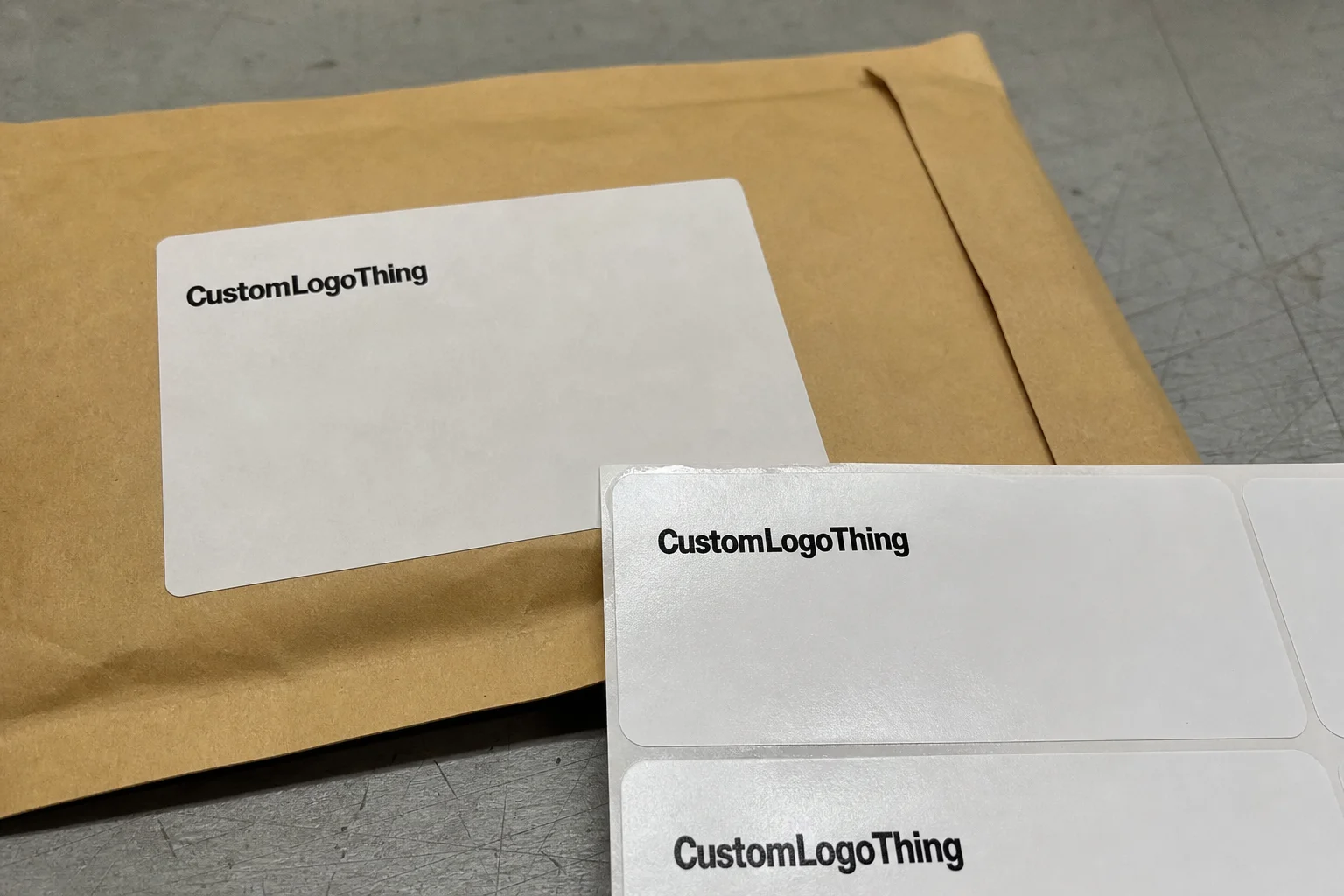
The most common failures are practical, not dramatic. The proof looks clean, the art is approved, and then the labels meet an actual package. The mailer flexes, the adhesive bond weakens, a corner lifts, or the barcode gets scuffed. The problem usually appears at intake, when a warehouse has to slow down and work around it.
Packaging surface is the first variable. Poly mailers are slick and flexible. Kraft boxes can be dusty, recycled, or coated. A label that works on one surface may fail on another. Edge lift, residue, and early bond failure are common when the adhesive does not match the substrate.
Handling is the second variable. Return parcels are sorted, stacked, re-scanned, and moved in bulk. Even if a label survives outbound transit, it still has to survive intake and sorting. A design that is fine for a static box can behave badly when the parcel is bent and handled repeatedly.
A return label is a functional component. If it fails, someone pays for the cleanup.
There is also a scanning issue that gets ignored too often. If the barcode is too small, placed on a reflective finish, or crowded by other copy, the warehouse may have to override it manually. That adds time to every unit and turns a minor design error into a labor problem.
How Custom Return Mailing Labels Work
At a basic level, custom return mailing labels carry return information, routing details, and branding. They can be applied to the outside of the package, included inside the parcel for later use, or built into a peel-and-reuse format. The right setup depends on your return model.
Common formats include a branded label applied at shipment, an insert card or peel panel that the customer uses later, and a variable-data label that includes routing codes or serial information for warehouse intake. The more your process depends on scanning and sorting, the more important the data layout becomes.
What goes on the label matters as much as placement. Return address, brand name, barcode, QR code, and handling instructions all compete for space. If variable data is needed, the layout has to stay legible as the data changes. If it is not needed, do not overbuild the design. Use the space for contrast and readability.
For brands that want a coordinated packaging system, the label should match the rest of the set in tone and finish. It should sit naturally beside your Custom Labels & Tags and the broader Custom Packaging Products lineup. Otherwise the return piece feels disconnected from the rest of the package.
The best labels also reduce work for the customer. Clear peel points, obvious placement, and simple instructions reduce mistakes. If the return label is part of a reusable mailer or included panel, the process should be obvious at a glance.
Material, Size, and Adhesive Choices That Matter
The spec comes down to three choices: material, size, and adhesive. Those determine whether the label survives the return path.
Paper stock is the lower-cost option and works well for dry, low-friction applications. It is a sensible choice for simple carton returns and short handling cycles. The tradeoff is durability. Paper is more vulnerable to scuffing, moisture, and edge wear.
Synthetic stock, usually polypropylene or polyester, costs more but holds up better under abrasion, moisture, and repeated handling. If the label goes on a poly mailer or needs longer shelf life in a warehouse, synthetic stock usually reduces failures and reprints. The unit price is higher, but the operational cost is often lower.
Size is where buyers often compromise too much. A label that looks tidy in a mockup can become crowded once you add a return address, brand name, routing code, and barcode. If the layout feels tight in the proof, it will feel worse in production. Leave enough white space for fast reading and clean scanning.
Adhesive Fit Is Not Optional
Permanent adhesive is the default for most carton applications. It is secure and usually the right answer when the label has to stay in place through transit and intake. Removable adhesive makes sense when repositioning is required or when the customer needs to reuse part of the packaging without residue.
Specialty adhesive matters on coated, textured, recycled, or flexible surfaces. Poly mailers are the usual problem area because they flex and the surface is slick. A label that seems fine on a desk may fail once the parcel is bent, stacked, and rubbed against other parcels.
If sustainability claims matter, look at the full construction rather than only the face stock. FSC-certified paper supports responsible sourcing claims; the baseline is documented here: FSC. For durability and transit performance, it also helps to think in terms of transport testing. That is why ISTA standards are relevant even for a label order.
Print method matters as well. Digital, thermal, and offset each have different strengths. If the labels are printed in-house, the stock must match the printer. If the supplier prints them, the press method should fit the run size, finish, and data requirements. A proof that looks good on screen is not enough if the stock jams a printer or smears under handling.
| Option | Best For | Typical Tradeoff | Relative Cost |
|---|---|---|---|
| Paper stock with permanent adhesive | Dry carton returns, low-cost runs, simple layouts | Less durable against abrasion and moisture | Lowest |
| Synthetic stock with permanent adhesive | Poly mailers, higher-handling returns, longer shelf life | Higher unit price, stronger material feel | Medium to high |
| Removable adhesive label | Insert cards, repositionable use, special workflows | May not hold as well on rough or dusty surfaces | Medium |
| Variable-data label | Routing, serialization, barcode-driven intake | More setup and proofing effort | Medium to high |
That table usually narrows the decision quickly. Paper can be enough for a simple dry return path. Synthetic stock is often the cheaper choice in practice when packages flex, rub, or pick up moisture. Unit price matters, but the cost of failure matters more.
Process, Timeline, and Turnaround Expectations
The production flow is straightforward: artwork intake, spec confirmation, proofing, approval, print, finishing, packing, and shipment. If variable data is involved, the data file needs to be checked before production starts. Sloppy inputs are what slow jobs down.
The biggest delay is usually correction time, not press time. Missing dimensions, unclear copy, wrong barcode sizing, and late artwork changes can stall a job quickly. A label order that should have been routine turns into back-and-forth when the return format was not specified cleanly.
Lead times depend on quantity, material, print method, and finishing. As a practical range, simple digital runs can often ship in about 5-10 business days after proof approval. More complex jobs, larger quantities, or specialty materials can move into the 10-15 business day range, sometimes longer if variable data or extra finishing is involved. Rush service is possible in many cases, but it costs more and still depends on complete files and fast approvals.
Sampling is worth it whenever the label touches a specific surface. A physical test on the actual mailer or box will show edge lift, barcode contrast, placement issues, residue, and how the adhesive behaves under flex. If the sample fails, fix the spec before the full run. Reprinting after production is expensive.
For seasonal businesses, reorder timing matters as much as the first order. Returns spike after launches, promotions, and holidays. If inventory is too tight, rush charges solve a problem that a modest buffer would have avoided. A small cushion and a clean reorder schedule are more reliable than a perfect forecast.
Pricing, MOQ, and Unit Cost Breakdown
Pricing for custom return mailing labels looks simple on a quote sheet and still be misleading. The main drivers are size, material, adhesive, color count, print method, finishing, and whether the job includes variable data. If any of those change, the price moves.
MOQ changes the economics quickly. A smaller run spreads setup cost across fewer pieces, so the unit price rises. Larger runs lower unit cost, but they also increase inventory and cash tied up in stock. That tradeoff is fine if the label format is stable. It is less attractive if the return process changes every few months.
For a common apparel use case, a simple paper label in a few-thousand-piece run can often land around $0.18-$0.28 per unit before freight, depending on coverage and setup. Synthetic stock often lands higher, roughly $0.25-$0.45 per unit in the same range. Variable-data work usually adds setup complexity first and cost efficiency later as volume rises. Small custom runs, especially 500-1,000 pieces, tend to carry the highest unit cost because fixed work is spread over fewer labels.
| Order Type | Typical Run | Common Pricing Pattern | Buyer Takeaway |
|---|---|---|---|
| Simple paper label | 5,000 pieces | Often around $0.18-$0.28 per unit before freight | Good for dry, low-friction returns |
| Synthetic label | 5,000 pieces | Often around $0.25-$0.45 per unit | Better for handling and moisture |
| Variable-data job | 2,500-10,000 pieces | Higher setup cost, then better economics at scale | Useful for routing or serialized intake |
| Small custom run | 500-1,000 pieces | Highest unit cost because setup is spread thin | Fine for testing, not ideal for steady use |
Setup, proofing, and shipping charges can matter more than the unit price on short runs. Compare full delivered cost, not the teaser number. A low per-unit quote can still be the expensive choice once the extras are added.
If the label is part of a broader packaging system, it can make sense to plan the run with the rest of the program in mind. Coordinating labels with Custom Poly Mailers or a larger branded packaging rollout can reduce repeat-order friction and make planning easier.
Common Ordering Mistakes That Waste Time and Money
The first mistake is choosing the wrong adhesive for the actual surface. Coated poly mailers, dusty cartons, recycled board, and textured paperboard all behave differently. If the adhesive is too weak, the label lifts. If it is too aggressive, it tears or leaves residue. Either way, the label becomes a defect instead of a tool.
The second mistake is overcrowding the layout. Too much text, too little contrast, or a barcode squeezed into a corner all create problems. Labels need clear hierarchy. The return address should be easy to read, the barcode should scan cleanly, and the brand mark should not overpower the functional information.
The third mistake is skipping a real surface test. A screen proof does not show how the label behaves on a slick mailer seam, a dusty recycled carton, or a package that gets flexed repeatedly. Apply the sample to the actual packaging, press it down, bend the mailer, and check the edges. If the bond fails in minutes, it will not improve in transit.
Other mistakes are less visible but still expensive. Buyers under-order because they only think about launch volume, not return volume. They over-order because they assume the design will stay fixed forever. They ignore humidity, abrasion, and warehouse handling. Then they blame the printer when the spec was the real issue.
The same logic that applies to Custom Printed Boxes applies here: understand the surface, the shipment path, and the storage environment before finalizing the spec. If those variables are clear, the label decision is straightforward. If they are not, the order is a guess with a purchase order attached.
Expert Checks and Next Steps Before You Order
Before you place the order, run a short preflight check. Confirm the package surface, label size, adhesive type, print method, and any required copy. If the barcode needs to scan at intake, verify size and contrast before approval. If the label goes on a flexible mailer, test that exact surface before you lock the run.
If the label is meant for a specific clothing mailer or return box, ask for a physical sample or a short test pack. That matters more with coated surfaces, recycled board, and variable-data jobs. A sample shows fit, adhesion, clarity, and finish under realistic conditions. The proof is only half the job.
Keep the approved artwork, final proof, and spec sheet together. Reorders get messy when someone has to reconstruct the job months later. Good documentation also makes handoffs easier across ecommerce, operations, and merchandising.
For buyers comparing custom return mailing labels with other branded packaging components, the real question is whether the label holds up in the return workflow, keeps the package legible, and reduces unnecessary support work. If it does those things, it earns its place. If it does not, the cheapest quote is still too expensive.
The practical path is simple: measure the package, confirm the surface, Request a Quote with exact specs, and run a small test order before scaling. That is how you get labels that work in production instead of just looking good on a proof.
FAQ
How are custom return mailing labels different from standard address labels?
Custom versions are built around your packaging, return workflow, and branding needs instead of a generic address-only format. They also let you choose stock, adhesive, size, and whether you need barcodes, routing codes, or handling instructions.
What size should I choose for custom return mailing labels on clothing mailers?
Choose a size that leaves enough room for the return address, brand name, and any internal code without crowding the layout. Always test the proof on the actual mailer because folds, seams, and textured surfaces can change how the label fits.
What affects the price of custom return mailing labels the most?
Size, stock, adhesive, color count, finishing, and variable data are the main drivers. Setup, proofing, and shipping can matter more than the unit price on short runs, so compare the full delivered quote.
What is a realistic turnaround for custom return mailing label orders?
Lead time depends on proof approval, quantity, print method, and finishing. Simple jobs can move in about 5-10 business days after approval, while more complex or larger runs often take 10-15 business days or longer.
Can custom return mailing labels be used on poly mailers and cardboard boxes?
Yes, as long as the adhesive matches the surface and the material can handle the shipping environment. Test on the exact packaging first, especially with coated, recycled, or high-friction surfaces, because weak specs usually fail there first.


