Buyer Fit Snapshot
| Best fit | Custom Seed Paper Hang Tags projects where brand print, material claims, artwork control, MOQ, and repeat-order consistency need to be specified before quoting. |
|---|---|
| Quote inputs | Share finished size, material target, print colors, finish, packing count, annual reorder estimate, ship-to region, and any compliance wording. |
| Proofing check | Approve dieline scale, logo placement, barcode or warning zones, color tolerance, closure strength, and carton packing before bulk production. |
| Main risk | Vague material claims, crowded artwork, missing packing details, or unclear freight terms can make a low unit price expensive after revisions. |
Fast answer: Custom Seed Paper Hang Tags: Material, Adhesive, Artwork, and MOQ should be specified like a repeatable production item. The safest quote records material, print method, finish, artwork proof, packing count, and reorder notes in one written spec.
Production checks before approval
Compare the actual filled-product size with the drawing, then confirm tolerance on folds, seals, hang holes, label areas, and retail display edges. Reserve space for logos, QR codes, warning copy, and material claims before decorative graphics fill the panel.
Quote comparison points
Review material grade, print process, finish, sampling route, tooling charges, carton quantity, and freight assumptions side by side. A quote is only useful when the supplier can repeat the same color, closure quality, and packing count on the next order.
Custom seed paper hang tags can turn a routine product detail into something customers actually remember, especially when the tag feels tied to the brand story instead of sitting there like an afterthought. For apparel, gifts, and small-batch goods, that little piece of product packaging can do real work: it carries the logo, explains the message, and gives the buyer something they can plant instead of toss. If your line already uses Custom Labels & Tags or broader Custom Packaging Products, this is one of the cleaner ways to extend package branding without adding clutter.
What Are Custom Seed Paper Hang Tags?
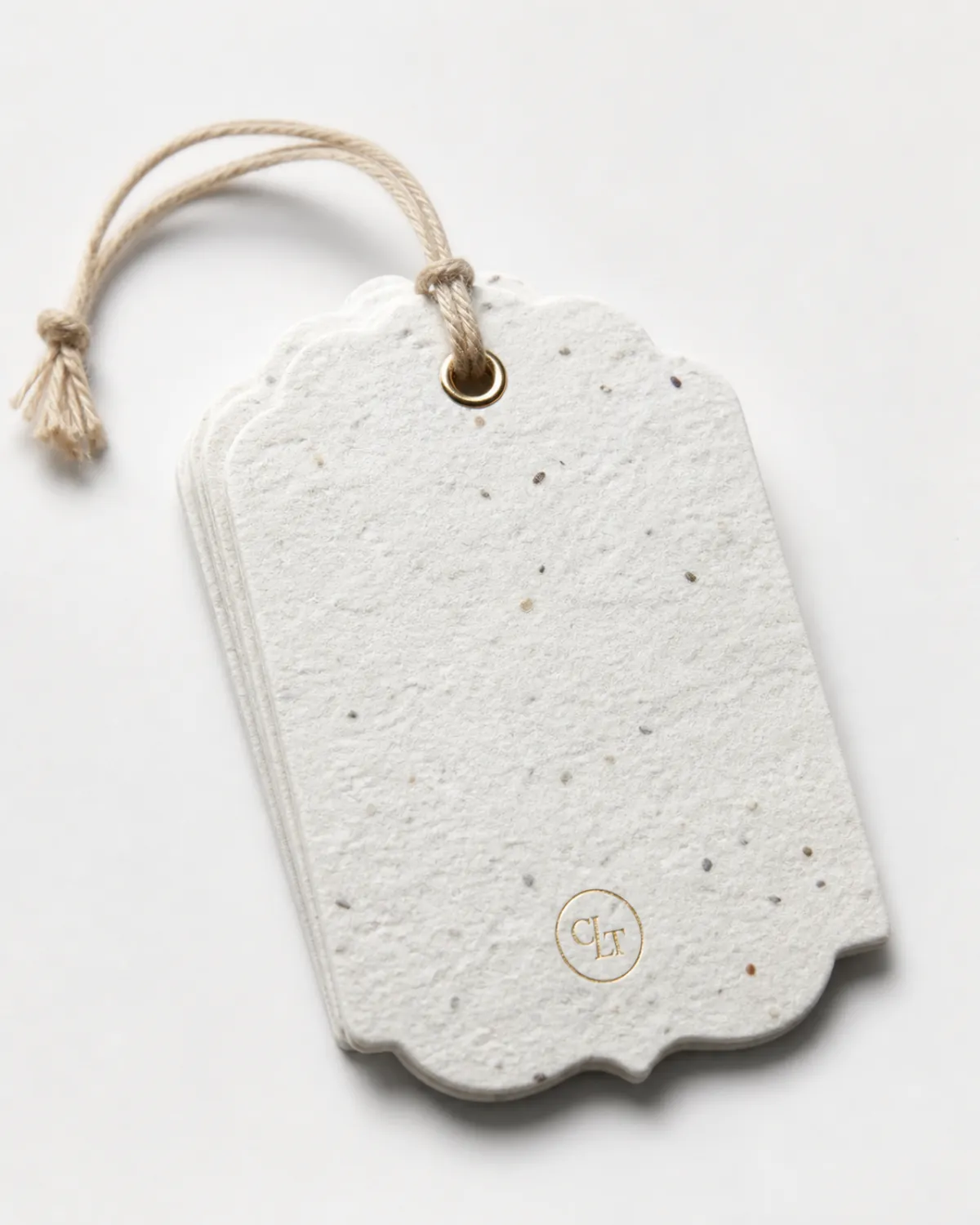
Picture the last garment tag you peeled off and dropped into the trash. Now imagine the same moment, but the customer pauses because the tag feels too useful to discard. That is the real appeal of custom seed paper hang tags: they swap a disposable detail for a small, plantable keepsake that can carry branding, sustainability messaging, and post-purchase value in one compact piece. For brands trying to sharpen retail packaging, that is not a sentimental extra. It is a practical advantage.
Seed paper is not ordinary recycled stock dressed up with an eco label. It is a fiber-based sheet with seeds suspended inside the pulp, so the material can be cut into a hang tag, label insert, thank-you card, or promo piece and later planted in soil. With custom seed paper hang tags, the paper itself becomes part of the product experience, which is why they show up in eco-focused apparel lines, special edition launches, wedding favors, and other branded packaging formats where the unboxing moment matters.
The distinction matters. A kraft-style tag can look environmentally aware without offering anything plantable. If there are no viable seeds inside the sheet, nothing grows. Real custom seed paper hang tags depend on a few variables working together: the paper blend, seed type, print method, and the way the customer handles the tag after purchase. Miss one of those pieces and the planting result weakens fast.
From a packaging buyer’s point of view, the value is easy to understand. A standard tag tells the shopper the size, price, or brand name. A plantable tag adds a second life after the sale. That matters because package branding is not only about shelf appeal; it is also about what the customer remembers after the garment is home, the gift is opened, or the shipment is unpacked. Custom seed paper hang tags create that follow-through better than most add-on inserts.
There is a visual advantage too. Seed paper usually has a tactile, natural surface rather than a coated finish, so it supports a handmade or purpose-driven look. That can fit artisanal product packaging, but it also works for polished lines if the design stays disciplined. Many brands overcomplicate the idea. The best custom seed paper hang tags usually look simple, honest, and easy to understand at a glance.
I have seen a lot of packaging concepts that try to do too much at once, and this is one of those formats where restraint pays off. A compact tag with one clear message often feels more premium than a crowded one with four different claims fighting for attention. It is kinda funny how often “less” ends up doing more, but that is usually what happens here.
For brands that already invest in Custom Printed Boxes, tissue, stickers, and inserts, a plantable tag is a small addition that can make the whole set feel more considered. It does not need to shout. It just needs to feel well chosen.
How Custom Seed Paper Hang Tags Work
The production process behind custom seed paper hang tags starts with a pulp base, usually made from recycled or plant-based fibers, into which seeds are gently suspended before the sheet forms. The mixture is then pressed, dried, and cut into tag shapes. That sounds simple, yet the handling matters a great deal because seeds are living material, not decoration. If the sheet is processed too aggressively, the seeds can be damaged or distributed unevenly.
Once a customer is ready to plant the tag, the instructions need to be straightforward. The typical method is to soak the tag, tear it into smaller pieces if needed, press it lightly into loose soil, cover it with a thin layer of dirt, and keep it moist until germination begins. That is why clear planting copy is so important on custom seed paper hang tags; people are much more likely to follow five plain steps than one vague sustainability slogan.
Seed selection changes how the tag behaves. Flower mixes, herb blends, and wildflower combinations all have different storage needs, germination windows, and climate preferences. A wildflower mix may feel like the default choice, but that is not always the best answer for every brand or region. The better question is whether the seed mix matches the customer’s likely soil, season, and patience level. If the tag sits in a drawer for months and the seed variety is sensitive to age, the planting result may be weaker than expected.
Printing and finishing also impose real limits. Heavy ink coverage, film lamination, thick varnish, and certain coatings can interfere with sprouting because they block water absorption or add a surface layer the seedling must push through. That is why custom seed paper hang tags are usually designed with restrained print coverage, open areas for instructions, and finishes that do not seal the sheet shut. If the tag is supposed to grow, the production choices need to respect that goal.
A good plantable tag is not just a print job with seeds inside it; it is a piece of packaging design that has to function before and after the sale.
For branding teams, the layout should leave enough room for the logo, a short message, and a readable planting prompt. Small retail formats do not reward crowded copy. In practice, custom seed paper hang tags work best when the design gives the customer one clear action to remember: keep, plant, and grow.
If your team wants to sanity-check material sourcing, it helps to think about responsible fiber standards as well. Many brands look at FSC-certified paper sourcing for broader environmental credibility, especially when the tag is part of a larger sustainability story across product packaging and retail packaging.
Custom Seed Paper Hang Tags Cost and Pricing Factors
Pricing for custom seed paper hang tags is usually driven by six practical variables: size, thickness, seed variety, print colors, die cutting, and quantity. A simple one-color rectangle will almost always cost less than a custom silhouette with front-and-back printing and a specialty seed blend. The reason is not mystery markup; it is setup time, material handling, and how many production steps are involved.
MOQ, or minimum order quantity, matters a lot. Smaller runs tend to carry a higher unit cost because the fixed work of proofing, seed paper formation, setup, and cutting is spread across fewer tags. Larger orders often improve pricing efficiency, but only if the design is stable and the delivery window can support a bigger run. For many buyers, custom seed paper hang tags become cost-effective once the run is large enough to absorb setup without pushing unit cost too high.
There is also value beyond the tag itself. A plantable tag can reduce the need for separate promo cards, extra sustainability inserts, or a second messaging piece in the package. That means the tag may do the work of two or three ordinary inserts. From a packaging design standpoint, that can be smarter than paying for a cheaper tag that says less and gets thrown away faster.
As a practical buying tool, I like to compare quotes using the exact same spec sheet. If one supplier quotes a 2 x 3 inch tag with one-color print and another quotes a 3 x 5 inch tag with two-sided color, the numbers are not useful side by side. Ask each vendor to price the same paper thickness, seed mix, ink coverage, shape, and finishing so the comparison is honest. That is especially true for custom seed paper hang tags, because seed selection and printing limits can shift the price more than people expect.
Here is a simple comparison framework that can help a buyer plan a budget before requesting samples:
| Option | Typical Specs | Best For | Approx. Unit Cost at 5,000 Pieces |
|---|---|---|---|
| Standard Plantable Tag | 2 x 3 in, one-color print, common wildflower mix | Apparel, gift tags, entry-level branded packaging | $0.22 - $0.35 |
| Premium Retail Tag | 3 x 5 in, front-and-back print, moderate ink coverage | Retail packaging with more message space | $0.32 - $0.55 |
| Custom Shape Tag | Die-cut silhouette, heavier setup, selective print areas | Seasonal launches, branded packaging with strong shelf presence | $0.40 - $0.70 |
| Special Seed Blend | Herb or custom flower mix, tighter quality control | Brands with a specific planting story | $0.35 - $0.75 |
Those numbers are planning ranges, not promises, because paper thickness, seed viability, artwork complexity, and pack-out details all influence the final quote. Still, they give buyers a realistic starting point. If an order is quoted far below those ranges, ask what was removed from the spec. If it is far above, ask whether the quote includes premium seed sourcing, custom shapes, or special finishing that may not be necessary for your use case.
For brands comparing custom seed paper hang tags against standard paper tags, the higher price often reflects a more specialized process rather than a luxury markup. The material is more delicate, the handling is more careful, and the final piece is doing two jobs instead of one. That difference is worth understanding before a packaging team makes the call.
Custom Seed Paper Hang Tags Process and Timeline
The process for custom seed paper hang tags usually begins with a project brief, then moves into quoting, artwork review, proofing, paper formation, printing, cutting, inspection, packing, and shipping. That sounds linear, yet the schedule often circles back once or twice because proof changes are common. A logo may need to move a few millimeters, the planting text may need to be shortened, or the hole placement may need to shift so the tag hangs cleanly on a garment or gift tie.
One reason the timeline is longer than standard tag production is that seed paper itself needs more care than conventional sheet stock. Drying times are part of the reality, and the material can be more sensitive to pressure, humidity, and ink load. If the order is straightforward, custom seed paper hang tags often move in about 12 to 15 business days from proof approval. More complex jobs, especially those with Custom Die Cuts or specialty seed blends, may need 18 to 25 business days. That is a practical planning window, not a fixed promise.
Late artwork changes are one of the biggest schedule risks. So are seed availability issues, overcomplicated shapes, and copy that comes back with too much revision. A buyer can save time by locking in the basics early: final size, seed mix, print method, attachment style, and shipping address. The sooner those are stable, the easier it is to keep custom seed paper hang tags on track.
If the tags support a product launch, trade show, seasonal release, or retail deadline, I would build in extra time rather than cutting it close. Seed paper is not the place to gamble with a last-minute rush. Even a clean order can hit delays if the proofing cycle stretches, and a missed delivery window can create problems for the whole packaging plan. That is especially true if the tags are coordinated with custom printed boxes, labels, and other branded packaging components that need to arrive together.
Simple shapes usually move faster. Fewer colors usually move faster. A standard rectangular tag with clear planting instructions and one-sided print is easier to approve and produce than a multi-layer design with custom corners, detailed illustration, and an unusual hole placement. If a brand wants speed, simplicity is the friend of custom seed paper hang tags.
For teams that want to think about shipping conditions as part of the timeline, ISTA testing methods can be a helpful reference point for packaging performance. You do not need a full lab program for every run, but the basic idea is sound: if the tag must survive transit, handling, and storage, the team should think ahead. The procedures outlined by ISTA are useful for understanding how packages are tested for movement, vibration, and rough distribution conditions.
Design and Material Choices That Affect Performance
Material choice shapes almost every part of the final result. The fiber content affects the feel, thickness, and print appearance, and the surface texture can either support or fight the plantable function. A slightly rough, tactile sheet usually works better than a heavily coated one because it absorbs water more readily and looks more natural on shelf. That is one reason custom seed paper hang tags often have a softer, handmade appearance than conventional tags.
Artwork matters just as much. Bold type, limited ink coverage, and clear contrast are usually better than tiny text and busy illustration. The tag needs to survive visual clutter on a rack or in a box, and it still needs to communicate the planting steps without squinting. A logo can sit proudly on the front, but a dense wall of copy can make custom seed paper hang tags feel more like a brochure than a usable tag.
Attachment choices also deserve attention. Hole size, twine type, string color, and whether the hole is centered or offset all change how the tag hangs and how customers remove it later. A larger hole can tear too easily if the stock is thin. A too-small hole can make threading frustrating during assembly. These little details matter because the tag has to work in a real pack-out environment, not just in the design file.
Seed and climate fit is another point that gets overlooked. A trendy wildflower mix is not automatically the best choice. If your customer base is in a hot, dry region, or if the tags are likely to sit in storage for a while, a seed mix should be selected with that reality in mind. With custom seed paper hang tags, the right seed variety should be chosen for the use case, not just for the appearance of the idea.
Compliance and messaging deserve a careful eye too. If the tag makes a grow claim, the planting copy should be specific and realistic. Do not promise guaranteed blooms, do not bury the instructions in small text, and do not imply results that depend on weather, soil quality, and user follow-through. A responsible sustainability message is more credible than a flashy one. That is true for custom seed paper hang tags, and it is true for product packaging generally.
Simple layouts usually age better on shelf, travel better in transit, and plant better in the soil; with seed paper, restraint is often the smartest design choice.
If your brand language leans toward premium retail packaging, the tag can still feel refined. Use one strong image, a disciplined color palette, and enough white space to let the natural paper texture do some of the work. Good package branding is not always louder; sometimes it is more composed.
Common Mistakes to Avoid With Seed Paper Tags
Overprinting is a common error. Dense ink coverage can reduce germination, make the sheet less flexible, and remove the breathable surface the seeds need. A lot of brands assume more artwork equals more value, but with custom seed paper hang tags, too much print can work against the plantable function. It is better to leave space and let the material breathe.
Vague planting instructions create another problem. If the customer has to guess how much water to use, whether the tag should be torn, or how deep it should go in the soil, the success rate drops fast. Planting copy should be short and explicit. For example: soak, plant under a thin layer of soil, keep moist, and place in sunlight once sprouts appear. That is the sort of language that helps custom seed paper hang tags actually earn their promise.
Skipping sample testing is risky too. A sample can show whether the stock feels too thin, whether the logo gets muddy, whether the hole tears easily, and whether the seed texture creates an uneven print surface. A buyer who orders a full run without checking samples may discover the tag is technically plantable but practically awkward. For a project this specific, a small test run is worth the time.
Seed choice can go wrong in less obvious ways. Some mixes are beautiful on paper but are not well suited to the customer’s climate or storage period. Others may need more care than the typical buyer is willing to give. It helps to ask where the tag will live before it is planted: in an ecommerce parcel, on a garment rack, in a gift bag, or on a display table. The answer changes how custom seed paper hang tags should be specified.
Sustainability claims should stay honest. If the tag is made from seed paper, say that clearly. If the paper is sourced from certified fiber, say that accurately. If the plant result depends on local weather, say that too. A careful claim is stronger than a broad one, and it builds trust with buyers who are paying attention. That kind of honesty matters just as much in branded packaging as it does in product packaging.
For teams that want a quick packaging rule of thumb, this is a good one:
- Use enough ink to communicate the brand, not so much that the sheet is sealed up.
- Keep the planting message short and visible.
- Choose a seed mix the customer can actually grow.
- Confirm the tag survives hanging, shipping, and handling.
- Ask for a sample before approving the full run of custom seed paper hang tags.
Expert Tips for Better Results and Next Steps
Start with one clear use case. That sounds obvious, but it prevents a lot of wasted design time. A tag for apparel does not need the same size, attachment method, or copy length as a tag for a candle, a gift set, or an event giveaway. If the project is focused, custom seed paper hang tags are much easier to specify, quote, and approve.
Request a pre-production sample or a digital proof before committing to the full order. The sample should answer the real questions: Does the size feel right in the hand? Is the hole placed correctly? Is the logo readable? Is the planting text legible at the intended distance? These checks take a small amount of time, but they save a much larger amount of rework later. With custom seed paper hang tags, that step is rarely wasted.
It also helps to build a simple checklist before you ask for pricing:
- Tag size and shape
- Estimated quantity
- Preferred seed mix
- Print colors and coverage
- Attachment method
- Artwork file format
- Target delivery date
That checklist keeps the conversation grounded in real production details. A good supplier can give you a cleaner answer when the spec is complete, and you can compare quotes more fairly when every vendor is looking at the same setup. That is especially helpful if you are balancing custom seed paper hang tags against other options in your branded packaging mix.
Another practical tip is to think about the rest of the package system, not just the tag. If the product also uses tissue, labels, custom printed boxes, or inserts, the color palette and tone should line up. A tag that feels too rustic for a polished box line can look out of place, just as a highly finished tag can feel too formal for a handmade product. The better the package branding holds together, the stronger the customer’s impression.
Before you request quotes, review the layout one more time and ask whether the tag is trying to do too much. If it is carrying the logo, a sustainability message, a long product story, a barcode, and planting steps all at once, the design probably needs to be edited. Good custom seed paper hang tags are clear enough to read quickly and simple enough to plant without confusion.
That is usually where the best results come from: a realistic seed choice, a disciplined layout, a clean proofing process, and a supplier who understands that the tag must function as both branding and a plantable material. If you keep those pieces aligned, custom seed paper hang tags can add a memorable finish to the package without making production harder than it needs to be.
What makes custom seed paper hang tags different from recycled paper tags?
Recycled paper is a substrate, while seed paper is built to be planted after use because it contains embedded seeds. That means custom seed paper hang tags need more careful choices around print, coating, and finishing so the tag can still sprout later. They also give the customer a post-purchase action, which usually creates a stronger memory than a standard recycled tag.
How do I know which seed mix is best for custom seed paper hang tags?
Start with climate, season, and the customer’s likely growing conditions, not just the look of the seed blend. Wildflowers are common, but herbs or specific flower mixes may be a better fit depending on the brand story. The safest path is to confirm that the seed mix is compatible with the paper process and shelf life you expect for custom seed paper hang tags.
What affects the cost of custom seed paper hang tags the most?
Quantity, size, seed type, print coverage, die cutting, and finishing are the main cost drivers. Smaller runs usually cost more per unit because setup work is spread over fewer pieces, while simpler artwork and standard shapes usually keep pricing more manageable. When you compare custom seed paper hang tags, make sure the specs match exactly before you judge the quote.
How long does the process usually take for custom seed paper hang tags?
Simple orders often move in about 12 to 15 business days after proof approval, while more complex work can take 18 to 25 business days or longer. The actual schedule depends on material selection, revisions, drying time, and whether the design needs custom cutting. The best habit is to build extra lead time into custom seed paper hang tags before any product launch or retail deadline.
What should be printed on custom seed paper hang tags?
At minimum, include your logo, a short sustainability message, and clear planting instructions that can be understood at a glance. Leave enough open space so the tag still reads cleanly and does not feel crowded. A simple call to action works best for custom seed paper hang tags: keep the tag, plant it, and let it grow.
For brands that want packaging to feel more intentional, custom seed paper hang tags are a small format with unusual staying power. They need the right material choice, a clean layout, and honest instructions, but when those pieces come together, they add a memorable finish that customers tend to talk about, keep, and actually use. If you are planning one, lock the size, seed mix, print coverage, and planting copy before you request the first proof, then test the sample in real handling conditions so the final run does exactly what the tag promised.

