Buyer Fit Snapshot
| Best fit | Custom Die Cut Boxes With Logo projects where brand print, material claims, artwork control, MOQ, and repeat-order consistency need to be specified before quoting. |
|---|---|
| Quote inputs | Share finished size, material target, print colors, finish, packing count, annual reorder estimate, ship-to region, and any compliance wording. |
| Proofing check | Approve dieline scale, logo placement, barcode or warning zones, color tolerance, closure strength, and carton packing before bulk production. |
| Main risk | Vague material claims, crowded artwork, missing packing details, or unclear freight terms can make a low unit price expensive after revisions. |
Fast answer: Custom Die Cut Boxes With Logo: Design, Cost, and Fit should be specified like a repeatable production item. The safest quote records material, print method, finish, artwork proof, packing count, and reorder notes in one written spec.
Production checks before approval
Compare the actual filled-product size with the drawing, then confirm tolerance on folds, seals, hang holes, label areas, and retail display edges. Reserve space for logos, QR codes, warning copy, and material claims before decorative graphics fill the panel.
Quote comparison points
Review material grade, print process, finish, sampling route, tooling charges, carton quantity, and freight assumptions side by side. A quote is only useful when the supplier can repeat the same color, closure quality, and packing count on the next order.
Custom Die Cut Boxes With Logo: Design, Cost, and Fit
Custom Die Cut boxes with logo solve a very specific packaging problem: the product is good, but the box keeps getting in the way. Stock cartons often leave too much empty space, and that extra room turns into rattling, scuffing, wasted filler, and a packout process that feels a little too improvised. I have seen teams spend more time rescuing a bad fit than they ever would have spent designing it correctly the first time. A properly cut box changes the math quickly. Less movement. Less tape. Fewer inserts. Better freight efficiency. And, maybe most importantly, a package that looks intentional before anyone opens it.
From a buyer's standpoint, that kind of control matters. A carton that fits better usually ships better, stores better, and presents better. The printed logo carries more weight when the structure itself feels disciplined. Custom die cut Boxes with Logo turn packaging into part of the product experience instead of a plain outer shell. That is especially true in ecommerce, where the box may be the first physical touchpoint a customer gets. It is also true in retail, where the package has to hold attention in a cluttered aisle and not just sit there looking obedient.
Decoration and structure are two different jobs. A logo on a generic carton can still look polished, but Custom Die Cut boxes with logo are built around the actual product size, the way the box opens, and the closure style that holds everything together. That difference shows up in the warehouse first, then in damage rates, then in shipping cost. A tighter fit can reduce dimensional weight charges, trim filler use, and cut a little labor from every packout. The sections below break down how custom die cut boxes with logo are made, what drives cost, where timelines stretch, and which mistakes keep showing up in real production.
A good custom box does more than carry a product. It lowers friction on the packing line, protects the contents, and makes the brand feel like it knew what it was doing.
What custom die cut boxes with logo solve first
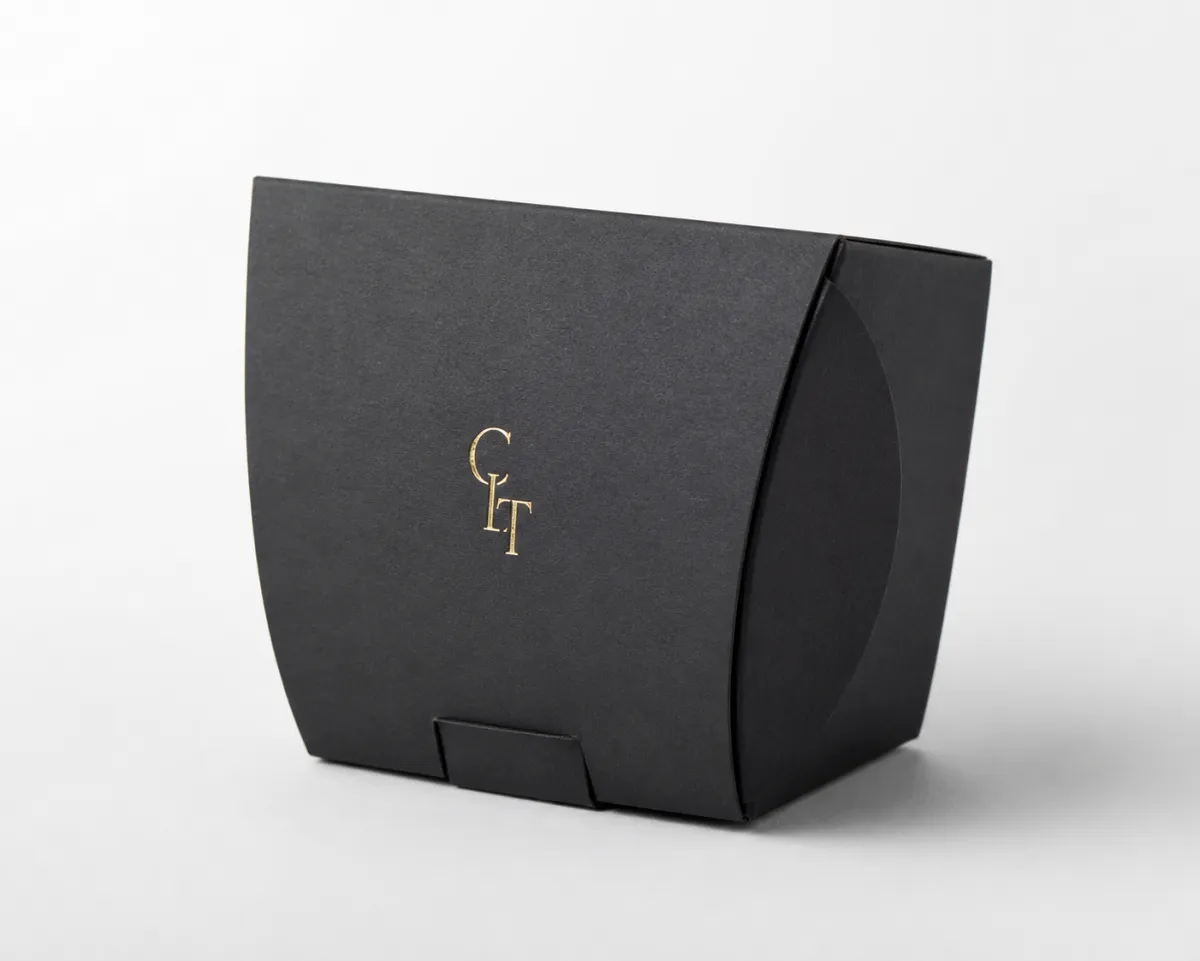
The first problem Custom Die Cut boxes with logo solve is movement. A candle tin, glass bottle, or compact accessory should not bounce around inside a carton like loose change in a drawer. Even if the item survives shipping, that motion can bruise corners, scuff labels, and make the unboxing feel rushed. I once watched a team lose half a day because a fragile accessory kept shifting just enough to crease the insert. The product was fine. The package was not. A box built to the product's dimensions changes the script. The item sits where it should, the closure lands cleaner, and the outside panel signals purpose before the customer touches the seal.
Cost follows fit. Standard cartons are often oversized because one format has to cover too many SKUs, and that convenience has a price tag. More filler. More tape. More air. More freight volume. Custom die cut boxes with logo reduce those tradeoffs. A tighter layout can lower dimensional weight charges, which matters a lot for parcel shipping, where box size can cost more than product weight. The savings are not always dramatic on day one, but they add up in a way finance teams tend to appreciate once the numbers are compared side by side.
There is another payoff that gets missed because it is harder to quantify. The branding has more authority when the box does not look generic. A die cut structure gives the logo, message, or pattern a stronger role in the reveal. In product packaging, the package is often the first tactile contact a customer has with the brand. For gift sets, subscription boxes, and retail presentations, custom die cut boxes with logo can create a reveal stock cartons simply cannot fake, no matter how glossy the print gets.
Operationally, the difference is just as real. Stock cartons are fast to source, but they push problem-solving onto the packing line. Extra filler, loose inserts, and extra tape become part of the routine. Custom die cut boxes with logo move that problem-solving upstream into design, which is where it belongs. Fewer surprises at packing. Fewer returns from transit damage. Less time spent making a generic format behave like a premium one. For a lot of teams, that is the real value.
Products that tend to benefit most usually fall into a few groups:
- Cosmetics and skincare that need a precise cavity and a cleaner opening moment
- Candles, fragrance, and glass items that need surface protection in transit
- Electronics and accessories where motion control reduces returns
- Gift sets and subscription kits where presentation affects perceived value
- Retail packaging that needs shelf impact and practical assembly
If you are comparing formats, it helps to look at structural options early. A supplier can often show several paths through Custom Packaging Products, and that side-by-side view usually reveals the tradeoffs faster than a single quote ever will. The choice is rarely just about looks. It is about what the box has to do once it leaves the mockup table.
One more advantage gets overlooked often. Custom die cut boxes with logo can reduce the number of materials in the packout. Less filler. Fewer secondary wraps. Sometimes no insert at all, or a lighter one. That shortens assembly time and makes the unboxing feel designed instead of improvised. In branded packaging, that is not a small thing. It separates a package that merely arrives from one that feels like somebody thought through the journey.
How the process and timeline work for custom die cut boxes with logo
The process starts with more than artwork. For custom die cut boxes with logo, a useful brief should include product dimensions, weight, fragility, shipping method, and whether the box is meant for retail display, ecommerce fulfillment, or both. A small serum bottle has different needs than a bundled accessory kit, and folded apparel in a retail setting may care more about stackability than crush resistance. Specific input makes a better box. Vague input makes a box that kind of guesses.
The dieline is the blueprint. It defines the cuts, folds, tabs, score lines, closure points, and any insert windows or locking features. If the dieline is off by even a few millimeters, the box can feel awkward in the hand and slower on the line. A lid that should seat cleanly may fight the flap. A locking tab may refuse to engage. A fold line that lands in the wrong place can make a premium box feel strangely cheap. Good artwork cannot rescue weak structure.
Proofing usually runs in two stages. First comes the digital proof, where logo placement, copy, barcode area, and color expectations get checked. Then comes the physical sample or prototype, which is where the real issues show up. Does the product still fit once a sleeve or insert is added? Does the closure hold after repeated opening? Does the corner panel crush too easily? For custom die cut boxes with logo, the sample is not a checkbox. It is the first honest test.
Timeline depends on what the order asks the factory to do. Simple custom die cut boxes with logo using standard board, one-color printing, and a familiar closure can move fairly quickly after approval. Add embossing, a new tool shape, window patches, or heavy ink coverage, and the clock stretches. Approval speed matters too. So does board availability. A finish that needs another pass or a supplier that has to cut new tooling can add days. In a lot of projects, the bottleneck is not the press. It is the back-and-forth around revisions.
A practical planning range often looks like this:
- Concept and dieline: 1 to 3 business days for a clear brief
- Digital proofing: 1 to 2 business days if artwork is ready
- Sample or prototype: 3 to 7 business days, longer for complex structures
- Production: often 10 to 15 business days after approval for standard runs
- Special finishes: may add several days depending on queue and complexity
That range is not a promise. It is a planning tool. If a launch date matters, custom die cut boxes with logo should be scheduled backward from delivery, not forward from artwork approval. Doing it in reverse gives enough room for one or two rounds of revision without turning the order into a rush fee, which nobody enjoys paying.
Quality teams also ask about transit testing, and that question deserves a straight answer. For tougher shipping lanes, it can be smart to request alignment with ISTA procedures or ASTM D4169, especially if the route includes repeated handling, long transit, or stacking in distribution centers. The International Safe Transit Association is a useful reference point here: ISTA transport testing guidance. A test method costs less than a damaged shipment and a customer complaint that lands with a photo attached.
Key material and design factors that affect performance
Material choice is where custom die cut boxes with logo either earn their keep or quietly underperform. Corrugated board, kraft board, SBS, and specialty paperboard each bring a different mix of strength, print quality, and finish. Corrugated is the workhorse when shipping protection matters most. Kraft carries a natural, restrained look that fits sustainability-minded brands. SBS, or solid bleached sulfate, gives a cleaner print surface and a more polished retail presentation. Specialty boards can elevate the feel, though the cost climbs faster than many first-time buyers expect.
The board is only one part of the equation. Caliper, flute direction, and crease quality all shape how custom die cut boxes with logo behave in real use. A thicker board may protect better, yet if score lines crack or folds resist assembly, the box loses speed and polish. Flute direction matters because it changes rigidity and folding behavior. A visually strong box can still fail under stack load if the structure is not aligned with the route and the product weight. Packaging gets unforgiving once it leaves the design file.
Branding choices matter too. Full coverage printing can make custom die cut boxes with logo feel bold, but it also raises ink load, drying time, and scuff risk. Spot-color logo placement can keep the design crisp and the budget calmer. Inside printing creates a stronger reveal, especially for gift sets and premium custom printed boxes. Embossing, debossing, foil, and soft-touch lamination all raise perceived value, though each should solve a real brand problem rather than decorate empty space because the team had room for it.
Here is a practical comparison of common options:
| Box type | Best use | Typical material | Approximate price impact | Main advantage |
|---|---|---|---|---|
| Corrugated die cut mailer | Ecommerce, shipping, fragile items | E-flute or B-flute | Moderate, often better at higher volume | Strong transit protection and faster packout |
| Kraft paperboard box | Natural brands, lightweight retail items | Brown kraft board | Usually lower than premium specialty finishes | Simple look with a clear sustainability signal |
| SBS folding carton | Cosmetics, supplements, premium retail | 18pt to 24pt board | Moderate to higher depending on print coverage | Excellent print quality and a clean presentation |
| Specialty rigid-style box | Gift sets, luxury launches, presentation kits | Rigid chipboard with wrap | Highest of the group | Strong shelf presence and a premium unboxing feel |
Selection should reflect the product itself. A heavy candle in glass needs a different structure than a lightweight accessory kit. Temperature sensitivity matters too. If contents soften, warp, or sweat in heat, board and coating choice need to account for that. Stackability matters for warehouse storage. Shipping method matters because parcel handling is harsher than controlled retail replenishment. Custom die cut boxes with logo work best when these variables are considered together rather than one by one.
Material choices also affect freight efficiency. A lighter board may shave weight, but it can fail under pressure. A sturdier board may protect better, but it can add cost in storage and shipping. The right answer depends on the route, not just the logo. In packaging design, the better choice is often the one that protects the product without building excess structure into the box. That is a more useful standard than asking for the thickest carton available.
Brands that care about sustainability claims need evidence, not assumptions. If FSC-certified paperboard matters to the project, ask for documentation rather than trusting the supplier's memory. The Forest Stewardship Council lays out the certification framework here: FSC certification and sourcing standards. Claims about recycled content, recoverability, and responsible sourcing deserve the same scrutiny. Buyers trust packaging that tells the truth, especially when the box is doing double duty as a brand statement.
There is a real tension in this category. The prettiest format is not always the best performer, and the strongest format is not always the best brand fit. Custom die cut boxes with logo live in the middle of that tension. They need enough structure to protect the item, enough surface quality to carry the design, and enough manufacturing discipline to ship at a sensible cost. The strongest projects are the ones where those three demands stop fighting each other.
Cost and pricing for custom die cut boxes with logo
Pricing for custom die cut boxes with logo is shaped by a handful of repeatable drivers, and buyers usually save money once they know where the cost actually lives. Size is the first one. Bigger boxes use more board and take more freight space. Material follows. Corrugated and SBS often sit in different price bands depending on thickness, coating, and conversion method. Print coverage matters too, because a small logo on one panel is simpler than a full-wrap design with inside printing and multiple finishes.
Quantity has the biggest effect on unit price. Small runs look expensive because setup cost, die cost, and prepress work are spread across fewer pieces. Larger runs lower the per-unit price once those fixed steps get diluted. That is why a 500-piece order can look far more expensive per box than a 5,000-piece order, even if the structure is identical. The quote is not just about paper. It is about how many times the setup gets paid for.
Here is a realistic budgeting frame for custom die cut boxes with logo, using common materials and standard print work. Actual figures vary by supplier, region, finish, and board availability, but these ranges are helpful for planning:
| Quantity | Simple printed die cut box | Premium finish version | Notes |
|---|---|---|---|
| 500 units | $1.20-$2.80 each | $2.25-$4.50 each | Setup cost is spread thin; sample fees matter more here |
| 1,000 units | $0.75-$1.85 each | $1.55-$3.25 each | Good middle ground for pilot launches and seasonal programs |
| 5,000 units | $0.30-$0.95 each | $0.80-$2.10 each | Volume begins to flatten the setup premium |
Those numbers can move upward if the project includes foil, embossing, complex inserts, window patches, heavy ink coverage, or specialty coatings. They can also move down if the structure is simple and the board is widely available. A lot of buyers fixate on unit price and miss the total project cost. Tooling, sample charges, prepress, freight, and remake risk all belong in the same comparison. Skipping those line items makes the budget look prettier than it really is, which is not helpful when the invoice arrives.
MOQ can distort the picture too. A supplier quoting a low unit price at 10,000 pieces may look cheaper than one quoting a higher unit price at 2,000 pieces, but the cash outlay is very different. If demand is uncertain, it can be smarter to price custom die cut boxes with logo at two or three quantity tiers. That shows where the savings flatten out and where inventory risk begins to outweigh the discount. It also helps prevent overbuying just because the per-unit number looks satisfying on a spreadsheet.
Do not ignore the cost of the structure itself. Sometimes the smartest savings move is not a fancier finish. It is a simpler format. A better fold, a stronger board, or a more accurate cavity can beat expensive decoration on value alone. A lot of packaging programs overspend here. They add finish to make the box feel premium, when a cleaner cut and a tighter fit would have done more for the buyer.
For a quick quote conversation, a useful ask is: "Show me a budget version and a premium version of custom die cut boxes with logo at the same quantity." That single request reveals where the real costs sit. It also keeps the conversation focused on tradeoffs instead of chasing a vague affordable number that may not include sampling, inserts, or freight. A supplier who can explain the difference clearly is usually the one worth listening to.
If you are comparing suppliers, look beyond the headline price. Ask how dieline revisions are handled, whether sample charges get credited later, and how reprints are managed if the first run misses the mark. Strong custom die cut boxes with logo pricing should be clear enough that you can separate design cost, production cost, and delivery cost without guessing through a spreadsheet.
Step-by-step from dieline to approved sample
A clean order for custom die cut boxes with logo usually starts with a short spec sheet. That document should list product dimensions, product weight, the final use case, brand assets, and any special handling requirements. If the item will ship in a corrugated outer shipper but sit in retail packaging later, say so. If the box needs to survive shelf stacking and parcel transit, say that too. Precision at the start prevents expensive assumptions later, and it usually shortens the proof cycle by a lot.
Step 1: gather the input. Size, weight, fragility, closure preference, finish, and shipping method. Add a note about the unboxing experience. Do you want a reveal? A clean tuck? A gift-style open? The clearer the goal, the easier it is for the supplier to design custom die cut boxes with logo that fit the brand rather than just the product.
Step 2: request a dieline. Review the folds, the relationship between folds and product, cutouts, and lock points. This is the stage where structural problems can often be corrected with almost no cost. After print is approved, corrections slow down and get more expensive. The dieline turns the idea from a visual concept into a working structure, which is why it deserves real attention instead of a quick glance.
Step 3: review the proof. Check logo scale, barcode clearance, copy, and panel order. If the design includes inside printing, make sure the reveal makes sense after the box opens. If the box carries product instructions, legal copy, or a country-of-origin statement, confirm that the text is legible and positioned so it survives the folding sequence. Custom die cut boxes with logo can look perfect in a mockup and still fail on the line if the print area was not thought through.
Step 4: approve a sample or prototype. This is the fit-and-function stage. Put the real product inside. Add any tissue, insert, or protective wrap you plan to use in production. Shake the box. Stack it. Open it more than once. If the closure pulls loose or the corners crush too easily, fix it now. For custom die cut boxes with logo, sample approval is the cheapest place to catch a bad decision. It is also where teams learn whether the packout is friendly or just looks friendly.
Step 5: lock the production settings. Confirm quantity, packaging counts, case pack, pallet needs, and delivery destination. If the order supports a launch, ask how the finished boxes will be packed for shipment. A strong box can still arrive damaged if the master carton is weak. Good vendors think through the whole chain, not just the finished carton.
At this stage, many teams ask for a second option. That can be a budget path and a premium path, or a current structure and a future structure for a new SKU. If you want to compare formats before deciding, a supplier's Custom Packaging Products catalog can be a useful reference point. Seeing the alternatives often helps the brand settle on the right level of finish.
One useful discipline is to treat approval as a gate, not a courtesy. Once the sample is approved, the production spec should be frozen. Every small revision after that creates risk. Strong custom die cut boxes with logo programs are built on clean decisions: one dieline, one proof, one approved sample, and a clear handoff into production.
Common mistakes with custom die cut boxes with logo
The most common mistake is designing to the artwork first and the product second. A logo can look flawless on screen and still sit on the wrong panel, face the wrong direction, or fight the fold pattern. With custom die cut boxes with logo, the structure has to lead. Otherwise the brand pays for a box that looks polished but works poorly in the real world.
Over-finishing is another frequent miss. Foil, soft-touch, heavy lamination, and specialty coatings can be attractive. They can also slow production, raise scuff risk, or make the box harder to recycle. Sometimes the buyer spends for effect the customer barely notices. I see that a lot with custom die cut boxes with logo for ecommerce. The box spends most of its life inside a shipper, so the premium finish never gets enough exposure to justify its cost. That does not mean finishes are bad; it just means they need a job to do.
The inside of the box gets ignored too often. That is a mistake. The opening moment is where the buyer feels the distance between generic packaging and a deliberate experience. Inside print, a color accent, a brief message, or a clean product nest can do more for perceived quality than a louder exterior panel. In custom die cut boxes with logo, the inside is not dead space. It is part of the message, and in some categories it is the part customers remember most.
Measurements are another weak point. Teams sometimes measure the product and forget the wrap, insert, or protective layer that changes the final footprint. A bottle in a sleeve is not the same as a bottle alone. A folded garment in tissue is not the same as a bare item. Those differences matter. One or two millimeters can decide whether the closure works smoothly or whether the packing line starts fighting the box. That is a small error on paper and a big headache in production.
Shipping tests get skipped too often. A box that looks perfect on the desk may fail after compression, vibration, or drop events. Standards like ISTA and ASTM exist for a reason. They move the team from "looks fine" to "survives the route." If the package will live through parcel handling, stack loads, or a mixed distribution chain, test before placing the full order. It is cheaper than returns, and much cheaper than trying to explain away a dented launch.
Here are the mistakes that show up most often in failed custom die cut boxes with logo projects:
- Using the wrong inner dimensions and assuming the product will settle into place
- Choosing a finish that looks great but scratches or scuffs during handling
- Ignoring assembly time, which can slow packing and raise labor costs
- Approving print before verifying barcode placement, regulatory copy, or panel order
- Skipping a sample test with the real product and real inserts
There is also a strategy mistake worth calling out. Some brands try to make one box do everything. They want it to ship, display, protect, gift, and sell itself in the same motion. Sometimes that works. Often it does not. A better path is to decide what custom die cut boxes with logo need to do first, then build the format around that priority. Protection first. Presentation second. Or the reverse if the item is retail-led. The order matters, and pretending it does not usually costs money later.
When in doubt, simplify. A cleaner structure with better fit usually beats a complex package trying to impress everyone. Buyers remember the box that opens cleanly and protects the product without fuss. They rarely remember the one that used every finishing trick available but made the packout slower and less reliable.
Expert tips and next steps for ordering smarter
If you want stronger quotes on custom die cut boxes with logo, start with a one-page brief. Keep it tight. List exact dimensions, product weight, quantity, finish, shipping method, and whether the box is for retail packaging, mailer use, or both. Add a reference image if you have one. Suppliers can price faster when they are not guessing at the structure or the brand goal. A good brief does half the work before the first email goes out.
Ask for at least two paths. A budget version. A premium version. A third option if the format must serve both shipping and shelf. That simple comparison shows which upgrades actually matter. Often the difference between good and great custom die cut boxes with logo is not a dramatic structural change. It is a cleaner board choice, a better fold line, or a smarter coating decision. Fancy is optional; fit is not.
A pilot run is worth the time if the product is new or fragile. One test order can reveal whether the dimensions are right, whether the product shifts inside the cavity, whether the print color matches the expectation, and whether the assembly process is friendly to the packing team. That is a lot of learning for a small run. It is also the most reliable way to keep custom die cut boxes with logo from becoming an expensive lesson.
Supplier selection should reach beyond the lowest quote. Communication quality matters. Dieline accuracy matters. Sample turnaround matters. A supplier who asks practical questions about product weight, shipping lane, and end use is usually thinking like a packaging partner, not just a print vendor. For most brands, that distinction saves time later. It also helps the finished packaging feel coherent instead of improvised.
If you are narrowing the choice now, here is a simple checklist:
- Do the dimensions account for the product, wrap, and insert?
- Has the box been sampled with the real item inside?
- Does the board choice match the shipping route?
- Are the print and finish choices pulling their weight?
- Do the quote, sample, and freight costs line up in one budget?
One final comparison helps frame the decision. A standard carton may be cheaper on paper, but custom die cut boxes with logo can lower filler usage, reduce damage, improve brand recall, and speed up packing. That is not always the right answer, but it is often the better one for products where fit and presentation matter. Once the box becomes part of the brand experience, custom die cut boxes with logo stop being an extra and start becoming part of the value proposition.
If you are ready to move from concept to sourcing, keep the brief practical and the expectations precise. The best custom die cut boxes with logo are not the most ornate ones. They are the ones that fit the product, protect the shipment, and make the brand look intentional from the first touch to the last fold. That is the standard worth aiming for, and it is usually the one that holds up when the cartons hit the floor.
What products work best in custom die cut boxes with logo?
The best fits are products that benefit from precise sizing, clean presentation, or a more controlled opening moment. Cosmetics, candles, electronics, subscription kits, and gift sets usually gain the most from custom die cut boxes with logo. Fragile items and awkward shapes benefit too, because the structure can be built around the product instead of forcing the product into a generic box. If the item ships often, the tighter fit can also reduce filler and speed up packing. That combination tends to matter more than people expect.
How do I estimate the cost of custom die cut boxes with logo?
Start with size, board type, print coverage, and quantity, because those variables move price the most. Then add finish, tooling, sample costs, and freight so the budget reflects the full project. Ask for quotes at more than one tier if possible. That makes it easier to see where the unit price drops and where savings begin to flatten out. For custom die cut boxes with logo, the quote is most useful when it shows the structure of the cost, not just the headline number.
What files do I need to order custom die cut boxes with logo?
Send editable logo files, usually in vector format, plus copy, barcodes, and any legal text that must appear on the box. Provide exact product dimensions and mention whether inserts, coatings, or special finishes are needed. If you have reference packaging, share photos so the supplier can understand the fit and presentation goal faster. Clean files shorten the proof cycle and reduce the chance of avoidable errors in custom die cut boxes with logo. That part is boring, yes, but it saves a lot of grief.
How long does production usually take for custom die cut boxes with logo?
Simple orders can move quickly after artwork approval, but structural changes and specialty finishes add time. Sample approval is often the biggest variable because revisions can reset the clock. A realistic timeline usually separates proofing, sampling, and manufacturing so the delay point is easy to spot. For custom die cut boxes with logo, the fastest projects are the ones where the brief is specific and the sample is approved without major changes.
Are custom die cut boxes with logo better than standard folding cartons?
They are better when the product needs a specific fit, stronger presentation, or less wasted space. Standard folding cartons can be cheaper and quicker for basic items, but they rarely match the precision of a custom die cut format. The right choice depends on product size, shipping method, brand goals, and whether protection or presentation matters more. For many brands, custom die cut boxes with logo become the better choice once returns, filler, and brand perception are factored into the decision.

