Custom Sensory Stickers: Design, Price, and Order Tips
A shopper may touch a skincare jar seal, coffee bag label, or children’s activity decal before reading every line of copy, and that split-second contact shapes the product impression. Custom sensory stickers are built for that moment. They add texture, scent, softness, grip, shine, raised detail, or interaction so the sticker does more than sit flat on the package.
In packaging terms, these are adhesive labels designed to engage one or more senses beyond sight. They can include soft-touch coatings, raised varnish, textured films, glitter, fabric-like surfaces, foam layers, scratch-and-sniff coatings, scented inks, holographic film, thermochromic ink, or peel-and-reveal features. Some are playful. Some read as premium. Some help customers identify a product faster by feel.
They are not novelty for novelty’s sake. A well-specified sensory label can support brand recognition, product education, accessibility cues, event handouts, classroom tools, wellness kits, subscription boxes, and limited-edition retail packaging. The difference from a decorative sticker is simple: decorative stickers rely mainly on artwork and color, while sensory versions add a material or finishing layer that the customer can feel, rub, smell, peel, tilt, or test.
Below is the practical side of buying sensory stickers: effects, materials, adhesives, durability, safety, artwork setup, timeline, price drivers, and the details that should be ready before asking for samples or a quote.
What Custom Sensory Stickers Are and Why Touch Changes the Sale
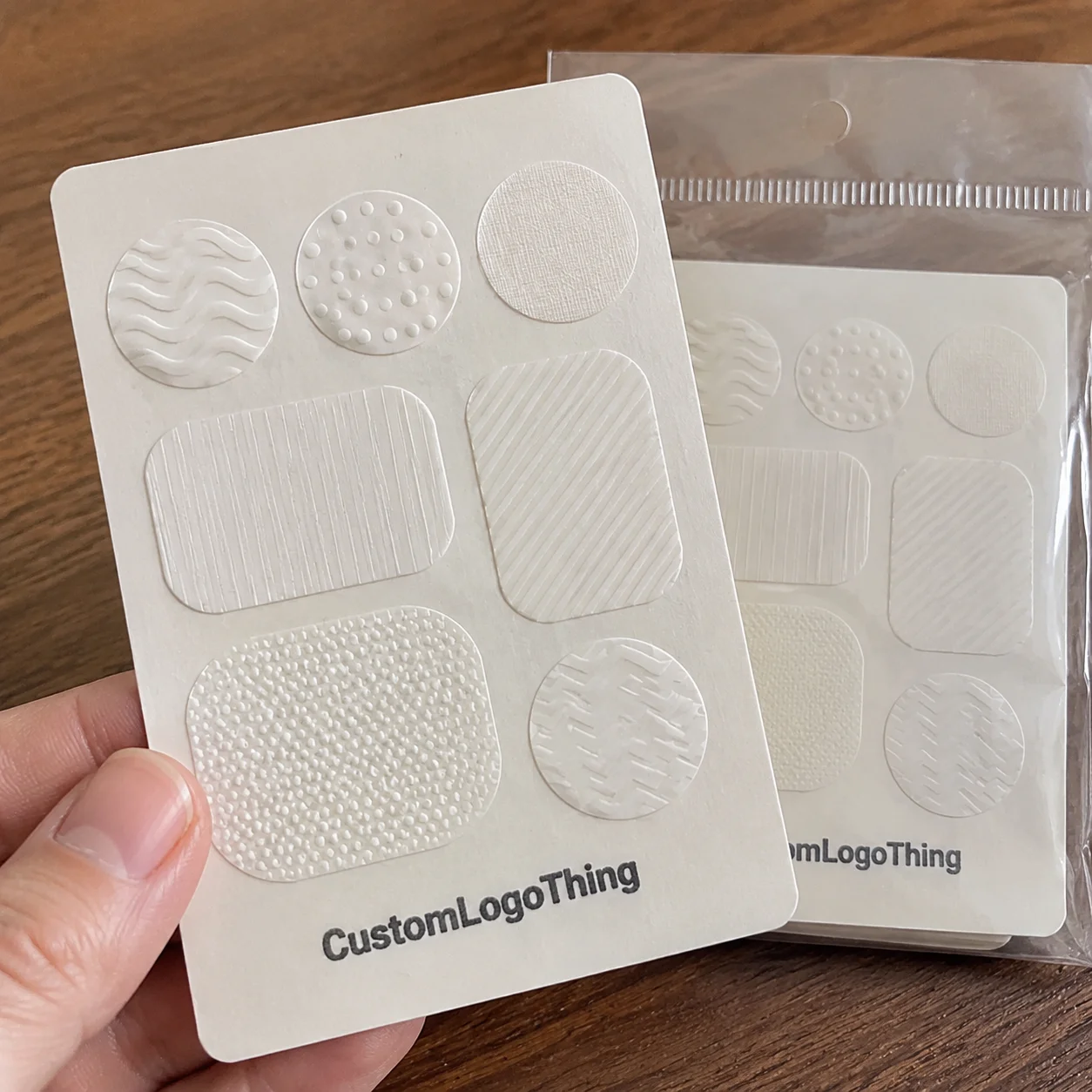
Touch changes the perceived value of a product quickly. A matte paper sticker on a candle box says something different from a velvety soft-touch seal, and a raised glossy logo on a supplement pouch feels different from a flat CMYK print. Neither is automatically better. The right choice depends on the product, the shelf, the customer age group, and the message the brand wants to send.
Think of a calming tea brand. A quiet textured paper label or soft-touch finish may reinforce the promise of comfort better than glitter or heavy foil. Now think of a gaming launch, a festival giveaway, or a collectible toy drop. Holographic film, raised gloss, or glow-in-the-dark ink may fit that energy much better. Custom sensory stickers work best when the effect supports the story instead of fighting it.
Packaging buyers often ask for “something people will notice.” Fair request. It just needs a sharper target. Should the sticker feel premium? Should it make a child want to touch and sort shapes? Should it release a coffee, citrus, vanilla, mint, or lavender scent when rubbed? Should it act as a grip patch on a jar lid? Should it make brand elements feel more handcrafted?
Those answers matter because every sensory effect has a production consequence. A raised varnish needs artwork separation and registration control. A scent coating needs chemistry, coverage area, and storage planning. A foam sticker needs thickness control and die-cut performance. A textured film needs the right adhesive, especially on curved, cold, oily, or rough surfaces.
Packaging floor rule: if the sticker will be touched repeatedly, stored in heat, exposed to moisture, or applied to a curved container, test it on the actual surface before placing the full order.
How Sensory Sticker Effects Work on Real Materials
Most sensory stickers start with the same basic build: a face stock, adhesive, release liner, printed graphics, and one or more finishing layers. The face stock might be coated paper, BOPP film, PET, vinyl, textured specialty paper, clear film, foam, or a fabric-like synthetic. The adhesive may be permanent, removable, repositionable, freezer-grade, high-tack, low-tack, or wash-off. The finishing layer creates the feel, scent, shine, grip, or interactive feature.
Soft-touch laminate is one of the most common tactile options. It gives a suede-like, low-glare feel that works well on premium cosmetics, wellness packaging, stationery, and certain Custom Labels & Tags. Spot UV or raised varnish adds glossy dimensional areas, often over logos, icons, droplets, flavor names, or pattern elements. A raised varnish does not feel like deep embossing, but it can create a noticeable ridge when applied with enough deposit and proper curing.
Textured films can create grain, grip, leather-like, rubber-like, sand-like, or fabric-like impressions. Foam layers add cushion and depth, which can be useful for children’s learning tools or playful retail promotions. Glitter and holographic films are visual first, but they still create interaction because people tilt, rub, and inspect the surface. Glow-in-the-dark ink, metallic foil, and thermochromic ink invite the same test: does it change?
Scented stickers are a category of their own. Fragrance can be introduced through scented coatings, microencapsulated aroma layers, or scratch-and-sniff varnishes that release scent when rubbed. Scent strength and life depend on the fragrance system, storage temperature, exposure to air, rub frequency, and whether the stickers are packed in sealed bundles or exposed during shipping. A lavender scent for a sleep kit needs a different tone from a citrus scent on a beverage launch.
Adhesive selection is not glamorous, but it decides whether the idea works. Paper, glass, plastic jars, flexible pouches, corrugated mailers, cardboard sleeves, cold bottles, and curved tubes all ask different things from the adhesive. The more layers you add, the more die-cut accuracy, curing time, registration tolerance, and compatibility testing matter.
Key Specs That Decide Feel, Durability, and Safety
The best sensory sticker is not the most dramatic one. It is the one that matches the product environment, customer age group, handling conditions, and brand promise. A sticker for an indoor gift box can be simpler than one used on a bath product, freezer item, outdoor bottle, or high-touch retail sample.
Face stock is the first decision. Coated paper is economical and common for short-term indoor use, especially for promotional stickers, paperboard boxes, and dry retail packaging. BOPP and PET films are better when moisture resistance, tear resistance, or a cleaner no-label look matters. Vinyl can work well for flexible or outdoor uses, though it is not always the right fit for every sustainability goal. Textured specialty paper gives artisan packaging a warm, fibrous feel, but it absorbs inks and coatings differently than film.
Adhesive options need the same care. Permanent adhesive is common for product packaging and tamper labels. Removable adhesive is useful for promotions, temporary seals, and event giveaways. Repositionable adhesive helps with hand-applied campaigns where placement tolerance is loose. Freezer-grade adhesives help on cold-chain products. High-tack adhesives are often needed for rough corrugated boxes, textured plastics, or low-energy surfaces. Wash-off adhesives may be requested for reusable containers, though the container, wash process, and label construction all need review.
Durability depends on moisture, oils, abrasion, sunlight, heat, cold handling, shipping rub, and repeated touching. A soft coating that feels beautiful on a dry carton may scuff on a jar carried in a purse. A scented coating may fade faster if the stickers sit near heat or are packed loosely. A glitter finish may need a protective layer if loose transfer would be a problem for cosmetics, food-adjacent packaging, or children’s kits.
Safety deserves a direct conversation. For children’s products, consider peelable pieces, small parts, fragrance sensitivity, skin contact, and age grading. For wellness, cosmetics, or food-adjacent packaging, ask about migration concerns, allergen questions, and any market-specific compliance needs. Standards and guidance vary by product category, so do not treat a sticker approved for a notebook as automatically appropriate for a lip balm jar or snack pouch. For broader packaging responsibility topics, the EPA sustainable materials management guidance is a useful starting point, and paper-based projects may also consider FSC-certified material options through FSC.
Artwork setup affects feel, too. Leave enough surface area for raised or scented effects to activate. Avoid tiny scratch zones that a fingertip cannot rub. Use strong contrast or a clear icon to show the interactive area. Confirm whether the finish covers the whole sticker or only selected artwork elements. For custom sensory stickers, the finish layer is part of the design file, not an afterthought added after the art is done.
Process and Timeline from Artwork to Finished Stickers
A typical order moves through a predictable path: project brief, material recommendation, artwork review, proofing, sampling if needed, print setup, finishing, die-cutting, quality control, packing, and shipping. Straight printed labels may move quickly, but layered sensory work benefits from more front-end discipline.
Start with the application details. Provide finished size, shape, quantity, intended surface, indoor or outdoor use, target sensory effect, application method, delivery deadline, and any compliance or retail requirements. If the sticker will go on a pouch, send pouch material details or photos. If it goes on a jar, mention glass or plastic, diameter, curve, surface texture, and whether the jar may be oily, chilled, wet, or handled after filling.
During proofing, the printer checks the dieline, bleed, safe area, color mode, image resolution, finish layers, scent or texture callouts, and alignment between specialty effects and printed graphics. A raised gloss logo needs its own artwork layer. Scratch-and-sniff areas need clear coverage instructions. Soft-touch coverage may be full flood or selective, depending on the look and budget.
Sampling expectations should be realistic. A simple soft-touch film sticker may require only a material swatch and digital proof. A custom scent match, unusual texture, shaped foam sticker, or multi-layer build may need extra development time and approval rounds. Scent is especially subjective; “vanilla” can mean bakery, floral, creamy, powdery, or candy-like depending on the fragrance system.
Lead time varies because specialty materials may need sourcing, coatings may require curing, dies may need to be made, scent systems may need testing, and tight registration can slow press setup. As a practical planning range, straightforward printed tactile stickers often fall around 7–15 business days after proof approval, while scented, custom-shaped, multi-layer, or unusual-material projects may need 15–30 business days or more. That depends on quantity, factory load, proof speed, and material availability.
Early approval helps more than people think. Delayed artwork signoff, late quantity changes, revised sizes, or switching the application surface after proofing can push production back harder than the printing itself. If you are coordinating stickers with custom printed boxes or other Custom Packaging Products, line up the dielines and delivery windows together so the sensory label does not arrive after the packaging build is already packed out.
Cost and Pricing Factors Buyers Should Understand
Sensory sticker pricing is shaped by more than square inches. The main drivers are material, adhesive, finish type, number of colors, shape, order quantity, setup complexity, sampling, packing method, and freight. A small sticker with a custom scent and tight die-cut may cost more than a larger basic film sticker because the process has more setup and waste.
Quantity has a big effect on unit cost. Larger runs spread setup, plate, die, and finishing preparation across more pieces. Small runs carry a higher per-sticker price even if the final sticker looks simple. Minimum order quantity may be influenced by roll size, coating setup, scent batch requirements, die-cutting efficiency, or the waste created during press calibration.
| Effect Type | Typical Use | Cost Behavior | Buyer Tip |
|---|---|---|---|
| Soft-touch laminate | Premium skincare, wellness, stationery, candle packaging | Often moderate; economical on larger runs | Test scuff resistance if the product is handled heavily |
| Raised spot UV or varnish | Logo highlights, droplets, icons, flavor cues | Moderate to higher depending on coverage and registration | Keep raised areas large enough to feel with a fingertip |
| Scratch-and-sniff or scented coating | Food promos, coffee, candles, wellness kits, events | Higher due to fragrance system and testing | Request a scent sample before approving full production |
| Holographic or metallic film | Collectibles, gaming, beauty, limited-edition launches | Moderate to higher depending on film and print coverage | Check readability under store lighting |
| Foam or thick tactile layers | Children’s activities, educational tools, promotional kits | Higher because thickness affects cutting and packing | Confirm safety, small-part risk, and packing height |
For planning, a basic custom printed sticker can price very differently from a layered sensory build. As a rough buyer-side range, simple printed paper or film stickers in a few thousand pieces may land around $0.05–$0.18 each depending on size and print coverage. Soft-touch or spot texture might push many mid-size orders into the $0.12–$0.35 range. Scented, raised, holographic, foam, or multi-process stickers can run from about $0.25 to well over $1.00 each in smaller quantities. These are not fixed quotes; material, size, quantity, and finishing coverage can swing the price sharply.
Hidden cost items are easy to miss. Ask about custom dies, rush fees, freight, sample rounds, variable artwork versions, special packing, roll direction, core size, and application testing. If the labels will be machine-applied, roll direction and unwind position matter. If they will be hand-applied to product packaging, sheeted packing may be easier for the team.
The smartest buying move is to ask for two or three quote options. Request a good-better-best material set, an alternate size, or different finish coverage areas. If the budget is tight, reduce sticker size, limit the sensory area to one focal point, choose an existing material, simplify the shape, or increase quantity to lower unit cost. That protects the effect without guessing in the dark.
Common Mistakes That Make Sensory Labels Disappointing
The biggest mistake is choosing an effect because it sounds exciting instead of because it supports the product, customer, and surface. Glitter, scent, raised gloss, foil, and texture can all be useful, but stacking them on one small label often creates visual noise, increases cost, and makes the message harder to read.
Tiny interactive areas are another common problem. A 3 mm scratch-and-sniff dot is not much fun. A thin raised varnish line may look fine on a PDF but disappear under a fingertip. If you want touch to carry the message, give the effect room to work. For many tactile zones, a fingertip-sized area is a better starting point than a hairline detail.
Adhesive mismatch causes plenty of avoidable rework. A standard paper sticker may peel on a cold beverage bottle, wrinkle on a flexible pouch, lift from an oily cosmetic jar, fail on rough corrugated board, or flag on a tight curve. Surface energy, temperature, texture, moisture, and handling all matter. Testing a dozen labels on the real package for 24–72 hours can reveal problems before money is tied up in a full run.
Scent mistakes are just as real. Too strong can feel cheap or irritating. Too weak can disappoint. A poor scent match can confuse the product story; a “fresh linen” sticker on a coffee promotion may be memorable for the wrong reason. Storage conditions also affect aroma. Heat, air exposure, and repeated rubbing before the customer receives the item can reduce scent impact.
Artwork mistakes slow production and weaken the finished label. Missing dielines, no bleed, unclear specialty layers, low-resolution art, unapproved color expectations, and assuming a finish will look identical on paper and film are all common. Paper absorbs. Film reflects. Clear stock changes color perception. Metallic film can darken some inks. Raised gloss over small type can reduce legibility.
Use a simple prevention checklist: test on the real surface, approve the proof carefully, keep the sensory message simple, confirm handling conditions, and ask the manufacturer where tolerances may show. A good supplier should be able to explain registration limits, curing needs, scent behavior, and adhesive tradeoffs in practical terms.
Next Steps Before You Request Samples or Place an Order
Before requesting pricing, write a short project brief that explains what the sticker must make someone feel, notice, smell, or do. That one sentence will guide better material decisions than a vague request for “a cool label.” Try wording such as: “We want a soft premium seal for a glass skincare jar,” or “We need a citrus scent reveal for a seasonal beverage mailer,” or “We want a raised glossy icon that guides customers to open the sample pack.”
Gather the essentials before asking for a quote: finished size, shape, quantity, artwork file, product surface, storage conditions, target launch date, desired finish, indoor or outdoor use, and whether the sticker will be hand-applied or machine-applied. Photos or samples of the actual container help. So do details like cold fill, freezer storage, bath exposure, oily residue, flexible pouch movement, or rough corrugated texture.
Choose one primary sensory goal. Soft premium feel, playful texture, scent reveal, grip assistance, tamper cue, and interactive promotional moment are different targets. A sticker can support more than one, but one should lead. That discipline keeps packaging design cleaner and makes quoting easier.
Ask for material guidance rather than locking yourself into a finish too early. You may think you need vinyl, but BOPP may suit the job better. You may ask for embossing, but raised varnish may deliver enough texture at a better price. You may request full-coverage scent, but a smaller rubbed zone may smell clearer and cost less.
Request a production proof or sample when the project involves fragrance, heavy texture, curved packaging, child-focused use, moisture exposure, cosmetics, Premium Retail Packaging, or any label that will represent the front face of the brand. For shipped product launches, you can also reference distribution testing concepts from ISTA when thinking through vibration, compression, rub, and handling risk across the total pack.
Compare total project fit, not only the cheapest unit price. A sticker that peels, fades, smells wrong, scuffs early, or feels weak can cost more in rework than a better-specified material. Send the brief, artwork, surface details, target quantity, launch date, and packing requirements so the manufacturer can recommend realistic materials, finish options, lead time, and a quote for custom sensory stickers.
FAQs
What are custom tactile stickers best used for?
They work well for packaging seals, product labels, event giveaways, children’s learning tools, wellness kits, subscription boxes, and retail promotions where touch reinforces the message. The best use case has a clear purpose, such as soft-touch for premium goods, raised gloss for highlighting a logo, or grip texture for handling.
Can custom sensory labels be waterproof?
Yes, they can be made water-resistant or waterproof when film materials such as BOPP, PET, or vinyl are paired with the right adhesive and protective finish. Waterproof performance should be tested on the actual container, especially for cold bottles, bath products, outdoor use, or surfaces exposed to oils and abrasion.
How long do scented sensory stickers keep their smell?
Scent life depends on the fragrance system, coating method, storage temperature, packaging exposure, and how often the sticker is rubbed or handled. Scratch-and-sniff or encapsulated scents usually last longer when kept sealed, away from heat, and protected from heavy rubbing before use.
Are sensory stickers safe for children’s products?
They can be suitable, but the design should account for age group, peelable parts, fragrance sensitivity, skin contact, choking risks, and any applicable product safety requirements. For children’s applications, avoid small loose pieces, overly strong scents, and materials that have not been reviewed for the intended use.
What information is needed to quote custom sensory stickers?
A useful quote request includes size, shape, quantity, artwork, target finish, application surface, indoor or outdoor use, packaging method, deadline, and shipping destination. Photos or samples of the actual container help the manufacturer recommend the right material, adhesive, finish, and production approach.


