Packaging gets expensive when the box is guessed instead of specified. A custom size box solves that by matching the product, the insert, and the shipping method instead of forcing one generic carton to handle every job badly.
The mistake is usually framed as a design problem. It is not. A box that is a little too loose wastes fill, creates movement, and drives up dimensional weight. A box that is too tight slows packing, crushes corners, and makes the product look second-rate before anyone opens it. Good packaging starts with fit. Print, finish, and brand presentation come after that.
If you are comparing structures, start with the right Custom Packaging Products for the product, not the cheapest blank shell available. That single decision often saves more money than squeezing a few cents out of the unit price later.
What a Custom Size Box Actually Solves
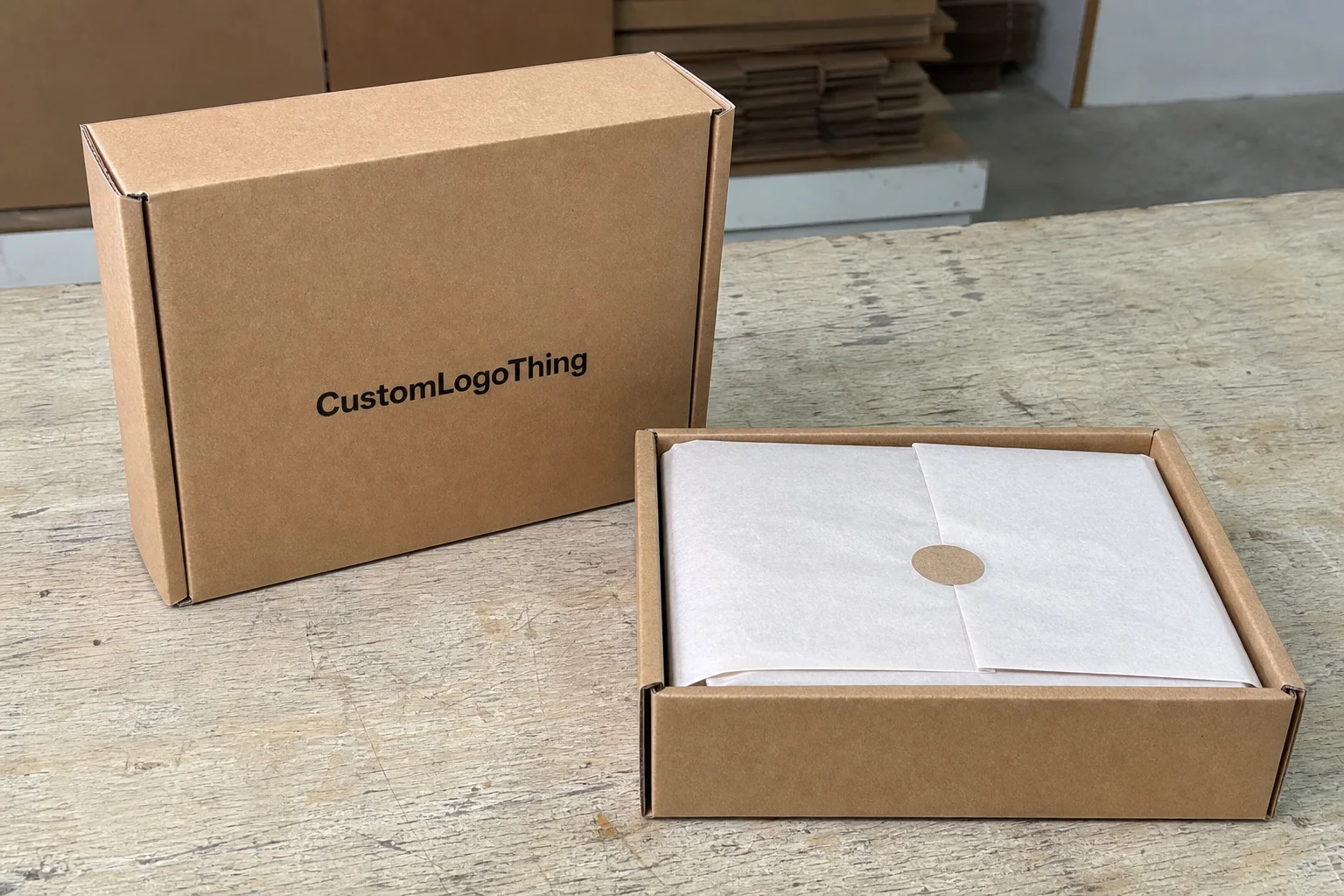
A custom size box is built around the packed item, not the item sitting naked on a table. That distinction matters more than most buyers expect. A bottle in a tray, a device with accessories, or a retail bundle with multiple components all need different internal dimensions. If the box ignores closures, padding, or inserts, the quote may look fine and still fail the first packing test.
Better sizing does three practical things. It reduces movement, improves presentation, and cuts wasted board or corrugate. It can also reduce parcel charges by lowering dimensional weight. Carriers bill on outer size. A few extra inches can push a package into a higher rate band, and they will not care that the box only looked slightly oversized on the sample.
Custom does not automatically mean expensive. Wrong sizing is what gets expensive. Oversized cartons get filled with paper, air pillows, or foam to compensate. That is paying twice: once for the extra material and again for the labor and freight tied to a larger package. A correct spec usually wins over the run, even if the first quote looks a little higher than stock.
There is also a brand effect, and it is not subtle. A neat fit gives the impression that the product belongs in the package. On retail packaging, that makes the line look deliberate. On shipping boxes, it makes operations look organized. People notice sloppy fit faster than they notice a good box.
“Close enough” is not a sizing method. If the product rattles, the box is wrong. If the lid bows, the box is wrong. If packing takes an extra 20 seconds per unit, the box is wrong.
For brands with multiple SKUs, one well-built Custom Printed Box structure can also simplify operations. You are not juggling three almost-identical cartons that each need different tape patterns or inserts. That is where product packaging stops being a collection of exceptions and starts acting like a system.
How Sizing Turns Into a Production Spec
Turning measurements into a production-ready spec is where many first-time buyers stumble. Length, width, and height are not enough by themselves. You need the packed dimensions, which means the item plus any insert, sleeve, divider, void space, closure flap, or protective layer. If the product ships in a polybag or shrink wrap, that thickness belongs in the spec too.
Inside dimensions and outside dimensions are not interchangeable. Ask for one or the other explicitly. Folding cartons are often quoted by inside size. Corrugated structures may be discussed by outside size depending on the supplier and the box style. That sounds minor until two vendors quote what looks like the same number and the samples arrive differently. Then everybody starts talking around the spreadsheet instead of admitting the spec was incomplete.
Material construction changes fit as well. A 16 pt folding carton, an E-flute mailer, and a heavier B-flute shipper will not hold the same usable space even if the nominal size on the quote looks similar. Board caliper, flute height, glue flaps, and score allowances all eat into the finished opening. On tight designs, even 1 to 3 mm can matter.
This is why a dieline or mockup is not optional on a new run. A sample tells you whether the product slides in cleanly, whether the closure has enough room, and whether the print lands where you expected. If the box is for retail packaging, the mockup also shows whether the face panel frames the product or buries it in dead space.
For suppliers, the clearest spec reads like a short instruction set:
- Product name and SKU
- Packed dimensions in the final orientation
- Inside or outside dimension callout
- Material and board thickness
- Insert or padding requirement
- Print sides, finish, and quantity
That is the difference between a quote that is useful and one that is just a number. A precise custom size box spec gives production something real to build against, so problems show up before tooling starts.
One more practical point: tolerances matter. A good supplier should be able to tell you the expected manufacturing variance, especially on corrugated work. If the fit is tight, ask how much clearance the design really needs. A box can be dimensionally correct and still be a poor fit if the product has a rigid corner, a fragile finish, or a closure that needs breathing room.
Fit, Protection, and Shelf Impact Factors
The right dimensions depend on more than the product itself. Fragility, shape, weight, and handling all change the answer. A rigid cosmetics jar needs different clearance than a flat printed insert. A device with cables, accessories, and a power brick needs more room than the item alone suggests. Odd shapes are usually where buyers discover that “standard” just means compromise.
Shipping method matters too. Parcel shipments need a box that survives drops, vibration, and compression. A freight pallet wrapped and strapped for transport has different risks. Retail Display Boxes need a clean shelf face and enough structural support to stay square under store handling. For parcel testing, an ISTA-aligned drop and vibration check is worth doing before full production. The standards at ISTA are a good reference point if the product moves through common carriers.
Packaging also has to survive the boring stuff: storage, stacking, temperature swings, and repeated handling. A lightweight carton that looks fine in the sample room may bow after sitting under a pallet for a week. That is why a custom size box should be judged as a system, not as a shell with a pretty print file.
Presentation is part of protection. A tidy fit makes the pack-out look premium because the product lands where it should, every time. That matters in branded packaging and in custom printed boxes that carry a lot of visual weight. If the product floats inside the package, the print cannot rescue it. A sloppy fit reads as cheap even when the artwork is expensive.
If sustainability is part of the brief, ask what board is available in FSC-certified options. The FSC system is widely used when buyers want traceable paper sources. That does not magically make a package better, but it does make procurement and claims paperwork easier to defend.
For many buyers, the fastest way to narrow the right size is to answer a few blunt questions:
- Will the box be opened by a customer or a warehouse team?
- Does the product need an insert, divider, or tamper-evident seal?
- Is the shipment going parcel, freight, or retail display?
- Does the package need to look clean enough to sit on a shelf?
Once those answers are clear, the dimension decision gets much easier. That is the point where packaging design stops being guesswork and starts being a controlled spec.
A real-world fit check should also include closure behavior. Watch the lid or flap after the product is inserted. If the board springs open, if the tuck flap has to be forced, or if the seam splits at the score, the size is wrong even if the outer dimensions look fine on paper. Cheap fit problems always show up somewhere else. Usually in labor or damage.
Cost, MOQ, and Unit Price Drivers
Quote pricing is not random. It is mostly setup, material, labor, and complexity. Small runs usually cost more per unit because the design setup, plate work, cutting dies, and machine changeover are spread across fewer pieces. That is true for folding cartons, corrugated mailers, and most other custom printed boxes.
The biggest cost drivers are predictable:
- Dimensions and box structure
- Material thickness and board grade
- Print coverage and number of colors
- Special finishes like soft-touch, foil, or spot UV
- Inserts, windows, or internal partitions
- Freight and packaging for shipment to you
MOQ matters because a low quantity pushes the unit price up. Sometimes that is unavoidable. But a slightly larger run can cut the per-unit cost enough to justify the extra inventory, especially if the box will be used for months. Buyers often focus on the quoted unit price and ignore storage, freight, and rework. That is the wrong number to optimize. Total landed cost is what hits margin.
Here is a useful way to compare common options for a custom size box program:
| Option | Typical MOQ | Rough Unit Price | Best For | Main Tradeoff |
|---|---|---|---|---|
| Stock size with custom label | 100 to 500 | $0.20-$0.80 | Early-stage launches, simple product packaging | Limited fit control and weaker package branding |
| Custom printed folding carton | 500 to 5,000 | $0.18-$0.95 | Retail packaging, lightweight products, branded presentation | Needs accurate dieline and print-ready artwork |
| Custom corrugated mailer or shipper | 250 to 3,000 | $0.75-$2.50 | Parcel shipping, e-commerce, fragile items | Higher freight cost and more board usage |
Those ranges are broad on purpose. A plain kraft mailer with one-color print is not the same thing as a full-bleed laminated carton with a custom insert. Even with the same dimensions, the quotes can diverge fast. If a supplier gives you a price that looks too good, check the material, the finish, and the dimensions again. Something is usually missing.
If you are comparing options from the same supplier, ask them to quote the exact same spec across each version. That is the only way a real comparison works. For brands building a packaging line, the right Custom Packaging Products choice is often the one with the best total cost over the life of the SKU, not the prettiest unit price in isolation.
There is a second pricing trap that shows up later: over-specifying the package. Heavy board, premium coating, and a complex insert can all be justified. They are not automatically justified. If the product is light and the box is only traveling across a warehouse, extra structure can become dead weight. Matching board strength to the actual abuse level is part of buying well.
Process, Timeline, and Production Steps
The production path is usually straightforward, but each step needs clean inputs. A typical job moves from quote request to proof, then sample or mockup, then production, then quality check, and finally shipment. The more clearly you define the size and structure up front, the less time gets burned on revisions later.
A realistic timeline depends on complexity. Simple folding cartons may move through proofing and production in about 10 to 15 business days after approval. More complex runs with inserts, special finishes, or unique board grades can take longer. Freight adds its own clock. If the destination is close, transit might be a few days. If the shipment crosses multiple zones, add buffer. People plan freight as if the carrier is reading the same spreadsheet. It is not.
What speeds things up most?
- Measurements that reflect the packed product
- Artwork files that are print-ready
- Clear quantity targets and reorder expectations
- Fast proof approval from the brand side
- One decision-maker who can answer fit questions quickly
What slows things down?
- Changing dimensions after the dieline is approved
- Adding inserts late in the process
- Moving from gloss to soft-touch after proofing
- Waiting to confirm whether the box is inside- or outside-dimension based
From a production point of view, the cleanest jobs are the ones that arrive with one clear purpose. Is the box meant to protect, present, or both? Does the pack-out need speed, or does it need a premium feel? Those answers affect board choice, score lines, and print placement. That is why a custom size box order should be treated as a spec sheet, not a vague request for “something that fits.”
If you are building a line of branded packaging, ask for a sample before full production. A sample is cheap insurance. It tells you whether the box closes cleanly, whether the insert holds, and whether the final footprint still works on your shelf or shipping carton. If the sample feels awkward in the hand, it will feel worse on the packing line.
Quality control should not stop at visual inspection. Check score cracking, glue seam alignment, print registration, and board direction. On corrugated work, verify that the flute direction supports the load path you want. On folding cartons, check that the tuck and dust flaps do not interfere with each other. These are small issues until they are producing returns, rework, or crushed corners.
Common Mistakes That Waste Money
The most common mistake is measuring the product and stopping there. That ignores the packed version. Once you add an insert, a label, a closure flap, or a protective sleeve, the box needs more room than the raw product dimensions suggest. Buyers discover this after the first sample, which is the expensive time to learn it.
The second mistake is comparing quotes without matching the spec. One vendor may be quoting an inside dimension, another an outside dimension. One may be using thinner board, a lighter print coverage, or a simpler cut style. If the numbers look different, the boxes are different. The quote is not lying; it is answering a different question.
The third mistake is forgetting the human inside the process. If the package is awkward to fill, hard to close, or fussy to tape, labor costs rise. That matters in high-volume product packaging. A design that saves three cents on board but adds five seconds of packing time is not a savings. It is a tax wearing a discount label.
The fourth mistake is skipping a sample or test pack. That is the fastest way to discover a dimension is off, and the slowest way to solve it. A good test pack should cover the actual working conditions: line speed, closure fit, print visibility, and shipping protection. For fragile items, I would rather see a small pre-production sample than a thousand boxes sitting in a warehouse waiting for a fix.
There is another trap with Custom Printed Boxes: designing for looks without checking assembly. A box can look polished on screen and still be painful to handle on the packing bench. Packaging design should respect both the shelf and the line. Ignore either one, and the budget will remind you later.
Printing mistakes are another quiet cost. If your artwork relies on tight edge registration, thin type, or a full-bleed color that must land perfectly, ask how the press handles variance. Paper swells. Board shifts. Ink density changes. A good supplier will tell you what is realistic before you approve a file that looks clean only in theory. That conversation is cheaper before production than after it.
A clean spec prevents most of this. Measure the packed product. Confirm inside dimensions. Note the board type. State the clearance you need. Then get a sample and test it in real conditions. That is the boring answer, which is usually the correct one.
Expert Checks and Next Steps
If you want the quote to be useful, give the supplier a complete spec packet. At minimum, include the packed dimensions, material preference, print coverage, quantity, destination, and any insert or padding requirement. If the product is fragile, note the handling risk. If the box will sit on a retail shelf, say so. A custom size box for shipping is not spec’d the same way as one meant to sell off the shelf.
Before you approve production, check these items:
- Inside dimension and outside dimension are clearly labeled.
- The product fits with the intended insert or filler.
- The closure closes flat without bulging.
- The artwork still aligns after the structure is folded.
- The quote matches the material, finish, and quantity you asked for.
If the run is new, ask for a dieline, a virtual proof, or a physical sample. If the item is high value or fragile, use the sample to test actual packing speed and shipping resilience. That is a better use of time than arguing about theoretical fit after 10,000 units are already in motion.
Brands that buy well treat packaging as a controlled input. They do not chase the lowest number on the page. They compare total cost, fit, and repeatability. That is how branded packaging stays consistent, how retail packaging looks intentional, and how the box does its actual job without drama.
If you are quoting a custom size box run, lock the spec first, then ask for apples-to-apples pricing across the same material, print method, and delivery target. That order matters. Get the size right, and the rest gets much easier.
How do I measure for a custom size box?
Measure the packed product, not just the item itself. Use length, width, and height in the orientation it will ship or display. Add clearance for inserts, closures, or protective padding before you send the spec.
What affects custom size box pricing the most?
Dimensions, material thickness, and print coverage usually move price first. Low quantities raise unit cost because setup is spread across fewer pieces. Freight, inserts, and finishes can change the total landed cost more than buyers expect.
What is the MOQ for a custom size box?
MOQ depends on the structure, material, and printing method. Smaller runs are possible, but the per-unit price is usually higher. Ask whether a stock size with custom print or labeling is cheaper for your volume.
How long does a custom size box usually take?
Lead time depends on proof approvals, material availability, and production capacity. Clean artwork and fast sign-off shorten the timeline more than people think. Add buffer for freight and receiving so the schedule reflects reality, not wishful thinking.
Can I get a sample before ordering the full run?
Yes, and you should if the fit is new or the product is fragile. A sample or mockup catches sizing problems before they become expensive inventory. Use the sample to test packing speed, closure fit, and shipping protection.

