fedex Custom Printed Boxes are not a minor branding add-on. They affect freight, damage rates, and how controlled a shipment feels the second it leaves the dock.
A plain corrugated shipper only has to move a product from point A to point B. A printed box has a second job: it has to make the shipment feel intentional before anyone opens it. That matters for e-commerce, subscription programs, retail replenishment, and any brand that wants the parcel itself to do some work.
The catch is that packaging is never just a design decision. It is a material choice, a logistics choice, and a cost decision all at once. If the carton is oversized, freight goes up. If the board is too light, damage risk climbs. If the artwork is ambitious but the run is small, setup charges can eat the margin. The good orders solve all three problems together.
For teams comparing printed shipping cartons, the real question is not whether the box can carry a logo. It is how much protection, presentation, and consistency the program needs, and how much the business is willing to pay for each of those pieces.
Why fedex custom printed boxes matter more than most brands think
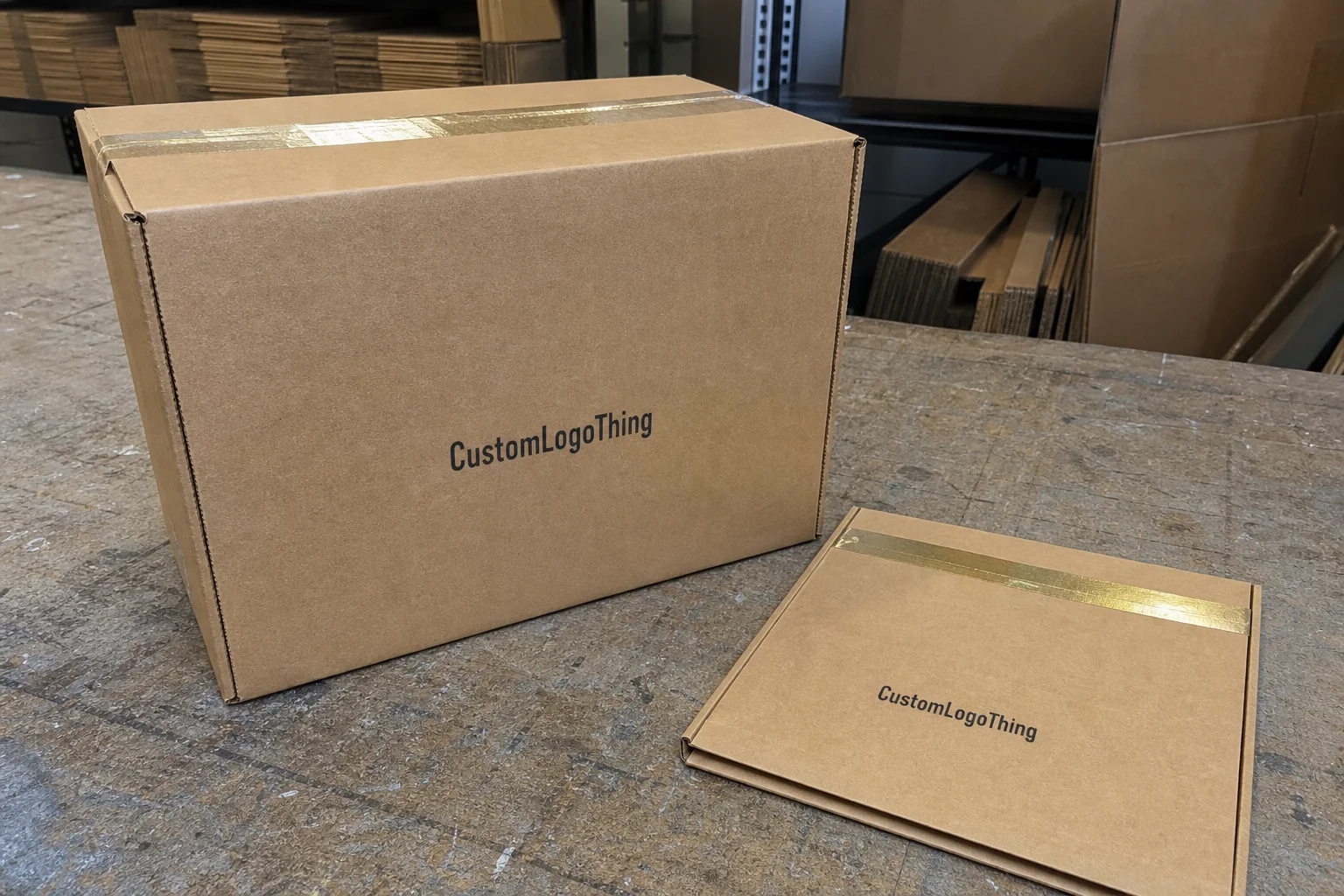
Boxes are the first thing a customer, receiver, or warehouse handler sees. That makes the outer carton a branding surface, but it also makes it a control point. A cleanly printed box can help a package look legitimate, reduce confusion in receiving, and make returns easier to identify. For shipments moving through FedEx’s parcel network, that matters because the carton will see conveyor handling, stacking, drops, and friction that have nothing to do with the product itself.
There is a practical reason branded cartons keep getting more attention. The box often carries the first visible promise the brand makes. A strong print treatment signals order and care. A flimsy, oversized, or poorly aligned carton does the opposite. Customers may not be able to articulate what went wrong, but they notice it immediately.
Printed boxes also help operations, not just marketing. A distinct carton can speed warehouse sorting when multiple SKUs share similar dimensions. It can make outbound inventory easier to identify. It can reduce the need for extra labels or stickers on the outside of the shipper. None of that is glamorous. It is just efficient.
Still, print does not rescue bad structure. A beautiful carton that crushes in transit is still a bad carton. The best results come from matching board grade, flute profile, and print method to the actual shipping environment. If the parcel will move through a standard distribution chain, the spec should be built for that chain, not for a mockup on a desk.
The box should earn its keep in transit first and in presentation second. If the order flips that order, the budget usually pays for it later.
How custom printed shipping boxes work from artwork to delivery
The process is straightforward once the dimensions are locked. First comes the box style: regular slotted carton, mailer, telescope, or a custom structure with inserts. Then the supplier confirms the internal dimensions, the board grade, the flute profile, and the print area. That step matters because the artwork has to fit the folds, flaps, seams, and glue zones of the actual carton. Flat artwork files do not understand structural reality. The dieline does.
After that, prepress reviews the file for bleed, safe zones, color values, and any text sitting too close to a fold. If the package includes barcodes, compliance marks, or return-routing information, those elements get checked too. Good buyers treat the proof as a control document, not a formality. It is cheaper to fix a misplaced mark on screen than to reprint thousands of boxes.
The production method depends on the order. Digital print is common for smaller or faster runs. Flexographic print is usually stronger for repeat orders and simple graphics at scale. Litho-laminate work is reserved for premium presentation or high-graphic boxes where image quality matters enough to justify the added cost and time.
- Digital print fits short runs, pilot launches, and versioned artwork.
- Flexographic print fits repeat cartons with simpler graphics and higher quantities.
- Litho-laminate fits premium cartons, retail-ready packaging, and jobs where appearance carries more weight.
One practical rule: if the artwork may change in the next quarter, avoid committing to a large printed inventory. That advice saves a lot of write-offs. If the carton spec is stable and demand is predictable, the economics shift in favor of higher quantities.
Cost, pricing, MOQ, and quote drivers for printed boxes
Pricing is driven by a small set of variables, and buyers usually see them once the quotes are compared side by side. Box size affects board usage. Board grade changes material cost and performance. Print coverage changes setup and production time. Finish options add another layer. Quantity is the biggest swing factor because setup costs get spread across more units as the run gets larger.
For fedex Custom Printed Boxes, the quote should show more than the unit price. Ask for the landed cost where possible: carton price, setup or plate charges, proofing, freight, and any sampling fees. A lower unit number is not useful if shipping or prepress is missing from the comparison.
MOQ is one of the first friction points. Digital jobs often tolerate smaller quantities, sometimes in the low hundreds. Flexo usually wants a larger commit because plates and setup have to be recovered. Litho-laminate is the most expensive to start and usually makes sense only when the visual upside matters enough to justify the inventory risk.
| Print method | Common MOQ | Setup burden | Indicative unit range | Best fit |
|---|---|---|---|---|
| Digital print | 100-500 | Low | $0.60-$1.50 | Short runs, test launches, seasonal graphics |
| Flexographic print | 500-1,000+ | Moderate | $0.20-$0.55 | Repeat orders, simple logos, larger volume programs |
| Litho-laminate | 1,000-2,500+ | Higher | $0.85-$2.25 | Premium retail presentation, high-detail graphics |
Those ranges are directional. They move with board grade, flute, print coverage, color count, finish, and freight distance. A white-faced carton with full coverage will price differently from a kraft box with a single-color logo. A heavier board may raise the unit cost but reduce damage claims. That trade is often worth it.
Cheap packaging is only cheap until it fails. Then the hidden cost shows up in returns, replacements, repacks, and customer complaints. A better comparison is not “which quote is lowest?” but “which quote gives the best landed cost for the box That Actually Survives the shipment?”
For brands that need an outside benchmark, ISTA test methods are a useful reference point for transit risk, especially if the product is fragile or the box will travel through rough parcel handling. FSC certification also matters if the brand wants to make verifiable fiber claims. Both are practical filters, not marketing decoration.
Process and lead time: what happens after you submit artwork
The production clock does not really start until the file is usable. That is a boring truth, but it explains most delays. If the supplier receives a logo file without a dieline, or a mockup that ignores folds, the proofing cycle starts over. If the artwork uses the wrong color space or the barcode lands on a seam, the job slows down again. Clean files save more time than rush fees do.
Standard lead times often land in the 10-18 business day range after proof approval for common printed cartons. Simpler digital jobs can move faster. Custom structures, specialty coatings, or additional sampling can push the schedule longer. Rush production is possible in some cases, but it usually costs more because it interrupts the plant schedule.
The biggest timing risks are predictable: artwork corrections, structural changes, ink or board substitutions, and late approvals. None are mysterious. They are the normal result of moving a physical product through print and converting equipment instead of a desktop printer. If the program has a hard launch date, those risks need to be managed up front.
Buyers can cut lead time by sending a complete brief the first time. Include finished box dimensions, product weight, desired quantity, shipping method, print coverage, and whether the carton must handle parcel abuse, pallet stacking, or both. The more specific the brief, the fewer assumptions the supplier has to make.
Quality control should also be part of the schedule, not an afterthought. A serious proof stage checks color tolerance, barcode placement, fold alignment, glue integrity, and board consistency. If the box is new, a structural sample is usually worth the extra day or two. That is cheaper than discovering a problem after the cartons are on a truck.
Spec checklist: size, durability, print area, and shipping performance
Start with internal dimensions. External dimensions are useful for freight, but the product has to fit inside the usable space. Too tight and the item can scuff or compress. Too loose and the product shifts, which usually means void fill, extra cost, and more damage risk. In packaging, half an inch is not a rounding error.
Then choose the board. Single-wall corrugated is common for many e-commerce cartons, but the right grade depends on weight, stack load, and travel distance. E-flute is thinner and prints well. B-flute gives a bit more cushioning. C-flute adds more crush resistance. Double-wall is usually reserved for heavier products or harsher shipping conditions. Burst strength and edge crush strength both matter, and they are not interchangeable.
Print area comes next. Decide whether the box needs a logo on one panel, multiple sides, or a full-wrap design. Confirm the no-print zones around manufacturer seams, glued flaps, and folds. Artwork that looks centered on a flat PDF can drift once the box is folded and glued. That is normal. It just needs to be accounted for early.
- Internal dimensions matched to the actual product and any inserts.
- Board grade chosen for weight, fragility, and stack performance.
- Flute profile matched to print quality and protection needs.
- Print locations confirmed on all visible panels.
- Barcodes, labels, and compliance marks kept clear of folds and seams.
- Sample carton reviewed before the full run is released.
Shipping performance should be tested with the filled product, not empty samples. A carton can look perfect on a table and still fail under drop, vibration, or compression loads. If the box travels by parcel, the spec should reflect parcel handling, not ideal handling. That means thinking about scuffing, moisture, stacking, and dimensional weight all at once.
One more point: the right box is not always the biggest or the strongest. Oversizing increases cubic shipping cost. Overbuilding can waste money. The smartest spec is the one that holds the product safely, prints cleanly, and keeps freight under control.
Common mistakes buyers make when ordering custom printed boxes
The first mistake is designing too early. Teams approve graphics before the carton size is final, then discover that the logo lands too close to a fold or a panel edge. That leads to artwork rework and another proof cycle. It is avoidable.
The second mistake is poor file hygiene. Low-resolution logos, missing vector art, and unapproved colors create unnecessary noise in production. If the supplier asks for print-ready files and gets a screenshot instead, the schedule slows down. If the barcode is not verified at actual size, the carton may look fine and still fail at the warehouse scanner.
The third mistake is comparing quotes without matching specs. One supplier may be quoting heavier board, another may be leaving freight out, and a third may not include sampling. A lower price only means something if the boxes are truly the same. Otherwise, the comparison is fiction.
The fourth mistake is overcommitting before the box has been tested in real conditions. That is especially risky for new products, fragile goods, or programs with variable demand. If the carton is unproven, order enough to validate the structure and print, not enough to lock the business into a mistake.
Most of the expensive failures come from the same handful of problems:
- Artwork approved before dimensions are final.
- Seams, folds, and glue zones ignored during design.
- Freight, samples, or setup charges omitted from quote comparisons.
- Bulk quantities ordered before a filled sample passes testing.
The hidden cost is usually rework. Rework burns time, delays launches, and compresses margin. The carton itself is rarely the real problem. The real problem is that the carton was never approved against the actual use case.
Next steps: gather specs, compare proofs, and place a smarter order
The cleanest way to buy printed cartons is to start with the data. Gather the product dimensions, finished weight, shipping method, print coverage, and target quantity before asking for quotes. If there are compliance marks, barcode requirements, or special handling notes, include those too. The supplier should be pricing the same box you plan to use, not filling in the blanks.
After that, ask for a proof and, if the job is new or fragile, a structural sample. That extra step catches fold issues, print alignment problems, and dimension mistakes before production starts. It is much cheaper to correct a sample than to correct a run.
Then compare quotes line by line. Price matters, but so do lead time, board grade, print method, freight, and the quality of the proofing process. If one option is faster and a little more expensive, that may be the better choice if the launch is fixed. If another is cheaper but weaker, the savings disappear the first time the box collapses or the print shifts.
- Lock the product dimensions and weight.
- Choose the carton style and board grade.
- Approve the dieline and artwork placement.
- Review the proof for color, folds, labels, and barcode position.
- Request a sample if the shipment is new, heavy, or fragile.
- Release production only after the proof matches the spec sheet.
That process sounds methodical because it is. It is also the shortest path to a cleaner launch and fewer surprises. If the goal is fedex custom printed Boxes That Protect the product and still look deliberate on arrival, the best starting point is almost always the shipping requirement. Branding comes after that. It works better that way.
FAQ
What do I need before ordering FedEx custom printed boxes?
Have product dimensions, finished weight, shipping method, logo files, and target quantity ready. Also decide whether the print is outside only or inside and outside. That gives the supplier enough information to quote the carton, setup, and freight without guessing.
How much do FedEx custom printed boxes usually cost?
Pricing depends on size, board grade, print coverage, color count, finish, quantity, and freight. Smaller runs usually cost more per box because setup is spread across fewer units. For common orders, digital print tends to land in the higher unit-cost range, while flexo gets more efficient as volume climbs.
What is the typical lead time for printed shipping boxes?
Standard lead times often fall in the 10-18 business day range after proof approval, though simple digital jobs can move faster and custom structures can take longer. Artwork revisions, sample approvals, and material substitutions are the main reasons schedules slip.
Can I print on both sides of a custom shipping box?
Yes, but the box style has to allow it. Inside printing can change cost and may require extra production care around seams, glue flaps, and folds. A dieline review is the safest way to confirm where the artwork can actually go.
How do I compare quotes for custom printed boxes fairly?
Compare the same internal dimensions, board grade, flute, print method, finish, freight, and proofing terms. Check whether samples, plates, and setup are included. A lower unit price is not a better deal if the carton is weaker, slower to produce, or more likely to fail in transit, especially for fedex custom printed boxes that need to survive parcel handling.