Custom Size Labels for clothing B2B sourcing can look like a small trim decision until it starts affecting sorting, fit perception, or receiving speed. A size mark that is hard to read, poorly folded, or inconsistent across styles creates friction in the factory and again in the warehouse. That friction has a cost. Sometimes it is a few cents per piece. Sometimes it becomes a relabeling run.
The size label also sits closer to the customer experience than many buyers expect. A garment can be well cut and well sewn, yet still feel unfinished if the size indicator is crude, scratchy, or visually out of step with the rest of the line. If your program already includes Custom Labels & Tags, Wholesale Programs, or broader Custom Packaging Products, the label belongs in the same approval path as the rest of the product package.
That matters because size labels do more than state S, M, L, or 32. They guide production, reduce confusion across vendors, and create a reference point when one factory cuts slightly differently from another. In private label and wholesale programs, that consistency is worth more than it looks on paper.
"A label is never just a label. It becomes visible the moment the wrong one enters the run, and then the problem is no longer aesthetic. It is operational."
Why size labels can make or break a clothing line
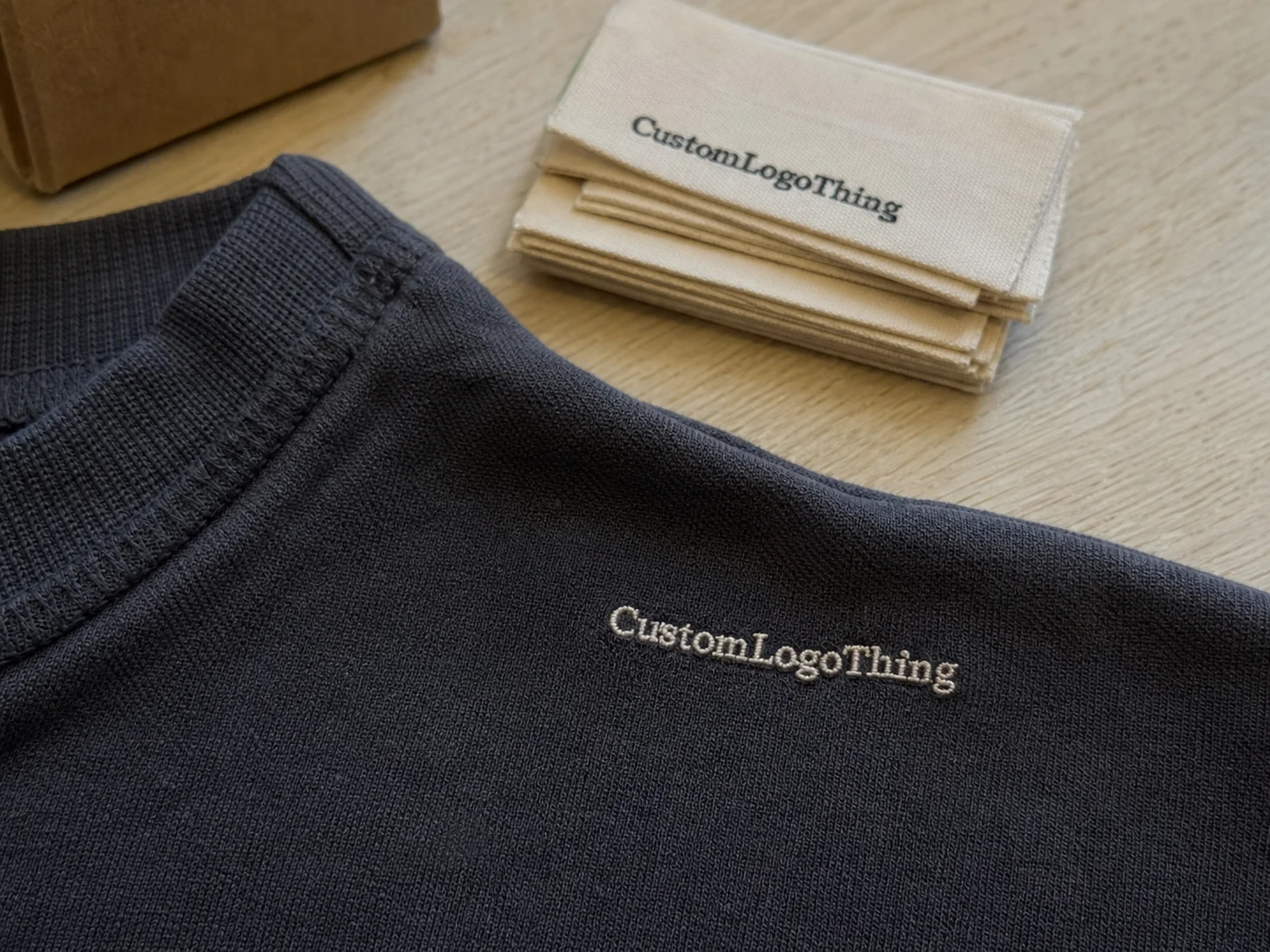
Most teams think of a size label as a code. In practice, it is a routing tool, a quality cue, and a small but constant touchpoint with the garment. Warehouse staff use it to sort cartons. Sewing teams use it to place trims in the same location from style to style. Buyers use it to verify the product at a glance.
This becomes more important when multiple factories are involved. One supplier may grade with slightly different tolerances, another may use a different trim library, and a third may interpret the spec more narrowly than intended. A stable size label spec gives the program one fixed reference. That helps across denim, knitwear, children’s apparel, outerwear, and any line where the same size range repeats across multiple silhouettes.
A practical example: a medium label that is too wide for a slim neck seam does not fail in a spreadsheet. It fails during sewing, or worse, after garments are already packed. The fix might look small, but the cost sits in labor, delay, and extra inspection.
That is why buyers who treat size labels as part of the build spec rather than a last-minute decoration tend to get fewer surprises. The label is small. The impact is not.
How custom size labels for clothing B2B sourcing are specified and manufactured
The first decision is construction. Buyers usually choose between woven, printed, satin, heat transfer, or a combination label that carries size and care information in one piece. Each option behaves differently on the garment line. Woven constructions give a more substantial feel and can hold up well through repeated laundering. Printed satin is softer and better for low-profile seams. Heat transfer eliminates the sewn edge entirely, which is useful for activewear and close-to-skin garments.
The second decision is specification. A useful brief states the exact size wording, finished dimensions, fold type, material, color reference, placement, and attachment method. "Inside neck" is not enough. Neither is "side seam." A supplier needs to know whether the label sits in a center fold, end fold, or straight cut format, and whether the garment construction leaves enough seam allowance for that choice.
Artwork review is where many sourcing errors begin. The supplier may be able to read the logo, but a size label still needs legible type at a small scale, correct spacing, and a finish that survives folding and wear. If the garment is intended for repeated washing, the proof should be treated as more than a visual check.
Garment context matters as much as the art. A side-seam label in heavy fleece is a different request from a neck label on a lightweight jersey tee. If the buyer shares fabric weight, seam construction, and the expected contact point against skin, the supplier can usually recommend a better build. That is how rework gets avoided.
Cost, pricing, MOQ, and unit cost drivers
Price is driven by a small set of variables: material, number of colors, print or weave complexity, finished dimensions, fold style, and packing format. A simple one-color printed size label usually sits near the bottom of the range. A woven damask label with tight type, multiple colors, or special finishing moves higher. A label packed by size run or by style can also add handling cost.
MOQ matters because setup is spread across fewer units when quantities are low. That usually raises unit cost. It does not make small runs impossible, but it does mean buyers should compare the quote against the actual volume needed, not against an ideal bulk number that may never be ordered. Sampling fees, plate charges, and artwork revisions may be separate line items or rolled into the quote.
What usually changes the quote
Precise color matching, finer type, tighter tolerances, or special fold requirements tend to increase cost. So does a construction that needs to stay soft against skin while still surviving wash cycles. Labels that are part of a larger trim package can sometimes be produced more efficiently, but only if material compatibility and machine setup line up.
How to compare offers fairly
Compare like for like. The same dimensions, the same material, the same fold type, the same quantity split, the same packing format. A woven label quote is not directly comparable to a printed satin quote unless the buyer understands the tradeoff in feel, durability, and line handling. The cheapest quote can become the most expensive option if it triggers a correction after sampling.
| Label type | Typical feel | Best fit | Indicative unit cost at 5,000 pcs | Notes |
|---|---|---|---|---|
| Woven damask | Textured, premium | Denim, outerwear, core branded apparel | $0.05-$0.14 | Good detail retention and durable through wear |
| Printed satin | Soft, smooth | T-shirts, kidswear, intimate apparel | $0.03-$0.09 | Useful where comfort and low profile matter more than structure |
| Heat transfer | Flat, label-free hand | Activewear, performance garments, minimal seams | $0.06-$0.16 | Requires disciplined application on the garment line |
| Combo care/size label | Standard production label | Mass apparel programs with compliance needs | $0.04-$0.12 | Can reduce trim count and simplify sewing |
Unit price should never be reviewed in isolation. A quote that excludes testing, packing, or freight is not a complete number. Ask how the supplier handles sampling, approval, and shipping before comparing offers. The headline price is only useful if the landed cost stays visible.
Process and timeline from artwork to bulk production
The standard flow is brief, spec confirmation, artwork review, sample or strike-off, approval, production, packing, and shipment. Most delays happen at the handoff points. A buyer sends an incomplete width or fold request, the supplier makes an assumption, and the sample comes back wrong.
Color requests create their own problems. If the brand wants a specific shade, the supplier needs a reference. "Close to black" is not a reference. Neither is "slightly warmer blue." The more precise the instruction, the fewer revision cycles. Fine text creates another risk. Small type that reads cleanly on screen can break down in woven construction if the proof is not reviewed at actual size.
Lead time varies by queue and order size, but many label programs run about 12 to 15 business days from proof approval to bulk completion. Add time if the artwork is still changing or if a second sample is needed. Rush orders are possible, but they usually come with higher cost and less room for correction.
A clean quality-control sequence usually includes a visual proof check, a dimensional check, a hand-feel check, and a wash or abrasion check if the garment category needs it. Some buyers also ask for a pull test or stitch verification on the seam sample. None of those checks are exotic. They are standard controls for avoiding a label that looks right but fails in use.
For programs that touch retail packaging, it helps to keep shipping and material standards in view. Cartons, bundle packs, and outer packs often follow transit discipline from organizations such as ISTA, while paper-based components can be aligned with sources such as FSC if a brand wants a clearer paper sourcing story.
Materials, durability, and garment compatibility
Material choice should follow the garment, not the branding preference alone. Soft satin works well where comfort is the first concern. Woven constructions suit premium branding and higher wear tolerance. Heat transfer is often the cleanest option when a sewn label would interfere with performance, stretch, or skin contact.
Durability is broader than wash resistance. A label also has to survive folding, abrasion, carton handling, and repeated touch during retail processing. Some constructions fray at the edge if the cut is too aggressive. Others twist inside a seam if the width is not matched to the fabric thickness. On knits, stiffness can create puckering. On children’s garments, scratchiness becomes a comfort complaint very quickly.
Soft goods that need a gentler hand
Tees, baby apparel, and intimate wear usually need lower friction, smaller footprints, and softer yarns. A sample can look fine in a photo and still irritate after washing or after an hour of wear. The only reliable check is a test sample on the actual garment or a close construction match.
Labels that need more structure
Workwear, denim, and outerwear usually need a label that holds shape and stays readable through tougher use. In those categories, the size mark is also part of the brand signal. It tells the buyer the garment has been planned. The best result usually comes from matching the label construction to the body fabric weight and the brand promise at the same time.
It also helps to coordinate the label with the rest of the trim set. If the line already includes hangtags, linings, and Custom Packaging Products, the size label should feel like part of the same system. Not identical. Coherent.
Common sourcing mistakes that create rework
The biggest mistake is approving a design without confirming the actual size, fold direction, or placement on the garment. A label can look correct on a screen and still fail in production if the fold is reversed or the finished width is too wide for the seam allowance. That kind of error is expensive because it usually appears after the first sample.
Skipping the test sample is another expensive habit. If the label needs to survive repeated washing or sit against a delicate fabric, sample approval is not optional. The sample exposes edge finish issues, print sharpness, stitch behavior, and the true hand feel of the material. It is cheaper to reject one sample than to relabel a production run.
Communication failures are the last common source of waste. Merchandising, sourcing, and production sometimes work from slightly different versions of the same spec. If the label instructions live in three places, they tend to drift. Put the size label spec in the tech pack, in the approval file, and in the purchase order notes.
There is also a hidden cost that buyers underestimate: sorting time after an error. A wrong label is not just a defect. It can stop the line, trigger inspection, force relabeling, and hold shipment. That sequence turns a small trim issue into a scheduling issue.
Next steps for a cleaner sourcing brief and quote request
Start with a brief that answers the production questions directly. Include garment type, size range, label dimensions, placement, material preference, attachment method, quantity split by size, and target ship date. If the label needs to match other trims, call that out. A supplier cannot flag a conflict that has not been described.
Ask for a sample or proof before bulk approval, a unit price at more than one volume, and a timeline that separates sampling from production. That structure makes vendor comparison much cleaner. It also exposes whether the supplier is organized enough to handle revisions without turning every change into a delay.
For brands that repeat styles across seasons, the goal is a repeatable system, not a one-off order. The same team managing cartons, hangtags, and retail packaging should know exactly where the size label sits in the brand architecture. That is especially true if the line also uses custom printed boxes or other branded packaging elements.
Clean sourcing is not complicated, but it does require discipline. Turn vague needs into a written brief, compare like-for-like quotes, approve a sample, and keep the label spec in the same file set as the rest of the production documents.
What should I include when requesting custom size labels for clothing B2B sourcing?
Include garment type, size breakdown, label dimensions, placement, material preference, attachment method, and target quantity. Ask for a quote that separates sampling, setup, unit cost, and shipping so you can compare suppliers cleanly.
How do I choose between woven and printed size labels for clothing?
Choose woven labels for a more premium, textured look and printed labels when you want finer detail or a softer hand. Match the material to the garment use case, wash frequency, and how close the label sits to skin.
What affects the price of custom size labels the most?
Material, print or weave complexity, label size, number of colors, finishing style, and MOQ are the main cost drivers. A lower order quantity usually raises unit cost because setup is spread across fewer labels.
How long does the process usually take from artwork approval to shipment?
Timeline depends on sampling needs, production queue, order size, and whether artwork is finalized at the start. If the spec is clear and approval is fast, the process moves much faster than projects that need revisions.
What is the best way to avoid mistakes in size label sourcing?
Use a written spec sheet, confirm the final artwork, and approve a sample before bulk production. Double-check fold style, size wording, placement, and fabric compatibility before placing the order.