Custom Social Media Stickers are one of the simplest branded items to spec, but they only work well when the details are handled with care. People keep them on laptops, bottles, packaging, notebooks, and cases when the design feels useful or worth showing off. That makes them a small physical object with a long tail of visibility.
For creators, events, retail teams, and product brands, the value is not limited to the sticker itself. A well-made sticker can carry a handle, QR code, hashtag, or short URL into places a paid post will never reach, and it can keep doing that for months. That is why these pieces still show up in packaging programs even when budgets are tight. They are inexpensive to print, easy to distribute, and surprisingly durable when the material choice matches the use case.
Used alongside Custom Packaging Products or inserts, stickers can turn an unboxing moment into a follow-up action without feeling forced. The important part is to treat them like part of a system, not a throwaway extra.
Why custom social media stickers get attention fast
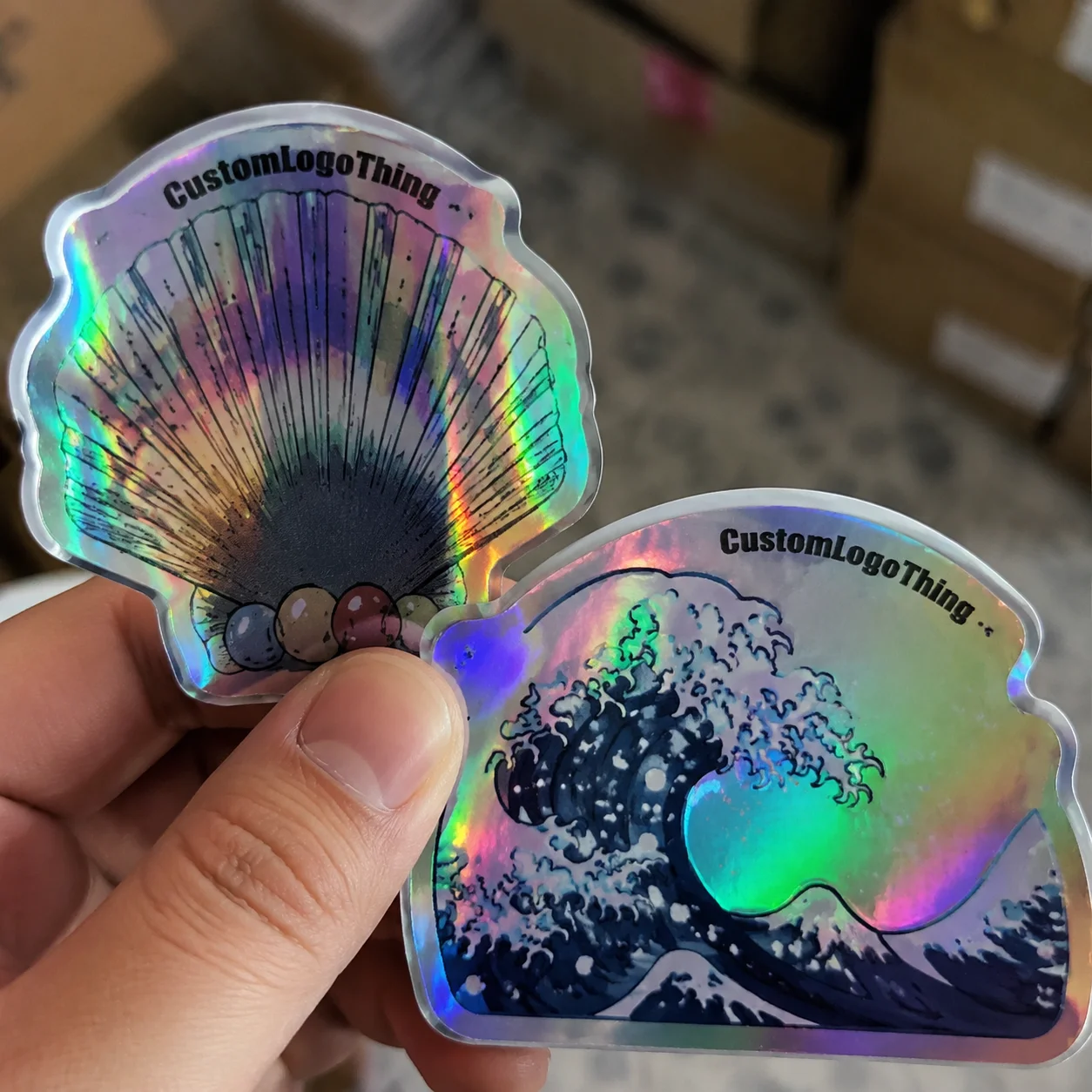
Most marketing asks for attention and gives very little back. Stickers are different because they are useful, collectible, or at least visually satisfying enough to keep around. That is a practical advantage, not a branding cliché. Once a sticker is on a laptop lid or bottle, it travels with the owner, which means the impression keeps repeating in offices, gyms, cafés, classrooms, and shipping lines.
Custom social media stickers also work because they are low friction. A person does not need to open an app, tap through a feed, or remember a campaign later. They only need to notice the handle, scan the code, or recognize the icon. That is a small ask, and the smaller the ask, the better the odds of response.
The strongest use cases are usually the most practical ones:
- Creators use them to promote a handle, channel, or link-in-bio page.
- Events use them for hashtags, sponsor visibility, and scan-to-register pages.
- Brands place them in product packaging, sample kits, and mailers.
- Retail teams use them as giveaways that reinforce package branding and repeat visits.
A sticker is not a substitute for strategy, but it can support one very efficiently. A clear call to action, a readable QR code, and a design people want to keep can outperform flashier promo items that get tossed the same day.
“If the sticker cannot be read in two seconds, it is decoration. If the QR code cannot be scanned, it is only a tiny poster.”
How the sticker production process works
The production flow is straightforward, though each step affects the result. Start with purpose: where will the sticker live, what should it do, and how much information can it hold before it becomes cluttered? Then choose size, substrate, finish, and cut style. After that, proof it carefully. Skipping proof review is usually how avoidable mistakes reach production.
Artwork should be close to final before you request a quote if you want pricing that reflects reality. Vector files are best for logos and text-heavy layouts because they stay sharp at scale. High-resolution raster files can work for illustrated art, but QR codes, fine type, and thin strokes need extra attention. A code that looks fine on screen can still fail if it is too small or lacks proper quiet space around it.
Most suppliers will look for a few basics:
- Vector logos in AI, EPS, or PDF format.
- High-resolution artwork at 300 dpi or better.
- Readable type that survives small-format printing.
- QR codes placed on a plain, high-contrast field.
Cut style changes both presentation and handling. Kiss cut stickers stay on a backing sheet, which is useful for sets, mailers, and handouts. Die cut stickers follow the shape of the artwork and tend to feel more finished in hand. Sheet format is practical when several small designs need to ship together. If you need adhesive pieces for inventory, labeling, or product identification, Custom Labels & Tags may be the better match than a promotional sticker format.
Proof approval is where good orders stay good. Check text size, color balance, QR clarity, and cut alignment at actual size. Minor color shift can happen between matte and gloss surfaces, and that is normal; obvious mismatches are not. The difference between a clean launch and a reprint is often a careful proof viewed on a real monitor, not just a quick thumbs-up in an inbox.
Cost, pricing, MOQ, and unit economics
Sticker pricing depends on size, quantity, material, finish, cut style, and whether the order ships as individual pieces or sheets. Add a laminate, specialty adhesive, flood coating, or rush turnaround and the total rises. There is no mystery here. It is just manufacturing cost spread across the order.
Lower quantities carry a higher unit price because setup is divided among fewer pieces. Larger runs lower the cost per piece, but they also create more inventory exposure. A few hundred pieces makes sense for a launch test or a one-time event. A few thousand makes sense when the sticker will live inside packaging, mailers, or a sustained campaign. Ordering more because the unit rate looks attractive is how useful stock turns into storage.
| Order Type | Typical Unit Cost | Best For | Tradeoff |
|---|---|---|---|
| Small run, 250-500 pcs | $0.60-$1.20 | Testing artwork, small launches, creator merch | Higher per-unit cost |
| Mid run, 1,000-2,500 pcs | $0.20-$0.45 | Events, product packaging, influencer kits | Moderate upfront spend |
| Bulk run, 5,000+ pcs | $0.08-$0.22 | Ongoing campaigns, retail packaging, wider distribution | More inventory to manage |
These are working ranges, not guarantees. Material choice matters a great deal. A white vinyl sticker with laminate will cost more than a basic paper label. A multi-version order costs more than a single design because setup and proofing multiply. Special finishes, unusual shapes, and accelerated schedules also add cost. The cheapest quote is not always the best one if it excludes the durability or scan reliability you actually need.
It helps to work backward from distribution. If the stickers go into branded packaging, use monthly pack-out volume as the baseline. If they support an event, count attendees, staff, press, and extras for later mailings. If they are for a campaign with a short shelf life, keep the run small enough that you are not stuck with outdated handles or links. That is especially important when social profiles, offers, or landing pages change often.
Common cost traps include multiple size versions, specialty laminates, and rush fees. A sticker order that starts as a simple promo item can become expensive if it needs three QR codes, two dimensions, and same-week delivery. The sticker is not the problem; the planning is.
Design choices that improve scans and shares
Good sticker design depends on hierarchy. Put the brand name or handle where the eye lands first. Place the QR code or platform icon second. Keep decorative elements last, and only use them if they do not interfere with readability. If the message has to be hunted for, the sticker is doing too much and communicating too little.
Contrast matters more than most mockups suggest. A pale handle on a glossy pastel background may look polished on a screen and disappear on a real surface. QR codes need clean edges, enough quiet space, and a background that does not compete with the code. Dark on light is the safest choice, especially for small formats. Busy gradients can be attractive, but they are not kind to scans.
Size and shape change how the sticker behaves in the real world. Larger pieces read faster and allow more room for a call to action. Smaller pieces fit better on laptops, jars, insert cards, and shipping seals. Die cut shapes support brand recognition, while circles and squares are easier to package and stack. If the sticker is part of a broader rollout, coordinate it with package branding and custom printed boxes so the whole presentation feels planned rather than pieced together.
Finish affects both appearance and durability:
- Matte reduces glare and keeps text easier to read.
- Gloss adds color pop and a slicker surface.
- Laminate improves resistance to rubbing, moisture, and handling.
Surface choice matters too. A matte sticker on a matte box feels intentional. A glossy sticker on kraft packaging can stand out well if the colors are strong enough. If the piece will be touched often, ask for a durable laminate so the edges do not wear early and the print does not smudge. That matters for product packaging, retail inserts, and shipment materials that see a lot of handling.
Material and sustainability questions are worth asking before production starts, even if you are not making a formal eco claim. Resources from FSC and broader packaging references from PMMI are useful for understanding substrate and labeling considerations. Not every sticker needs an environmental promise, but Buyers Should Know what their material and adhesive choices mean in practice.
Timeline, turnaround, and production steps
Turnaround depends on file readiness, print method, finishing, and shipping distance. Clean files move quickly; messy files do not. A standard digital run with simple cut lines can often move from proof approval to production in about 5-10 business days. Specialty finishes, heavy post-processing, or layered order handling can push that into the 10-15 business day range. Shipping adds its own lead time, and freight is rarely as predictable as the launch calendar wants it to be.
It is safer to plan around the real deadline rather than the hoped-for one. If the stickers support a launch, event, or mailer, build in time for revisions and transit. Rushed jobs often force tradeoffs in finish, size, or material, and those tradeoffs tend to show up later as complaints about scuffing, weak adhesion, or poor readability.
A clean production path usually follows the same sequence:
- Send artwork and specs.
- Review the digital proof at actual size.
- Approve size, cut, color, and placement.
- Print, cut, and finish the order.
- Pack and ship with enough buffer for delivery.
For higher-stakes campaigns, a sample or short test run is worth considering when the design is new, the adhesive is unusual, or the sticker has to work on textured or curved surfaces. That small check can reveal problems before you commit to a larger quantity. If the sticker is going onto a box, pouch, or mailer, test adhesion on that exact surface instead of a desk sample. Real surfaces tell the truth.
Stickers also work best when they fit into the rest of the packaging program. Package branding elements like seals, thank-you cards, belly bands, and inserts can help the sticker feel like part of a coordinated system. That matters when the sticker is doing more than decoration and has to support a launch or campaign with a clear message.
Common mistakes that waste sticker budgets
The quickest way to waste a sticker budget is to treat the piece like a flyer. Too much text, too many claims, and too many tiny design elements make the sticker harder to use and easier to ignore. People are not reading a mini brochure on the side of a laptop. They are scanning, deciding, and moving on.
QR code placement is another common failure point. A code that looks fine in a mockup can still become unreliable if it is too small, set on a busy background, or printed with poor contrast. Test it from a realistic viewing distance on a regular phone. If it only scans under ideal lighting, it is not ready for production.
Material mismatch creates expensive problems too. Paper stickers do not belong on cold bottles or outdoor surfaces. A lower-grade adhesive will struggle on textured packaging. Without laminate, a sticker can scuff, bubble, or peel sooner than expected. Durability should match the environment, not the budget line alone.
Inventory planning deserves the same attention. Ordering too many pieces because the unit rate looks better is a common mistake. Better buyers match quantity to actual usage:
- Events: attendee count, staff count, and extra stock for vendors.
- Packaging: monthly pack-out volume plus a small buffer.
- Creators: merch drop size and likely repeat demand.
- Mailers: campaign list size plus spoilage allowance.
Buy for use, not for the spreadsheet. A shelf full of unused stickers is not reach. It is just inventory with a nice print finish.
Expert tips for better ordering and rollout
Start with a test batch if the design is new or the surface is unusual. That is especially useful for curved bottles, coated cartons, textured mailers, or any packaging that may challenge the adhesive. A hundred pieces can reveal issues that would be expensive to discover at five thousand.
Keep one master layout and change only what needs to change. Maybe the handle changes. Maybe the QR destination changes. Maybe the campaign line changes. Holding the structure steady makes it easier to compare versions and understand what is actually driving scans or shares. Otherwise, results get muddy fast.
Distribution matters as much as the design. Stickers perform best when they show up where attention already exists: event handouts, product packaging, thank-you cards, creator mailers, and retail kits. If the sticker is part of a physical product experience, matching it with custom printed boxes or fold-flat inserts can make the whole package feel intentional.
Track performance with unique QR codes or short URLs. That gives you actual data instead of assumptions. One link per version is usually enough to tell you which design is driving traffic, follows, signups, or coupon use. If you want to compare batches, keep the variable set small. The cleaner the test, the clearer the read.
When you compare suppliers, ask about proof format, cut tolerances, substrate options, and reorder consistency. That last point matters more than many buyers expect. A reorder that shifts in color, laminate, or trim can look slightly off next to the original batch. Some brands never notice. Others spot the difference immediately.
What to do next before you request a quote
Before requesting pricing, lock in the basics: size, finish, quantity, shape, and the surface the sticker will actually touch. If those details are loose, the quote will be broad, and broad quotes are hard to compare. They usually create more email traffic than clarity.
Gather the files that matter: final artwork, logo file, QR destination, copy limits, and any brand rules that affect color or typography. If the sticker has to match other branded packaging, include reference art so the supplier can see the full context. A sticker that lives inside a larger packaging system should be reviewed that way, not in isolation.
Then choose quantity based on rollout volume, not just price breaks. If the campaign is short-lived or the handle may change, keep the order conservative. If the artwork is stable and the distribution is wide, a larger run can make sense. The point is to match the run size to the real use, not to chase the lowest line-item cost.
Use the proof stage to verify three things: readability, scan behavior, and color balance. If all three are sound, approve the job. If one fails, fix it before production starts. That is the simplest way to avoid a stack of Stickers That Look fine in a spec sheet and wrong in the real world.
If you are preparing custom social media stickers for a launch, event, or packaging program, get the specs settled first and request quotes only after the layout is ready. That is the most efficient way to buy: clear design, realistic quantity, and a production plan that fits how the stickers will actually be used.
What are custom social media stickers used for?
They promote handles, hashtags, QR codes, and campaign landing pages in a format people are more likely to keep and share. They work well for events, product packaging, creator merch, and local brand awareness.
How do I choose the right size for custom social media stickers?
Choose size based on where the sticker will be placed and how far away it needs to be read. Larger formats help with QR codes and short calls to action, while smaller formats fit packaging and laptops better.
What affects the price of custom social media stickers?
Price is shaped by size, quantity, material, finish, cut style, and whether the order needs special features or rush service. Unit price drops at higher quantities, but total spend rises, so match the run size to your real distribution plan.
How long does production usually take?
Production time depends on proof approval, print method, finishing, and shipping distance. Clean files and standard specs usually move faster, while revisions and specialty finishes add time.
Can custom social media stickers include QR codes?
Yes, and they often work well when the code is large enough and placed on a clean, high-contrast background. Test the code before approval so you know it scans correctly from realistic distance and lighting.


