Custom Stickers Business: Order Smarter Brand Labels
What a custom stickers business really does for brands
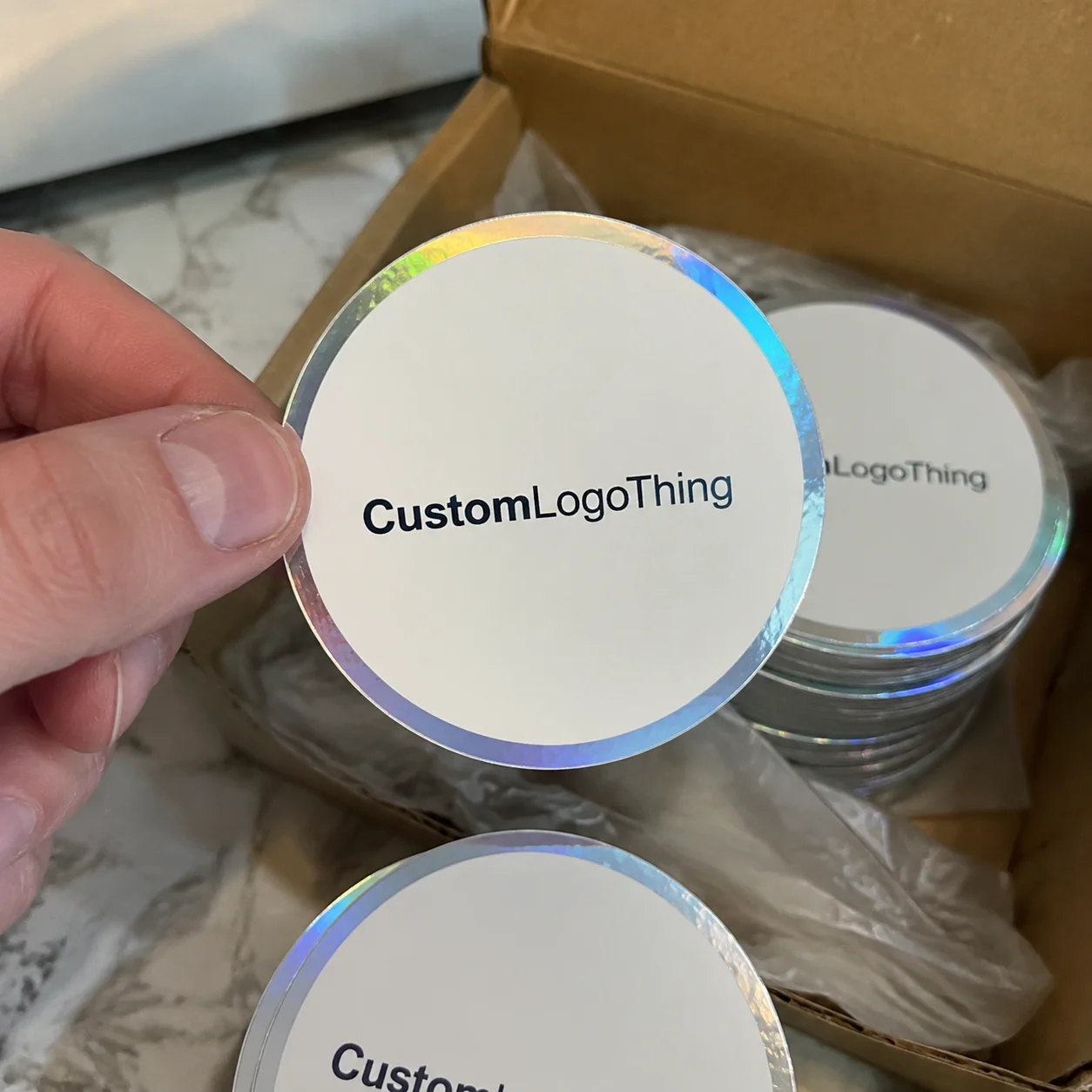
A custom stickers business handles a product that is easy to underestimate. One sticker can cost less than a thank-you card, yet travel farther once it lands on a laptop, shipping box, water bottle, retail bag, sample pouch, or curbside pickup order. That is why stickers occupy a useful middle ground: part packaging, part marketing asset, part operations tool.
The supplier’s job is not simply printing a logo in a cute shape. A good order matches artwork, material, adhesive, finish, cut style, packing format, and quantity to the way the sticker will be used after it leaves production.
That distinction matters. A tissue-seal sticker inside a gift box does not need the same adhesive as a label applied to a chilled smoothie bottle. A vinyl decal for outdoor use has a different job than a paper sticker on a bakery bag. One must tolerate UV exposure, rain, abrasion, and repeated handling. The other may only need to look polished for a day.
Buyers usually run into several product families: die-cut stickers that follow the artwork shape, kiss-cut sheets with extra backing for easier peeling, roll labels for fast application, clear stickers for a low-ink “printed-on” look, vinyl decals for durability, paper stickers for indoor packaging, holographic stickers for promotional impact, and finishes such as matte laminate, gloss laminate, soft-touch film, metallic effects, or textured stock.
There is a practical financial angle too. A small skincare brand can use one logo sticker across jars, shipping cartons, sample pouches, and influencer kits instead of ordering four separate printed packaging runs. That does not replace planned Custom Packaging Products, but it can extend a packaging system while keeping less cash tied up in inventory.
The smart order is rarely the most decorated one. It is the one matched to use. The sections ahead cover how orders move from artwork to finished goods, what drives cost, which specs deserve attention, and where sticker projects usually fail.
How sticker orders move from artwork to finished product
A sticker order usually starts with two inputs: artwork and intended use. The buyer sends a logo, design file, QR code, promotional graphic, or label layout. The supplier checks whether the file can print cleanly, confirms size, recommends material, prepares pricing, and sends a proof before production begins.
Artwork quality is the first checkpoint. Vector files such as AI, EPS, SVG, or print-ready PDF are best for logos because the edges scale cleanly. A high-resolution PNG can work for simple graphics. A screenshot pulled from a website usually cannot. It may look acceptable on a phone, then print with fuzzy edges, weak blacks, or color shifts once enlarged to three inches wide.
Proofing is the safety check, not a ceremonial email. A useful proof confirms finished size, cut line, bleed, safe margin, color direction, quantity, material, finish, roll direction if relevant, and any specialty effect. If the sticker includes a QR code, ingredient copy, batch field, compliance warning, or website URL, review it at actual size. Zoomed-in screens flatter small text.
Production method depends on quantity, design count, and performance requirements. Digital printing is flexible for short runs, multiple designs, and quick artwork changes. Larger orders or specialty jobs may use other methods selected for consistency, speed, opacity, or cost efficiency at volume. Exact color matching can require added proofing, especially when stickers need to align with custom printed boxes, cartons, pouches, or existing retail packaging.
Cut style changes the user experience. Die-cut stickers follow the design shape and work well for giveaways or branded merchandise. Kiss-cut stickers leave backing around the sticker, making small or delicate shapes easier to peel. Roll labels feed into applicators or speed up hand labeling. Sheets are practical for storage, events, and lower-volume hand application.
Before cartons ship, buyers should expect basic quality checks: adhesion review, print clarity, cut alignment, finish inspection, and count verification. Not every supplier documents these steps the same way, so ask. A packaging-oriented sticker supplier should be able to explain how it checks problems that affect application, not only how it prints color.
Practical checkpoint: Treat the proof like a purchase contract. If the size, finish, material, or quantity is wrong on the proof and you approve it anyway, production will usually make the wrong thing very efficiently.
Material, adhesive, and finish choices that change performance
Material selection is the gap between a sticker that looks good and one that survives its job. Paper, vinyl, BOPP film, clear film, textured stock, and metallic materials behave differently around moisture, pressure, temperature, sunlight, oils, and abrasion. A nice sample on a desk is only one data point.
Paper stickers are cost-efficient and can look excellent on dry indoor packaging. They suit bakery bags, tissue seals, thank-you inserts, candle boxes, promotional handouts, and short-life product packaging. Their weakness is exposure. Water, oils, refrigeration, condensation, and repeated handling can stain, wrinkle, or lift paper unless the stock and finish are chosen carefully.
Vinyl and film-based stickers are stronger choices for durability. They are often better for water bottles, cosmetics, outdoor decals, curved containers, and products handled frequently by customers. BOPP is common in product labeling because it resists moisture better than standard paper and can be supplied in white, clear, or metallic looks. Clear film can create a minimal “no-label” appearance, but dark packaging may require white ink or opacity planning so the design does not disappear.
Adhesive is where many orders succeed or fail. Permanent adhesive works for long-term branding and retail packaging. Removable adhesive suits temporary promotions, seasonal labels, and surfaces where residue would cause complaints. Freezer-grade adhesive is built for cold storage and condensation. Aggressive adhesive may be needed for textured, recycled, low-energy, or curved surfaces, though it can leave residue or damage delicate materials.
Finish affects both appearance and life span. Matte reduces glare and often feels more premium. Gloss boosts color punch and can make bright graphics look sharper. Soft-touch feels upscale, especially on beauty and specialty food packaging, but it may scuff depending on handling. Laminate adds a protective layer, often worth the extra cost for stickers on bottles, mailers, tool cases, laptops, or products that rub against other items during shipping.
For sustainability claims, ask what can be documented rather than relying on vague language. If paper content matters to your brand, the Forest Stewardship Council is one authority buyers often reference for certified paper-based materials. Not every sticker construction will qualify, especially once adhesives, liners, films, and laminates enter the specification.
A simple buyer test catches many failures: apply a sample to the actual package or surface, then abuse it gently. Press it down. Add moisture if that reflects real use. Move it through a temperature change. Rub it with a thumb. Leave it for several days. If it is going on a jar, curve it around the jar. If it is going on a recycled mailer, test that exact mailer. Desk approval is not field approval.
Sticker pricing, MOQ, and unit cost explained
Sticker pricing is not only about size. It is shaped by material, adhesive, finish, shape complexity, order quantity, setup, proofing, finishing, packing style, and shipping weight. A two-inch round paper sticker and a two-inch laminated vinyl sticker may look similar in a PDF. Their costs and performance are not the same.
MOQ means minimum order quantity. It protects production efficiency because every job has fixed work: file review, proofing, press setup, material setup, finishing setup, cutting, counting, and packing. The best economic order quantity may be higher than the MOQ because setup costs spread across more pieces.
Short runs reduce cash risk. Larger runs usually lower unit cost but create inventory risk if your logo, compliance text, barcode, color system, or packaging size changes. This is where brand teams sometimes overspend: they chase a lower unit price, then sit on boxes of outdated labels six months later.
| Sticker Type | Typical Use | Common Cost Behavior | Buyer Watchout |
|---|---|---|---|
| Paper stickers | Dry indoor packaging, tissue seals, inserts | Often lowest unit cost at medium quantities | Weak around moisture, oil, and abrasion |
| Vinyl stickers | Outdoor decals, laptops, bottles, giveaways | Higher than paper, better durability | Check adhesive for curved or textured surfaces |
| BOPP roll labels | Product packaging, jars, bottles, retail labels | Efficient at volume, especially on rolls | Roll direction and spacing affect application speed |
| Holographic or metallic stickers | Promotions, limited editions, premium branding | Higher material and finishing cost | Small text may lose contrast on reflective stock |
| Laminated decals | High-contact surfaces, shipping, outdoor use | Added cost for protective layer | Confirm matte, gloss, or textured finish before approval |
For basic paper or film stickers, very small runs can land above $0.40 per piece because setup is doing the heavy lifting. At 1,000 to 5,000 pieces, simple two-inch to three-inch stickers often become more efficient, sometimes falling into a broad $0.06 to $0.25 per unit range depending on material, finish, print coverage, and packing. Specialty effects, large formats, individual bagging, or multiple designs can move the price sharply upward. These are planning ranges, not promises; quotes depend on actual specs.
Cost drivers buyers often underestimate include custom dies, metallic or holographic stocks, laminates, exact color matching, individual bagging, split shipments, multiple artwork versions, rush production, and oversized formats. Shipping can also surprise people. A roll label order packed in dense cartons may be cheaper to handle than thousands of individually cut stickers prepared for retail-style distribution.
Quote preparation gets faster when you provide the right inputs: size, quantity, number of designs, material preference, indoor or outdoor use, roll or sheet format, finish, deadline, and shipping location. If the sticker is part of a wider branded packaging program, share that too. Matching labels to boxes, pouches, sleeves, or Custom Labels & Tags is easier when the supplier sees the full packaging direction.
The cheapest quote is not automatically the best quote. Two stickers can share the same size and artwork while using different adhesive systems, liners, laminates, inspection standards, and packing methods. Ask what is included. A custom stickers business that quotes clearly should make trade-offs visible instead of hiding them behind one low unit price.
Process and timeline: what happens before stickers ship
A typical order path looks like this: inquiry, spec review, quote, artwork check, proof approval, material preparation, printing, drying or curing if needed, lamination or finishing, cutting, packing, and dispatch. Simple digital jobs with ready artwork may move quickly. Specialty materials, strict color targets, custom tooling, or high quantities add steps.
For many orders, the biggest timeline variable is proof approval, not printing. Missing dimensions, low-resolution art, unclear material choices, or a slow internal approval chain can add several business days before the job enters production. Buyers sometimes focus on rush shipping while losing more time deciding whether a 2.25-inch or 2.5-inch label looks better on a jar.
Lead time and transit time are separate. Production lead time covers manufacturing after approved specs and proof. Transit time covers carrier movement after the order leaves the facility. If a launch is on Friday, a “five business day production” schedule does not mean the stickers arrive in five business days. Packing, dispatch cutoff, carrier service, customs for cross-border shipments, and local delivery all matter.
Rush orders are sometimes possible for simple digital stickers with final artwork and stocked materials. They are less realistic for specialty films, large-volume roll labels, custom dies, exact color matching, or jobs requiring testing. Rush fees are not magic; they usually buy priority scheduling, overtime, or faster shipping. They do not fix a weak file or an adhesive mismatch.
For launch planning, order samples or prototypes first if the sticker affects product packaging, retail presentation, or automated application. Build buffer time around trade shows, influencer mailings, seasonal promotions, and retailer ship dates. Avoid approving proofs while distracted. One wrong digit in a barcode, batch field, or website URL can turn a low-cost sticker into a high-cost rework.
Packaging logistics deserve attention. Rolls may need core size, unwind direction, label gap, and outer diameter confirmed. Sheets need sheet size and count per sheet. Singles may need shrink wrapping, bands, or cartons by design. If stickers travel through parcel networks with product samples, review packaging performance principles from groups such as the International Safe Transit Association, especially when fragile items, vibration, or compression are involved.
- Fast-turn checklist: final artwork, confirmed size, approved material, exact quantity, delivery address, required arrival date, and one decision-maker for proof approval.
- Risk checkpoint: if the sticker touches moisture, cold, oil, sunlight, or automation equipment, build time for a sample test.
- Reorder habit: save the final spec, including material, adhesive, finish, die line, roll direction, and approved proof file.
Step-by-step guide to ordering stickers without guesswork
Step 1: define the job. A sticker can brand a box, seal tissue paper, label a product, provide a warning, carry a QR code, support an event, decorate an unboxing moment, or turn plain inventory into retail-ready goods. Each job has different performance requirements. A giveaway sticker needs peel appeal. A product label needs readability and adhesion. A tamper-style seal needs placement discipline.
Step 2: measure the application area with real packaging in hand. Screens lie by omission. A three-inch round mark may look balanced in a design file and oversized on a jar lid. A 1.5-inch logo may look sharp on a monitor and disappear on a 12-inch mailer. Print a paper mockup at actual size, cut it out, and place it on the package before approving dimensions.
Step 3: choose the format based on use. Rolls are usually best for machine application or high-volume hand labeling. Sheets are easy to store and distribute internally. Singles work for giveaways, inserts, and event tables. Kiss-cut formats help when delicate shapes need support from extra backing. For teams applying thousands of stickers, backing and peel experience affect labor cost more than many buyers expect.
Step 4: select material and adhesive around real conditions. Ask basic but unforgiving questions. Indoor or outdoor? Wet or dry? Flat or curved? Disposable or long-lasting? Chilled or room temperature? Smooth glass, coated paperboard, recycled kraft, plastic pouch, or textured mailer? Product Packaging That sits in a bathroom, freezer, warehouse, or car trunk faces different stress than a sticker on a thank-you card.
Step 5: prepare artwork for print. Add bleed where the design runs to the edge. Keep critical text inside safe margins. Outline fonts or package them correctly. Embed linked graphics. Use vector logos where possible. Check that QR codes scan at the final printed size and have enough quiet space around them. Thin lines, tiny reversed-out text, and low-contrast colors often fail first.
Step 6: review the proof like a contract. Check spelling, size, cut line, color direction, orientation, material, finish, quantity, and delivery details. If you are ordering roll labels, confirm unwind direction and whether labels come outside-wound or inside-wound. If several departments need approval, assign one final decision-maker. Consensus by forwarded email is how errors hide.
Step 7: inspect the first delivered batch. Compare the shipment against the approved proof. Check count, finish, color, cut alignment, adhesion, and packing. Apply a few stickers to the real surface before releasing the batch to fulfillment, events, or production. Then save the final spec sheet. Reorders become faster, and future suppliers have less room to guess.
Common sticker ordering mistakes that cost more later
The most expensive sticker mistake is ordering only by price. Adhesive failure is quiet at first. Edges curl. Labels lift from curved bottles. Stickers slide on cold surfaces. Residue appears after removal. By the time the problem is visible, the product may already be packed, shipped, photographed, or placed in front of customers.
Artwork is the second trap. Files that are too small, built in the wrong color space, missing bleed, or not designed for cutting can cause jagged logos, muddy colors, crowded cut lines, or unreadable text. A supplier can often flag these issues during prepress, but it cannot make a pixelated screenshot behave like a clean vector logo without rebuilding the art.
Skipping samples is another false economy. A sticker can look perfect in a product photo and still fail in refrigeration, shipping abrasion, hand lotion exposure, sunlight, or condensation. If the sticker carries legally relevant product information, allergen details, warnings, or a scannable code, sample testing is not decorative. It is risk control.
Format mistakes add labor. Individually cut stickers may be excellent for customer giveaways but slow for a fulfillment team applying 4,000 units in one afternoon. Rolls may be efficient for labeling but awkward for event staff who need to hand out branded decals. Roll orientation, label gap, backing stiffness, and peel tabs all influence speed at the workbench.
Packaging workflow is often ignored until the first production day. If employees apply stickers by hand, ask who applies them, where the sticker is staged, how many are applied per hour, and what happens to the liner waste. A one-second improvement per sticker saves more than an hour across 4,000 applications. Small details compound.
Rushed orders create the final cluster of problems. There may be no buffer for proof corrections, material availability, carrier delays, or last-minute artwork changes. If the sticker connects to retail packaging, barcodes, fulfillment, or seasonal demand, treat it as a production component. Not a desk accessory.
Next steps before you request a sticker quote
Before asking for pricing, collect the pieces that make a quote accurate: artwork, product photos, application surface details, size range, quantity, delivery deadline, and target budget. If you are not sure about material, describe the use. A good supplier can recommend options faster from “two-inch label for a refrigerated glass bottle with condensation” than from “premium waterproof sticker.”
Create a simple spec sheet with columns for sticker use, size, material, adhesive, finish, format, quantity, and testing notes. It does not need to be elaborate. One spreadsheet can prevent three common problems: reordering the wrong material, forgetting the approved size, and comparing quotes that do not match.
Separate must-haves from nice-to-haves. Durability, adhesion, readability, and scannability should usually outrank decorative effects when the sticker carries product or shipping information. Holographic stock might be perfect for a limited-edition launch sticker. It may be a poor choice for small black compliance text on a reflective background.
Ask specific supplier questions. What material fits this surface? What finish improves durability? What MOQ changes the unit cost? What proof is included? What lead time is realistic after proof approval? Can the label be supplied on rolls with the correct unwind direction? What happens if the color needs to align with package branding across boxes, bags, and labels?
Order a small test run or physical sample when the sticker touches moisture, refrigeration, outdoor exposure, premium retail packaging, or automated application equipment. The test is cheaper than repacking finished goods. Disciplined buyers usually outperform rushed buyers here: they test the boring variables before the launch date gets close.
The best results from a custom stickers business come from treating stickers as a small packaging system, not a last-minute decoration. Define the job, match the material to the surface, check the proof carefully, and save the final spec so every reorder gets easier.
FAQ
How do I start ordering from a custom sticker company?
Start with the sticker’s purpose, finished size, quantity, application surface, and deadline before choosing material or finish. Send the best artwork file available, ideally vector artwork such as AI, EPS, SVG, or print-ready PDF. Ask for a proof that confirms cut line, size, material, finish, quantity, and delivery details before production begins.
What affects the cost of custom business stickers the most?
Quantity, size, material, adhesive, finish, shape, number of designs, packing method, and shipping all affect price. Higher quantities usually lower unit cost because setup and production preparation are spread across more stickers. Special finishes such as holographic stock, metallic effects, soft-touch laminate, or heavy-duty outdoor materials usually increase cost.
What is the typical turnaround time for custom stickers?
Simple digital sticker orders can often move faster than specialty jobs, but timing depends on artwork readiness, proof approval, material availability, quantity, and finishing. Lead time begins after specs and proofs are approved, not when the first inquiry is sent. Buyers should separate production time from shipping time when planning launches, events, or seasonal packaging.
Which sticker material is best for product packaging?
Paper stickers work well for dry indoor packaging, short-term promotions, and cost-sensitive applications. Film materials such as vinyl or BOPP are stronger choices for moisture, refrigeration, oils, curved containers, or frequent handling. The best choice depends on the surface, storage conditions, handling, brand look, and required life span.
Can a custom stickers business help with artwork issues?
Many suppliers can flag low-resolution files, missing bleed, unsafe margins, thin lines, small text, or cut-line problems before production. Basic prepress checks are often part of proofing, while full logo redesign or complex artwork rebuilding may cost extra. Buyers should ask what artwork support is included so revisions, timing, and production costs are clear.


