Custom Stickers for Shirts: Choose Transfers That Last
What Custom Stickers for Shirts Actually Are
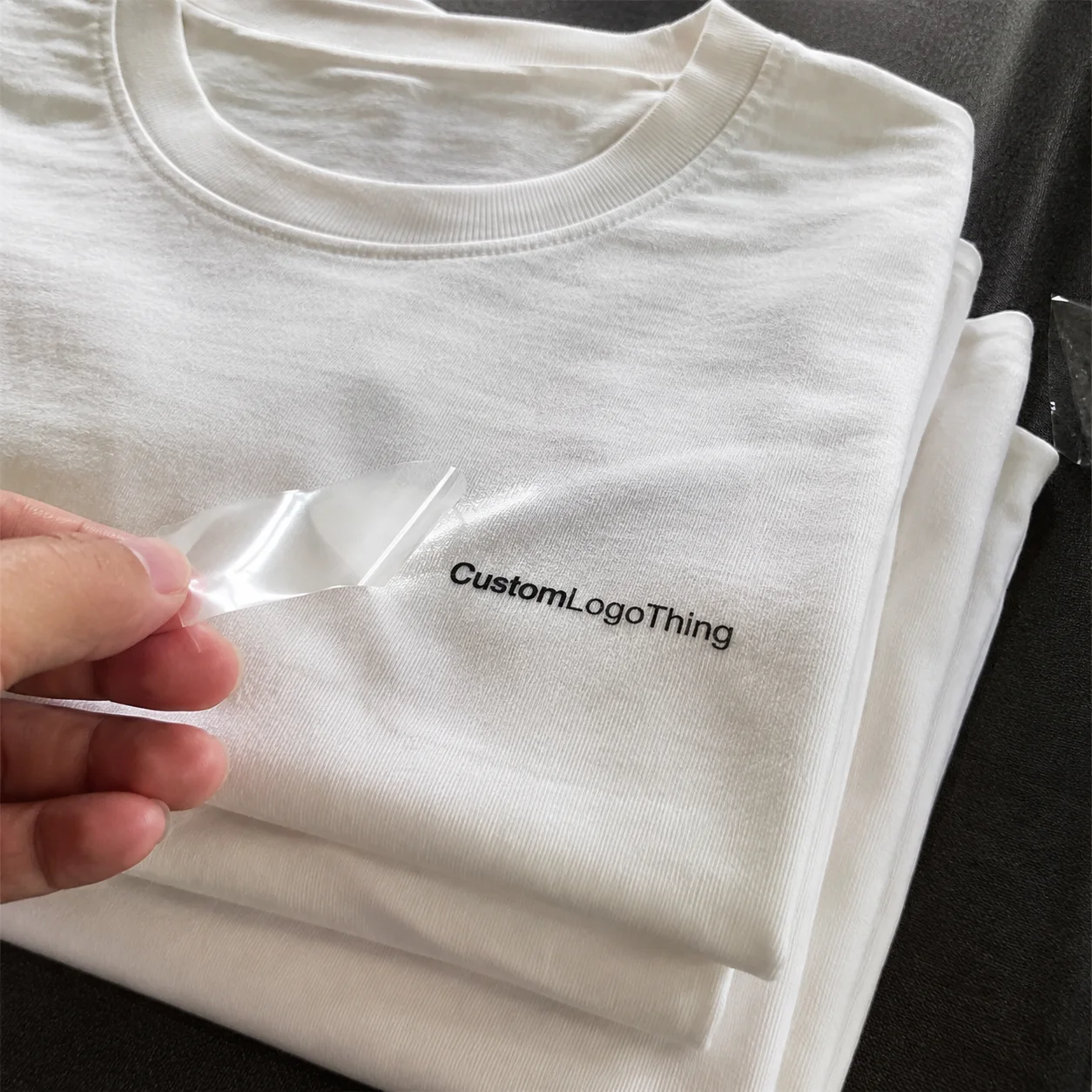
A shirt graphic fails in public long before the fabric does. That is the uncomfortable truth behind custom stickers for shirts: they decorate apparel without traditional screen printing, but their value depends on whether they survive washing, stretching, folding, heat, and human impatience.
The phrase sounds casual. Production language is less forgiving. A buyer may say “shirt stickers,” while a decorator may mean DTF transfers, heat transfer vinyl, screen-printed transfers, sublimation graphics, iron-on labels, adhesive-backed woven patches, or temporary fabric decals. Those are not interchangeable products. They use different inks, films, adhesives, carrier sheets, temperatures, pressures, and peel methods.
Shirt transfers make the most sense when an order needs flexibility. Merch drops, staff uniforms, school spirit wear, event giveaways, creator apparel, and small-batch brand testing all fit the profile. A run of 24 full-color shirts for a launch event rarely deserves the same setup as 5,000 units for national retail. Transfers let a brand test demand before locking into a more rigid decoration method.
Compared with embroidery, transfers are usually better for gradients, small color shifts, and large flat graphics. Compared with screen printing, they are often faster at low quantities and easier to use across several artwork versions. Not always cheaper. The math depends on print size, quantity, labor, spoilage, finishing, and whether the supplier applies the transfers or ships them loose for in-house pressing.
Practical rule: do not choose the transfer first. Choose the shirt, expected wash life, artwork size, and finish standard. Then pick the method that can meet those conditions.
The right option depends on fabric content, wash frequency, artwork complexity, quantity, application method, and how premium the finished garment needs to feel. A giveaway tee worn twice carries a different risk than a staff uniform washed every week for six months. The transfer can be the smartest part of the job, or the weak link. The difference is usually decided before production starts.
How Shirt Sticker Materials Work on Fabric
Shirt transfers bond to fabric through heat, pressure, adhesive chemistry, or a mix of all three. Many transfer types press somewhere around 120°C to 165°C, with dwell times commonly in the 8- to 20-second range. Pressure matters just as much as temperature. Too light, and edges lift. Too heavy, and the graphic can distort, scorch, or leave a visible press mark on sensitive fabric.
Heat transfer vinyl works well for bold shapes, names, numbers, and simple one- or two-color graphics. DTF transfers handle detailed full-color artwork, short runs, and complex logos better. Sublimation is strongest on white or light polyester because the dye becomes part of the fiber rather than sitting as a film on top. Screen-printed transfers can become cost-efficient at larger quantities, especially when colors are controlled and repeatability matters.
Removable fabric stickers belong in a separate category: short-term events, visitor badges, pop-ups, races, product launches, and promotional activations where wash durability is not the goal. They are useful. They are also easy to misuse. A sticker meant for a one-day event should not be sold as a washable shirt decoration.
Fabric compatibility is where many orders get into trouble. Cotton is forgiving. Polyester can be heat-sensitive and may show dye migration, especially on red, navy, black, and high-visibility garments. Blends behave according to their weakest component. Performance shirts may carry coatings that resist adhesion. Fleece, ribbed knits, pique polos, and textured garments create uneven surfaces, reducing contact between adhesive and fiber.
Stretch matters. A rigid transfer on a stretchy shirt can crack because the film and fabric move at different rates. For leggings, athletic tees, fitted uniforms, and youth sports apparel, ask for a stretch-rated transfer and test it at the actual graphic size. A 50mm sleeve logo behaves very differently from a 280mm full-front print.
Finish changes both appearance and performance. Matte films hide scuffs better. Gloss can look sharp but may show scratches. Puff, metallic, glitter, reflective, soft-touch, and clear-carrier effects introduce extra variables. They can be worth it for creator merch or premium event apparel, but they should be sampled before a bulk order. Special effects usually mean slower production, tighter handling, and a higher chance of rejects.
One useful comparison comes from packaging. A logo that looks impressive on screen still has to work on a physical surface. The same buyer who checks varnish, board weight, and scuff resistance on Custom Packaging Products should ask similar questions about garment fabric, adhesive behavior, opacity, and abrasion. Physical materials punish vague specifications.
Key Specs That Decide Durability, Feel, and Wash Life
Durability is not one specification. It is a chain. Fabric, transfer type, adhesive, heat settings, pressure, artwork thickness, cooling time, and wash care all contribute. Break one link, and the shirt may look fine on delivery but fail after three laundry cycles.
Before Ordering Custom Stickers for shirts, ask for transfer thickness, recommended fabric content, stretch rating, wash temperature, dryer limits, cure settings, and expected wash cycles. Some suppliers quote “up to 40 washes” or “50-plus washes.” Treat that as a controlled expectation, not a universal promise. Home laundry is chaotic. People use hot water, overloaded dryers, bleach alternatives, aggressive detergents, and impatience.
Artwork affects the result more than buyers expect. Tiny lines can disappear or lift. Distressed textures may need simplification. Gradients and halftones often push the job toward DTF or sublimation. Transparent areas can become tricky if the transfer method requires a carrier film. Small text below 6pt is risky on fabric unless the method, film, and garment surface are all forgiving.
Hand feel deserves plain language. Some transfers sit on top of the shirt like a thin film. Others feel more integrated with the fabric. A 75mm left-chest logo may feel fine in a heavier film because the contact area is small. A full-front 300mm graphic in that same film can feel stiff and warm, especially on a lightweight 150gsm tee.
Placement changes the risk profile. Left chest marks are usually straightforward. Full fronts need even pressure across a larger area. Back neck labels require precision because they sit near seams. Sleeve prints can distort on tapered or tubular garments. Hem labels look premium but need careful alignment. Oversized graphics may need larger platens or section pressing, which adds labor and increases inconsistency.
- Edge adhesion: inspect corners and fine points after cooling, not while the adhesive is still warm.
- Color consistency: compare the approved proof with a pressed sample under neutral light.
- Stretch behavior: pull the fabric gently across the design and watch for cracking, whitening, or edge lift.
- Wash test: run at least one sample through a normal wash and dry cycle before a retail run.
- Flatness: check whether the graphic curls, ripples, tunnels, or traps lint after cooling.
For packaging-minded teams, the inspection habit should feel familiar. Organizations such as ISTA focus on transport testing because real distribution punishes weak assumptions. Apparel decoration has its own version of that truth: the transfer is only proven after heat, stretch, wash, dry, and wear.
A production-ready specification should be specific enough that another operator can repeat the result. “White logo on black shirt” is not a spec. “DTF transfer, 95mm wide, matte finish, left chest, applied at supplier-recommended temperature and pressure on 100% cotton jersey, cold peel, second press with parchment, wash tested after 24 hours” is closer. The details sound dull until they prevent a remake.
Pricing, MOQ, and Unit Cost for Shirt Stickers
Price is driven by quantity, print method, number of colors, design size, material finish, setup needs, artwork cleanup, and whether application is included. A small left-chest transfer can cost a fraction of a full-front graphic because material area and press time are lower. A metallic or puff finish may add setup time, higher scrap risk, and slower throughput.
For loose transfers, very small digital runs may start around $1.50 to $5.00 per piece for small graphics, depending on size and finish. Larger quantities can fall below $1.00 for simple designs. Applied shirt decoration lands higher because labor, garment handling, quality checks, folding, packing, and spoilage are included. A 50-piece run may feel expensive per unit; a 500-piece repeat order with clean artwork and confirmed settings usually prices much better.
MOQ varies by method. Digital DTF transfers can support samples and low quantities. Heat transfer vinyl works well for small personalization runs, though labor rises if every name or number changes. Specialty finishes and screen-printed transfers tend to make more sense at higher volumes because setup is spread across more units.
| Transfer Option | Best Fit | Typical Quantity Logic | Common Cost Watchout |
|---|---|---|---|
| DTF transfers | Full-color logos, small batches, creator merch | Works from samples to mid-size runs | Large prints can feel heavier if not specified carefully |
| Heat transfer vinyl | Names, numbers, bold shapes, simple graphics | Strong for low quantities and personalization | Complex weeding raises labor cost |
| Screen-printed transfers | Repeat orders, uniforms, larger branded runs | More attractive as volume rises | Setup charges hurt very small runs |
| Sublimation | Light polyester apparel and all-over graphic effects | Good for polyester-focused programs | Limited on dark cotton garments |
Hidden costs deserve attention. Failed applications, under-tested fabrics, rush fees, separate shipping, custom packaging, individual bagging, relabeling, and replacement inventory can change the real cost by 10% to 25% on rushed or poorly specified jobs. Ordering exactly 100 transfers for 100 shirts is a gamble. A spoilage allowance of 3% to 7% is more realistic, especially for new artwork, new operators, or unfamiliar fabric.
Paying more is rational for retail merch, staff uniforms, premium event apparel, or any shirt expected to survive repeated washing. Cheap transfers on expensive garments create an odd financial mismatch. The decoration becomes the weak point, and customers rarely blame the spreadsheet.
For a cleaner quote, prepare artwork files, shirt fabric, garment color, transfer dimensions, quantity tiers, application needs, delivery date, and packaging preferences. If finished shirts need hang tags, size labels, folded packing, or barcode labels, align the apparel order with Custom Labels & Tags. It keeps retail packaging, product packaging, and apparel branding from feeling like three separate decisions.
Process and Timeline from Artwork to Finished Shirts
A normal production flow starts with artwork review, file cleanup, material recommendation, digital proof, sample or test press, bulk production, quality control, packing, and shipping. Simple repeat orders move fastest because the supplier already knows the transfer type, dimensions, colors, garment style, and press settings. New artwork needs more checking.
During artwork review, production teams look at resolution, line thickness, transparent backgrounds, color mode, edge detail, and whether the design needs a cut path. Vector files such as AI, EPS, or SVG are usually easiest for clean edges. A transparent PNG can work if it is high resolution, often 300dpi at final print size. A 600px logo pulled from a website will not become crisp because it is printed on fabric.
Proofing is not a formality. Confirm dimensions, placement, print colors, finish, carrier sheet, and garment compatibility before production begins. A 10-inch graphic and a 12-inch graphic may look similar on a monitor, but the difference is obvious on a small shirt. If brand color matters, provide Pantone references or previously approved samples. Digital proofs cannot perfectly predict fabric absorption, film opacity, surface texture, or dye migration.
Application settings are the quiet machinery behind success. Heat, pressure, dwell time, peel temperature, and cooling affect adhesion and final feel. A hot-peel transfer removed too late may leave texture issues. A cold-peel transfer removed too early may lift fine lines. Pressing over seams, buttons, zippers, thick collars, or pockets can prevent full contact, which explains many edge failures.
Timelines vary, but the logic is predictable. Simple transfer-only orders may move in a few business days after proof approval. Applied apparel with sourced garments often needs more time, commonly one to three weeks depending on quantity, garment availability, sampling, finishing, and packing. Specialty effects, retail bagging, rush quantities, or multiple artwork versions add steps. Supplier capacity matters, so a sample timeline should not be treated as a bulk production promise.
The least glamorous bottlenecks cause the most delays: missing garment specs, low-resolution logos, late proof approvals, unclear ship dates, unconfirmed sizing, and last-minute artwork changes. If a launch date is fixed, approve the proof early and leave buffer for freight. Custom Printed Boxes and branded packaging taught many teams the same lesson. Production may be controlled, but inbound files and outbound shipping rarely behave perfectly.
Common Mistakes That Make Shirt Transfers Fail
The most costly mistake is choosing a transfer because it looks good on screen instead of testing it on the actual shirt fabric. Screens do not show stretch recovery, heat sensitivity, dye migration, or how a large film feels after a person wears it for eight hours.
Low-resolution artwork causes the next cluster of problems. Jagged edges, muddy details, weak small text, and poor color separation become more visible on fabric than on a backlit display. If the design includes a fine outline, distressed texture, or tiny registered trademark symbol, ask whether it will hold at final size. Sometimes the correct answer is to simplify the art.
Ignoring fabric content is another expensive shortcut. Polyester, stretch blends, coated performance shirts, and heat-sensitive garments may need different transfer materials or lower application temperatures. Dark polyester can release dye into light graphics, creating a dull or tinted look. That is not just an ink issue; it is a fabric-and-heat issue.
Placement errors are easy to underestimate. Seams, collars, ribbing, pockets, and curved areas prevent even pressure. A sleeve logo placed too close to a seam may look acceptable at first, then lift at the edge after washing. Ribbed tanks and textured polos need extra caution because the transfer may bond to the high points without reaching the valleys.
Wash-care mistakes shorten life quickly. Hot water, high dryer heat, harsh detergents, bleach, and washing too soon after application can all weaken the bond. Many decorated shirts perform better when washed inside out in cold or warm water and dried on low heat. Care cards help, especially for retail merch and staff apparel issued to people who did not choose the garment themselves.
Ordering mistakes are more administrative, but just as real. Buying exact quantities with no spoilage allowance creates panic after two failed presses. Skipping samples for a retail run shifts risk from the supplier’s press to the customer’s closet. Approving proofs without checking actual dimensions can turn a polished logo into a chest graphic that feels too small, too low, or oddly placed.
Buyer warning: a transfer failure is often blamed on “bad stickers,” but the root cause may be fabric coating, wrong pressure, poor artwork, rushed washing, or a placement zone that never allowed full adhesion.
Next Steps Before You Order Shirt Stickers
Start with a practical checklist. Identify shirt fabric, garment color, quantity, artwork size, desired finish, expected use, and who will apply the transfers. A buyer ordering loose custom stickers for shirts for an internal team needs different support than a brand requesting fully finished retail apparel with folded packing, size stickers, and barcode labels.
Sort the project into one of three paths. Quick event apparel should prioritize speed, legibility, and reasonable cost. Durable uniform branding should prioritize wash life, repeat placement, and easy reordering. Retail-quality merch should prioritize hand feel, color accuracy, finish consistency, and packaging design that matches the product’s price point.
Test one real garment before scaling. Press the sample at the recommended settings. Let it cool fully. Stretch the graphic. Inspect the edges. Wash it inside out. Dry it using the care conditions customers are likely to use, not the perfect lab routine. Then compare the color, flatness, and feel against the approved sample.
Ask for two or three quantity tiers, such as 50 and 250 pieces, or 100 and 500 pieces. The price break often reveals whether the chosen method is sensible. If the larger tier drops sharply, setup is driving the cost. If it barely moves, material area or hand labor may be the main constraint.
Save approved specs for reorders: transfer type, dimensions, placement, heat settings, proof file, packaging instructions, and garment style. This habit reduces errors and speeds repeat production. It also keeps package branding consistent if the shirt ships with hang tags, labels, mailers, or retail packaging.
Most transfer failures are preventable. Match the transfer to the fabric, test one real garment, and quote with enough detail to avoid expensive surprises. The cheapest sample is the one that exposes a problem before 500 shirts are decorated.
Frequently Asked Questions
Are custom stickers for shirts the same as iron-on transfers?
They can be, but the phrase is broader than basic iron-ons. It may include DTF transfers, heat transfer vinyl, sublimation graphics, screen-printed transfers, and short-term fabric decals. For washable apparel, ask for the exact transfer type, compatible fabric content, heat settings, pressure range, peel instructions, and expected wash performance.
How long do shirt stickers last after washing?
Durability depends on transfer material, fabric, application quality, and wash care. Properly applied heat transfers can last through many washes when handled correctly, but high dryer heat and harsh detergents shorten life. Wash inside out, use mild detergent, avoid high heat, and wait before the first wash if the supplier recommends a cure period.
What is the best material for custom shirt decals on cotton?
Cotton commonly works well with DTF transfers, heat transfer vinyl, and screen-printed transfers, depending on design complexity and order quantity. Use DTF for detailed full-color artwork, vinyl for simple bold graphics, and screen-printed transfers when higher quantities justify setup and repeat color control.
Can I order custom stickers for shirts in small quantities?
Yes. Many digital transfer methods support small runs, samples, and test batches better than traditional screen printing. Expect a higher unit cost on low quantities because setup, proofing, file handling, and packing are spread across fewer pieces.
What files do I need for custom shirt stickers?
Vector files such as AI, EPS, or SVG are usually preferred. High-resolution transparent PNG files can also work if they are built at final print size. Include garment color, final dimensions, placement notes, Pantone or brand colors if available, and finish requirements such as matte, puff, metallic, glitter, soft-touch, or reflective.