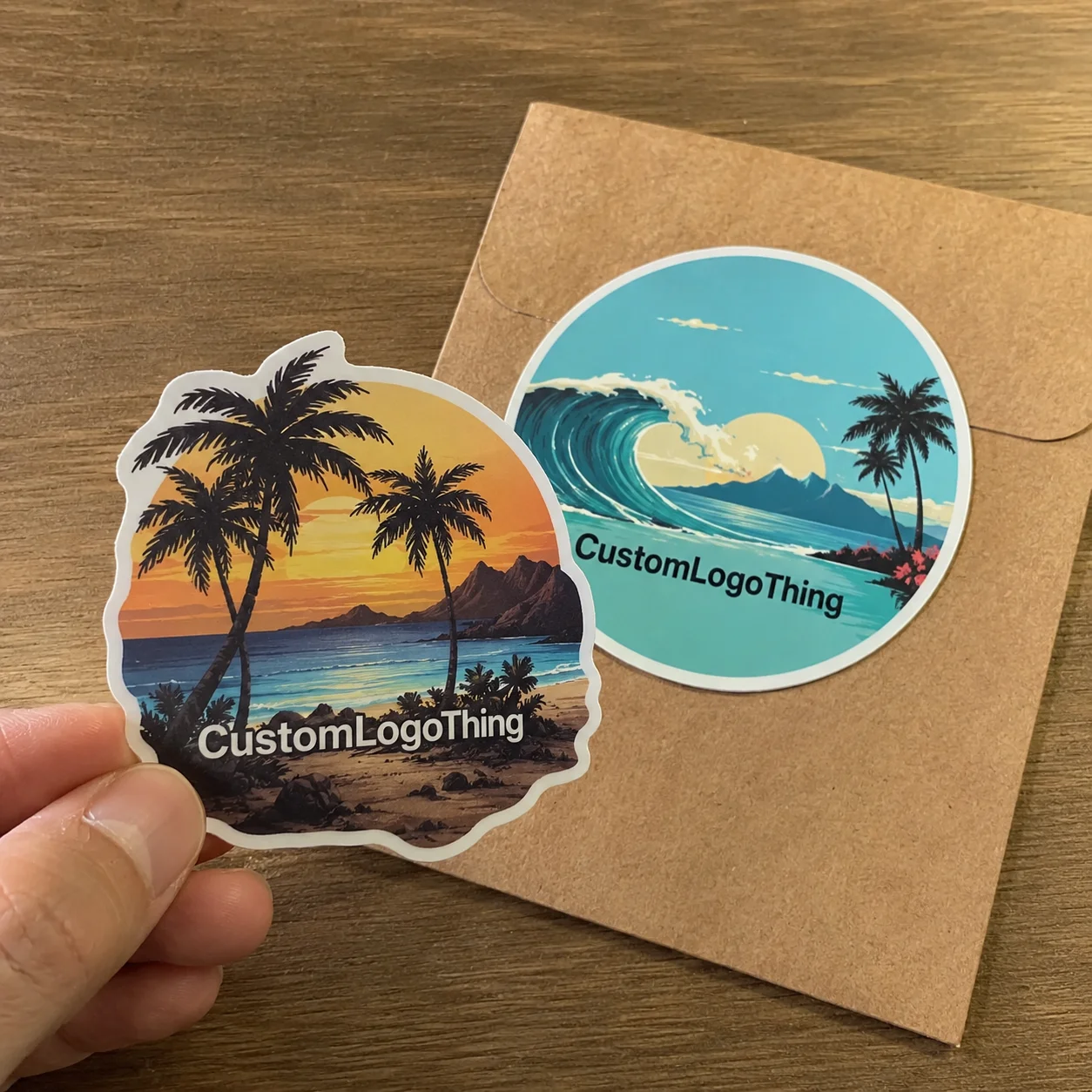
A logo sticker can look sharp on a matte paper candle box and start lifting from a chilled glass bottle by the next morning, even though the artwork is identical. That small failure explains why ordering custom stickers for retail product packaging should begin with the package surface, not the shape of the logo or the finish that looks best on a screen.
Stickers are unusually flexible packaging parts. They dress up plain cartons, seal tissue, add barcodes, mark seasonal flavors, support limited runs, identify batch details, and help a new retail product reach the shelf before the brand is ready for fully printed boxes, bags, jars, or pouches. They are also deceptively technical. A sticker is not just paper with glue on the back.
Ordering Custom Stickers Starts With the Surface
The real buying decision is not only “circle or rectangle” and “gloss or matte.” A retail sticker is a small packaging system made from face stock, adhesive, liner, ink, coating, and sometimes white ink, foil, laminate, or a specialty release liner. If one part of that system does not match the product environment, the label can curl, flag at the corners, scuff, wrinkle, or make a barcode difficult to scan.
Paperboard is forgiving. A coated paper sticker with permanent adhesive can work well on a folding carton, kraft mailer, rigid gift box, or dry retail bag. Glass, film, molded plastic, and flexible pouches ask for more care. A beverage bottle may collect condensation. A cosmetic jar may carry traces of oil from filling or handling. A pouch may flex, expand, or bow during packing and shipping. Those conditions change adhesive performance as much as they change appearance.
Custom Logo Things supports practical buying decisions by aligning sticker specs with the package surface, order quantity, use conditions, and budget. If the same logo needs to appear on product packaging, shipping cartons, retail displays, and promotional inserts, one all-purpose sticker may not be the smartest specification. Two or three material versions can be cheaper than replacing a failed run.
Packaging floor rule: if the sticker is going onto a curved, cold, oily, textured, or flexible surface, test the material before approving the full run. A 24-hour adhesion check can prevent a full carton of labels from becoming scrap.
Stickers can reduce waste when they are specified correctly. The right material and adhesive prevent relabeling, rejected inventory, unreadable UPCs, and rushed replacement orders. That matters for small launches. It matters more for brands applying stickers across several SKUs or building a repeatable branded packaging program.
Sticker Materials, Adhesives, and Finishes Buyers Should Compare
Material selection drives both the look and the life of the sticker. Coated paper is usually the economical choice for dry indoor packaging: folding cartons, bakery boxes, mailer inserts, hang tags, and promotional seals. Kraft paper gives natural package branding for candles, soaps, coffee, dry foods, and handmade goods, although the brown base will mute ink color. White BOPP and clear BOPP resist moisture better than paper, which makes them common for jars, bottles, tubs, and products handled in damp conditions. Vinyl is tougher still, especially for longer handling life or outdoor exposure, but it usually prices above paper and BOPP.
Adhesive choice needs plain language. Permanent adhesive is built to stay on the package through normal handling and sale. Removable adhesive suits temporary promotions, pricing, or instructions that should peel away without tearing the surface, though removability depends heavily on the substrate. Freezer-grade adhesive is used for cold-chain products where ordinary adhesive may harden and lose tack. High-tack adhesive helps with rough corrugated, textured paper, some low-energy plastics, and surfaces that do not give standard labels much grip.
Finishes change presentation and durability. Gloss laminate gives stronger color pop and some abrasion protection. Matte laminate reduces glare on shelf and photographs well for ecommerce listings. Soft-touch coating creates a premium feel, though it can show fingerprints on dark ink coverage. UV coating adds shine and scuff resistance. Uncoated paper accepts pen or marker writing, useful for batch codes or handwritten flavor notes. Metallic foil, spot UV, and clear label effects can make a premium sticker stand out, but they add cost and proofing detail.
Buyers comparing sticker specs against other Custom Labels & Tags should match the material to the actual package: corrugated mailers, folding cartons, glass jars, plastic bottles, flexible pouches, retail bags, and clamshell packaging all behave differently. Industry groups such as the International Safe Transit Association publish transport testing resources that push packaging teams to think beyond the shelf photo and account for vibration, compression, and handling friction.
| Sticker Material | Best Use | Typical Strength | Buyer Watchout |
|---|---|---|---|
| Coated paper | Dry cartons, boxes, bags | Economical, clean print | Poor choice for moisture or condensation |
| Kraft paper | Natural retail packaging | Warm, handmade look | Ink appears less bright on brown stock |
| White BOPP | Bottles, jars, tubs | Moisture resistance | May need special adhesive on difficult plastics |
| Clear BOPP | No-label look on glass or plastic | Premium clean appearance | White ink is often needed under colors |
| Vinyl | Durable decals and rough handling | Strong weather and abrasion resistance | Higher unit cost than paper |
Artwork, Shape, Size, and Print Specifications to Confirm
Good printing starts with good files. Vector artwork, usually AI, EPS, or press-ready PDF, gives the cleanest logo edges and type. High-resolution raster images can work when necessary, but they should usually be 300 dpi at final size. Files should be built in CMYK or converted with the understanding that screen color will not match print exactly. Fonts should be outlined, linked images embedded, and bleed added before the proof stage.
The common sticker formats are straightforward once the application method is known. Die-cut singles work well for giveaways and promotional inserts. Kiss-cut sheets are efficient for hand application and mixed designs. Roll labels fit dispensers and automatic labeling machines. Rectangles, circles, ovals, square labels, contour cuts, and perforated rolls each have a place, but the right format depends on speed, storage, packing, and the person or machine applying the sticker.
A few technical terms should be confirmed before ordering custom stickers. Bleed is extra artwork that extends past the cut edge so no white sliver appears after trimming; 0.0625 to 0.125 inches is common. The safe zone keeps text and logos away from the trim line, often at least 0.0625 inches inside the cut. The cut line tells production where the die or digital cutter will trim. A white ink layer sits behind color on clear or metallic materials so the artwork does not disappear into the package behind it.
Size should follow the job. A 0.75-inch circle may be enough for tissue wrap or a small logo seal. A 2 x 3 inch label can carry scent, flavor, barcode, and net weight on a jar or box. A 4 x 6 inch label may be needed for ingredients, nutrition facts, warnings, or shipping information. If a QR code is included, test it at printed size; many codes need at least 0.8 to 1 inch of clear space depending on data density and contrast.
Digital printing is common for short runs, multiple designs, and lower setup cost. Flexographic printing becomes more efficient for larger roll quantities, especially repeat orders with stable artwork. Specialty finishing such as foil, embossing, spot UV, and laminates adds production steps, so the proof should show exact placement before approval. For regulated copy, buyers should confirm ingredient lists, nutrition panels, warning text, UPC placement, and required claims internally before the file goes to production.
Sticker Pricing, MOQ, and Unit Cost Factors
Sticker pricing is shaped by size, material, adhesive, cut complexity, print coverage, finish, order quantity, and whether the job needs a special die or premium effect. A plain 2 x 2 inch coated paper square on sheets may be inexpensive. A clear BOPP contour-cut label with white ink, matte laminate, and high-tack adhesive costs more because it uses higher-grade materials and tighter production control.
Minimum order quantity depends on the process. Digital sheet stickers and die-cut singles can often support lower quantities, especially in standard shapes and common stocks. Custom roll labels, foil stamping, specialty adhesives, perforations, and unique die shapes may require higher minimums because setup, tooling, press preparation, and waste allowance must be covered. Not every job follows that pattern, but it is a useful planning assumption.
Unit cost usually drops as quantity increases. Proofing, file setup, die preparation, color calibration, and press make-ready are spread across more pieces. A small sticker quote might land around $0.28 to $0.45 each at 500 pieces, $0.14 to $0.26 each at 2,500 pieces, and $0.08 to $0.18 each at 10,000 pieces, depending on size, stock, finish, and ink coverage. Freight and packing can shift the final landed cost, especially with bulky roll-label cartons.
Tiered quotes are useful because they show the real cost curve. Ask for 500, 1,000, 2,500, and 5,000 pieces if launch volume is uncertain. The lowest invoice total may not be the best buy if the reorder arrives two weeks later at a much higher unit cost. The opposite risk is dead inventory: overbuying stickers for a product with changing ingredients, compliance copy, or package design can erase the savings.
| Order Type | Typical Quantity Range | Estimated Unit Range | Good Fit |
|---|---|---|---|
| Basic paper sticker | 500 to 5,000 | $0.06 to $0.30 | Dry cartons, bags, and short promotions |
| Laminated BOPP label | 1,000 to 10,000 | $0.08 to $0.28 | Jars, bottles, and handled retail packaging |
| Clear label with white ink | 1,000 to 10,000 | $0.12 to $0.38 | Glass, plastic, and premium package branding |
| Foil or specialty finish | 1,000 to 5,000+ | $0.18 to $0.60+ | Gift sets, cosmetics, candles, and premium launches |
For an accurate quote, prepare the finished size, quantity, material preference, package surface, indoor or outdoor use, finish, roll direction if machine applied, and target delivery date. If the sticker is part of a broader packaging buy, compare it with Custom Packaging Products such as printed boxes, sleeves, inserts, and bags before locking the specification.
Process, Proofing, and Production Timeline for Sticker Orders
A clean sticker order follows a predictable path: submit specs and artwork, receive material recommendations, review the quote, approve the digital proof, approve a physical sample if needed, move into production, then ship. The fastest jobs are the ones where the buyer already knows the package surface, finished size, quantity range, and use environment before requesting the quote.
Lead time depends on order complexity, material availability, proof approval speed, finishing steps, die requirements, and freight method. A simple digitally printed sticker order may produce in 5 to 8 business days after proof approval. Roll labels with specialty adhesive, laminate, foil, or a custom die may need 10 to 18 business days, sometimes longer if material must be sourced. Rush work may be possible, but it often narrows material choices and increases cost.
Proofing deserves slow eyes. Buyers should inspect spelling, dimensions, cut line, color expectations, barcode function, QR code scan, white ink placement, and roll orientation before approval. If a label will be machine applied, confirm the unwind direction, roll core size, outside diameter limit, gap, and leading edge. A roll label can print beautifully and still create downtime if it feeds into the labeler in the wrong direction.
Physical samples or material swatches are especially useful for clear labels, soft-touch finishes, refrigerated products, curved containers, and unfamiliar substrates. Test on the actual package, not a similar one if possible. Apply the sticker, wait at least 24 hours, then check edges, corners, opacity, rub resistance, and lifting around curves. For paper-based packaging programs, buyers concerned with responsible sourcing can review resources from the Forest Stewardship Council when discussing certified stocks.
Separate production time from transit time. A completed print run still needs packing, carrier pickup, movement through the freight network, and delivery. If a shelf date is fixed, work backward and leave room for artwork corrections, internal approvals, sample testing, production, transit, and a reorder buffer. Many launch calendars get tight because the sticker is treated as a small item, even though it can hold up the entire retail pack-out if it arrives late.
Common Ordering Mistakes That Delay Sticker Jobs
The most common delay is missing specifications. A buyer sends a logo and asks for a price, but leaves out the finished size, quantity, material, finish, application surface, and whether the stickers will be hand-applied or machine-applied. The supplier then has to guess or send questions back. Each round costs time.
Low-resolution artwork creates another avoidable problem. A logo pulled from a website may look fine on screen but break down when printed at 3 inches wide. Thin lines may disappear, small type may fill in, gradient backgrounds may band, and QR codes may lose clean edges. Vector files prevent most of this trouble, especially for packaging design that needs crisp logos across boxes, labels, and stickers.
Adhesive mismatch is the expensive mistake. Standard paper labels can fail on cold bottles, oily cosmetic jars, textured boxes, and flexible pouches that expand and contract. A sticker lifting at one corner in the packing area may look minor. On shelf, that lifted corner collects dust, catches on neighboring products, and makes the package feel unfinished. For automatic application, poor release from the liner can also slow the line or create label waste.
Color expectations need a practical check. Screen color is backlit RGB; print is CMYK ink on a physical material. Kraft, clear, metallic, and textured stocks all change the final appearance. A bright red printed on white BOPP will not look the same on kraft paper. Clear labels may need white ink behind the logo, while metallic stocks may intentionally let shine show through selected areas.
Proofs should not be approved too quickly. Before a production run, check legal copy, ingredient statements, net weight, UPC placement, QR function, spelling, dieline position, and unwind direction for automatic labelers. For food, cosmetics, supplements, and regulated goods, the brand owner should confirm compliance requirements before print approval.
- Surface: paperboard, glass, metal, plastic, film, or corrugated.
- Environment: dry shelf, refrigeration, freezer, moisture, oil, sun, or abrasion.
- Size and copy: finished dimensions, safe zone, barcode, QR code, net weight, and ingredients.
- Production details: quantity tiers, format, roll direction, packing preference, and deadline.
- Artwork: vector logo, outlined fonts, embedded images, bleed, and white ink layer if needed.
Next Steps to Prepare a Sticker Quote That Prints Cleanly
Start with the product or package the sticker will go on. Measure the available label area with a ruler or caliper, then note whether the surface is paper, plastic, glass, metal, film, or corrugated. If the sticker wraps around a curve, measure the flat visual area, not only the total container width. Small differences matter; a label that is 0.125 inches too wide can wrinkle on a tapered jar or overlap a seam on a pouch.
Decide how the stickers will be applied. Hand application works for small batches, seasonal sets, and premium products where placement is checked one by one. Dispensers need roll format and a liner that releases cleanly. Automatic labeling machines need the correct roll direction, gap, core size, and sometimes a specific outside roll diameter. Missing that information can produce a roll that prints correctly but does not run correctly.
Gather the final logo, copy, barcode or QR code, desired shape, quantity range, finish preference, and environmental requirements. If the sticker must survive refrigeration, freezer storage, moisture, shipping friction, frequent rubbing, or outdoor use, say that before the material is chosen. Guessing can work on simple dry cartons. It is risky on curved bottles, coated pouches, and oily jars.
Ask for material recommendations and tiered pricing. A useful quote should identify the stock, adhesive, finish, quantity, format, and estimated lead time. If the order connects to custom printed boxes, inserts, tissue, or other retail components, a broader Wholesale Programs discussion can help keep color, finish, and delivery planning aligned across the full pack-out.
For a practical quote, send these details in one message: package surface, sticker size, shape, quantity tiers, artwork files, finish preference, application method, storage conditions, and delivery deadline. Ordering custom stickers moves faster when the buyer defines the surface and use conditions before the artwork enters proofing.
Custom Sticker FAQ
What should I prepare before ordering custom stickers?
Prepare the finished size, shape, quantity, artwork file, application surface, indoor or outdoor use, finish preference, and delivery deadline. If the sticker goes on a bottle, jar, pouch, or box, share the material and whether it will face moisture, cold storage, oil, or heavy handling. For roll stickers, confirm whether they will be hand-applied or machine-applied so the supplier can set the correct roll direction, liner, gap, and spacing.
How does pricing work for custom sticker orders?
Pricing depends on sticker size, material, adhesive, finish, print method, shape, quantity, and whether a custom die or specialty effect is required. Higher quantities usually reduce unit cost because setup and production preparation are spread over more stickers. Requesting several quantity tiers helps compare the real cost difference between a small run and a larger production order.
What is the best material for custom product stickers?
Coated paper works well for dry indoor packaging, while BOPP, vinyl, or laminated stocks are better for moisture, abrasion, and longer handling life. Clear BOPP is useful for a no-label look on glass or plastic, but it often requires white ink behind artwork for strong color visibility. The best choice depends on the product surface, storage conditions, brand look, and whether the sticker must be removable or permanent.
How long does it take to produce custom stickers?
Timeline depends on artwork readiness, proof approval, material availability, order quantity, finishing requirements, and shipping method. Simple digital sticker orders can often move faster than specialty roll labels with custom dies, foil, laminate, or uncommon adhesive. Buyers with firm launch dates should allow time for proof review, sample testing if needed, production, packing, and transit.
Can I order custom stickers in small quantities?
Small quantities are often possible for standard digitally printed stickers, especially simple shapes and common materials. Very low MOQs may not apply to specialty materials, custom dies, foil stamping, roll labels, or machine-applied formats. A tiered quote can show whether ordering slightly more pieces creates a better unit cost without overbuying inventory.
For more production questions, the Custom Logo Things FAQ can help buyers prepare artwork, shipping details, and quote information before the sticker job moves into proofing.