On a crowded shelf, a shipping carton, or a mailer stack that gets opened in seconds, plain labels can disappear almost immediately. Custom stickers holographic solve that problem with a reflective surface that catches light from different angles, giving logos and seal graphics more motion and visual weight without adding much complexity to the packaging program.
That effect is not just decoration. For packaging buyers, the finish can influence perceived value, reading distance, and the way a product feels in hand. A well-chosen holographic sticker can make a simple box, pouch, or insert look more deliberate, while a poorly chosen one can overwhelm the artwork or muddy the brand message.
The practical question is not whether the material looks flashy. It is whether the sticker still reads clearly, survives handling, and fits the job it is supposed to do. In many product launches, seasonal promotions, and ecommerce kits, that balance matters more than a perfect mockup on a screen.
Why Holographic Stickers Grab Attention Fast
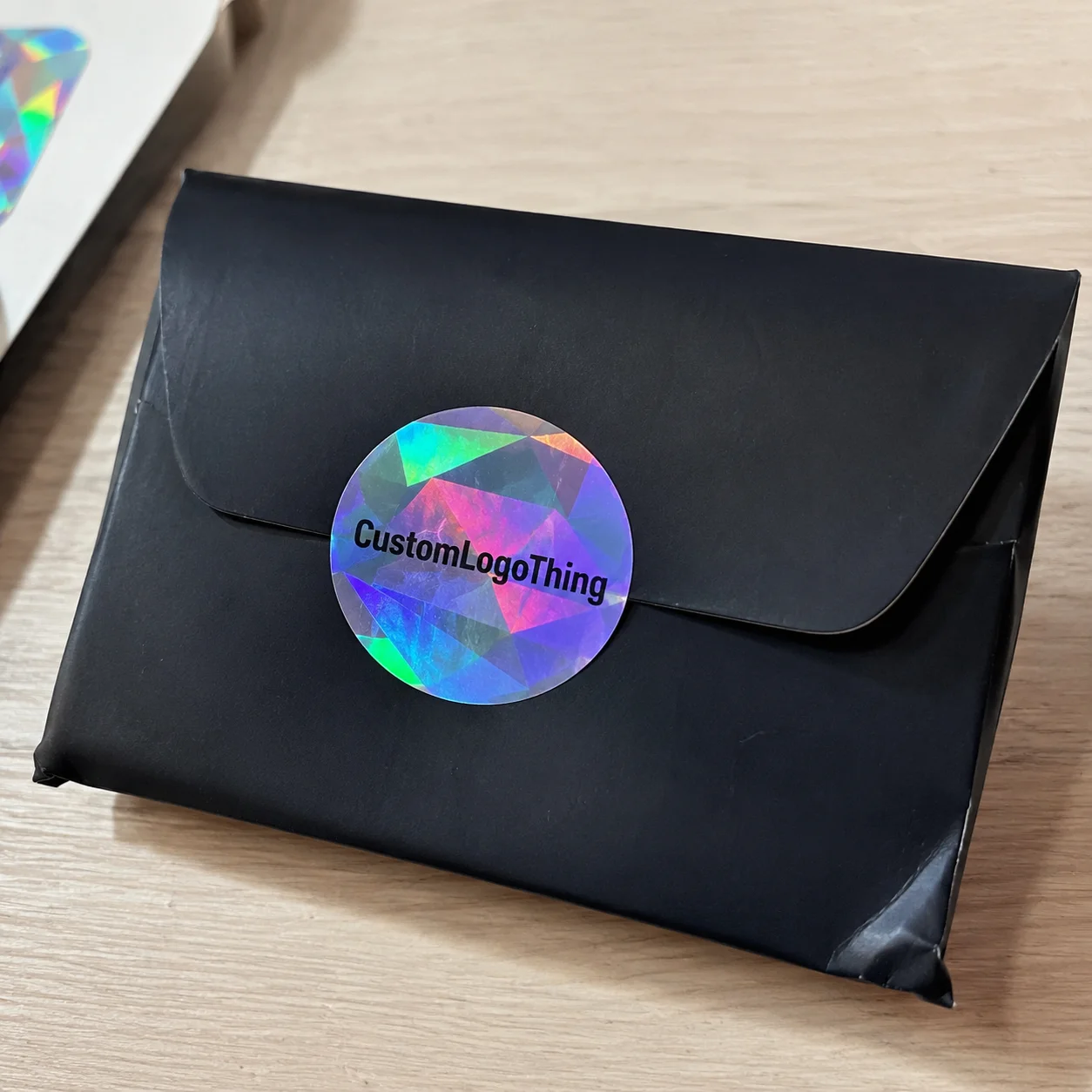
Holographic film works because it changes with the light instead of sitting flat and uniform like a standard white label. The reflective layer shifts color as the surface moves, so the artwork appears to move a little too. That makes custom stickers holographic effective for product packaging, event handouts, inserts, and closure seals where the first impression needs to happen quickly.
The finish is often described as glittery, but that is not quite right. Glitter scatters sparkle across the surface, while holographic film has a layered color shift that comes from the substrate itself. Depending on the design, that effect can be loud and high-energy or restrained and premium. A simple logo with strong negative space can feel refined on holographic stock, while a dense layout usually feels busier than intended.
White ink changes the look in a major way. A white underprint keeps logos and text readable by blocking some of the substrate color shift, while open areas let the reflective pattern show through. That is why the same art file can look elegant, overdone, or muddy depending on how it is built for the material.
A good holographic sticker supports the branding first and the visual effect second.
That is especially useful in packaging programs where the sticker is one piece of a larger system. The finish can coordinate with custom boxes, inserts, seals, or branded mailers without requiring a full redesign of every component. For buyers comparing Custom Packaging Products, it is often the fastest way to add shine and distinction without overcomplicating production.
How the Holographic Sticker Process Works
Most orders begin with artwork review, then move into proofing, print production, finishing, inspection, and shipment. The exact path depends on the material and print method. Some jobs use holographic face stock directly; others print on a clear or white base and add a holographic laminate; still others use specialty films that already carry the reflective pattern. Each approach changes how the colors land and how much of the effect remains visible.
UV printing and eco-solvent printing are both common for synthetic sticker materials because they hold detail well and stand up better than many paper-only systems. For reflective stock, a white layer is often printed first or under select artwork areas so colors do not wash out. Without that step, dark tones may go dull, while lighter colors can pick up too much of the substrate shift and become harder to read.
Cut style matters just as much as print method. A kiss-cut sticker stays on its backing sheet or roll, which makes it easy to store, count, and apply by hand. A die-cut sticker follows the shape of the artwork itself, which gives a cleaner presentation for logo marks, badges, and event graphics. Sheeted formats work well for inserts and small fulfillment teams; rolls are better when the stickers need to move through a faster labeling workflow.
One of the easiest mistakes to make is assuming the artwork will behave the same way on every reflective surface. Holographic film changes the visual balance of ink, especially when the design uses deep colors, metallic accents, or small type. A navy logo may appear richer on a monitor than on the actual sticker, and a silver line may lose too much contrast unless the file is built with the material in mind. That is why proofing matters so much for custom stickers holographic used on retail packaging or product labels where consistency matters.
If the sticker needs to sit alongside labels or tags from the same packaging program, reviewing Custom Labels & Tags at the same time can help keep finish, thickness, and visual tone aligned rather than treating each piece as a separate purchase.
Key Specs That Shape Look, Durability, and Fit
The base material is the first spec to get right. Holographic vinyl is a strong option for product seals, bottles, and packaging that will be handled often, since it offers better durability and moisture resistance than paper-based stock. Holographic BOPP is another common choice for labels and branded packaging because it delivers a cleaner film look with solid scuff resistance. Paper-based holographic materials do exist, but they are usually better suited to short-term indoor promotions or lower-abuse applications.
Adhesive selection deserves equal attention. Permanent adhesive is the safest default for most retail packaging and ecommerce use, especially when the sticker has to stay in place through shipping. Removable adhesive works for temporary promotions, reusable containers, or short campaign runs, but it is not a good fit for cartons, pouches, or cold-chain packaging that needs reliable hold. If the application includes refrigeration or frozen goods, freezer-safe adhesive should be requested directly rather than assumed.
Top coating or lamination changes performance as much as appearance. A gloss laminate can improve scuff resistance and protect the surface during mail handling, while a matte top layer softens the glare and can improve legibility in some layouts. If maximum shimmer is the goal, it is often better to let more of the holographic face stock remain exposed rather than covering everything with a layer that dulls the effect.
Shape complexity is another practical constraint. Highly detailed die cuts can look impressive, but tiny internal corners and very thin cutouts are harder to produce cleanly on reflective material. Fine text below about 6 pt, or lines thinner than 1 mm, is risky unless the file is simplified and the production tolerance is tightly controlled. That kind of detail may look acceptable in a proof and still fail once the sticker is cut and applied.
Surface fit is easy to underestimate. A flat carton, curved jar, flexible mailer, and coated plastic pouch all behave differently. Curved surfaces can distort a logo if the sticker is oversized or too rigid. Glossy plastic can reduce grip if the adhesive is not matched correctly. Matte carton stock usually gives the cleanest visual contrast, while textured or heavily coated surfaces may need more testing before a full run.
| Material / Format | Best Use | Typical Strength | Tradeoff |
|---|---|---|---|
| Holographic vinyl | Retail packaging, product seals, promo stickers | Good durability and moisture resistance | Usually costs more than paper stock |
| Holographic BOPP | Labels, branded packaging, mailers | Scuff resistance and clean film appearance | Less paper-like in hand |
| Paper-based holographic | Indoor promotions, short-run handouts | Lower material cost | Less durable with moisture and abrasion |
| Sheeted stickers | Hand application, inserts, kit packaging | Easy to count and distribute | Slower for larger-volume application |
| Roll format | Fulfillment, faster application, labeling lines | Efficient handling and storage | May require process alignment or equipment |
Cost, Pricing, and MOQ Factors to Compare
Sticker pricing is shaped by more than size alone. Quantity, shape complexity, material choice, adhesive type, ink coverage, and finishing all affect the unit cost. For buyers comparing custom stickers holographic across vendors, the useful comparison is the full spec, not the headline price stripped of context.
As a general market range, small runs can land around $0.20 to $0.60 per piece depending on dimensions and production complexity, while larger runs often reduce the per-unit cost because setup is spread across more pieces. That range is not fixed. Heavy ink coverage, white underprint, custom shapes, lamination, and tighter color control can push pricing in either direction. A simple two-inch logo sticker rarely costs the same as a multi-color, custom-cut label with layered print.
MOQ, or minimum order quantity, also changes how a quote should be read. Some suppliers price by sheets, some by rolls, and some by piece count. A lower minimum is useful for testing a new look or approving a design before a larger rollout, but the unit cost is usually higher. If the sticker will support recurring launches, seasonal packaging, or a multi-part branding system, a larger order can make more sense over time.
Setup charges matter too. Proofing, artwork adjustments, tooling for a custom die shape, and special finishing can create upfront costs that do not always show clearly in the per-piece number. A quote that looks inexpensive may not stay inexpensive once cut style, stock, and proof rounds are included. For fair comparisons, ask vendors to show the material, print method, cut type, and quantity break side by side.
When the stickers will be part of a broader packaging spend, it helps to think in terms of use rather than just unit cost. If the same sticker supports mailers, product packaging, and event kits across several campaigns, a slightly higher order can reduce the total packaging budget over time by lowering reorders and simplifying inventory.
Process and Timeline: From File Prep to Delivery
Clean files usually shorten the whole production cycle. Vector artwork, outlined fonts, and a clear cut path reduce proof edits and help prevent registration issues, especially on complex shapes or designs with tight negative space. If the sticker uses a white underprint or multiple layers of color, the file has to be set up carefully from the start so the final print lands in the right place.
A typical workflow includes artwork review, digital proof, proof approval, production, finishing, inspection, and shipment. Many custom sticker orders fall into a 7 to 15 business day window after approval, although specialty cutting, lamination, or a busy production queue can stretch the schedule. Faster turnaround is possible on simpler jobs, but it usually depends on how much proofing is already finished before the order is placed.
Lead time often slips before anything reaches the press. A brand may need another proof round, or discover that the logo file is not print-ready. That is normal. What matters is knowing that those delays usually come from file preparation, not from the sticker itself. If the material has to arrive before a launch or trade show, the safest move is to build in extra time for proof revisions.
Format also affects turnaround and delivery handling. Sheeted stickers are easy to count and box. Roll labels can require tighter finishing and packaging control. Individual die-cut pieces may look simple, but they still need careful handling so edges stay crisp and backing stays intact. For custom stickers holographic, it is worth asking whether the shipment will arrive by sheet, roll, or loose count so the delivery method matches the way the stickers will actually be used.
For brands that manage a full packaging system, it helps to consider the sticker alongside cartons, inserts, and labels from the same production plan. That reduces visual mismatch and keeps the package from feeling pieced together. Durable packaging planning also depends on real-world handling conditions, which is why references such as the ISTA and the Institute of Packaging Professionals are useful when a project needs more than aesthetic choices.
Common Design and Ordering Mistakes to Avoid
Weak contrast is the most common problem. Thin text, pale colors, and delicate gradients can disappear on a reflective background, especially under store lighting or camera flash. A holographic sticker can look sharp in a mockup and still fail in use if the type is too small or the layout is too busy.
Skipping white underprint causes a different kind of trouble. Without it, logos and text may absorb too much of the substrate shift and change too much from one angle to another. For product packaging, that kind of inconsistency can make the brand feel less controlled than it should.
Size mistakes show up often as well. Some teams shrink the sticker until the copy is hard to read, while others make it large enough to cross folds, seams, or curved edges in awkward ways. A reflective surface can break visually at those transitions, so the placement needs to suit the container rather than forcing the container to suit the sticker.
Adhesive mismatches can undo a good design quickly. Oily plastics, textured mailers, refrigerated containers, and freezer environments all behave differently. A sticker that holds well on a matte carton may fail on a coated pouch. The application surface should be part of the spec discussion before the order is placed, not after the first test run.
Approving the art on a monitor is another trap. Light reflection, substrate color shift, and the actual cut line all change the final impression. A physical proof or sample is far more useful when the sticker will sit on retail packaging, product seals, or branded mailers that need to look right in real conditions.
Expert Tips for Better Color, Clarity, and Branding
Keep the design bold and legible. Strong logos, simple iconography, and a clear hierarchy of text usually print better on reflective stock than dense layouts do. If the goal is premium branding rather than maximum shine, let the holographic effect act as an accent: a border, seal, badge, or central highlight can carry more visual value than a full-face pattern packed with details.
Match the sticker style to the packaging story. Beauty and wellness brands often benefit from more restrained compositions; tech accessories and event merch can support stronger contrast and a brighter finish; seasonal drops usually need a more expressive look. That is where custom stickers holographic can work well, because the material signals special treatment without requiring a full change to the packaging system.
Request a physical proof when color precision matters. Reflective stock changes how saturation, contrast, and metallic tones appear, and screen color alone is not a reliable judge. That matters most when the sticker needs to coordinate with Custom Printed Boxes, coated cartons, or a broader branded packaging set.
If the stickers will be applied by hand in smaller quantities, sheet format is often easier to manage. For larger fulfillment runs, roll format can save labor and speed application. The right choice depends on who is applying the sticker, how often the design changes, and how much space the packing workflow has for storage and handling.
For teams that care about material sourcing, it helps to look at the larger packaging mix instead of judging the sticker in isolation. Some brands use FSC-certified paper components for boxes and inserts while reserving durable films for high-contact parts of the package. The FSC and the EPA both provide useful guidance on sourcing and waste reduction when the packaging program is being built with longer-term materials decisions in mind.
Are custom holographic stickers waterproof?
They can be, but waterproof performance depends on the base material, adhesive, and whether a protective laminate is used. For moisture, refrigeration, or outdoor exposure, request a durable vinyl or BOPP construction rather than paper stock.
Do holographic stickers need white ink underneath?
Not always, but white ink is often used to keep logos, text, and important artwork readable on a reflective surface. Without a white underprint, some colors may look translucent or shift too much under different lighting.
What is the minimum order for holographic sticker printing?
MOQ varies by manufacturer and production method, but smaller quantities usually carry a higher unit cost. Ask whether the shop prices by sheets, rolls, or individual pieces so you can compare orders accurately.
How long does custom holographic sticker production take?
Turnaround depends on proof approval, print method, quantity, and finishing steps like die cutting or laminating. If you need a deadline, ask for estimated lead time before submitting final artwork so the schedule matches your launch date.
What artwork works best for custom stickers holographic?
Bold shapes, strong contrast, and simple layouts usually print and read best on reflective stock. Fine detail can work, but it is safer to avoid very small text, pale gradients, and low-contrast color combinations.
If custom stickers holographic are supposed to do real branding work, the formula is straightforward: Choose the Right stock, match the adhesive to the surface, keep the artwork readable, and confirm the finish with a proof before the run starts. That approach produces a sticker that looks intentional on packaging, holds up in use, and earns its place in the overall brand system.


