Custom Thick Stickers solve a very practical packaging problem: thin labels can wrinkle on curved bottles, lift at the corners, or look underbuilt once they move through shipping, retail handling, and a few days of use. When a package needs to feel intentional, a thicker sticker construction can change the impression quickly without changing the basic format.
From a buyer’s point of view, the appeal is straightforward. You get a label or decal that feels more substantial in the hand, resists scuffing better, and helps branded packaging look more finished on shelves, in mailers, or on reusable product containers. That extra body is not just cosmetic; it often helps the sticker survive the way people actually touch packaging.
Thicker stickers also give designers more room to balance texture, finish, and color without the piece feeling flimsy. On premium retail goods, that small difference can matter more than adding another ink color or enlarging the artwork. A clean edge, stable adhesive, and well-chosen laminate usually do more for perceived quality than people expect.
Why custom thick stickers stand out on crowded packaging
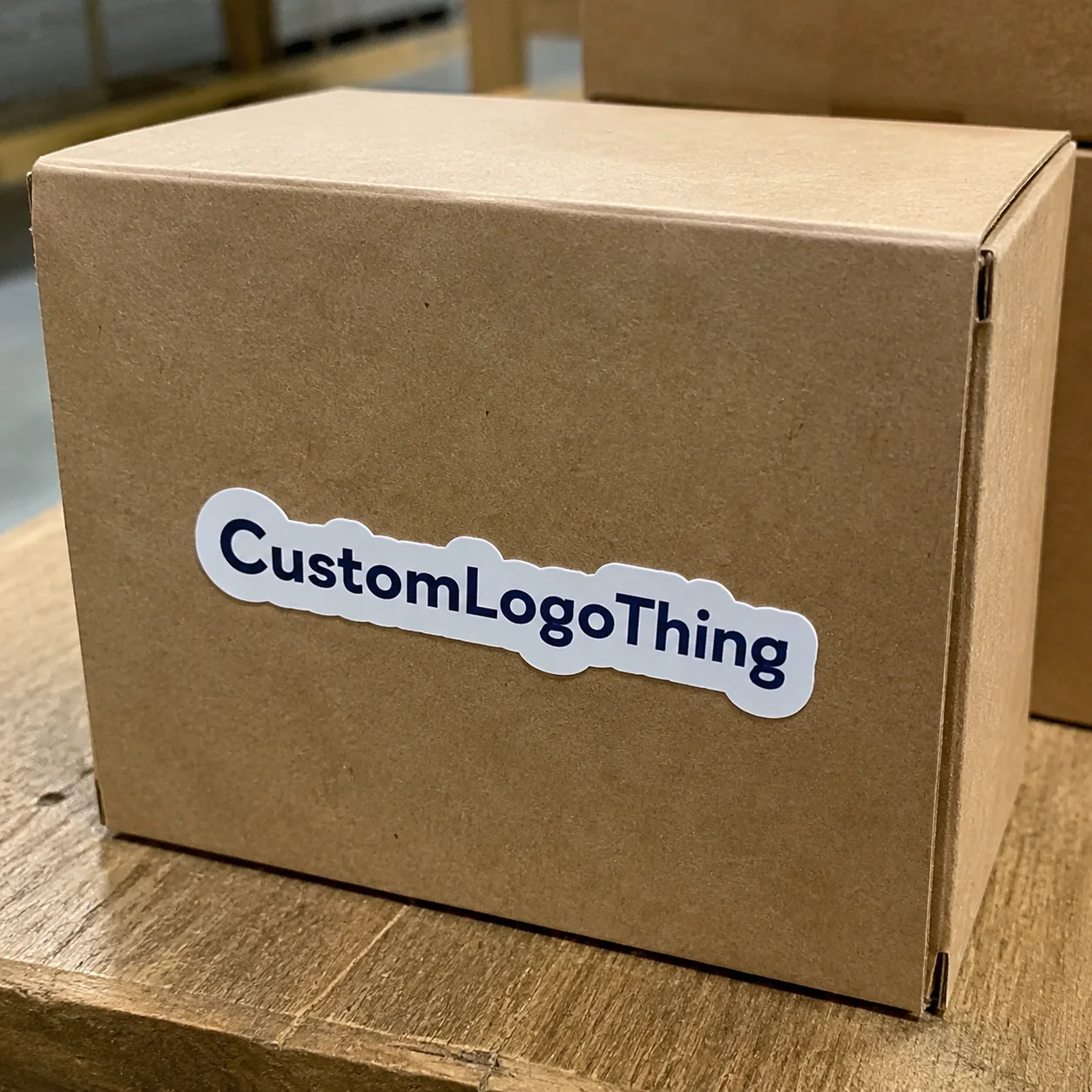
Thin pressure-sensitive labels work fine for many jobs, but once you move into heavy handling, moisture, friction, or a premium presentation, their limits show fast. A paper label on a cold drink bottle or a low-cost film on a mailer flap may look good at first, then start curling, creasing, or showing wear at the edges after transit. That is where custom thick stickers earn their keep.
“Thick” is not one single material. In practice, it usually means a heavier facestock, a more substantial film, or a layered construction with a protective laminate that increases overall caliper and gives the sticker a fuller feel. Buyers often notice the difference before they can describe it: the piece feels more premium, looks more deliberate, and fits better on retail packaging or product packaging that is meant to signal quality.
That hand-feel matters more than many brands expect. In packaging design, tactile cues shape how a product is read before the customer opens the box. A sticker that sits flat, resists scuffing, and has a clean cut edge can make custom printed boxes, mailers, jars, or cartons look more polished. It also helps when the sticker is part of a broader package branding system that includes inserts, labels, and other decorative elements.
Thicker builds make the most sense when the sticker will be exposed to one or more of the following:
- Repeated handling by customers, staff, or fulfillment teams
- Curved or flexible surfaces like bottles, jars, and squeeze containers
- Outdoor use, condensation, or temperature swings
- Retail packaging that has to look clean under bright light
- Promotional goods where the sticker itself carries the brand image
For buyers comparing options, it helps to see where thicker formats fit alongside other packaging items. A sticker is not a box, of course, but it often plays the same branding role as a premium carton or a well-printed insert. If you are also sourcing Custom Packaging Products, matching the sticker finish to the rest of the pack can make the whole presentation feel more cohesive.
A sticker does not need to be oversized to feel premium. Sometimes a cleaner edge, a better laminate, and the right adhesive do more than extra color coverage ever will.
How the material build and print process work
Every sticker has the same basic anatomy: a facestock on top, ink or toner printed onto that face, a laminate or coating on top of the print in many cases, and an adhesive layer on the back with a release liner behind it. The “thickness” buyers talk about comes from the combined stack, not just the print layer itself. A heavier face stock, a thicker film, or a protective laminate can each increase the final caliper in different ways.
Material choice changes both feel and performance. Vinyl and BOPP are common for durable applications because they resist moisture better than paper and stay cleaner during handling. Paper stocks can still work for indoor promotions or dry environments, but they tend to read thinner and can scuff faster. For premium labels, a laminated vinyl or BOPP build is often the safer choice, especially if the sticker is part of retail packaging or a product line that gets refrigerated.
Print method matters too. Digital printing is widely used for custom thick stickers because it handles short runs, multiple designs, and sharp color work without the setup burden of traditional plate-based methods. That makes it practical for brands with changing artwork, seasonal promotions, or small-batch launches. Once the print is down, a laminate or coating can protect the surface from abrasion, minor moisture, and handling marks. For outdoor exposure or heavy-use applications, lamination usually does more heavy lifting than the ink layer alone.
The cut style also changes the final experience. Die-cut stickers are cut to the shape of the design, which gives them a finished look and often a stronger retail presence. Kiss-cut stickers are cut through the top layer but left on a backing sheet, which can make them easier to peel and distribute. Sheet format works well for hand application and mailing inserts, while roll format is better when the stickers will be applied in quantity or by machine. The format does not just affect workflow; it can change how thick the piece feels when someone removes it from the liner.
| Build | Typical Feel | Best Use | Notes |
|---|---|---|---|
| Paper + no laminate | Light | Dry indoor use | Lowest-cost option, but scuffs more easily |
| Vinyl or BOPP | Medium to substantial | Bottles, jars, mailers | Better moisture resistance and handling durability |
| Vinyl/BOPP + laminate | Thick and premium | Retail packaging, outdoor branding | Usually the best balance of protection and presentation |
| Specialty textured build | Distinctive | High-end branding | Can cost more and may need tighter proof review |
One production detail that gets overlooked is registration tolerance. The thicker and more heavily finished the sticker, the more important it becomes to keep print, cut line, and laminate aligned. A small shift may not matter on a plain utility label, but it is easy to notice on a premium piece with a fine border or close-fitting contour cut.
Key factors that shape durability, feel, and price
The finish can change a sticker more than some buyers expect. A gloss finish gives color more pop and tends to look lively under retail lighting. Matte softens reflections and often feels a little more refined. Soft-touch can create a velvety hand-feel that reads premium immediately, though it is not always the most forgiving option for abrasive environments. If the sticker will live on packaging that gets touched constantly, a protective laminate matters as much as the finish itself.
Adhesive choice deserves just as much attention. A sticker for glass behaves differently from one on textured cardboard, powder coat, polyethylene, or a refrigerated plastic container. Some adhesives bond well on smooth surfaces but struggle on low-energy plastics or dusty cardboard. Others hold up better in cold environments, where condensation can interfere with adhesion. If the sticker is for product packaging or reusable containers, ask what surface it will actually meet in use, not just in a spec sheet.
Durability is also affected by where the piece is stored before application. Rolls or sheets kept in a hot truck, near direct sun, or in a humid warehouse can behave differently from material stored in a controlled room. That matters because even a strong adhesive has limits when dust, moisture, or heat are part of the workflow.
Pricing changes with nearly every choice you make. Size, quantity, shape complexity, print coverage, laminate selection, and special finishing all move the quote. A simple round or square sticker can be easier to produce than a custom contour cut with tight inside corners. Heavy ink coverage also adds cost because it uses more material and can slow production slightly. For many buyers, the real question is not whether a thicker sticker costs more upfront, but whether it saves money by reducing reprints, replacements, or presentation issues later.
There is also a useful standards angle here. If your stickers are going into shipping or handling-heavy applications, durability claims should be grounded in testing logic, not just opinion. Organizations such as ISTA and EPA are relevant references when brands evaluate packaging performance, logistics stress, or material decisions, especially if the broader pack has to survive transit and storage.
Cost and pricing: what changes your quote
Unit price usually falls as quantity rises, but the starting quote depends on more than run size. Setup time, material availability, cutting method, proofing, and finishing steps all shape the final number. For example, a 1,000-piece order of thick laminated stickers might land in a very different cost band than a 10,000-piece run, even if the artwork is identical. That is normal; the machine time and material use do not scale perfectly linearly.
MOQ, or minimum order quantity, simply means the smallest run a supplier will accept. Specialty films, textured finishes, and layered constructions may require higher minimums because they are slower to set up or purchased in larger parent rolls. If you only need a small batch, ask whether the vendor offers digital short runs or whether the price is being padded by an overly large minimum. Sometimes a slightly simpler material gets you a much better first-order cost without changing the brand impact much.
Here are the main pricing levers buyers should check before comparing quotes:
- Artwork complexity: vector cleanup, multiple versions, and custom shapes can affect prepress time
- Bleed and margins: larger print areas can increase material usage
- Finish: gloss, matte, soft-touch, or laminate protection each changes cost
- Quantity: more units usually reduce per-piece cost
- Rush production: compressed schedules often add fees
- Shipping: bulky sheet format or expedited freight can move the landed price
If you are comparing suppliers, make sure the quote includes the same things. One price may include proofing and shipping while another leaves those out. One may quote a laminated vinyl sticker while another is pricing a heavier paper build. That kind of mismatch leads to bad comparisons and, honestly, a lot of false “savings.” The clearer the spec, the more useful the quote.
A practical way to read pricing is to compare landed cost, not just sticker cost. If one option costs a little more but reduces damage in transit, arrives faster, or needs fewer reprints, it may be the better buy. That is especially true for launches, where a missed delivery date can cost more than the material difference ever would.
Process, timeline, and production steps to expect
A standard production flow starts with artwork review, then proof approval, then print, cut, finish, inspect, and pack. That sounds straightforward, but small delays often happen before the machine ever starts. Missing vector files, color changes after proofing, or a back-and-forth on dimensions can eat up days. The fastest jobs are usually the ones with clean files, a clear size, and a well-defined surface use.
Timeline depends on material and finishing complexity. A straightforward digital run may move in about 5 to 10 business days after proof approval, while more involved thicker builds with lamination, Custom Die Cutting, or specialty materials often take 10 to 15 business days, sometimes longer if stock is tight. Rush options can shorten that, but only if the supplier has the material and press time available. Shipping distance then adds its own layer, especially for heavier or bulkier orders.
There is one quiet bottleneck that causes more delays than people expect: proof approval. If the proof sits unanswered for several days, the whole schedule shifts. A clear checklist helps here. Confirm the size, quantity, material, finish, and cut shape before the proof comes in, and you will avoid the awkward last-minute corrections that push delivery into the next production window.
For brands building a coordinated package, this is also the point where sticker timing has to match other items such as inserts, custom printed boxes, or promotional mailers. A sticker that arrives early and sits in storage can still be fine, but a sticker that arrives after the launch date misses the point entirely.
Quality control usually happens at a few checkpoints rather than once at the end. A good shop will verify color consistency, cut accuracy, adhesive performance, and packaging count before release. For thick builds, that inspection matters because small defects can hide until the sticker is peeled from the liner or applied to a curved surface. If the supplier cannot explain how they check those points, the process is probably thinner than the product.
Step-by-step checklist for ordering the right build
Start with use case. Ask whether the sticker is going indoors, outdoors, onto curved packaging, into cold storage, or onto a surface that gets touched every day. That answer narrows the material choices more effectively than any generic “premium” request. A sticker for a lotion bottle is not the same as one for a shipping carton, even if both are technically labels.
- Define the surface: glass, plastic, cardboard, powder coat, or coated paper.
- Set the environment: dry, refrigerated, humid, or outdoor exposure.
- Choose the build: paper, vinyl, BOPP, or laminated construction.
- Select finish: gloss, matte, or soft-touch based on brand look and wear.
- Confirm the cut: die-cut, kiss-cut, sheet, or roll.
- Prepare artwork: vector files, bleed, and safe margins.
- Review proof carefully before authorizing production.
That order matters. Many buyers start with color or shape, then work backward when the sticker does not adhere well or does not survive handling. It is better to pick the construction around the application, not the other way around. If you are also buying Custom Labels & Tags, keep the construction logic consistent so the labels feel like part of the same package family.
Before production, request a proof and compare it against the actual product or box, not just a digital mockup. A sticker can look perfectly centered on screen and still feel off once it lands on a curved or narrow surface. When possible, measure the real placement area and account for edges, seams, and any closure folds. That one extra check prevents a lot of waste.
For brands planning a launch or seasonal rollout, the safest workflow is to confirm specs early, especially if the sticker has to align with broader packaging design choices. Matching the finish to the rest of the pack makes the brand look deliberate rather than assembled from separate pieces.
If you are ordering for multiple SKUs, keep the same print tolerance and finish language across the line whenever possible. Consistency across sizes and shapes usually matters more than chasing a different effect for every product variant. Buyers and customers notice when the system feels stable.
Common ordering mistakes that make stickers feel cheap
The first mistake is mismatching adhesive and surface. A sticker that peels at the corners or curls on a bottle does not feel premium, even if the print is beautiful. The second is choosing thickness for feel alone. A heavier sticker may sound better on paper, but if it has to wrap around a tight curve, a build that is too stiff can lift or bridge at the edges.
Low-resolution artwork is another easy way to make a premium product look ordinary. A crisp die line and strong file prep matter just as much as the substrate. If the print edges are fuzzy or the contour looks rough, the whole piece suffers. Proof review matters for the same reason; small type, thin outlines, and tight borders can all behave differently once they hit the press.
Storage and application conditions are often ignored. Heat can soften some adhesives, cold can reduce tack, and humidity can create application trouble on certain surfaces. If the stickers are being stored in a warehouse or applied in a production room, those conditions should be part of the buying decision. Otherwise, the supplier may technically deliver what was ordered, but the result still feels wrong in use.
Another common issue is overdesign. Heavy effects, dense copy, and too many competing visual cues can make a thick sticker look busy instead of premium. The material should support the artwork, not fight it. Simple layouts often hold up better because the finish, edge quality, and color are allowed to do their job.
Honestly, one of the biggest mistakes is treating stickers as an afterthought. A clean sticker is often the last visible touchpoint in package branding, so if it feels flimsy, the whole product can read that way. That is especially true in retail packaging, where customers compare dozens of items in seconds.
Practical next steps for a cleaner, faster order
Start by auditing the final use case. Where will the sticker live, how will it be handled, and what should it communicate in the first three seconds? A sticker for an ecommerce mailer needs different priorities than one for a boutique candle, a cold beverage, or a reusable jar. The better you define the environment, the easier it is to choose a construction that fits.
Then gather the basic Specs Before You request pricing: size, quantity, material preference, finish, shape, and target delivery date. Those six or seven details cut down quote ambiguity fast. If you want to compare suppliers fairly, make sure each one is answering the same brief. That is the cleanest way to avoid apples-to-oranges pricing.
Samples and proofs are worth the extra step whenever you are weighing thickness, finish, or adhesive performance across options. A sample can tell you more in thirty seconds than a long email thread can tell you in three days. If you are planning broader product packaging updates, testing the sticker alongside cartons, wraps, and inserts can reveal how the whole system reads together.
In the end, custom thick stickers are not just about adding material. They are about choosing the right construction so the label holds up, looks intentional, and supports the rest of the packaging system. If you order with the surface, finish, and timeline in mind, the result feels cleaner, lasts longer, and does a better job of representing the brand.
FAQ
What are custom thick stickers made of?
They usually combine a heavier face stock or vinyl base with adhesive, ink, and often a protective laminate or coating. The final feel depends on the full material stack, not just the printed surface.
Are thicker stickers always more durable?
Not always. Durability depends on the adhesive, laminate, material type, and the surface they are applied to. A thick build helps, but the whole construction has to match the use case.
Do thick stickers cost more than standard stickers?
Usually yes, because heavier materials and extra finishing steps increase production cost. Larger quantities can bring the unit price down and make premium builds more practical.
How long does production usually take for custom thick stickers?
Timeline depends on artwork readiness, material availability, finishing, and order size. Proof approval speed is often the biggest factor in overall turnaround.
What is the best finish for custom thick stickers?
Gloss works well for bold color and shine, matte gives a softer premium look, and laminate adds extra protection. The best choice depends on whether the sticker needs durability, visual pop, or both.


