Custom Trinket Box: Request Specs, Pricing, and Lead Times
A custom trinket box does more than hold a small item. It changes how the item is judged before the customer even lifts the lid. That sounds simple because it is simple. A compact box can make a modest product feel thoughtful, giftable, and worth keeping. A generic carton can flatten the experience in seconds.
That matters for jewelry, charms, pins, keepsakes, small awards, and promotional pieces. For buyers, the box is part of the product, not an afterthought. It protects the item, frames it, and tells the customer how to treat it. If the pack looks careless, the item gets blamed for a problem that started with the packaging.
There is also a practical reason to pay attention. Small presentation packaging moves through more hands than people expect. It gets packed, shipped, stored, shelved, and opened. The spec has to survive all of that without falling apart, scuffing badly, or looking off-brand by the time it reaches the customer.
Why a custom trinket box can change perceived value fast
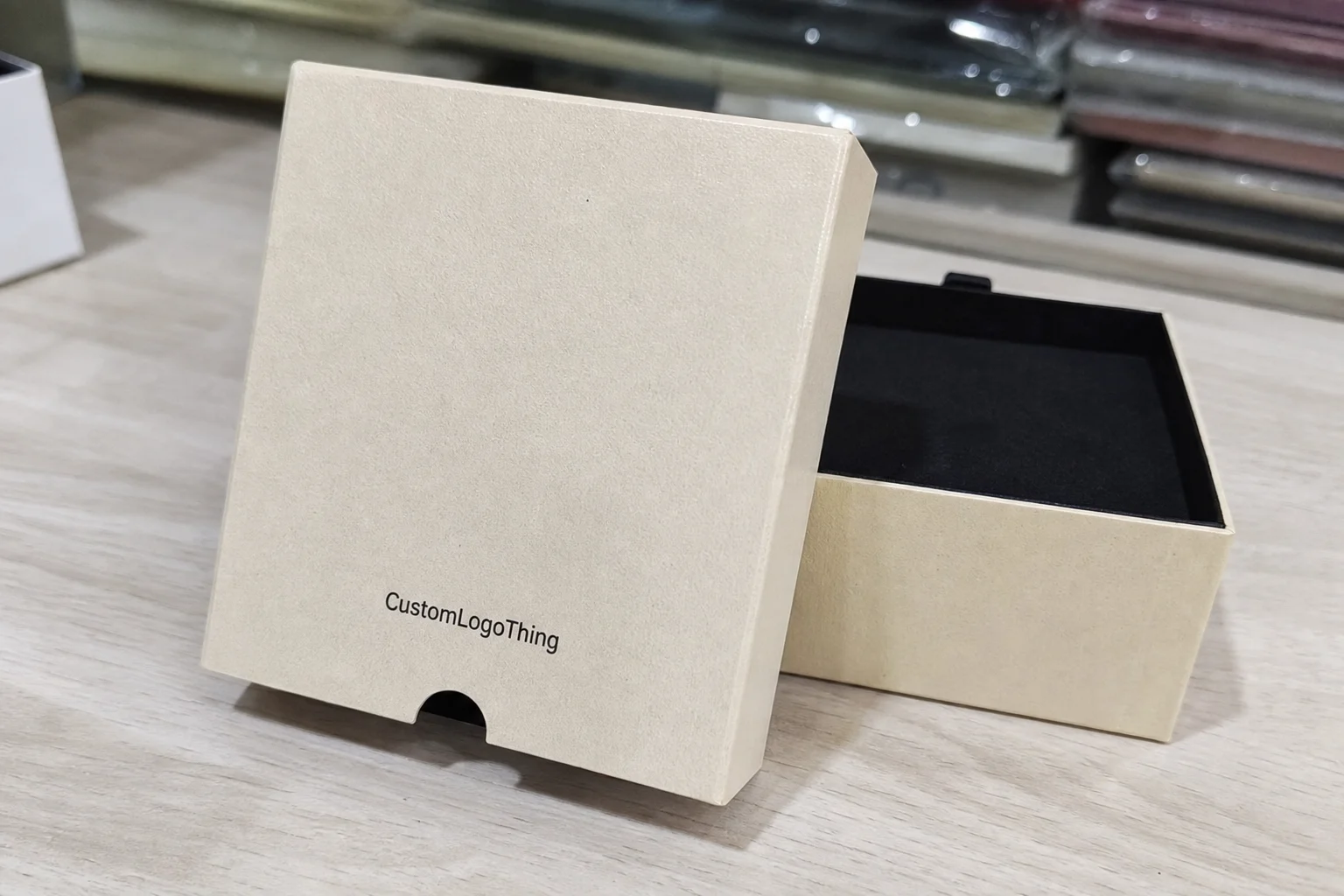
For small products, perceived value is fragile. A precise, well-proportioned box makes the item feel considered. A loose fit or a flimsy lid makes the whole package feel cheaper, even if the item inside is fine. Buyers usually feel that difference instantly, which is why packaging decisions often affect conversion and repeat purchase behavior more than people expect.
These boxes work across retail packaging, event gifting, collector sets, and accessory lines because they do three jobs at once: protect, present, and organize. The best versions also support storage after purchase. If the customer keeps the box on a dresser, in a drawer, or in a display tray, the packaging keeps working long after the sale.
Compared with bags or simple mailers, a box gives structure. That matters for stacking, shelf presence, and opening experience. It also helps with product protection, especially for items with hard edges, plated surfaces, stones, or coatings that scratch easily. A soft pouch may be enough for some pieces, but it rarely communicates the same level of finish.
A small box can look wrong for reasons that have nothing to do with the product: weak insert fit, sloppy lid alignment, or print that sits too close to the edge. The product may be fine. The presentation is what failed.
The cleanest way to approach a project is to define five things up front: protection, presentation, size, finish, and quantity. If those are clear, the rest of the spec usually resolves without much back-and-forth.
How the box structure and insert system work
Every custom trinket box starts with structure. That includes the outer shell, lid style, base style, insert, lining, and closure. Those parts determine how the box feels in the hand, how it opens, and how securely the product sits inside.
Common structures include tuck top cartons, lift-off lid boxes, hinged lid boxes, sleeve-and-tray constructions, and two-piece rigid styles. Tuck top boxes are usually the most cost-conscious choice for light items and high-volume runs. Lift-off lid boxes feel more gift-oriented. Hinged and two-piece rigid boxes tend to read as premium right away, which is why they are common for jewelry, commemorative pieces, and small luxury goods.
The insert is where many projects succeed or fail. A foam cavity holds the item firmly and creates a clean reveal. Paperboard inserts can be easier to recycle and still work well if they are cut accurately. Molded pulp is a practical option for buyers who want a lower-plastic message, although the visual finish is different from foam or velvet-style interiors. Fabric-wrapped boards and flocked surfaces can elevate the look, but they add assembly steps and more inspection points.
Size should be based on the product first, then adjusted for clearance and handling. A ring box needs less internal volume than a charm set, but both still need enough room for fingers to remove the item without pinching or scraping it. Oversizing wastes material and makes the product feel less secure. Undersizing creates pressure marks, bowed lids, or lids that do not close cleanly.
Branding surfaces matter too. A logo printed on the lid top is not the same as full wrap graphics, foil accents, or interior print. Each option changes setup time, proofing, and often the minimum order quantity. Strong package branding is usually not about filling every side of the box. It is about placing the mark where the eye lands first and using the material itself to support the message.
For buyers building a broader packaging system, it helps to compare related formats in the wider catalog of Custom Packaging Products. Sometimes a trinket box is the right fit. Other times a matching carton, sleeve, or insert system gives a cleaner result across several SKUs.
Materials, finishes, and branding details that affect the final look
Material choice changes both the look and the function. Paperboard is common for lighter retail packs and carton-style formats. Rigid chipboard is thicker and feels more substantial, so it suits presentation boxes where the opening experience matters. Specialty wraps add texture, color depth, and a more finished exterior. Clear windows can work if visibility is part of the sales job, but they should be used with intent. A window changes the feel of the package fast.
Finishes are not decoration for the sake of decoration. They alter how the customer experiences the box in the hand. Matte coatings reduce glare and usually feel calmer. Gloss makes color brighter and graphics sharper. Soft-touch lamination adds a velvety surface, though it can show wear if the box is handled a lot. Foil stamping, embossing, debossing, and spot UV each create a different tactile cue. Used well, they can make a small custom trinket box feel much closer to luxury gift packaging.
There is always a tradeoff. A box meant for retail shelf display may prioritize appearance. A box meant for shipping needs corner strength, scuff resistance, and a finish that can survive pressure from outer cartons. If the product will move through distribution, store back rooms, and customer hands, durability matters as much as the studio sample. A beautiful sample that rubs badly in transit is not a win.
Color consistency deserves real attention. Brand colors shift with paper stock, coating, ink system, and whether the art uses process color or spot color. That is normal, but it needs to be managed through proofing and sample approval. Buyers who need tight color control should ask about press checks, target tolerances, and the lighting conditions used during approval.
Sustainability claims should stay precise. If the board is FSC-certified, say that specifically. If the insert is recyclable, explain whether local recycling programs usually accept that material. If the box uses mixed materials, do not overstate recyclability. Buyers notice when packaging copy sounds cleaner than the actual construction. The best claim is the one that can be defended.
For standards and transport context, the FSC and ISTA sites are useful references. They are not packaging recipes, but they help buyers evaluate sourcing language and shipping tests without guessing.
| Option | Typical Look | Best Use | Typical Tradeoff |
|---|---|---|---|
| Paperboard tuck box | Clean, economical, printable | Light accessories, promo items | Less premium feel |
| Rigid two-piece box | Substantial, gift-ready | Jewelry, keepsakes, collector items | Higher unit cost |
| Sleeve-and-tray box | Layered, display-friendly | Sets and presentation kits | More assembly complexity |
| Box with custom insert | Secure, organized | Fragile or irregular items | Insert tooling and setup add cost |
Cost, pricing, MOQ, and what drives unit cost
Pricing for a custom trinket box depends on size, board thickness, print coverage, number of colors, specialty finishes, insert complexity, and the overall structure. The box is small, but small does not mean simple. A tiny box with a detailed wrap and a fitted insert can be more expensive than a larger, plain carton.
MOQ matters because setup costs have to be spread across the run. A 1,000-piece order usually costs more per unit than a 5,000-piece order, even if the final box looks identical. That is one reason Buyers Should Ask for multiple quantity breaks before choosing a spec. A quote with only one quantity tells you less than you think.
Ballpark pricing helps, as long as nobody mistakes it for a promise. At volume, a basic paperboard presentation box with simple print can land in the low cents to around a dollar per unit, depending on the market and build. Rigid Boxes with Custom inserts, foil, and soft-touch lamination can move into the $1.50 to $4.50+ range fast. Hand assembly, unusual shapes, or special surface treatments can push past that. The point is not the exact number. The point is that material complexity and labor drive cost more than box size alone.
Hidden costs appear in places buyers often forget to ask about. Dieline development may be included or billed separately. Prototype or sample fees can apply. Color matching may require additional proofing. Special inserts, window tooling, and export cartons can also change the total. Freight matters too. A compact order can still ship in a surprisingly large stack of master cartons once inserts and fully assembled units are packed out.
A practical way to compare quotes is to ask three questions:
- What exactly is included in the unit price?
- What is a charged add-on?
- Does this price reflect factory-direct production or an extra margin layer?
The cheapest number is not always the best value. If the box crushes in transit, shifts the product in the insert, or needs extra labor at pack-out, the lower invoice gets erased quickly. Good product packaging should reduce friction across the supply chain, not just look cheaper on a quote sheet.
Production steps and lead time from concept to shipment
The cleanest production flow starts with a brief: product dimensions, target use, quantity, finish, and insert needs. From there, the dieline gets developed, artwork is placed, a proof is reviewed, and sample approval happens before mass production begins. After that comes printing, finishing, assembly, final packing, and shipment.
Artwork approval is one of the biggest variables. A first proof can be signed off quickly, or it can take several rounds if the logo scale, print alignment, or color target is not settled. Specialty finishes take time too. Embossing, foil stamping, and laminated textures usually require extra setup and more careful inspection.
Lead time is not a single fixed number. It changes with material availability, print complexity, order size, and whether the boxes need hand assembly. Flat-pack styles usually move faster than glued rigid boxes with custom inserts. If the project needs a sample run, add time for that review cycle as well.
For buyers planning launches, trade shows, or gift-season programs, a buffer is smart. Packaging rarely behaves like a same-day commodity order. Even a small delay in signoff can push shipping by several days. A schedule that looks fine on paper can get tight fast once the production calendar fills up.
Quality control should not be treated as a final glance at the end. It needs checkpoints. The usual ones are print registration, lid squareness, glue squeeze-out, foil alignment, insert compression, closure feel, and scuff resistance. If the box is rigid, check corner integrity. If it has a hinged lid, check that the hinge line opens cleanly without resistance or wobble. If it uses a magnetic flap, check pull strength and alignment.
For transport durability, ISTA testing gives teams a useful framework. A small box does not always need a full lab program, but it does benefit from realistic thinking about vibration, drop risk, carton compression, and pack-out behavior before release.
Step-by-step guide to ordering the right spec
Start with the item itself. Measure exact dimensions, weight, and fragility. Decide whether the box needs to store the item, display it, or present it as a gift. That decision shapes the rest of the spec faster than any finish choice.
Next, choose the structure. A simple fold-up carton can be enough for a lightweight accessory. A rigid or sleeve-style box usually makes more sense if the goal is a premium reveal. Then choose the insert that holds the item firmly without making the box feel oversized. The insert should stop movement, but it should not make removal awkward.
Once the structure is set, prepare the artwork around the final dieline. Include bleed, safe zones, and exact logo placement. If the project includes interior print or foil, those elements need to be clearly marked in the file package. Leaving them to interpretation creates avoidable mistakes.
For new structures or tight color targets, ask for a prototype or pre-production proof. That is where problems surface: lid fit, insert clearance, print contrast, and closure feel. A flat PDF cannot tell you whether a clasp sits properly or whether the product rattles during handling.
Before approval, use a checklist. Confirm size, material, finish, print sides, insert type, count per master carton, and delivery timing. If any of those details are vague, the approved sample and the final production order can drift apart. That is how rework starts.
One more point: decide who owns signoff. If design, operations, and merchandising all have a say, the review path needs to be defined. Otherwise, approvals stall because everyone is waiting for someone else to take ownership. Packaging projects do not usually fail on complexity alone. They fail on fuzzy responsibility.
Common mistakes buyers make when specifying small presentation boxes
One of the most common mistakes is ordering around the product and forgetting the insert. The item may fit, but if it moves in transit, the box loses its premium feel and can create scuffs or breakage. A good custom trinket box is planned as a system, not just a shell with a logo on top.
Another issue is choosing a box that looks great but is awkward to assemble or ship. A fragile lid or a complicated fold sequence can create labor problems at pack-out. If the warehouse team has to fight the packaging, the design is working against the operation.
Finish choices create their own headaches. Dark soft-touch coatings can show fingerprints. Metallic foils can be prone to abrasion if the outer cartons are tight. Gloss can reveal handling marks more easily than buyers expect. None of that means the finish is wrong. It means the finish has to match the real distribution path.
Print scope is another common miss. Buyers sometimes assume the quote includes every surface, then find out it only covers the lid top or a single exterior panel. Interior branding, side panel copy, and multi-color embellishment should all be spelled out before approval. Ambiguity here gets expensive fast.
Skipping a sample is risky when the structure is new. A box can look correct in a digital mockup and still fail in the hand. Closure tension, insert depth, and logo scale all benefit from an actual sample review. That step usually costs less than a reprint.
And yes, overdesign is a mistake too. A lot of small-packaging specs pile on every possible effect, then wonder why the box feels busy or overworked. A single clean mark on a good material often reads better than three kinds of embellishment fighting for attention.
The strongest packaging specs are not the most elaborate ones. They are the ones that leave almost no room for guesswork.
Next steps for getting a quote and moving into production
If you want a useful quote for a custom trinket box, send the minimum information needed to price the job accurately: product dimensions, quantity, target use, print requirements, finish preference, and any insert or pack-out details. The clearer the brief, the cleaner the quote.
Decide whether the project needs a display-first presentation box or a shipping-ready version. Those are not always the same structure. A box that photographs well may not be the best choice for a distribution-heavy program, and a box that ships efficiently may need more surface treatment to feel gift-worthy.
Ask about the sample workflow upfront. Some jobs begin with a virtual proof, some with a flat sample, and some with a fully assembled prototype. Each one answers a different question. The right path depends on how much risk you want removed before production starts.
Compare suppliers by what they include, not just the headline price. If one quote includes dieline support, proofing, and more detailed finish spec while another leaves those items open, the cheaper quote may not be cheaper once revisions begin. Good buyers look for actual value, not a number that only looks smaller.
Before release, lock the approved spec sheet as the handoff document for production. Confirm carton count, packing method, and delivery timing. That keeps the manufacturing team, the buyer, and the warehouse aligned on the same target. For a small package, that level of discipline matters more than most people expect.
If the goal is to make a small item feel deliberate instead of generic, a well-specified custom trinket box is still one of the clearest ways to combine protection, presentation, and brand memory in a compact format.
What is a custom trinket box used for?
It is used to present, protect, and organize small items such as jewelry, collectibles, keepsakes, promotional gifts, or retail accessories. It can also improve perceived value by making a small product feel more deliberate and gift-ready. The right structure depends on whether the box is meant for display, storage, gifting, or shipping.
How do I choose the right size for a custom trinket box?
Start with the exact product dimensions, then add clearance for inserts, closure depth, and finger access. Avoid oversized boxes because they increase material use, raise unit cost, and can make the item feel less secure. If the item is fragile or irregularly shaped, size the box around the insert rather than the object alone.
What affects custom trinket box pricing the most?
Material thickness, print coverage, number of colors, specialty finishes, insert complexity, and order quantity are the biggest drivers. MOQ matters because setup costs are spread across fewer units when the run is small. Shipping and assembly can also change the true landed cost.
How long does production usually take?
Lead time depends on approval speed, material selection, print complexity, and whether samples or prototypes are required. Simple structures move faster than rigid, fully finished boxes with custom inserts or specialty coatings. Build in extra time for artwork revisions and final signoff so the schedule stays realistic.
What should I send when requesting a quote for a custom trinket box?
Send product dimensions, quantity, target use, print requirements, finish preferences, and any insert or packaging needs. If you already have artwork, include the dieline and logo files so the quote reflects the real production scope. If not, provide a reference image or a clear description of the look and feel you want.

