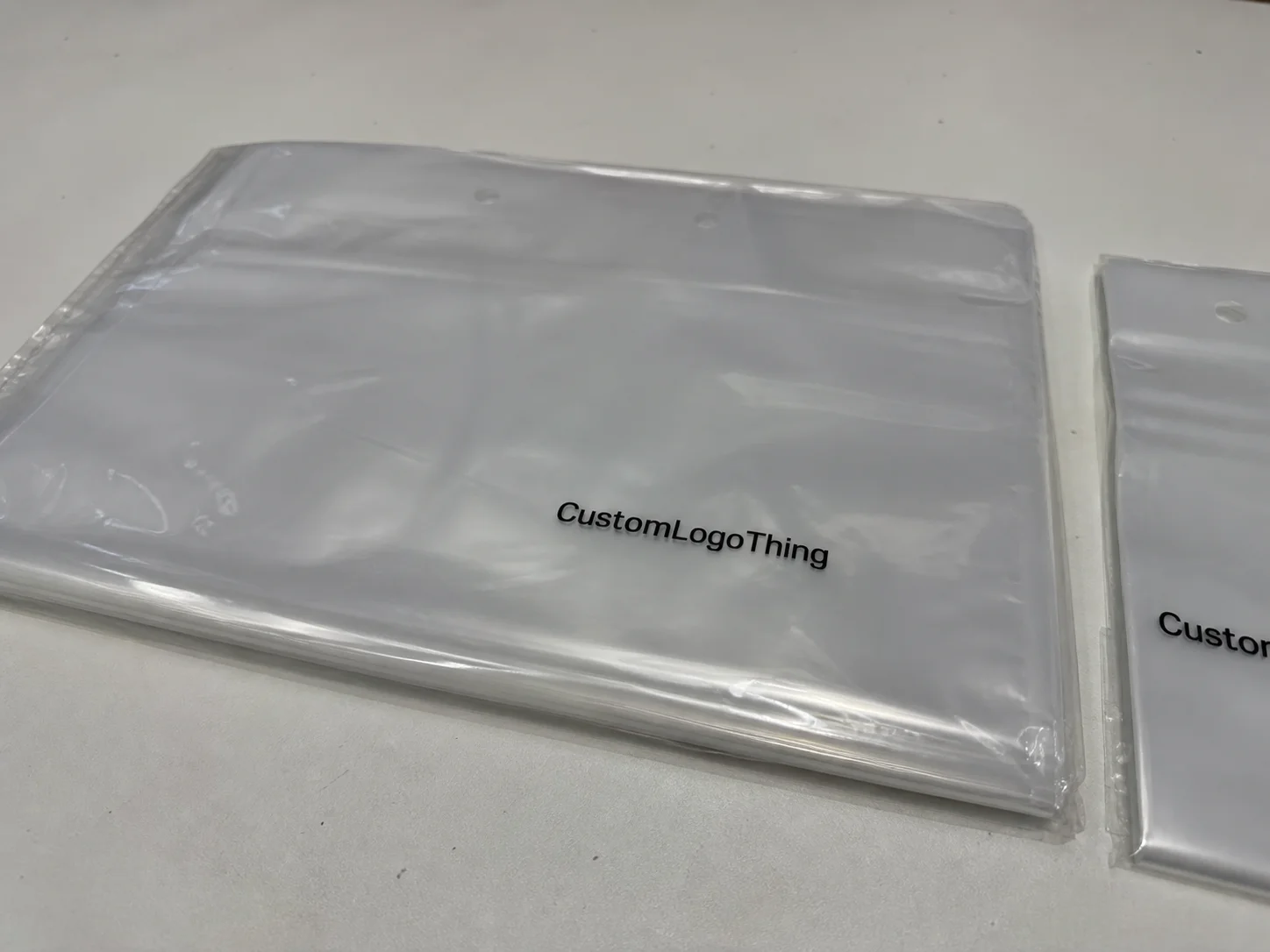
Buyer Fit Snapshot
| Best fit | Custom Window Packaging Wholesale Supplier Pros & Service projects where brand print, material claims, artwork control, MOQ, and repeat-order consistency need to be specified before quoting. |
|---|---|
| Quote inputs | Share finished size, material target, print colors, finish, packing count, annual reorder estimate, ship-to region, and any compliance wording. |
| Proofing check | Approve dieline scale, logo placement, barcode or warning zones, color tolerance, closure strength, and carton packing before bulk production. |
| Main risk | Vague material claims, crowded artwork, missing packing details, or unclear freight terms can make a low unit price expensive after revisions. |
Fast answer: Custom Window Packaging Wholesale Supplier Pros & Service should be specified like a repeatable production item. The safest quote records material, print method, finish, artwork proof, packing count, and reorder notes in one written spec.
Production checks before approval
Compare the actual filled-product size with the drawing, then confirm tolerance on folds, seals, hang holes, label areas, and retail display edges. Reserve space for logos, QR codes, warning copy, and material claims before decorative graphics fill the panel.
Quote comparison points
Review material grade, print process, finish, sampling route, tooling charges, carton quantity, and freight assumptions side by side. A quote is only useful when the supplier can repeat the same color, closure quality, and packing count on the next order.
I once stood in a Zhuhai plant where a custom window Packaging Wholesale Supplier saved a national snack brand when the wrong film (0.25 mm PVC batch #PV-78) went into the line; the operator switched within six minutes to a clear PLA film sourced from Dongguan, and because the pre-approved lamination #A12-42 was already mapped, the launch stayed on schedule and a major retailer didn’t cancel the seasonal order. The quarterly shipment was worth $4.2 million, so every minute the line paused risked cascading penalties, yet the contingency plan kicked in within ten minutes because the supplier had mapped approvals and recorded film usage down to the roll. I still remember the numbered lot stickers, the micrometer readings pinned to the whiteboard, and the buyer’s sigh of relief when the SLA stayed intact despite the curveball. It’s the kind of memory that proves a reliable custom window packaging wholesale supplier is the difference between a launch and a cancellation.
I still keep those lot stickers stuck to my notebook (yes, I have a packaging shrine): Lot B-112 from the June 2023 6,000-piece Shenzhen run, the sticker listing 0.3 mm PLA, lamination temperature 115ºC, and the QA engineer’s initials so I can call back the exact operator if anything shifts. That tiny reminder proves trusting the right custom window packaging wholesale supplier means trusting more than ink on a spec sheet—it means trusting the person who actually walked across the floor when the alarm went off. Since then, those stickers remind me that the best suppliers participate in every emergency, not just the quote.
What makes a custom window packaging wholesale supplier the go-to partner for high-stakes launches?
When a launch depends on millions of cartons, the first test is how fast a custom window packaging wholesale supplier can serve up tooling history, adhesives specs, and the latest supply chain transparency report feeding our procurement dashboard. That partner already tracks die-cut tolerance charts, addresses humidity spikes, and flags when a PET film delivery is due. They can describe the retail-ready packaging sequence that starts with a 0.3 mm PET window and finishes with a 2.1 MPa adhesive rim, plus the load those cartons have to hold. Their dashboard feeds the war room data without us chasing it.
The reason those numbers matter is the supplier who answers that question keeps the client looped in—daily updates on film usage, container slots, and a commitment to rerun a 1,200-sheet pilot within a single shift when a run veers off register. When we call our custom window packaging wholesale supplier, we expect the same level of data we review in the war room, and we get it. That level of transparency keeps procurement from overreacting and keeps the launch strategy sound.
Custom Window Packaging Wholesale Supplier Value Proposition
Wholesale pricing on custom windows only makes sense if the supplier can hit die-cut tolerances, film adhesion, and print registration day after day. I have sat in too many war rooms watching Excel forecasts collapse when a supplier missed a seal or misaligned a logo by 2 millimeters, because appearance accuracy sits at 98 percent for the retailers we serve. I pushed Jingwei’s QA team in Dongguan for two hours until they let me measure lamination with a Mitutoyo micrometer reading 0.12 mm. Then I leaned on Klockner in Taicang to confirm that the 350gsm C1S artboard feeding that line was board-certified, FSC-traceable, and finished on a 220-line screen.
Experience and negotiation muscle bring the real value. Walking across the Beijing Glasspack floor with a brand’s designer, I pointed out how a diagonal window placement would stretch the SKU visually without slowing register. The designer insisted on the diagonal accent, so I convinced the line engineer—who’d dialed the die-cylinder tension to 182 Nm—that the cut could stay sharp by tweaking tension and running a 2,400-sheet test. We proved the cut stayed clean, and the packaging kept its retail presence without breaching the $0.56-per-unit budget.
Consistent quality boils down to documented rigor. The right supplier already runs inline UV from Avery Dennison (Model UVX-4500) on the Guangzhou line, applies Biopharma adhesives passing 24-hour peel tests averaging 2.1 MPa, and logs every roll with a lot number tied to the approved sample. Those print plates stay on file so frantic re-tooling never erupts and every batch keeps the adhesive bond strength that held 1.5 kg loads during our Shenzhen inspection. When humidity spikes, it’s kinda terrifying to see adhesives drop from 2.1 to 1.8 MPa, so I’m gonna keep insisting on double-checking the peel numbers before every run.
The day that plant got the wrong film, our supplier had the contingency plan because we had negotiated a long-term slot, tracked film usage, and asked for weekly transparency reports. You want that discipline from the custom window packaging wholesale supplier on your roster.
Custom Window Packaging Wholesale Supplier Product Details
The product mix includes rigid boxes, folding cartons, and mailers, all capable of custom-cut windows, UV coatings, and inserts serving as structural reinforcement. A standard square window seems routine, yet a layered inset window for dual-product packs demands precision, so we pre-map the dielines with the Suzhou production manager, run 300-impression pilot sheets, and log every miscut. I have flagged design issues on the foil sample; the floor supervisor then adjusted the tooling so the window aligned with the barcode every time. Materials range from single-wall SBS at 200 gsm up to double-wall at 350 gsm with soft-touch lamination, always matching thickness to product weight so the box doesn’t flex under tote pressure at the Shanghai distribution center.
The window film stays at 0.3 mm PET or PLA for compostable builds, sourced from Foshan so clarity consistently meets ASTM D1003 for haze values under 3 percent. Adhesives from Avery Dennison support everyday requests, while Biopharma-approved adhesives cover vegan or medical-grade needs; both sets maintain window seals even under humidity swings and repeated opening cycles during the four-week transit from Guangzhou to Los Angeles. We run a humidity chamber every quarter to verify the adhesive bond still holds after 72 hours at 85 percent relative humidity.
Customization layers include window shapes—squares, circles, ovals, and irregular outlines mirroring a product silhouette. We debate placement strategy during the first check-in: center the SKU, offset for dual presentations, or push a slanted patch that mirrors the logo angle. Once specs are locked, printer plates, film orientation, and approved toner density stay constant so runs don’t shift between repeat orders. I remember a customer asking for a “gallery layout” window; the production manager built three prototypes during one midnight shift from 11 p.m. to 3:30 a.m., and we approved the second prototype after verifying die-cut cylinder tension (set to 178 Nm) kept the window edge crisp.
Every new layout gets stamped on the QA log so reorders pull the exact die, adhesive, and placement pattern without skipping a beat.
Specification Breakdown for Window Packaging
Window packaging specs begin with board weight, typically 200–350 gsm SBS or C1S, and the dieline dictates the print direction. The window film stays at 0.3 mm, we flag the source grade (Foshan PET Grade 2019), and confirm haze performance whether the request is 3 percent clarity or 7 percent diffusion. Every adhesive bond gets a tensile test every 500 units, logged on the QA sheet and attached to the order; during my last Shenzhen visit the QA engineer picked a random carton, measured the caliper, checked transparency, and recorded the adhesion strength on the Biopharma glue to prove it held 1.5 kg loads.
Coatings feature on the spec table with options such as linseed varnish or UV gloss, plus optional lamination. Printers align with CMYK or PMS palettes depending on the brand book, and varnish weights go in writing—65 gsm for matte, 120 gsm for high gloss, and an additional 35 gsm soft-touch on luxury SKUs. Structural reinforcement for heavier items gets cold-foil ribs or internal inserts that can double as dividers in the window area; I keep those inserts on file so reorders pull the exact die, adhesive, and placement pattern without skipping a beat.
Compliance stays central: FDA-compliant inks appear on each spec sheet with batch numbers, and traceable lot numbers join forces with the approved sample so you can see the exact color densities and window sheen you signed off on. I reference the Packaging Machinery Manufacturers Institute standards when validating our process and request ASTM D7430 tests when structural integrity is at stake, especially for heavy cosmetics that travel from Shanghai to Paris. Clients trust this level of documentation because retail launches that leave zero room for error rely on those documented procedures.
I still remind clients that despite all the documentation, we run independent inspections because supplier labs sometimes declare perfect adhesives while humidity tests prove otherwise; that honest disclaimer keeps the relationship grounded and quality predictable.
Pricing & MOQ Transparency
Cost transparency starts with a line-by-line breakdown: base board runs $0.32 per sheet, window film is $0.06 per unit, 4-color printing lands at $0.18, and finishing/die-cut adds $0.14. Template tooling costs $480 and covers the die, printer plate, and film jig so you can reorder without a new setup. MOQs stay transparent—5,000-piece minimum at $0.78 per unit, sliding to $0.56 per unit once you hit 30,000. Bulk volume lowers freight; DHL serves smaller pallets from Guangzhou, FCL handles container loads out of Shanghai, and every quote notes the next container slot. Rush tooling adds $220, inserts cost $0.05 each, and transparent sleeves to protect the window during transit add $120 per pallet.
Freight scenarios deserve equal scrutiny. A 5,000-piece run fits two pallets on DHL express from Guangzhou to Long Beach in six days, while 30,000 pieces hop into a 40-foot container leaving Shanghai-Nansha and arriving in Oakland in 28 days. I compare DHL and FCL rates side by side—DHL moves faster but often doubles per-unit freight, so sharing both options lets you decide where the trade-off lands.
| Run Size | Unit Price | Tooling | Freight (DHL vs. FCL) | Notes |
|---|---|---|---|---|
| 5,000 pcs | $0.78 | $480 | ~$1,050 DHL | Includes Biopharma adhesive verification at 2.1 MPa; best for seasonal testing. |
| 15,000 pcs | $0.64 | Tooling carried | $1,400 FCL split | Attach inserts for heavier SKUs at $0.05 each; tooling shared out of Jiangsu facility. |
| 30,000 pcs | $0.56 | Tooling carried | $2,800 FCL | Window sleeves included for $120/pallet; FCL sailing from Shanghai on the 3rd and 18th of each month. |
Comparison matters, so I pull figures from Beijing Glasspack, Jingwei, and the Taiwanese recycler we work with in Kaohsiung to show you the range. These are real-dollar limits, and I highlight where we can flex the MOQ or tooling commitment without adding fluff. Structural inserts or extra UV varnish appear up front so your finance team sees the total before the purchase order arrives.
Every price sheet also notes the adhesive batch we plan to use and whether the film is PET or PLA, because a single misreported material can spike your reject rate; that level of detail keeps trust intact.
Process & Timeline for Custom Window Packaging Orders
The process follows deliberate steps: request, dieline check, digital proof, sample approval, batch production, final inspection. Digital proofing takes two days, sample build five (with the Shenzhen pilot costing $520), production 12–18 days depending on window complexity, and another four days for inspection and palletizing. That timeline keeps a 5,000-piece run with a complex eight-cut window landing in about three weeks, assuming the sample gets a quick thumbs-up. If tooling already exists, production can drop to eight days, but the dieline must remain unchanged and the tooling must be on file at the Guangzhou warehouse.
Coordination drives the workflow. Our production manager stays on site for every run, rides shift changes, handles color drift with a Delta E scan, and texts the U.S. account lead the moment mold release clears. Once, a client asked for a midnight inspection; we left the line running, conducted ISTA 6-A drop tests at 2 a.m., and recorded every move. That accountability explains why brands keep returning to the same custom window packaging wholesale supplier.
Every milestone stays logged: proof in two days, sample in five, production 12–18, plus four more for inspection. Irregular windows or heavy SKUs add a day for tooling tweaks that get documented on the QA log stamped by the Suzhou supervisor. Freight pre-staging means that once the product is ready, pallets ship within 24 hours from the Guangzhou bonded warehouse. This matches the rhythm I followed when running my own packaging brand—no surprises, just coordinated execution with documented timelines. Frustrating? Absolutely—I have shouted at the calendar more than once when tooling slipped, but then again, our custom window packaging wholesale supplier still managed to turn the whole thing around without making me look like a liar in front of procurement.
Why Choose Us: Actionable Next Steps with the Custom Window Packaging Wholesale Supplier
Step 1—Send your dieline, product photos, and window preferences using our template so tooling specs and quote accuracy lock in within 24 hours. If you need dieline drafting help, our Custom Packaging Products team revises and validates your layout overnight, and we reference the approved sample before moving forward. Detail any substrate weights, adhesives, and transparency goals so the quote hits the right numbers the first time.
Step 2—Approve the physical prototype, note any second-pass comments, and confirm final specs before production queues. I make sure the QA checklist covers adhesives, film clarity, and structural inserts, and I double-check print registration against the client’s PMS swatch (normally PMS 186 C for our snack brand). If you’re scaling fast, we loop in our Wholesale Programs account manager to keep your capacity slot open and document the adhesive batch we're locking.
Step 3—Share your shipping window so we can schedule the production slot, lock in capacity, and line up freight while tying everything back to the custom window packaging wholesale supplier who already knows your deadlines. We also schedule inspection and pack-out to eliminate port delays, syncing with the Long Beach dock windows on Tuesdays and Fridays. That coordination prevents post-production surprises and keeps the SLA intact.
Most companies underestimate how much time and money a reliable supplier saves, which is why I stay on the floor. I measure windows with a caliper and hold my suppliers accountable to the specs we all agreed on. I also keep detailed notes on adhesives, film clarity, and structural inserts so nothing slips between runs. Yes, I do bring snacks to the meeting—call it morale support; usually M&M’s because I once watched a supplier eat through a 4 a.m. shift and still hit the GMP standard by breakfast.
Actionable takeaway: compile your dieline, product weights, adhesive preferences, and shipping window, then hand those files to your custom window packaging wholesale supplier so the next Shanghai sail date gets booked with confirmed QA checks and tooling already on file.
How do I vet a custom window packaging wholesale supplier before ordering?
Ask for ISO 9001 and FSC chain-of-custody certifications, sample reports, and recent production photos; I confirm those during every factory visit and compare them to our QA logs. Request a prototype to verify window clarity, adhesives (e.g., Biopharma glue batch 19B4), and print registration firsthand, and ensure the supplier keeps consistent run lengths, especially with high-precision window curls that can offset the entire batch.
What lead times should I expect from a custom window packaging wholesale supplier?
The standard lead time is 12–18 days after sample approval for volume runs, which aligns with the 14-day dock-to-dock schedule we book with Guangzhou freight partners. Rush orders drop to 8–10 days with tooling already on file, but anticipate a 15 percent premium for the overtime setup. Always budget 3–4 additional days for inspection and palletizing before shipment so logistics waits don’t catch you off guard.
Can a custom window packaging wholesale supplier handle both printing and gluing?
Yes, pick a supplier with in-house die-cutting, printing, and gluing lines to eliminate coordination gaps. We run inline UV varnish and adhesives from Biopharma that hold up even with large window areas, and our dedicated gluing line 3 in Shenzhen can handle 1,200 cartons per minute, keeping the Cost Per Unit down because you only pay one freight leg.
How transparent are costs with a custom window packaging wholesale supplier?
We provide itemized quotes showing board, ink, window film, tooling, freight, and QA fees. I also pull numbers from Beijing Glasspack and our other partners so you understand the market range, and we negotiate MOQs and tooling with real dollar limits—no fluff. Every quote includes the next available container slot so the finance team sees the shipping cadence alongside the $0.56-per-unit figure.
Do custom window packaging wholesale suppliers offer sustainable window film options?
Yes, we source compostable PLA film and FSC-certified board for eco-conscious brands, and I recently negotiated with a Taiwanese recycler in Kaohsiung to supply cellulose windows at standard costs. Ask for the certificates, and we’ll include them with the production run along with the lot traceability you need; the PLA film we ship from Dongguan carries batch numbers that correspond to the sustainability audit.