Why Wholesale Five-Panel Caps for Coffee Shops Work at the Counter
A customer waits for a latte. The grinder is running, the card reader has just approved the transaction, and a neat stack of caps sits beside the whole-bean bags. That is the commercial logic behind wholesale five-panel caps for coffee shops: not novelty merch, not an afterthought, but small-footprint inventory placed where an add-on purchase can happen before the drink is ready.
Coffee shops already sell identity. The espresso matters, but the cup typography, tile color, staff aprons, menu board, playlist, pastry case, and bag label all train customers to recognize a point of view. A five-panel cap turns that identity into a wearable product. A mug often stays in a cabinet. A cap moves through the neighborhood, shows up in a bike lane, waits in a weekend market line, and keeps advertising long after the receipt has been tossed.
From a merchandise buyer's perspective, caps behave better than many cafe retail items. Mugs are breakable and bulky. Tote bags compete with grocery store giveaways. Stickers are cheap, but they rarely lift average order value by much. Five-panel hats are compact, easy to count, and seasonally flexible. A washed black cap can sell in January; a cream canvas cap can sell in July. A clean stack of 12 to 18 units may need less than a foot of counter or shelf width.
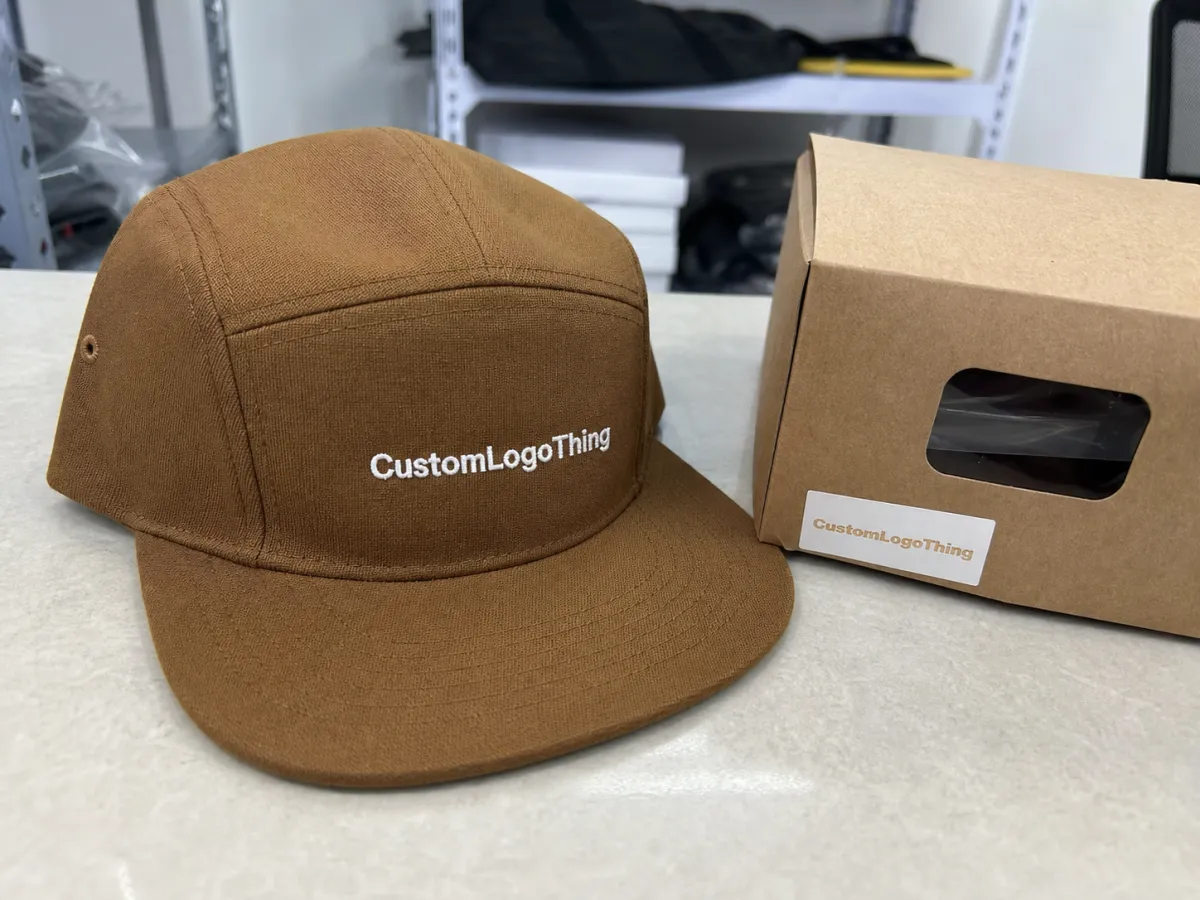
The five-panel shape works especially well for coffee branding because the front panel is uninterrupted. There is no center seam cutting through the logo, which gives a roaster mark, short wordmark, mascot, or badge room to breathe. The typical front decoration area lands around 2.25 to 2.75 inches wide, depending on cap structure and patch shape. The look is casual rather than corporate. Done well, it feels like cafe retail, not a free tradeshow hat.
Buyers should treat caps the same way they treat cups, sleeves, labels, and retail bags: define the spec, calculate landed cost, review the proof, and document the final version. Custom Logo Things can help buyers compare blanks, decoration methods, minimums, and timelines through its Wholesale Programs. Still, the strongest orders start before quoting begins, with a clear answer to a less glamorous question: are these caps for staff, resale, events, loyalty rewards, or a repeatable merch program?
Product Details Buyers Should Confirm Before Ordering Cafe Caps
A five-panel cap is built from one front panel, two side panels, and two back panels. That front panel is the reason cafe buyers keep returning to the format. It gives a cleaner stage for artwork than a six-panel cap with a seam running straight through the center.
Fabric changes the entire retail signal. Cotton twill is the dependable option: soft, familiar, and easy to wear daily. Canvas feels sturdier and can justify a higher shelf price if the stitching and shape are clean. Nylon gives a lightweight outdoor look, useful for cafes that sell to cyclists, hikers, runners, or weekend market customers. Corduroy can work for a limited seasonal drop, especially in espresso brown, forest, slate, cream, or washed black.
Weight and hand feel matter more than many mockups suggest. A cap that looks sharp on a screen may feel flimsy on the counter if the fabric collapses too easily or the brim lacks shape. The reverse is also true: an overly stiff crown can make an otherwise tasteful cap feel like industrial promo stock. For neighborhood coffee retail, a soft unstructured crown often has the highest try-on comfort because it feels broken in from the first wear.
Closures deserve attention. Plastic snapbacks are simple, adjustable, and cost-efficient. A metal buckle reads quieter and more premium, often better for minimalist branding. A webbing strap has a practical, workwear feel. Elastic adjusters reduce customer decision-making but may not fit as broad a range as a classic adjustable closure. If the cap will be worn by staff during long shifts, test whether the closure catches hair or creates pressure after a few hours.
Brim shape also shifts the audience. Flat brims read modern and streetwear-driven. Slightly curved brims feel more approachable for general cafe retail. A precise, monochrome, architectural brand may support a flat brim. A shop known for family brunch, commuter coffee, and neighborhood pastries may sell more units with a softer curve.
Color should start with the existing brand system, not a trend board. Strong cafe colors include espresso brown, cream, oat, slate, forest, muted rust, navy, and washed black. Pull accent colors from cup sleeves, menu boards, tile, staff aprons, or interior signage. A cap that looks connected to the shop is easier to sell than one that only looked stylish in a digital mockup.
Sample photos help, but they do not answer everything. Crown height, brim stiffness, fabric texture, and closure quality are difficult to judge from a line item. For wholesale five-panel caps for coffee shops tied to a launch, anniversary, holiday gift box, or high-volume reorder, a physical pre-production sample can prevent an expensive mismatch.
Logo Methods, Placement, and Artwork Specs for Retail-Ready Caps
Decoration is where a cap becomes merchandise or becomes clutter. Embroidery, woven patches, leatherette patches, PVC patches, screen printing, and heat transfer can all work. They do not solve the same problem.
Embroidery is strong for simple marks, initials, short text, and clean shapes. It has texture, durability, and wide customer familiarity. The trade-off is detail. Tiny serif lettering, hairline illustrations, and complex cafe scenes often fill in or distort once stitched at cap scale.
Woven patches handle fine lettering and badge-style artwork more cleanly. They are useful for cafes with illustrated logos, small founding text, or roaster-style labels. Leatherette patches can add perceived value on canvas or cotton twill, though they need the right brand tone; not every cafe mark should look like a bourbon label. PVC patches are more graphic and weather-resistant, often better for outdoor-focused or playful brands. Screen printing and heat transfer can suit lightweight nylon caps, but buyers should confirm abrasion resistance and edge durability before committing retail inventory.
| Logo method | Best use | Typical buyer note |
|---|---|---|
| Flat embroidery | Simple logos, short text, staff caps | Lower setup complexity; watch lettering under 0.25 inch |
| Woven patch | Detailed badges, roaster artwork, fine lines | Can support a higher retail price when edge finishing is clean |
| Leatherette patch | Premium cafe merch, neutral color palettes | Works best with bold marks and high-contrast engraving |
| PVC patch | Outdoor, graphic, or weather-resistant positioning | May feel too sporty for soft neighborhood cafe branding |
| Heat transfer | Nylon caps, light graphics, low-profile decoration | Confirm wash, abrasion, and edge-lift expectations |
Placement should be intentional. The centered front panel is the obvious spot for the primary mark. Side embroidery can carry a small neighborhood name, roaster line, opening year, or short phrase. Rear strap decoration is subtle and useful for brand reinforcement, but restraint matters. A cap with three competing marks can start to look like a sponsorship board.
Artwork files should be cleaned before the quote is finalized. Vector files are preferred because they scale without losing edge quality. High-resolution raster files may work for some patch methods, but only when resolution and contrast are strong enough. Pantone references, thread color targets, or clear brand color notes reduce the risk of forest green turning nearly black on production fabric.
The common failure is predictable: a logo that works on a 12-ounce cup does not automatically work on a 2.5-inch patch. Thin serif type, tan-on-cream contrast, crowded cafe illustrations, and long taglines are frequent weak points. The best cap artwork often gets simpler, not louder.
Commercial rule: if a customer cannot read the mark from three feet away, the decoration is probably too detailed for retail cap placement.
Specifications That Affect Fit, Shelf Appeal, and Reorders
A quote is only as reliable as the specification behind it. Buyers should lock the fabric, crown height, brim shape, closure type, sweatband material, eyelets, stitching color, interior label, decoration size, and packaging format before comparing prices. Otherwise, two suppliers may quote products that sound similar and arrive as completely different caps.
Most cafe cap programs use adjustable one-size-fits-most construction. That phrase hides real variation. A shallow crown can look current on one customer and feel too small on another. A stiff brim can feel premium or awkward, depending on the audience. A soft crown may sell well in a relaxed cafe but look underbuilt for a higher-price retail wall. Fit is not a footnote; it affects returns, staff adoption, and whether customers try the cap on in the first place.
Staff use brings a separate set of constraints. Breathable cotton, lighter nylon, soft sweatbands, and low-irritation closures matter during an eight-hour shift. A cap that photographs well but annoys baristas behind the bar will not become a reliable uniform piece. If staff caps and retail caps share the same design, consider whether the build is durable enough for daily wear and attractive enough for customers to pay for.
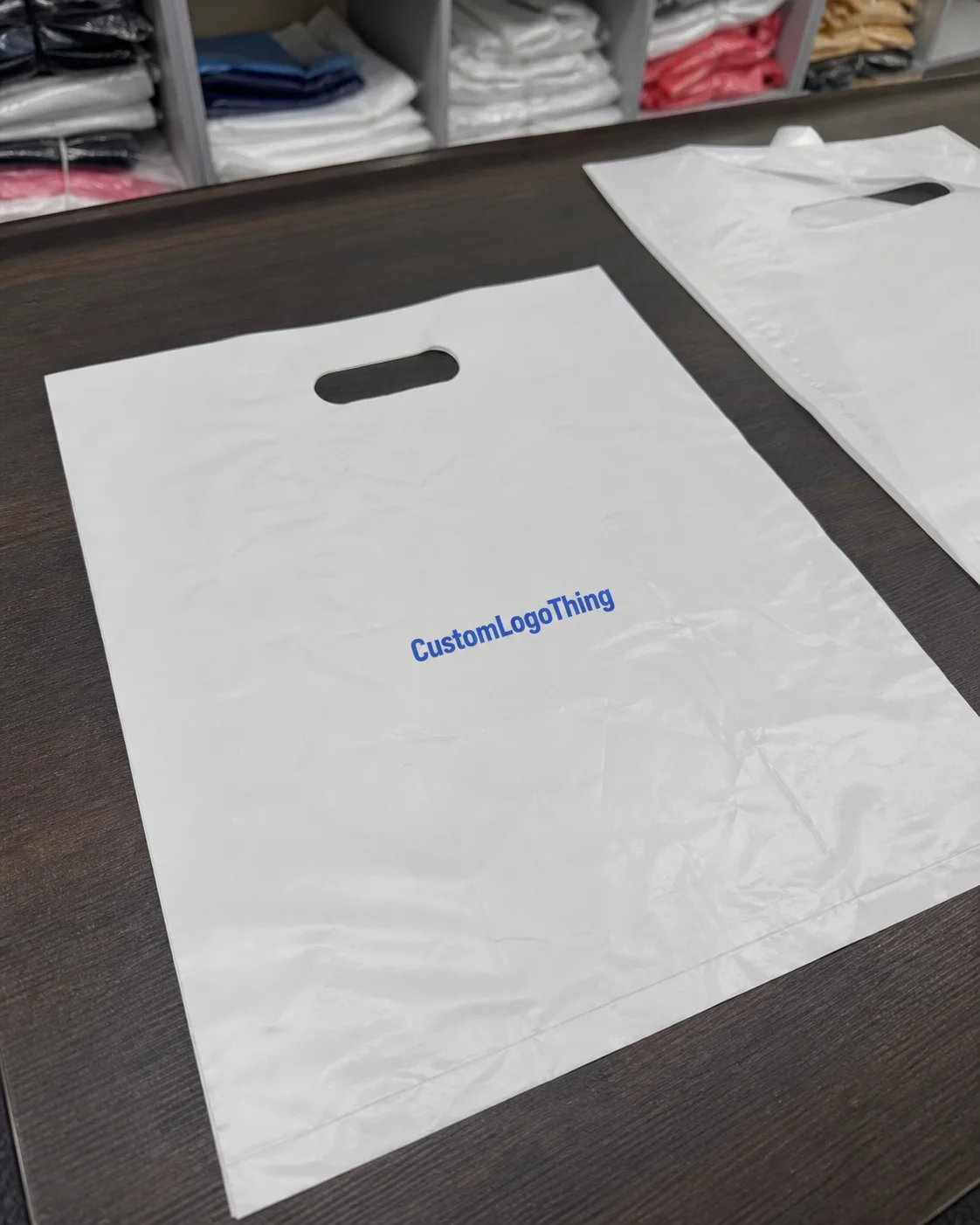
Retail presentation changes the spec again. Will the caps sit folded on a shelf, hang from a peg, stack beside beans, or ship inside gift boxes? Hang tags, barcode stickers, folded cartons, individual polybags, and carton packing all affect cost and handling. Individual polybags protect fabric and patches during shipping, but some cafes avoid them to reduce plastic. For sustainability claims or paper-based packaging decisions, buyers can review guidance from the EPA Sustainable Materials Management program.
Compliance is not glamorous. It is still part of resale merchandise. Fiber content, country of origin, and care information may be required depending on the product type and market. If FSC-certified paper hang tags are part of the presentation, confirm certification claims through the Forest Stewardship Council rather than treating a recycled-looking tag as evidence.
Reorders are where undocumented specs become expensive. A second run can drift in shade, crown depth, patch size, stitching color, or closure finish if the first order was never recorded. A simple spec sheet should include product code or blank reference, fabric, color, decoration file, decoration size, placement measurement, thread or patch colors, closure, packaging, proof date, and any approved tolerances. For wholesale five-panel caps for coffee shops, that sheet protects margin every time the cap is reordered.
Cost, Pricing, MOQ, and Unit Cost Drivers for Custom Caps
Cap pricing is not mysterious, but it is layered. Blank cap quality, decoration method, number of logo locations, order quantity, packaging, sampling, and freight all push the final unit cost. A 50-piece staff order is a different economic animal from a 300-piece retail drop or a 1,000-piece multi-location rollout.
As a practical range, simple decorated caps on available blanks may land around $8 to $16 per unit at moderate quantities, depending on decoration and packaging. Premium patches, specialty fabrics, custom labels, smaller runs, and more involved packing can move higher. Independent cafe retail pricing often falls around $24 to $38, though brand strength, neighborhood, and perceived quality drive the ceiling. Not every shop can sell a $36 cap. Some can sell out at $42 if demand already exists.
MOQ depends on the blank and decoration route. Lower minimums may be possible for embroidery on available stock. Custom fabric colors, private labels, specialty patches, and custom trim usually require higher quantities because setup and sourcing costs need to be spread across more units. A buyer asking for 24 caps, custom corduroy, two decoration locations, and individual barcode labels should expect the math to resist.
Margin planning should start with landed cost, not decoration cost alone. Include inbound freight, sampling, packaging, possible duties, and any extra labor needed to label or display the caps. If a cap lands at $13.50 and retails for $30, the gross margin may work. If rush freight pushes the landed cost to $18.75, the same shelf price becomes much tighter. The cap may still make sense, but the buyer should know whether the goal is profit, staff consistency, brand visibility, or event utility.
Hidden cost traps are predictable: oversized embroidery, too many thread colors, last-minute artwork revisions, rush shipping, individual packaging, and undocumented reorders that require fresh sampling. Buyers should request two or three quantity breaks, such as 50, 150, and 300 units, to see whether the next tier reduces unit cost enough to justify the inventory. Sometimes the better buy is obvious. Sometimes the cheaper unit cost ties up cash in slow-moving colors.
Custom Logo Things' Wholesale Programs can help structure those quantity breaks around the use case: staff uniforms, counter retail, event merchandise, loyalty rewards, or multi-location replenishment. That distinction matters. Wholesale five-panel caps for coffee shops should be priced around how they will move, not just how they appear in a product photo.
Production Steps, Lead Time, and Timeline Risks to Plan Around
A typical cap order moves through quote, artwork review, digital proof, sample approval if needed, bulk production, quality control, packing, freight, and delivery. Skip a step and the risk does not disappear. It usually moves to the calendar, the shelf, or the buyer's margin.
Lead time depends on decoration method, blank availability, production queue, proof approval speed, and whether the order uses in-stock caps or custom components. Simple embroidery on available blanks is the most realistic path for tighter schedules. A custom patch on a custom color cap with special packaging takes longer because more materials, suppliers, and approvals are involved.
The largest timeline risk is often not production. It is delayed artwork approval. A one-day pause on a proof can shift decoration, packing, and ship dates because production slots are scheduled in sequence. If a cafe opening, seasonal drink launch, anniversary event, or holiday gift box has a fixed date, plan backward from the required in-hand date, not the preferred ship date.
Typical commercial orders often need 12 to 20 business days after proof approval for simpler decoration, with longer timelines for sampling, custom materials, or complex kitting. That is a planning range, not a guarantee. Freight, order size, holidays, and factory capacity can change the calendar. The quote should state whether the production clock starts after payment, artwork approval, or pre-production sample sign-off.
Rush orders can work under narrow conditions: available blank cap, simple logo, fast buyer approval, no specialty packaging, and no custom trim. Add variables and the rush window gets fragile. The buyer may save time by reducing the spec rather than asking production to compress too many steps.
Quality Checks That Separate Sellable Merch from Giveaways
There is a sharp difference between promotional caps and merchandise-grade caps. Customers paying retail notice fit, stitching, brim feel, logo alignment, and packaging within seconds. A cap gets little forgiveness at the counter because the customer can pick it up, turn it over, and judge it before buying.
Inspection should cover centered decoration, clean thread trimming, consistent patch placement, secure closures, smooth seams, accurate color matching, and carton packing that prevents crushed brims. Patch placement tolerance should be defined before production. Thread colors should be approved against the cap fabric, not only against a screen image. For embroidery, buyers should watch density, puckering, loose threads, and whether small negative spaces remain open.
A poorly made cap does more than fail as merchandise. It makes the cafe's design standards look careless. Coffee buyers understand quality control instinctively. No serious shop would serve espresso that varies wildly from shot to shot. The same logic applies to retail caps: crooked patches, mismatched fabric lots, and distorted logos tell customers the shop was less careful than usual.
Standards can help buyers ask better questions. For shipping and handling, the International Safe Transit Association provides test procedures used across packaging and distribution; buyers with larger or multi-location orders can review ISTA resources when carton durability and transit damage become concerns. For most cafe orders, the practical version is direct: pack caps so brims do not arrive flattened, then inspect before they go on the shelf.
Custom Logo Things supports professional buying with clear proofs, production notes, quantity checks, and decoration recommendations based on intended retail price. A $15 staff cap and a $34 retail cap should not be built from the same assumptions. Buyers should define acceptable tolerances for patch position, thread shade, fabric variation, and packaging before bulk production begins.
Next Steps to Build a Quote-Ready Cap Order
A quote-ready order is faster to price and easier to produce. Start with the cap style, target quantity, preferred fabric, cap color, logo method, logo location, delivery deadline, and whether the caps are for resale, staff use, events, or loyalty rewards. Those details shape the recommendation before the first proof is made.
- Cap style: five-panel, unstructured, flat or slightly curved brim.
- Fabric: cotton twill, canvas, nylon, corduroy, or another approved material.
- Quantity: request a ladder such as 50, 150, and 300 pieces.
- Decoration: embroidery, woven patch, leatherette patch, PVC patch, print, or transfer.
- Packaging: bulk packed, individual polybags, hang tags, barcode stickers, or gift-box ready.
- Deadline: required in-hand date, not only preferred ship date.
Send current brand assets, photos of existing merchandise, desired retail price, and packaging requirements early. A cafe trying to retail caps at $32 needs a different build than a shop ordering 60 staff hats for baristas. The target price tells the supplier whether to prioritize premium trim, faster production, lower unit cost, or a measured compromise.
Color selection should come from evidence. Check top-selling mugs, best-performing apparel, menu board colors, sleeve colors, and social photos where customers already engage with the brand. A cap should feel like part of the cafe system, not an isolated object borrowed from a trend forecast.
For buyers comparing wholesale five-panel caps for coffee shops, the most useful request includes artwork, quantity, deadline, cap color, decoration preference, retail use, and packaging notes. Review the proof carefully. Document the final spec. If the cap sells, the reorder should be a controlled repeat, not a new project pretending to be the old one.
FAQ
What is the typical MOQ for custom five-panel caps for coffee shops?
MOQ depends on the blank cap, decoration method, and customization level. Simple embroidery on available blanks usually allows lower quantities than custom fabrics, private labels, or specialty patches. Coffee shops should request multiple quantity breaks because the unit cost may improve noticeably between a small staff order and a retail merch quantity.
Which logo method is best for wholesale cafe caps?
Embroidery works well for simple logos, initials, and short text. Woven or leatherette patches are better for detailed cafe badges, illustrations, or premium retail positioning. The best method depends on logo complexity, cap fabric, target retail price, and whether the cap needs to feel like merchandise or staff uniform apparel.
How long does it take to produce wholesale five-panel hats for a coffee shop?
Timeline varies based on proof approval, blank availability, decoration method, sampling needs, and freight. Simpler orders may fit a 12 to 20 business day production window after proof approval, while custom materials or special packaging can take longer. Orders tied to cafe openings, seasonal launches, or holiday gift boxes should be planned backward from the required in-hand date.
Can coffee shops reorder the same five-panel caps later?
Yes, but accurate reorders depend on documented specifications such as cap style, fabric, color, thread or patch colors, logo size, placement, closure, and packaging. Buyers should keep the approved proof and final spec sheet to reduce mismatch risk on later runs.
What details are needed to quote wholesale five-panel caps for coffee shops?
A quote should include estimated quantity, cap color, fabric preference, logo file, decoration method, logo placement, delivery deadline, and whether the caps are for retail sale, staff uniforms, or event merchandise. Packaging requests, hang tags, barcode labels, and shipping destinations should be included early because they can affect unit cost and timeline.