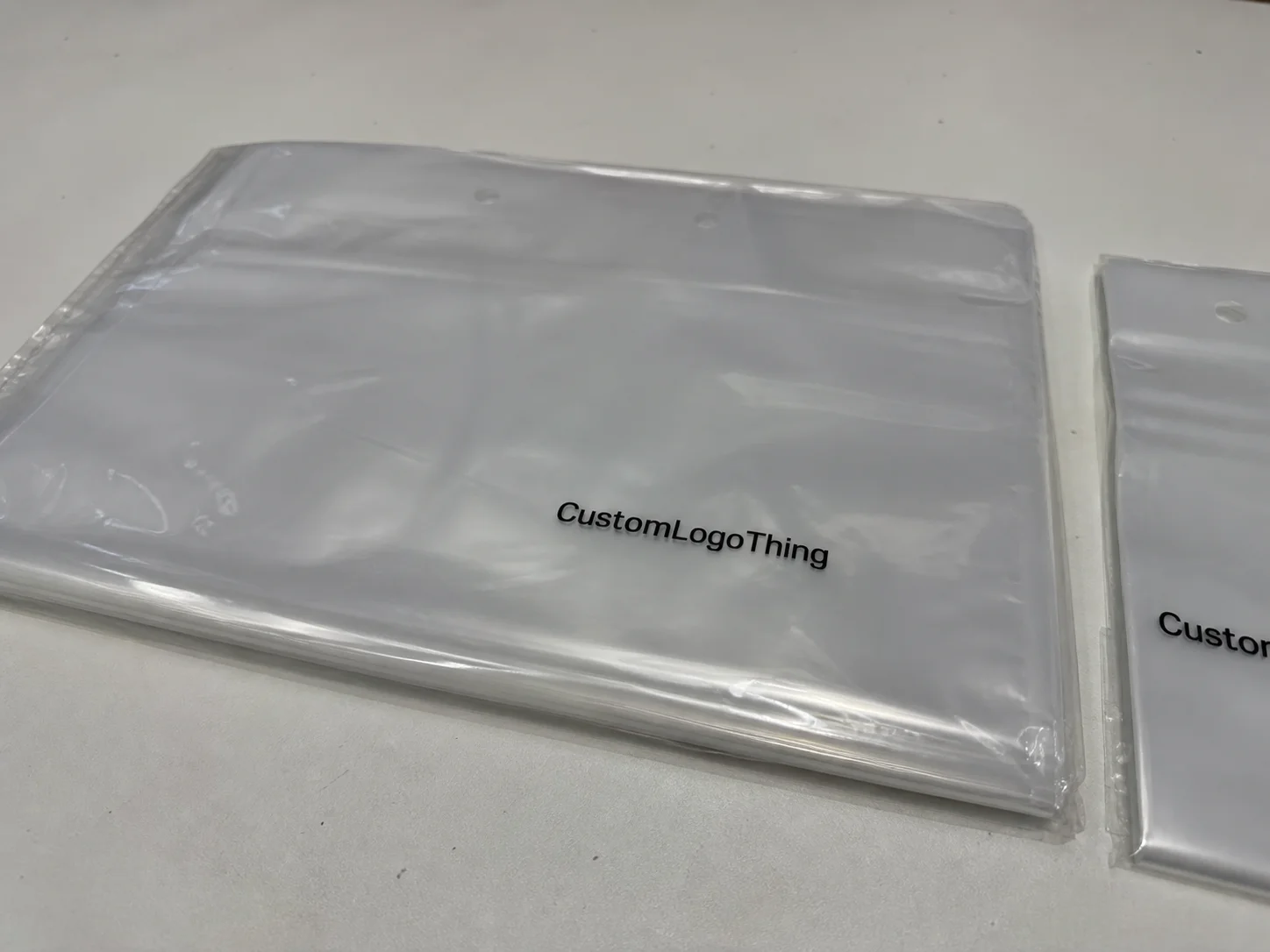
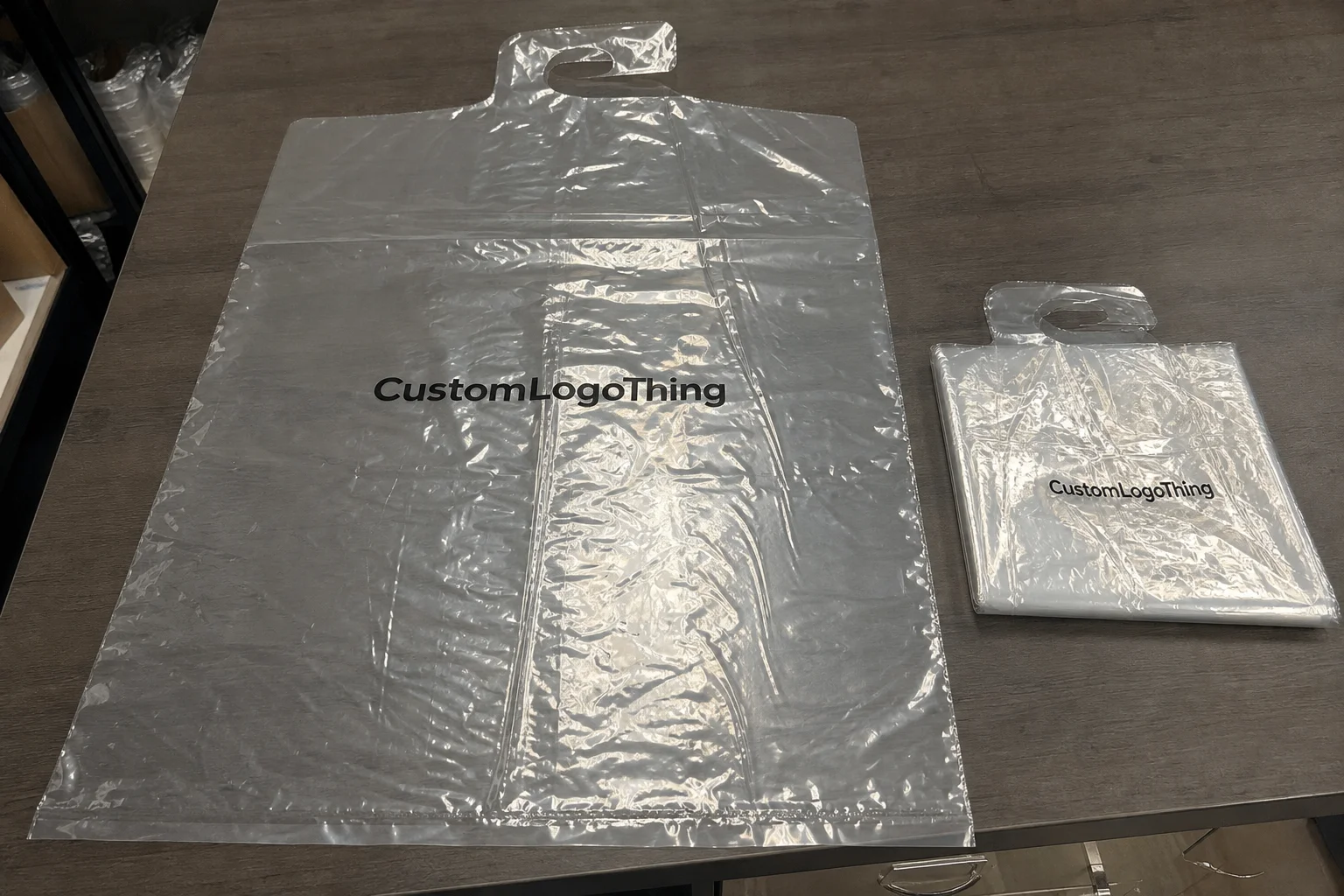
A bag seems simple until the order shows up wrong. Then the details matter: film that feels too thin, a logo too close to the handle cutout, a boxed item that barely fits, or case packs that are awkward for staff. That is why customized plastic bags for business need clear specifications before artwork approval.
The best approach is practical: choose for performance first, then design around the real bag structure. Good graphics cannot fix weak seals, poor fit, or the wrong material.
What Customized Plastic Bags Really Do for a Business

Custom bags serve three functions: carry the product, protect presentation on the way out, and keep the brand visible after the sale. For retail stores, gift shops, takeout counters, trade shows, and event programs, that last touchpoint can matter more than the unit price suggests.
Common formats solve different handling needs:
- Die-cut handle bags for lightweight retail items, brochures, and event handouts
- Loop handle bags for apparel, boutiques, and heavier contents that need a more substantial feel
- Zip-style bags for kits, samples, spare parts, and reusable pack-ins
- Gusseted bags for boxed or bulkier items that need expansion
- Header bags for hanging retail display
- Merchandising bags for general over-the-counter packaging
The style should match both the product and how the customer will carry it. A 2.0 to 2.5 mil LDPE die-cut bag can be enough for folded apparel, brochures, or light accessories. A 3.0 mil loop handle bag usually feels stronger in hand and handles repeat carrying better. Resealable bags make more sense for organized kits or items opened more than once.
Printing also changes how the bag is perceived. A one-color logo on white or clear film is usually the most economical option. Frosted film with two-color branding can look more premium, but contrast and fine detail become harder to manage. If the product has sharp corners, concentrated weight, glass, or breakage risk, choose the structure around those realities instead of around appearance.
Working rule: choose the bag as a load-bearing package first and a branding surface second.
How the Manufacturing Process Shapes Print Quality
Print quality is shaped by more than the artwork file. Resin choice, film extrusion, surface treatment, printing method, bag conversion, sealing, and inspection all affect the finished result.
Most custom retail bags are made from polyethylene, usually LDPE or HDPE. LDPE is softer and more flexible, often preferred when clarity or a smoother feel matters. HDPE feels crisper and is common in lightweight carry bags. Thickness, measured in mils, affects strength, stiffness, opacity, and how ink appears on the film.
Buyers usually compare three print methods:
- Flexographic printing: common and cost-effective for medium and larger runs with simple graphics
- Gravure printing: stronger color consistency and image control on large programs, but higher setup cost
- Digital printing: useful for shorter runs, versioning, or proofing, though not always the best unit-cost option at volume
Material and print process interact. Softer film can shift slightly during conversion, which matters for tight registration and fine lines. Heavy ink coverage on thinner film may scuff more easily. Areas near side welds, bottom seals, gussets, or handle cutouts are not fully usable print space even if the flat dimensions suggest otherwise.
That is why prepress review matters. A proof should confirm logo placement, safe margins, seam interference, text size, orientation, and any Pantone target. If artwork crosses a fold line or sits too close to a weld, the bag can look off-center or hard to read once produced.
For general packaging education, the Institute of Packaging Professionals is a useful reference. If the bags are part of a larger fulfillment program, transport testing concepts from ISTA can help set realistic durability expectations.
Cost, Pricing, and MOQ Factors Buyers Should Compare
Bag pricing is driven mainly by material, size, film thickness, print colors, order quantity, and freight. Add-ons such as loop handles, reinforced patches, frosted film, bottom gussets, or larger print coverage increase cost quickly.
Many quote comparisons fail because suppliers are not pricing the same construction. A 1.5 mil HDPE bag and a 2.5 mil LDPE bag may both be described as custom retail bags, but they will not perform or price the same way.
| Specification Factor | Lower-Cost Option | Higher-Cost Option | Typical Cost Effect |
|---|---|---|---|
| Material | Standard HDPE | LDPE or frosted specialty film | LDPE often adds about 10% to 25% |
| Thickness | 1.5-2.0 mil | 2.5-4.0 mil | More resin raises unit cost steadily |
| Printing | 1 color, 1 side | 2-4 colors, 2 sides | Each added color increases setup and run cost |
| Handle Style | Die-cut | Loop handle or reinforced patch | Premium handles add conversion cost |
| Quantity | 2,500 pieces | 25,000 pieces | Higher volume usually lowers unit price |
As a rough planning range, a simple one-color die-cut bag at around 5,000 pieces may cost about $0.12 to $0.28 per bag, depending on size and gauge. A heavier loop handle version with broader print coverage may run closer to $0.30 to $0.75 per bag. Freight can shift landed cost more than buyers expect because bags are light but bulky.
MOQ is usually tied to production efficiency. Plates must be mounted, film run, colors adjusted, and bags packed in workable case quantities. That is why many custom orders begin in the low thousands, not the low hundreds.
To compare quotes fairly, standardize the request: same dimensions, same mil thickness, same resin, same print colors, same print sides, same handle style, and the same delivery terms. Otherwise, the numbers are not directly comparable.
Businesses comparing bags with other retail packaging formats can review Custom Packaging Products.
Choosing the Right Specs for Your Use Case
The right spec starts with the item going inside, not the logo. Weight matters, but shape matters just as much. A soft garment and a boxed candle may weigh about the same while stressing film and seals very differently.
For light items, 1.5 to 2.0 mil may be enough. For apparel, small boxed products, catalogs, and bundled promotional materials, many buyers move into the 2.25 to 3.0 mil range. If the bag is likely to be reused, the added gauge is often justified.
Core specifications include:
- Width and height: enough room for the product plus comfortable top clearance
- Gusset depth: needed for boxed or bulky shapes
- Handle style: die-cut, loop handle, patch handle, or no handle
- Closure type: open top, zip seal, header, or fold-over
- Finish and opacity: clear, white, frosted, tinted, matte, or glossy
- Seal strength: important for heavier or hard-edged contents
Clear film works well when product visibility helps sales. White and black films usually improve logo contrast. Frosted film gives a softer premium look, but small type and delicate linework often reproduce less sharply than on bright white film.
A useful buying habit is to test with the real product assortment. If a store sells folded apparel, glass jars, and brochure packets, one medium bag rarely fits all three well. A small family of standard sizes usually performs better and reduces waste from oversizing.
Customized Plastic Bags for Business: Process and Timeline
Most orders move through inquiry, spec review, quote, artwork submission, proofing, approval, production, inspection, packing, and shipment.
At the quoting stage, buyers should provide:
- Bag dimensions
- Preferred material or bag style
- Target thickness in mil
- Quantity
- Artwork files in vector format
- Pantone references if color matching matters
- Required delivery date
If possible, include product weight and a photo of the item in the current bag. That gives the supplier a better basis for recommendation.
For timing, a simple reorder with unchanged artwork may move in roughly 7 to 15 business days after final confirmation, assuming press time and film are available. A first-time custom order often takes 12 to 25 business days, sometimes longer, because proofing, plate preparation, and setup come first. Imported programs can take much longer once transit and customs are added.
The most common delays are incomplete artwork, unclear color expectations, dimension changes after proofing, or slow approvals. Post-production details such as case labeling, palletization, split shipments, and receiving schedules can also affect the real delivery date.
Planning buffer: add several business days beyond the quoted ship date for launches, promotions, or events.
What Should You Check Before Ordering Customized Plastic Bags for Business?
Before approval, confirm the details that affect performance, print accuracy, and landed cost:
- Material type: LDPE, HDPE, or another film structure
- Thickness: mil rating suited to product weight and desired feel
- Finished size: width, height, and gusset depth against the packed item
- Handle style: carrying method suited to the load
- Print area: usable zone after seals, folds, and handle cutouts
- Artwork format: vector files and Pantone references if needed
- Case pack and freight: how the order will be packed, shipped, and received
Ask what the supplier inspects during quality control. A solid program usually checks dimensions, gauge tolerance, seal integrity, print registration, color consistency, and packed quantity per case.
Common Ordering Mistakes That Raise Cost or Delay Delivery
The first common mistake is approving artwork without checking the real printable area. A flat bag dimension is not the same as usable print face once welds, folds, seals, gussets, and handle cutouts are considered.
The second is vague specifications. “Medium plastic bag” or “standard thickness” is not enough. Buyers should define dimensions, resin, gauge, handle style, print colors, print sides, and quantity.
Another mistake is under-ordering a stable program. A short first run may feel safer, but if demand is predictable, repeated short runs often cost more because setup charges return each time.
Artwork files also cause delays. Low-resolution logos pulled from websites are rarely usable for print plates. Vector files such as AI, EPS, or print-ready PDF are usually preferred.
Finally, style mismatch causes many performance complaints. A thin die-cut bag may work for folded apparel and fail quickly with a boxed mug or glass bottle. Most failures start with the wrong specification, not the printing.
A simple fix is to keep a written spec sheet from the first approved run. Save dimensions, material, gauge, color references, print orientation, case pack, and approved photos so reorders stay consistent.
Expert Tips for Better Branding, Order Accuracy, and Reorders
Keep graphics simpler than you think you need. Bags wrinkle, reflect light, and move in use. A bold logo, readable type, and one or two well-chosen colors usually outperform crowded layouts.
Request a physical sample when approving a new size, finish, or handle style. Digital proofs are useful, but they do not show film feel, seal performance, or how ink reads on frosted material under store lighting.
Build a reusable record for every approved version. Include dimensions, gauge, resin type, artwork revision, color references, print side details, case pack, and photos. That makes reorders faster and more controlled.
Buyers balancing presentation with disposal concerns can review guidance from the U.S. Environmental Protection Agency. Local regulations and customer expectations vary, so requirements should be checked before ordering.
Next Steps for Ordering with Confidence
A reliable buying process starts with a short checklist: bag type, finished size, material, thickness, quantity, artwork, budget target, and delivery deadline. Without those basics, quotes are built on assumptions.
Compare at least two suppliers using the same specifications. Ask each to confirm resin grade, mil thickness, print method, usable print area, case pack, and shipping terms.
Before final approval, confirm:
- Logo placement and orientation
- Color targets or Pantone references
- One-side or two-side printing
- Handle, gusset, and seal locations
- Case pack and shipment format
Also clarify whether the job is a one-time event run or a repeat program. The best print method, inventory approach, and even material recommendation can change based on reorder frequency.
The final check is still the most practical one: test the sample with the real product. If it fits, carries properly, and presents the brand cleanly, the specification is probably sound.
FAQ
What are customized plastic bags for business usually made from?
Most are made from polyethylene film, usually LDPE or HDPE. LDPE is softer and often clearer, while HDPE is lighter and crisper. The right choice depends on product weight, desired feel, print appearance, and whether the bag needs more stretch or more stiffness.
How much do customized plastic bags for business cost per unit?
Unit cost depends on size, thickness, print colors, quantity, handle style, and freight. A simple custom die-cut bag at moderate volume may run around $0.12 to $0.28 each. Heavier or more premium styles, especially loop handle bags with larger print coverage, often run $0.30 to $0.75 each or more.
How long does production usually take?
Reorders with unchanged specs may ship in roughly 7 to 15 business days. First-time custom jobs often take 12 to 25 business days because proofing, plate preparation, and setup happen before production starts. Freight time should always be added to the manufacturing lead time.
What information should I send to get an accurate quote?
Send bag dimensions, material preference, thickness, quantity, print colors, artwork files, and your delivery deadline. If possible, include product weight and a photo of the packed item. That helps the supplier recommend the right structure instead of quoting only by appearance.
Can I reuse the same design for future orders?
Yes. If the artwork and specifications are saved properly, repeat orders are usually much simpler. Keeping a written spec sheet helps maintain size, material, handle style, and print placement across future runs.