A garment can be beautifully cut, carefully sewn, and still feel unfinished if the label looks flimsy or scratches the skin. That tiny strip of fabric often becomes the first tactile proof of quality, which is why a Damask Woven Labels Factory supplier matters more than many buyers expect.
Labels do more than carry a logo. They shape how a customer reads the brand, how the product holds up in washing, and whether the inside of a garment feels considered rather than rushed. Damask weaving sits in a useful middle ground: detailed enough for branding, soft enough for wear, and sturdy enough for repeated laundering.
Damask woven labels: what they are and why brands notice the difference
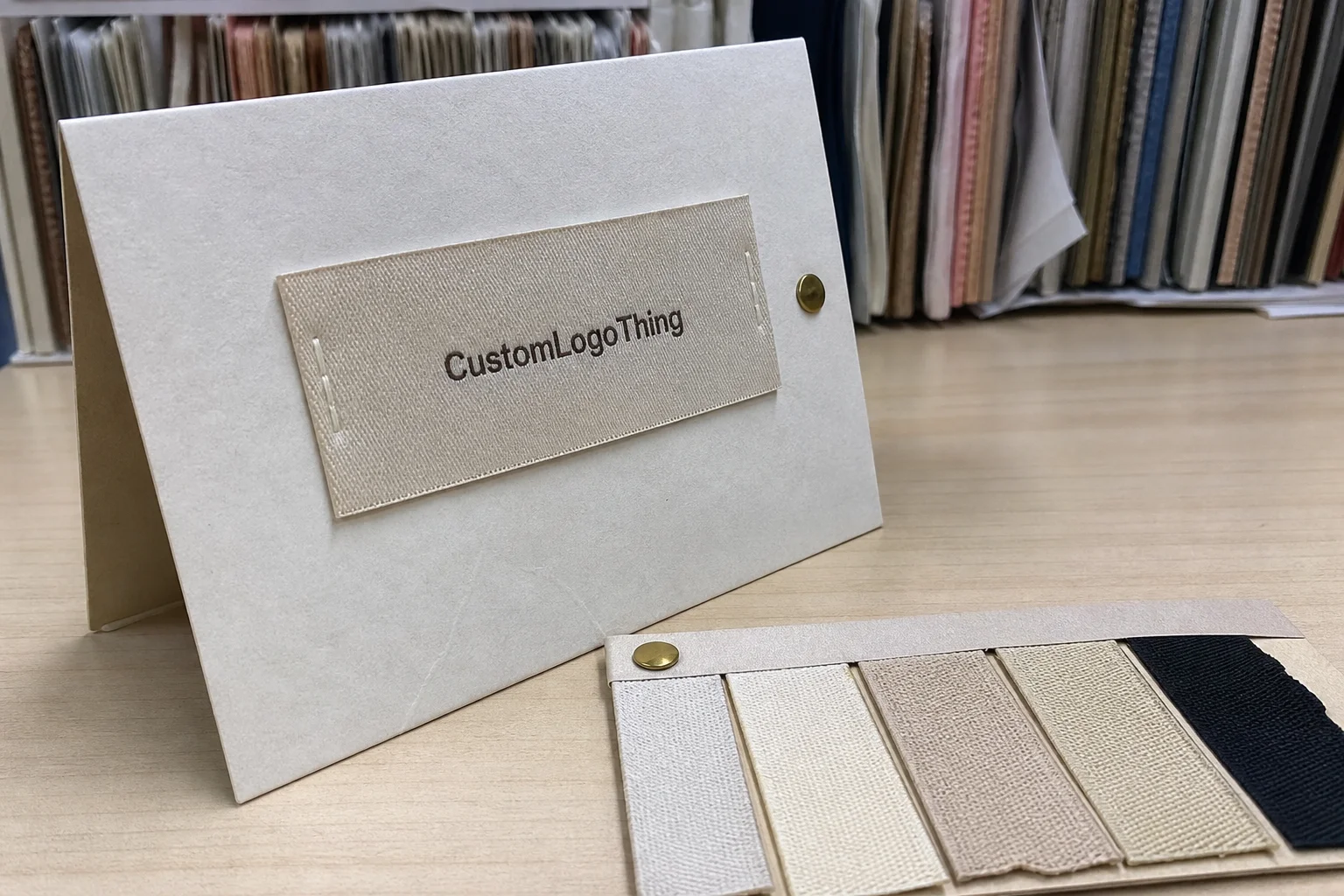
Damask woven labels are made on a loom with fine, high-density threads. That tighter construction handles small letters, icons, borders, and line art better than basic woven constructions, especially once the label is trimmed down to a neck tag or side seam piece.
Compared with satin woven labels, damask usually looks less glossy and has a crisper edge. Compared with taffeta, it tends to feel more refined and less stiff. Satin can work well when a silky surface matters most, while taffeta is often chosen for very economical applications, but damask is usually the better fit for fashion, sportswear, children’s wear, accessories, and premium basics.
Brands use damask labels in the usual places: neck labels, size tabs, side seam branding, care labels, fold-over labels, hem tags, and small accent trims on bags or hats. A good damask woven labels factory supplier is doing more than producing fabric tape. They are balancing weave density, fold style, yarn color, garment placement, and wear performance so the label still works after sewing and after washing.
Buyer reality: a label that looks fine on a screen can still fail in hand if the text is too small, the fold is wrong, or the yarn contrast disappears against the base.
End use changes the spec more than many first-time buyers expect. A hoodie neck label has different comfort demands than a care label inside a jacket lining. That is why a serious quote from a damask woven labels factory supplier should account for garment type, placement, and expected wash cycles, not just the artwork. For brands expanding their trim system, related items such as Custom Labels & Tags can help keep the overall presentation consistent.
How the weaving process affects detail, texture, and durability
The production flow is straightforward, but each step affects the final result. It usually starts with artwork preparation, then thread color matching, loom setup, weaving, cutting, folding, backing or finishing, and a final inspection before packing. If one stage is rushed, defects usually show up as fuzzy text, uneven edges, or labels that do not sit neatly once sewn into a garment.
Thread count and weave density are the main technical levers. Higher density leaves more room for small details and helps keep thin lines readable, especially if the artwork includes tiny type or a detailed emblem. Lower density can still work, but the design should be simplified so the image does not blur once the threads interlace.
Color is another place where buyer expectations and weaving reality can drift apart. Because woven labels use threads instead of ink, gradients rarely translate cleanly. Strong contrast performs better than soft tonal transitions. A black logo on off-white, or a red mark on navy, usually reads better than a design with subtle shading or hairline color blends.
Finish choices matter as well. A heat-cut edge behaves differently from a folded edge. End fold, center fold, manhattan fold, and loop fold all change how the label sits on the garment and whether the wearer feels an edge against skin. Backing options, such as sew-in, iron-on, or adhesive support, affect application speed and how well the label stays in place during production.
A reliable damask woven labels factory supplier should provide a digital mockup or weave simulation before bulk production. That proof helps check line weight, text size, fold layout, and placement before thread ever reaches the loom. Better suppliers also say plainly when tiny details are too fine for woven construction and recommend a redesign rather than quietly producing a weak result.
Cost, pricing, and MOQ factors that change your quote
Pricing comes down to a handful of practical variables, and the best buyers understand how they affect the quote. The main drivers are size, weave density, number of colors, label shape, fold style, backing type, quantity, and packaging requirements. Change one of those, and the unit price usually shifts as well.
Small runs usually cost more per piece because loom setup, thread matching, and proofing are spread across fewer labels. A run of 1,000 pieces might land around $0.10-$0.18 per unit for a simple design, while 5,000 pieces may drop closer to $0.04-$0.10 per unit depending on width, color count, and finish. Those are working ranges, not fixed prices, because artwork complexity changes the equation quickly.
MOQ rules vary by factory. Some suppliers set minimums by design, others by size, fold, or color combination. Ask whether samples or strike-offs count toward production, because some suppliers bill them separately while others credit them back on the final order. That detail can shift the real landed cost more than the headline quote suggests.
Woven labels often cost more than basic printed labels, but the perceived value is usually higher too. Printed labels can make sense for content-heavy care information or short-run promotions, while woven construction tends to win where texture, durability, and a premium brand feel matter. For apparel brands, that difference can justify the extra cents if the label is part of the buying experience rather than an afterthought.
| Option | Typical Use | Relative Cost | Durability / Feel |
|---|---|---|---|
| Damask woven label | Branding, neck labels, premium trim | Medium | Sharp detail, soft hand-feel, strong wash life |
| Satin woven label | Soft-touch branding, lining labels | Medium to medium-high | Very smooth, slightly glossier, detail depends on weave |
| Taffeta woven label | Economical care labels, simple branding | Lower | Functional, thinner, less refined detail |
| Printed label | Care instructions, short-run content | Lower | Good for text, less texture, wear depends on print method |
Ask for an itemized quote. A single line that says “1,000 labels” does not show whether the price includes folding, cutting, cartons, or sample setup. A clear quote from a damask woven labels factory supplier should separate unit cost, sample cost, packing, and freight so you can compare real totals instead of headline numbers.
Production steps and timeline: from artwork approval to shipment
The smoothest orders follow a predictable path: inquiry, specification review, artwork proof, sample or strike-off approval, mass production, finishing, quality checks, packing, and dispatch. The sequence sounds simple, but the timeline changes with design complexity, thread availability, factory workload, and how quickly approvals move back and forth.
Artwork approval is often where delays start. Tiny text, thin borders, and low-contrast color choices usually take more than one round to correct. A good supplier will point out weak areas early, which saves time later and avoids a batch that looks different from the approved artwork.
After approval, weaving begins. The loom setup can be quick for a repeat order and slower for a brand-new spec with multiple colors or special folds. Once the labels are woven, they are cut, folded, backed if needed, and checked for consistency. That final inspection matters because small shifts in tension or color can show up across a full run.
Lead time depends on order size and season, but many straightforward jobs move within a few weeks once artwork is locked. Rush orders are possible in some cases, though they usually raise cost and leave less room for revisions. A dependable damask woven labels factory supplier will give a realistic timeline instead of promising a date that only works if nothing changes.
How to compare a supplier before you place an order
The cheapest quote rarely gives the best result. A stronger comparison starts with sample quality, proofing clarity, communication speed, and consistency on repeat orders. If a supplier responds slowly before the sale, that usually gets worse once production starts.
Look closely at the proofing stage. Good suppliers explain what can and cannot be reproduced in weave form, and they say so before production begins. That saves time and avoids the common trap of approving artwork that looks good digitally but turns muddy in thread.
Ask for images of previous jobs with similar size, fold, and density. A factory that handles only broad, simple labels may not be the right fit for fine lettering or detailed emblems. A supplier with experience in your product category is more likely to understand the comfort, durability, and placement issues that matter after the label reaches the garment.
Communication habits tell you a lot. Fast, clear answers to early questions usually mean fewer surprises later. A dependable damask woven labels factory supplier should be able to explain thread colors, MOQ rules, lead times, packaging options, and revision limits without making the process feel vague or slippery.
Common mistakes that create weak labels or wasted spend
One frequent mistake is asking a woven label to do too much. Tiny text, thin strokes, dense artwork, and soft color gradients can look appealing on a screen, then fall apart in thread. Simplifying the design usually improves legibility and keeps the label from turning into an expensive blur.
Another mistake is choosing the wrong fold for the application. A center fold on a neck label, for example, behaves differently from a side seam tag. If the fold does not match the sewing plan, the label can bunch up, twist, or create an uncomfortable edge against the skin.
Some buyers also skip the sample stage to save time. That decision often costs more later if the label does not match the garment or if the text is too small to read after weaving. One approved sample can prevent a full production run from becoming dead stock.
Color mismatch is easy to overlook until the labels arrive. Thread colors do not always match screen colors, and even small shifts can make the branding look off. Clear Pantone references help, but the final result still depends on thread availability and how the colors interact inside the weave.
Expert tips for cleaner artwork, better hand-feel, and smarter reorders
Keep artwork simple enough to survive the loom. Strong logos, clear type, and clean borders usually print best in woven form. If a design relies on fine gradients or tiny decorative pieces, consider reducing the detail before sending it to production.
Use contrast with intent. Light thread on a dark base or dark thread on a light base generally reads more clearly than closely matched tones. The more contrast the artwork has, the less likely the final label is to lose detail once it is cut and folded.
Choose the hand-feel based on placement. A soft finish matters most for labels that touch the neck or inner skin, while a firmer construction may be fine for side seam tags or external branding. The same label spec can feel perfect in one spot and irritating in another.
Keep a record of every approved spec. That includes dimensions, fold style, thread colors, backing, and quantity. Reorders move faster when the supplier has a clean reference instead of trying to recreate a label from memory or from a fuzzy old photo.
For recurring programs, order a little extra if storage allows. A small buffer can reduce unit cost and protect the line when sales pick up faster than expected. Working with a damask woven labels factory supplier that keeps consistent records makes that kind of planning much easier.
Next steps for ordering with confidence
Start with the garment, not the label. Think about where the trim will sit, how often the item will be washed, and whether the label needs to feel invisible or become part of the brand experience. Once those choices are clear, the rest of the spec becomes much easier to lock down.
Send suppliers the same information each time: artwork, size, fold, quantity, placement, backing, and target timeline. Clear inputs produce cleaner quotes and make supplier comparisons far more useful. If one quote leaves out setup, packing, or freight, ask for a revised version before you compare prices.
Approvals matter. A neat proof saves money later, and a rushed yes can turn into a full batch of labels that miss the mark. A thoughtful damask woven labels factory supplier will welcome a careful review because it reduces rework for both sides.
If you are ordering for the first time, keep the run small enough to test the market, then scale once the fit and feel are confirmed. That approach lowers risk and gives you real feedback from finished garments instead of assumptions from a screen.
Frequently asked questions
What makes damask woven labels different from other woven labels?
Damask labels use a tighter weave with finer threads, which helps capture small details more cleanly and usually gives the label a softer, more refined finish.
Are damask woven labels suitable for high-wash garments?
Yes. They are built for durability and usually hold up well through repeated washing when the thread selection and backing are matched to the garment.
Can damask woven labels show gradients or photo-like images?
Not well. Woven construction works best with solid shapes, clear text, and strong contrast rather than soft gradients or highly detailed imagery.
What information should I send to get an accurate quote?
Artwork, size, fold style, quantity, color count, backing preference, placement, and target delivery date will give a supplier enough detail to price the job properly.
Why does my sample look different from the digital design?
Thread and weave structure change how color, line thickness, and spacing appear. A digital proof is a guide, but the weave sample is the real test.