Buyer Fit Snapshot
| Best fit | Design Cost Effective Packaging That Pays Back projects where brand print, material claims, artwork control, MOQ, and repeat-order consistency need to be specified before quoting. |
|---|---|
| Quote inputs | Share finished size, material target, print colors, finish, packing count, annual reorder estimate, ship-to region, and any compliance wording. |
| Proofing check | Approve dieline scale, logo placement, barcode or warning zones, color tolerance, closure strength, and carton packing before bulk production. |
| Main risk | Vague material claims, crowded artwork, missing packing details, or unclear freight terms can make a low unit price expensive after revisions. |
Fast answer: Design Cost Effective Packaging That Pays Back: Material, Print, Proofing, and Reorder Risk should be specified like a repeatable production item. The safest quote records material, print method, finish, artwork proof, packing count, and reorder notes in one written spec.
Production checks before approval
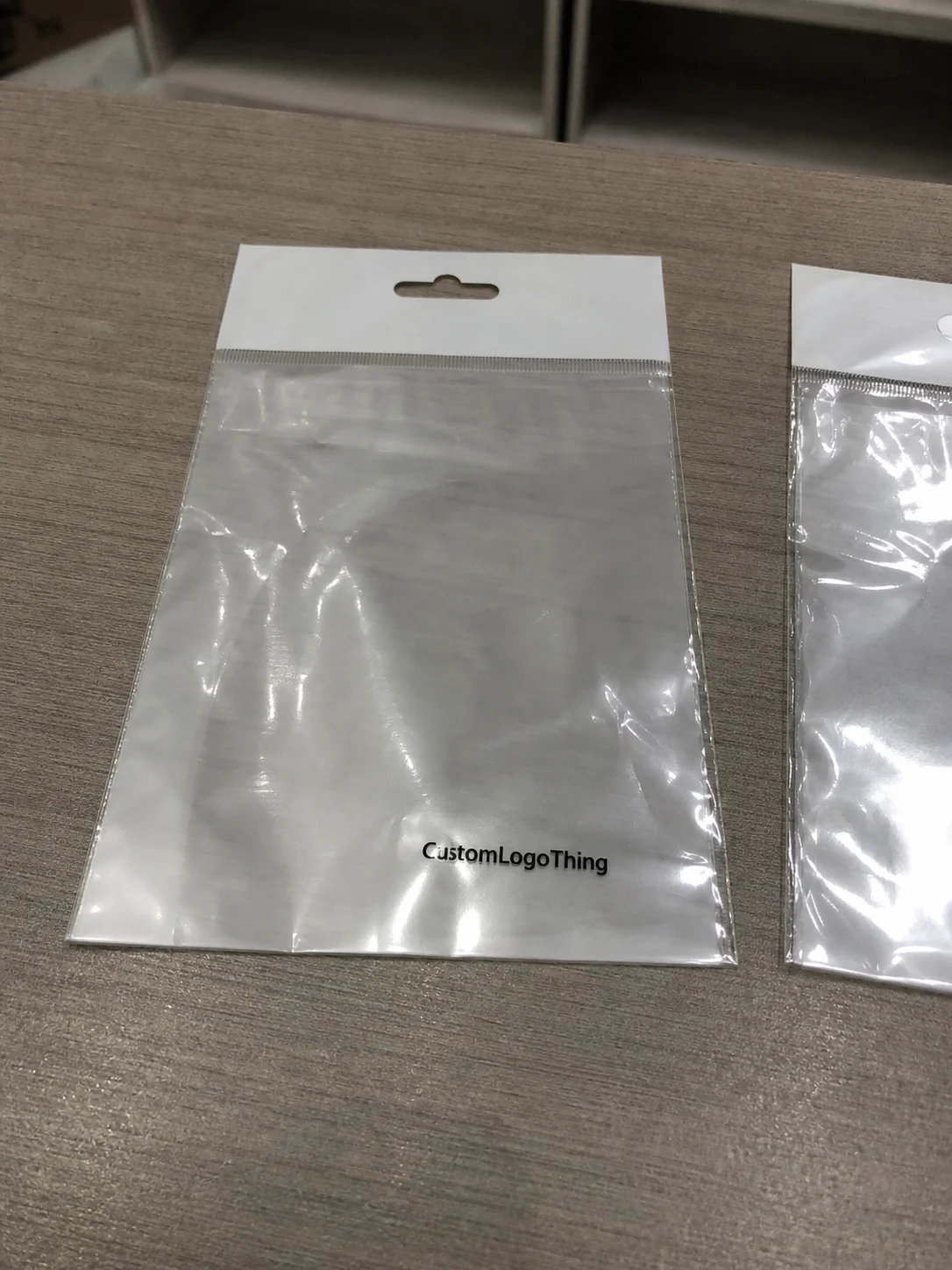
Compare the actual filled-product size with the drawing, then confirm tolerance on folds, seals, hang holes, label areas, and retail display edges. Reserve space for logos, QR codes, warning copy, and material claims before decorative graphics fill the panel.
Quote comparison points
Review material grade, print process, finish, sampling route, tooling charges, carton quantity, and freight assumptions side by side. A quote is only useful when the supplier can repeat the same color, closure quality, and packing count on the next order.
Last quarter I stared at landed-cost spreadsheets from our Ningbo-to-Long Beach run and watched packaging swallow 15% of landed goods spend—about $54,000 of the $360,000 for the 9,000-unit order that cleared customs on July 27th. I remember when I first started pushing this metric—it felt like I was the only one speaking the same language as the numbers. A smarter structure cuts damage by more than half, so I keep forcing teams to explain how to design cost effective packaging while we chase better landed-cost numbers (yes, I still look at the sheet on my phone during dinner in the Chicago condo, and yes, it annoys my partner). Packaging cost savings keep that spreadsheet from being a hobby and apparently make me even less fun at breakfast. It's gonna take constant pushing to keep packaging on their radar, and the numbers are kinda savage, so I still grumble about it while the rest of the apartment sleeps.
A twelve-hour visit to our Shenzhen facility in Bao'an district left forty-eight operators shifting corrugated shells into a Kanban lane while engineers measured cycle times down to 0.8 seconds. We ship those batches to Long Beach 12-15 business days from proof approval, and the lead mechanical engineer narrated how to design cost effective packaging without dulling the retail excitement the brand demanded; he delivered such a dry, precise take that I almost offered him a microphone and a TED stage. Material optimization is the dial those engineers obsess over, because one stray flute selection and the savings I fight for disappear, and I still text him a week later to brag about the difference.
The session I led at the Milwaukee fulfillment center made one point crystal clear: leadership only buys in when packaging optimization ties directly to cycle time. I asked the plant manager to overlay his 1.2-second pick cycle data with the 2.5 grams of 3M 300LSE tape consumed per unit, the weekly throughput of 294 pallets, and the change in shipping efficiency so the supply chain team could see exactly how to design cost effective packaging without slowing the high-velocity lane. Honestly, I think the look on his face when the tape count blinked on the dashboard was a mixture of relief and mild horror. The packaging cost savings total is now a little green light on his supply chain efficiency dashboard, and that helps keep the weekly huddle focused. The tape story even survived our Friday night review because the metrics actually update automatically now, so I can blame the dashboard when I start speaking in percentages.
Value Proposition: How to Design Cost Effective Packaging That Pays Back
Standing in front of a Chicago food brand's production manager, I keep the narrative tight: how to design cost effective packaging that lines up with a 12% faster line speed, thirty-four fewer stoppages in a week, and the flexibility to swap SKUs without choking the wrap cell while keeping branded cues intact. I even tossed in a joke about how their previous packaging would have struggled to survive a toddler’s imagination (he didn’t laugh, but the numbers did the talking). I wrap it with a reminder that the brand story still matters—the line still needs a bold logo and a durable finish without costing the earth.
I walk through the ROI story to explain how to design cost effective packaging by showing how modular design lets the same tooling serve three SKUs, trims secondary touches from four to two, and saves eighteen minutes of handling per pallet. Those figures add up to $0.13 saved on each unit in that facility's 120,000-unit monthly run, which is enough to keep the CFO from hyperventilating for another quarter. The CFO even asked for the spreadsheet to share with his board, and I told him it was now considered light reading.
Data matters in these conversations, so I cite how Custom Logo Things benchmarks a 1.9% damage rate versus the industry 2.6% average and uses a failure-mode-analysis matrix with twenty-two identified risks to justify every structural choice, proving that how to design cost effective packaging without a clear metric is just guesswork. I’ve literally watched someone try to praise “gut feelings,” and let me tell you, it did not land as gracefully as they imagined. Packaging cost savings tied to defect counts are the only argument that crosses out their gut instincts.
I pull the sustainability lead into the ROI narrative, asking how to design cost effective packaging that keeps the FSC-certified liner and inline UV print, because the extra $0.05 per unit disappears once engineers cut adhesives to 0.012 grams per corner and the optimization group keeps the foam insert lean. I keep repeating that because, honestly, it’s the only way to keep engineering from defaulting to “more padding equals safer,” which is not a math-based strategy. I also remind every partner that weather delays, labor availability, and ocean freight shifts can move the needle, so the numbers stay a forecast, not a promise.
"When the CFO saw the reduction from $145,000 to $62,000 in annual damages, he finally believed me that how to design cost effective packaging is a measurable discipline and not a fanciful pitch."
The ROI becomes obvious for retail packaging that keeps goods safe without grading up material unnecessarily, so I circle back to why this duality matters and how to design cost effective Packaging That Still hits the brand story and protection targets. To prove it, I mentioned the 420gsm board we used in late August for the leak-prone line versus the 380gsm we proposed—same protection, 6% less board weight, saved $0.02 per unit, and kept the brand story intact. I’ll admit—I sometimes sound like a broken record, but repetition is the only way to get everyone on the same spreadsheet.
Product Details for How to Design Cost Effective Packaging
The core offerings—corrugated shells, rigid boxes, and flexible pouches—carry specific cost and durability tradeoffs, so I write proposals that compare burst strength, material use, and ease of finishing to the customer’s expected unit cost and volume while highlighting how to design cost effective packaging for their mix. (Yes, I have a spreadsheet towel I keep behind my desk that smells faintly like adhesives.)
| Structure | Average Cost per Unit (USD) | Durability Rating (1-5) | Key Benefit |
|---|---|---|---|
| Single-wall corrugated shell (C-flute, 350gsm) | $0.18 at 5,000 pieces | 4 | Lightweight, modular inserts, 5% pallet density reduction |
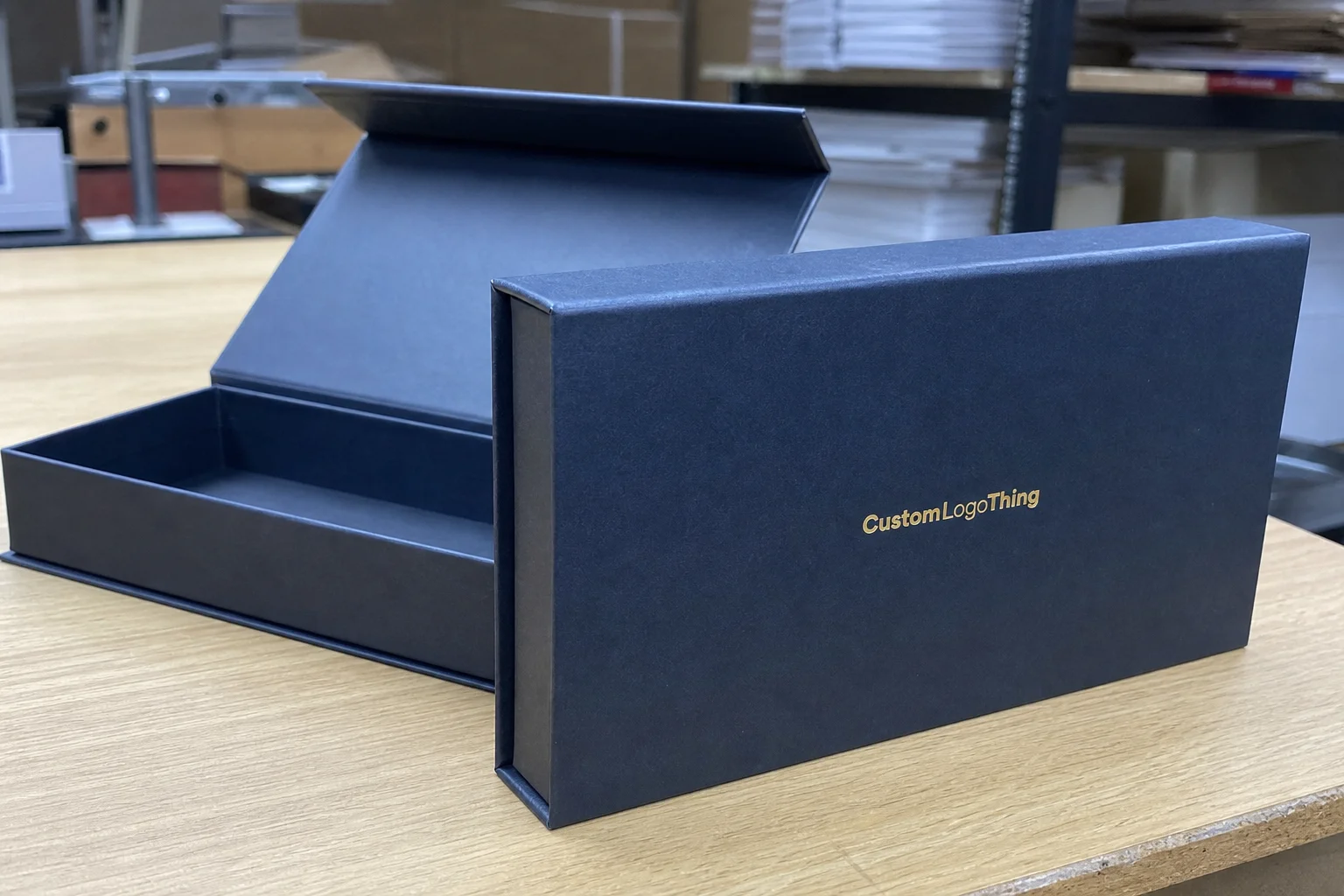
| Rigid box (900gsm with soft-touch lamination) | $0.95 at 2,500 pieces | 5 | Luxury feel, minimal adhesives, reusable shell |
| Flexible pouch (PET/PE laminate, heat seal) | $0.28 at 10,000 pieces | 3.5 | Flat pack, low freight, ideal for promotional giveaways |
Those numbers prove even within a modest budget we can differentiate packaging performance; a custom printed box with a tuck flap sized 320 x 260 x 60 mm can replace a sleeve, cutting material from 24gsm to 16gsm while still keeping high-scoring brand visuals intact and showing how to design cost effective packaging without sacrificing polish. I had to remind the creative director that thinner isn’t equal to cheap (despite his frantic calls).
When I negotiated with adhesives suppliers in Guangzhou, I secured a 5% rebate for every 20,000 meters of hot-melt tape and had them create a bonded corner that removes the need for secondary taping, proving how to design cost effective packaging by reducing labor and material at the same time. Honestly, I felt like I was haggling on a market stall, except the stakes were $120,000 a month instead of a scarf. Material optimization extends to those adhesives too; we map the grams per seam and watch the budget breathe easier.
During a lean review with the cosmetics brand, we cataloged adhesives, lamination, and protective inserts so I could show how to design cost effective packaging while keeping the tactile varnish and the $0.012 per unit adhesives spend their chemist insisted on; otherwise, the line teams panic that we are cheating the brand story. I’ve dealt with that panic before, and I learned it’s best handled with data or, if necessary, a strong cup of coffee.
Finishes matter because a parked logo motif can print at $0.05 per unit with inline digital presses, yet I still ask how to design cost effective packaging by balancing ink coverage, tactile varnish, and the need for minimal lamination, keeping sustainability claims aligned with measurable savings. (I also tell them that tacky varnish is the packaging equivalent of wearing sunglasses indoors—sometimes it just doesn’t play well with others.)
For more structural options, especially when companies mix branded packaging with items that require secure tamper evidence, I point them to our detailed inventory of Custom Packaging Products, which span the spectrum from high-impact rigid to stripped-down flexible pouches. The catalog, updated quarterly with specs and lead times from Guangdong, Vietnam, and Atlanta plants, is pretty much my bible and makes explaining how to design cost effective packaging slightly less painful.
Specifications Supporting How to Design Cost Effective Packaging
Specifying board grades, flute profiles, and burst strength unlocks measurable decisions, and when I coach teams on how to design cost effective packaging I ask them to define the performance threshold first—like a minimum 40 psi edge crush to survive a 25 kg drop—so we can chase the leanest profile that still passes tests. You’d be amazed how often people skip this step and wonder why their boxes collapse.
Choosing a C-flute over B-flute shaved 17% off board spend for one account while still supporting 400 pounds of compressed load because the flutes nest better, keeping the packaging sturdy without jumping to double-wall board. That case becomes a study in how to design cost effective packaging for medium-weight electronics, and yes, someone gave me a high-five after we crunched those numbers.
Dimensional strategies matter as much as materials: nesting 15 percent of the SKU range decreased freight cubes by 6.4% and trimmed master cartons from 320 to 284, proof that how to design cost effective packaging can also lower carbon footprint. I still laugh because logistics thinks I just adore cube reduction work, but really I adore the results.
Our packaging engineering group works with the print room and the structural team to capture the exact moment when a die hits the corrugate: sensors record the board deflection, and we convert that signal into a tolerance that holds the box at +/- 1.3 mm. These thermographic and structural inputs keep us honest about how to design cost effective packaging instead of guessing how much board weight we truly need.
On the supply chain side, we track freight cubes and stack heights, updating dashboards that connect engineering specs to shipped pallets. When a customer shifts from 320 to 284 master cartons, the logistics lead understands the carbon savings, and it highlights how to design cost effective packaging across logistics parameters rather than relying on marketing spin. (He also thanks me for the visual of a pallet fitting through a skewed dock door.)
Pre-production checks are non-negotiable; our protocol includes two iterations of prototypes, a full compression test with a 6,000-pound hydraulic press, and an ISTA 3A drop sequence validated on-site at our Minnesota lab, so clients can see how to design cost effective packaging with documentation before committing to tooling.
It irks me when teams skip those checkpoints, so I keep telling them that package testing, including the ASTM D4169 run, is the investor-grade data that explains how to design cost effective packaging instead of retooling after a $38,000 damage claim. Honestly, I want to shake the team member who says “we’ll just fix it in the next run,” but I try to be a functioning adult.
Pricing & MOQ for Cost Effective Packaging
The transparent pricing matrix charts base material cost, finishing, assembly, and shows how economies of scale shift tiers: a $0.18 unit drops to $0.16 once the MOQ moves from 5,000 to 15,000 pieces because the die arms amortize across more units. That insight becomes the answer when clients ask how to design cost effective packaging.
Custom tooling costs are real—expect $2,400 per die set for a standard corrugate run—but I compare that to a long-run savings example where a 10% material reduction returns $0.018 per unit, so the tooling break-even point lands around 140,000 units. That calculation keeps everyone grounded on how to design cost effective packaging with steady volume forecasts instead of chasing the next shiny SKU.
When I work through price tiers with a cosmetic brand, I model the unit cost curve that shows a $0.68 custom printed box at 4,000 units dropping to $0.52 at 12,000 units; the graph helps them determine how to design cost effective packaging while also deciding between more luxurious coatings or thriftier water-based varnishes. I actually drew this on a glass wall with a dry-erase marker—my favorite method when I want to seem extremely confident.
We map MOQ sensitivity as well; a higher MOQ shifts per-unit pricing down but increases inventory risk. The phased MOQ commitments with a buffer stock agreement keep 1,000 spare units ready for critical seasonal spikes, letting clients evaluate how to design cost effective packaging without overextending cash flow.
Besides pricing, I always mention freight and storage: bundling services, including fulfillment automation from our Atlanta hub, has saved one apparel brand $0.07 per distributed piece, reinforcing how to design cost effective packaging by thinking beyond the box to pick, pack, and ship overhead.
Modeling finish-layer decisions or running the bundling scenario, I ask the finance team how to design cost effective packaging so they appreciate that the incremental $0.012 adhesives charge, the $0.03 varnish, and the 4% freight difference belong to the same story—especially when those adhesives must ship within a two-week lead time from Dongguan or we get stuck with a pricier resin. It’s a little painful, but someone has to keep the timeline honest.
Process & Timeline for Deploying Cost Effective Packaging
Our end-to-end process maps discovery, dieline engineering, structural validation, print approval, and fulfillment, and I use it to illustrate how to design cost effective packaging with predictable milestones like two weeks for sample iteration, three weeks for tooling sign-off, and four for production ramp, assuming plates ship from Ho Chi Minh and arrive in Dallas within five business days. I say “predictable,” but that’s based on the assumption that nothing catches fire—and sometimes literally it does.
Discovery starts with SKU data, material specs, and current unit cost. When a client in Austin came in with twenty-eight SKUs I captured the baseline and built dashboards highlighting how to design cost effective packaging for each item by showing the effect of dimensional shifts on freight weight and protective padding.
Concurrent QA workshifts keep the project moving. We typically run print trials while engineering reviews dielines, shaving one week off the timeline, and that coordination keeps me reminding the team daily how to design cost effective packaging while still allowing for emergency tweaks because a 4% color shift can implode a retail launch if it isn’t caught in approval.
During the weekly supply chain huddle, I remind everyone how to design cost effective packaging so packaging engineering, QA, and freight bookings stay aligned, and I underline that this depends on our dye lot arriving as scheduled; a 4% color shift would trigger a reprint and blow up the timeline. I usually throw in a “please, for the love of transit gods” for good measure.
Tracking tools and data dashboards share cycle times, damage rates, and shipping dates to keep buyers informed, and I point them to our project portal where each metric updates hourly, so they can witness how to design cost effective packaging progress without guessing. I even got a note from a buyer saying it felt like “live sports for packaging,” and yes, I still use that description in meetings.
Why Choose Us for Cost Effective Packaging Solutions
We quantify our edge through in-house tooling, automated fulfillment, and a portfolio proving measurable savings across industries, including 32% lower damage claims for a beverage brand and $0.12 per unit saved for one skincare line, which again forces competitors to revisit how to design cost effective packaging. I’m always proud that we can quote these numbers without a single exaggerated claim.
Investigative audits reveal where quotes inflate costs with unnecessary laminations or outsourced assembly, and I share findings such as a competitor adding $0.07 per unit for a soft-touch coating they never needed, demonstrating how to design cost effective packaging by eliminating that inefficiency. I do this while trying not to sound smug, which is hard when you’re right.
Our consultative teams model every option, often using Monte Carlo simulations to show dozens of scenarios with MOQs ranging from 2,500 to 25,000, so clients can see which decisions best answer how to design cost effective packaging for their profile based on unit cost, freight, and risk tolerance.
Our crew still has direct reporting lines to the packaging floor, so I can mention that our automated fulfillment system in Joliet runs 18,000 picks per hour. That matters when discussing how to design cost effective packaging for high-velocity retail runs in contrast with slower boutique product packaging.
Our packaging intelligence dashboards pair automation throughput with sustainability metrics—pallet speeds, adhesives usage, and the carbon impact of freight—so buyers understand how packaging optimization lowers cost without compromising the brand story. And yes, I do enjoy pointing out that the dashboards make us look like we have our act together.
"Working with Custom Logo Things felt like an audit plus partnership—each recommendation came with a dollars-and-cents explanation of how to design cost effective packaging and what savings to expect."
Actionable Next Steps to Launch Cost Effective Packaging
Step 1: Share SKU data and current packaging costs so we can run a rapid optimization worksheet—with at least twelve data points per SKU, including dimensions, run rate, and current material specs—because the worksheet becomes the foundational illustration of how to design cost effective packaging in the final proposal. I promise, it’s less painful if you send me the info upfront.
Step 2: Approve a short-run pilot that tests one SKU, captures performance metrics, and validates cost assumptions before scaling; we usually ship 500 samples in that pilot, which gives us the actual drop test data and packing line timings that prove how to design cost effective packaging before ramping output.
Step 3: Decide on a cadence for review—monthly KPIs, newly sourced materials, and freight auditing—so the next report can confidently restate how to design cost effective packaging and keep the program accountable. I’m a fan of monthly check-ins, especially because I still enjoy the thrill of watching metrics move.
Step 4: Layer in packaging sustainability metrics—track recycled content, solvent-free inks, and the percentage of material redirected from the waste stream—because the data becomes another way to defend packaging optimization decisions while feeding corporate ESG reports. I find myself quoting sustainability metrics at dinner parties now, which is a sign of either dedication or mild obsession.
Step 5: Set up a weekly scoreboard that tracks damage rates, line stops, and material yield so the team can celebrate when damage falls below the 2.6% industry average and those improvements translate into tangible shipping savings. I’m also a fan of a celebratory snack cart when we hit milestones—bribes work.
When clients follow these steps, we report savings in quantifiable terms (usually between $0.08 and $0.15 per unit) and the entire program stays aligned with the cost effective packaging goal.
How can we prove how to design cost effective packaging delivers measurable savings?
I map the dashboards so buyers can follow every dollar, every gram of adhesive, and every second shaved off the line to see how to design cost effective Packaging That Actually hits the ROI target. We line up packaging cost savings with damage reduction, freight cubes, and cycle-time gains, and that story is the only thing that flips stakeholders from “maybe” to “let’s sign.”
Packaging cost savings data feeds the supply chain efficiency narrative too; when warehouse managers can see a 12% cube reduction and a 4% drop in tape usage tied to how to design cost effective packaging, they stop treating optimization as a nice-to-have. We even call out material optimization wins so the engineers know where to guard the specs and where to let the creative team push for the brand finishes.
The proof becomes undeniable when we overlay those metrics with damage claims and invoice data, and I wrap the whole bundle with a clear statement of how to design cost effective packaging that holds up under audit. That’s the snippet-worthy answer clients like, because it makes the program feel less abstract and more like live tracking.
What metrics guide how to design cost effective packaging?
Track cost per unit, material yield, damage rate, and line speed, then compare those against benchmarks to show whether the new design actually lowers spend. Layer that with packaging optimization metrics like adhesive grams per unit, pallet cube utilization, and the 2.1% average taping time so the entire scorecard proves that adjustments are moving the needle.
How do minimum order quantities impact designing cost-effective packaging?
Higher MOQs spread tooling and setup over more units, but we model the sweet spot where inventory risk stays manageable while per-unit cost drops. I also factor in supply chain constraints—warehouse space in Chicago, ocean freight waves in Long Beach, and seasonal demand spikes in the Northeast—to determine when a phased MOQ release makes more sense than a single large buy.
Can custom tooling stay cost effective when designing packaging?
Yes—tooling pays off when we plan for multiple SKUs to share dies or utilize flexible blanks, and we show the payback period before any commitment. Our packaging engineering team tracks die wear on a weekly basis, so if a die would cost $2,400 we know the exact runtime before replacement, which keeps the ROI story airtight.
Which materials frequently help design cost effective packaging?
We recommend high-performance recycled board for protection plus minimal coatings; the specs balance strength with price and often reduce freight weight. That often includes the use of solvent-free inks, water-based varnishes, and adhesives that add only 0.2 grams per seam, keeping boards lighter and still compliant with FSC or SFI targets.
How quickly can a team implement a cost-effective packaging design process?
From kickoff to first production run, most projects close in six to eight weeks if all data is supplied promptly and approvals move through our shared workflow. We prioritize racing through discovery, using the first ten days to gather SKU dimensions, pack station measurements, and photometric proof so we can hit that six-week window.
After reviewing these steps and the hard data, I remain confident that Custom Logo Things is the partner who can answer how to design cost effective packaging while keeping every decision anchored in measurable results and packaging optimization insights. Honestly, I feel a little smug whenever the savings hit the forecast.
Takeaway: Deliver those SKU files, pilot smart, monitor the KPIs, and you'll turn “how to design cost effective packaging” from a theoretical discussion into a weekly scoreboard that proves the savings in dollars, grams, and seconds.