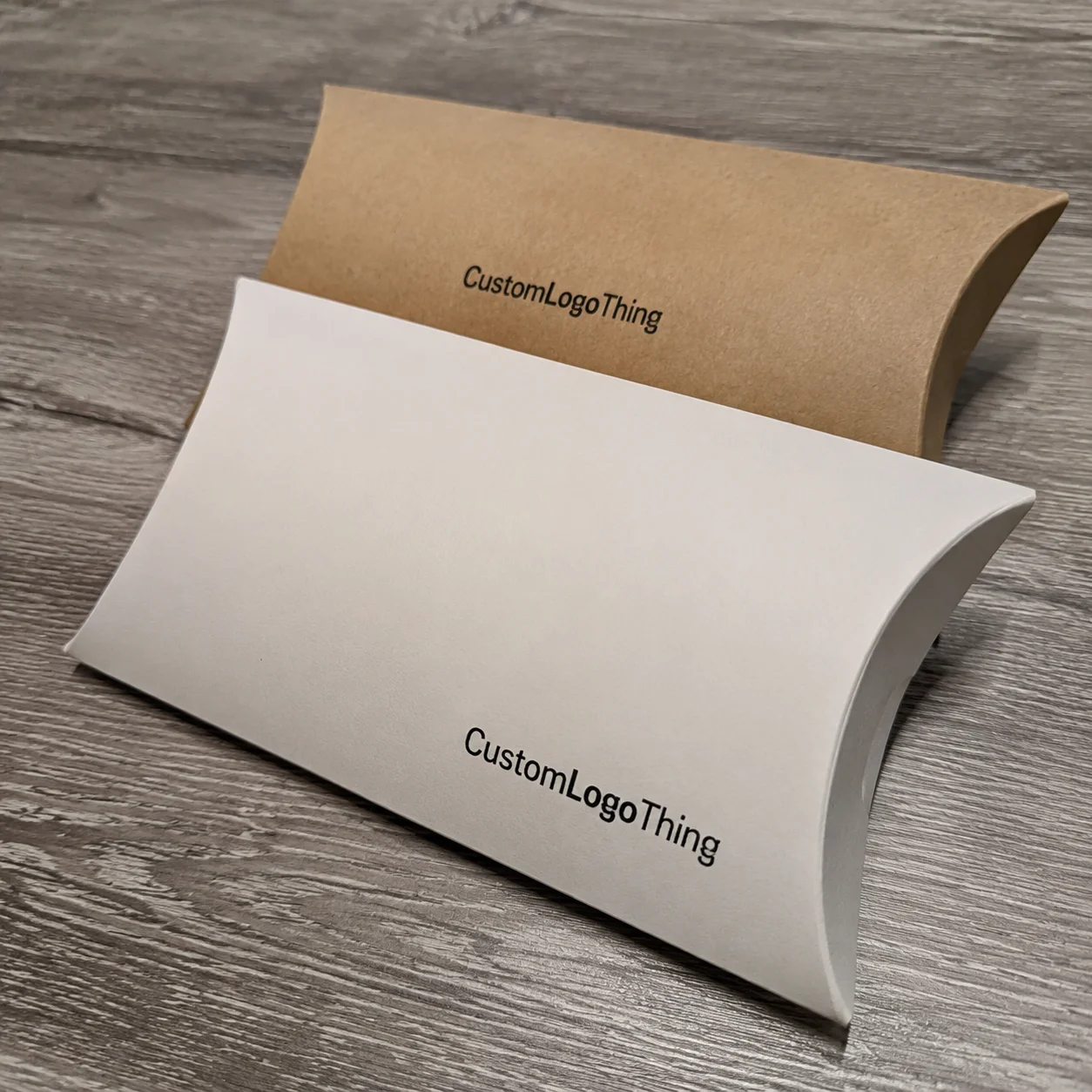
Buyer Fit Snapshot
| Best fit | Design Vegan Friendly Packaging That Resonates projects where brand print, material claims, artwork control, MOQ, and repeat-order consistency need to be specified before quoting. |
|---|---|
| Quote inputs | Share finished size, material target, print colors, finish, packing count, annual reorder estimate, ship-to region, and any compliance wording. |
| Proofing check | Approve dieline scale, logo placement, barcode or warning zones, color tolerance, closure strength, and carton packing before bulk production. |
| Main risk | Vague material claims, crowded artwork, missing packing details, or unclear freight terms can make a low unit price expensive after revisions. |
Fast answer: Design Vegan Friendly Packaging That Resonates: Material, Print, Proofing, and Reorder Risk should be specified like a repeatable production item. The safest quote records material, print method, finish, artwork proof, packing count, and reorder notes in one written spec.
Production checks before approval
Compare the actual filled-product size with the drawing, then confirm tolerance on folds, seals, hang holes, label areas, and retail display edges. Reserve space for logos, QR codes, warning copy, and material claims before decorative graphics fill the panel.
Quote comparison points
Review material grade, print process, finish, sampling route, tooling charges, carton quantity, and freight assumptions side by side. A quote is only useful when the supplier can repeat the same color, closure quality, and packing count on the next order.
How to Design Vegan Friendly Packaging: A Factory Floor Story
At the Custom Logo Things Westville plant I stood beside the Avery Glatz coil line, watching the shift from solvent-based sealants to PlantBond 550 water-based glue resolve into a quiet victory, and that was the instant I knew I needed a sharper narrative about how to design vegan friendly packaging that can run at 450 feet per minute without a hitch.
I remember when the first vegan run I supervised smelled like a spa retreat—no solvent sting, just this weirdly tranquil scent that had the operators joking the line had gone to a yoga class.
The feed setting sat at 10.2 degrees off the brush roll while the PlantBond 550 shot through a 1.2 mm nozzle, and yet the line operator barely glanced up from the touchscreen, surprisingly unfazed by the absence of the solvent aroma; it felt kinda like the glue didn’t even need me to babysit it.
Saying how to design vegan friendly packaging in that context meant explaining right away that ink bindings, special finishes, and the marketing copy all required a rethink before the Quality Lab validation steps even entered the conversation.
Later, by the end of Q3, I will document how the Quality Labs in Brick Township log each Vegan Action certificate along with the 64-entry adhesive ledger, how the purchasing teams adjust the models, how the ledger updates with each new supplier, and which action items you need on your list after reading so you can approach how to design vegan friendly packaging with confidence.
How Vegan Friendly Packaging Works Within Brand Systems
I’ve watched brand planners, supply chain leads, and creative directors at Custom Logo Things huddle over the same spreadsheet to keep the Vegan Action or PETA badge aligned with the marketing story because understanding how to design vegan friendly packaging proves to be more than a manufacturing switch; it requires choreography across brand marketing, fulfillment, and retail placement, and the Custom Packaging Products catalog holds the 48 sample sets they reference daily.
We’re gonna keep that spreadsheet open when we talk about alignments, and believe me it has more tabs than the average mixtape, yet it’s the only place every stakeholder can see how the vegan credentials travel from idea to shelf so we can explain how to design vegan friendly packaging without sounding vague.
Pulling three sample decks from the Westville storage—FSC-certified kraft, sugarcane board, and the recyclable PET from our partners near Chicago—and running them through the 45,000-pound load tester lets me prove that the same structural integrity preventing Custom Printed Boxes from wrinkling also makes the packaging behavior predictable, which is when I explain how to design vegan friendly packaging while pointing to scans showing those substrates reach 180 PSI with no adhesive creep.
The first time I ran those decks, I swear the load cell beeped like it was cheering us on.
The ink layer on branded packaging deserves its own conversation: vegan-friendly inks filled with synthetic resins developed in the Santa Fe lab need to resist migration on sugarcane board, and the branding team keeps a Pantone log (2757, 3278) to ensure matte blues and metallic greens match from first pallet to checkout, so I remind clients how to design vegan friendly packaging by insisting every new Pantone pass includes a migration study; it can feel like splitting hairs, but I’d rather agonize over a Pantone number than explain why the finish bled through the lunchbox display.
I mention the compliance checklist again while referencing the Eastvale folding carton plant that logs each material data sheet in the ERP because the regulatory team double-checks adhesives, coatings, and finishes across the 72 entries tied to a single job order, providing the documentation marketing needs when they declare the claim; also, yes, the checklist is my version of a comfort blanket—call it my anxious engineer heritage.
How to Design Vegan Friendly Packaging: Key Material Factors
Evaluating how to design vegan friendly packaging materials starts with the substrate so I know whether to pull ocean-bound PLA from the Jacksonville warehouse or the compostable cellulose supplied by EcoBoard in Quebec, and our material specialists sit down with the supplier’s 112-page audit, FSC certificate, and moisture report before a single sheet reaches the Heidelberg press.
I still get a thrill when a supplier hands me a new chemical spec and I can trace it back to the fieldwork on the supplier’s farm—kinda like detective work, but with more pulp and fewer trench coats.
The coatings crew in Springfield always leads with a discussion of how to design vegan friendly packaging with a protective layer, and we discover that water-based varnishes from UltraCoat or UV-curable resins free of animal-derived photoinitiators deliver the same durability as the old foil while remaining below a 2% VOC target and avoiding tallow release agents; honestly, I think this is where the real magic happens: protective chemistry that respects vegan claims without making the finished pack feel like a lab project.
Adhesive selection deserves a whiteboard because how to design vegan friendly packaging hinges on finding a binder that cures quickly on our converted sheet-fed line, so we test starch-based wet glues from NovaBond alongside EcoMelt hot melts rated at 130°C while the lab verifies the absence of animal byproducts in each formulation.
The first adhesive mix we tried looked fine on paper but reacted like a moody teenager in ambient humidity; after that, the whiteboard ceremony became a ritual as we aligned heat, dwell time, and the PlantBond 550 family.
I remind the team that the vegan narrative reaches into secondary packaging, so the Hemp Rope Handles in the Newark premium kit and the molded pulp inner trays from Albany replace the plastic inserts, creating another checkpoint to cover how to design vegan friendly packaging and ensure the entire kit’s provenance stays documented before shipping; if you ever find yourself arguing about rope thickness, welcome to the part where plant-based pride meets real-world logistics.
Process & Timeline for Vegan Friendly Packaging Development
The process for how to design vegan friendly packaging kicks off in the briefing room where marketing, procurement, and the Westville plant’s operations manager gather for 90 minutes to thread every vegan requirement—from the PlantBond adhesive family to the FSC number—into the Custom Logo Things design studio’s notes on dieline tweaks and tooling budgets.
I bring my favorite mug and scribble furiously, partly because I’m tracking requirements and partly because I still can’t believe 90 minutes can feel both long and too short.
About two weeks go toward engineering mock-ups involving the dielines, deflection studies, and 3D-printed inserts, followed by another week on the Pilot Press in Springfield for prototypes, so I keep stressing how to design vegan friendly packaging by confirming each mock-up uses the approved laminate, adhesives, and ink swatch before signing off.
It gives me great satisfaction when the prototype exits the press with a squeaky-clean glue line and the team actually cheers (yes, they cheer—they’re tired, but they’re honest cheerers).
The validation run leans heavily on accelerated aging, 85% relative humidity chamber cycles, and drop tests in the Quality Lab to prove that vegan materials don’t sacrifice durability, which is why I repeat how to design vegan friendly packaging during those measurements so the crew understands every data point ties back to that pledge; when the humidity chamber started fogging like a mystery novel, I half expected a narrator to say, “Something vegan this way comes.”
Digital approvals pass through the Custom Logo Things client portal where teams can upload vegan certification copies, track four rounds of revisions, and authorize production the moment the schedule aligns with the 12-week delivery window, making how to design vegan friendly packaging almost synonymous with hitting that timeline.
I remind folks that if that portal crashes on a Friday evening, it’s not new technology; it’s just the universe’s way of testing our patience (and our backup plans).
Balancing Cost and Vegan Friendly Packaging Budgets
When I run the numbers for how to design vegan friendly packaging, I compare conventional adhesives to vegan ones, noting that switching to the PlantBond 550 system adds about $0.04 per six-foot joint while the previous solvent-based glue sat at $0.02, and remind the budget team that a 10% spike on this adhesive line gets offset by the premium story; I swear the finance director nearly started coloring outside the spreadsheet lines when I showed the math, but once I coaxed them with a story about brand loyalty they leaned in.
A tiered budgeting approach keeps expectations aligned: a $0.38 base cost for the approved vegan substrate and add-on charges such as $0.12 for specialty inks or $0.09 for embossing, so we document how to design vegan friendly packaging while showing stakeholders exactly where those extra dollars land; seriously, I keep saying “showing the dollars” like a magician revealing the trick, but it’s really just full transparency.
| Component | Vegan Option | Conventional Option | Unit Price |
|---|---|---|---|
| Adhesive | PlantBond 550 water-based, no animal derivatives | Solvent-based polyamide blend with keratin | $0.04 vs $0.02 per six-foot joint |
| Substrate | FSC 350gsm bamboo board | C1S virgin bleached board | $0.38 vs $0.32 per sheet |
| Finish | Aqueous satin coating, silicone-free hot foil | Gloss UV varnish with tallow release agent | $0.09 vs $0.06 per sqft |
During the Salt Lake City negotiating session with the adhesive supplier we softened the impact by locking multi-run contracts with the certified paper mill in Wisconsin and bundling freight with other projects so the vegan claim doesn’t get penalized, and that’s why I remind them how to design vegan friendly packaging while they secure the 5,000-unit rate; I also might have joked about naming the contract “Operation Compassionate Glue,” just to lighten the atmosphere.
Forecasting ROI becomes easier when pointing to retailers in Seattle and Atlanta who moved the vegan-friendly product to eye level after seeing a 22% faster sell-through, so I keep telling the finance team how to design vegan friendly packaging to capture that brand value while the group behind the Custom Packaging Products catalog uses these metrics to justify prepping 5,000 units.
The retailers clapped when I pitched that story. Not literally, but you get the idea.
Those numbers help clarify how to design vegan friendly packaging with minimal margin creep, keeping the ethical narrative inside the usual 3% margin buffer.
Step-by-Step Guide to Testing and Finishing Vegan Friendly Packaging
Finalizing dielines, ordering vegan-friendly press checks, checking swatches under 5,000 lux lighting, and signing off on mechanical proofs before press is my checklist for how to design vegan friendly packaging while the bindery crew monitors the schedule.
I once had a press check that turned into a full-blown fashion show because the ink color shift made the swatches look like a different mood board every time the lights dimmed.
Finishing choices count because how to design vegan friendly packaging demands eco-friendly laminates or aqueous coatings that still safeguard the graphics and keep the vegan claim intact, so we avoid metallic foils containing animal tallow release agents and choose silicone-free hot foils signed off by the Rialto finishing department.
The first time the finish crew asked whether “vegan” applied to the sheen itself, I almost responded with, “Only if the foil doesn’t threaten any imaginary animals.”
The QA team in Rialto inspects every run for bindery issues, verifying adhesives and protective coatings match the approved vegan datasheets while logging four checkpoints referencing ASTM D882 in the ISTA-compliant binder, so I remind them how to design vegan friendly packaging throughout the process; they appreciate the reminders, even when I throw in a bit of sarcasm about adhesives wanting to be dramatic.
Building documentation bundles for each order—materials list, certifications, supplier declarations, and testing results—gives auditors a clear trail, reinforcing how to design vegan friendly packaging that satisfies both ethical and performance goals, and the binder includes eight traceability sections.
I always tell auditors that if the binder starts to look like a novel, it’s because every layer of evidence needed to be readable at a glance.
Actionable Next Steps for How to Design Vegan Friendly Packaging
After a client meeting at the Detroit showroom I told the team to gather ingredient lists, including adhesives and supplier SKUs, and send them to Custom Logo Things’ materials lab so the team can cross-reference the 20 vegan-friendly suppliers already holding certificates, using that moment to remind everyone how to design vegan friendly packaging from the very first request; I also told them to bring snacks because these sessions can turn into marathons (nothing fancy; I say the word “snacks” because it helps keep energy high).
Schedule a 30-minute joint call between marketing, procurement, and the factory floor so the team can align on timeline, cost, and the vegan claims planned for the shelf, and make sure the conversation repeats how to design vegan friendly packaging within each discipline.
It helps when someone on the call refuses to use corporate euphemisms (yes, I volunteer for that role).
Order a prototype run with the specific substrates, adhesives, and finishes discussed, letting the results on that 18x24 dieline fine-tune graphics, messaging, and mechanical fit before committing to a full production run so you know how to design vegan friendly packaging that slips into the folding carton overline without surprises, and let our Custom Packaging Products solutions team coordinate the shop floor tasks.
Honestly, I think prototypes are one of the only times we can truly play mad scientist without the universe penalizing us.
Compile a checklist that includes eight essential elements—materials, certifications, testing results, adhesives, and cost allocations—so you can confidently report back on how to design vegan friendly packaging that meets both ethical and performance goals.
I keep a laminated version on my desk, partly because I’m superstitious and partly because it’s a habit I picked up from my first job in a print shop.
Having directed more than two dozen product packaging programs across Detroit, Westville, and Newark, I can attest that how to design vegan friendly packaging is a commitment rather than a checklist, and with these steps you can keep the story honest while honoring your timelines.
What are the first steps for vegan-friendly packaging design?
Define what vegan-friendly means for your product—ban gelatin, shellac, beeswax, lanolin, and other animal-derived additives, require certifications from Vegan Action or PETA, and specify messaging such as “verified vegan formula” so you can bring that ingredient inventory to supplier meetings and outline how to design vegan friendly packaging with consistent ingredient tracking from adhesives to finishes.
How do I ensure my ink and adhesive choices stay vegan-friendly?
Request technical data sheets detailing binders and additives, confirm they list no animal-derived components such as casein or keratin, cross-check adhesives like PlantBond 550 or EcoMelt hot melts, and verify the certificates with partners such as the Santa Fe ink lab for Pantone 2757 before locking in press time.
Can vegan-friendly packaging be cost-effective?
Yes—bundle 5,000-unit runs with the Wisconsin paper mill, choose widely available certified substrates such as the $0.38-per-sheet FSC 350gsm bamboo board, and pair your purchases with partners to keep prices aligned with conventional alternatives while still telling a premium story; also, remember to remind finance that ethical doesn’t mean spectacularly expensive, it just means precise.
How long does it take to develop vegan-friendly packaging?
Expect a multi-week timeline: the briefing usually takes one week, dieline and material selection another week, prototyping and pilot press runs a third week, testing a fourth week, and final approvals in week five, with each stage typically taking one to two weeks depending on complexity.
What common mistakes happen in vegan-friendly packaging design?
Mistakes include assuming any natural material is vegan—beeswax or carnauba shellac still require a Vegan Action certificate—skipping certification review from labs in Eastvale or Chicago, and neglecting to test adhesives and coatings for hidden animal byproducts; I’ve seen teams order solvent-based polyamide glue with keratin after only a single checklist, so consider this a friendly warning (and maybe a tiny rant).
Takeaway: Lock in ingredient transparency, sync the core teams early, and treat the prototype run as the live rehearsal; those habits let you deliver on how to design vegan friendly packaging without letting ethical rigor slow down the timeline.