Buyer Fit Snapshot
| Best fit | Eco Friendly Packaging Wholesale for Profitable Growth projects where brand print, material claims, artwork control, MOQ, and repeat-order consistency need to be specified before quoting. |
|---|---|
| Quote inputs | Share finished size, material target, print colors, finish, packing count, annual reorder estimate, ship-to region, and any compliance wording. |
| Proofing check | Approve dieline scale, logo placement, barcode or warning zones, color tolerance, closure strength, and carton packing before bulk production. |
| Main risk | Vague material claims, crowded artwork, missing packing details, or unclear freight terms can make a low unit price expensive after revisions. |
Fast answer: Eco Friendly Packaging Wholesale for Profitable Growth should be specified like a repeatable production item. The safest quote records material, print method, finish, artwork proof, packing count, and reorder notes in one written spec.
Production checks before approval
Compare the actual filled-product size with the drawing, then confirm tolerance on folds, seals, hang holes, label areas, and retail display edges. Reserve space for logos, QR codes, warning copy, and material claims before decorative graphics fill the panel.
Quote comparison points
Review material grade, print process, finish, sampling route, tooling charges, carton quantity, and freight assumptions side by side. A quote is only useful when the supplier can repeat the same color, closure quality, and packing count on the next order.
Eco Friendly Packaging wholesale is not just a brand signal for Custom Logo Things customers; it is a procurement decision with consequences for margin, damage rates, and replenishment speed. I have sat in review meetings where a buyer saved two cents on a carton and then spent ten times that amount on rework, freight, and apologies to retail partners. A pack that tears in transit or collapses under stack load can wipe out a "cheap" quote pretty quickly. If 6-10% of units arrive weak, punctured, damp, or out of spec, the invoice price stops being the main story. The real story becomes returns, replacements, delayed launches, and the awkward math of lost shelf time.
Eco Friendly Packaging wholesale should be treated as a control point, not a decorative sustainability badge. Recycled paperboard with the right barrier performance, molded pulp inserts, and bio-based films can reduce compliance friction and improve retailer acceptance, but only if the test data is real and the specs are written tightly. A buyer choosing between two similar-looking options may find that the stronger build wins over time because reorder cycles are cleaner, line stoppages are lower, and there is less scrap at receiving. The aim is straightforward: buy eco friendly packaging wholesale that protects stock and cash flow at the same time.
A package that looks sustainable but fails in transport is not saving money. It is creating hidden cost in a very expensive place.
From a packaging buyer's point of view, the strongest results usually come from a fact-based framework. Compare material cost, conversion cost, freight density, shelf life, and replacement rate, then decide whether the proposed build actually fits the product, the route, and the retail environment. That is the difference between polite sustainability language and a package that performs under pressure. For brands also buying Custom Packaging Products or expanding through Wholesale Programs, the same rule applies: the specification has to support the supply chain, not just the artwork.
Value Proposition: Eco friendly packaging wholesale that protects stock and cash flow
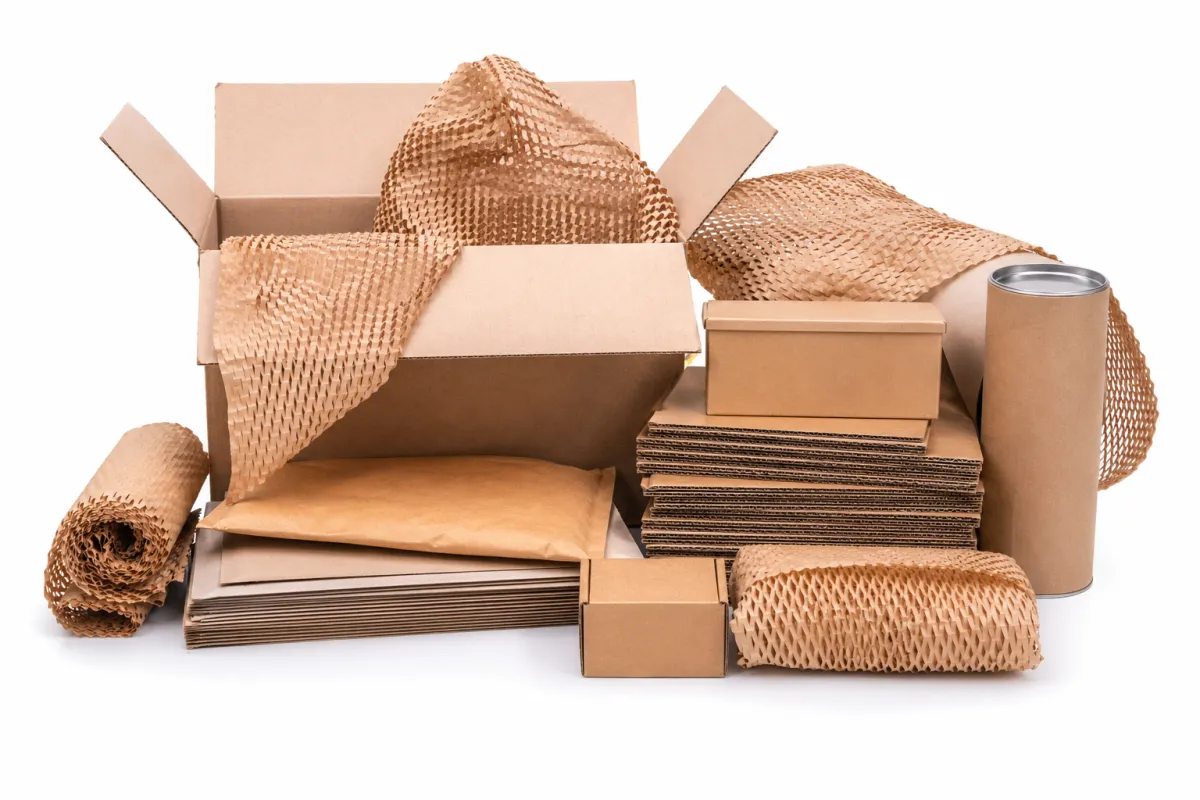
Eco Friendly Packaging wholesale works best when the package does more than signal values. It needs to protect product quality, move cleanly through the warehouse, and arrive with enough strength that the retailer does not need to babysit it. A lower-cost carton that crushes under pallet load can erase any material savings before the quarter is over. In practical buying terms, the value proposition is not "green equals good"; it is "better control over total delivered cost."
The buyer impact shows up in three places. First, fewer damages reduce chargebacks and replacement orders. Second, stable packaging means fewer stoppages on filling and packing lines. Third, a consistent spec makes procurement easier because you are not rewriting approvals every time a shipment lands. That is why Eco Friendly Packaging wholesale should be judged by shelf performance, transport survival, and reorder reliability, not by a single sustainability claim printed on a quote.
Retailers and compliance teams are asking for sharper definitions now: recycled content percentage, certified compostability where relevant, water resistance, and print durability. Vague claims invite delays. Verifiable claims move faster. If a supplier can document those points with mill certificates, test reports, and batch traceability, the wholesale program becomes easier to defend internally and easier to scale. For sustainable packaging teams, those details often become the deciding factor.
One pattern holds up across a lot of packaging programs: if two materials have similar unit economics, the one with better recovery speed often wins. Faster recovery means fewer issues in receiving, fewer reprints, and less time lost waiting on a reshipment. That is especially true for Eco Friendly Packaging wholesale orders serving e-commerce, personal care, and shelf-ready retail packaging where interruptions ripple across multiple SKUs. In other words, the package is either helping the route or making it kinda brittle.
- Look at delivered cost - include freight, storage, and waste, not just the unit quote.
- Check handling performance - compression, puncture resistance, and moisture response matter in transit.
- Ask for proof - recycled content, certification marks, and test reports should be easy to verify.
- Measure replacement cost - rework and returns can exceed the original packaging savings.
For brands comparing branded packaging options, the strongest choice is often not the cheapest or the most elaborate. It is the one that balances package branding, material efficiency, and operational reliability. That is the real advantage of Eco Friendly Packaging wholesale: it gives the buyer room to scale without taking on avoidable risk.
The most common mistake is overfocusing on the "green" story and underfocusing on how the package behaves in the real supply chain. A carton that looks good on a sample table can fail when stacked, wrapped, chilled, or exposed to humidity. A serious eco friendly packaging wholesale program does not guess. It validates.
Product Details: Eco friendly packaging wholesale options in common production families
Eco friendly packaging wholesale usually falls into a few practical production families, and each family has a different best use case. Corrugated die-cut mailers are strong for shipping and e-commerce. Paper-based pouches are useful for lightweight goods. Rigid paperboard cartons work well for retail presentation. Mono-material sleeves with water-based inks can help when the goal is reduced material complexity without losing shelf presence. The right pick depends on product weight, moisture exposure, and how much print coverage you need.
For buyers, the most useful question is not "which material is best?" It is "which structure will survive my route with the least waste?" That is where eco friendly packaging wholesale becomes technical. You want to verify burst strength, edge crush, moisture resistance, print opacity, and how the package stacks in your warehouse. If a SKU sits in a humid room, recycled fiber can still be the right answer, but only if the board grade and coating are chosen with that environment in mind.
Substrate choice matters more than a lot of sourcing decks admit. FSC-certified fiberboard is a strong fit for retail packaging and many custom printed boxes because it gives consistent sourcing documentation and auditable chain-of-custody records. Post-consumer recycled content paper can work well for sleeves, cartons, and shippers where buyers want a measurable recycled claim. Sugarcane-based films and bio-derived laminates can help in certain food-adjacent or moisture-sensitive applications, although the end-of-life route needs to be defined carefully. No material is magic, and no supplier should pretend otherwise.
On the floor, details that seem small can change the whole run. Flap lock geometry affects packing speed. Score integrity affects carton opening and corner crush. Seal style affects compression performance. Water-based varnish, aqueous coating, and matte spot UV can all change line speed and drying behavior, which means waste rates may rise if the converter is not set up for the finish. That is why eco friendly packaging wholesale quoting should always include conversion notes, not just a board name.
Sustainability proof points also need plain language. Retailers and compliance teams want to know whether the pack is recyclable in common streams, whether a certification mark is valid, and how end-of-life guidance should be displayed. If a package is compostable, that claim should be backed by the proper standard and regional instructions, not a generic statement that sounds good on a sales sheet. For sourcing standards and fiber chain-of-custody details, FSC provides clear reference material at fsc.org. For transport test guidance, ista.org is a useful authority.
Matching the structure to the SKU matters a lot. Lightweight personal-care shipments often work well in paperboard cartons with a folded insert. Higher-load food-contact cartons may need a different wall profile and tighter closure control. Long-tail e-commerce units often benefit from corrugated die-cut mailers because they handle stacking and shipper abuse better. In every case, the buyer should ask whether the package supports the actual line, the actual warehouse, and the actual customer behavior.
Seen this way, eco friendly packaging wholesale is not a single product category. It is a set of build choices that should be tuned to product weight, humidity, print requirements, and freight profile. That is where the best packages earn their keep.
Specifications: What to lock down before placing bulk packaging orders
Strong eco friendly packaging wholesale buying starts with a technical checklist, because a loose brief almost always becomes a loose quote. Lock down dimensions, tolerances, test standard, grammage, ply count, and allowable moisture swing before anyone starts pricing. If you are buying for multiple distribution zones, define the environment as well: humidity range, temperature range, stack height, and whether the package will sit in cold storage or a hot trailer.
Print specifications need the same discipline. State Pantone tolerances, color density targets, barcode placement windows, and the minimum readable area after trimming and creasing. If the barcode drifts into a fold or the logo prints too close to an edge, the package may still look acceptable in a mockup but fail at receiving or checkout. In eco friendly packaging wholesale, clean art direction is useful only when it survives production geometry.
Performance tests should be written before the order is released. Ask for edge-crush or compression targets, drop simulation, water resistance, puncture resistance, and peel strength for closures. For transport protection, many buyers reference ASTM-based testing or an ISTA profile such as ISTA methods, depending on the route and the product risk. The right test does not need to be fancy. It needs to match the actual abuse the package will face.
Handling specs are just as important as lab specs. Set max pallet height, stretch wrap limits, forklift impact profile, and orientation marks for mixed-SKU loadouts. A package that passes compression testing but gets damaged by poor pallet configuration is still a failure. I have seen many eco friendly packaging wholesale programs lose money because the spec was written for the board supplier and not for the warehouse team.
It also helps to define lab and certification requirements in the RFQ itself. If a manufacturer cannot provide current test reports, batch traceability format, and the relevant chain-of-custody details, that supplier should not move to pricing negotiation. The same applies to in-house line fit. Specify glue pot temperature window, dwell time expectations, heat-seal temperature range, and whether rejection cameras are compatible. A supplier that understands packaging design from the production side will ask for these details early.
- Dimensions and tolerance - state exact internal and external measurements.
- Test standard - identify ASTM, ISTA, or a comparable method.
- Print rules - define color tolerances and barcode placement.
- Line fit - include speed, sealing, and rejection requirements.
- Approval process - request a signed sample sign-off form before pilot release.
For sampling, do not approve from one pretty unit. Ask for a minimum sample count that reflects the size range you plan to order, and allow destructive testing on the pilot lot. This is especially useful for custom printed boxes and retail packaging, where print appeal can hide a weak crease or an over-inked panel. The cleaner the acceptance criteria, the less likely eco friendly packaging wholesale will create friction later.
Pricing and MOQ for Eco friendly packaging wholesale decisions
Pricing on eco friendly packaging wholesale should be read as a line-item structure, not a single number. Base stock, die-cut complexity, print area, color count, coatings, and finishing all change the quote. A buyer who only asks for "best price" usually ends up comparing packages that are not actually equivalent. The better approach is to ask for a component breakdown so you can see where each cost sits.
MOQ also changes the math. Setup costs and plate costs get spread over the run, so larger quantities usually improve unit pricing. But over-ordering creates the opposite problem: storage fees, aging inventory, and the chance that a design change forces obsolescence. A thoughtful eco friendly packaging wholesale plan treats MOQ as a balance between amortizing setup and preserving flexibility.
Here is a practical pricing map I would use for early discussions. These are directional wholesale ranges, not bids, and the final number depends on board grade, artwork coverage, freight, and the complexity of the build.
| Packaging family | Typical unit range | Common MOQ | Best use case |
|---|---|---|---|
| Corrugated die-cut mailer | $0.42-$0.78 | 1,000-5,000 | E-commerce and shipping protection |
| Rigid paperboard carton | $0.28-$0.64 | 3,000-10,000 | Retail packaging and branded presentation |
| Paper-based pouch | $0.18-$0.39 | 5,000-20,000 | Lightweight goods and refill formats |
| Molded pulp insert | $0.12-$0.30 | 5,000-25,000 | Protection for fragile components |
Those ranges are only useful if you compare them against landed cost. Freight cubic density, pallet count, and regional warehouse drop patterns can matter more than the board grade in some lanes. That is why a seemingly cheaper option can become more expensive once it occupies extra truck space or needs more handling. In eco friendly packaging wholesale, freight is often the hidden variable that decides the winner.
A smart pricing review also asks for trend logic. Recycled content surcharges can move, resin-linked coatings can move, and ink pricing can move. Ask how the supplier handles 12-month changes so you are not blindsided by quarterly surprises. Tooling amortization is another useful lever. If a die or insert mold can be shared across variants or shared SKUs, the effective cost per unit can fall while the sustainable build stays intact.
The metric that really matters is landed cost per sellable unit. If a slightly higher quote cuts waste, lowers damages, and improves order-fill reliability, it may outperform the cheaper offer by a wide margin. That is why serious eco friendly packaging wholesale procurement should compare price with scrap risk, freight, and service stability, not just line item totals.
Process and Timeline: Eco friendly packaging wholesale workflow from RFQ to full production
A reliable eco friendly packaging wholesale workflow moves in a predictable order: brief and sample request, technical review, design correction, pilot run, quality sign-off, full production, and dispatch. That order sounds obvious, but many delays happen because buyers try to compress it or skip a step. If the dieline is still changing while the quote is being finalized, the project is already at risk.
Timeline depends on complexity. A simple stock swap with a standard die can sometimes move faster because the tooling is already familiar and the artwork is not fighting the structure. A medium retool with proofing and color correction takes longer because the converter has to set up, print, check, and adjust. Complex custom profiles with foil-free barriers, full graphics, and tighter pack-out controls take the longest. In a typical run, simple projects may land in the 10-15 business day window after proof approval, while more complex eco friendly packaging wholesale programs can stretch beyond that once tests and revisions are included.
The most common bottlenecks are not mysterious. Approval chains in brand and compliance teams slow the first round. Raw material allocation windows can shift. Machine setup windows at the converter level can be tight during busy production periods. The best buyers keep all the needed sign-offs moving together instead of waiting for one department to finish before the next department begins.
Documentation should travel with the job. Sampling photos, test reports, mill certificates, and approved proof artifacts belong in one version-controlled file pack, not scattered across email replies. That file pack becomes your record if anything later needs to be traced. A clean documentation trail is one of the quiet strengths of eco friendly packaging wholesale, especially for buyers that need repeat orders across multiple regions.
Change control matters too. Define what counts as a minor revision and what triggers retool, reproof, and a timeline reset. A text change in a legal panel is not the same as a new board grade or a different closure system. If you do not separate those changes in advance, the schedule can slide for reasons that should have been obvious at the start.
Practical prevention beats recovery. Finalize the dieline, bleed, label fields, and barcode placement in the first review cycle. Pre-approve one alternate substrate if supply tightens. Keep one backup color path where needed. Those steps reduce uncertainty and help eco friendly packaging wholesale runs stay on track even when demand is moving faster than forecasts.
Operationally, the whole process is about reducing surprise. Every approved test, every signed proof, and every documented revision lowers the chance of a costly run interruption. That is the kind of discipline buyers should expect from any credible eco friendly packaging wholesale supplier.
Why Choose Us for eco friendly packaging wholesale at high volume
For high-volume buyers, the value of eco friendly packaging wholesale comes down to traceability, spec discipline, and clear communication. The glossy sales pitch matters far less than whether a supplier can hold tolerances, share test data, and handle revision control without confusion. Procurement teams usually care about lead-time reliability, spec adherence percentage, on-time shipment ratio, and rejection history across similar SKUs. Those are the numbers that reduce headaches.
At Custom Logo Things, the most useful support is often technical rather than promotional. That means reviewing the packaging design before quoting, checking whether the chosen substrate fits the intended use, and flagging any places where the art, structure, or closure may create production trouble. A smart eco friendly packaging wholesale partner should be comfortable talking about die lines, print windows, and handling behavior, not just color and finish.
Buyers also need proof-oriented service. Engineering review before quoting keeps weak concepts from becoming expensive orders. Design-for-manufacturability feedback can prevent overcomplicated builds that look nice but print poorly. Packaging audits before first commercial release can catch issues with barcode placement, closure fit, or weak compression performance. That is the kind of support that helps custom printed boxes and retail packaging programs scale without avoidable scrap.
There is another trust point worth stating clearly: sustainable claims only mean something if the package passes practical warehouse and transport stress. A carton that fails under stack load or a pouch that leaks at the seal is not credible as a sustainable solution, regardless of how the copy reads. Real eco friendly packaging wholesale should stand up to handling, shipping, and customer use.
Service-level discipline is just as important as product quality. A clear escalation path keeps problems from stalling the job. A sample-to-production handoff protocol prevents confusion about what was approved. A monthly business review for top SKUs helps the buyer spot drift before it becomes a bigger issue. That is what confidence looks like in wholesale packaging supply.
- Technical support - material selection, structure review, and line-fit feedback.
- Clear documentation - proofs, test data, and revision history in one place.
- Reliable handoff - approved samples and production records tied together.
- Problem prevention - early warning on tolerance, finish, or closure risks.
For regional programs, local inventory buffering and shorter transit lanes can further reduce risk. Not every buyer needs the same setup, but everyone benefits from fewer handoffs and quicker engineering response. That is where eco friendly packaging wholesale becomes more than a line item: it becomes part of the operating system behind the brand.
What is eco friendly packaging wholesale and why it matters for supply chain performance?
When buyers ask whether the category is really measurable or just marketing, the answer lives in the performance numbers. Eco friendly packaging wholesale can only be trusted when it improves durability, supports recycling or compostability pathways, and reduces preventable handling loss at scale. In that sense, package design becomes a logistics question before it becomes a branding question. The best wholesale suppliers treat each quote as a pilot hypothesis: if the data does not hold, they correct the structure before commercial release.
I have seen programs that looked good on paper but stumbled in the warehouse because the board grade was right and the closure was wrong. I have also seen the reverse: a simpler pack with stronger edge stability beat a more expensive option because it reduced chain-reaction failures across transport, retail, and returns. That is why controlled testing matters. It keeps the conversation honest.
There is also a trust issue that buyers should not ignore. A recycled claim is not the same as recycled content in a traceable supply chain. Compostable is not the same as compostable in the region where your product sells. Recyclable is not the same as accepted by every local system. Those distinctions are not gotchas; they are the difference between a defensible program and a messy one. A supplier that talks plainly about those limits is usually the safer partner.
Next Steps: 5 practical steps before you place an eco friendly packaging wholesale order
Before you issue a purchase order, tighten the brief. Step one is to send a one-page spec sheet with exact dimensions, closure type, barcode zone, estimated annual volume bands, and the environments the pack will face, including humidity, temperature, and stack height. That gives the supplier enough detail to quote eco friendly packaging wholesale honestly instead of guessing.
Step two is to shortlist materials with your procurement team using a scorecard. I would rate moisture tolerance, print fidelity, certification clarity, and recyclability routing before I rate the price. If a package looks inexpensive but fails on those four points, it will likely cost more later. This is where sustainable packaging decisions become practical. A good eco friendly packaging wholesale choice should work in the supply chain, not only in a presentation deck.
Step three is to request two sample rounds and a full test matrix in the same quotation cycle. One round tells you how the sample looks. Two rounds tell you whether the supplier can make corrections without drifting away from the approved spec. The test matrix should include the stress points that matter for your route, especially if you are shipping through mixed warehouses or retail packaging channels.
Step four is to build one cost model that includes freight, handling, and scrap risk before you approve the MOQ. That keeps the conversation grounded in sellable units rather than brochure prices. If the highest-rated option has a slightly higher piece price but lower waste and lower reorder risk, it may be the better business decision. In eco friendly packaging wholesale, the cheapest quote is not automatically the cheapest result.
Step five is to work backward from the distribution date and lock a contingency plan. Color approval, material substitution, and backup substrate choices should be defined before production starts. If a schedule slips, you do not want the whole launch to stall because one alternative was never approved. A solid eco friendly packaging wholesale plan has a primary spec and a fallback spec.
Useful buyers do one more thing: they insist on approved drawings, acceptance criteria, and a signed production timeline before the order is released. That may sound cautious, but it saves money. It also gives you a cleaner path if the order needs to be repeated later with the same package branding, the same product packaging, and the same compliance expectations.
Takeaway: if you want eco friendly packaging wholesale to perform like a sourcing win instead of a feel-good purchase, lock the spec, test the route, compare landed cost per sellable unit, and keep a fallback material approved before production begins. Do those four things, and the order is far more likely to protect both your product and your budget.
FAQs
What is the best way to evaluate eco friendly packaging wholesale pricing across different materials?
Build a landed-cost sheet per SKU that includes board or film cost, conversion setup, printing complexity, freight cubic volume, and expected waste rate, then compare that sheet against your actual sellable unit cost. That is the only fair way to compare eco friendly packaging wholesale offers that use different substrates or different print builds.
How do I set MOQ for eco friendly packaging wholesale without overstocking?
Use a two-stage order: a pilot quantity for line validation, then a replenishment MOQ tied to demand forecast and approved shelf life. That approach keeps eco friendly packaging wholesale volume high enough to control setup cost without trapping you in aging inventory.
What specs should I demand for bulk eco friendly packaging wholesale before approval?
Require dimensional tolerance, compression or drop targets, moisture resistance limits, print specs with color tolerances, barcode clearance, and signed certificate copies before production release. If a supplier cannot provide those details, the eco friendly packaging wholesale quote is not ready for approval.
Can eco friendly packaging wholesale delay launch timelines?
It does not have to, if the sequence is fixed early. Finalize artwork and dieline in the first review window, lock proof approval before pilot production, and keep one approved backup substrate ready in case claims review adds a gate. Good eco friendly packaging wholesale planning usually prevents schedule drift rather than causing it.
How do I compare eco friendly packaging wholesale quality claims from different suppliers?
Compare only against shared test standards and sample results, not the wording on a datasheet. Ask for recent batch test reports, rejection history, and at least one documented production lot before purchase. That keeps eco friendly packaging wholesale sourcing grounded in measurable performance instead of general promises.


