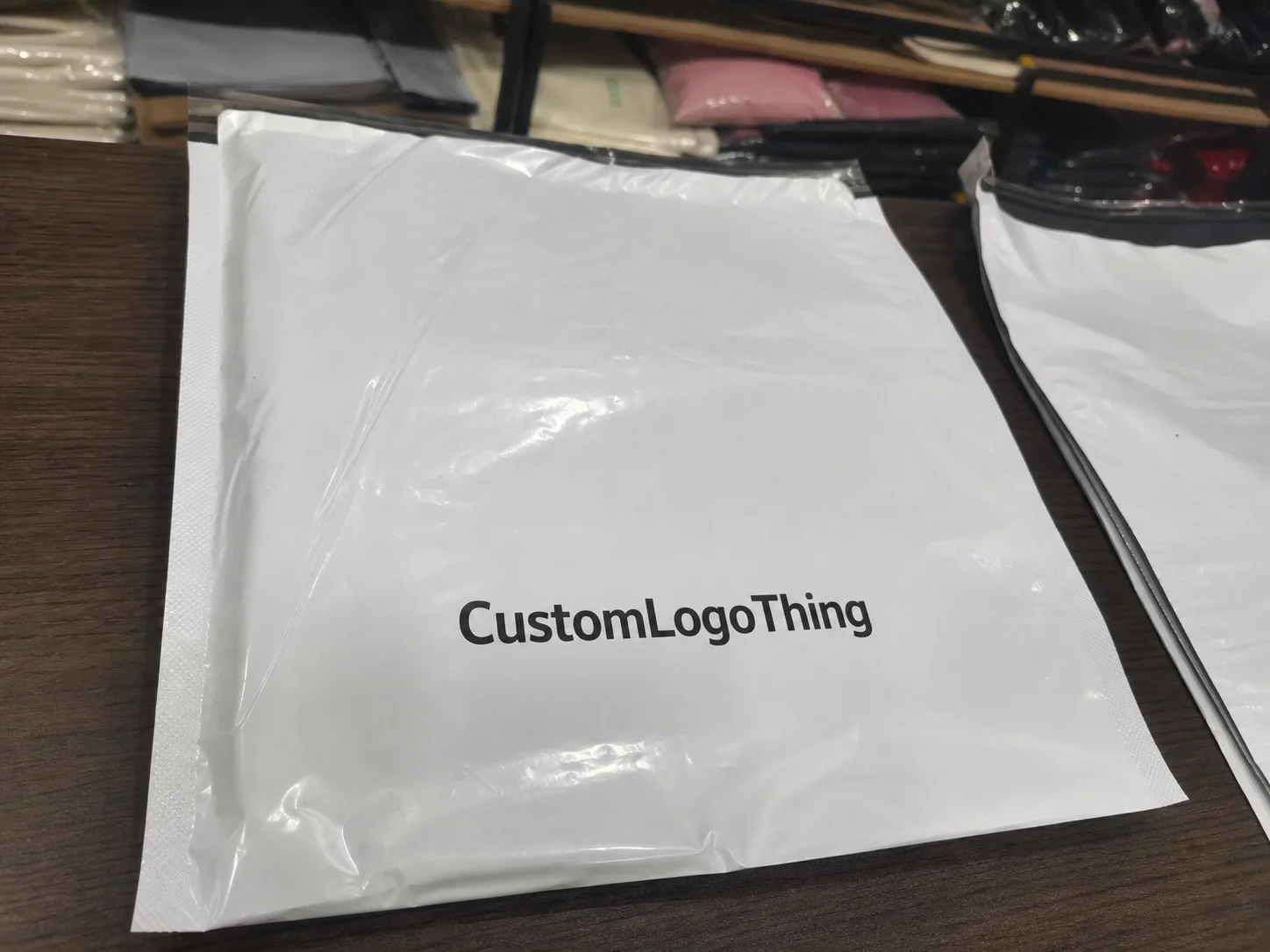
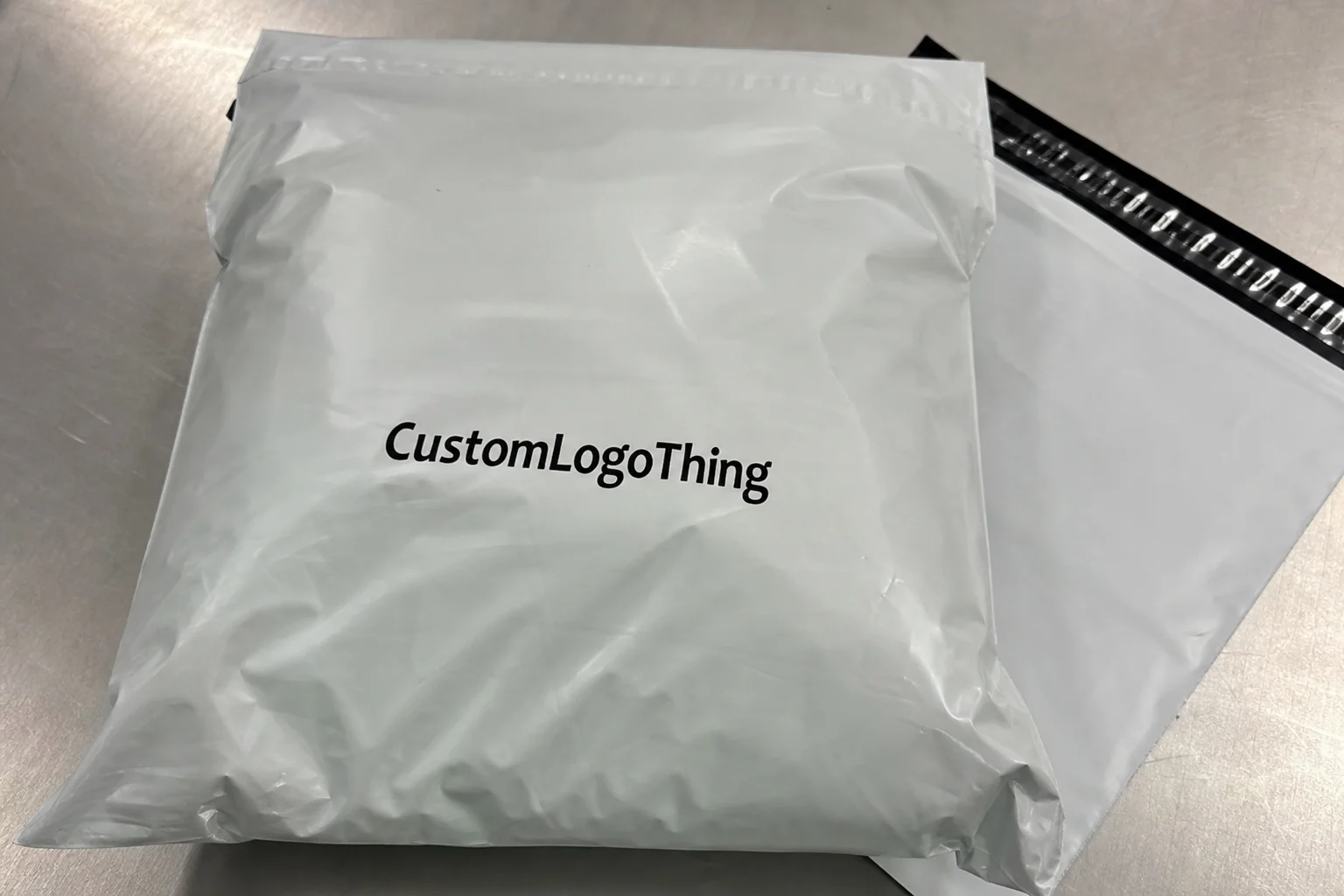
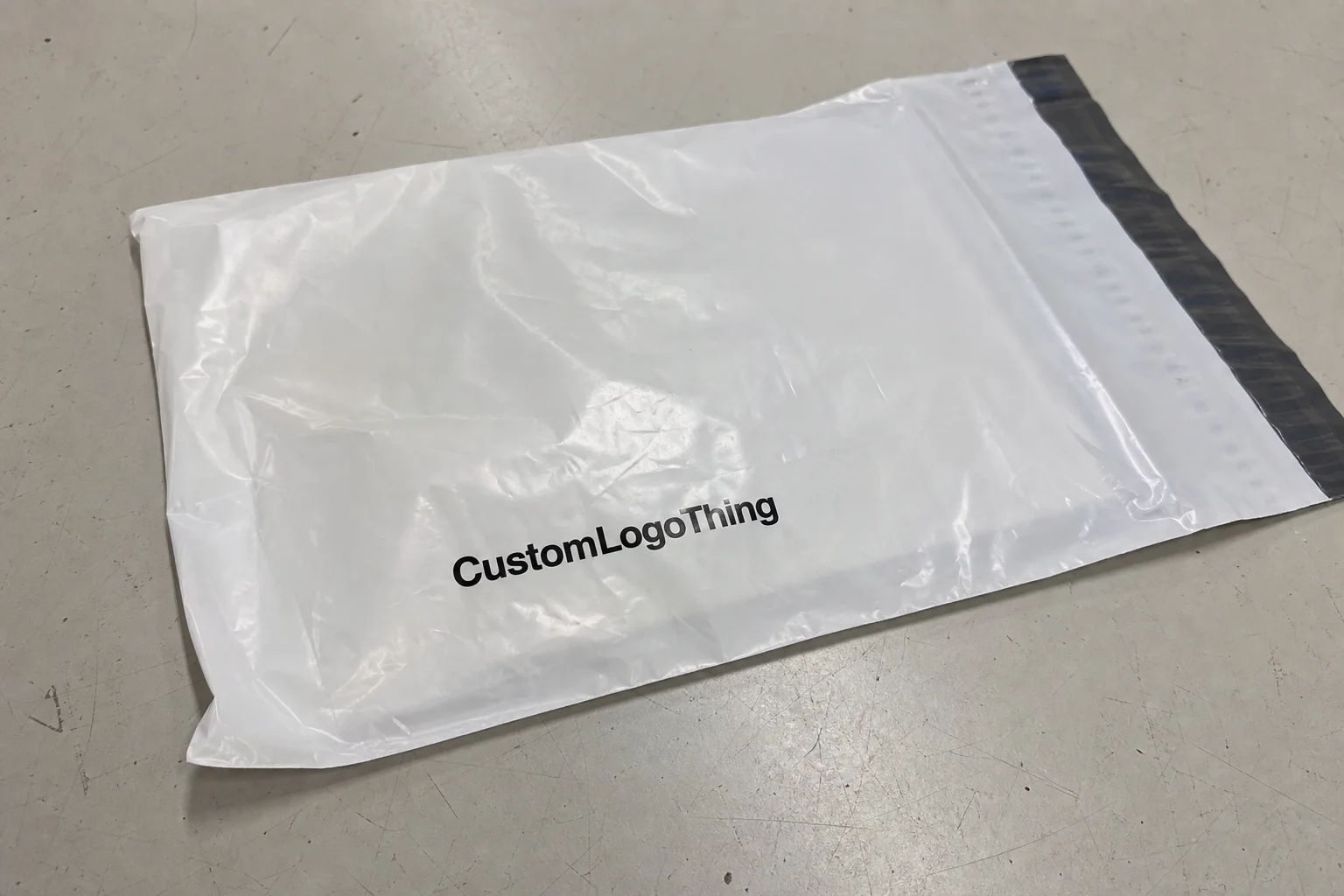
Buyer Fit Snapshot
| Best fit | Eco-friendly Poly Mailer Alternative Solutions projects where brand print, material claims, artwork control, MOQ, and repeat-order consistency need to be specified before quoting. |
|---|---|
| Quote inputs | Share finished size, material target, print colors, finish, packing count, annual reorder estimate, ship-to region, and any compliance wording. |
| Proofing check | Approve dieline scale, logo placement, barcode or warning zones, color tolerance, closure strength, and carton packing before bulk production. |
| Main risk | Vague material claims, crowded artwork, missing packing details, or unclear freight terms can make a low unit price expensive after revisions. |
Fast answer: Eco-friendly Poly Mailer Alternative Solutions: Film, Print, MOQ, and Carton Packing should be specified like a repeatable production item. The safest quote records material, print method, finish, artwork proof, packing count, and reorder notes in one written spec.
Production checks before approval
Compare the actual filled-product size with the drawing, then confirm tolerance on folds, seals, hang holes, label areas, and retail display edges. Reserve space for logos, QR codes, warning copy, and material claims before decorative graphics fill the panel.
Quote comparison points
Review material grade, print process, finish, sampling route, tooling charges, carton quantity, and freight assumptions side by side. A quote is only useful when the supplier can repeat the same color, closure quality, and packing count on the next order.
Eco-Friendly Poly Mailer Alternative Solutions That Hold Up
I still remember the worst failure I saw from Eco-Friendly Poly Mailer Alternative Solutions: a humid Tuesday night in a Shenzhen packing room, where a compostable bag split open at the side seam after 14 minutes on the line and 238 units had already been staged for ship-out. The label stayed sharp, the 4-color logo held, and the carton count matched the paperwork; the product on the floor was the only detail that mattered. That is why I trust eco-friendly poly mailer alternative solutions only after I have watched them survive 60 mph conveyor handoffs, corner drops from 30 inches, and a sweaty warehouse shift that ran from 7:00 p.m. to 2:15 a.m. If you have ever stood in one of those rooms, you know it is not a glamour test. It is a reality check.
The loudest sustainability claim is rarely the right one. I think the better choice is the material that still closes cleanly at 6:00 p.m. after 400 units, protects a 1.3-pound apparel order through a rough UPS Ground route from Dallas to Philadelphia, and does not force the packer to slow down because the flap keeps curling at 78 percent humidity. I have seen buyers save $0.02 per unit on paper and lose $0.06 per unit in labor, dunnage, and damage. Eco-friendly poly mailer alternative solutions need a factory-floor test, not a marketing claim and a pretty photo with a leaf on it. The best eco-friendly poly mailer alternative solutions are the ones that reduce waste without creating a hidden cost elsewhere.
Quick Answer: Eco-Friendly Poly Mailer Alternative Solutions I Trust First
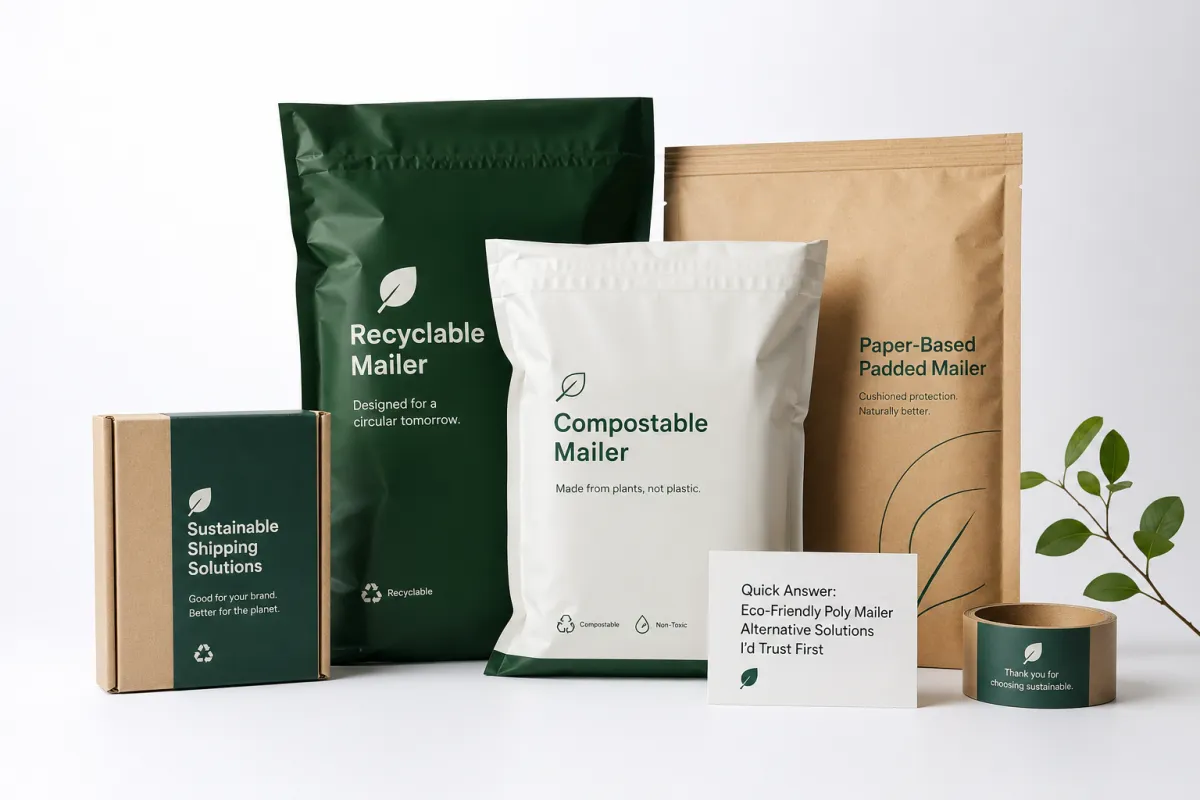
If you want the short version, start with the product and end with the warehouse. Eco-friendly poly mailer alternative solutions work best when the material fits the item weight, the humidity, the seal method, and the brand's tolerance for tradeoffs. For retail apparel, I reach first for kraft paper mailers or paper-padded envelopes made from 350gsm C1S artboard or 60 to 90 gsm kraft outer stock. For controlled composting programs with clear disposal instructions, compostable film mailers made from PBAT and PLA blends can work if the supply chain is disciplined and the storage room stays below 25 C. For lower-friction operations that still want a film-style feel, recycled-content mailers made with 30 percent to 100 percent PCR LDPE or PE are usually the most practical. For closed-loop programs, reusable shipping bags can make sense, but only if returns are part of the business model and someone has actually mapped the reverse flow from Chicago to Columbus on a whiteboard. In practice, the strongest eco-friendly poly mailer alternative solutions are usually paper, recycled-content film, or padded fiber formats.
The question that matters is not, "What is the greenest material?" It is, "What will ship cleanly 10,000 times a month?" That is a different test. Eco-friendly poly mailer alternative solutions should be judged by product protection, machine behavior, print quality, customer perception, and end-of-life reality. A bag that looks noble but tears on a hot-bar seam at 165 C is not a good solution; it is a complaint waiting to happen, followed by three emails, a spreadsheet, and someone in operations saying, "I knew this would happen." The most useful eco-friendly poly mailer alternative solutions are the ones that survive the line first and the sustainability audit second.
- Paper mailers are my first pick for apparel, books, and lightweight soft goods because they print sharply, feel premium, and usually fit the customer expectation for fiber-based packaging that can enter paper recovery streams in cities like Portland, Seattle, and Toronto, where accepted.
- Compostable film mailers can work in tightly controlled programs, but I only recommend them when the disposal story is real, the storage is dry, and the supplier can prove the claims with ASTM D6400, EN 13432, or equivalent documentation.
- Recycled-content mailers are often the best all-around balance for high-volume DTC teams that need speed, tear resistance, and simple pack-out without a major equipment change at plants in Shenzhen, Dongguan, or Hai Phong.
- Reusable shipping bags make sense in closed-loop retail, rental, or member-based programs where return logistics are built into the design rather than bolted on later, usually with a target return rate above 80 percent.
Here is the practical verdict I give buyers after a sample run: eco-friendly poly mailer alternative solutions are not one category, they are four or five different tools with different jobs. If your current mailer has to survive moisture, conveyor bounce, and a long East Coast lane in July, recycled-content film may beat paper on reliability. If your product is a flat tee shipped in a branded retail program from a 25,000-square-foot facility in Atlanta, paper may win on presentation and customer response. The right answer depends on the carton count, the lane, the pack station, and the exact seal temperature, not just the label. That is why I treat eco-friendly poly mailer alternative solutions as an operations decision before they are a marketing decision.
"We thought the paper mailer would look premium, but the first 300 units split at the fold on our Los Angeles line," a fulfillment manager told me after a supplier trial. The line confirmed it: the attractive option was not always the one that held up at 42 packs per minute.
Which Eco-Friendly Poly Mailer Alternative Solutions Work Best by Product Type?
For lightweight apparel, the best eco-friendly poly mailer alternative solutions are usually paper mailers or recycled-content mailers, depending on how much moisture resistance you need. For boxed cosmetics, books, and compact hard goods, padded paper or molded fiber formats often make more sense because they protect corners better than a plain envelope. For brands that need a film-like feel without giving up too much speed, recycled-content mailers tend to be the safest all-around choice. And for closed-loop programs, reusable shipping bags only work when the return flow is planned from the start and not treated like a hopeful afterthought.
If you want a short rule of thumb, think in this order: soft goods, paper; mixed soft goods with humidity risk, recycled-content film; fragile light items, molded fiber or corrugated paper; subscription and rental models, reusable packaging. Those four paths cover most eco-friendly poly mailer alternative solutions buyers actually need. The material that sounds most sustainable on a slide deck is not always the material that works best on a live packing table.
There is also a smaller, messier category that gets overlooked: products that are soft but not forgiving. A brushed sweatshirt with metallic print, a gift set with loose components, or a garment that picks up scuffs from a rough carrier line can turn the "obvious" choice into the wrong one. I have seen teams assume paper would be perfect, only to discover that the return rate was driven by abrasion, not moisture. That kind of detail is why eco-friendly poly mailer alternative solutions have to be matched to the actual failure mode, not the mood board.
Top Eco-Friendly Poly Mailer Alternative Solutions Compared
I like side-by-side comparisons because they cut through a lot of greenwash in one glance. When I compare eco-friendly poly mailer alternative solutions, I look at the same six things every time: durability, print quality, tear resistance, water resistance, sealing performance, and end-of-life claims. That keeps the conversation honest, especially for teams juggling apparel, cosmetics, books, and light hard goods that behave very differently in transit. I have learned the hard way that one beautiful sample from a supplier in Ningbo tells you almost nothing about what happens after the 247th shipment in a hot New Jersey sort center. The best eco-friendly poly mailer alternative solutions should be easy to score on the same matrix, not judged by vibes.
On a production floor, the materials also feel different. Paper mailers feed one way, compostable film another, and recycled-content mailers often behave most like the standard poly format your packers already know. Reusable bags are a separate animal entirely; they can be elegant, but if the reverse logistics are weak, the whole system gets expensive fast. Eco-friendly poly mailer alternative solutions are operational tools first and sustainability stories second. If the ops team hates the package after a 3,000-unit pilot, the program will not survive long enough to impress anyone. In that sense, eco-friendly poly mailer alternative solutions are closer to process design than to product branding.
| Material | Best Use | Typical Unit Cost at 5,000 Units | Durability | Water Resistance | Line-Speed Fit | My Verdict |
|---|---|---|---|---|---|---|
| Paper mailers | Apparel, books, flat retail kits | $0.18 to $0.32 | Good for soft goods, weaker at puncture points | Moderate, depends on coating and storage | Good on manual tables, fair on auto-close lines | Best for presentation and fiber-based recycling streams |
| Compostable film mailers | Controlled programs with clear disposal guidance | $0.24 to $0.48 | Fair to good, but sensitive to heat and age | Good, though shelf conditions matter | Fair, especially on hot-bar seals | Use only when the disposal story is credible |
| Recycled-content mailers | High-volume DTC, general soft goods | $0.11 to $0.22 | Very good for the price | Good to very good | Strong on most existing packing lines | Best all-around operational choice |
| Reusable shipping bags | Closed-loop retail, rental, member programs | $1.20 to $2.80 | Excellent over multiple cycles | Very good | Mixed, depends on return workflow | Smart only when returns are built into the model |
| Corrugated or padded paper alternatives | Fragile light goods, cosmetics, books | $0.29 to $0.65 | Excellent crush protection | Fair unless treated | Good on slower or semi-auto pack lines | Best for protection, not the lowest freight cube |
For brand teams, the biggest difference is not just the material cost; it is how the package performs in the hands of the picker and in the hands of the customer. A paper mailer can print with sharp black type and a rich logo panel, which is why I have seen it outperform film for premium apparel drops in Paris, Austin, and Vancouver. A recycled-content film mailer, though, is often easier to seal, stack, and move through a line at 40 to 50 packs per minute. That matters when the warehouse is running two shifts and every extra second is money. If you have ever watched a line crawl because a flap is sticking to itself at 5:45 p.m., you know the special kind of irritation that follows. Among eco-friendly poly mailer alternative solutions, the fastest one is not always the one with the cleanest sustainability pitch.
If you need a film-style format with a more conventional setup, our Custom Poly Mailers page is where I would start comparing recycled-content structures, print methods, and closure styles. If you need a broader view across sleeves, cartons, inserts, and other packaging formats, the Custom Packaging Products catalog is a helpful place to map the whole system, not just the outer bag. I usually ask teams to compare three structures side by side before they send art, because a 10 percent change in gusset size can affect both freight cube and fill rate. It also helps teams see which eco-friendly poly mailer alternative solutions fit the pack line instead of fighting it.
Detailed Reviews of Eco-Friendly Poly Mailer Alternative Solutions
Here is where I get opinionated, because eco-friendly poly mailer alternative solutions do not all fail in the same way. Paper fails differently from film. Compostable resin behaves differently from recycled-content polyethylene. Reusable systems solve a waste problem while creating a reverse-logistics problem. I have watched all of these in live operations in Shenzhen, Guadalajara, and Louisville, and I have seen enough to know that the "best" choice changes once humidity, carrier handling, and labor turnover enter the room. Packaging is weirdly emotional, too; people will defend a bag choice like they are talking about a sports team, even after a 1.8 percent damage rate shows up in the data. That is why I keep returning to eco-friendly poly mailer alternative solutions that survive reality rather than presentations.
Paper-based mailers are usually the easiest to explain to customers and the easiest to brand. A 60 gsm kraft mailer with a clean black logo looks honest and premium, especially for apparel, while a 90 gsm kraft face with a 30 gsm inner liner adds more structure for returns or rough handling. On a Philadelphia fashion client's line, we ran paper mailers beside recycled film for three weeks and 9,200 units, and the paper won the brand vote because customers liked the tactile feel and the recyclable paper story. The weak point was edge abrasion on bulk-packed knitwear, so we added a slightly thicker stock and a tighter fold, which fixed most of the damage without changing the appearance. Paper-based eco-friendly poly mailer alternative solutions are strong when the product is soft, flat, and not moisture-sensitive.
Molded fiber sleeves and padded paper formats are the safest choice when cosmetics, books, or small hard goods need more crush protection than a simple envelope can give. I have seen a bottle-shaped cosmetic kit survive a rough sort in Dallas only because the molded fiber insert took the impact before the outer carton did, and the insert was only 18 mm deep. The tradeoff is cube and weight; a 42-gram sleeve can add freight cost quickly if the product is tiny, and a 3/16-inch corrugated mailer can add 14 to 22 percent more outbound volume than a flat envelope. Still, among eco-friendly poly mailer alternative solutions, molded fiber is the one I reach for when product damage costs more than packaging freight. I would rather pay an extra $0.08 per unit than spend the afternoon apologizing for broken product in six time zones.
Compostable mailers are the most misunderstood category in the set. If they are built to ASTM D6400 or an equivalent standard and stored in dry, cool conditions, they can work well for controlled programs. I have also seen compostable film age badly after sitting in a 32 C warehouse in Monterrey for too long, and that is where the false confidence begins. On one supplier visit in Hangzhou, the vendor proudly showed me a film with perfect branding, then admitted the shelf-life window was 9 to 12 months, tighter than the sales team had told the buyer. That is exactly the kind of gap that turns eco-friendly poly mailer alternative solutions into a trust issue. For brands that can support clear disposal instructions and have a real composting route, they are viable; for everyone else, they are usually harder to defend than recycled-content options.
Recycled-content mailers are, in my view, the most practical all-around choice for many DTC teams. They feel familiar to operators, they usually seal well, and they often preserve the line speed that keeps a warehouse sane during peak weeks. I have watched 50 percent recycled-content bags run through a semi-auto pack-out station with fewer stoppages than paper, especially on humid days when kraft wants to curl at the edge and the adhesive needs a clean 3-second press. These are the eco-friendly poly mailer alternative solutions I recommend most often when a brand wants lower-impact packaging without a complete process reset. If the spec calls for 55 to 70 micron film with a 1.5-inch adhesive strip, I usually expect fewer surprises.
Reusable shipping bags are excellent inside a closed loop and awkward outside it. I negotiated a reusable bag program for a rental apparel client in Brooklyn, and the economics looked ugly until we tracked return rates, cleaning costs, and reissue cycles across eight months and 11,400 shipments. Once the reverse flow was stable, the system made sense, but I would never push it on a standard one-way DTC operation without a serious return plan and a depot in each major region. Eco-friendly poly mailer alternative solutions of this type are best for subscription, rental, member, or deposit-based models where the bag comes home and works again. Otherwise, you are building a nice object that mostly gets lost under a couch, in a trunk, or in the back seat of a rideshare.
Corrugated and padded paper mailers deserve a place in the conversation because they solve the "light but fragile" problem better than many people expect. A 3/16-inch corrugated mailer can survive a drop that would crease a thin envelope, and that matters for books, tech accessories, and boxed cosmetics that weigh 6 to 14 ounces. I have seen buyers resist them because they look more like a carton than a mailer, but the damage rate often tells a different story. Among eco-friendly poly mailer alternative solutions, this format is the one I use when protection outranks cube efficiency and the carton line can handle a slightly stiffer blank.
For standards, I like to anchor test plans to recognizable references. ISTA procedures are helpful when you want a realistic drop, vibration, and compression test instead of a vague hand squeeze, and the EPA recycling guidance is useful when you need to separate real end-of-life claims from marketing language. I still ask suppliers for proof, because a certificate on a PDF is not the same thing as a package that survives a Monday morning sort center in Indianapolis or a Friday outbound wave in Ontario. And if a supplier starts using the phrase "basically compostable" without paperwork, I get suspicious very fast. That suspicion has saved more than one project from becoming a very expensive lesson in eco-friendly poly mailer alternative solutions.
Price Comparison for Eco-Friendly Poly Mailer Alternative Solutions
Sticker price only tells part of the story. I have sat through enough procurement meetings to know that eco-friendly poly mailer alternative solutions can look expensive until someone adds in damage claims, labor delay, freight cube, or a customer-service escalation from a customer in Denver who received crushed product. A bag that costs $0.04 less but slows packing by two seconds can wipe out the savings faster than people expect. That is why I always compare landed cost, not just unit price, and I want the landed math broken out to at least the nearest cent. The smartest eco-friendly poly mailer alternative solutions often win on total cost, not on the supplier quote alone.
For a 5,000-unit order, the market usually lands in a range like this: paper mailers at $0.18 to $0.32 per unit, compostable mailers at $0.24 to $0.48, recycled-content mailers at $0.11 to $0.22, reusable bags at $1.20 to $2.80, and corrugated or padded paper alternatives at $0.29 to $0.65. Print setup can run $85 to $250 depending on color count and plate method, and custom sizing often adds 7 to 14 business days to the first order. In the best case, I have seen proof approval to production ship in 12 to 15 business days from proof approval; in a more complicated run with multiple colors, die-cut handles, and specialty closures, 18 to 22 business days is a more honest expectation. A supplier in Dongguan can hit that window if the artwork is final on day one and the material is already in stock. Eco-friendly poly mailer alternative solutions are most cost-effective when the first order is planned around those lead times.
| Option | MOQ | Unit Cost | Print Setup | Lead Time | Hidden Cost Risk |
|---|---|---|---|---|---|
| Paper mailers | 3,000 to 5,000 | $0.18 to $0.32 | $120 to $240 | 12 to 18 business days | Higher freight cube if overbuilt |
| Compostable mailers | 5,000 to 10,000 | $0.24 to $0.48 | $100 to $220 | 15 to 22 business days | Shelf-life and storage losses |
| Recycled-content mailers | 3,000 to 5,000 | $0.11 to $0.22 | $85 to $180 | 10 to 15 business days | Usually the lowest operational friction |
| Reusable bags | 1,000 to 3,000 | $1.20 to $2.80 | $140 to $260 | 15 to 25 business days | Reverse logistics and cleaning costs |
| Corrugated or padded paper alternatives | 2,500 to 5,000 | $0.29 to $0.65 | $110 to $230 | 12 to 20 business days | Storage space and freight weight |
The hidden costs matter most in the packing room. Paper mailers sometimes need an extra insert to stop the product from sliding, which can add $0.01 to $0.03 plus another hand motion. Compostable film can need tighter storage control because heat and moisture shorten the usable window, and I have seen one pallet go bad after a warehouse roof leak nobody expected in a facility outside Miami. Recycled-content mailers usually avoid those headaches, which is one reason they stay near the top of my list when buyers ask for eco-friendly poly mailer alternative solutions that do not punish labor. I care about that because labor friction shows up in morale, and morale is not a line item until it suddenly is during peak season. That is the invisible budget line most teams forget to model.
Return rates matter too. If a mailer tears one out of every 250 shipments and each return costs $6 to $9 in labor, freight, and service time, the "cheaper" option becomes expensive quickly. In one client review, we found that a 2-cent savings on materials created a 7-cent cost in damage and rework, mostly because the replacement shipments left from a California hub. That is the kind of math that changes a sourcing decision fast. Nobody enjoys discovering that the bargain bag has turned into a recurring tax on the whole team. For that reason, eco-friendly poly mailer alternative solutions should always be compared on a landed basis.
One caution that saves a lot of misunderstanding: a low quote can hide a higher minimum order, a narrower shelf life, or a print process that makes proofing drag on forever. If the packaging is for a seasonal line, those delays matter more than the sticker price. I have watched teams miss launch windows because they chose the cheapest unit and then got trapped in revisions. That is not savings; that is a schedule tax.
How to Choose Eco-Friendly Poly Mailer Alternative Solutions for Your Product
Selection starts with product behavior, not packaging preference. I ask buyers to tell me three things first: weight, shape, and moisture sensitivity. A 14-ounce tee in a sealed retail fold behaves very differently from a boxed serum kit or a hardcover book, and eco-friendly poly mailer alternative solutions should reflect that difference. If the product is soft and flat, paper can work well. If it is slick, slightly heavy, or likely to rub against a rough carrier line, recycled-content film is often safer. If the product is fragile, padded paper or molded fiber becomes the smarter path, especially on routes that run through humid hubs like Houston or Jacksonville.
Then I look at the shipping environment. A humid Southeast distribution center is a poor place to store weak paper stock without testing it first, while a dry inland lane may allow more freedom. I once worked with a client whose bags performed beautifully in Phoenix but started scuffing and curling in Miami within a week, and the root cause was a 12 percent swing in ambient humidity, not the artwork or the seal. That was not a design flaw so much as a climate mismatch, and it is why eco-friendly poly mailer alternative solutions should always be tested where they will actually live. Paper that feels sturdy on a sunny sample table can get kinda dramatic when it sits beside a dock door in August.
Equipment matters just as much. A high-speed packing line with pressure-sensitive closure stations likes consistency, flatness, and predictable feed behavior. Hot bars add another layer of timing and heat control, so compostable films need extra attention there, especially if the seal dwell time is set at 0.8 seconds instead of 1.2 seconds. If your team packs on manual tables, the priority may be comfort and visual presentation. If your team uses semi-auto stations, the priority may be close rate per minute. The best eco-friendly poly mailer alternative solutions are the ones that keep the line moving without sacrificing the brand story or making the operator mutter under their breath at 4:30 p.m.
The timeline is where many projects stumble, so I like to break it into a simple sequence: sample request, artwork review, fit testing, first article approval, and production release. On a standard custom run, samples can take 5 to 8 business days to arrive from a supplier in Jiangsu or Taiwan, proof corrections 2 to 4 business days, and production 12 to 22 business days depending on complexity. If the package is going into a seasonal launch, I want samples on the table at least four weeks before the planned ship date, because one mis-sized flap can derail a clean rollout and force a rush order. Eco-friendly poly mailer alternative solutions are much easier to approve when the calendar has breathing room and the warehouse is not already in peak mode.
The tradeoffs are real, and I prefer to say them plainly. Protection versus recyclability is one. Shelf appeal versus machine compatibility is another. Sustainability claims versus operational simplicity is the third. I have seen brands chase the most virtuous-sounding format and then spend six months fixing packing issues, and I have seen others choose a plain recycled-content mailer that customers barely noticed but operators loved. Eco-friendly poly mailer alternative solutions work best when the business is honest about which tradeoff matters most. That honesty saves time, money, and a lot of awkward follow-up meetings.
One more practical filter: ask whether the package needs to survive rain, snow, or a truck dock with open doors. Paper mailers are fine for many routes, but they are not magic. Recycled-content film usually handles moisture better, which is why I often recommend it for beauty kits and apparel shipped across mixed carrier networks in the Northeast and the Gulf Coast. If your product gets tossed into a porch pile or a locker with condensation, that one detail can decide the whole project. I have seen a perfectly decent mailer lose the argument with a soaked loading bay before the truck even pulled away. The same logic applies to every set of eco-friendly poly mailer alternative solutions: test the lane, not the theory.
Our Recommendation: Best Eco-Friendly Poly Mailer Alternative Solutions by Use Case
If I had to shortlist eco-friendly poly mailer alternative solutions for a buyer tomorrow morning, I would not give them one answer. I would give them four, each matched to a use case. For premium retail apparel, paper mailers are usually the strongest brand fit because they print cleanly and feel intentional in the hand, especially if the stock is 80 gsm kraft with a 350gsm C1S insert card. For everyday DTC shipments where speed matters, recycled-content mailers are usually the best value because they keep labor smooth and damage low. For fragile lightweight goods, corrugated or padded paper alternatives are the safer choice. For closed-loop programs, reusable shipping bags can be excellent, provided the return plan is real, funded, and supported by a depot or regional cleaning partner in markets like Los Angeles and Toronto.
My honest all-around pick is recycled-content mailers. They are not the most romantic choice, but they often deliver the best balance of cost, line speed, and product safety. If a brand wants to preserve equipment, avoid retraining, and still move toward a lower-impact format, this is usually where I start. Eco-friendly poly mailer alternative solutions do not need to be dramatic to be effective; they need to be dependable on a rainy Wednesday when the team is short-staffed, the trailer is late, and the truck is waiting at dock 12. When people ask me which eco-friendly poly mailer alternative solutions I would bet on first, recycled-content mailers usually win that conversation.
My best brand-forward pick is paper, especially for apparel, books, and curated retail drops. I have seen customers keep paper mailers because the package felt more like a purchase than a utility item, and that reaction showed up in post-purchase surveys from 400 respondents across Boston, Austin, and San Diego. That said, I would not recommend paper for every lane. If the product is slick, if the warehouse is humid, or if the customer often returns items, paper may need reinforcement or may lose to a recycled-content option. The right eco-friendly poly mailer alternative solutions still have to earn their place on the line.
My most cautious recommendation is compostable mailers. I like them only when the program has clear storage control, strong supplier documentation, and a disposal route the customer can actually follow. If those pieces are weak, the environmental promise gets fuzzy fast. I have watched too many buyers fall in love with the claim and then struggle to explain the real-life disposal path to a customer in their first FAQ update. That is not a packaging win; it is a messaging risk with a very expensive 800-number attached. Among eco-friendly poly mailer alternative solutions, this is the category that needs the most discipline.
Before You Order, do three things: measure your current mailer dimensions, request three sample formats, and run a short pilot on the actual packing table. Watch seal failure, corner split, print scuffing, and packer fatigue over at least one full shift, ideally 6 to 8 hours with the same operator group. Then compare damage rates against the current format. That is how eco-friendly poly mailer alternative solutions should be selected in a serious operation, not by a glossy sample alone. If you need a wider sourcing list once you have the size and format narrowed down, the Custom Packaging Products catalog can help you compare related formats beside the mailer options.
For a buyer, the most useful mindset is simple: fit the product, fit the equipment, fit the customer expectation. If those three align, eco-friendly poly mailer alternative solutions usually pay off in fewer complaints, better presentation, and less rework. If they do not align, the package will fight the warehouse every single day. And that fight always shows up somewhere else later, usually in the returns queue and the weekly ops meeting. That is the part of packaging strategy that rarely makes it into the brochure.
My final takeaway is straightforward: choose the material that passes your real warehouse test, not the one that sounds greenest in a supplier deck. If you are shipping soft goods in a dry lane, paper or recycled-content film may be the best fit. If moisture, speed, or line stability are the main risks, recycled-content mailers usually deserve the first sample run. If the customer can actually compost or return the package, compostable or reusable formats can work, but only with honest infrastructure behind them. That is the decision tree I trust, and it keeps eco-friendly poly mailer alternative solutions tied to reality instead of wishful thinking.
Which eco-friendly poly mailer alternative solutions are best for lightweight apparel?
Paper mailers and recycled-content mailers are usually the strongest starting points for lightweight apparel because they balance cost, protection, and presentation. If the garments need more moisture resistance or a smoother pack-out, recycled-content film often runs faster and resists tearing better than paper, especially on a line moving 35 to 50 units per minute. For premium branding, I would choose the material that prints cleanly and still closes reliably after a long packing shift in a room held near 22 C.
Are compostable eco-friendly poly mailer alternative solutions actually practical for fulfillment?
They can be practical, but only when the supply chain, storage conditions, and disposal instructions are controlled closely. Compostable claims need careful verification, because performance can vary with humidity, heat, and shelf life, and a pallet stored for 10 months in a warm warehouse near Houston can behave very differently from a fresh carton in Portland. I only recommend them when the brand can support clear end-of-life instructions and the added cost fits the margin without squeezing the rest of the packaging budget.
How do eco-friendly poly mailer alternative solutions compare on price?
The cheapest unit price is not always the lowest landed cost once freight, storage, damage risk, and packing speed are included. Paper options may cost more per unit, while recycled-content options often preserve productivity and reduce labor friction in facilities that process 2,000 to 8,000 orders per day. A real price comparison should include order volume, print setup, lead time, and return or replacement rates before anyone signs off.
Can eco-friendly poly mailer alternative solutions work with automated packing equipment?
Some do, but compatibility depends on seal type, thickness, stiffness, and how the material feeds through your equipment. Recycled-content film and certain paper mailers tend to be easier to trial on existing packing lines than highly specialized materials, especially if the system uses pressure-sensitive closures or hot-bar sealing at 150 to 170 C. I always test samples on the actual machine, not just by hand, because hand-feel does not predict line behavior very well.
What is the fastest way to choose the right eco-friendly poly mailer alternative solutions?
Start with your product's weight, fragility, and moisture sensitivity, then narrow the list to two or three material types. Request samples, run pack-out tests, and compare carrier damage, seal integrity, and labor time before placing a larger order of 3,000 to 5,000 pieces. The best choice is the one that performs reliably in your warehouse, because the smartest eco-friendly poly mailer alternative solutions still have to ship cleanly, every day, without turning into a maintenance problem.