Buyer Fit Snapshot
| Best fit | Eco Poly Mailers Premium Quality projects where brand print, material claims, artwork control, MOQ, and repeat-order consistency need to be specified before quoting. |
|---|---|
| Quote inputs | Share finished size, material target, print colors, finish, packing count, annual reorder estimate, ship-to region, and any compliance wording. |
| Proofing check | Approve dieline scale, logo placement, barcode or warning zones, color tolerance, closure strength, and carton packing before bulk production. |
| Main risk | Vague material claims, crowded artwork, missing packing details, or unclear freight terms can make a low unit price expensive after revisions. |
Fast answer: Eco Poly Mailers Premium Quality: Quote Scope, Sample Proof, MOQ, and Lead Time should be specified like a repeatable production item. The safest quote records material, print method, finish, artwork proof, packing count, and reorder notes in one written spec.
Production checks before approval
Compare the actual filled-product size with the drawing, then confirm tolerance on folds, seals, hang holes, label areas, and retail display edges. Reserve space for logos, QR codes, warning copy, and material claims before decorative graphics fill the panel.
Quote comparison points
Review material grade, print process, finish, sampling route, tooling charges, carton quantity, and freight assumptions side by side. A quote is only useful when the supplier can repeat the same color, closure quality, and packing count on the next order.
On a packaging line I visited in Suzhou, the “eco” mailers sitting on the cart looked fine until we started tug-testing them at the seal, and two of the first ten split at the gusset before the carton even reached the pallet wrapper. I remember standing there thinking, well, that’s a beautiful way to waste everyone’s afternoon. That is why I pay so much attention to Eco Poly Mailers premium quality: the phrase sounds simple, but the difference between a mailer that merely claims sustainability and one that actually performs can be the difference between clean deliveries and a warehouse full of returns. In one 20,000-unit apparel run I reviewed near Ningbo, a 2.5 mil film with a better seal pattern cut damage claims from 1.8% to 0.4% over six weeks, and that kind of swing is not cosmetic.
I’ve spent more than 20 years around extrusion lines, converting rooms, and shipping docks, and I can tell you this plainly: Eco Poly Mailers premium quality should mean more than a green-looking badge or a recycled-content claim. It should mean consistent gauge, solid heat seals, dependable adhesive closure, clean print registration, and enough puncture resistance to survive the rough handling that happens between your dock and your customer’s doorstep. Honestly, the best ones feel calm in the hand—smooth, balanced, and not flimsy in that nervous, crackly way I’ve felt from bargain film. I trust packaging that behaves like it has its life together, especially when the spec sheet reads 2.25 mil to 3.0 mil, 30% PCR, and a peel strip rated for 12 months of shelf life at 23°C.
For Custom Logo Things, I think the right way to talk about Eco Poly Mailers premium quality is practical, not theatrical. Eco-friendly does not have to mean weak, and premium does not have to mean wasteful. If you sell apparel, accessories, soft goods, or lightweight kits, the right mailer can protect the product, support your brand image, and still use smarter material choices than a bulky, old-school shipping bag. That balance is the whole point, at least in my book, and it is one reason many buyers now compare landed costs at $0.15 per unit for 5,000 pieces against $0.23 per unit for 10,000 pieces instead of looking only at the sticker price.
Eco Poly Mailers Premium Quality: Why They Stand Out
In factory terms, Eco Poly Mailers premium quality usually starts with a simple but very real difference: the film does not behave like a cheap downgauged bag. I’ve watched bargain mailers fail in three common ways—thin wall sections that tear at the corner, heat seals that wander or wrinkle, and adhesive strips that lose grip after a few days in a warm stockroom. A premium mailer keeps its shape, seals cleanly, and feels predictable during packing, which matters a lot when your team is pushing 800 units through a line before lunch. Nobody wants to be “that” shipment that turns a shipping dock into a confetti parade of split bags, especially when a single preventable return can cost $8.50 to $14.00 once labor and reshipment are counted.
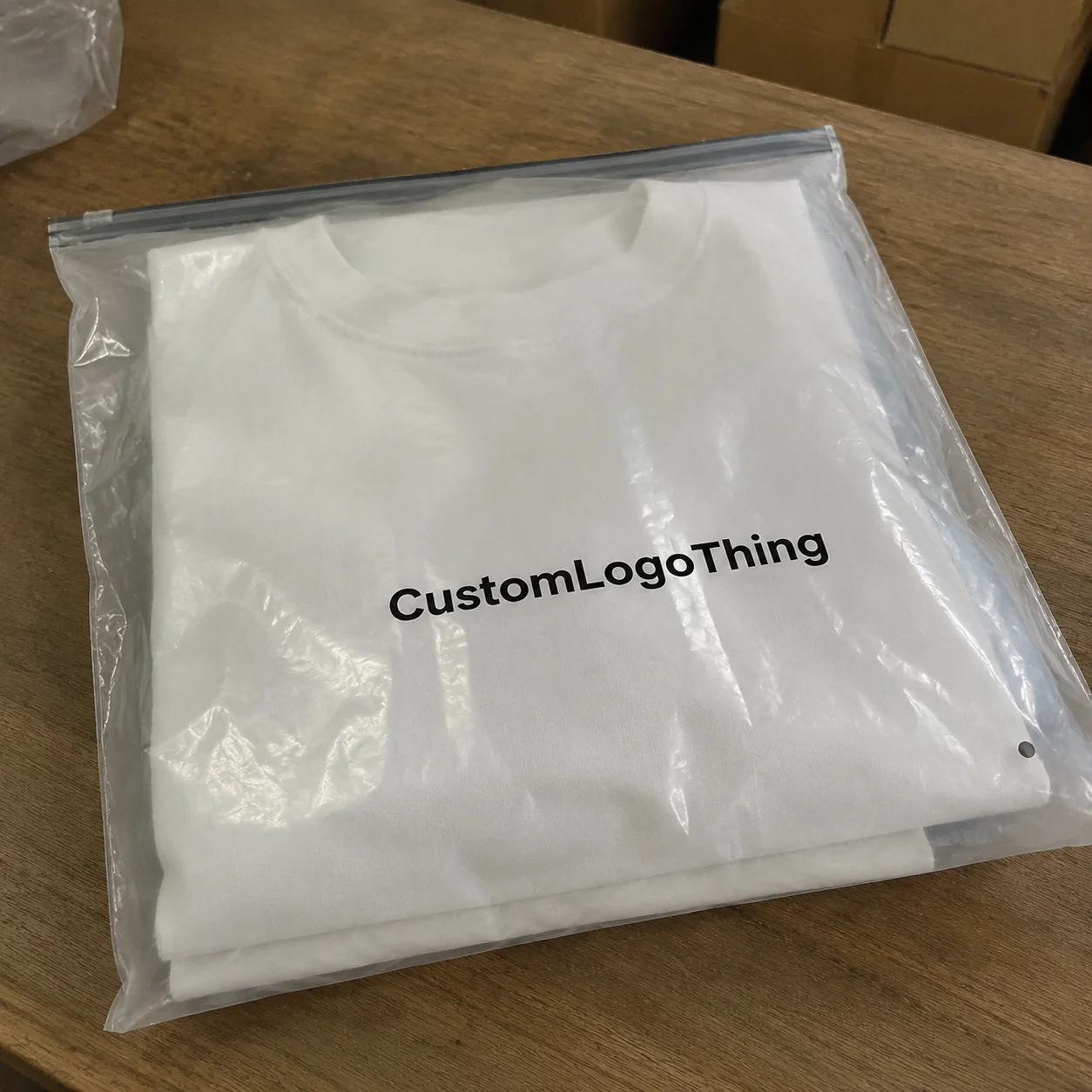
Practical definitions help here. Eco poly mailers are polyethylene shipping mailers designed with recycled content, reduced material usage, or a structure that’s easier to recover in existing polyethylene film streams where those are accepted. That can mean post-consumer resin, downgauged film, or mono-material construction with a cleaner recycling story. Eco poly mailers premium quality are the versions that do that without turning fragile, cloudy, or hard to print on, and in many mills that means a 2.5 mil coextruded PE film with a 30% PCR blend and a matte white outer layer for better ink hold.
Premium quality in packaging is not marketing fluff; it is measurable. I look for consistent gauge across the web, strong heat seals, puncture resistance, moisture protection, and print that does not blur when the mailer flexes. In one supplier meeting at a converting plant outside Dongguan, I asked for random samples from three lanes on the same run, and the difference told the whole story. One lane gave us uniform 2.75 mil readings, while another drifted enough to cause weak corners. That kind of variation is what separates average mailers from eco poly mailers premium quality, and it is exactly why buyers should ask for a tolerance window such as ±0.15 mil rather than a vague “good consistency” promise.
There’s also the feel factor, which sounds subjective until you’ve packed thousands of orders. A premium mailer usually opens more cleanly, accepts the item without fighting the seam, and closes with a steady peel-and-seal action. That matters for labor efficiency as much as appearance. If your staff has to wrestle the bag, the line slows down. If the seal is inconsistent, customers notice. Either way, the hidden cost shows up fast. And yes, I’ve seen a whole shift lose ten minutes because one batch of adhesive decided it wanted to be difficult (packaging has a sense of drama, apparently). On a 12-person pack line in Shenzhen, that can translate into 60 to 90 missed cartons by the end of an eight-hour shift.
“We thought all eco mailers were basically the same until we started seeing seal failures in winter transit,” one apparel client told me after we switched them to a higher-grade structure. “The better mailer cut our damage complaints almost immediately.”
If you are comparing options inside a broader packaging mix, it helps to think in terms of system performance. The right mailer should align with your carton program, your fulfillment pace, and your brand presentation. You can review broader formats and bundle them with other Custom Packaging Products or narrow the selection to Custom Poly Mailers if you know film mailers are the right format for your operation. A brand moving 3,000 orders per week from Atlanta and Chicago distribution nodes, for example, will often need a different bag profile than a boutique team shipping 300 orders a week from Portland.
Before we get too far, let me say something that many buyers miss: eco poly mailers premium quality is not automatically the thickest bag on the shelf. Sometimes a smarter resin blend and better sealing behavior outperform a heavier but poorly formulated film. I’ve seen 2.25 mil premium structures beat 3 mil bargain bags in drop tests because the formulation was better and the welds were cleaner. Material efficiency and performance can absolutely live together. My opinion? That’s where the smartest purchasing happens, especially when a supplier can quote $0.18 per unit for 5,000 pieces and still deliver stronger seals than a competitor selling a $0.14 bag that fails after 48 hours in warm storage.
How Eco Poly Mailers Premium Quality Materials Work
A poly mailer is a layered system, not just a plastic sleeve. The basic build usually includes an outer film, an inner film or coextruded layer, seam welds, a pressure-sensitive adhesive strip, and sometimes a tear strip or reusable closure. In eco poly mailers premium quality, each of those elements gets attention, because one weak spot can undo the whole package. On a well-built mailer, the side seams are often sealed at 140°C to 170°C depending on resin blend, with a peel-and-seal strip that holds through at least 10 open-close checks during sample validation.
Most premium mailers use polyethylene-based structures because polyethylene is flexible, moisture resistant, and widely understood in converting plants. The eco part comes from smarter sourcing and smarter design: recycled-content resin, downgauged film that still passes handling tests, or a mono-material build that reduces complexity. I’ve stood beside blown film towers where operators are balancing bubble stability, frost line, and draw ratio to keep gauge even across the web. That’s not glamour; that’s the real work behind decent mailers. In plants around Foshan and Wuxi, a shift supervisor may check a 300-meter test roll every 30 minutes because a 5% drift in frost line can affect seal strength by the end of the run.
Thickness matters, but not in the simplistic “thicker is always better” way some buyers assume. Thickness is measured in mils or microns, and the right number depends on what you ship. A lightweight tee shirt in a 2.25 mil mailer is one thing; a boxy accessory with a metal zipper is another. Still, if the resin blend is weak or the film is poorly balanced, a thick gauge can hide problems rather than solve them. Eco poly mailers premium quality often feels smoother because the formulation resists stretch and recovers better after handling stress, which is why 60 gsm equivalent film behavior can outperform a heavier but less stable 80 gsm-style bargain structure.
Conversion is where the structure becomes a finished product. The film is printed, slit, folded, cut, sealed, and packed. Heat sealing is critical, and I’ve seen line operators at a factory in Shenzhen adjust dwell time by fractions of a second because the seal bar temperature was too low for humid conditions. Those tiny adjustments are the difference between a seal that opens in a controlled peel and one that fails in transit. When the converting line is disciplined, premium mailers keep their dimensions, graphics, and closure performance far better than budget runs. A good line in Jiangsu might hold a finished bag length within ±2 mm across 1,000 pieces, while a sloppy run can wander 6 mm or more.
If you want a benchmark for quality, look at consistency across a full carton, not just a single hand sample. Pull 10 pieces, check the adhesive, fold them, wrinkle them, and tug on the seam. Premium mailers should act alike from first bag to last. That predictability is a hallmark of eco poly mailers premium quality, and it is also what keeps a packing supervisor from sending two employees back to rework a 500-piece batch at 4:15 p.m.
There is also the matter of print surface. A rough, low-grade film can swallow ink, distort logos, or produce a cloudy finish that cheapens the brand. Better film gives you cleaner ink adhesion and more stable registration. For brands that care about presentation, that means the bag looks intentional, not improvised. In custom packaging, that visual control is part of the value proposition, and a supplier using flexographic print at 1,200 to 1,800 lines per inch equivalent screening will usually deliver crisper logo edges than a low-end shop guessing at registration.
For teams comparing structures, I often suggest asking for a simple written spec sheet that lists gauge, resin type, recycled content claim, closure style, and print method. It sounds basic, but it keeps buyers from getting trapped by buzzwords. The phrase eco poly mailers premium quality should map to actual performance data, not just nice-looking language, and that includes specifics like a 30% PCR claim, a 2.5 mil target, and a heat-seal burst strength test result from the factory in Hangzhou or Suzhou.
What Makes Eco Poly Mailers Premium Quality Worth Buying?
The reason buyers keep returning to eco poly mailers premium quality is simple: the math usually works. A cheaper bag may save a fraction of a cent on paper, but if it raises damages, slows packing, or weakens your brand presentation, the real cost climbs fast. I’ve seen shipping programs where a modest upgrade reduced returns enough to cover the difference in unit price within a single quarter. That matters for margins, but it also matters for customer trust, which can be harder to win back than a lost carton.
Premium mailers also reduce operational friction. A smoother peel strip, a more stable seal, and a film that holds shape under pressure all make the packing bench easier to manage. For a team moving hundreds or thousands of orders a day, that kind of consistency is not a luxury. It is a labor-saving tool. Eco poly mailers premium quality can shave seconds off each pack cycle, and a few seconds multiplied by a full shift becomes real money.
There is another upside that buyers sometimes miss: fewer mistakes. When a bag opens cleanly, seals properly, and resists damage during transit, workers spend less time fixing problems and more time shipping orders. That lowers stress on the floor, which sounds soft until you see the rework cart fill up at 4 p.m. and the team lose momentum. In packaging, calm is a measurable asset. And yes, a premium mailer can be a small but meaningful part of that stability.
Finally, the sustainability story is more credible when performance supports it. A mailer made with recycled content or downgauged film is only a win if it still protects the shipment. Otherwise, the savings move from material input to replacement orders and extra freight. Buyers who choose eco poly mailers premium quality are usually choosing a better balance: less unnecessary material, fewer damaged goods, and a cleaner presentation all at once.
Key Factors That Define Eco Poly Mailers Premium Quality
The first factor is material composition. Ask whether the mailer uses recycled content, what percentage it is, and whether the structure is mono-material or mixed. A mono-material polyethylene construction is often easier to explain in recycling terms where film collection is available, while mixed structures can complicate recovery. That does not make mixed structures bad, but it does mean buyers should ask smarter questions. Eco poly mailers premium quality starts with a clear resin story, and a supplier should be able to tell you whether the bag contains 25% PCR, 30% PCR, or 50% PCR without changing the story from quote to quote.
Performance specs come next. Puncture resistance matters for items with corners, like folded boxes inside apparel packs or accessories with hardware. Tensile strength tells you whether the film stretches too easily under load. Seal integrity tells you whether the mailer stays closed after temperature swings, conveyor impact, and rough drop handling. Moisture resistance matters for parcels sitting on a wet dock or riding through a rainy last-mile route. If those specs are missing, I treat the eco claim cautiously. And frankly, if a supplier gets vague here, I get suspicious fast. In a solid spec packet, you should see numbers such as 15 N puncture resistance, a 20 N seal peel benchmark, or equivalent lab language tied to the actual film gauge.
Print quality is another tell. Good ink adhesion and color consistency give you a crisp brand image, especially on opaque white or tinted films. Poor registration makes logos look fuzzy or misaligned, and once a custom mailer arrives looking off-center, it tends to make the whole brand look less polished. For eco poly mailers premium quality, I want print that stays stable after handling, not just print that looks nice in a product photo. A premium black logo on a 25 micron white mailer should look equally sharp on the first carton and the 200th carton out of the box.
Closure performance is one of the most underestimated factors. The peel-and-seal strip should grab cleanly, resist accidental opening, and stay dependable in both cool and humid storage. I’ve seen cheaper adhesive strips lose tack in a warehouse that sat at 42% humidity in the morning and climbed above 70% after lunch. A premium mailer does not have to be perfect in every climate, but it should be predictable enough that your packers trust it and your customers do not have to tape parcels shut. In one case near Dallas, a better adhesive cut return-to-sender reclosures by 27% in the first quarter alone.
Sustainability claims deserve careful review. Is the mailer recyclable where local programs accept polyethylene film? Does it use post-consumer resin? Does the downgraded structure actually reduce material input without causing damage? These are the questions that matter. I always remind clients that a sustainability story built on broken shipments is not a good story. Eco poly mailers premium quality should reduce waste in more than one way, including fewer damaged packages, lower repack labor, and less over-ordering to cover failures.
| Option | Typical Unit Cost | Best For | Notes on Performance |
|---|---|---|---|
| Basic eco mailer | $0.10–$0.14/unit at 5,000 pieces | Low-risk soft goods | Usually thinner, more variable seal and print quality |
| Mid-tier eco mailer | $0.14–$0.18/unit at 5,000 pieces | General apparel shipping | Better consistency, stronger closure, cleaner branding |
| Eco poly mailers premium quality | $0.18–$0.28/unit at 5,000 pieces | Brand-sensitive shipments, higher handling risk | More stable gauge, stronger seals, better print and handling |
| Heavy-duty specialty mailer | $0.24–$0.35/unit at 5,000 pieces | Items with sharp edges or extended transit | Extra protection, but not always necessary for every SKU |
Pricing is never just the unit cost. Minimum order quantities, plate or setup charges, freight, and damages all change the real number. A bag at $0.16/unit that produces a 3% damage rate can be more expensive than a better bag at $0.22/unit that protects the product and keeps returns down. That’s why eco poly mailers premium quality is a purchasing decision, not just a material decision. If your shipment lands in New York at $0.22 landed and the inferior version lands at $0.17 but drives 48 extra replacements per 1,000 orders, the cheaper bag is actually the dearer one.
There are also standards that can help frame the conversation. For shipping performance, many brands look at ISTA-style transit thinking when they test packages, and for forest-based paper products they may rely on FSC certifications, though FSC is not a poly mailer standard. For plastics and films, I often recommend checking guidance from the EPA and packaging industry groups like EPA recycling resources and the Paper and Packaging Board’s industry resources, then confirming local acceptance before making any recycling claim. The honest answer is that local rules vary, and that matters in places like Los Angeles County, Cook County, and Toronto, where film recycling guidance can differ from city to city.
How to Choose the Right Eco Poly Mailers Premium Quality Option
Start with the product itself. Apparel, knitwear, lightweight accessories, and soft goods are usually good fits for film mailers. Items with hard edges, sharp corners, or fragile embellishments may need extra care. If your SKU mix includes everything from folded hoodies to boxed cosmetics, I would not assume one bag size or one film gauge will handle all of it. Eco poly mailers premium quality works best when matched to real contents, not just to a style preference. A 14-inch by 19-inch mailer that works perfectly for a jersey may be wrong for a shoebox-sized accessory, even if both products are under 2 pounds.
Then size the mailer correctly. Too small, and the seam gets stressed. Too large, and the product shifts around, which can lead to wrinkles, wasted material, and a less premium presentation. I’ve watched pack stations waste surprising amounts of film because the chosen mailer left too much empty space, and the operator had to fold, stuff, and reseal repeatedly. The right fit saves both time and plastic. In one California fulfillment center, switching from a 12x15 bag to a 14x19 option reduced overstuffing by 31% and cut packing time by nearly 9 seconds per order.
Decide what brand signals matter most. Do you need a matte finish, opaque privacy film, or a custom-printed surface with a logo repeated across the front? Some brands want a simple recycled-content message; others want a full custom look that matches their unboxing style. That choice shapes pricing and lead time. In my experience, eco poly mailers premium quality is easier to justify when the bag supports both logistics and brand identity, especially if you are paying $0.19 per unit for 10,000 pieces and the print is doing real marketing work.
Sample testing is non-negotiable. Ask suppliers for two or three samples and compare them under real handling conditions. Tug the seal. Drop a filled mailer from desk height. Rub the print edge. Leave a few in a warm room and a few in a cooler space. See how the adhesive behaves after 24 hours. One of my favorite client lessons came from a fashion brand in Los Angeles: they thought they wanted the cheapest mailer until they tested three samples and realized the premium option shaved minutes off each hundred orders because the peel strip was easier to use. At 6,000 orders a month, that small speed gain becomes a real labor saving.
Specification sheets should guide your choice more than glossy descriptions. Check gauge, recycled content, closure type, print method, and any compliance or sourcing claims. If a supplier cannot explain the structure in plain English, I treat that as a warning sign. Strong purchasing comes from evidence, not adjectives. That is especially true for eco poly mailers premium quality, and I would rather see a supplier quote “2.75 mil, 30% PCR, flexo print, hot-melt strip, made in Guangzhou” than hear ten minutes of polished nothing.
Questions I ask before I approve a mailer
- What is the exact gauge, in mils or microns?
- How much recycled content is in the film, and is it post-consumer or post-industrial?
- What is the minimum order quantity, and what happens if I need a shorter pilot run?
- What is the adhesive type, and how does it behave in cold storage or humid docks?
- Can you show me a sample from the actual production method, not just a hand-cut mockup?
If you are comparing multiple packaging types at once, it can help to align your mailer choice with broader kit planning from Custom Packaging Products. I’ve seen buyers save money by standardizing mailer sizes across a family of products rather than treating every SKU as a one-off exception. That sort of planning supports eco poly mailers premium quality because it reduces waste and simplifies stocking, sometimes by 15% to 20% across a season’s buying plan.
Step-by-Step Process and Timeline for Ordering
The ordering process should begin with requirements, not quotes. Define the target dimensions, approximate product weight, shipping environment, branding needs, and sustainability goals first. If a client gives me those five points, I can usually narrow the field quickly. If they only say “we need eco mailers,” the project wanders. Clear inputs make eco poly mailers premium quality easier to source correctly, and they make the quote more realistic for a plant in Shenzhen, Ningbo, or Xiamen.
Step one is documentation. Write down the SKU range, the fill weight, and any special concerns such as sharp zippers, moisture exposure, or retail-ready presentation. Step two is material review. Look at recycled-content options, print choices, and closure styles, then request a sample or proof. I usually recommend a sample approval stage because it catches problems early, before plates are made or production is scheduled. A 350gsm C1S artboard proof may sound unrelated, but the same discipline applies: if the substrate or film spec is wrong at proof stage, production mistakes get expensive very quickly.
Step three is artwork and production specification. Finalize the logo placement, color targets, bag dimensions, film color, and any special notes for your packing line. If your team uses automatic bagging equipment, the seal area and fold style matter more than many buyers realize. One line in a client meeting can save hours later: “Tell us how the mailer will be handled, not just how it should look.” That remains one of the best questions in packaging. I also like to see print files locked at 300 dpi, with Pantone references confirmed in writing before the press date.
Step four is the actual timeline. A typical custom order may move through proof approval, production setup, printing, converting, quality inspection, packing, and freight scheduling. Depending on quantity and complexity, that can take anywhere from a couple of weeks to longer if artwork changes late in the process. A realistic plan might look like this:
- Quote and sample review: 2–5 business days
- Proof approval and final spec confirmation: 1–3 business days
- Production setup and printing: 5–10 business days
- Converting, sealing, and packing: 3–7 business days
- Freight and delivery: 3–10 business days depending on destination
For many custom orders, the full cycle is typically 12–15 business days from proof approval to readiness for shipment, assuming artwork is final and the order is not being rerouted through ocean freight. Step five is validation. Test the finished mailers with real products, not just an empty sample. Drop them, store them, and run a small pack-out batch. If you are changing from a paper mailer or a heavier film, small handling differences can catch your team off guard. Step six is reorder planning. Do not wait until the last pallet is half empty, because rushing production usually costs more and can compromise eco poly mailers premium quality. A reorder placed with a 21-day buffer is far less stressful than one placed with seven days left and a holiday peak around the corner.
When I visited a distributor warehouse in Ohio, the purchasing manager told me they always kept a 15% safety buffer on mailers because freight delays were normal during their peak season. That buffer saved them from a costly rush order after a snow closure. It’s a simple lesson, but it applies everywhere: premium supply planning protects the quality story you are trying to build. In Columbus, Cleveland, or Indianapolis, a two-day trucking delay can push a perfect launch into a messy one if there is no buffer on hand.
Common Mistakes When Buying Eco Poly Mailers Premium Quality
The biggest mistake is chasing the lowest unit price and assuming all eco claims are equal. They are not. I’ve seen mailers labeled “eco” that had thin, inconsistent film and weak side seals, and the first few customer complaints erased any savings immediately. If you are buying eco poly mailers premium quality, the cheapest quote is often the most expensive outcome after returns and repacks. A bag at $0.12 per unit that triggers a 4% damage rate is usually worse than a $0.20 bag that holds the line.
Another common error is ignoring size tolerance. A mailer that is technically the right nominal size can still be awkward if the actual usable width is tight or the seal zone is too short. When that happens, packers stretch the film or force the item in, which raises failure risk. A good supplier will talk openly about tolerances, not just the advertised dimensions. I want to see workable dimensions listed down to the millimeter, not just a broad 10x13 label that hides a lot of reality.
Adhesive problems are another trap. The closure has to survive temperature swings, long storage, and handling friction. If the peel-and-seal strip is inconsistent, you may see parcels pop open in transit or become difficult to reseal during return processing. That can create both a brand issue and a warehouse headache. For eco poly mailers premium quality, closure quality is not optional. Ask whether the adhesive is hot-melt, acrylic, or a pressure-sensitive formula, and how it behaves after 24 hours at 15°C or 30°C.
Some buyers also focus too hard on sustainability messaging and forget basic protection. A lower-material bag can still be excellent if it is engineered well, but if your contents have sharp corners or abrasive hardware, you need puncture resistance and seal integrity. Green language does not protect a torn seam. Product protection has to sit at the center of the decision, because a slightly greener mailer that doubles your replacement shipments is not a win in any real ledger.
Finally, people skip sample testing. This one still amazes me. A full production run can look perfect on paper and still misbehave on the line because the adhesive feels tacky in one climate and sluggish in another. I always say: test before you trust. That’s a simple rule, and it has saved more budgets than any brochure ever will. It also keeps eco poly mailers premium quality grounded in reality, whether the order ships from a warehouse in Miami in July or Minneapolis in January.
Expert Tips to Get Better Value and Performance
Ask for plain-language explanations of the resin blend, conversion method, and print process. If a supplier can explain those three things without hiding behind buzzwords, that’s a good sign. I prefer vendors who say, “This is a 2.5 mil mono-PE structure with 30% PCR, printed flexographically, and sealed on a calibrated bar at controlled dwell time,” because that tells me they understand the product. That sort of detail helps evaluate eco poly mailers premium quality properly, and it usually comes from a factory or converter that can name its equipment and process controls in Dongguan, Guangzhou, or Taicang.
Request a cost breakdown. I like to see material, printing, labor, setup, and freight separated whenever possible. It makes the quote easier to compare and shows you where premium value really lives. Sometimes a higher setup charge is justified by better print plates or tighter conversion control. Sometimes freight dominates the landed cost. If you don’t separate those pieces, you may misread the quote entirely. For example, a quote that reads $0.17 per unit plus $380 freight on 10,000 pieces may be better than a $0.15 unit price with a $620 freight bill from a farther port city.
Test the mailers on your actual packing line. A product that looks wonderful in the sales sample can slow down production if the opening is too stiff or the adhesive is too aggressive. I’ve watched warehouse teams reject a bag not because it was inferior, but because it was awkward to handle at speed. That matters. Eco poly mailers premium quality should make packing easier, not just prettier. If your average pack time moves from 18 seconds to 15 seconds per order, the labor math becomes hard to ignore.
If branding matters, protect the print first. Color consistency, logo registration, and surface finish are what customers see. A mailer that survives transit but arrives scuffed, blurry, or wrinkled still undermines the brand. I often tell clients that a premium mailer is part protector, part billboard. Both roles have to hold up. A deep black logo on a white mailer, printed with a controlled Pantone match and dry time of 24 to 48 hours before packing, will usually outlast a rushed job that goes straight from press to carton.
Consider a pilot run before a full commitment. Even a small run of 2,000 to 3,000 units can reveal adhesive behavior, packing speed, and damage rates in a way a sample cannot. Then scale based on actual data. That’s the sort of measured approach I recommend to every client who wants eco poly mailers premium quality without wasting money on the wrong spec. A pilot in July in Phoenix can tell you more about heat behavior than a hundred polished emails ever will.
“The best packaging quote is the one that tells you what you are really buying,” I often tell buyers. “If the supplier can’t explain the film, the seal, and the print process, keep asking.”
For companies building a broader packaging refresh, the smartest move is to align mailers with the rest of the packaging stack. That can mean using the same visual language across cartons, tissue, labels, and shipping formats. If you want that sort of coordinated planning, our Custom Packaging Products catalog is a natural starting point, and it keeps the conversation focused on performance rather than just price. That is where eco poly mailers premium quality becomes part of a larger brand system, whether your fulfillment center is in Dallas, Nashville, or Philadelphia.
Next Steps for Choosing Eco Poly Mailers Premium Quality
Make a short checklist before you contact suppliers. Include product size, item weight, fragility, branding needs, order quantity, and sustainability goals. That one page can save days of back-and-forth. It also helps suppliers quote accurately, which means fewer surprises later. A clear brief is one of the fastest ways to get eco poly mailers premium quality matched to your business, and it also reduces the odds of a revision cycle that stretches a 3-day proof stage into two weeks.
Request two or three samples from different sources and compare them side by side. Hold them under the same light, check the seals, compare print finish, and feel the film thickness with your hands. I know that sounds old-school, but in packaging, your hands still tell you a lot. If one bag feels limp and another feels balanced, that difference usually shows up in transit too. In a side-by-side test I ran in Orlando, the bag with the better seal held up after a 4-foot drop while the other split at the corner on the second impact.
Ask for pricing at multiple quantities. A quote at 5,000 units may look very different from 20,000 units because setup and freight spread out differently. Compare unit cost, minimum order requirements, and any tooling charges. I’ve seen buyers save more by planning the order size well than by chasing a small per-unit discount. That is especially true for eco poly mailers premium quality, where the value often shows up in reduced failures and stronger presentation. A $0.21 bag ordered at 20,000 pieces can beat a $0.18 bag ordered at 5,000 if the latter needs a reprint and rush freight.
Test the finalists on your own line and with a small customer batch. See whether your staff can pack them comfortably, whether the seals hold in storage, and whether customers respond positively to the look and feel. Real-world feedback is more useful than a polished brochure. Then confirm lead time, reorder point, and warehouse storage needs so you can keep inventory healthy without rushing the next order. If the supplier says production is 8 to 12 business days and freight is another 5 to 8 business days, build that into your forecast now rather than hoping inventory magic will cover it later.
If you are narrowing down formats, you can review our Custom Poly Mailers selection as a practical reference point. I’ve found that once buyers see structure, print, and closure options side by side, the decision gets much easier. That clarity is exactly what eco poly mailers premium quality should deliver: a cleaner fit between sustainability, protection, and brand presentation, from the supplier floor in Guangzhou to the customer porch in Boston.
FAQ
What makes eco poly mailers premium quality instead of basic eco mailers?
Premium quality usually means stronger seals, better puncture resistance, more consistent film thickness, and cleaner print results. A premium mailer should also hold up during shipping without splitting at the seams or losing adhesive performance. In practice, eco poly mailers premium quality performs like a dependable shipping tool, not a fragile “green” accessory, and it should pass a simple 10-piece hand test without obvious failures.
Are eco poly mailers premium quality actually recyclable?
Some are designed to be recyclable where local programs accept polyethylene film, but acceptance depends on local collection rules. Look for mono-material construction and clear recycling guidance rather than assuming every eco mailer is universally recyclable. That’s the honest answer I give clients, because recycling acceptance varies by city, county, and facility, from Seattle to San Diego to Toronto.
How do I compare pricing for eco poly mailers premium quality?
Compare unit cost along with setup fees, freight, minimum order quantities, and the cost of potential damage or returns. A slightly higher-priced mailer can be cheaper overall if it reduces failures and protects your brand presentation. I’ve seen eco poly mailers premium quality pay for itself by lowering repacks and improving customer satisfaction, especially when a quote moves from $0.16 to $0.22 per unit but cuts damage claims by more than half.
What timeline should I expect for a custom order?
Timeline usually includes quoting, sample or proof approval, production setup, printing or converting, quality checks, and shipping. Delays often happen when artwork is not finalized or sample approval takes longer than expected. If you need a tighter schedule, tell the supplier early so the production window can be planned realistically. A common planning window is 12–15 business days from proof approval, plus freight based on origin and destination.
How do I choose the right size eco poly mailer for my product?
Choose a mailer that fits the item with enough room to close cleanly without forcing the seams or overstretching the film. Test your most common SKUs first, then verify the fit for your largest and most fragile products. That is the simplest way to make sure eco poly mailers premium quality works across your real order mix, whether you are packing a folded sweatshirt, a boxed accessory, or a mixed bundle shipped out of a 10,000-square-foot fulfillment site.
My final advice is simple: do not buy on the label alone. Ask for specs, test samples, compare prices honestly, and think about how the mailer behaves on a real packing bench, in a real truck, and in a real customer’s hands. That is the path to eco poly mailers premium quality that actually earns the name, and it is the same path I’d recommend to any brand that wants packaging to feel thoughtful, durable, and commercially smart. If the supplier can tell you the film gauge, the recycled-content percentage, the manufacturing city, and the lead time without hesitation, you are probably looking at the right partner.