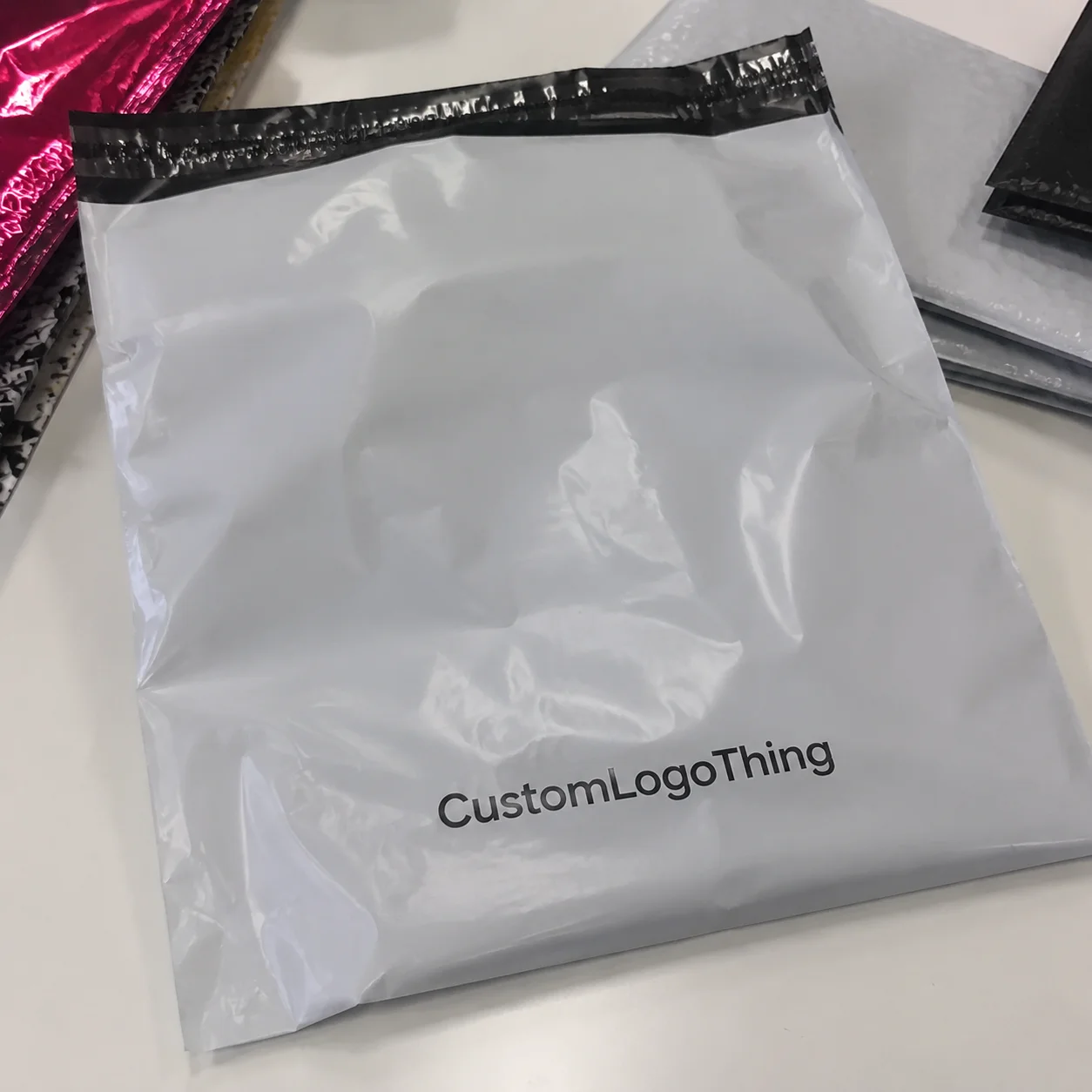
Buyer Fit Snapshot
| Best fit | Eco Poly Mailers Design for Better Branding projects where brand print, material claims, artwork control, MOQ, and repeat-order consistency need to be specified before quoting. |
|---|---|
| Quote inputs | Share finished size, material target, print colors, finish, packing count, annual reorder estimate, ship-to region, and any compliance wording. |
| Proofing check | Approve dieline scale, logo placement, barcode or warning zones, color tolerance, closure strength, and carton packing before bulk production. |
| Main risk | Vague material claims, crowded artwork, missing packing details, or unclear freight terms can make a low unit price expensive after revisions. |
Fast answer: Eco Poly Mailers Design for Better Branding: Film, Print, MOQ, and Carton Packing should be specified like a repeatable production item. The safest quote records material, print method, finish, artwork proof, packing count, and reorder notes in one written spec.
Production checks before approval
Compare the actual filled-product size with the drawing, then confirm tolerance on folds, seals, hang holes, label areas, and retail display edges. Reserve space for logos, QR codes, warning copy, and material claims before decorative graphics fill the panel.
Quote comparison points
Review material grade, print process, finish, sampling route, tooling charges, carton quantity, and freight assumptions side by side. A quote is only useful when the supplier can repeat the same color, closure quality, and packing count on the next order.
One of the strangest wins I ever saw came from a color change on a mailer, not a material change. In a Shenzhen factory, a client swapped a bright neon green for a muted forest green on the same recycled film, same 70-micron thickness, same adhesive, same carton count, and the same 8,000-piece order. Their unit cost moved by about $0.01, and the customer feedback suddenly read “premium” instead of “cheap.” That is the kind of thing people miss when they search for Eco Poly Mailers design tips and assume design is just decoration.
I’ve spent enough time on factory floors to know the truth: the mailer is doing more work than most brand teams admit. It carries your logo, your sustainability story, your shipping damage risk, and your first impression. If the design looks muddy, noisy, or like an afterthought, customers notice. If it looks clean and intentional, the package feels worth keeping. That’s why Eco Poly Mailers design tips matter for branding, cost control, and practical shipping performance all at once. Honestly, I think this is one of the most underrated parts of packaging strategy, especially for brands shipping 2,000 to 20,000 units a month.
Eco Poly Mailers Design Tips: Why Small Packaging Changes Matter
Let me be plain: Eco Poly Mailers are not one single thing. Some are made with recycled polyethylene, some use recyclable mono-material structures, some have reduced-ink printing, and some are “eco” mainly because the supplier slapped a leaf icon on the spec sheet. The label matters. I’ve had buyers ask for biodegradable mailers when what they really needed was a recyclable mailer with PCR content and a clean print layout. Different products. Different claims. Different risk. And yes, different headaches for everyone involved, especially if the order is moving through factories in Guangzhou, Ningbo, or Dongguan with different documentation standards.
That’s why eco poly Mailers Design Tips start before artwork even exists. A mailer can be made from recycled content and still look cheap if the print is cluttered or the colors clash with the base film. It can also look expensive with a single-color logo, a crisp font, and 15 mm of breathing room on all sides. Design affects waste because every extra revision, extra print pass, and rejected proof burns time and material. Design affects shipping because large dark coverage on thin film can show scuffs, and too much ink near seals can lead to weak adhesion. Design affects memory because people remember the package they opened, not the spreadsheet that approved it. On a 10,000-piece run, a 2% rejection rate is 200 bags, which is enough to make any procurement manager stop smiling.
“We changed only the placement and the ink count, and the same mailer suddenly felt like a $4 brand package instead of a bulk shipping bag.” That was a buyer from a subscription apparel brand in Los Angeles. She wasn’t exaggerating. I saw the samples myself, and the print quote sat at $0.24 per unit for the revised version versus $0.22 for the original.
Here’s the mindset shift. The goal is not to make the mailer scream sustainability from across the warehouse. The goal is to make the package feel considered. Smart eco poly mailers design tips help an eco-friendly mailer look premium instead of flimsy, even when the material cost barely moves. That’s the sweet spot. Clean design. Low waste. Fewer complaints from fulfillment teams who hate peeling misaligned adhesive flaps at 6:30 p.m. I’ve watched that job on a line in Suzhou at 5,000 bags per hour, and nobody is writing poetry afterward.
I’ve also seen the opposite. A skincare brand tried to fit six certification icons, a slogan, an ingredient promise, and a full-panel gradient on a matte recycled mailer. The result looked like a coupon insert. They wanted “sustainable luxury.” What they got was visual clutter and a reprint bill of $1,850 for artwork fixes and a new plate set. Painful, yes. Avoidable, absolutely. I remember standing there while everyone stared at the proof like it had personally betrayed them, and the factory in Ningbo had already quoted a six-business-day delay to remake the plate.
How Eco Poly Mailers Design Works
The printing method drives a lot of the design limits. Flexographic printing is common for high-volume mailers because it is efficient and usually cheaper once the setup is done. Rotogravure gives strong detail and excellent repeatability, but the cylinder costs can sting if your order is small. Digital printing is great for shorter runs, variable artwork, and faster proof cycles, though unit pricing can be higher. I’ve seen quotes where digital started around $0.18 to $0.35 per unit for modest runs of 1,000 to 3,000 pieces, while flexo could drop lower at scale once you pass the setup threshold. That is not a universal truth. It depends on size, film, colors, and supplier. But the pattern holds, from factories in Shenzhen to converters in Ho Chi Minh City.
Then there’s the structure of the mailer itself. Film thickness matters. A 60-micron mailer behaves differently from an 80-micron one, especially for opacity and tear resistance. Seal strength matters because the side seals and bottom seal affect where artwork can live. The adhesive strip matters because you do not want a logo or slogan disappearing under the flap when the end customer uses the return seal. These are not tiny details. They are the difference between a package that looks planned and one that feels like it was designed by someone who has never watched a packing line move at 1,200 units per hour.
Ink coverage is another place where eco poly mailers design tips save money and headaches. On recycled or matte films, heavy ink can look dull or inconsistent because the surface absorbs and scatters light differently than a glossy virgin PE film. White underprint can help bright colors pop, especially if your base film is gray, kraft-inspired, or translucent. But white ink adds cost and another pass. I’ve negotiated enough print jobs to tell you this: if the design can work with fewer inks, you’ll usually get a cleaner result and a saner quote. My blunt opinion? Fewer moving parts is usually better than a fancy concept that falls apart in production.
Print registration also deserves respect. Flexible packaging moves. It stretches. It shifts a little under pressure, heat, and tension. That means fine lines, tiny text, and edge-to-edge artwork need extra caution. Keep critical copy away from the trim lines, and never park your logo on a seam unless you enjoy crop marks and angry emails. Bleed should be built into the file from the start, usually 3 mm to 5 mm depending on the supplier’s dieline. If the printer asks for a specific safe zone, use it. Don’t freestyle it. The factory will not salute your creativity while reworking 20,000 bags, and the reprint lead time is typically 12–15 business days from proof approval on a standard flexo order.
For brands that want the technical side, organizations like ISTA help establish packaging test expectations, and EPA guidance is useful when you are evaluating environmental claims. That does not replace a printer’s spec sheet, but it does keep people honest, especially when claims are being reviewed by buyers in California, Texas, or the EU.
Key Design Factors for Eco Poly Mailers
Color is the first decision I push clients to simplify. Strong contrast beats crowded palettes every time. If your logo is navy, a light gray or soft kraft-like mailer can work beautifully. If your brand colors are pastel, do not force them onto a translucent recycled film and expect miracles. That is how people end up with logos that look washed out at 9 a.m. and completely invisible under warehouse LEDs. One to two inks is often the sweet spot for both cost and readability. I know, that sounds boring. It also works, and in a 5,000-piece production run it can keep unit pricing near $0.16 to $0.21 instead of climbing toward $0.30.
Logo placement comes next. Top-left or centered placements are usually the safest options because they create instant recognition when the mailer is stacked, scanned, or photographed for social media. But you must respect seams, perforations, and the adhesive flap. I once watched a brand approve a gorgeous centered logo only to discover the bottom seal cut straight through the last two letters. The replacement cost was $640 for the plate correction and another week of waiting. A painful lesson in geometry, especially when the shipment was already booked from Dongguan to Long Beach.
Messaging hierarchy is where many brands get cocky. Your mailer is not a full campaign board. It needs one clear logo, one website, and maybe one short sustainability message. That is enough. If you are trying to fit your mission statement, QR code, product promise, and five icons, your customer has to work too hard. Clean eco poly mailers design tips usually start with restraint. A simple message is easier to remember and easier to print accurately. Also, it does not make your bag look like it lost an argument with a brochure.
Material compatibility matters more than design teams like to admit. A minimalist mark can look luxurious on a matte recycled surface. The same art can look harsh on a shiny film or muddy on a dark PCR blend. I’ve seen brands assume the artwork was wrong when the real issue was the substrate. The design should fit the surface finish, opacity, and color tone. If it does, the package feels intentional. If it does not, the package looks like it lost a fight with the printer. A 350gsm C1S artboard sample might look perfect in a carton proof, but on a 70-micron poly mailer the same artwork can flatten unless the contrast is adjusted.
Below is a practical comparison I use when clients ask how different design choices affect price and presentation. The numbers vary by supplier and order size, but the pattern is consistent.
| Design Choice | Typical Unit Cost Impact | Brand Look | Best For |
|---|---|---|---|
| 1-color logo on standard recycled film | Lowest; often the most efficient setup | Clean, modern, easy to read | Small brands, bulk shipping, subscription mailers |
| 2-color layout with white underprint | Moderate; more setup and ink | Sharper color pop, more premium feel | DTC brands, retail-ready shipping bags |
| Full-panel artwork with multiple inks | Highest; more print passes and waste risk | Bold, but harder to keep clean | Campaign launches, special editions |
| Digital variable artwork | Higher per unit at scale, flexible for short runs | Good for testing and personalization | Limited drops, influencer kits |
I tell buyers to treat the design as a system, not a decoration. If the mailer goes through a fulfillment center, gets tossed in a tote, and lands on a customer’s kitchen table, it has to survive that journey visually and physically. The best eco poly mailers design tips account for all three: the artwork, the substrate, and the shipping abuse. Because yes, customers absolutely notice when the package is rubbed raw before they even open it, especially if the shipment traveled 3,000 miles from a factory in Guangdong.
Eco Poly Mailers Design Tips: Step-by-Step Process and Timeline
I always start with the brand goal. Are you building a retail-like unboxing moment, replacing a cardboard mailer for an influencer kit, or trying to cut shipping costs in bulk without looking like you gave up? Those are three different jobs. The right eco poly mailers design tips change based on the answer. A subscription apparel brand may want a bold repeat pattern. A cosmetics brand may want a quiet, elegant mark. A warehouse-driven operation may care more about stackability and print durability than anything decorative.
Once the goal is clear, artwork prep begins. You need the correct dieline, exact dimensions, bleed, and safe zones before anything goes to production. I’ve seen a $3,200 order get delayed because the client sent a square logo file and assumed the factory would “resize it.” No. The factory is not a graphic designer with infinite patience. If the artwork file does not match the bag size, adhesive area, and seal margins, somebody has to fix it. That someone usually bills you, and in many factories the correction alone adds 1 to 2 business days before proofing can restart.
Here is the file discipline I ask for:
- Vector logo files in AI, EPS, or editable PDF
- Bleed of 3 mm to 5 mm, depending on the die line
- Safe zone at least 5 mm from trim and seal edges
- Color references in Pantone or CMYK, plus a printed sample if possible
- Ink limits for recycled or matte films
Proofing is where smart brands save themselves from embarrassment. Digital mockups are useful, but I prefer a physical sample when the order is above 5,000 units or the design has critical color matching. Under warehouse lighting, a muted green may turn gray. Under phone flash, a dark navy can look almost black. Under retail spotlights, metallic-style ink can behave like a mirror. That is why I insist clients review samples in the light where the package will actually be seen. I learned that the hard way after approving a sample that looked perfect in a conference room and oddly sad under fluorescent warehouse lights.
One of my favorite supplier negotiations happened in Dongguan. We were discussing a 12,000-piece run with a soft-touch matte surface and a two-color print. The factory suggested a cheaper gloss finish to “save cost.” I pushed back, asked for a sample on both substrates, and the matte version won by a mile. The gloss option looked plastic. The matte one looked intentional. The price difference was $0.012 per bag. That tiny number changed the whole perception of the brand. Good eco poly mailers design tips often come down to these tiny tradeoffs, especially when your factory is quoting in RMB and your finance team is converting to dollars.
Typical timeline stages look like this, though timing depends on approval speed and factory load:
- Concept and size planning: 1 to 3 business days
- Artwork prep and dieline adjustment: 2 to 5 business days
- Digital proof review: 1 to 2 business days
- Physical sampling: 5 to 10 business days if requested
- Mass production: often 10 to 18 business days after proof approval
- Freight planning: add 5 to 30 days depending on shipping method
If you are ordering through Custom Poly Mailers, ask for the proof before production starts. If the supplier will not show a safe-zone mockup, that is a sign to slow down. I would rather lose two days than reprint 20,000 bags because somebody forgot the return seal sits across the back panel. That kind of mistake is how perfectly nice budgets start crying. For comparison, a typical proof-to-shipment cycle on a standard 8,000-piece order from approval in Shenzhen is often 12–15 business days before export packing.
Cost and Pricing Considerations for Eco Poly Mailers
Design complexity has a very real price tag. Every extra color means more setup. Every special finish adds cost. Every unusual size increases waste during cutting and sealing. In practical terms, a one-color recycled mailer might come in at a far friendlier rate than a full-panel, multi-color design with white underprint and a custom size. I’ve seen pricing differences of $0.02 to $0.08 per unit just from artwork choices alone on orders in the 10,000-piece range. Multiply that by a large shipment and suddenly you are talking real money, not pocket change. On a 25,000-piece order, that spread can mean $500 to $2,000 in added cost.
MOQ matters too. Smaller batch orders usually carry a higher per-unit price because the setup cost is spread across fewer pieces. At larger volumes, the unit price drops, but only if the design is print-efficient. That is why eco poly mailers design tips should always be tied to order quantity. A brand ordering 3,000 pieces should think differently from a brand ordering 30,000. If you only need a test run, digital or a simple flexo setup may make more sense than an elaborate gravure program. For a 5,000-piece trial, a supplier in Xiamen may quote $0.15 per unit, while the same artwork on a 20,000-piece run can fall closer to $0.09 to $0.12 depending on ink count and film.
Here is where brands can save money without making the package look cheap:
- Use one or two ink colors instead of four or five
- Choose standard sizes rather than custom dimensions
- Keep artwork flat and avoid full-coverage backgrounds when possible
- Limit revisions by approving a proper dieline early
- Plan freight ahead so you do not pay rush charges
And yes, there are hidden costs. Custom plates can run from a few hundred dollars to well over $1,000 depending on process and size. Sampling might be free with some suppliers and charged by others. Shipping can surprise people, especially when you are moving lightweight but bulky packaging by air. A client once spent $420 on air freight to save a launch date, and honestly, that was still cheaper than missing a retail window by two weeks. I have seen worse. I have seen a brand eat $1,900 in inventory holding costs because they approved artwork three days late. That hurts more than the freight bill, particularly when the goods are sitting in a warehouse near Shanghai waiting for a pallet slot.
One more thing: ask for the breakdown. A good supplier should explain whether the quote includes plates, sampling, standard cartons, and export packing. If they do not, the “cheap” price may grow legs and walk away from your budget. I prefer suppliers who are boringly transparent. It saves everyone from bad surprises, and it is a lot easier to compare a quote from Shenzhen with one from Kuala Lumpur when the line items are actually visible.
Common Mistakes in Eco Poly Mailers Design
The biggest mistake is trying to cram too much detail onto a flexible surface. Tiny text looks neat on a screen and terrible on a moving film bag. Fine lines can disappear, especially if the substrate is matte or recycled. I’ve seen logos with hairline strokes vanish completely after printing because the line weight was too thin for flexo. The fix was simple: thicken the line, reduce the number of elements, and stop pretending the mailer was a poster. I know that sounds harsh, but the press does not care about your mood board, and a 2-point serif font may be unreadable after the first sealing pass.
Another mistake is using sustainability claims that are vague or legally risky. “Eco-friendly” means almost nothing by itself. “Recyclable where facilities exist” or “made with 30% recycled content” is more specific, but only if you can support it. I am not a lawyer, and I never pretend to be one. But I have watched brands get uncomfortable when a retailer asked for documentation they did not have. If you want to make a sustainability statement, back it with supplier data, FSC documentation if relevant, or third-party testing where applicable. Otherwise, keep the claim modest and keep your claims file ready for buyers in Berlin, Chicago, or Melbourne.
Ignoring seam placement is a classic rookie move. You would be shocked how often a gorgeous center logo gets cut off by the bottom seal or hidden by the adhesive strip. The back panel can be especially tricky because the return flap changes the usable area. A supplier in Vietnam once showed me three runs from different brands, all with the same mistake: the logo sat too close to the fold. The result was clipped text and a lot of blame-shifting. None of it necessary. A 5 mm safe-zone adjustment would have solved it. Five millimeters. That is it. Packaging can be wonderfully annoying like that, especially on a 250-micron seal area where the heat changes the alignment just enough to matter.
Finish and opacity are easy to overlook too. A mailer might look great flat on a table and then feel flimsy in hand because the film is too thin or too shiny. Some recycled films have a slightly uneven tone, which means print colors shift from batch to batch. That does not mean the product is bad. It means the design must respect the material instead of fighting it. Smart eco poly mailers design tips assume real-world variation. Idealized mockups do not pay freight bills, and a pretty render will not fix a 65-micron bag that shows scuffs after 200 units.
Finally, never assume every “eco” material prints the same. It does not. PCR blends, recycled-content films, and matte finishes all behave differently under ink and pressure. If your previous supplier used a virgin PE film and your new one uses post-consumer recycled content, the artwork may need adjustment. That is normal. It is not a crisis. It is packaging. And if the supplier is manufacturing in regions like Jiangsu or Zhejiang, ask for a pre-production sample before committing to the full 15,000-piece run.
For brands that want a broader packaging range, Custom Packaging Products can help keep the visual system consistent across mailers, cartons, and inserts.
Expert Eco Poly Mailers Design Tips You Can Use Right Away
Keep the front clean. One logo. One message. One URL. That is it. The bag is not a billboard for your entire origin story, and honestly, the customer does not need a six-line paragraph before they can open the package. A clean front panel feels more premium, prints more accurately, and is easier for fulfillment teams to handle. If you want to add personality, use a pattern on the back or a repeat motif in one corner, ideally with 10 mm of breathing room from the seal.
Use a limited palette and lean into negative space. That is one of the simplest eco poly mailers design tips that also happens to make the package look more sustainable. Empty space communicates confidence. It also reduces print complexity. A two-color design on a soft gray recycled film can look more expensive than a full-color explosion on a glossy bag. I’ve seen it happen a hundred times. Less noise. Better brand recall. Less chance of everybody in the room pretending the clutter is “intentionally dynamic.”
Ask for a pre-production sample and test it under three conditions: retail lighting, warehouse lighting, and phone camera flash. Those three environments reveal different problems. Retail light may wash out pale colors. Warehouse light can make dark tones look muddy. Flash can expose uneven ink coverage or surface scuffing. One client sent me a sample photo and said the logo looked “off.” The issue was not the logo. It was the lighting at their fulfillment center in Dallas. We fixed it by changing the base film tone and increasing contrast by one Pantone step, which cost nothing compared with reprinting 12,000 bags.
Choose design elements that support repeat use or reuse. If the mailer is attractive enough, customers may keep it for returns or secondary storage. That is not just a nice branding moment. It extends the life of the package. Durable messaging, a clean return note, and a pattern that does not look trendy for five minutes can help. I like designs that still make sense if the customer sees them again in a closet or drawer. A good package has a second life when possible, and a good return flap in a 70-micron bag can make that second use practical for another 2 to 3 shipping cycles.
Work with your printer early on file setup. I mean early. Not after the art director “finalizes” the brand story deck for the seventh time. Ask for the dieline, confirm the print method, check the approved Pantone targets, and verify whether the supplier needs separate files for front, back, and flap areas. This is where good eco poly mailers design tips save real money. Fixing a file before plates are made is cheap. Fixing it after production starts is not. In many factories, a last-minute file correction can add 24 to 72 hours before the line restarts.
If I had to reduce the whole thing to one sentence: design for the material you actually have, not the material you wish you had.
When I visited a supplier near Ningbo, the production manager kept a sample board pinned beside the line. Every “good” result had a note explaining why it worked: low ink coverage, no fine serif font, logo away from the seam, matte finish matched to the recycled film. That board told me more than a sales deck ever could. Real packaging is won on practical details like that, and the best teams in Zhejiang or Jiangsu usually have a wall full of those clues.
And if you want the sustainability story to hold up, check the certs. FSC is relevant for paper-based components and certain packaging programs, while other materials may need different documentation. For reference standards and packaging best practices, the Packaging School and packaging industry resources are useful starting points, and FSC is the place to verify forest-based claims. Use the right proof for the right claim. Saves arguments later, especially when a retailer in London asks for the paperwork on a Friday afternoon.
My last piece of advice is simple and annoyingly effective: print less, say more, and test before you commit. That is the heart of strong eco poly mailers design tips. The best mailers are not the loudest ones. They are the ones that look good, ship well, and do not force your team into a reprint scramble because a seam ate the logo. If the quote is $0.15 per unit for 5,000 pieces and the proof takes 2 days, that is usually a better outcome than trying to save a penny and losing a week.
FAQs
What are the best eco poly mailers design tips for small brands?
Start with a simple layout: logo, website, and one short sustainability message. Use one or two ink colors to keep costs down and maintain a clean look. Pick a mailer color that supports your logo instead of fighting it. For smaller brands, that usually means a recycled gray, soft white, or muted tone that gives you stronger contrast without extra print passes. On a 3,000-piece order, that can keep pricing closer to $0.17 to $0.28 per unit instead of pushing the quote upward with extra inks.
How many colors should I use for eco poly mailers design?
One to two colors is usually the sweet spot for cost and clarity. More colors can work, but they increase print complexity and price. Strong contrast matters more than a crowded color palette. If your logo needs extra help, use white underprint only where it truly improves legibility, not across the whole bag. For example, a black logo on a 70-micron recycled gray mailer often reads better than a four-color gradient that looks good only in the mockup.
How long does the eco poly mailers design and production process take?
Artwork prep and proofing often take several days depending on revision speed. Sampling can add time if you want a physical check before mass production. Production and freight timing depend on order size, print method, and supplier capacity. A realistic schedule for a custom run often falls in the 2-4 week range before freight, but that can move faster or slower based on the factory queue. In many cases, proof approval to shipment is typically 12-15 business days for a standard order of 10,000 pieces.
Do eco poly mailers cost more than standard poly mailers?
They can cost more depending on recycled content, print method, and order quantity. Simple artwork and larger volumes help reduce the per-unit price. Sampling, plates, and freight can also affect the final budget. In some cases, a cleaner one-color eco design can land close to standard pricing, especially when the supplier can use efficient print setup and a common size. I’ve seen a 5,000-piece run price at $0.15 per unit with a standard recycled film and a single-color print.
What should I avoid when designing eco poly mailers?
Avoid tiny text, busy patterns, and low-contrast colors. Do not make sustainability claims you cannot prove. Always check seam placement, bleed, and proof accuracy before approval. Also avoid assuming a recycled film will print exactly like virgin plastic; the surface may shift color slightly, and the artwork should be adjusted to match. If the safe zone is 5 mm and the flap sits close to your logo, move the logo before you approve the plate.
Good packaging design is rarely flashy. It is usually disciplined, slightly boring in the best way, and incredibly effective. If you treat the bag like a product, not an afterthought, you get better branding, fewer reprints, and a smoother production run. That is the real payoff of eco poly mailers design tips. Better branding. Less waste. Fewer factory surprises. And if you have ever stood next to a sealed pallet of reprints while someone mutters about “small artwork changes,” you know why that matters, especially when the job started in a Shenzhen or Dongguan plant and had a shipping deadline hanging over it.
Takeaway: choose a simple layout, confirm the dieline and safe zones before artwork is finalized, and test the mailer on the exact substrate you plan to order. That one habit prevents most reprints, keeps the package looking premium, and makes the sustainability message feel credible instead of forced.