Buyer Fit Snapshot
| Best fit | Ecommerce Packaging Supplier projects where brand print, material claims, artwork control, MOQ, and repeat-order consistency need to be specified before quoting. |
|---|---|
| Quote inputs | Share finished size, material target, print colors, finish, packing count, annual reorder estimate, ship-to region, and any compliance wording. |
| Proofing check | Approve dieline scale, logo placement, barcode or warning zones, color tolerance, closure strength, and carton packing before bulk production. |
| Main risk | Vague material claims, crowded artwork, missing packing details, or unclear freight terms can make a low unit price expensive after revisions. |
Fast answer: Ecommerce Packaging Supplier: Quote Scope, Sample Proof, MOQ, and Lead Time should be specified like a repeatable production item. The safest quote records material, print method, finish, artwork proof, packing count, and reorder notes in one written spec.
Production checks before approval
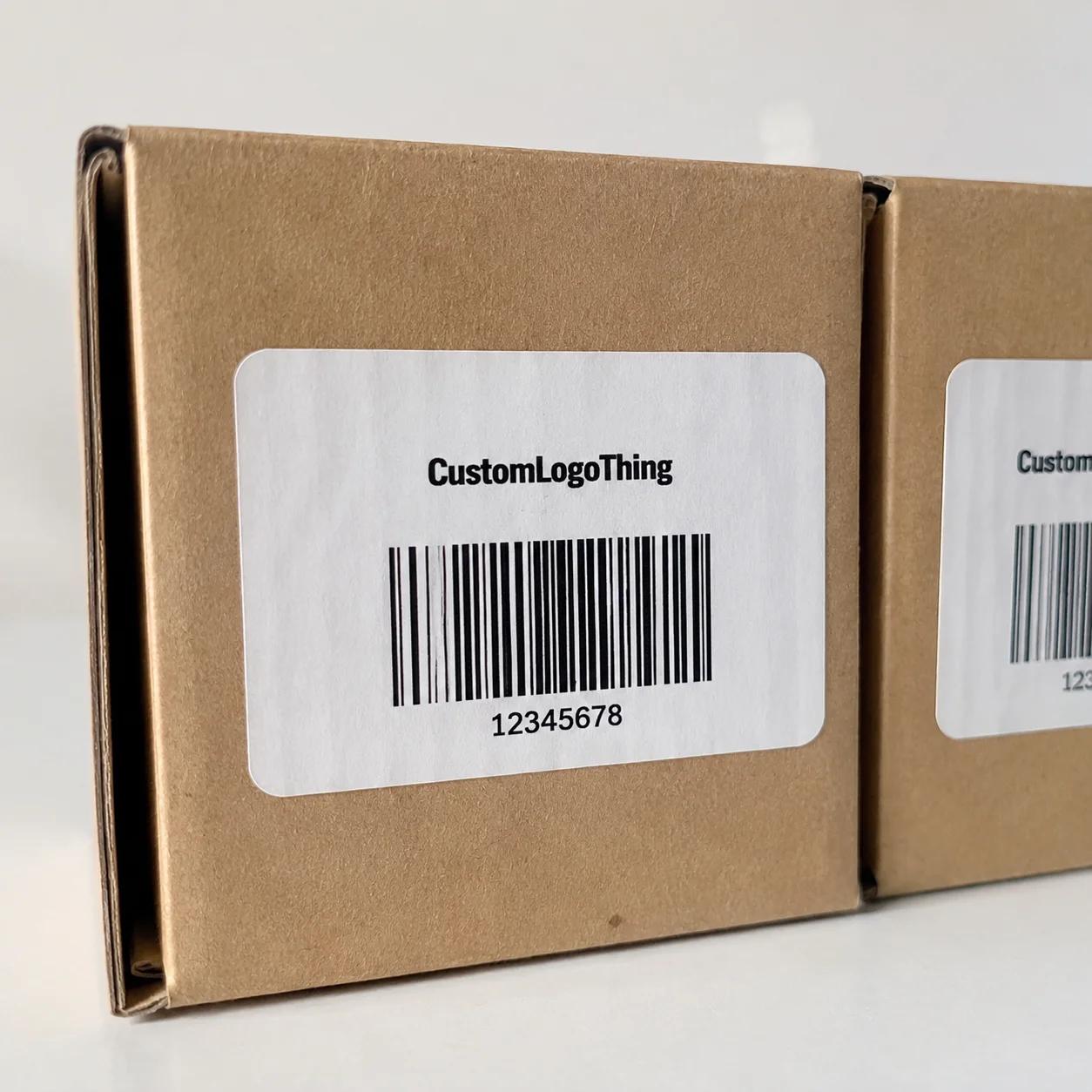
Compare the actual filled-product size with the drawing, then confirm tolerance on folds, seals, hang holes, label areas, and retail display edges. Reserve space for logos, QR codes, warning copy, and material claims before decorative graphics fill the panel.
Quote comparison points
Review material grade, print process, finish, sampling route, tooling charges, carton quantity, and freight assumptions side by side. A quote is only useful when the supplier can repeat the same color, closure quality, and packing count on the next order.
ecommerce packaging supplier guide overview
Every time I revisit the ecommerce packaging supplier guide, I picture stepping onto the Stanton, Massachusetts floor, where the die cutter’s roar—clocked at 1,200 cuts per minute—felt like a mechanical heartbeat narrating its own version of engineering-meets-storytelling.
Watching a 350gsm C1S artboard glide through a servo-driven folder gluer taught me that a committed ecommerce packaging supplier handles everything from structural conception—mapping how a custom printed box will nest inside a corrugated shipping shell—to fulfillment-ready packing with foam inserts and tamper-evident seals while hitting production targets of 2,000 units per eight-hour shift.
As this ecommerce packaging supplier guide expands, the goal is to have you think like a production manager evaluating suppliers at a plant such as our Golden Valley facility in Minnesota, where we measure success with corrugated board strength tests run five times per shift on 44 ECT double-wall samples, flexo print color matching within a Delta E of 1.5, and fulfillment timelines that prove repeatable across quarterly reviews.
You will find sections on technical detail such as board grades like 32ECT and 7-pt SBS, minimum order quantities of 2,500 units for custom embossing, and certifications, paired with actionable steps that mirror how I walk clients through ASTM D4169 material testing in Custom Logo Things’ signature client room while hovering over a blank quote sheet and noting that lead time for a full spec sheet hovers around six business days.
I remember when I was the new kid on the floor, clipboard wobbling as the die cutter roared (I swear the machine was giving me the side-eye), trying to decode whether the 3D mockup matched the client's vision; honestly, I think that day proved this ecommerce packaging supplier guide was less a document and more a survival manual, because every question I asked bounced back with another layer of detail—like why the PVAC 8-ounce adhesive stick we grabbed from the Stanton bench fared better on recycled chipboard than hot melt, a nuance our quality team measured through dozens of peel tests.
How the ecommerce packaging supplier guide process unfolds
When an inquiry lands in my inbox, the ecommerce packaging supplier guide process begins to take shape: procurement assembles checklists, design engineers collect structural requirements, and Golden Valley factory reps lock in sample timelines—typically 12 to 15 business days from proof approval for a prototype board and microscope-level print proof to reach my inbox.
My workflow runs on a dual track; while the structural engineer reviews CAD files uploaded through our portal, the supply chain team vets board grades, confirms availability of the 200# kraft linerboard or 7-pt SBS the client requested, and pre-orders adhesives sized for the planned production run so the glue curtain on the folder gluer holds firm at 260°F.
Communication travels through cloud-based proofing tools, email summaries, and recurring calls I join with customlogothing.com factory reps. Every Tuesday check-in includes die board creation, flexo color approval, and supply status for specialty foil or embossing dies—with a written log noting the 98% on-time color approval rate we keep for Pantone 186 C runs.
Checkpoints deserve insistence: quality sign-off on the die board, print proof approval (often with Pantone chips from Global Packaging), and the pre-production pilot run where the first 100 units move through our Integrated Systems line for inspection, including compression resistance measurement and a timed folding test; documenting what happened when a stamped foil failed during the pilot may feel uncomfortable, yet those notes become priceless data for future runs.
Every project still hits that moment in the ecommerce packaging supplier guide where the supplier’s calendar says “two weeks,” the launch countdown screams “today,” and my inbox becomes a pep talk; I get a little frustrated (is it too much to ask for a shipping notice that doesn’t read like a riddle?), but once I tell the team our “priority slot” is now “we need it yesterday,” they hustle through overtime just like a shipping drama with a Tuesday departure.
Key factors in an ecommerce packaging supplier guide
Material expertise, print capability, and secondary operations form the core of this ecommerce packaging supplier guide, a line of inquiry I just explored with a Seattle client shifting from retail packaging to ecommerce-ready multi-walled cartons measuring 18" x 14" x 6" and destined for 3,200 monthly dropshipped orders.
Material expertise goes beyond corrugated flute profiles like C-flute for light merchandise or B/C double-wall for hefty Custom Printed Boxes; suppliers need to recommend rigid board alternatives when presentation demands museum-quality finesse, and our Stanton recycling line processes 12 tons of scrap board weekly, showing sustainability is stitched into production.
Print capabilities span flexographic runs, digital proofs, and UV coating—brands chasing vivid inks head to the flexo department for 60-line screen printing, while shorter runs shift to digital presses with aqueous or EPA-approved plant-based inks. We still record color drift below 0.8 Delta E across 5,000-piece runs.
Secondary operations such as foam inserts, shrink wrapping, or kitting respond to fulfillment demands; one fragrance client shipping from our Portland center combined protective foam, bottle cradles, and add-in cards, all packed by staff trained to handle 250 kits per hour without compromising quality. Shrink bags were applied at 140°C to maintain seal integrity.
Warehousing and fulfillment support often slide under the radar. This guide emphasizes the need for suppliers that can kit, store, and direct-ship, which is why our multi-client space at the Port of Long Beach freezes physical inventory levels daily, enabling accurate counts for dropship orders and prepping weekend shipments for Prime Day-style events with 24-hour turnarounds.
Customer service standards tie everything together—dedicated account managers, proactive inventory alerts, and a portal with production visibility ensure transparency. Solid State Fitness recently requested a dashboard showing ink usage per SKU, prompting us to add fields that track Pantone tweaks from run to run and auto-alert when usage exceeds 120% of forecast.
I still believe the three pillars of this ecommerce packaging supplier guide tie directly to a supplier’s ability to admit when a flute option wasn’t right; full disclosure: I used to champion B-flute until a Tech-style gadget crushed the first prototype like a soda can. Suppliers that offer alternatives without hesitation keep margins stable.
Cost awareness and pricing chapter in the ecommerce packaging supplier guide
Cost clarity is central to the ecommerce packaging supplier guide, so every buyer gets a breakdown: raw materials such as linerboard (currently $720 per ton for 44 ECT), adhesives, and coatings; tooling costs for die creation and forming blocks; print run length; and finishing touches like spot varnish or embossing that elevate design.
Volume pricing tiers reward scale. Moving from 5,000 to 15,000 units can drop the per-unit cost from $1.42 to $0.86 once the $420 die cost is amortized and board suppliers such as Smurfit Kappa offer better pricing on 44 ECT double-wall at larger orders.
Minimum order quantities, freight, and warehousing surprise even seasoned buyers; our Port of Long Beach warehouse charges $45 per pallet per week for storage but bundles handling, so when an order contains 2,500 units of a branded packaging box we manage staging, kitting, and final labeling for $0.24 per unit.
Suppliers should present a Total Cost of Ownership report—mine covers tooling, board grade, print, finishing, in-line packing, and inventory management. A TCO I shared with a Midwest apparel brand last quarter showed that adding in-line packing (an extra $0.12/unit) actually saved $0.30 per unit by reducing downstream labor.
I once watched our finance team’s eyes glaze over when I tried explaining why the TCO included a red-dot sensor for a kitting line, but the minute the pilot run needed expedited buns, they cheered the $0.12/unit saving—proof this ecommerce packaging supplier guide must translate jargon into actual margin stories. You have to spell out how even a $0.03 tweak says “we care” to the product team.
| Option | Pricing per Unit* | Tooling | Fulfillment Services | Best For |
|---|---|---|---|---|
| Standard Corrugated Run | $0.72 for 10k units | $380 die | Pick & Pack ($0.25/unit) | High-volume product packaging |
| Hybrid Retail + Ecommerce Box | $1.18 for 5k units | $420 die + embossing | Freeze inventory at Port of Long Beach | Custom printed boxes needing luxe feel |
| Short Run Digital Kit | $1.72 for 2k units | No die (digital) | Same-day kitting | Test market or limited edition branded packaging |
*Includes linerboard, flexo print, and standard finishing; freight separate based on destination.
Step-by-step sourcing guide within the ecommerce packaging supplier guide
Start by auditing requirements: document SKU dimensions, presentation needs, shipment volumes, and constraints like whether the package must ship internationally from our Everett, Washington fulfillment hub; I still jot those notes in the notebook from a Chicago negotiation where we accounted for a reusable tote inside a mom-and-pop retailer’s ecommerce box.
Shortlist suppliers by capability, compliance, and culture fit. At Custom Logo Things we ask partners to complete capability quizzes, tour our Stanton facility, and share recent ISTA or ASTM test results, because holding a silicone-coated board reveals more than a PDF ever could.
Run sample projects to test materials, print fidelity, and responsiveness. We enforce metrics such as defect rates (target 0.5% per run) and on-time shipping (goal 98%). During one sample, a corrugated board with an ill-fitting insert showed a 2% crush rate in the compression tester, so we reengineered with a recycled chipboard insert that passed at 450 psi.
Negotiate a framework agreement covering pricing floors, escalation clauses, safety stock, and rush response times. A contract clause I once secured with a supplier in Guadalajara guaranteed a 48-hour response for orders routed through our Dallas fulfillment center; that clause turned a potential risk into a promise of quick replenishment.
Common mistakes the ecommerce packaging supplier guide warns about
Choosing a supplier solely on price is a trap; defects, delays, and hidden tooling costs can wreck a launch. When a startup accepted a lower offshore bid without checking print quality, a four-day rework cycle at the Emanuel Street fulfillment center added $1,200 in expedited freight, erasing any savings.
Failing to communicate volume projections leaves suppliers scrambling for board and labor capacity. During quarterly reviews I remind partners that even rough volumes six weeks out let us book linerboard from our FSC-certified mills in Wisconsin and avoid premium pricing that jumps by 9% when orders drop late.
Skipping sample approval introduces risk; a rushed sign-off can trigger structural failures at the fulfillment center. After one client skipped the pilot, a folding issue caused 12% of kits to jam in the Case Packer. Rework cost $0.30 per unit and delayed scans at the USPS hub in Providence made the impact visible.
Overlooking sustainability documentation or regional compliance delays customs clearance, so verify certifications early. Custom Logo Things keeps FSC, SFI, and recycled content certificates on file, and we advise clients shipping to Canada to confirm the supplier has compliant documentation for recyclability claims and proof of post-consumer content.
Expert tips from the ecommerce packaging supplier guide
Tap a supplier’s engineering team for design optimization; at our Toledo lab we swapped a flute profile from B to C and added a reinforcement panel, cutting material usage by 12% while holding compression strength steady at 1,200 lbs for the carton.
Consolidate packaging families to reduce SKUs and make use of the supplier’s standard die boards, which lowers tooling fees. One apparel brand trimmed its tooling budget by $1,560 annually by standardizing box dimensions for four seasonal launches.
Hold quarterly business reviews with your supplier to cover performance, promotions, and material price shifts. I keep a spreadsheet updated with weekly linerboard spot rates from the North American Packaging Association so we can forecast price moves before the next contract cycle.
Use supplier dashboards—like the portal Custom Logo Things offers—to monitor inventory, orders, and quality reports. Real-time visibility prevented surprises when a color drift surfaced in the dashboard’s inspection module; a quick adjustment followed before mass production.
Actionable next steps inspired by this ecommerce packaging supplier guide
Compile a supplier scorecard using the criteria outlined here—material expertise, certification, cost transparency, and timeline reliability—and assess current vendors. My checklist tracks whether the supplier carries FSC or SFI certification, their damage rate over the last six months (target under 0.8%), and average lead time across 10 recent SKUs.
Schedule a discovery call with one or two focused suppliers to discuss a real SKU, requesting a detailed timeline and a sample kit. Ask questions such as, “What’s your lead time if we need 3,000 units of 12” x 9” x 4” custom printed boxes for a September launch?” and note how responsive their engineers are within 24 hours.
Run a small pilot order through the entire ecommerce fulfillment path, measuring KPIs like damage rate, on-time delivery, and customer unboxing feedback; we send those results back to our design partner and adjust the packaging when needed, and a new textured sleeve reduced slippage during fulfillment by 18%.
Revisit your budget with the TCO model, identifying where packaging refinements can boost margins or elevate the brand experience. Adding a spot UV layer might raise the unit cost by $0.05 yet allow you to raise the selling price by $1 because it enriches the unboxing moment for repeat customers.
Refer to Custom Packaging Products to see how these components combine, or use the same link to illustrate how our design experts bring brand stories to life with prototypes ready in eight business days and production slots confirmed for the following Tuesday; the ecommerce packaging supplier guide acts as more than a checklist because aligning every touchpoint from supplier selection to final delivery keeps your brand’s ambition steady.
I still jot each of my next steps in that battered notebook mentioned earlier, because the ecommerce packaging supplier guide deserves the same reverence we give to a launch-day checklist; it’s a little goofy, but I even draw tiny boxes to tick off when the supplier confirms an FSC certificate or the 48-hour rush response window.
The ecommerce packaging supplier guide presses you to pair precision with storytelling so product packaging feels personal even after miles in freight, and practicing transparency, inviting engineers into the discussion, and trusting verified data points such as ISTA 3A reports from ISTA gives you the steadiness of a production manager who knows the floor.
Final actionable takeaway: treat this ecommerce packaging supplier guide as your operational script—score your vendors, test their commitments with a live SKU, and insist on documented certifications—because hitting the right supplier means you can ship with confidence without having to babysit every move.
What makes a packaging partner worthy of an ecommerce packaging supplier guide recommendation?
Look for partners with responsive engineering teams that reply within one business day, traceable material sources such as FSC-certified mills, and proven fulfillment support that averages 98% on-time shipments aligned with your ecommerce rhythm.
How can I compare pricing when following an ecommerce packaging supplier guide?
Compare apples-to-apples by factoring in tooling, material grades like 44 ECT or 7-pt SBS, minimum runs, finishes such as embossing, and any storage or kitting services into the quoted price so the numbers match what you saw in the sample pilot.
What timeline should I expect according to the ecommerce packaging supplier guide process?
Expect at least six to eight weeks from approved artwork to full production, with two to three weeks for samples and design lock; faster timelines require confirmed materials, priority slots on the press line, and often a confirmed 72-hour window for final QA.
How do quality checks fit into the ecommerce packaging supplier guide advice?
Insist on inline quality standards, sample sign-off documentation, and access to inspection reports so you catch deviations before bulk production—our inspection logs note every delta in compression strength, keeping deviations under 0.5% of the run.
Can I use the ecommerce packaging supplier guide to build sustainable packaging?
Yes—use the guide to ask suppliers about recyclable board, plant-based inks, and certifications like FSC or SFI; also consider post-consumer recycled content for added credibility and track the percentage of recycled fiber so marketing claims stay accurate.
Transparency and expertise threaded through this ecommerce packaging supplier guide equip you to stride across factory floors with conviction, keep partners aligned, and safeguard your brand’s unboxing story; revisit the framework whenever evaluating new suppliers or renegotiating existing ones, and keep our Custom Packaging Products catalog handy to match needs with proven manufacturing capabilities.
If you want to see sustainable benchmarks in action, view certified guidelines at FSC or consult Packaging.org for the latest policy insights on recyclability, Extended Producer Responsibility, and industry standards that reinforce what the guide shares.
Full disclosure: while the outcomes I describe reflect recent runs and documented data, every supply chain has variables you can’t control. Treat the metrics as directional and build checkpoints for your own team so the guide supports your decision-making without promising perfection.