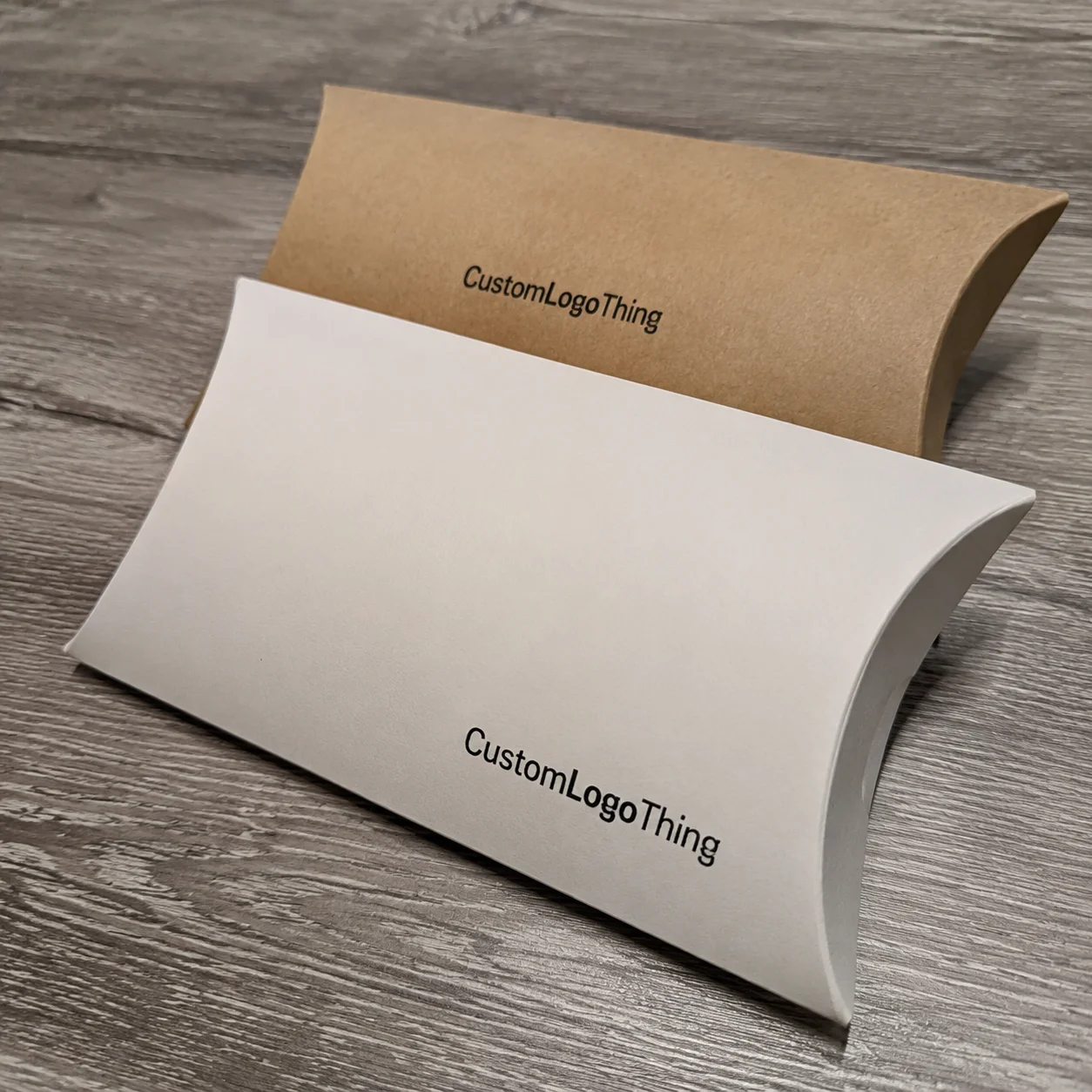
A single cap should not need a box built for a boot. Yet plenty of ecommerce hat orders still leave the packing bench inside oversized corrugated cartons, padded with paper, billed by cube, and stored in warehouse space nobody has to spare. Poly mailers for hat ecommerce orders solve a narrower problem: soft headwear usually needs clean, dry, branded containment more than rigid box protection.
That distinction matters because carriers charge for space as well as weight. A 4-ounce beanie can become an expensive shipment if it travels in a carton with a big dimensional profile. The waste is not only material. It is packing labor, storage volume, void fill, freight exposure, and the slightly ridiculous customer experience of opening a large box for one folded knit hat.
Poly Mailers for Hat Ecommerce Orders: The Box Is Often the Overbuild
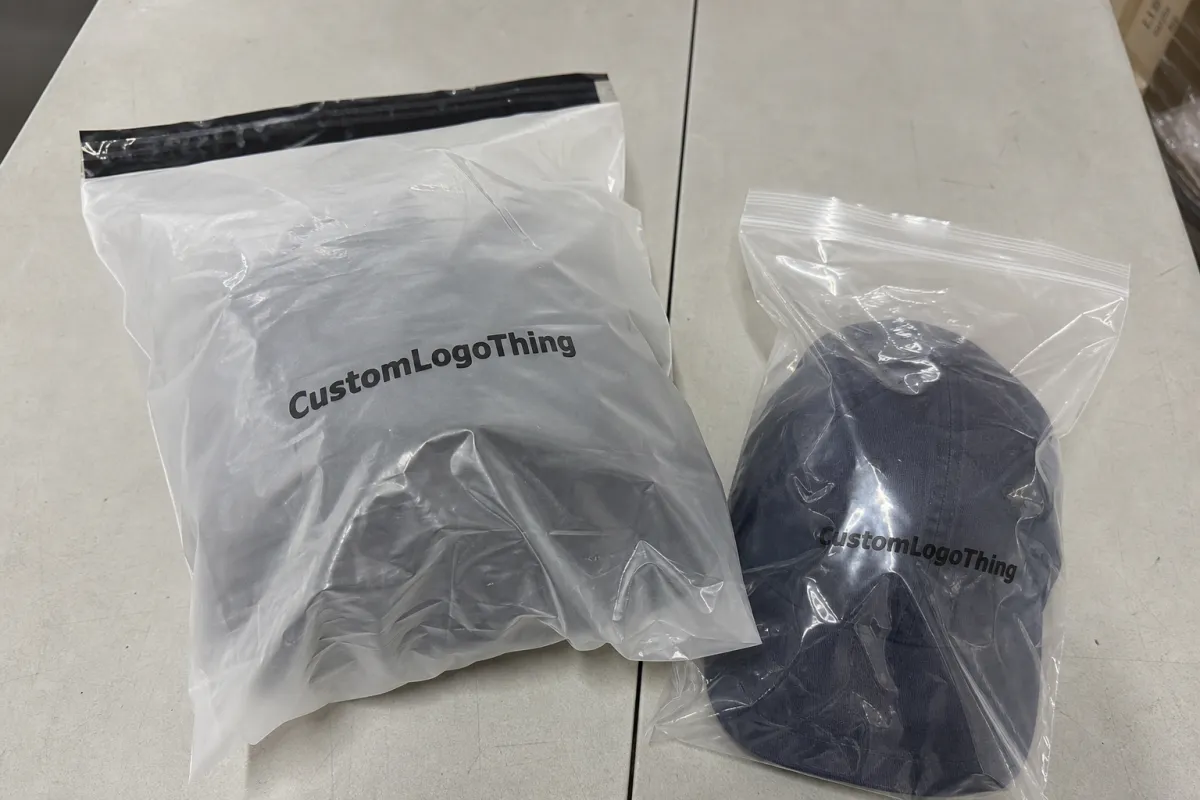
On a shipping floor, the mistake is easy to spot. One dad hat sits inside a box sized for three accessories. The packer adds kraft paper so the cap does not slide. The label goes on. The order moves out. Nobody questions it because the box “works.”
Fine. It works. That does not make it the right spec.
Corrugated boxes protect against compression, stacking, and impact. They also create cube. For unstructured caps, beanies, folded bucket hats, soft visors, and simple merch bundles, that cube may be unnecessary. A properly sized mailer can reduce package volume, shorten packing time, and give the buyer a cleaner branded delivery at a lower packaging cost than many box programs.
There is a boundary, and ignoring it gets expensive. Structured crowns, tall foam fronts, rigid flat brims, fragile pins, raised leather patches, or premium retail presentation requirements may need a box, insert, padded mailer, or hybrid format. This is where many brands get sloppy: they treat every hat as equally fragile. They are not.
Practical rule: if the hat can sit gently compressed in a retail bin without losing shape, a properly sized mailer may be a serious option. If the crown collapses, the brim warps, or the patch leaves a pressure mark, test a box or protective insert.
Custom Logo Things treats the choice as a specification problem, not a race to the thinnest bag. The right mailer depends on film structure, gauge, closure, print coverage, size, order mix, and the level of delivery risk the brand accepts. Better packaging shows up in lower damage rates, faster packing, fewer oversized shipments, and a delivery that looks intentional.
Which Hat Orders Belong in Custom Poly Mailers
Not every hat belongs in a poly bag. Many do. Beanies, dad caps, 5-panel caps, soft snapbacks, folded visors, lightweight bucket hats, promotional caps, and simple apparel-plus-cap orders are usually the first candidates to test. These products tolerate modest compression better than structured display caps.
Order configuration matters as much as product type. One hat is different from two hats. A hat-and-sticker bundle behaves differently from a hat-and-sock bundle. A cap packed with a T-shirt may get some protection from the garment around it, while a cap packed with a metal pin may need heavier film, internal wrap, or a different pack method to reduce puncture risk.
Buyers should flag risk factors before requesting a quote. Tall structured crowns, foam fronts, suede patches, 3D embroidery, metal hardware, flat brims, and retail-ready presentation standards all change the packaging answer. A mailer that is fine for a Washed Cotton Dad cap may be wrong for a premium snapback with a rigid crown.
| Hat Order Type | Likely Packaging Fit | Buyer Watchout | Typical Cost Position |
|---|---|---|---|
| Single beanie or soft dad cap | Custom poly mailer | Avoid excess empty space and weak closures | Often lowest unit and freight profile |
| Cap plus socks or stickers | Poly mailer or heavier co-extruded mailer | Check puncture points and label adhesion | Low to moderate |
| Structured cap with tall crown | Box, insert, or padded format | Compression can distort shape | Moderate to high |
| Premium retail presentation order | Rigid box or branded shipper | Unboxing condition may outweigh freight savings | Highest, but justified for some drops |
Compared with boxes, poly mailers reduce cube, storage space, and packing steps. Compared with bubble mailers, they usually cost less and ship flatter, though they offer less surface cushioning. That tradeoff is acceptable for many soft goods. It is not universal.
For brands buying through Custom Poly Mailers, the question is not “mailer or box?” That is too blunt. The better question is: which hat, which order mix, which damage risk, which branding requirement, and which freight cost target?
Material, Closure, and Print Details That Affect Delivery Quality
Material choice controls more than feel. Standard LDPE is common for ecommerce poly mailers because it is flexible, moisture resistant, and cost-efficient. Co-extruded poly can improve opacity and strength. Recycled-content films may support sustainability targets, though availability, minimum order quantity, and film appearance can vary. Compostable-style alternatives exist in some supply chains, but buyers should verify performance, storage conditions, and disposal claims through credible sources such as the EPA recycling and waste guidance.
Thickness is where cost and risk meet. Thinner films can lower the unit price for high-volume soft goods. Heavier gauges improve puncture resistance for orders with buckles, pins, embroidered patches, or multiple items. Many ecommerce programs start around common mailer film ranges such as 2.0 to 3.0 mil, then move up or down after packed sample testing. The film structure matters too; a single gauge number does not tell the whole story.
Closures deserve more attention than they get. A permanent peel-and-seal strip suits one-way shipping. Dual adhesive strips help with returns, which can matter for apparel-heavy brands. Tamper-evident closure zones may support higher-value drops or limited releases, especially when customers expect the package to arrive without signs of interference.
Print execution affects delivery quality as well as brand presentation. One-color logo printing is efficient for repeat ecommerce use. Full-color coverage can turn the mailer into a branded unboxing surface, but dense flood coats, fine lines, small reverse text, and edge-to-edge art need review against film color, print method, and minimum run size. A black logo on white film behaves differently than a cream logo on a kraft-tone recycled-content film. Pretending otherwise is how proofs become surprises.
Operational details look boring until they fail. Writable surfaces help exception handling. Barcode readability matters for warehouse routing. Label adhesion needs testing, especially on slick or heavily inked films. Perforation placement should not weaken the closure area. Packing teams care about whether the mailer opens quickly, receives the hat cleanly, seals without a fight, and scans without a second label slapped over the first one.
For hat ecommerce shipments, the strongest specification is rarely the most complicated. It is the one that protects the product, prints cleanly, seals reliably, and fits the team's actual packing motion.
Size Specifications for Caps, Beanies, and Multi-Hat Packs
Sizing is the first specification to get right. Oversized mailers look careless, wrinkle in transit, and may invite rougher handling because the product floats inside the bag. Undersized mailers stress the seal, distort the crown, bend the brim, or press patch edges into the fabric.
Start with the actual product, not catalog dimensions. Measure brim width, crown height, folded depth, patch thickness, button height, and the packed shape. Will the cap ship flat, gently nested, folded with tissue, or paired with apparel? A half-inch change can matter once the adhesive flap closes and the shipping label stiffens one side of the package.
A good quote request should include finished mailer width and height, flap depth, film thickness, film color, print area, closure type, and quantity. If the brand is not sure about size, send product measurements and photos of the packed hat. Custom Logo Things can compare those details against standard mailer formats and custom dimensions from the wider Custom Packaging Products range.
Testing should mimic the warehouse, not a desk demonstration. Pack the hat exactly as fulfillment will pack it. Apply the real shipping label. Flex the package. Stack it under modest weight. Open it after several hours and inspect the crown, brim, embroidery, and patch surface. If pressure marks appear in the test, they may show up in customer photos. Customers are very good at photographing the one thing nobody wanted photographed.
Bundle sizing needs sharper thinking. Two beanies may need only modest extra height because knit goods compress evenly. Two structured caps may require a different packaging format altogether. One optimized mailer plus one backup size often beats one universal mailer that is too large for 80 percent of orders and still too tight for the remaining 20 percent.
Order mix percentages make the buying decision clearer. If 8 out of 10 shipments are single soft caps, optimize for that lane. Use a second SKU for bulkier bundles. That is how poly mailers for hat ecommerce orders start cutting real cost instead of simply replacing one package with another.
Pricing, MOQ, and Unit Cost Drivers for Hat Mailers
Price depends on measurable variables: size, film thickness, material type, print colors, ink coverage, closure style, order quantity, and freight destination. That is why a buyer asking for “a cheap custom mailer” usually gets a slower answer than a buyer sending dimensions, artwork, quantity, and delivery location.
Custom printing usually requires enough volume to justify setup, plate, press time, and material handling. Minimum order quantity is not an arbitrary wall placed in front of small brands for fun. It reflects production economics. Smaller runs may be possible in some formats, but the unit price often rises because setup cost is spread across fewer bags.
Realistic unit costs vary widely. A basic one-color Custom Poly Mailer in a common ecommerce size might land in the low cents to mid-teens per unit at larger quantities, while heavier film, dual seals, specialty materials, or full-coverage art can move higher. For lower-volume runs, buyers should expect the price to reflect setup and freight. Any quote without size, quantity, print details, and delivery information is only a rough signal.
The lowest unit price is not always the lowest landed cost. A cheaper mailer that tears, slows packing by 8 seconds per order, causes reships, or creates customer complaints can erase the savings quickly. In a 5,000-order run, 8 extra seconds per package equals more than 11 labor hours. Tiny frictions scale. Annoyingly well.
- Lower cost levers: choose a standard size, reduce print colors, limit ink coverage, use stock film colors, and order higher quantities.
- Higher protection levers: increase film gauge, use co-extruded material, add return strips, or shift risky SKUs into padded or boxed formats.
- Branding levers: use a repeat logo pattern, one strong brand color, or a label-safe layout that keeps scanning zones clear.
- Operations levers: standardize mailer sizes, mark packing rules, and align package dimensions with the most common order profiles.
For a faster quote on poly mailers for hat ecommerce orders, prepare target quantity, mailer dimensions, artwork file, number of print colors, material preference, delivery ZIP or port, and sample requirements. Custom Logo Things reviews both over-specification and under-protection, because both cost money.
Process and Timeline From Artwork to Ready-to-Pack Mailers
The purchasing workflow is straightforward when the inputs are clean. Share product details and order mix. Confirm mailer size and material. Submit artwork. Review the proof. Approve production. Then the job moves through manufacturing and delivery.
Proofing is not a formality. Buyers should check logo size, orientation, ink color, seal placement, barcode and label zones, and how the design looks after the mailer is packed. A logo centered on a flat dieline may sit awkwardly once the cap creates volume inside the bag. Judge mockups as packed packages, not only as artwork files.
Physical samples are most useful when changing material, size, closure style, or heavy print coverage. Digital proofs may be enough for repeat runs with known specifications. If a brand is switching from boxes to mailers for hat orders, a packed sample test is the safer move before the main run. Discovering a sizing problem after production is a very efficient way to ruin everyone's afternoon.
Lead time depends on quantity, print complexity, material availability, sampling needs, proof approval speed, and shipping method. Common delays come from incomplete artwork, uncertain dimensions, late approvals, quantity changes after quote approval, or choosing specialty material before confirming stock. Vector artwork helps. Clear measurements help more.
Fulfillment readiness is the final gate. Once mailers arrive, the packing team should test label adhesion, scanability, closure speed, and packed appearance. A short transit simulation can be simple: pack several orders, label them, stack them, flex them, and inspect them the next day. For broader distribution testing, standards from groups such as ISTA provide useful context for packaged-product performance, even when a brand is running practical in-house checks rather than a formal lab program.
How Custom Logo Things Reduces Packaging Guesswork
Packaging decisions improve when the first question is diagnostic. What is the product shape? How does it ship? What percentage of orders are single hats? What damage rate is acceptable? Does the brand need return-ready packaging? Is the mailer supposed to carry a logo only, or does it need campaign-level artwork?
Custom Logo Things helps buyers compare standard poly mailers, custom printed mailers, heavier gauges, returnable closures, and broader branded ecommerce packaging options. That comparison is practical, not decorative. A startup selling weekend drops may need an MOQ-friendly one-color design in one size. An established hat brand may need two mailer sizes, seasonal artwork, and return strips for apparel-heavy orders.
The investigative lens matters. Many current packages are not solving current problems. They are inherited habits. A brand began with boxes because boxes were available, then kept ordering them because no one measured dimensional waste, packing time, or void-fill use. Pull 100 orders and the pattern often appears fast.
Cleaner brand presentation is one outcome. Fewer packaging SKUs is another. Better warehouse speed can be just as valuable as prettier artwork. For monthly shipment volumes in the thousands, a few cents saved per mailer matters, but so does a packing flow that removes extra paper, tape, box building, and label rework.
There is no promise of magic damage elimination. Soft packaging has limits. The stronger promise is smarter specification: a mailer that fits the economics of ecommerce, protects the right hat types, prints consistently, and gives buyers a repeatable system.
Next Steps Before You Request a Hat Mailer Quote
Before requesting pricing, gather the facts. List hat types, packed dimensions, average order quantity, monthly shipment volume, return requirements, artwork files, and target delivery location. If several products ship together, separate the order mix into single hats, multi-hat packs, apparel bundles, and accessories.
A simple audit is surprisingly useful. Pull the last 100 hat orders. Count how many shipped as single caps, two-hat bundles, apparel-plus-cap orders, returns, and damage claims. Photograph current failures: crushed crowns, bent brims, torn bags, weak seals, label lift, water exposure, or customer complaints about presentation. Evidence beats opinion. Usually by a lot.
Decide the business priority before quoting. Is the goal lowest unit cost, better branding, faster packing, reduced cube, easier returns, stronger water resistance, or a cleaner arrival photo? A single package can support several goals, but one goal usually leads the specification.
- Measure the hat in its real packed position, including brim, crown, patch, and folded depth.
- Choose the likely order lane: single soft hat, soft bundle, structured hat, or premium presentation order.
- Confirm artwork format, preferred print colors, and label placement area.
- Test one size with real labels and real packing motions before committing to volume.
- Review the FAQ or ask about Wholesale Programs if order volume is recurring.
The best test is physical. Pack real caps, apply real labels, place the package under modest pressure, flex it, and check how it looks after handling. If the mailer still looks clean and the hat keeps its shape, the specification is moving in the right direction.
Buyers sourcing poly mailers for hat ecommerce orders should send Custom Logo Things the product dimensions, order mix, artwork, quantity, and shipping destination. With those details, the recommendation can move from guesswork to a precise mailer spec that protects the product, supports the brand, and avoids box-level waste.
FAQ
Are poly mailers for cap ecommerce orders safe for structured hats?
They can work for some lightly structured caps, but tall crowns, foam fronts, flat brims, and premium retail presentation often need a box, insert, or padded format. The safest approach is to test a packed sample using the exact hat, closure, label, and handling conditions expected in fulfillment.
What size poly mailer should I use for a single hat order?
Measure the hat in its packed position, including crown height, brim width, folded depth, and any patch or embroidery thickness. The mailer should close without forced compression while avoiding excess empty space that can wrinkle, fold, or look oversized.
Can custom printed poly mailers include my hat brand logo?
Yes, custom logo printing can usually include brand marks, taglines, pattern artwork, return messaging, QR codes, or campaign graphics. For the cleanest result, provide vector artwork and confirm print colors, film color, print area, and label placement before proof approval.
What affects the cost of custom poly mailers for hats?
Major cost drivers include mailer size, film thickness, material type, print colors, ink coverage, closure style, order quantity, and delivery location. Standard sizes, simpler artwork, fewer colors, and larger runs typically reduce unit cost.
How long does production take for branded hat shipping mailers?
Turnaround depends on quantity, material availability, artwork readiness, proof approval speed, printing complexity, and shipping method. To avoid delays, confirm dimensions, quantity, artwork files, delivery details, and any sample requirements before requesting the final quote.