Fitness Brand Mailer Boxes Lead Time: Plan Your Launch
The phrase fitness Brand Mailer Boxes lead time sounds narrow, but the schedule behind it reaches into nearly every part of a launch. One late artwork change can ripple through proofing, press scheduling, finishing, packing, and freight, and suddenly a small delay becomes a missed campaign window. For a supplement drop, an influencer kit, or a seasonal promo bundle, that shift can decide whether the unboxing lands while attention is high or shows up after the moment has passed.
Fitness brand mailer boxes lead time is more than the printing window. It covers the full path from approved artwork to boxes in your hands, including dieline checks, sampling, board sourcing, finishing, packing, and transit. That matters because packaging does real brand work. The box protects the product, but it also shapes the first impression, carries the visual branding, and helps build brand recognition before a customer touches the contents.
If your team ships inserts or paired products, it helps to look at the whole packaging stack instead of a single box in isolation. The right Custom Packaging Products page can help compare formats, while our Case Studies show how timing shifts once the brief gets more layered. For bundle shipments that need a lighter outer pack, Custom Poly Mailers can sometimes keep the schedule simpler than a more complex rigid presentation box.
What Fitness Brand Mailer Boxes Lead Time Really Means
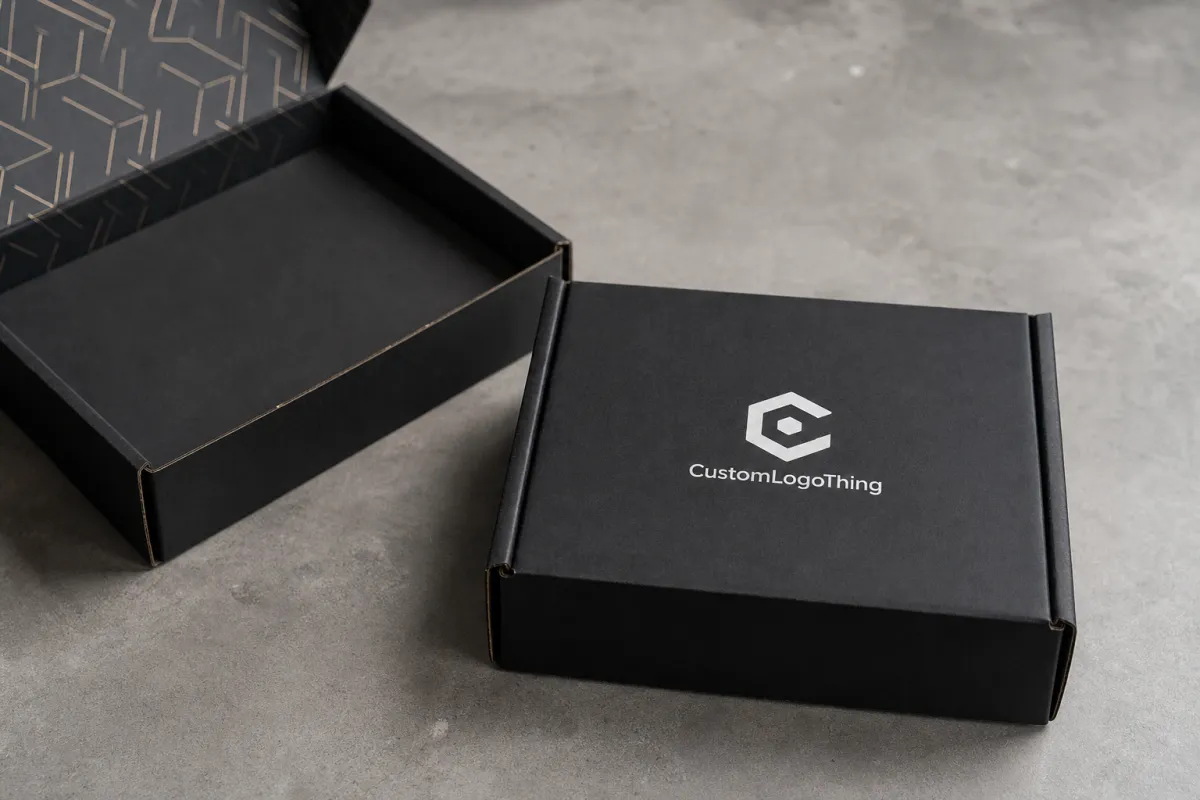
Fitness brand mailer boxes lead time should be treated as a full schedule, not a single production number on a quote. A line that says 10 to 12 business days usually refers only to production after artwork approval. It rarely includes dieline confirmation, sample review, revisions, freight booking, or the time lost when a file pauses in prepress because a barcode is missing or a product claim needs legal approval.
Fitness brands feel that pressure more sharply than many other categories because the packaging is tied to deadlines that do not move. Product drops follow influencer calendars. Subscription boxes follow billing cycles. Promo kits follow events, retail activations, and supplement launches that cannot wait for packaging to catch up. Once the launch date is fixed, fitness brand mailer boxes lead time becomes a planning question, a cost question, and a logistics question all at once.
Quoted production time, transit time, and total calendar time are not the same thing. Production time covers printing, finishing, cutting, folding, and packing. Transit time covers the shipment from the plant to your warehouse, fulfillment center, or office. Total calendar time includes both of those steps plus the days lost to approvals and internal handoffs. Teams that mix up those three usually book too tightly and then spend the last week trying to recover lost days.
A practical rule keeps the schedule honest: work backward from launch day and assume the packaging will need one extra approval cycle somewhere along the way. That is usually where fitness brand mailer boxes lead time gets stretched.
Fitness brands tend to notice that stretch faster because packaging is rarely just packaging. It supports the unboxing experience, helps keep brand consistency across channels, and reinforces the visual branding that signals quality before the product is even opened. In a crowded category, a clean mailer with accurate print, solid structure, and consistent color can strengthen brand recognition long before a social post gets a second look.
From a packaging buyer's point of view, the challenge is that the box is only one item in the launch stack. Labels, inserts, shippers, retail compliance copy, and fulfillment instructions all compete for the same approval window. That is why fitness brand mailer boxes lead time works best as a launch milestone, not a one-off print order.
Fitness Brand Mailer Boxes Lead Time: Process and Timeline
The workflow usually starts before printing begins. A quote request comes first. Then the size gets confirmed, or a dieline gets created if the structure is fully custom. The artwork team places the graphics, the printer reviews the file, and the proof goes out for approval. If the box needs a sample, that adds another loop. Only after those steps does fitness brand mailer boxes lead time move into production, finishing, packing, and delivery.
Typical timeline ladder
- Simple mailer with standard size and one-color print: often 8-12 business days after proof approval.
- Custom size with full-color print: often 12-18 business days after proof approval.
- Premium finish with foil, embossing, or specialty coating: often 15-25 business days after proof approval.
- Overseas production plus ocean or air freight: usually requires the longest total calendar window, even if the unit price is lower.
The shortest schedules usually come from simple specs. A mailer box in a standard size, printed on common corrugated board, can move quickly when the art file is clean and the quantity is reasonable. Add foil stamping, spot UV, soft-touch lamination, or structural changes, and fitness brand mailer boxes lead time starts to widen. That is not a flaw in the process. Finishing steps take time, and each one adds a checkpoint that needs to clear before the next stage can begin.
The biggest hidden delay is often not the press room. It is the back-and-forth before production. Missing Pantone references, low-resolution logos, skipped bleed, or inconsistent copy can stop the job before a single sheet is printed. A clean approval path can shorten fitness brand mailer boxes lead time more effectively than almost any rush surcharge.
Domestic and overseas sourcing behave differently. Domestic production often gives faster proofing, easier communication, and shorter freight. Overseas production can improve unit economics on larger runs, but customs clearance and ocean transit may become the longest part of the schedule. If the launch date is fixed, total calendar time matters more than the unit price. A lower quote that arrives late is not a bargain.
A simple planning habit helps a great deal: count backward from launch day and leave room for artwork, sample review, and transit delays. If the boxes need to be in hand by the first of the month, the packaging team should not start on the fifteenth of the prior month. That sounds obvious, but fitness brand mailer boxes lead time still gets compressed until there is no room left for error.
Pricing, MOQ, and Unit Cost for Fitness Brand Mailer Boxes
Price and speed are connected, but never in a simple straight line. Box size, board grade, print coverage, finishing, and order quantity all affect the quote. Freight route matters too. A carton that looks inexpensive on paper can become costly once shipping, setup fees, and rush charges are added. That is why fitness brand mailer boxes lead time should be discussed alongside landed cost, not just unit cost.
MOQ, or minimum order quantity, is the smallest run a supplier will produce. A lower MOQ gives flexibility, though it usually raises the per-box price because setup is spread across fewer units. A larger run lowers unit cost, yet it ties up more cash and storage space. For fitness brands testing a new product line, that tradeoff matters. If the launch is small and the audience is still being validated, a higher unit cost can make sense. If the box will be reordered every month, the economics shift.
| Option | Typical MOQ | Typical Unit Price | Lead Time Profile | Best Use |
|---|---|---|---|---|
| Standard corrugated mailer with custom print | 250-500 | $1.10-$2.10 | Often the fastest, around 8-12 business days after approval | Test launches and limited drops |
| Fully custom mailer with CMYK print | 1,000-5,000 | $0.85-$1.65 | Usually 12-18 business days after approval | Recurring kits and subscription programs |
| Premium finish with foil, emboss, or soft-touch lamination | 1,000+ | $1.45-$3.25 | Often 15-25 business days after approval | High-end brand identity and PR kits |
| Rush production | Varies | Base price plus 15%-35% | Can reduce the schedule if material and press capacity are available | Hard launch deadlines |
Board grade is another quiet cost driver. A mailer made from 32 ECT corrugated board behaves differently from a carton built on heavier board or a premium SBS insert tray. The same is true for print coverage. Full bleed coverage uses more ink and may require more drying or curing time. If the spec also calls for specialty coatings, fitness brand mailer boxes lead time grows because the box has more steps to finish before packing.
Hidden costs also show up in freight pricing. Box weight, dimensional weight, destination zone, and pallet count all affect shipping charges. A larger box may look fine on a spec sheet, but if it ships in bulky volumes, the delivered cost climbs quickly. That is why comparing quote structure matters more than reading the lowest headline number. Two suppliers can quote the same unit price and still produce a very different final bill.
For paper sourcing, ask whether the board can be supplied with FSC chain-of-custody documentation if that matters to your brand claims. The FSC certification framework helps teams that want more transparent fiber sourcing. For transit validation, many packaging buyers also ask whether the carton structure has been reviewed against ISTA test methods for parcel handling. Those details do not always change the quote, but they do change confidence in the finished pack.
How the Process Works From Artwork to Delivery
Most delays happen because the workflow gets treated casually. A strong project starts with exact dimensions, quantity, print requirements, and a real delivery date. Once those inputs are clear, the supplier can issue a dieline or confirm an existing structure. That is where fitness brand mailer boxes lead time becomes manageable, because the box is being built around a stable brief rather than a moving target.
Artwork and prepress
Prepress is where many launch schedules quietly succeed or fail. The team checks bleed, safe area, image resolution, dieline alignment, barcode placement, and copy accuracy. A missing bleed can leave white edges. A low-resolution logo can blur. A barcode placed too close to the fold may scan badly. Small issues, yes, but each one can pause fitness brand mailer boxes lead time before the first sheet ever sees ink.
It helps to prepare a clean file library before the quote even goes out. Keep logos in vector format, confirm approved copy, and store any compliance text in one place. If the packaging needs nutrition claims, subscription terms, or weight statements, have those approved internally before design starts. That saves rounds of email later and reduces the chance that an approval loop will slip into the production slot and push fitness brand mailer boxes lead time by days.
Production and handoffs
Once the proof is signed, the job moves through printing, finishing, cutting, folding, and packing. On a well-run order, handoffs between these steps are tightly coordinated. On a messy order, each handoff becomes a waiting point. If the supplier also handles kitting, inserts, or bundle assembly, ask exactly where those tasks happen. A missing instruction can turn a straightforward order into a chain of clarifications that slows fitness brand mailer boxes lead time for no good reason.
Shipping planning matters as much as print planning. If the boxes are going to a fulfillment center, confirm the receiving window, pallet requirements, and dock appointment rules early. If the cartons are shipping direct to a launch agency or event site, make sure the address is final and the contact person will actually be available. A box that finishes on time but sits at a carrier terminal still hurts the launch.
One more practical point: a clean handoff shortens communication loops. That matters because every question sent back to the brand team adds time. When the supplier can see exact dimensions, clear artwork, the right contact, and a fixed in-hands date, fitness brand mailer boxes lead time is much easier to protect. Better input leads to faster output, and packaging projects respond to that pattern every time.
If you are shipping a high-volume parcel program, ask whether the carton design has been considered for parcel abuse, compression, and vibration. The right structure will not stop a carrier from handling boxes roughly, but it can reduce the odds of damage during real-world transit. That is where packaging standards and testing practice matter more than pretty renderings.
Common Mistakes That Stretch Fitness Brand Mailer Boxes Lead Time
The first mistake is changing the size after the dieline is already created. That seems minor in the moment, but it can reset the layout, shift print alignment, and force a new proof. If the order is already in queue, that one change can push fitness brand mailer boxes lead time by several days. A second mistake is approving proofs late. Many teams think they are only delaying one email thread. In reality, they may be missing a production slot.
The third mistake is design indecision. When a team keeps asking for revisions after the file is in prepress, the job stops behaving like a schedule and starts behaving like a moving target. That is expensive. It also hurts brand consistency because each revision increases the chance that one version of the packaging copy or color palette will drift away from the rest of the launch. If the box sits inside a wider visual branding system, indecision carries a real cost.
Supplier mismatch is another quiet problem. A fully custom box is not the right answer for every deadline. Sometimes a stock size with custom print is the smarter route. Sometimes the brief is better suited to a simple mailer and a separate insert. The point is not to lower ambition. The point is to match the structure to the clock. Choosing the wrong structure for the deadline is one of the quickest ways to stretch fitness brand mailer boxes lead time.
Compliance can also slow approvals. If multiple stakeholders must sign off on claims, ingredient language, QR codes, or marketing copy, the process can stall even when production is ready. That is especially common in supplement and wellness packaging, where one department cares about aesthetics, another cares about legal language, and a third only sees the project after the proof is already prepared. A late-stage legal edit can be enough to push fitness brand mailer boxes lead time into the next cycle.
Last-minute launches are the riskiest of all. The more an order depends on perfect timing, the less room there is for quality control. If a box must arrive by a fixed event date, there is no spare time for reprints, courier changes, or file repairs. That is why packaging buyers who understand fitness brand mailer boxes lead time usually protect themselves with a buffer, even if the rest of the team wants to cut it close.
- Changing dimensions midstream: resets the dieline and can require a new proof.
- Waiting to finalize shipping details: creates avoidable freight delays.
- Approving files without a final checklist: increases the risk of a prepress pause.
- Assuming all packaging suppliers move at the same pace: ignores real differences in workflow and capacity.
Ways to Reduce Lead Time Without Losing Quality
The clearest speed gains usually come from standardization. If a fitness brand uses the same mailer size for recurring subscription drops, seasonal promos, or influencer inserts, the next order can start much faster. The dieline already exists. The board spec is already approved. The artwork only needs updating, not rebuilding. That alone can make fitness brand mailer boxes lead time more predictable.
A second smart move is to build a packaging calendar around launch cycles instead of treating every order as urgent. Subscription brands often know months in advance when the next shipment will go out. Retail-focused brands know the seasonal promo windows. Even a small DTC label can map its product drops. Once that schedule exists, the packaging team can request quotes earlier and avoid the panic that usually stretches fitness brand mailer boxes lead time.
Master artwork is another time saver. Keep logos, approved copy, barcode art, compliance language, and brand color references in a ready-to-print library. When the next campaign starts, the designer does not need to reconstruct the file from scratch. They only need to adapt the content. That lowers the number of handoffs, which is often the fastest way to protect fitness brand mailer boxes lead time without sacrificing quality.
Supplier selection matters too. A vendor with in-house prepress, clear proofing, and reliable freight coordination will usually move faster than a fragmented workflow that bounces between multiple outside partners. That is not just a speed issue. It is also a communication issue. Fewer handoffs mean fewer misunderstandings, and fewer misunderstandings mean fewer schedule slips. For brands that care about brand recognition and customer perception, that consistency carries real value.
There is also a simple financial truth: a modest buffer of extra inventory is often cheaper than a rushed replacement order. Brands sometimes hesitate to print more boxes than they need because storage costs money. Fair enough. Yet emergency freight, rush setup, and late design changes can cost more than carrying a small safety stock. A buffer does not erase fitness brand mailer boxes lead time. It absorbs it.
If your launch kit also includes apparel, supplements, or inserts packed in separate mailers, it may make sense to coordinate with other Custom Poly Mailers or related packaging formats so the entire shipment plan moves on one timeline. That kind of planning can reduce avoidable delays and keep the unboxing experience aligned with the main box design.
The brands that handle fitness brand mailer boxes lead time best are rarely the ones with the biggest budgets. They are the ones that decide early, approve quickly, and keep the spec simple unless there is a real reason to add complexity. The result is better brand consistency, cleaner delivery, and fewer launch-day surprises.
From experience, the most reliable packaging schedules usually come from teams that treat the box like a working part of the launch, not decoration tacked on near the end. That mindset sounds plain, maybe even a little boring, but it saves a lot of headache later.
Next Steps Before You Request a Quote
Before you ask for pricing, gather the basics: exact dimensions, target quantity, print method, finish requirements, delivery destination, and in-hands date. If you can provide those six items in one message, the supplier can usually give a far more useful answer. That preparation alone can shorten fitness brand mailer boxes lead time because the conversation starts with decisions instead of questions.
Ask for two timelines. One should reflect standard production. The other should reflect a compressed schedule, if a rush option is even available. That comparison helps the team see the real tradeoff between speed and cost. A rush may be worth it for a major launch, but not for a small test run. The only way to know is to compare the quotes side by side.
It is also smart to request a landed-cost view. Box price matters, but freight, approvals, samples, and rework all shape the final spend. A quote that looks better on unit price can still be worse once shipping and delay risk are included. That is especially true for overseas programs, where the lowest manufacturing price may come with the longest fitness brand mailer boxes lead time.
Internal approval matters just as much as supplier approval. Before a project starts, make sure the artwork is signed off, the budget is approved, the shipping contact is confirmed, and the launch date is locked. A supplier can only move as fast as the internal decision-making allows. That is why the strongest schedules are usually built from the inside out.
One final planning move helps more than most teams expect: build a back-schedule from launch day. Mark the latest proof approval date, the latest production start date, and the latest freight pickup date. Then add a small buffer at each point. If the schedule only works when every step is perfect, it is not a schedule. It is a hope. And hope is a poor substitute for fitness brand mailer boxes lead time control.
How long is the typical fitness brand mailer boxes lead time for a small order?
Small custom runs usually take longer per box because setup and proofing are spread across fewer units. Expect the calendar to include approval time plus production and shipping, not just printing, especially if the artwork is being built from scratch.
What changes fitness brand mailer boxes lead time the most?
Artwork revisions, special finishes, and shipping distance usually have the biggest effect on the schedule. A fast approval process can shorten fitness brand mailer boxes lead time more than almost any other single step.
Does custom printing increase fitness brand mailer boxes lead time?
Yes, custom printing usually adds proofing and setup time before production starts. The more complex the artwork or finish, the more likely the schedule will stretch, especially when multiple stakeholders review the proof.
How does MOQ affect fitness brand mailer boxes lead time and pricing?
A higher MOQ can improve unit cost, but it may also require more planning for storage and cash flow. Lower quantities are easier to test, yet they often carry higher per-box pricing and can still need the same setup time.
Should I order a sample before committing to fitness brand mailer boxes lead time?
A sample is smart when color accuracy, structure, or unboxing feel matters to the launch. Just remember that sampling adds time, so it should be built into the schedule from the start instead of being treated as a last-minute check.
If you want the cleanest result, treat fitness brand mailer boxes lead time as a launch constraint, not an afterthought: lock the structure early, approve artwork quickly, and keep a realistic buffer for freight and final checks.

