Get a Florist Event Paper Bags Moisture Liner Quote Without Guesswork
If you need a florist event paper bags moisture liner quote, skip the romance copy and send the working details. Flowers leak. Stems sweat. Floral foam drips when it is mishandled. Plain paper shows every one of those mistakes, usually at the worst possible moment: during a wedding handoff, hotel delivery, sponsor activation, or market checkout line.
Moisture-lined paper bags solve a narrow but valuable problem. They give florists and event teams a cleaner, better-looking carrier for wrapped bouquets, damp stems, flower bar takeaways, branded gifts, and short-distance handoffs. They are not buckets. They are not coolers. They are paper bags built with a barrier layer so light moisture does not immediately wrinkle the shell, weaken the bottom, or stain the print.
Most buyers want three answers first: price, lead time, and whether the bag will hold up. Fair. The better question is what the bag is being asked to survive. A dozen wrapped mini bouquets for a two-hour reception is a different packaging problem from long-stem arrangements with water tubes, saturated wrap, and a delivery route across town.
From a production standpoint, the decision comes down to bag structure, liner type, handle style, and print method. Pretty artwork will not save a weak side seam. A premium rope handle does not fix an underbuilt bottom. A heavier paper stock can help, but only if the fold, gusset, glue, and liner coverage match the load.
The fastest path to a useful quote is bluntly practical: quantity, size, artwork, event date, delivery location, target budget if there is one, and a clear description of the moisture exposure. Photos help. A sample of the current failing bag helps even more.
Florist Event Paper Bags Moisture Liner Quote: What You Actually Need
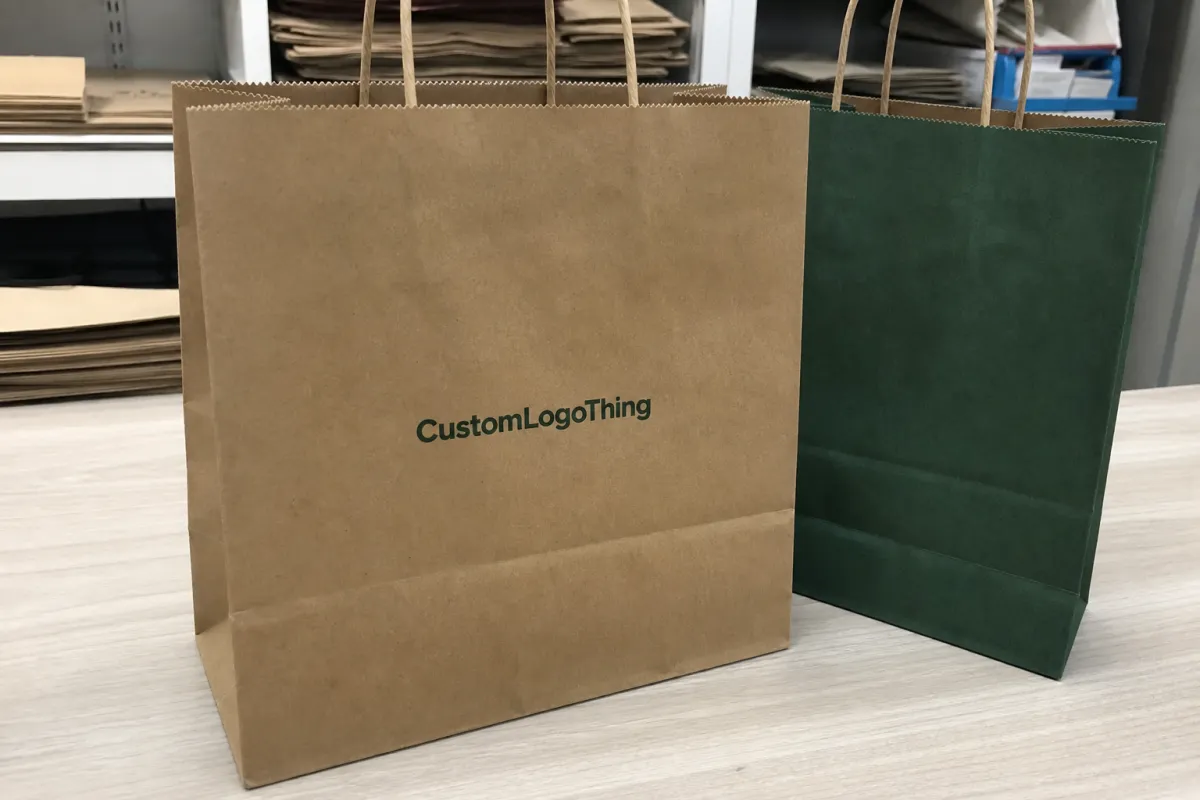
A proper quote should tell you more than the unit price. It should identify the paper weight, liner type, handle construction, print method, minimum order quantity, production time, and any setup charges. If the quote does not clarify those details, the number is not very useful. It is just a guess wearing a dollar sign.
For most projects, suppliers will ask for a dieline or at least finished dimensions, artwork in vector format, target order quantity, and whether the bag must support wet bouquets, wrapped stems, or dry gift items. A solid spec sheet should also mention whether the bag needs a matte, soft-touch, or gloss finish; whether the liner must be PE, PLA, or film-laminated; and whether the bottom needs a flat insert or a reinforced cardboard board.
The liner matters because floral packaging lives in a damp gray zone. Bouquets may be wrapped and controlled, but they are rarely bone dry. Condensation collects around sleeves. Cut stems release water. Staff pack quickly. Event teams move cartons from vans to prep rooms to guest tables. The bag does not need to survive a flood, but it does need to resist short-term moisture long enough to complete the handoff.
A liner improves resistance to damp wrapping, light condensation, and small drips. It does not make the bag watertight. If the arrangement includes loose water, soaked floral foam, melting ice packs, or long wet transport, the spec needs more than a lined paper bag. That may mean a rigid insert, a tray, a plastic inner sleeve, a bucket for transport, or a different carrier altogether.
For most floral event work, the practical sweet spot is a lined paper bag with a reinforced bottom, medium-to-heavy paper, a top fold that does not tear easily, and handles matched to the loaded weight. Twisted paper handles are the budget workhorse. Cotton rope feels more polished and is easier on the hand with heavier bouquets. Ribbon handles can look elegant, though they are not always the safest choice for weight. Die-cut handles suit lighter favor bags and compact gifts, not serious wet floral loads.
The buying logic is simple:
- Bag structure controls shape, load-bearing strength, and how well the bag stands upright.
- Liner type controls short-term moisture resistance and interior durability.
- Handle construction controls comfort, tear risk, and guest experience.
- Print method controls color accuracy, artwork detail, setup cost, and repeatability.
A wedding welcome bag is not the same object as a bouquet carrier. A hotel floral gift is not the same as a farmer's market takeaway. A corporate flower bar may need 500 attractive handouts in three hours, while a subscription florist may need repeatable packaging that works every week. The more specific the brief, the fewer expensive corrections appear later.
Moisture-Lined Paper Bag Details for Bouquets, Stems, and Event Handouts
A good lined floral bag starts with a printed paper exterior, a folded top edge, properly glued side seams, and a bottom that does not fold under the first uneven load. The liner sits inside the paper shell as a barrier against light moisture. Not glamorous. Very useful.
Typical constructions use 120-180 gsm art paper or 150-250 gsm kraft paper for the outer shell, with a PE-lined or film-laminated interior. For premium event bags, a 157 gsm art paper exterior with a 25-40 micron PE liner is common when the bag must stay presentable during short-term damp handling. For heavier bouquet carriers, many buyers step up to 170-230 gsm coated paper plus a 1.5-3 mm cardboard bottom insert.
Several liner types come up in quotes. PE coating is the common economical option for damp handling and short-term protection. It performs well for wrapped bouquets and event handouts where the moisture level is controlled. PLA-style bio-based coatings may be available for buyers with sustainability requirements, although availability, price, heat tolerance, and lead time can vary by supplier and project. Laminated film liners offer stronger moisture resistance and better abuse tolerance, but they usually increase cost and can complicate recyclability claims. Wax-style finishes can suit certain looks and budgets, but they are not a universal answer.
The honest distinction: some floral uses need a liner, and some need a different containment strategy.
- Good fit for a lined bag: wrapped bouquets, damp stem bundles, mini arrangements, flower bars, bridal party gifts, retail handoffs, and event giveaways.
- Higher-risk use: loose water, saturated floral foam, heavy water tubes, ice packs, long transport, or arrangements packed before they have drained properly.
Handle choice deserves more attention than it usually gets. Twisted paper handles are common because they are affordable, familiar, and adequate for many retail uses. Cotton rope gives a more premium feel for weddings, hospitality gifting, and brand activations. Ribbon handles photograph well, but they can cut into the hand or loosen if the load is too heavy. Die-cut handles keep the silhouette clean, but the hand hole weakens the top panel if the paper is not reinforced.
Common handle specs include 5-6 mm twisted paper rope for lighter bags, 8-10 mm cotton rope for a more premium feel, and 15-25 mm satin or grosgrain ribbon where the load is mostly cosmetic. For wet bouquets, handle anchoring should be reinforced with paper patches or folded top tabs so the handle area can resist repeated lift-and-set cycles during event service.
Reinforcement changes performance quickly. A bottom board insert can help a bouquet sit flatter. A thicker paper stock improves stiffness. A double-fold top strengthens the handle zone. Interior handle patches reduce tear risk. None of these details are especially exciting on a spec sheet, which is exactly why they get skipped. Then the bag fails at the seam, not the logo.
Sourcing claims need discipline. FSC-certified paper can support responsible sourcing language, and buyers can verify certification basics through the FSC. If your program requires socially audited manufacturing, ask for a current WRAP or BSCI report. For textile or insert components, OEKO-TEX Standard 100 can be relevant if the project includes fabric liners, wraps, or ribbon components. Recycled-content programs often ask for GRS documentation when the claim includes post-consumer fiber. If the item is marketed as organic or natural-fiber based, GOTS may matter for specific material chains. For sensitive or high-value shipments, packaging expectations may be compared with ISTA packaging testing practices. That does not mean every floral bag needs formal lab testing. It means the packaging should be specified with real handling conditions in mind, not chosen from a mood board.
Bag Sizes, Paper Weights, Liners, and Print Specifications
Size is where many floral packaging projects start to drift. Too short, and the bouquet wrap gets crushed. Too narrow, and the arrangement leans. Too shallow, and stems poke awkwardly out of the top. Too wide, and the bag looks underfilled even when the flowers are beautiful.
For a florist event paper bags moisture liner quote, dimensions should be tied to the actual bouquet height, wrap diameter, and desired presentation. Measure the product after wrapping, not before. Paper sleeves, tissue, ribbon, stem length, water tubes, and protective inserts all change the size needed. A half-inch looks trivial in a spreadsheet. In a packed carton or a narrow gusset, it can decide whether the arrangement stands straight.
Typical starting points:
- 8 x 4 x 10 in. for small gifts, single stem bundles, mini bouquets, and compact handouts.
- 10 x 5 x 13 in. for medium wrapped bouquets, bridal party gifts, and event favors with tissue or a card.
- 12 x 6 x 16 in. for larger bouquet carriers, fuller event takeaways, and retail floral handoffs.
- 14 x 7 x 18 in. for tall stems, broader bouquet heads, or presentations that need more vertical clearance.
Paper weight affects the whole feel of the bag. Most lightweight floral handout bags start around 120-150 gsm. Premium event bags often move to 157-210 gsm. If the bag must stand up to repeated handling and a heavier bouquet load, 200-250 gsm or a kraft-laminated build is easier to defend. Heavier stock raises unit price, but it also reduces wrinkling, improves print registration tolerance, and lowers the chance of a collapsed top edge.
Liner choice should match the use case, not just the marketing story. A PE liner is usually the most practical option when the goal is a clean bag that survives light dampness for a few hours. A PLA or compostable coating may be worth quoting if the program has a sustainability requirement, but buyers should confirm what local waste streams can actually accept. A film-laminated interior performs better against drips and condensation, yet it may limit recycling options and push the bag into a different price tier.
For print, most suppliers will quote CMYK offset, pantone spot color, or a combination of both. Offset works well for multi-color artwork, gradients, and large runs. Pantone is the safer route for brand-critical colors. Hot stamping, foil, and embossing can add premium presentation for weddings or luxury florals, though these finishes usually increase setup time and cost. If the logo has fine linework or small type, request a digital proof or a plate proof before production starts.
A realistic print spec usually includes:
- Artwork format: vector PDF, AI, or EPS with outlined fonts.
- Color target: CMYK or Pantone reference numbers.
- Coverage: one-side print, two-side print, or full-wrap print.
- Finish: matte, gloss, soft-touch, foil, emboss, or spot UV.
- Tolerance: acceptable print shift, color variation, and trim deviation.
Quote, Pricing, MOQ, and Unit Cost Factors
Unit price moves fast because several variables stack on top of each other: size, paper weight, liner type, handle type, print colors, finish, quantity, and carton packaging. The same bag can cost very different amounts depending on how much of the structure changes.
As a working benchmark, a simple moisture-lined floral paper bag might land around $2.50-4.00 per unit at 500 MOQ for a moderate-size printed bag with a basic liner and standard handles. A more premium version with heavier paper, better finish, reinforced bottom board, and more complex artwork can move to $4.50-7.50 per unit at 500 MOQ. At 1,000-3,000 units, the same spec can often drop by 15-30 percent depending on print complexity and material choices.
Typical MOQ ranges are usually tied to the build:
- 300-500 units for simpler custom print jobs, especially if the bag uses standard materials and limited colors.
- 500-1,000 units for fully custom sizes, reinforced construction, or premium finishes.
- 1,000+ units when the project needs special liners, multiple print methods, or tight brand matching.
Setup costs can include plate charges, foil dies, embossing dies, sample prep, and carton labeling. For offset or spot-color print, a one-time setup fee is common. Buyers should ask whether that fee is amortized into the unit price or listed separately. Ask the supplier to break out tooling, sampling, and freight so the quote can be compared apples-to-apples.
The biggest cost drivers are usually:
- Material upgrades: heavier paper, laminated liner, reinforced bottom board, cotton rope handles.
- Print complexity: full coverage, multi-color artwork, foil, embossing, and color matching.
- Bag size: larger dimensions consume more material and slow conversion speed.
- Order quantity: smaller runs carry more labor and setup cost per unit.
- Delivery terms: cartons, palletization, and international freight can materially change landed cost.
Sampling is worth paying for. A pre-production sample may cost $60-180 depending on complexity, while a couriered physical sample set with color checks and handle testing may run higher. If the event is high stakes, a sample is cheaper than a failed launch.
Production Steps, Lead Time, and Event Deadline Planning
Paper bag production is not mysterious, but it does have fixed steps. The artwork is confirmed first, then material selection, then sample approval, then bulk production, then inspection, then packing and dispatch. If any step is rushed, the later steps get riskier.
A typical workflow looks like this:
- Requirement review: dimensions, load target, liner type, handle type, print areas, and quantity are confirmed.
- Structural sampling: a plain or lightly printed sample checks size, gusset depth, folding behavior, and handle placement.
- Artwork proofing: a digital proof or plate proof verifies logo placement, color, and trim alignment.
- Pre-production sample: one finished bag is checked for color, liner coverage, seam strength, and appearance.
- Bulk conversion: paper is printed, die-cut, folded, glued, lined, and assembled on semi-automatic or automatic bag-making lines.
- Inspection: unit checks, carton checks, and load-related random sampling are completed before shipment.
Common machines and processes include offset or flexographic printing presses, die-cutting machines, automatic paper bag making machines, glue application systems, handle insertion units, and carton packing lines. For lined bags, lamination or inner-film insertion is often controlled separately from the outer print process so the liner does not interfere with registration or folding.
Lead time varies by complexity, but a realistic planning window is 18-22 business days for a standard custom run after artwork approval and sample signoff. Simpler orders may move faster if materials are already available. More complex programs with foil, embossing, custom liners, or dense brand color matching can take longer. Freight time is separate from production time, and event buyers should not assume a truck or air shipment is included in the manufacturing estimate.
For deadline planning, count backward from the event date:
- 4-6 weeks out: request quotes, confirm structure, and collect samples if needed.
- 3-4 weeks out: approve artwork and finalize the sample.
- 2-3 weeks out: bulk production and inspection happen.
- 1 week out: freight buffer, receiving, and any rework margin remain available.
If the event is fixed and the bag is part of the presentation, build in contingency time. A delayed print proof, a handle change, or a carton labeling correction can easily consume several days.
Common Buying Mistakes That Make Floral Bags Fail
The most common failure mode is over-focusing on the logo and under-specifying the structure. A beautiful bag with weak glue lines or an undersized gusset is still a weak bag. It just fails in a more expensive way.
Another mistake is using a dry-goods bag spec for a floral use case. Bouquet packaging needs to account for condensation, wrap movement, and light seepage. If the load includes water tubes, wet foam, or long dwell time, a standard retail paper bag is the wrong starting point.
Other avoidable mistakes include:
- Choosing the wrong liner: PE is not compostable, PLA is not automatically right for every climate, and film-lamination can complicate recycling claims.
- Ignoring handle strength: premium handles fail if the top fold and attachment points are too weak.
- Under-sizing the gusset: a narrow bag can crush blooms even when the height looks correct.
- Skipping bottom reinforcement: the first uneven load usually finds the weakest part of the base.
- Approving artwork without a proof: color drift, cropped logos, and text placed too close to the fold are common preventable errors.
One more mistake is assuming every floral event is a low-volume, highly customized order. In practice, event work often means speed and repetition. If the bag has to be packed, carried, and handed out in a rush, the structure needs to be forgiving, not fragile.
Quality Checks for Lined Floral Event Bags
Inspection should focus on function first and appearance second, because the bag only succeeds if it carries the flowers cleanly. A standard quality pass usually checks dimensions, print registration, seam integrity, liner coverage, handle attachment, and carton count.
Good inspection checkpoints include:
- Size verification: finished width, gusset, and height are measured against the approved spec.
- Seam check: side seams and bottom folds are checked for glue spread, alignment, and separation risk.
- Liner coverage: the barrier layer is inspected for wrinkles, exposed gaps, or missed corners.
- Handle test: a sample bag is loaded to check for tearing, slippage, or distortion at the attachment point.
- Print review: color consistency, scuff resistance, and placement against the dieline are confirmed.
- Drop and lift check: sample units are handled repeatedly to simulate event use and carton unpacking.
For heavier bouquet bags, buyers can ask for a simple load test tied to the expected contents. If the target load is 2-3 kg, the supplier should be able to confirm that the handle zone, top fold, and bottom board do not fail under normal carrying conditions. If the bags will be packed in cartons and moved repeatedly before the event, ask for carton compression and edge crush awareness as well.
Certification review should be practical, not decorative. Ask for document numbers and current validity if the order depends on GOTS, OEKO-TEX Standard 100, WRAP, BSCI, or GRS. If the project only needs basic paper sourcing, FSC may be enough. If it depends on recycled content, recycled fiber claims should be traceable and written into the quote. If the packaging will touch textiles, ribbons, or inserts, the relevant material chain should be identified separately.
Next Steps Before You Request Your Floral Bag Quote
The cleanest quotes come from clear inputs. Before you ask for pricing, gather the exact dimensions of the wrapped bouquet or stem bundle, the expected moisture exposure, the number of print colors, the desired handle style, the target quantity, and the event date.
Send these details if you want a quote that is actually usable:
- Finished bag size: width, gusset, and height in inches or millimeters.
- Product type: wrapped bouquets, stems, handouts, gifts, or mixed event items.
- Moisture level: light condensation, damp wrap, wet stems, or higher-risk containment.
- Materials: paper weight, liner type, handle preference, and any bottom board requirement.
- Artwork: number of print colors, finish, and whether foil or embossing is needed.
- Quantity and timing: MOQ target, production window, and ship-to date.
If you already have a sample bag that failed, send that too. The quickest way to improve the next version is to identify exactly where the current one gives out: the seam, the handle, the bottom, the liner, or the size.
FAQ
How much does a moisture-lined floral paper bag usually cost?
A common range is $2.50-4.00 per unit at 500 MOQ for a straightforward custom bag. Heavier paper, reinforced bottoms, premium handles, foil, or complex print can raise the cost to $4.50-7.50 per unit or more at the same quantity.
What is a realistic lead time?
For standard custom production, plan on 18-22 business days after artwork approval and sample signoff. Add freight time separately.
What materials are most common?
Outer shells are often 120-230 gsm paper or kraft paper, with PE, PLA-style, or film-laminated liners. Premium versions may include cotton rope handles and a cardboard bottom insert.
What certifications should I ask for?
Ask for FSC for paper sourcing, and when relevant, GOTS, OEKO-TEX Standard 100, WRAP, BSCI, or GRS documentation depending on the materials and compliance claims.
Do I need a sample before bulk order?
Yes, if the bag will carry wet bouquets, be part of a paid event, or use premium branding. A structure sample and a finished pre-production sample are the best way to verify size, print, liner coverage, and handle strength before committing to the full run.
What should I check in the final inspection?
Check dimensions, print alignment, seam glue, liner coverage, handle attachment, bottom strength, carton count, and a quick carry test with the intended load.


