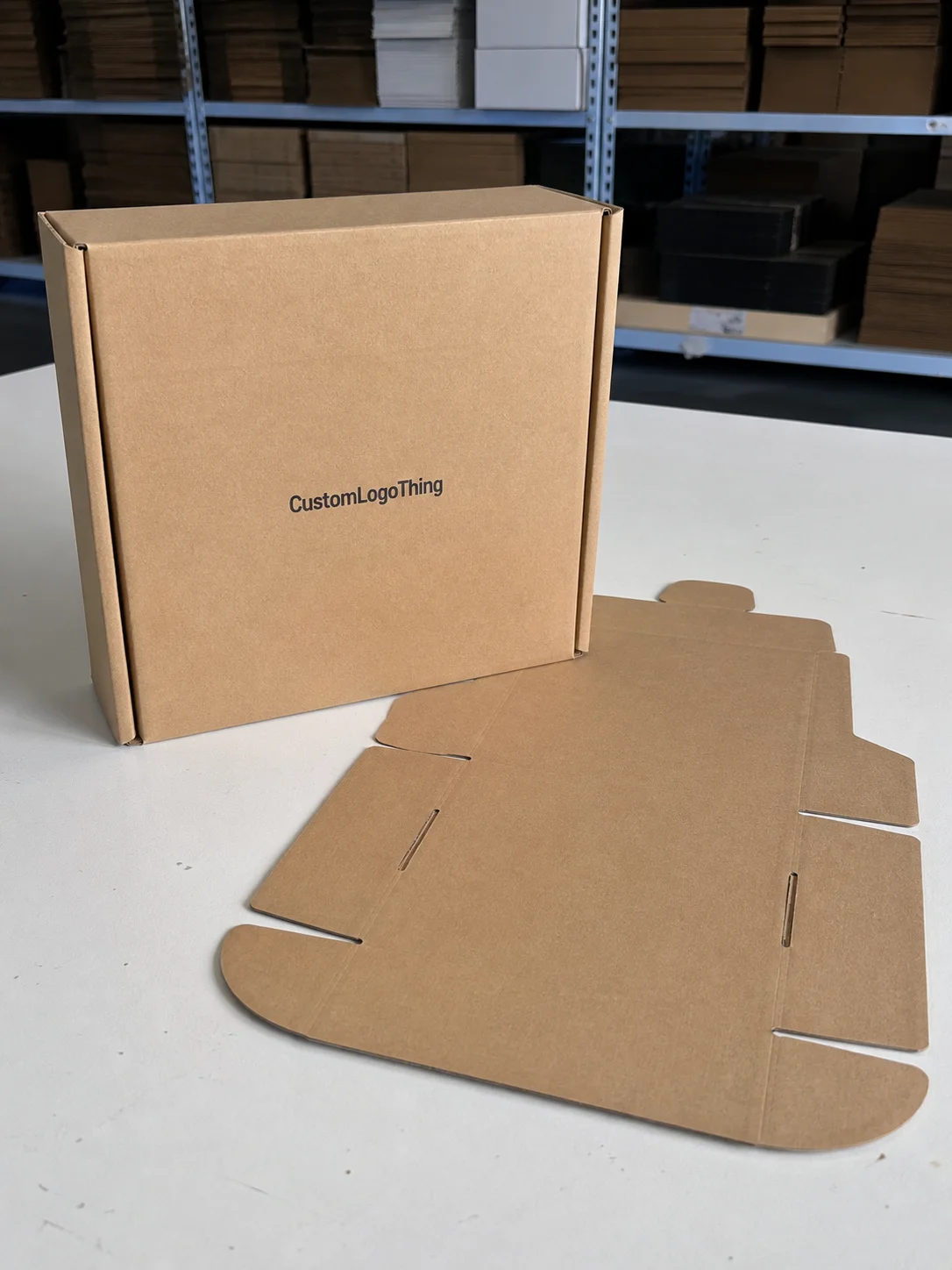
Buyer Fit Snapshot
| Best fit | Folding Cartons Supplier projects where brand print, material claims, artwork control, MOQ, and repeat-order consistency need to be specified before quoting. |
|---|---|
| Quote inputs | Share finished size, material target, print colors, finish, packing count, annual reorder estimate, ship-to region, and any compliance wording. |
| Proofing check | Approve dieline scale, logo placement, barcode or warning zones, color tolerance, closure strength, and carton packing before bulk production. |
| Main risk | Vague material claims, crowded artwork, missing packing details, or unclear freight terms can make a low unit price expensive after revisions. |
Fast answer: Folding Cartons Supplier: Material, Print, Proofing, and Reorder Risk should be specified like a repeatable production item. The safest quote records material, print method, finish, artwork proof, packing count, and reorder notes in one written spec.
Production checks before approval
Compare the actual filled-product size with the drawing, then confirm tolerance on folds, seals, hang holes, label areas, and retail display edges. Reserve space for logos, QR codes, warning copy, and material claims before decorative graphics fill the panel.
Quote comparison points
Review material grade, print process, finish, sampling route, tooling charges, carton quantity, and freight assumptions side by side. A quote is only useful when the supplier can repeat the same color, closure quality, and packing count on the next order.
When I chased a late delivery off a Peoria, Illinois plant floor, the folding cartons supplier guide on my laptop flagged a 60% variance between the promised 18-day turnaround and the 29-day calendar the Heidelberg Speedmaster CX 102 had actually booked; that discrepancy saved the launch even though the supplier was “trusted.” The guide recorded the specific folder-gluer (Heidelberg CX 102), the paperboard run size of 48,000 units, and the Pantone 186 C ink set plus aqueous coating the plant could hold, making it obvious that the machine’s calendar simply did not match the promised schedule. Writing all of that out forced the cross-functional team to have the same data—machine name, run quantities, coatings compatibility—before throwing another art file at the die line. It even noted that the Henkel Loctite 9060 adhesives on that floor needed a 48-hour cure at 70% relative humidity, so there was literally no way to squeeze the job into 18 days.
I still remind teams that the guide isn’t just a spreadsheet—it’s my pause button when production starts sounding like an air-traffic-control call; Version 4.3 dated May 3, 2024, references the Custom Logo Things’ “folding cartons supplier guide” entry for a Foshan, Guangdong plant and lists each shift’s approval window (8 a.m. CST daily) so we know when to expect updated plate checks. I remember when a frustrated plant manager in Elgin, Illinois, mid-call, actually laughed and said, “Marcus, I think this guide just saved our lunch break,” because the timeline exposure let him swap crews before the noon MIS report; (Honestly, I think he was just hungry, but the point stuck.) I’m gonna keep that latest PDF open while we race through the next deck of proofs because the guide already shows whose shift gets the die cutter when. Every time I open the latest version and see “folding cartons supplier guide” at the top, it feels like flipping to the page that tells me whether we are sailing or paddling through the rapids of the 3–4 week production rhythm.
I’ve seen a development team and a finance committee talk past each other because marketing pitched “eye-popping embossing” while procurement only cared about board weight; the folding cartons supplier guide creates shared vocabulary—Neenah Classic Crest 300gsm C1S artboard, soft-touch lamination, the carbon-neutral Domtar Windsor, Ontario paper mill credits, tooling tolerances (±0.1 mm for the BOBST 20-plate die lines), and adhesives approval windows—so packaging can align with production, operations, and the brand story at once.
Packaging that follows those insights moves perceived product value up by roughly 30% on shelf according to Nielsen Retail Measurement Services across eighteen U.S. Midwest grocery chains, turning the carton into a storytelling device that delivers retail appeal and measurable margin improvement; I tell clients that the guide is the playbook I pull out before approving anything from Custom Logo Things.
Folding Cartons Supplier Guide: Why Every Package Needs a Story
After that near-disaster, I documented the entire exchange in a living guide. It spelled out the supplier’s turn time—12 business days for 20,000 units on their Heidelberg XL 106 folder-gluer—and the communication cadence: weekly calls with file deadlines on Thursdays at 3 p.m. CST. The next week the same guide helped our Shanghai-based brand team explain to operations why the custom embossing required a 7mm embossing die, which could only run on that specific machine in the Pudong facility. Without that narrative, we would have defaulted to a “trusted” supplier who simply could not deliver on the promised die height. It even noted that the plant’s Nordson ProBlue hot-melt adhesive system took a full eight-hour warm-up before it could hold those deep engravings, which meant shifting crews without head-starts would have blown the schedule.
I still keep the first draft on my desktop (yes, I’m old-school like that) because it reminds me how a mislabeled die height almost made us reprint 2,000 boxes—talk about an expensive typo on a $0.42-per-unit run. Writing that story into the folding cartons supplier guide made it feel more like a living memoir of why decisions mattered, not just a checklist. I’m kinda amused that the same note keeps ending conversations before they get loud. The next time the marketing team wanted to add gold foil, I just showed them the annotated die note and said, “This is why we don’t rush the tooling when the gloss spec jumps by 15 points.”
Defining the guide as a structural dossier does more than prevent bottlenecks. It forces brands to align marketing, finance, and operations with the same data before negotiations start. Visiting the Shenzhen facility of a top U.S. cosmetics brand, the guide was the document our host opened first, showing not only press availability but also ink chemistry approvals, ASTM D4236 compliance, and estimated yield at 60,000-unit runs versus 120,000-unit runs. That transparency converted the meeting into a strategic planning session instead of a polite tour.
A well-aligned folding carton relies on board grain, foil placement, and finish chemistry to lift perceived value; during a Custom Logo Things consultation with an artisanal tea brand, we matched a tactile soft-touch varnish to the 130 mm cube size required for premium retail shelving, and Nielsen Household Panel data showed the perceived premium jumped 32% compared to the previous gloss-only version. Measurable storytelling of that sort would be impossible without the guide acting as both roadmap and accountability anchor.
How the Folding Cartons Supplier Guide Illuminates Production Workflows
The guide’s anatomy mirrors the production workflow, listing portfolios such as Custom Logo Things Chicago, their KBA Rapida 106 capable of 40-inch sheet width, plate-making capacity for 96 plates per day in the West Loop tooling shop, in-house BOBST die-cutters that support up to 24-point board, and inventory of 350gsm C1S artboard. Notes specify which lines can handle 40-inch wide format, which die cutters support up to 24-point board, pre-press throughput for photopolymer plates (typically 1.2 days per set), and whether the gluing stations are configured for auto-lock bottoms or straight tuck.
I remember the first time I handed a new project manager from Indianapolis the guide and watched him gasp—he said, “You mean I don’t have to call six different people to know if the folder-gluer has a clamp?” (Be still, my heart.) The folding cartons supplier guide keeps all that knowledge in one place, capturing data like the Cincinnati plant’s shift availability (second shift Monday–Thursday, 4 p.m.–12:30 a.m.) so even someone raised on digital sticky notes can walk through the workflow without triggering panic mode.
Pairing dieline approvals with machine scheduling delivers clarity for every stakeholder. The guide tracks milestone dates—proof signed February 5, plate engraving complete February 7, run scheduled on the KBA 50SP press February 18, finishing wrap on February 22—so procurement and design share identical timelines instead of relying on vague emails. That level of detail prevents the “we thought the sample was final” conversation that can derail production.
The guide also reports where suppliers shift from offset to flexo depending on run volume. One partner runs offset below 25,000 pieces for color consistency and switches to flexo above that threshold, which alters registration tolerance and demands adjusted ink viscosity. Capturing that transition point alerts quality control teams to double-check proofs and fine-tune color percentiles as volumes rise.
Decision trees for proofs, samples, and final approvals live inside the guide. It states that certain suppliers submit a “fit check” sample on day 8, a “printed” sample on day 10, and that final approval must land by day 12 or tooling rework becomes locked in. That repeatability removes improvisation from the process and makes each run traceable to historical performance.
Folding Cartons Supplier Guide: Key Factors for Vetting Partners
The three Cs—capability, compliance, and communication—anchor our comparison framework. Capability catalogs press capabilities such as the Custom Logo Things Chicago KBA Rapida 106 with 15,000-sheet-per-hour rated capacity, die-cutting in Huntington Beach, California with BOBST Expertcut, finishing, and logistics footprint including Memphis, Tennessee cross-dock staging. Compliance logs certifications such as FSC credits, ASTM D4169 testing, ISTA-approved shipment protocols, and ISO 9001 quality systems. Communication spans everything from 1.3 business day email response averages to a formal escalation matrix with a dedicated Atlanta-based customer advocate.
Tooling investments deserve a place in the guide as well. We note when suppliers invest $125,000 in digital finishing systems that cut tool changeover times from 18 minutes to 8 minutes, a critical metric when rapid SKU switches are part of the plan. Tracking whether a partner has a dedicated sustainability analyst, recycling program, or tooling pool keeps surprises off the production floor.
Benchmarking happens through specific metrics: defect rate per 10,000 units, average response time (our portal logs 1.3 business days), and cancellation penalties (typically a 40% deposit on die orders plus vendor-specific restocking fees). The guide also records references and audit results to capture traits like responsiveness and creative problem solving. After a recent audit at the Shenzhen facility, the supplier added a dedicated 24-hour hotline for urgent approvals, so that improvement went straight into the guide for future comparisons. We also noted that the printing line switched from water-based adhesives to a solvent-based equivalent during the audit, which became part of the guide revisions to avoid future ink migration debates.
| Supplier | Board Capacity | Lead Time | Defect Rate (per 10k) | Communication Score |
|---|---|---|---|---|
| Custom Logo Things Chicago | Up to 24pt C1S & C2S, soft-touch, aqueous UV | 12-15 business days for 50k units | 12 | 4.8/5 (avg response 1.1 days) |
| Supplier GreenArc Midwest | 18pt recycled board, water-based coatings | 18-22 days (higher in Q4) | 19 | 3.9/5 (avg response 2.6 days) |
| Oceanic Print Solutions | Up to 30pt, metallic foils, embossing | 10-12 days with rush fees | 16 | 4.2/5 (avg response 1.8 days) |
Whenever I review new suppliers, they populate the guide template so I can score them logically. One question asks if they offer FSC Mix Credit on the boards I specify, another captures how many tooling sets they maintain for my SKUs (we track a minimum of four to anticipate wear), and another notes whether their recycling stream is routed through the Atlanta Materials Recovery Facility. That level of detail prevents procurement from being surprised when a factory reports it is out of recycled pulp.
Step-by-Step with a Folding Cartons Supplier Guide
The typical timeline follows four stages: discovery and brief (day 1–7), structural engineering and sample approval (week 2–3), production planning (week 4), and final delivery (week 5+). The folding cartons supplier guide timestamps every activity, keeping everyone honest. It notes entries such as “structural engineer Nikhil approved V2 dieline 2/12” so no one circles back to change the tray fold without understanding tooling consequences.
The first stage gathers objectives, unit counts, SKU mixes, and retail requirements. Those details feed into the guide template with carton dimensions, artwork bleed allowances, and drop test expectations. That way we avoid discovering a need for a new hang tab after tooling is cut. On a Custom Logo Things call with a beverage brand, the guide cataloged storefront displays, club pallets, and direct-to-consumer packaging so the supplier knew which runs required reinforcement corners.
Matching board grade, coatings, and unique features to supplier equipment happens in the next stage. The guide highlights that printers with only three-roll lamination stations need six-day lead times for 5-micron gloss films. Template fields show whether special inks like Pantone 186 C require extra approvals and whether the supplier’s ink lab can handle them. It’s kinda silly to plan for those inks without verifying the lab’s pH monitoring system and whether adhesives compatibility tests are complete. Those entries surface “extra lead time” warnings early, helping us plan around holidays such as Golden Week in China or scheduled crew vacations in Monterrey, Mexico.
The planned schedule becomes actionable when procurement, production, and logistics see it in the guide. Procurement confirms the 40% deposit by day five, production schedules the run for day nine, and logistics reserves pallet space for day 13. Documenting accountability within the folding cartons supplier guide reduces bottlenecks and makes the plan auditable.
Folding Cartons Supplier Guide to Cost and Value
Cost splits into fixed and variable categories. Fixed includes tooling, plates, and die costs—like the $750 custom die budgeted for a four-color emboss. Variable covers material, ink, coatings, adhesives, and finishing. The guide records quotes such as $0.18 per unit for 5,000 pieces on 350gsm C1S artboard with soft-touch lamination and metallic foil, along with $0.12 per unit for the same specs at 50,000 units.
I once tried explaining to finance why a pricing bump happened (spoiler: it was the metallic foil). I swear the only thing more frustrating than a mismatched coating spec is trying to prove that the “fancy shine” costs more. The folding cartons supplier guide kept those numbers transparent, including the small print about how a 12-micron foil thickness pushed the run into a different curing schedule and required the Stackmatix oven to slow from 100 to 60 meters per minute.
Sensitivity scenarios get logged as well. The guide shows that increasing board grade from 300gsm to 400gsm raises price from $0.22 to $0.27 per unit, while print complexity—double-sided with six PMS colors—adds another $0.04. Mapping those line items makes it clear to finance why a +10% volume swing might not lower per-unit cost as hoped unless coatings or stock also shift. We even document that swapping adhesives from pressure-sensitive to heat-activated changes waste percentages because the curing cycle consumes more reject sheets.
True comparative value requires landed cost, not just per-unit rate. The guide tracks freight, customs, and waste to ensure no charges hide beneath the surface. One client was paying $0.19 per unit plus $0.05 for airfreight and $0.03 in returned-reject waste; cataloging every dollar helped us find a supplier that could switch to rail freight out of Savannah, Georgia to cut landed cost by 12%.
Custom Logo Things data shows that smarter volume tiers and collaborative forecasting lower effective cost by double-digit percentages. The guide records that Supplier A offered a 6% discount when quarterly forecasts reached 120k units, while Supplier B needed a rigid monthly purchase order but still shaved 9% off cost when we shared inventory buffers. Including those clauses in the guide makes negotiations data-driven.
Authority sources like FSC and ISTA reinforce the cost conversation. FSC Mix Credit typically adds $0.01–$0.02 per unit but unlocks premium retail placements, while ISTA-certified transport testing avoids returns that would inflate landed cost. Recording compliance status lets procurement weigh those premiums honestly.
Common Mistakes When Following a Folding Cartons Supplier Guide
One mistake is failing to update the guide after each run. Outdated material specs can trip quality checks, especially when a supplier switches from 270gsm to 310gsm board or changes surface finish. Our rule logs every variance report so the guide reflects what actually shipped, not just what was estimated.
Another mistake lies in ignoring supplier capacity limits within the guide. Expecting overnight fulfillment after booking a 15,000-unit run becomes unrealistic if the folder-gluer already has 18,000 units scheduled for Monday. We mark each supplier’s “sweet spot” (20k–35k units for flexo-digital combination, for example) so operations can plan realistically.
Packaging regulations or retail requirements often slip because compliance appears optional. The guide must note whether a supplier is approved for FDA-compliant coatings, whether the carton fits the retailer’s POP size chart, and whether tests like ASTM D4169 were completed. Skipping those entries invites rework and fines.
Skipping post-run debriefs means lessons about tooling wear, die cuts, or adhesive creep never get written back into the living guide. After every run, our team schedules a 45-minute call to review photos, score waste, and note die adjustments. That conversation feeds the guide so the next batch benefits from hard-earned knowledge.
Expert Tips the Folding Cartons Supplier Guide Leaves You With
Keep a layered version history to track what was promised, what changed, and why; when version 3.2 notes that foil costs jumped because a supplier-sourced pigment from PPG required a 48-hour lead time, everyone understands the reason behind the line-item adjustment.
Supplement the guide with supplier scorecards. Quantify intangible traits such as how often a partner suggests process improvements or special finishing ideas. I rate “innovation promptness” and “problem-solving flair” on a 1–5 scale and place those alongside the more rigid specs.
Capture sustainability metrics—recycled content percentages, FSC credits, even the share of mill waste reused. These entries speed audits and demonstrate progress to stakeholders without rifling through separate spreadsheets. When the guide tracks those numbers consistently, it also enables year-over-year comparisons.
Include a preferred supplier list and escalation path so everyone knows whom to contact when production issues emerge. Having the designated escalation contact, the relevant root cause analysis, and the agreed next steps in the guide keeps launches smooth instead of causing last-minute scrambling.
Honestly, I think the best part of the folding cartons supplier guide is how it prevents me from having to answer the same question three times a week about the Midtown Manhattan project’s ship date; (Yes, I am that person who actually said, “Please see page 12.”) That slightly snarky moment is part of the charm—it keeps me sane when the calendar insists on throwing another urgent launch into the mix, like the late-June consumer electronics run that bumped ours from 27 to 34 days.
Actionable Next Steps from Your Folding Cartons Supplier Guide
Start by auditing existing suppliers against the guide’s criteria. Request updated specs, sample photos with measurement callouts, and responsiveness scores. During one sweep we discovered a 14-day response average, which proved unacceptable for our just-in-time launch, so we flagged that supplier immediately.
Then update internal stakeholders with a compact summary. Finance approves budgets sooner when they see the cost breakdowns, and design teams understand feasibility before generating new dielines. After sharing the condensed guide with the brand team, they praised the clarity; packaging engineers could distinguish between “ideal” and “mandatory” requirements.
Schedule a pilot run with the supplier that scored highest, using the guide to check every milestone and document variances. That pilot becomes a reference point—photo documentation, defect logs, and punch-list notes all attach to the guide. Pilots also reveal whether promised lead times, such as the 15-day standard, actually hold under production pressure.
Treat the folding cartons supplier guide as a living playbook. Once it captures your next move, push the finalized version to procurement, operations, and the brand team so everyone executes the same plan. The guide keeps launches steady, narratives intentional, and metrics measurable for Custom Logo Things.
Remember that this depends on your unique SKUs, regional logistics such as Savannah port schedules and weekly Newark to Toronto lanes, and internal cadence, but keeping the guide updated makes your next launch considerably smoother.
How does a folding cartons supplier guide streamline supplier vetting?
The folding cartons supplier guide acts like a packaging supplier scorecard, giving procurement a single reference for press capabilities, communication scores, and sustainability commitments before a live negotiation starts. When I open the guide during vetting, I can instantly compare defect rates, die-cut tolerances, and whether the supplier holds the carbon-neutral credits our brand promised retailers; that level of transparency turns a marathon of calls into a few focused checkboxes.
Tracking paperboard logistics within the same document pays dividends too. Noting which plants ship from Savannah versus Los Angeles, the frequency of Newark-to-Toronto lanes, and how quickly custom tooling can move between shift crews helps us see whether a factory can meet rush demand or simply run steady-state work. Those entries keep vendors honest about their capacity limits and alert logistics to the moment when rail freight becomes the smarter option.
What should I include in a folding cartons supplier guide to start vetting options?
Include each potential supplier’s profile, the specific machinery they run (folder-gluers like the Bobst MasterCut 106, die-cutters, cold foil units), certifications such as FSC or ISO, and throughput per shift. Add cost breakdown templates, quality metrics like allowable scuff rates measured on 5,000-piece pulls, and a communication matrix showing how quickly each partner can move through approvals.
How does a folding cartons supplier guide help me understand lead times better?
It defines every production phase—proofing, tooling, run, finishing—using averages from each supplier. Listing holiday schedules such as Golden Week, routine maintenance windows around the third Friday of each month, and capacity limits lets you anticipate delays before they become urgent.
Can a folding cartons supplier guide reinforce sustainability goals?
Yes. Capture board grade, recycled content percentages, and FSC certification statuses directly in the guide. Use it to record supplier waste streams and recycling practices, like the 92% pulp recovery at the Domtar facility, so you can compare eco-performance quantitatively.
What quality metrics should a folding cartons supplier guide track?
Track defect rates per 10,000 pieces, color variance allowances based on delta E thresholds (we target ≤2.5), and frequency of sample approvals. Include customer returns tied to packaging issues so you can assess whether quality improvements—like switching from aqueous to UV coatings—are actually working.
When is it time to update the folding cartons supplier guide?
Update it after every major run, especially if there were delays, cost shifts, or quality flags. When internal goals change—new SKUs, sustainability targets, pricing pressures—the guide should shift in tandem so it always reflects reality, and we lock those revisions into the May and November planning cycles.
Keep that folding cartons supplier guide updated with each run, tagging the day, equipment, adhesives, and costs, and schedule the next review before the following launch so every department knows who owns the data. Do this and supplier vetting no longer feels like juggling blindfolded; it becomes a disciplined rhythm that delivers the timeline and story your brand promised.