Buyer Fit Snapshot
| Best fit | Frosted Poly Mailers Wholesale projects where brand print, material claims, artwork control, MOQ, and repeat-order consistency need to be specified before quoting. |
|---|---|
| Quote inputs | Share finished size, material target, print colors, finish, packing count, annual reorder estimate, ship-to region, and any compliance wording. |
| Proofing check | Approve dieline scale, logo placement, barcode or warning zones, color tolerance, closure strength, and carton packing before bulk production. |
| Main risk | Vague material claims, crowded artwork, missing packing details, or unclear freight terms can make a low unit price expensive after revisions. |
Fast answer: Frosted Poly Mailers Wholesale: Pricing, Specs, Lead Time should be specified like a repeatable production item. The safest quote records material, print method, finish, artwork proof, packing count, and reorder notes in one written spec.
Production checks before approval
Compare the actual filled-product size with the drawing, then confirm tolerance on folds, seals, hang holes, label areas, and retail display edges. Reserve space for logos, QR codes, warning copy, and material claims before decorative graphics fill the panel.
Quote comparison points
Review material grade, print process, finish, sampling route, tooling charges, carton quantity, and freight assumptions side by side. A quote is only useful when the supplier can repeat the same color, closure quality, and packing count on the next order.
For Brands That Ship every day, frosted Poly Mailers Wholesale is not a minor packaging choice. It affects margin, packing speed, freight weight, privacy, and the first physical impression a customer gets before the product is even opened. A parcel can be functional and still feel considered. It can also be cheap-looking and quietly damage the brand story. The difference is often only a few cents per unit, which is exactly why buyers should treat the mailer as part of the operating budget, not as an afterthought.
Frosted film gets attention for practical reasons. It hides contents better than clear plastic, looks cleaner than a plain utility bag, and stays light enough to avoid unnecessary shipping costs. Apparel labels, accessories sellers, print shops, and other soft-goods businesses often find the numbers work better here than with rigid cartons or heavier protective packaging. Over thousands of shipments, the small gains add up in storage space, freight spend, and labor time.
Custom Logo Things works with buyers who need direct answers, not packaging jargon. What size should you order? How thick should the film be? What does customization add to the price? How long will production take? Those questions determine whether a wholesale purchase supports profit or slowly erodes it. The right packaging decision is commercial first, visual second.
Why Frosted Poly Mailers Wholesale Beats Plain Shipping Bags
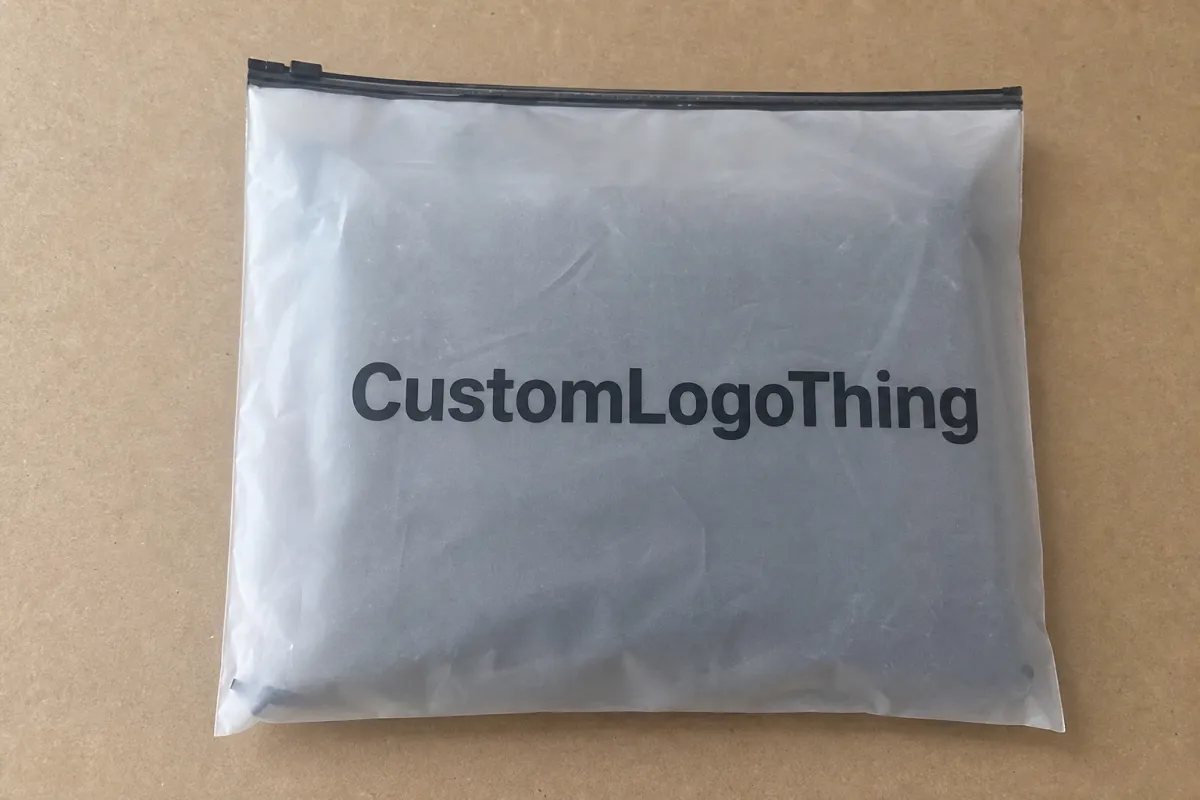
A shipping bag is never invisible to the customer. It arrives first, sits on the porch, and sets expectations before the box cutter comes out. A gray or white utility bag may move goods efficiently, but it rarely contributes anything meaningful to brand perception. Frosted packaging does more with nearly the same weight and structure. That difference matters, especially in categories where unboxing is part of the customer experience.
From a buyer's perspective, the appeal is commercial rather than decorative. Frosted poly mailers wholesale can reduce unit cost compared with smaller retail-style runs while still giving the shipment a more polished look. The surface reads modern without being loud. The semi-opaque finish adds privacy, and customers usually notice that immediately, even if they never mention it in a review.
Privacy is not a small detail. If you ship apparel, subscription items, wellness products, printed materials, or accessories, a clear bag can reveal too much. Frosted film softens that exposure. The parcel still feels branded, but it does not advertise the contents to everyone who handles it along the way. That matters in apartment buildings, shared mailrooms, campus pickup counters, and office deliveries.
The margin case is just as convincing. A branded carton can create a stronger premium impression, yet it adds weight, storage bulk, and material cost. A frosted mailer keeps freight light and packing fast. Across 10,000 parcels, a small weight difference becomes real money. A 20-gram swing per unit equals 200 kilograms moving through the warehouse and shipping network. That is labor, freight, and handling pressure, not theory.
Wholesale also improves consistency, which is easy to underestimate until demand spikes. A brand sending 500 bags one month and 5,000 the next cannot afford shade drift, weak adhesive, or print variation. Bulk buying gives the team a steadier supply base and lowers the risk of scrambling for replacements during a sale, launch, or seasonal surge.
Practical note: the best shipping bag is rarely the one that photographs best on a product page. It is the one that keeps the packing table moving, protects privacy, and still lands inside the target cost per order.
That is why frosted poly mailers wholesale often outperforms plain shipping bags for recurring shippers. The package looks better, stores efficiently, and keeps fulfillment simple. For the right product mix, that combination protects both brand perception and margin.
Product Details: What Makes Frosted Poly Mailers Different
A frosted poly mailer is usually made from lightweight polyethylene film with a semi-transparent matte finish. The bag is folded and heat-sealed on the sides, then fitted with a self-seal adhesive strip. Depending on the supplier, you may also see a tear strip for easier opening or a second adhesive strip for return use. The structure is simple. The result is not.
The frosted look is the defining feature. Clear mailers show everything. White mailers hide contents but can feel plain. Metallic mailers create a louder visual statement and often suit launches or limited campaigns more than daily fulfillment. Frosted bags sit between those options: presentable, discreet, and flexible enough for recurring shipments. That middle ground is one reason they fit so many ecommerce programs.
| Mailer Type | Visibility | Brand Look | Best Fit | Main Tradeoff |
|---|---|---|---|---|
| Frosted poly mailer | Semi-opaque | Clean, modern, understated | Apparel, accessories, soft goods, print items | Less rigid protection than cartons |
| Clear poly mailer | High visibility | Functional, minimal brand presence | Retail inserts, simple non-private shipments | Contents are easy to see |
| White poly mailer | Opaque | Simple, utilitarian, tidy | General ecommerce fulfillment | Less distinctive on arrival |
| Metallic mailer | Opaque | Bold, more premium, more eye-catching | Campaigns, special drops, branded launches | Can cost more and feel more promotional |
In ecommerce, the practical advantages are easy to measure. Poly mailers resist moisture better than paper alternatives in many shipping lanes. They are light, which helps control actual weight and sometimes dimensional weight. They store flat, so a modest back room can hold a large quantity. They are quick to pack, which matters once order volume rises and labor time starts showing up in the P&L.
The strongest fit is usually soft, non-fragile inventory. Folded apparel, socks, scarves, lightweight accessories, printed collateral, soft home goods, and similar products tend to ship well in frosted bags. If a product has sharp edges, liquid contents, or breakage risk, a buyer should step back and compare padded mailers or sturdier shippers before placing an order. Packaging should suit the item, not the other way around.
Closure quality deserves attention too. A self-seal strip should hold firmly without extra tape. Weak adhesive slows the line and creates avoidable returns or complaints. Overspecifying the bag wastes money. The right frosted mailer lands in the middle: secure enough for transit, light enough for efficient shipping, and simple enough for a busy packout team to trust.
For buyers comparing options, browse Custom Poly Mailers alongside the broader Custom Packaging Products catalog to see how frosted bags fit within your shipping program. A side-by-side comparison usually tells a clearer story than a single sample on its own.
There is a subtle presentation advantage as well. A frosted surface often hides scuffs and handling marks better than glossy film, which helps the mailer arrive looking intentional instead of worn. It will not prevent damage, and it is not meant to. It simply keeps transit wear from stealing attention before the customer opens the parcel.
Specifications to Confirm Before You Request a Quote
Pricing only makes sense after the specification is clear. Two mailers can look nearly identical in a photo and still quote very differently once size, thickness, print coverage, and closure style are defined. A strong quote request removes uncertainty before it starts. That saves time for the buyer and reduces back-and-forth with the supplier.
The first items to confirm are the basic dimensions: width, length, and side gusset if the design includes one. For most ecommerce programs, the bag size should match the packed product rather than the flat product. That sounds obvious, yet it is where many first-time orders go wrong. A folded hoodie and a folded T-shirt are not the same volume, even though both belong to the same category.
Thickness matters more than many buyers expect. Poly mailers are often measured in mils, and a small change can affect puncture resistance, hand-feel, and price. A lighter film may work fine for soft, low-risk products. A thicker film can improve durability and reduce stretching or split seams. The right choice depends on product weight, packing density, and how rough the shipping route tends to be.
- Width and length: confirm the finished packed size, not just the item size.
- Thickness: compare 2.5 mil, 3 mil, and 3.5 mil samples before you commit.
- Closure style: self-seal only, tear strip, or dual adhesive strip.
- Print area: decide whether the logo needs one side, both sides, or a repeat pattern.
- Color matching: check Pantone targets if exact brand colors matter.
- Carton counts: confirm how many bags ship per carton and how they are packed on a pallet.
Customization details can shift the quote too. Some buyers need a single-color logo and a simple brand line. Others want a full-color design, QR code, warning copy, or a return address block. More ink coverage usually means more setup attention and higher cost, even when the bag structure stays the same. It is less about decoration than about production steps.
Finish should be reviewed as well. The frosted effect is already part of the product, but some programs add extra matte or gloss treatment in the printed areas. That changes the look, the tactile impression, and sometimes the price. If the brand wants a restrained luxury feel, ask for samples rather than trusting a spec sheet alone. Product descriptions cannot fully capture how the material feels in hand.
Operational details matter because they affect storage and receiving. Carton dimensions tell you how much warehouse space is needed. Pallet configuration tells you how many cartons can move together. Bag count per carton tells you how quickly the receiving team can stage the order. These are the sort of details that look minor during quoting and become central the day the freight lands.
For quality and sustainability expectations, some buyers also want to know whether the film aligns with third-party or industry references. Packaging and material programs may be evaluated against general recyclability and sourcing standards; if sustainability claims matter to your brand, review relevant guidance from EPA Sustainable Materials Management and sourcing frameworks such as FSC where applicable to the broader packaging mix. For transit performance, testing references from ISTA can help when a shipper wants to reduce damage claims and compare package performance more formally.
One useful habit is to ask every supplier to quote the same size, same thickness, same print coverage, and same delivery terms. Without that discipline, comparisons get messy. A lower unit price can hide heavier shipping, setup fees, or a carton packout that wastes space. The cheapest line on the page is not always the cheapest bag in the warehouse.
Frosted Poly Mailers Wholesale Pricing, MOQ, and Unit Cost
Wholesale pricing depends on four main levers: size, thickness, print coverage, and quantity. A small printed mailer with simple artwork is usually easier to price than a large mailer with full-coverage branding and a custom finish. That remains true before freight enters the conversation. Once shipping is included, the gap can widen.
For stock or lightly customized orders, a buyer may see a lower entry point. For fully printed custom mailers, the MOQ often rises because setup, plate work, or print preparation has to be spread across more units. The pattern is predictable: small runs cost more per piece, while larger runs lower the unit cost as production becomes more efficient. Wholesale rewards repetition.
| Order Type | Typical MOQ Range | Approx. Unit Cost Range | Best Use | Notes |
|---|---|---|---|---|
| Stock frosted mailers | 500-1,000 units | $0.10-$0.22 | Testing, small launches, backup supply | Fastest path, least customization |
| Semi-custom mailers | 1,000-3,000 units | $0.16-$0.32 | Basic logo, standard sizes, repeat shipments | Good balance of flexibility and cost |
| Fully custom printed mailers | 3,000-10,000+ units | $0.18-$0.45 | Brand-forward shipping programs | Lower cost at scale, more setup detail |
Those figures are directional, not universal. A thicker film, larger bag, heavier ink coverage, or special finishing can push the price higher. A high-volume repeat order can push it lower. Freight changes the landed cost too. A quote that looks strong on paper may lose its appeal once carton weight, ocean freight, customs handling, or final-mile delivery are added.
That is why buyers should compare landed cost, not just unit cost. If one vendor quotes a slightly higher per-piece price but includes better freight terms, less waste in cartons, and fewer defects, the real cost can be lower. Procurement teams that chase the lowest line item too aggressively often discover the apparent bargain was expensive once all the hidden pieces were counted.
MOQ deserves a plain-English explanation. Minimum order quantity is not merely a sales tactic; it reflects how production is set up. Print setup, material procurement, and packing all have fixed costs. If a supplier must absorb those costs across a very small order, the math gets difficult quickly. Wholesale pricing improves as quantity rises because the fixed work is spread across more units.
Here is the practical way to request quotes:
- Choose one target size and one backup size.
- Specify film thickness and closure style.
- State whether you want one-side or two-side printing.
- Ask for pricing at three or four quantity tiers.
- Request artwork and setup fees separately from the bag price.
- Confirm whether shipping, taxes, and duties are included.
If you want a broader purchasing structure around packaging spend, compare your mailer buy with the company’s Wholesale Programs. That helps show whether the order belongs in a consolidated purchasing plan or should stay separate for speed and control.
Storage cost should not be ignored. Buying more units to lower the price per bag can make sense, but only if the warehouse can hold them without crowding other SKUs. The best deal balances unit cost, carrying cost, and replenishment timing. Anything else is just a large invoice with a smaller number in one column.
Process, Timeline, and Production Steps for Wholesale Orders
A reliable wholesale order follows a fairly standard path. Timing depends on stock availability, artwork readiness, quantity, and freight route, but the production logic rarely changes. Good suppliers make each step visible so the buyer can spot delays early and keep the launch calendar honest.
The process usually begins with specification review. At this stage, the buyer and supplier confirm the size, thickness, closure type, print area, quantity tiers, and destination. If any of those items are vague, the quote can look accurate while still being functionally wrong. Efficient orders start with clean specifications, not assumptions or guesswork.
Next comes pricing and approval. Once the buyer agrees to the quote, artwork files are reviewed and adapted for print. This is where delays often begin. Missing vector files, low-resolution logos, changed brand colors, and incomplete copy can all slow the schedule. If the design is not ready, production is not ready. The calendar does not bend around an unfinished file.
After artwork approval, the supplier may provide a digital proof or a physical sample, depending on the order size and complexity. This is the buyer's best chance to verify logo placement, opacity, text size, and overall appearance. Catching a mismatch at proof stage is far easier than discovering it after a full run has been printed and packed.
Then production begins. Stock orders can move quickly if the material is already available. Custom orders take longer because the film needs to be printed and finished to spec. A straightforward stock item may ship in a matter of days. A custom run often needs more time, especially if the quantity is high or the print is detailed.
Here is a realistic workflow outline:
- Inquiry and quote: 1-3 business days if the specs are complete.
- Artwork setup and proofing: 2-5 business days, longer if revisions are needed.
- Production: often 10-20 business days for custom mailers, depending on quantity and print complexity.
- Transit: add domestic delivery or international freight time based on destination.
That timeline can stretch. Freight congestion, customs review, seasonal order spikes, or a last-minute artwork change can add days or even weeks. Buyers ordering before a launch or promotion should build in a cushion rather than planning right up to the deadline. A packaging delay rarely stays isolated; it can disrupt fulfillment, customer service, and marketing at the same time.
Changing specs after approval is a common mistake. A buyer may decide the logo should be larger, the bag should be thicker, or the color should shift after proof sign-off. Each change can trigger new setup work and a revised timeline. It is better to settle the commercial requirements before production begins than to pay for revisions in time and stress.
Inventory staging is another overlooked issue. If the buyer receives a large shipment but has no room to sort or repack it efficiently, the savings disappear into labor and clutter. Ask the supplier how bags are packed, how cartons are labeled, and how easy they are to receive into the warehouse. Those practical details save time later, long after the quote has been filed away.
For brands that run on tight reorder cycles, consistency matters as much as speed. The best wholesale programs are not simply the fastest. They are the ones that deliver the same thickness, the same seal performance, and the same printed appearance every time. That is the difference between a repeatable supply chain and a constant fire drill.
Why Choose Us for Wholesale Packaging Supply
Wholesale packaging is not only a price conversation. It is also a service conversation. Buyers need a supplier who understands what happens after the quote is accepted: artwork checks, production control, carton packing, transit planning, and replenishment rhythm. That is where value shows up after the sale.
At Custom Logo Things, the goal is not to overwhelm buyers with endless options. The goal is to narrow the decision to the choices that matter. A strong packaging supplier should help compare sizes, explain the tradeoffs between film thicknesses, and translate brand goals into a manufacturable mailer that can be ordered again without surprises. Good guidance saves money more effectively than a low quote.
Quality control is central to that promise. Before shipment, the order should pass through checks for film consistency, seal performance, print accuracy, carton count, and overall finish. A bag that looks fine in a mockup can still fail if adhesive performance is weak or the print is off-center. Those are not cosmetic problems. They affect packing speed, returns, and trust.
Reliability matters just as much. A growing brand cannot afford stockouts when order volume rises. Reorder timing should be predictable, and the supplier should be able to discuss quantity planning without vague promises. If a product is likely to become a recurring SKU, the wholesale plan should support that reality from the start instead of treating every order like a one-off project.
Practical support is part of the service too. Packaging buyers often need help selecting a size, comparing a 3 mil bag to a 3.5 mil bag, or understanding what artwork will print cleanly. That support helps especially when the team is not buying packaging full time. A strong supplier reduces friction by answering those questions clearly and early, before anyone has committed budget to the wrong spec.
For buyers building a broader supply strategy, a consistent mailer line can sit alongside branded cartons, labels, tissue, and inserts. That is why it helps to look at the full packaging mix rather than one SKU alone. A more disciplined packaging program usually leads to better presentation and fewer surprises in fulfillment.
If the goal is to protect margins while improving the shipping experience, the answer is rarely to buy the fanciest bag. It is usually to buy the right bag in the right quantity with the right specifications. That is the kind of decision a commercial packaging partner should make easier, not harder.
Next Steps to Place a Frosted Poly Mailers Wholesale Order
Start with the product, not the quote. Choose the target size based on the item after it is packed and folded, not the item sitting flat on a table. Then estimate monthly volume so you can see whether the order belongs in a small-run test, a semi-custom order, or a full wholesale replenishment program. A clear volume estimate often does more for pricing than a long email thread.
After that, decide what branding the mailer needs to do. Some brands only need a discreet logo and a return address line. Others want full-brand printing, messaging, or a QR code. Both can work. The right answer depends on the channel, the product margin, and how much the shipping bag needs to contribute to brand recognition. A package can be quiet and still feel deliberate.
Before requesting pricing, gather the basics:
- Dimensions: width, length, and any gusset requirement.
- Quantity tiers: the volumes you want compared side by side.
- Artwork files: vector logo, copy, and brand color references.
- Delivery details: shipping address, required date, and receiving constraints.
- Sample request: ask for a proof or sample if texture and opacity matter.
Sampling is a smart move. A bag that looks ideal in a digital mockup may feel too thin, too glossy, or too opaque in real use. Test the adhesive strip, opening behavior, packing speed, and overall look under normal warehouse lighting. A 10-minute sample review can prevent a costly ordering mistake that follows you for months.
When comparing vendors, ask for pricing at more than one quantity level. A 3,000-piece order and a 10,000-piece order may reveal a sharp break in unit cost. That difference can help you decide whether to buy only what you need now or to lock in better pricing with a larger order. The right choice depends on storage capacity and cash flow as much as on unit economics.
Then review the quote as a landed-cost decision, not just a product decision. Include freight, any setup charges, and any likely reorders. That is how a procurement team protects margin in a way that still holds up in the warehouse.
For a clean path forward, compare the preferred size, request a proof, and confirm delivery timing before placing the order. Once those steps are complete, frosted poly mailers wholesale becomes less of a search term and more of a repeatable packaging program that supports both brand image and operational control.
Frequently Asked Questions
How do I choose the right size for frosted poly mailers wholesale orders?
Measure the packed product, not just the flat item, and leave room for folds, seams, and the adhesive flap. A size that is too tight slows packing and can stress the seal, while a size that is too large wastes material and makes the shipment look loose. Apparel, print materials, and soft goods usually need different allowances, so ask for a size recommendation based on what you actually ship.
What is the typical MOQ for frosted poly mailers wholesale pricing?
MOQ depends on whether you are ordering stock, semi-custom, or fully printed mailers. Stock items often start lower, while custom print runs usually require higher quantities because setup costs need to be spread across more units. If you are comparing options, ask for tiered pricing so you can see the break point where a larger order lowers the unit cost enough to matter.
Can frosted poly mailers wholesale orders be custom printed?
Yes. Most wholesale programs support logo printing, brand colors, and simple messaging on one or both sides. The key details are print area, number of colors, and file format. If brand accuracy matters, request a proof or sample before production begins so you can confirm placement, color tone, and overall finish.
How long does production usually take for frosted poly mailers wholesale purchases?
Stock items can often move faster than custom-manufactured orders. Custom artwork, larger volumes, and freight routing add time, so the total schedule should include proof approval and transit. If the order needs to arrive before a launch or promotion, build in extra time rather than counting on the shortest possible timeline.
Are frosted poly mailers suitable for shipping apparel and lightweight goods?
Yes, they are a strong fit for folded apparel, accessories, soft goods, and other non-fragile products. They keep weight low, help protect privacy, and pack quickly on the fulfillment line. If the item is sharp, rigid, or breakable, it is smart to ask whether a padded mailer or different shipper would be a better match.
Actionable takeaway: before you place a frosted poly mailers wholesale order, lock down one packed size, one thickness target, one print spec, and three quantity tiers, then compare landed cost instead of unit price alone. That single discipline prevents most of the expensive mistakes that show up later in receiving, packing, and replenishment.


