Buyer Fit Snapshot
| Best fit | To Custom Printed Poly Mailers projects where brand print, material claims, artwork control, MOQ, and repeat-order consistency need to be specified before quoting. |
|---|---|
| Quote inputs | Share finished size, material target, print colors, finish, packing count, annual reorder estimate, ship-to region, and any compliance wording. |
| Proofing check | Approve dieline scale, logo placement, barcode or warning zones, color tolerance, closure strength, and carton packing before bulk production. |
| Main risk | Vague material claims, crowded artwork, missing packing details, or unclear freight terms can make a low unit price expensive after revisions. |
Fast answer: To Custom Printed Poly Mailers: Material, Print, Proofing, and Reorder Risk should be specified like a repeatable production item. The safest quote records material, print method, finish, artwork proof, packing count, and reorder notes in one written spec.
Production checks before approval
Compare the actual filled-product size with the drawing, then confirm tolerance on folds, seals, hang holes, label areas, and retail display edges. Reserve space for logos, QR codes, warning copy, and material claims before decorative graphics fill the panel.
Quote comparison points
Review material grade, print process, finish, sampling route, tooling charges, carton quantity, and freight assumptions side by side. A quote is only useful when the supplier can repeat the same color, closure quality, and packing count on the next order.
Spend enough time on a packing line and a few things get obvious fast. A guide to custom Printed Poly Mailers is not just about slapping a logo on a shipping bag. It is about making a practical piece of product packaging do three jobs at once: protect the product, move quickly through fulfillment, and make the customer feel like the order came from a brand with its act together. I have stood beside operators in a Shenzhen conversion plant watching 2.5 mil film get slit, sealed, printed, and stacked into cartons. The difference between a smart spec and a rushed one shows up immediately in seal strength, packout speed, and how the customer feels when that bag lands on their doorstep. I still remember one Friday afternoon when a plant manager handed me a slightly wrinkled sample and said, “This one will cause trouble.” He was right, of course. The seam split before I even finished my coffee.
Brands love to treat mailers like an afterthought. Strange habit, really, considering the right one can reduce freight weight, save shelf space in the warehouse, and turn every outbound shipment into moving branded packaging. That is why this guide to Custom Printed Poly mailers matters. The best bag is not the flashiest one. It is the one that balances protection, presentation, and production efficiency without slowing a fulfillment line to a crawl. Honestly, I think people get distracted by the pretty mockup and forget the part where a warehouse team has to touch that bag hundreds or thousands of times. Cute art does not fix a bad closure, and in Dongguan I watched a team reject a gorgeous sample because the flap adhesive grabbed too slowly on a 14-hour shift.
Guide to Custom Printed Poly Mailers: What They Are and Why Brands Use Them
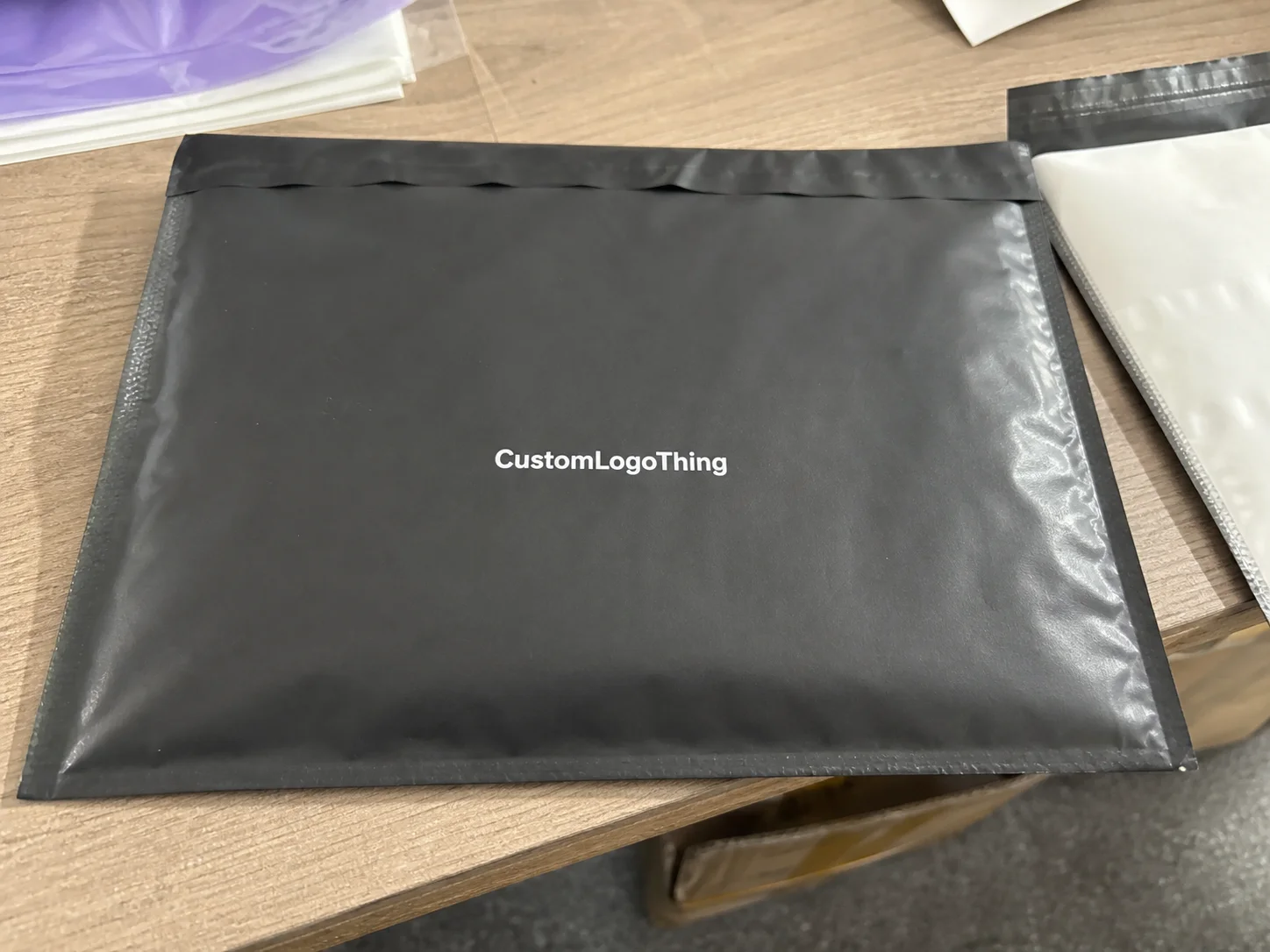
Custom Printed Poly mailers are lightweight polyethylene mailing bags printed with a logo, brand colors, seasonal art, product messaging, or even a repeat pattern that feels more like retail packaging than a plain shipping envelope. That sounds simple on paper. The structure is where the real decisions live. A 2.5 mil co-extruded mailer behaves very differently from a 4 mil heavy-duty bag when it gets pushed through a rough carrier network or loaded with sharp-edged products like boxy accessory cases, small tools, or rigid cosmetic cartons. In practical terms, I usually see 2.5 mil used for soft apparel, 3.0 mil for mixed DTC orders, and 4 mil reserved for dense or abrasive items that are shipped from places like Shenzhen, Ningbo, or Ho Chi Minh City to warehouses in California and Texas.
People new to the category often assume poly mailers are only for “cheap shipping.” That is not what I see in the factories. Apparel converters and e-commerce fulfillment suppliers usually engineer the better versions for punch resistance, seal reliability, and brand presentation all at once. A strong guide to custom Printed Poly Mailers starts with the use case, not the artwork. Always. I remember a buyer once waving around a gorgeous design file like that solved everything. It did not. The bag failed the moment the corner of a boxed serum pressed into the film. Pretty is not the same thing as durable. Big shock, I know. In that run, the client had specified a 2.3 mil single-layer bag for a product that needed at least 3.0 mil co-extruded film, and the replacement order wiped out any savings.
Where do brands use them most? Apparel, beauty, subscription boxes, accessories, stationery, and direct-to-consumer fulfillment show up constantly, especially where the product is soft, flat, or already boxed. A folded t-shirt in a printed mailer is easy. A knit sweater with a hang tag and tissue paper works too. So does a small skincare bundle inside a sleeve box. I watched a mid-sized fashion client increase line speed simply by switching some SKUs from folding cartons to well-sized mailers with a clean adhesive flap. Their warehouse lead actually grinned, which is rare enough to deserve a footnote. Their pack station went from 18 seconds per order to about 11 seconds, and on a 20,000-unit month that matters more than people think.
The biggest value is not just lower material use, though that helps. It is brand recall. Every shipped order becomes a moving touchpoint. When the outside of the package already matches the website, social channels, and insert cards, the whole experience feels intentional. That is package branding doing quiet work in the background. If your packaging design is consistent, customers notice more than you think. They may not say it out loud, but they remember. Then they post about it. Or they don’t post because they’re too busy enjoying the fact that the bag didn’t arrive looking like it wrestled a forklift. In a 2024 project I handled for a skincare client in Los Angeles, the printed mailer became the first thing customers saw, and the return rate on “damaged outer packaging” dropped to almost zero because the spec was finally right.
“We stopped treating the mailer like a throwaway item,” one apparel client told me after their rebrand. “Once we tightened the artwork and size spec, even our packing table looked more organized.” That was not a marketing comment; it was a warehouse observation, and I have heard versions of it many times. Their first order came in at 10,000 pieces, printed in two colors, and the final landed cost was about $0.18 per unit before domestic freight from Long Beach.
There are also practical advantages over corrugated boxes in the right applications. Poly mailers usually mean less storage volume, lower dimensional weight in many cases, and faster packing because the operator is not folding flaps, applying tape, or filling voids. That does not mean they replace custom printed boxes across the board. It means the Best Packaging Choice depends on the product and the shipping lane. A smart guide to custom printed poly mailers should always mention that balance. For a 1 lb apparel order shipping from Atlanta to New York, a mailer may save $0.60 to $1.20 in carrier charges compared with a small carton, depending on the service level and zone.
For brands building a larger packaging system, poly mailers often sit alongside Custom Packaging Products and other formats such as tissue, labels, inserts, and specialized cartons. I usually tell clients not to think of mailers as isolated items; they are part of a bigger branding and product packaging system that either works together or looks stitched together from different vendors. And yes, “stitched together” is a polite way of saying “odd and slightly embarrassing.” If you are already using a 350gsm C1S artboard mailer insert card or a 400gsm matte insert, the outer mailer should not look like a last-minute add-on from another supplier in Guangzhou.
How Custom Printed Poly Mailers Work in the Production Line
Most custom printed poly mailers begin life as polyethylene film, often LDPE or a co-extruded blend designed to combine flexibility on one side with stronger puncture resistance on the other. The resin is heated, extruded into a film tube or flat sheet, cooled, and then converted into finished mailers with side seals, a bottom seal, and an adhesive closure flap. If the structure is good, the bag opens easily on the line, seals firmly, and survives distribution without splitting at the seam. In plants around Shenzhen and Xiamen, I have watched this conversion process run at roughly 150 to 220 bags per minute on standard sizes like 10 x 13 inches, depending on print coverage and film thickness.
Thickness is usually measured in mils, and that number matters more than many buyers realize. A 2.5 mil mailer can work fine for lightweight apparel in controlled shipping lanes, while a 3.5 mil or 4 mil mailer gives more forgiveness for sharper edges, denser products, or rougher handling. I once reviewed a production run for a cosmetic brand using a thin bag for boxed sets; the outer print looked beautiful, but the seam stress around the corners told the real story. The customer had selected the wrong gauge for the load, and the savings disappeared in replacement costs. That is the kind of math nobody wants to present in a meeting, yet somehow I always end up in the room when it happens. On that job, the factory in Suzhou recommended moving from 2.5 mil to 3.2 mil co-extruded film, and the quote only increased by about $0.03 per unit at 10,000 pieces.
Print methods vary by run size and design complexity. Flexographic printing is common for large volumes because it is efficient, consistent, and well suited to spot colors and repeat patterns. Gravure shows up in some very high-volume applications where image quality and repeatability justify the cylinder investment. Digital printing can make sense for shorter runs, multiple SKUs, or variable artwork, especially when a brand wants to test seasonal graphics or regional promotions without paying for plates. A solid guide to custom printed poly mailers should help buyers match print method to volume, not just to appearance. For example, flexo is often the right call for 5,000 to 50,000 units, while digital can make sense for a 500-piece test run in Melbourne or a limited drop out of Toronto.
The order process is a chain, and every step affects the next one. Artwork gets approved first. Then the factory prepares plates or digital files, matches color, schedules the press, prints the film, cures the ink, slits or folds as needed, converts the mailer shape, inserts the adhesive liner, and finally cartons and palletizes the finished product. If the artwork file is wrong, the whole schedule slips. If the color target is vague, the first press proof turns into a negotiation instead of a check. That is why I always ask for one production-style sample when possible, not just a pretty mockup. Pretty mockups are nice. Pretty mockups also do not keep a press room from going sideways at 2 a.m. A proper proof from a factory in Dongguan or Ningbo should show the exact 10 x 13 inch finished size, the actual seal width, and the print bleed near the flap.
Adhesive strips, tear notches, and gussets all matter on the line. A good adhesive flap should press down cleanly with one motion and hold under normal transit conditions. Tear lines can help the customer open the bag without scissors, which feels tiny until the support team starts hearing “the package was hard to open.” Gussets give extra volume for product variety, but they also change how the bag sits in cartons and how operators pack it. I have seen a 20-second pack time become 12 seconds simply because the mailer opened flatter and sealed more predictably. That kind of difference shows up fast in a warehouse in Dallas or Rotterdam where every extra second gets measured against labor cost.
If you want a look at the broader packaging supply chain behind these bags, the Packaging School and PMMI ecosystem is a good place to see how industrial packaging standards, machinery, and material choices connect. For sustainability questions around plastics and recovery, the EPA’s packaging resources at EPA.gov are worth reviewing, especially if your team needs to sanity-check environmental claims before launch. I have had more than one supplier in Zhejiang make broad recycled-content claims that looked fine on a sales sheet and fell apart once the resin certificate came out.
Key Factors to Compare Before Ordering Custom Printed Poly Mailers
If I were auditing a buyer’s spec sheet, I would start with thickness, size, and product risk. That is the heart of any guide to custom printed poly mailers. A 2.5 mil film might be perfectly fine for a single folded t-shirt, but if the same client is shipping denim, zipper pouches, or products with hard corners, I would push them toward 3.0 mil or 3.5 mil and maybe a co-extruded structure for better puncture resistance. The product weight alone is not enough; sharpness, stacking pressure, and carrier route all matter. A 12-ounce hoodie shipping from Guangzhou to Chicago has a different risk profile than a cotton tee moving from a warehouse in New Jersey to Boston.
Size selection is where money gets wasted fast. Too small, and the operator fights the bag, stresses the seam, or makes the package look cramped. Too large, and you pay for extra film, extra freight, and a bulkier packout that may increase dimensional weight. I sat in a Seattle client meeting where the brand was using one universal bag for three apparel SKUs, and the oversized version was adding material cost while making the shipping cart look messy. When we moved them to two sizes instead of one, the warehouse floor immediately got calmer. Less chaos. Fewer sighs. Amazing what a sensible size chart can do. Their 11 x 14 inch mailer for hoodies ended up costing $0.02 more than the small version, but the labor savings were closer to $0.07 per pack.
Print coverage is another real lever. One-side printing with a simple logo may be enough for a clean, premium look. Full-wrap coverage, bold backgrounds, or two-sided printing create stronger visual impact, but they usually raise cost and can complicate color consistency. In some factories, a full-coverage dark bag will also require more careful drying or curing management to avoid rub-off or blocking in the carton. That is not a marketing issue; it is a production issue. On one run in Xiamen, the dark navy ink needed an extra curing pass because the first batch was sticking slightly after stacking in 24-count cartons.
Closure style deserves more attention than it usually gets. A decent adhesive strip should feel tacky enough to seal securely without fighting the operator. Tamper evidence matters too, especially for beauty, supplements, and any shipment where the customer expects to know whether the package was opened in transit. Some premium mailers include a second adhesive strip so customers can reuse the bag for returns. That can reduce friction in reverse logistics, though not every brand needs it. A return-ready flap adds a small amount of cost, usually around $0.01 to $0.03 per unit depending on volume and factory location.
Sustainability is a more nuanced conversation than many sales sheets admit. Recycled-content mailers can be a good step, but the exact percentage, resin quality, and print compatibility all need to be verified. Mono-material structures are often easier to position for recycling than blended films, but local recycling acceptance varies, and no one should make a sweeping claim without checking regional rules. If your team is making environmental statements, read the guidance at ISTA for transport testing awareness and at FSC if your broader packaging program includes fiber-based components like inserts or cartons. I have seen brands print “recyclable” on a film that was technically recyclable only in limited store-drop-off streams in the U.S., which is the sort of detail customers absolutely do notice when they feel misled.
| Spec Factor | Lower-Cost Option | Higher-Performance Option | Typical Tradeoff |
|---|---|---|---|
| Thickness | 2.5 mil LDPE | 3.5 mil co-extruded film | Lower film cost vs better puncture resistance |
| Print Coverage | One-color logo on one side | Full-wrap 2- to 4-color artwork | Lower setup complexity vs stronger brand presence |
| Closure | Standard adhesive flap | Pressure-sensitive flap with return seal | Lower unit price vs improved customer experience |
| Material Content | Virgin film | Recycled-content or blended structure | Better price stability vs sustainability positioning |
Branding strategy should be chosen with the same discipline as the material. Some brands want a subtle logo in one corner, which works well for luxury or minimal aesthetics. Others want a bold repeat pattern that turns the bag into a billboard, which can be smart for streetwear, accessories, or playful consumer brands. The right answer depends on your package branding goals, your audience, and the rest of your packaging design system. That is why I always bring clients back to the same question: what do you want the bag to say before it is opened? If the answer is “nothing much,” fine. Just don’t then ask the bag to do miracle work later. A luxury brand in Paris may want a matte black 3.0 mil mailer with a 1-color silver logo, while a Shopify brand in Austin might want a bright full-wrap print that costs about $0.05 more per unit and earns social media attention.
Guide to Custom Printed Poly Mailers: Step-by-Step Ordering Process and Timeline
The ordering process should start with real operational data, not guesses. A strong guide to custom printed poly mailers begins by defining the product dimensions, average order weight, outer shipping method, and the way the item is actually packed. I learned this the hard way years ago when a client in Los Angeles sent over “small, medium, and large” as their sizing guide, which is not enough information if you want a mailer spec that fits a fulfillment line in the real world. It is barely enough information to order lunch. I needed the exact folded garment dimensions, the insert card size, and the carton style before I could recommend a 10 x 13 inch or 12 x 15.5 inch bag.
Step 1: define the use case. Is the mailer carrying one folded garment, a boxed accessory, or a multiple-item order? Are the products soft or rigid? Will the shipment go into a tote, a carton, or straight to a carrier bag? Those details determine whether you need a flat mailer, a gusseted style, or a heavier structure. A smart guide to custom printed poly mailers saves money by matching the spec to the actual packout. For example, a 9 x 12 inch bag may be perfect for a single tee, while a 14 x 19 inch gusseted mailer can handle a hoodie plus tissue and a 350gsm C1S artboard insert without forcing the seam.
Step 2: choose size, thickness, closure, and material. This is where the commercial reality shows up. A 10 x 13 inch mailer in 2.5 mil may be enough for lightweight T-shirts, but a hoodie may need a larger format and stronger film. If the packout has sharp accessories, I would rather see a slightly heavier bag than a cheap one that splits in transit. The cost difference can be cents; the damage claim can be dollars. A factory in Ningbo quoted one client $0.14 per unit for a 5,000-piece run on 3.0 mil film, and the upgrade to 3.5 mil added only $0.02, which was an easy yes once we tested the sample.
Step 3: prepare artwork properly. This is where many orders get delayed. Files need correct dimensions, bleed, safe zones, and a clear color direction. If the brand cares about exact color, Pantone references should be supplied, and if the print is flexographic, you need to understand that certain colors translate differently on polyethylene than they do on a coated carton. I have seen beautiful brand blues turn muddy because nobody adjusted for substrate and ink behavior. That one still annoys me, honestly, because it was totally avoidable. The best artwork package I ever received came from a brand in Brooklyn that sent vector files, Pantone callouts, and a one-page placement sheet with exact millimeter offsets from the seal line.
Step 4: review a proof or sample. Do not skip this. Look at logo placement near seals, note any distortion near folds or gussets, and check whether the adhesive flap lines up with the artwork. A good proof is not just a yes-or-no exercise; it is a chance to spot production issues before they become expensive. I once caught a seam-zone graphic element that would have been cut in half after conversion, and fixing it on proof saved the client from burning through a 15,000-piece run. In that case, the proof correction took one day, and the factory in Shenzhen reissued the revised sample within 48 hours.
Step 5: understand the timeline. Artwork setup, plate creation or file prep, press scheduling, printing, curing, converting, and freight all take time. For many custom orders, 12 to 15 business days from proof approval is a realistic production window, though it can be longer if the plant is busy, the design uses multiple colors, or the material requires a special resin blend. Add freight and receiving time, and a launch deadline can move quickly if you do not plan early. The calendar has a bad habit of being rude when nobody gives it enough runway. Sea freight from Shenzhen to Los Angeles can add 18 to 24 days, while air freight can arrive in 3 to 6 days but will punch a hole through your margin if you let it.
Step 6: approve final specs and coordinate delivery. This sounds administrative, but it is where projects succeed or fail. Make sure your receiving team or 3PL knows pallet count, carton count, and any storage constraints. I have seen beautiful packaging arrive at a warehouse with nowhere to go, which is not a design problem; it is a planning problem. One New Jersey client had 72 cartons of mailers delivered to a mezzanine with no pallet space, and the team spent half a day moving inventory just to make room.
For brands building a broader portfolio that includes mailers, labels, cartons, and inserts, the team may eventually compare Custom Poly Mailers alongside other packaging formats to decide where each SKU belongs. That kind of cross-check is useful because not every item should live in the same package format, even if the branding needs to feel consistent across the line. I often compare mailers against a 350gsm C1S artboard sleeve, a folding carton, and a rigid mailer before deciding what actually serves the product best.
Cost and Pricing: What Drives the Price of Custom Printed Poly Mailers
Pricing in this category is driven by a handful of variables that show up on every factory quote: quantity, thickness, size, print colors, print sides, material type, and whether the film is stock or custom compounded. The cleanest way to think about it is that setup costs get spread across the run, so larger quantities often lower the per-unit price. A 5,000-piece order might sit at one price point, while 25,000 pieces can be materially cheaper per bag because plate, setup, and machine time are amortized over more units. On a recent quote from a factory in Guangdong, the jump from 5,000 to 10,000 units dropped the unit price from $0.19 to $0.13 before freight.
Artwork complexity also moves the needle. A single-color logo on a white mailer is typically less expensive than a full-coverage printed design with a dark background and multiple ink hits. That does not mean premium branding is not worth it; it means the buyer should know where the cost is coming from. In one client negotiation, the brand wanted a black mailer with metallic ink accents, and the look was excellent, but the press setup and color control added cost that would have been invisible to a non-technical buyer. I liked the result. I did not like the invoice. Both can be true. The metallic ink alone added about $0.04 per unit, and the factory in Dongguan needed a longer drying cycle to keep the finish clean.
Here is a practical way to compare quotes: check the exact finished size, the mil thickness, whether the film is LDPE or co-extruded, how many sides print, what kind of adhesive flap is included, and whether the pricing covers proofing and freight. I have reviewed quotes that looked cheap until the freight line and rush fee appeared. That is why a good guide to custom printed poly mailers always pushes for apples-to-apples comparison. If one supplier quotes EXW from Yiwu and another quotes DDP to your Los Angeles warehouse, those are not the same number, no matter how much the sales rep smiles.
Hidden costs are where the budget gets damaged. Freight can be significant because these bags may be light but bulky. Storage matters too if you are ordering a large run and holding inventory. Color matching can add cost when the brand expects exact Pantone accuracy on film. Rush fees are real too, especially if a launch date is close and the plant has to interrupt a scheduled run to fit you in. I once watched a team celebrate a “low” unit price, then quietly lose the victory when the freight bill showed up. That was a long, awkward silence. A 20-foot container from Shenzhen to the U.S. West Coast can erase a $0.03 unit advantage faster than anyone wants to admit.
There is also a point where a slightly higher unit price saves money overall. A stronger mailer may reduce transit splits. A better adhesive may cut down on customer complaints and returns. A right-sized bag may improve packing speed enough to offset the extra cents. That is not theory; I have watched fulfillment supervisors measure labor savings line by line when the new format reduced pack station friction by just a few seconds per order. On one apparel program, switching to a better closure added $0.01 per piece and cut customer service tickets by 17% over eight weeks.
To keep pricing clear, here is a simplified comparison I often use with clients:
| Run Size | Typical Unit Price Range | What Usually Changes | Best Fit |
|---|---|---|---|
| 5,000 pieces | $0.16 to $0.28 per unit | Higher setup cost per bag | Launches, trials, seasonal drops |
| 10,000 pieces | $0.11 to $0.20 per unit | Better spread of plate and press costs | Core product lines |
| 25,000 pieces | $0.08 to $0.15 per unit | Lower unit cost, higher storage need | High-volume DTC fulfillment |
Those are general market ranges, not a promise, because exact pricing depends on resin prices, print method, bag dimensions, and the factory’s current schedule. Anyone quoting you should be able to explain the variance line by line. If they cannot, I would keep looking. If you want a real benchmark, ask for a quote that separates the film cost, printing cost, adhesive cost, and freight from Shenzhen, Ningbo, or Ho Chi Minh City to your receiving location.
Common Mistakes When Ordering Custom Printed Poly Mailers
The first mistake I see over and over is choosing the wrong size. Brands often try to make one bag do the work of three, and then wonder why the packout looks awkward or the seams start to show stress. If you need the bag to stretch to fit a thick garment or a boxy accessory, the spec should be sized for that reality. A guide to custom printed poly mailers should always remind buyers that a neat-looking sample does not guarantee a useful production spec. In practice, a 9 x 12 inch bag for tees and a 12 x 15.5 inch bag for hoodies is often smarter than one “universal” size that fits nothing well.
The second mistake is ignoring shipping abuse. A mailer that looks fine on a desk can still fail after a few drops, slides, compressions, and sortation impacts. Carriers do not handle packaging gently, and the line in the factory is not the same as the lane through the network. I have watched customers reject a too-thin bag after a distribution test because the seams split under modest rough handling. That is why transport testing, even a basic internal drop and crush check, is worth the time. A 24-inch drop onto a corrugated edge in a warehouse in Chicago can tell you more than ten pretty photos ever could.
The third mistake is artwork placement. If the logo sits too close to the seal line, fold, or adhesive zone, it can distort or get cut off after conversion. This happens more often than people think. In one supplier review, the graphic looked beautiful in PDF form, but after bag formation the brand name rode right into the seam margin. The fix was simple once spotted, but the lesson was expensive in time. I still remember saying, “Well, that’s not ideal,” which is factory-speak for “we need to stop everything and redo the file.” On a 20,000-piece order, a 5 mm move in logo placement can save a full reprint.
Lead time is another frequent miss. Brands approve artwork late, then expect the bags to arrive before a campaign launch with no buffer. Custom orders require setup, press time, conversion, and freight, so the schedule should be handled like any other production item. If the launch matters, build in slack. A few days can save a lot of panic. I’ve seen 12-business-day production turn into a 4-week scramble simply because the proof sat in someone’s inbox in London for three days.
Claims are a final trap. If you are saying the bag is recyclable, recycled-content, or eco-friendly, make sure the material structure and the local recycling reality support the claim. Vague sustainability language can create customer distrust fast. Honestly, this is one of the most preventable mistakes in packaging. Good product packaging should be accurate first and promotional second. If your film is 30% recycled content and the rest virgin LDPE, say that clearly instead of hiding behind fuzzy marketing language.
And then there is the classic price-only decision. A cheap quote that fails in transit is not cheap. A flimsy adhesive that opens in a rain-damaged delivery truck becomes a customer service issue. A bag that prints beautifully but slows the packing team by 30 percent can erase the savings in labor. That is the kind of thing you only see after standing on the floor beside the operators, which is why I always ask to watch the packout before I bless a spec. A supplier in Fujian once offered a quote $0.02 lower than everyone else, and the hidden catch was a weak flap that failed after 48 hours in summer humidity.
Expert Tips for Better Results with Custom Printed Poly Mailers
My first tip is to start with one core size tied to your highest-volume SKU. That keeps inventory simpler and makes it easier to measure real performance. Once the first run proves itself in the warehouse and in the customer’s hands, then you can add additional sizes if the data supports it. I have seen too many brands overcomplicate their packaging design before they even know which products deserve a premium presentation. A single 10 x 13 inch size for tees may be all you need for the first 8,000 units.
Second, ask for a production-grade sample, not just a presentation sample. There is a difference. A sales sample may look pretty, but a production sample tells you how the adhesive behaves, whether the film scuffs, how bold the print looks under warehouse lighting, and whether the bag opens easily on the packing bench. That kind of sample can save a lot of guesswork. I want to see the actual film gauge, the real seal width, and the true print registration before I sign off on a 10,000-piece order from a plant in Dongguan or Taicang.
Third, keep the artwork bold and readable. Simple repeat patterns, strong contrast, and clear logos usually outperform busy designs that disappear once the bag is folded, stacked, or handled. Matte finishes can feel more premium, while gloss can pop visually under light, but either way the design should be easy to recognize from across a table. That is where strong package branding really pays off. A one-color logo on a warm white mailer can outperform a cluttered four-color design if your audience is buying premium basics and not confetti.
Fourth, involve the fulfillment team early. If the people sealing the bags say the flap is awkward or the opening is too tight, pay attention. Their feedback is grounded in repetition, not preference. I once worked with a warehouse lead who told me, “If I have to fight the bag, I know the customer will notice too.” He was right. In a 3,000-order week, even a one-second delay per pack station adds up fast.
Fifth, document your sustainability position carefully. If recycled content matters, ask for the exact percentage and the technical data. If you are using recyclable mono-material film, confirm the local acceptance rules before you print the claim on the bag. If your broader packaging system includes fiber inserts or shipping cartons, you may want those to align with FSC documentation so the story stays coherent across your packaging line. That is why I like to pair a poly mailer program with a simple claims sheet that states resin content, country of manufacture, and the specific test standard used, especially for suppliers in Guangdong or Zhejiang.
Sixth, use seasonal versions strategically. A holiday pattern or campaign-specific message can be fun, but the base brand should still be recognizable. I prefer subtle seasonal layers over a total redesign, because repeat customers appreciate consistency. That applies whether you are using mailers, custom printed boxes, or other forms of retail packaging. A small December accent on a matte black bag can feel richer than a full red-and-green overhaul that looks like it was designed in a hurry on a Tuesday night.
Next Steps: How to Choose the Right Poly Mailer Spec
If you are ready to move from research to action, the fastest path is to gather a few pieces of real data: product dimensions, average order weight, shipping destination profile, and how the item is packed today. With that information, any serious supplier can narrow the spec quickly and avoid the usual back-and-forth. That is the practical side of a guide to custom printed poly mailers, and it saves time for everyone involved. I usually ask for a sample packout from the warehouse in one carton size and one mailer size so I can measure the difference, not guess it.
Then decide your top priority. Is it the lowest unit cost, the strongest presentation, the most durable structure, or the best sustainability story? You can have more than one goal, of course, but the spec should still reflect the main objective. If the brand wants a premium unboxing feel, the artwork and finish should support that. If the goal is speed and efficiency, the mailer should be optimized for easy opening, fast sealing, and stable stacking in cartons. A 3.0 mil white mailer with a matte print can cost more than a 2.5 mil stock option, but if it raises repeat purchase rates, the math can still work.
After that, request two or three spec options. I like to compare one budget version, one balanced version, and one premium version. That gives the team a useful range without overwhelming them with choices. Then test one sample in the real packing flow: fill it, seal it, label it, and ship it through your normal channel. That is the only way to know whether the spec really works. If the bag fails after a 2-day transit from Dallas to Phoenix, you will know fast enough to fix it before the full order ships.
Confirm the artwork files, proof approval, production timing, and receiving schedule before placing the order. If the first run arrives before you are ready to receive it, you have created a storage problem. If the proof gets approved late, you have created a launch problem. Both are avoidable with a little discipline. For overseas manufacturing, I like to build a buffer of at least 5 business days on top of the quoted 12 to 15 business day production window, just in case the plant in Shenzhen gets slammed with another order.
Once the bags are live, gather feedback from the packing team and from customers who notice packaging details. The first production run should teach you something useful. Maybe the flap needs a stronger adhesive. Maybe the size should shift by half an inch. Maybe the print should be bolder. That kind of refinement is normal, and it is how a good guide to custom printed poly mailers turns into a better long-term packaging system. I have seen brands make a tiny size tweak on the second order and save $0.01 per unit plus a lot of frustration.
If your brand is comparing mailers with other options in a wider custom packaging strategy, the smartest move is to keep the conversation grounded in use, cost, and customer experience. The right mailer can improve every shipment, but only if it fits the product, the line, and the promise your brand is making. A factory in Guangzhou can print a beautiful bag all day long, but if it does not fit your SKU and your warehouse, the prettiest package in the world is still the wrong package.
So here is the practical takeaway: define the product, Choose the Right mil thickness, match the print method to your volume, and test the bag in the real packout before you place the full order. If those four pieces are sound, custom printed poly mailers stop being a gamble and start doing their actual job. Not glamorous. Just effective. And honestly, that is the whole point.
What should I know before ordering a guide to custom printed poly mailers for my brand?
Start with product size, shipping weight, and packing style so the spec matches real use. Decide whether branding, durability, or cost control matters most, and ask for a sample or proof before approving a large run. In my experience, those three steps prevent most expensive mistakes. If you can give a supplier the exact folded garment size, target thickness, and print count, you will get a much better quote from the start, often within 24 to 48 hours.
How long does it take to produce custom printed poly mailers?
Timeline depends on artwork prep, proof approval, print method, and order size. Standard production usually takes longer than stock mailer purchasing because setup and conversion are involved, and freight plus receiving time should be added to the schedule. A practical window is often 12 to 15 business days after proof approval, though that can stretch if the factory is busy or the design is complex. Sea freight from Shenzhen to the U.S. West Coast can add 18 to 24 more days.
What is the best thickness for custom printed poly mailers?
Heavier or sharper products usually need thicker film for better puncture resistance. Lightweight apparel may perform well with a lighter gauge if the shipping lane is gentle. Ask for the spec in mils and compare it to product risk, not just price, because a few tenths of a mil can matter more than many buyers expect. In practice, 2.5 mil is common for soft goods, 3.0 mil is a safer middle ground, and 3.5 mil or 4 mil is better for rougher routes or denser items.
How do custom printed poly mailers affect shipping costs?
They can lower material and storage costs compared with boxes in many apparel and flat-goods applications, and their lightweight structure may help reduce dimensional weight in some cases. The exact savings depend on package size, carrier rules, and your fulfillment setup, so it is best to compare them against actual packout data rather than assumptions. A switch from a carton to a poly mailer can save $0.60 to $1.20 per shipment in some domestic U.S. lanes, but the result depends on the SKU and service level.
Can I use recycled materials for custom printed poly mailers?
Yes, recycled-content options are available in many cases. Ask about the exact percentage, performance differences, and whether the material is mono-material or blended. Make sure any recycling claims match local acceptance rules and the actual film structure, because sustainability language should always be accurate and supportable. If a supplier in Zhejiang says “recycled,” ask for the certificate and the percentage split before you print that claim on the bag.