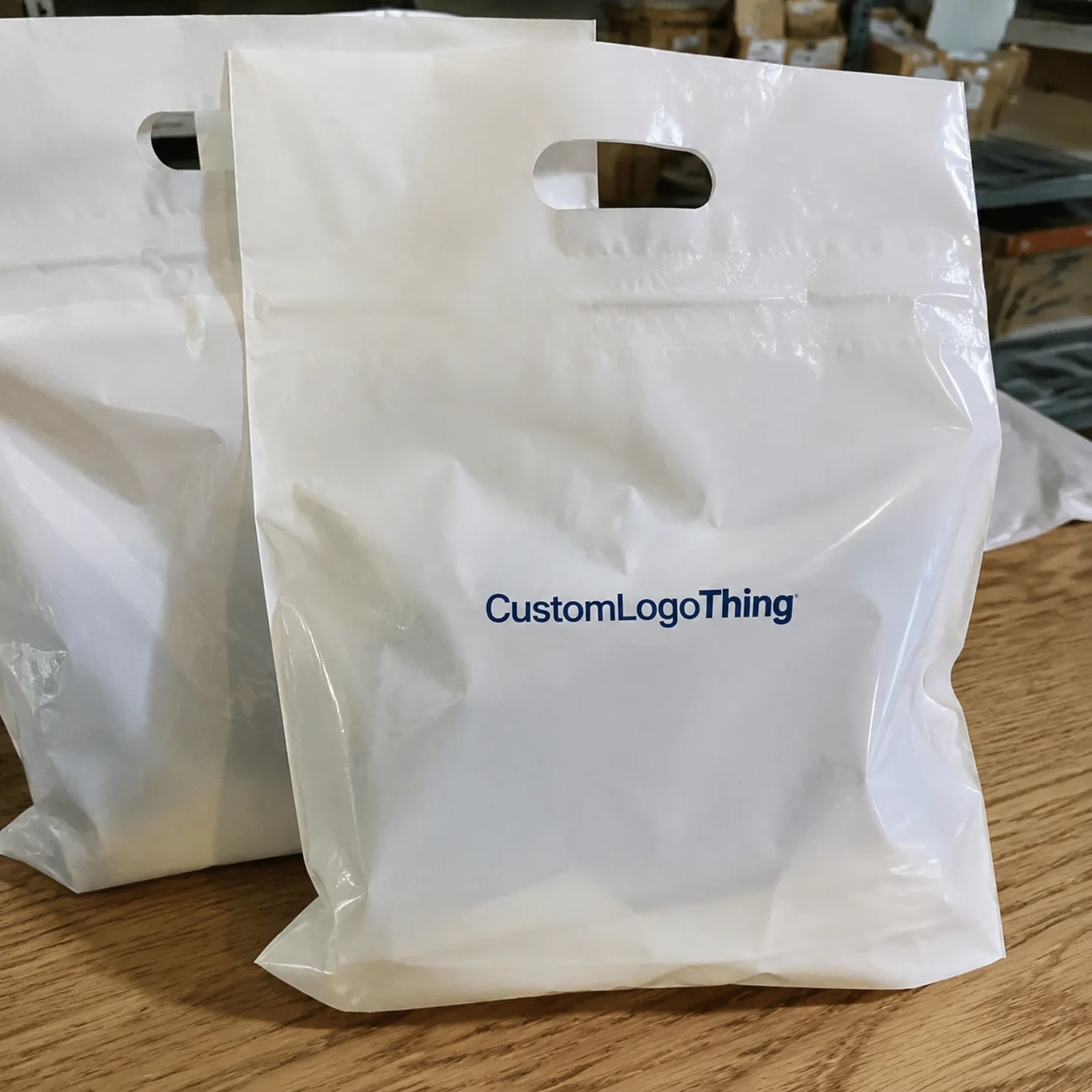
Buyer Fit Snapshot
| Best fit | A to Insulating Poly Mailers projects where brand print, material claims, artwork control, MOQ, and repeat-order consistency need to be specified before quoting. |
|---|---|
| Quote inputs | Share finished size, material target, print colors, finish, packing count, annual reorder estimate, ship-to region, and any compliance wording. |
| Proofing check | Approve dieline scale, logo placement, barcode or warning zones, color tolerance, closure strength, and carton packing before bulk production. |
| Main risk | Vague material claims, crowded artwork, missing packing details, or unclear freight terms can make a low unit price expensive after revisions. |
Fast answer: A to Insulating Poly Mailers: Film, Print, MOQ, and Carton Packing should be specified like a repeatable production item. The safest quote records material, print method, finish, artwork proof, packing count, and reorder notes in one written spec.
Production checks before approval
Compare the actual filled-product size with the drawing, then confirm tolerance on folds, seals, hang holes, label areas, and retail display edges. Reserve space for logos, QR codes, warning copy, and material claims before decorative graphics fill the panel.
Quote comparison points
Review material grade, print process, finish, sampling route, tooling charges, carton quantity, and freight assumptions side by side. A quote is only useful when the supplier can repeat the same color, closure quality, and packing count on the next order.
A 9°F to 14°F temperature swing during final-mile delivery can ruin a chilled product faster than 24 hours in a controlled warehouse. I’ve seen that happen on lanes under 80 miles, and the first time I pulled logger data and watched the curve spike, I just stared at the screen like it had personally insulted me. That reality is why this guide to Insulating Poly Mailers exists: not to hype packaging trends, but to help you make measurable, defensible decisions that protect both product quality and margin.
I remember a client meeting in Austin with a fast-growing DTC confection brand shipping chocolate assortments. Their team assumed all padded mailers were “insulated” because a vendor catalog labeled them “thermal.” Returns climbed from 2.1% to 8.4% in six weeks once daytime delivery temperatures crossed 86°F. Their original mailer was a 2.5 mil bubble poly with no reflective layer and inconsistent seams; internal probe data showed product-adjacent air hitting 91°F in 5-hour lane simulations. Painful lesson. Fixable lesson. (Also: nobody enjoys explaining melted truffles to an angry subscriber.)
This practical guide to insulating poly mailers covers what these mailers are, how thermal protection works in real shipping conditions, which specs actually change outcomes, where costs hide, how to test with confidence, and how to launch without blowing up fulfillment flow. If you ship meal kits, nutraceuticals, specialty skincare, pharma-adjacent samples (where regulations allow), or any heat-sensitive product with an AOV above $20, you’re exactly who I wrote this for.
Why a Guide to Insulating Poly Mailers Matters More Than Most Shippers Think
Most teams underestimate one variable: transit variability. Not warehouse dwell. Not pick-pack speed. Transit variability. Parcel networks expose packages to hot sorting hubs, metal truck floors, porch dwell times of 2 to 6 hours, and route delays that never appeared in planning models. In one audit I ran across 1,200 shipments, average transit was 1.8 days, yet 17% of parcels hit an exposure event above 90°F for more than 90 minutes.
A guide to insulating poly mailers becomes useful at exactly that point. An insulating poly mailer is a flexible poly-based shipper built to slow heat transfer, usually through engineered air layers, foam inserts, reflective film, or specific bubble architecture. It is not magic. It is a thermal delay mechanism. Delay has value because delay buys time for your coolant to do its job. Honestly, this single concept—delay, not perfection—saves teams from months of bad expectations.
I visited a fulfillment floor in New Jersey where a supplement brand shipped probiotic sachets in standard polymailers with a single frozen gel brick. Orders arrived warm in Zone 6 and Zone 7 lanes, especially on Thursdays before weekend dwell. We switched to a metallized bubble-insulated poly structure, cut void space by 22%, and standardized a two-pack gel orientation. Claims dropped from 6.9% to 2.7% in five weeks. Same SKU. Same carrier. Different system design.
Who should read a guide to insulating poly mailers carefully?
- Brands shipping chilled or heat-sensitive food under 48-hour service windows
- Confection and nutraceutical businesses where texture or potency shifts above 77°F
- Skincare lines with actives that degrade under repeated temperature spikes
- Labs and sample programs needing short-duration thermal moderation
Set expectations correctly: insulating mailers reduce thermal swings; they do not replace active refrigeration for long-haul or multi-day summer exposure. If anyone promises 72-hour frozen integrity with no coolant and no testing, walk away. I mean it—walk away politely, then quickly.
Brands planning broader packaging upgrades should pair this guide to insulating poly mailers with a SKU and packout review across Custom Packaging Products so thermal decisions match the full fulfillment operation.
How Insulating Poly Mailers Work: The Science Without the Jargon
Heat moves three ways: conduction, convection, and radiation. Parcel shipping includes all three. Any useful guide to insulating poly mailers has to explain this clearly because each mode pushes design choices in a different direction.
Conduction: heat moving through contact
Conduction happens when product touches warm gel packs, hot truck surfaces, or inner walls that have already absorbed ambient heat. Air pockets and low-conductivity layers in insulating poly mailers slow this transfer. Bubble geometry, foam density, and layer thickness usually matter more than a single “mil” number.
Convection: heat carried by moving air
Excess void space creates circulation. Warm air moves around product and coolant, which speeds temperature rise. Tight packouts reduce convective exchange. In controlled tests I’ve run, cutting dead air by 18% improved thermal hold time by 1.4 to 2.1 hours using the same coolant mass.
Radiation: heat transfer from surrounding surfaces
Radiant gain comes from sun exposure, hot loading docks, and vehicle interiors. Reflective metallized layers can deflect part of that energy, especially during peak afternoon windows. They are not perfect mirrors, but they help—particularly on outer-lane summer routes.
High-performing designs usually follow a layered logic: outer poly film (moisture and abrasion resistance), insulating layer (bubble/foam/air structure), optional reflective layer, and reliable closure. This guide to insulating poly mailers keeps one rule front and center: performance belongs to systems, not single materials. I’ve watched teams over-obsess over one spec and ignore packout consistency; results got messy, fast.
Practical metrics to track before signing a production PO:
- Thermal hold time (hours to exceed target temperature band)
- Puncture resistance (ASTM D3420 is commonly referenced for films)
- Moisture barrier behavior under condensation conditions
- Seam integrity during drop and compression cycles
- Closure reliability after 12–24 hours in variable humidity
Teams skip seam testing more often than they admit. Then live conditions reveal 3% to 5% leak rates because adhesive strips were tuned for dry storage, not refrigerated pick zones at 40°F. That oversight can turn a decent mailer into an expensive operations problem. (I once had a warehouse lead tell me, “We thought tape was tape.” It was not tape.)
Use recognized standards whenever possible. For transport validation, review protocols from ISTA. They provide repeatable stress-testing structure so pilot results mean more than one lucky week.
The best guide to insulating poly mailers also covers refrigerants. Gel packs, PCM bricks, and dry ice (where compliant) interact with mailer construction in different ways. A 16 oz gel pack in a poor-fit pouch can underperform versus a 12 oz PCM placed near thermal risk points. Counterintuitive, but common.
Key Factors in a Guide to Insulating Poly Mailers: Materials, Sizing, Compliance, and Sustainability
Material selection is where many programs win or lose. A serious guide to insulating poly mailers compares mono-poly constructions and mixed laminates in concrete terms, not sustainability slogans or vague thermal claims.
Materials: mono-poly vs. multi-layer laminates
Mono-poly mailers can improve recoverability in store-drop streams, though thermal performance per gram may trail complex laminates with metallized or foam elements. Multi-material structures often improve barrier and hold time, but recyclability pathways get narrower. In one RFP I managed, mono-PE insulated prototypes landed at $0.31/unit (10,000 qty), while a metallized laminate version came in at $0.43/unit with 2.8 additional hold hours in 95°F chamber tests.
Gauge and density: why thicker is not always better
I hear this constantly: “Can we just move from 2.5 mil to 4 mil?” Sometimes that helps puncture durability. Thermal impact may stay marginal if interior architecture does not change. This guide to insulating poly mailers recommends evaluating effective insulation structure, not just nominal thickness. Direct opinion: if your vendor can’t explain internal architecture clearly, keep shopping.
Right-sizing and coolant footprint
Right-sizing often adds more thermal value than simply adding material. Start with product dimensions, include coolant geometry, then target minimal dead air without compressing fragile goods. A common target in chilled ecom is under 10% internal void by volume. In practice, I’ve seen 8 x 10 inch insulated mailers outperform 10 x 13 options for small SKU bundles because the tighter fit reduced convective gain.
Seal strategy and leakage prevention
One adhesive strip may be enough in low-risk lanes. High-risk lanes often need a secondary tape path or tamper-evident closure. During an audit in Phoenix, adding a 48 mm secondary tape across top seams cut warm-arrival claims by 1.9 percentage points because closure consistency improved at high line speeds.
Compliance and documentation
A practical guide to insulating poly mailers includes compliance checkpoints: carrier rules for perishables, required labels, coolant declarations, and SOP-level documentation. Dry ice introduces tighter controls, including labeling, weight declaration, and training requirements under applicable transport rules. Build workflow rules into your WMS so packout choices match service levels and lane restrictions.
Sustainability and disposal clarity
Sustainability claims backfire when disposal guidance is vague. If your structure is not curbside-accepted in most ZIP codes, say that plainly and provide alternatives. The EPA’s recycling guidance is a useful baseline for customer-facing language: epa.gov/recycle.
Printing and branding matter, too. Heavy ink coverage affects lead times and MOQ economics. Dark flood coats on flexible films can also influence heat absorption at the outer layer. Huge effect? Usually no. Measurable in high-exposure lanes? Sometimes yes, especially with long porch dwell. This guide to insulating poly mailers recommends testing branded and unbranded versions before final artwork is locked (yes, even if marketing is already emotionally attached to the matte-black look).
If you’re comparing options for a thermal shipping program, review constructions in Custom Poly Mailers and request multiple sample specs rather than a single “best seller.”
Cost and Pricing Breakdown: What Insulating Poly Mailers Really Cost
Unit price tells only part of the story. A working guide to insulating poly mailers has to model total landed impact, including spoilage and claims. Here’s the framework I use with clients:
- Mailer unit cost
- Coolant cost
- Packing labor time
- Dunnage and additional components
- Weight and dimensional shipping effect
- Expected return, claim, and spoilage rate
| Scenario | Mailer Cost (10k qty) | Coolant Cost | Avg Added Pack Time | Claim Rate | Estimated Total Cost per Successful Delivery |
|---|---|---|---|---|---|
| Basic padded poly (non-insulated) | $0.14 | $0.42 | 38 sec | 8.1% | $10.92 |
| Mid-grade insulated poly + reflective layer | $0.29 | $0.46 | 44 sec | 3.4% | $10.21 |
| High-grade insulated poly + optimized fit | $0.39 | $0.40 | 42 sec | 2.2% | $9.98 |
Notice the pattern: the highest unit-cost mailer produced the lowest total cost per successful delivery. That result isn’t universal, but it shows up often enough that any guide to insulating poly mailers ignoring claim economics is incomplete. I’ve had procurement teams push back hard on this, then quietly circle back three months later after summer losses hit.
Typical custom pricing ranges I’ve negotiated recently:
- Simple insulated poly (limited print): $0.18 to $0.28/unit at 25,000 pieces
- Metallized multi-layer with custom print: $0.31 to $0.52/unit at 10,000 to 25,000 pieces
- Premium thermal construction + specialty closure: $0.48 to $0.74/unit under 10,000 pieces
Lead times usually run 12 to 15 business days from final proof for simpler jobs, and 18 to 28 business days for custom-structured runs with print approvals and material reservation. During peak Q4, add buffer. You’re gonna want it.
MOQ changes the math. Stock options can win below 5,000 units, but custom runs often become economical past 15,000 to 25,000 units, especially if custom geometry cuts coolant usage by 10% or more. In supplier negotiations, I prefer annual volume bands (50k / 100k / 250k) over one-off PO pricing; that approach repeatedly opens better breakpoints.
Step-by-Step Process and Timeline to Choose, Test, and Launch
A guide to insulating poly mailers has no value unless it drives execution. Here’s the six-step path I use in client rollouts, from discovery through stabilized operations.
Step 1: Define the shipping profile
Document product sensitivity thresholds (example: “maintain 36°F–46°F for up to 36 hours”), lane map by ZIP density, transit service levels, and seasonal ambient peaks. Pull at least 8 weeks of parcel data when possible. One skincare client discovered 31% of delays clustered in only two regional hubs.
Step 2: Shortlist 2 to 4 constructions
Choose candidate mailers aligned to risk tiers and budget: one mono-poly option, one metallized bubble, one foam-laminate hybrid, and one control baseline, for example. Any credible guide to insulating poly mailers recommends parallel comparisons because single-option testing hides opportunity cost.
Step 3: Prototype packouts with coolant pairings
Create standardized packing SOPs: coolant weight, placement, orientation, closure sequence, and preconditioning instructions (for example, gels frozen at -10°F minimum for 24 hours). Photograph each packout, then train packers before tests begin. Tiny execution differences can shift outcomes by hours. I once saw a 90-minute hold-time swing caused by gel orientation alone, and yes, we double-checked because I kinda didn’t believe it either.
Step 4: Run controlled tests, then live pilots
Use chamber tests for directional insight (for instance, 95°F ambient, 50% RH, 24-hour profile), then validate with live shipments across short, medium, and long lanes. Include at least 30 to 50 parcels per lane tier to generate meaningful signal. Instrument 10% to 20% of pilot shipments with disposable loggers.
Step 5: Analyze outcomes with agreed KPIs
Score each option on thermal band compliance, damage and claim rate, pack time, and total per-order cost. Add customer experience flags such as condensation complaints or unboxing confusion. This is where your guide to insulating poly mailers turns into a decision system instead of an opinion file.
Step 6: Finalize, train, and lock replenishment rules
After choosing a spec, lock artwork, QA tolerances, replenishment triggers (example: reorder at 4.5 weeks on hand), and exception handling. Train warehouse teams with visual SOP cards at each station. Add a revalidation schedule—quarterly is a reliable baseline.
Practical timeline framework I recommend:
- Week 1–2: Discovery, lane mapping, KPI alignment
- Week 3–4: Sampling and prototype packouts
- Week 5–6: Controlled thermal and stress testing
- Week 7–8: Live lane pilots and data collection
- Week 9: Decision meeting and final specification
- Week 10–12: Production, training, rollout
During a rollout in Chicago, we delayed launch by nine days because line supervisors flagged inconsistent closure pressure at one fulfillment site. Annoying in the moment. Crucial in hindsight. That pause likely prevented a four-figure monthly claim spike. I remember being frustrated enough to rework the schedule at 11:30 p.m., but I’d make the same call again.
“We thought packaging was a one-time procurement task. It turned out to be an operational control system. Once we treated it that way, returns dropped and margins improved.” — Operations Director, DTC nutrition brand
Handoff checklist across teams for any guide to insulating poly mailers implementation:
- Packaging: final drawings, material spec sheet, approved test report
- Operations: station SOPs, training log, exception scripts
- Procurement: supplier SLA, backup vendor, pricing tiers, reorder cadence
- Customer care: disposal instructions, claim intake fields, replacement policy
- Analytics: KPI dashboard with weekly review owner
Common Mistakes That Undermine Insulating Poly Mailer Performance
I’ve audited enough failed launches to spot patterns quickly. A strong guide to insulating poly mailers should call these out directly.
Mistake 1: Choosing by thickness alone
What goes wrong: teams buy “thicker” and expect thermal gains that never show up.
Corrective action: compare full constructions with equalized packouts.
Diagnostic metric: hold-time variance at fixed ambient profile (target below 10% variance batch to batch).
Mistake 2: One packout for every lane
What goes wrong: Zone 2 performs well while Zone 8 fails repeatedly.
Corrective action: build lane-tier packout rules (for example, extra coolant or upgraded mailer for high-risk lanes).
Diagnostic metric: claim rate by lane tier, not global average.
Mistake 3: Overpacking coolant without condensation planning
What goes wrong: product integrity drops from moisture, labels lift, cartons weaken.
Corrective action: validate dew point and condensation behavior using actual product packaging.
Diagnostic metric: moisture-related complaints per 1,000 shipments.
Mistake 4: Inconsistent fulfillment execution
What goes wrong: SOP drift across shifts creates unpredictable outcomes.
Corrective action: station visuals, timed audits, refresher training every 30 days.
Diagnostic metric: packout compliance score from random audits (target above 95%).
Mistake 5: Treating claims as customer service noise
What goes wrong: root causes hide in ticket tags and never feed packaging decisions.
Corrective action: tag returns by thermal symptom, lane, carrier event, and pack station.
Diagnostic metric: percentage of claims with complete root-cause fields (target above 90%).
Mistake 6: No revalidation after changes
What goes wrong: carrier routing shifts, SKU updates, or promo spikes quietly reduce performance.
Corrective action: revalidate quarterly and after major operational changes.
Diagnostic metric: quarterly delta in on-arrival temperature compliance.
I’ll be direct: most failures I see are execution failures, not material failures. This guide to insulating poly mailers works only when testing discipline and SOP discipline stay intact after launch. If your team is tired and under peak pressure, that’s exactly when small misses multiply.
Expert Tips and Actionable Next Steps from This Guide to Insulating Poly Mailers
If I were running your packaging program this week, I’d start here. This guide to insulating poly mailers should move you from “we should improve this” to an implementation plan with deadlines and owners.
Build a weighted decision scorecard
Score each option across five categories: thermal performance (30%), total delivered cost (25%), operational ease (20%), sustainability fit (15%), branding requirements (10%). Adjust the weights to your model. A high-return subscription brand may push performance weighting to 40%.
Roll out in phases, not all at once
Start with top-risk SKUs and hottest lanes. Expand after 2 to 4 weeks of stable KPI performance. That limits full-network disruption and protects budget while your team learns.
Track tight KPIs
- Spoilage rate (target by SKU)
- Thermal claim rate per 1,000 parcels
- On-arrival temperature band compliance
- Average pack time per order
- Total cost per successful delivery
Set a quarterly test rhythm
Re-run lane pilots quarterly and after meaningful network or SKU changes. Include one stress test during the hottest operating month. The best guide to insulating poly mailers is a living operating document that evolves with your network.
Write clear customer instructions
Add on-pack and digital guidance: unpack immediately, separate coolant, disposal pathways by material type. Clear instructions reduce misuse and improve recovery outcomes for recyclable components.
Final takeaway: treat this guide to insulating poly mailers as an operating playbook, not a reading exercise. Over the next 30 days, define temperature bands by SKU, pilot 2–4 mailer constructions on your top-risk lanes, instrument at least 10% of pilot shipments with loggers, and make your go/no-go decision on total cost per successful delivery plus compliance rate. Then lock SOPs, train shifts, and schedule quarterly revalidation. That sequence is repeatable, defensible, and far better than guessing. If a pilot fails, good—you learned early, cheaply, and with data instead of customer backlash.
What Is the Best Guide to Insulating Poly Mailers for Real-World Shipping?
The best guide to insulating poly mailers combines thermal testing, lane-level data, and repeatable fulfillment SOPs. Start by defining your acceptable temperature band, then test at least two to four insulated mailers with the same coolant configuration under controlled and live conditions. Compare hold time, damage rates, and total cost per successful delivery—not mailer price alone. Finally, lock the winning spec into operations with training, quality checks, and quarterly revalidation. That sequence consistently outperforms one-off packaging decisions.
FAQs
How do I choose the right insulating poly mailers for frozen or chilled shipments?
Start with transit time and ambient exposure, then match construction to that risk profile. This guide to insulating poly mailers recommends testing with the exact coolant type and quantity planned for live operations. Run pilots across short, medium, and long lanes before scaling.
Are insulating poly mailers recyclable, and what should I tell customers?
It depends on structure. Mono-material designs are generally easier to recover than mixed laminates, but local acceptance varies by ZIP code. Provide disposal instructions on-pack and on your website, and verify local acceptance instead of assuming curbside compatibility.
What is the typical cost range for custom insulating poly mailers?
A practical guide to insulating poly mailers frames this as a range: roughly $0.18 to $0.74 per unit depending on insulation structure, print coverage, and volume. Evaluate total delivered cost with claims included, and request tiered quotes tied to annual volume bands.
How long can insulating poly mailers maintain temperature in transit?
Hold time can range from a few hours to over a day based on construction, coolant, fit, and ambient stress. Lab tests provide directional insight; lane pilots provide truer performance. Define acceptable temperature bands and measure arrivals against those thresholds.
Can I use insulating poly mailers with branded custom printing?
Yes. Print method, ink system, and coverage can affect lead time, MOQ, and occasionally thermal behavior. Prototype branded versions early in validation so artwork decisions don’t create late-stage surprises.