Buyer Fit Snapshot
| Best fit | To Tamper Proof Poly Mailers projects where brand print, material claims, artwork control, MOQ, and repeat-order consistency need to be specified before quoting. |
|---|---|
| Quote inputs | Share finished size, material target, print colors, finish, packing count, annual reorder estimate, ship-to region, and any compliance wording. |
| Proofing check | Approve dieline scale, logo placement, barcode or warning zones, color tolerance, closure strength, and carton packing before bulk production. |
| Main risk | Vague material claims, crowded artwork, missing packing details, or unclear freight terms can make a low unit price expensive after revisions. |
Fast answer: To Tamper Proof Poly Mailers: Film, Print, MOQ, and Carton Packing should be specified like a repeatable production item. The safest quote records material, print method, finish, artwork proof, packing count, and reorder notes in one written spec.
Production checks before approval
Compare the actual filled-product size with the drawing, then confirm tolerance on folds, seals, hang holes, label areas, and retail display edges. Reserve space for logos, QR codes, warning copy, and material claims before decorative graphics fill the panel.
Quote comparison points
Review material grade, print process, finish, sampling route, tooling charges, carton quantity, and freight assumptions side by side. A quote is only useful when the supplier can repeat the same color, closure quality, and packing count on the next order.
Guide to Tamper Proof Poly Mailers: Secure Shipping Basics
One broken seal can do more damage than a torn carton. A single failed closure in a guide to tamper proof poly mailers decision can trigger a refund, a chargeback, and a lost customer before the day is over, which is why the conversation never really stops at film thickness or print quality.
From a packaging buyer's point of view, tamper proof mailers are about visible accountability. They are built to show opening evidence, not just to resist scuffs and punctures, and that difference matters when you are shipping apparel, supplements, returns, or any product a customer expects to arrive untouched. The guide to tamper proof poly mailers below breaks down the features that matter, what they tend to cost, and what to ask before you place an order with a supplier like Custom Poly Mailers.
I have seen more than one brand spend good money on strong product photography and polished inserts, only to lose confidence at the doorstep because the outer mailer looked ordinary. That part is kinda unglamorous, but it matters. The outer package is the first proof point your customer sees, and if it looks easy to open and reclose, the trust problem starts before the box is even opened.
Guide to Tamper Proof Poly Mailers: What They Really Do
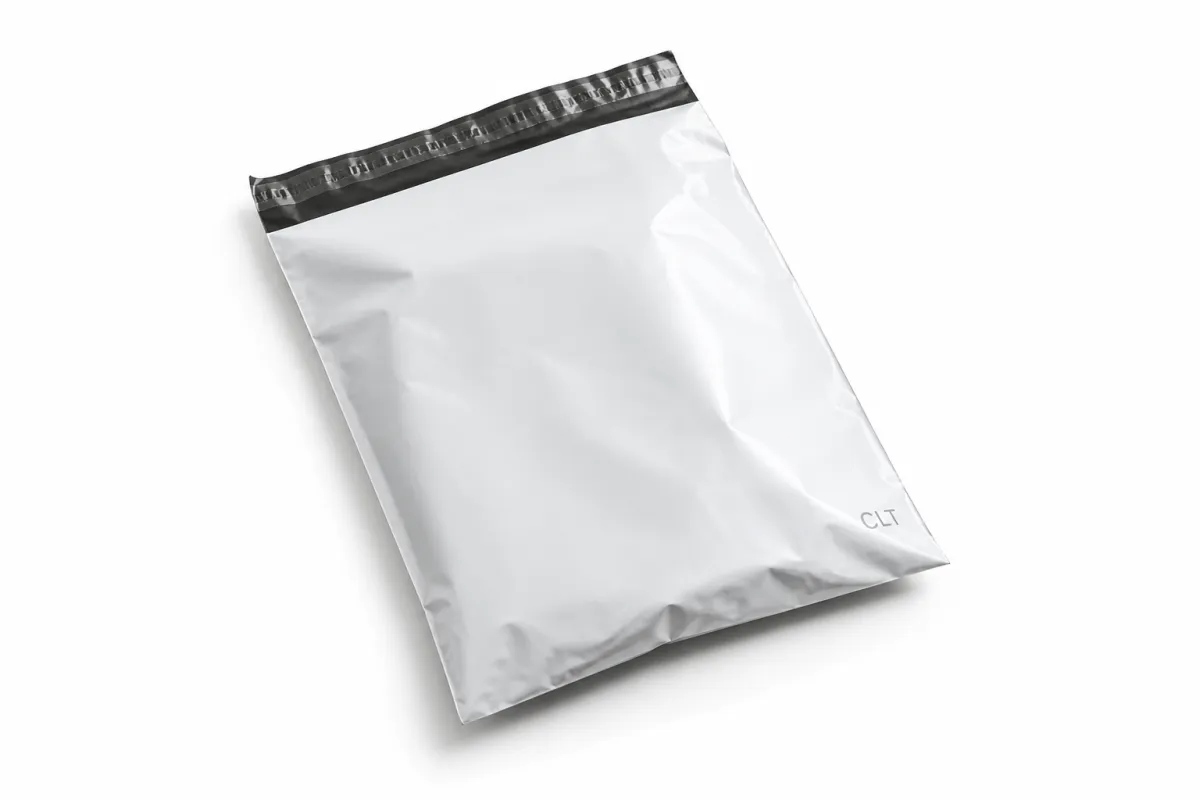
The first thing to understand in the guide to tamper proof poly mailers is that the phrase tamper proof gets used loosely across the market. Most products are better described as tamper-evident. They are designed to reveal interference: a lifted flap, a broken adhesive line, a damaged tear strip, or a closure that cannot be reset without leaving a mark. That is very different from a promise of “impossible to open.”
That distinction sounds like marketing language until a claims team gets involved. A standard poly mailer can keep dust and light moisture off the product, but it usually does not tell you whether someone opened it and closed it again. A tamper-evident design turns the opening event into evidence. For brands handling higher-trust items, that evidence is often the product itself. The guide to tamper proof poly mailers becomes useful precisely because it helps you decide whether visible proof matters more than the last few cents of unit cost.
These mailers show up most often in e-commerce apparel, but the list grows quickly: supplements, beauty products, subscription boxes, direct-to-consumer returns, document transfers, and consumer goods where customers want to know the package has not been opened and repacked. In all of those cases, the guide to tamper proof poly mailers is not just a packaging choice. It is a trust signal.
There is a real operational angle too. A brand can spend heavily on ads and product photography, then lose confidence at the point of delivery because the outer packaging looks plain or generic. The right closure, a clear warning message, and a structure that visibly resists tampering can cut down the number of anxious “Did anyone open this?” emails. That does not remove every risk, but it narrows the gap between what the buyer expects and what the package proves.
The best tamper-evident bag is not the fanciest one. It is the one your packing team can close correctly every time, while still making tampering obvious if someone tries to defeat it.
A practical way to think about the guide to tamper proof poly mailers is simple: security lives at the closure, not in the body of the bag. A thicker film helps with puncture resistance and handling, but if the seal is weak, misaligned, or easy to reclose, the whole structure loses value. The body can survive the trip and still fail the moment someone tests the flap.
That is why buyers who only compare film gauge are often disappointed. The better question is not “How thick is it?” but “What evidence does it leave behind when opened?” Keep that question in front of you, and the rest of the guide to tamper proof poly mailers starts to make sense quickly.
One more honest note: no mailer is magical. If a package is mishandled hard enough, cut open with tools, or crushed in transit, even a good tamper-evident design can fail to tell the whole story. The goal is not perfection. It is strong, repeatable evidence that gives your team and your customer something real to rely on.
How Tamper Proof Poly Mailers Work
At the center of the guide to tamper proof poly mailers are a few simple mechanisms that do most of the security work. The most common one is a permanent adhesive strip. Once the flap closes, opening it usually destroys the adhesive interface or distorts the film enough that the damage is obvious. Dual-seal closures extend that idea by adding a second closure path, often for returns or re-shipping, while still making the first opening visible. Tear strips and opening indicators add another layer by showing a clean, intentional path versus a forced one.
None of those features matter much if the seal is weak or the closure area is too narrow. A bag can use a strong 2.5 or 3.0 mil film and still fail the basic test if the adhesive is poorly applied. That is why experienced buyers often focus on seal design before they focus on the bag body. In the guide to tamper proof poly mailers, the closure is the security event. Everything else supports it.
Here is the practical sequence. The packer inserts the product, removes the release liner if the design uses one, presses the flap into place, and the bond sets. If someone tries to open it later, the evidence should be immediate: wrinkled film, torn adhesive, a split seam, or a message such as “VOID” appearing across the flap. The point is not to make the bag impossible to access. It is to make unauthorized access easy to detect, which is a more realistic objective in the guide to tamper proof poly mailers.
Compared with standard poly mailers, tamper-evident options trade a little convenience for much more visibility. Standard mailers are fast and cheap, and they work fine for low-risk shipments. If you are shipping items where customer trust matters, the trade-off shifts. The extra closure step can be worth it if it reduces damage claims, repacks, or chargebacks. That calculation sits near the center of the guide to tamper proof poly mailers because security should be measured against actual business risk, not just the packing line's preference.
Testing should be part of the buying process, not a last-minute check. A good supplier will be comfortable with basic shake tests, pressure tests, and seal checks using real product packs, not empty bags. For more formal transit evaluation, package engineers often reference ISTA test protocols to simulate handling stress and transportation abuse. The more the closure survives realistic abuse without losing tamper evidence, the more useful it becomes in the real world.
Guide to Tamper Proof Poly Mailers: Cost, MOQ, and Quote Drivers
Price is where the guide to tamper proof poly mailers gets interesting, because unit cost is only one part of the bill. The main drivers are film thickness, closure system, print coverage, size, and whether you are buying stock or custom-made bags. A plain stock tamper-evident bag with minimal print may land in the lower price band, while a fully branded bag with warning text, custom colors, and a dual-seal structure can rise noticeably. As a planning range, many buyers see something like $0.18-$0.35 per unit for higher-volume stock or simpler runs, and about $0.28-$0.55 for more customized work, depending on order size and print complexity. Those numbers are directional, not a promise, because freight and setup can shift the final landed cost pretty fast.
MOQ, or minimum order quantity, changes the picture fast. A larger minimum often lowers the per-unit cost because setup gets spread across more pieces, but it also ties up cash and warehouse space. That matters if your shipping profile changes often or if you are still testing whether tamper-evident packaging fits your operation. The guide to tamper proof poly mailers is not only about landing on the cheapest bid; it is about making sure the order size matches your monthly consumption and your storage reality.
Quotes also move when brands ask for special details. Custom colors are one variable. Variable data is another. If you need barcodes, SKU-specific messaging, warning panels, or serialized labels, expect the quote to change. Even a small artwork update can affect plate charges, proofing time, and setup labor. The guide to tamper proof poly mailers should make you cautious of any quote that feels too simple, because “simple” often means some cost has not been itemized yet.
There are hidden costs that do not always show up in the headline unit price. Freight can be meaningful if you are moving bulky cartons. Samples may be free, or they may not. Tooling and plate charges can matter for custom print. Packaging configuration matters too, because bags packed flat in cartons are usually easier to warehouse than bags packed with inserts or nested closures. The smartest way to read the guide to tamper proof poly mailers is to compare landed cost, not just factory price.
| Option | Typical MOQ | Typical Unit Cost | Lead Time | Best Fit |
|---|---|---|---|---|
| Stock tamper-evident mailer | 500-1,000 | $0.18-$0.35 | 3-7 business days | Fast reorders, pilot programs, lower customization |
| Custom printed mailer with warning text | 3,000-5,000 | $0.22-$0.40 | 12-15 business days after proof approval | Branded DTC shipments and steady monthly volume |
| Fully custom structure with dual seal | 5,000-10,000 | $0.28-$0.55 | 15-25 business days | Higher-trust goods, returns, regulated categories |
| Rush production | Varies | Base cost plus surcharge | Shortened by agreement | Launches, inventory gaps, seasonal spikes |
The table above is useful, but it still leaves room for apples-to-oranges mistakes. One supplier may include freight in the quote and another may not. One may quote a thicker film and another a thinner one. One may include print on only one side while another charges for both. In the guide to tamper proof poly mailers, the simplest comparison method is to ask every supplier for the same spec sheet, the same carton count, the same print coverage, and the same delivery destination.
That approach does something else too: it shows whether the supplier understands the job. A quote that arrives with vague answers to basic spec questions is a warning sign. A quote that clearly states size, film thickness, closure style, print method, lead time, and freight assumptions is much easier to trust. For buyers who want a broader view of packaging formats, Custom Packaging Products can be a useful starting point before narrowing down to a mailer spec.
Tamper Proof Poly Mailers Production Steps and Timeline
The production flow in the guide to tamper proof poly mailers usually starts with a brief. That brief should include the product size, product weight, how the item is packed, whether there is a return use case, and what level of tamper evidence you actually need. If a supplier has to guess those details, you are paying them to work through uncertainty instead of solving your packaging problem.
After the brief, the supplier develops artwork and structural specs, then sends a proof or sample for review. This is where delays often begin. If the art file is not final, if the barcode placement keeps changing, or if the seal structure needs custom testing, the schedule slips. The guide to tamper proof poly mailers is full of buyers who thought the timeline began after approval, when in fact it began the moment the first unclear email went out.
For stock mailers, the timeline is usually shorter because the tooling and film structures already exist. For custom mailers, many buyers should plan around 12-15 business days from proof approval for straightforward production, and longer if the design uses special print effects, multiple closures, or a tailored size that needs a new die or layout. Rush orders can compress the schedule, but they often raise the price and reduce flexibility elsewhere. That is a core lesson in the guide to tamper proof poly mailers: urgency is expensive when it collides with setup work.
Quality control matters at every step, especially on a packaging line where a bad seal is not obvious until after shipment. Suppliers should inspect adhesive placement, film consistency, print clarity, and closure function before the order leaves the facility. If you want a practical way to keep the timeline under control, prepare the following before requesting a quote in the guide to tamper proof poly mailers:
- Final packed product dimensions, not just product dimensions.
- Estimated monthly usage and reorder cadence.
- Preferred closure type, such as permanent seal or return-friendly dual seal.
- Artwork files in the correct format and color mode.
- Any transit or security concerns that should affect the design.
Seasonality also matters. If your brand ships heavier volumes during promotions, holidays, or subscription launches, the buying calendar should reflect that. The best time to place a custom order is not when inventory is already tight. It is when the shelf is still healthy enough to absorb normal proofing and production time. That one habit alone can keep the guide to tamper proof poly mailers from turning into a crisis memo.
Common Mistakes When Buying Tamper Proof Poly Mailers
The first mistake in the guide to tamper proof poly mailers is treating every security closure as equal. It is not. A weak adhesive, poor flap alignment, or a closure that can be reopened without obvious damage erodes the value of the whole bag. Buyers sometimes assume the printed warning text does the work, when the real performance comes from the physical seal. If the seal fails, the message is decoration.
The second mistake is sizing. Too small, and the seams work harder than they should, which can create splitting, stress whitening, or awkward closure tension. Too large, and you waste material, increase shipping bulk, and sometimes slow the packout process because employees have to manage excess slack. The guide to tamper proof poly mailers works best when the mailer is sized for the actual packed item, including inserts, sleeves, tissue, or protective padding.
Third, many buyers ignore fulfillment speed. A tamper-evident bag that takes too long to close can create labor friction on the packing line. Even a few extra seconds per unit matters at scale. In a warehouse shipping thousands of units a week, that translates into more labor hours, more mistakes, and more fatigue. The guide to tamper proof poly mailers has to respect operational reality, not just brand presentation.
Fourth, people skip sample testing. That is risky, especially for items with sharp corners, powders, moisture-sensitive contents, or odd shapes that press against the flap. A mailer that looks strong empty can behave very differently once it is filled. One sample run can reveal whether the adhesive holds, whether the warning strip stays legible, and whether the opening evidence remains clear after real handling. In the guide to tamper proof poly mailers, sample testing is cheap insurance.
Finally, many teams forget the return process. If outbound packaging is tamper-evident, inbound packaging should be thought through just as carefully. Otherwise the customer service team ends up explaining why a one-time-use closure cannot be reused, or the warehouse receives an unlabeled return that is hard to verify. The guide to tamper proof poly mailers should include the full shipping loop, not just the outbound moment.
There is also a sustainability trap worth mentioning. A brand may assume thicker automatically means better, but more material is not always the right answer. Sometimes a better closure design beats extra film. If you are comparing claims about recycled content, reduction, and material use, the EPA's source reduction and materials guidance at EPA is a useful reference point for thinking about packaging decisions in a broader waste context.
Expert Tips for Choosing Tamper Proof Poly Mailers
If I had to reduce the guide to tamper proof poly mailers to one principle, it would be this: choose the bag based on risk, not habit. Low-risk apparel does not need the same closure system as higher-value, sensitive, or regulated goods. That seems obvious, yet many teams overbuy one feature and underbuy another because they copied a previous spec without checking the current use case.
Ask for a spec sheet that names the essentials: film thickness, adhesive type, seal strength, opening indicator style, print method, and any performance limits. If a supplier cannot or will not provide those details, that is useful information too. The guide to tamper proof poly mailers should make you more demanding, not less. Clear specs reduce ambiguity, and ambiguity gets expensive once the orders start moving through a warehouse.
Test with real packout samples, not empty bags. A folded garment behaves differently from a boxed supplement, and a product with hard edges can stress the seal in ways a flat sample never will. The opening evidence should stay obvious after a reasonable amount of handling, because the package will not travel in a velvet-lined box. That practical view is one of the biggest takeaways from the guide to tamper proof poly mailers.
Branding still matters, but it should not interfere with security. Warning text can stay clean and legible. Color can reinforce the message without making the bag hard to use. A matte finish can feel premium while still showing tamper marks clearly. The best designs do not force you to choose between confidence and convenience. They make both work together, which is the ideal outcome in the guide to tamper proof poly mailers.
And yes, you are gonna want to check the seal under real warehouse conditions. A bag that looks perfect on a sample table can act differently once a packer is moving quickly, using gloves, or handling a mix of item shapes. That is not a flaw in the bag so much as a reminder that packaging lives in the real world, not in a spec sheet.
When you talk to suppliers, ask a few blunt questions:
- What is your typical turnaround consistency on repeat orders?
- How do you handle defects or misprints?
- Has this closure been tested under transit stress or only in-house?
- Can you share a real sample with the same print and seal structure?
- What happens if we need a reorder during a seasonal spike?
Those questions reveal more than a polished sales sheet ever will. A supplier who can answer them with numbers, process steps, and realistic constraints usually understands the difference between selling a bag and supporting a shipping operation. That is exactly the kind of partner you want while working through the guide to tamper proof poly mailers.
What to Do Next: Turn the Guide Into a Buying Plan
The fastest way to use the guide to tamper proof poly mailers is to start with a short audit. List what you ship most often, the size of each packed item, the weight range, whether the goods are fragile, and how often you process returns. Those five details usually tell you more than a generic product category label. They show whether you need basic tamper evidence, a stronger dual-seal structure, or a more branded presentation layer.
Next, build a one-page spec sheet before you contact suppliers. Include dimensions, target quantity, desired lead time, print expectations, closure preference, and any compliance or transit concerns. That one page saves time on both sides. It also makes it easier to compare quotes because every vendor is answering the same brief. The guide to tamper proof poly mailers becomes much easier to execute when the sourcing conversation is structured from the start.
Then request samples from at least two options. Open and reclose them if the structure allows it. Fill them with real product. Check whether the seal is easy for packers to use, whether the opening evidence remains obvious, and whether the finished bag looks polished on a shelf or at the doorstep. If one sample feels clumsy at the bench, it will feel worse in a live fulfillment environment. That is a simple truth in the guide to tamper proof poly mailers.
After sampling, compare pricing, MOQ, and Lead Time together. A lower unit price is only a win if the bag still fits your workflow and your schedule. A slightly higher price can be the better business decision if it cuts rework, improves confidence, or avoids a packaging bottleneck. If you need a broader view of format options before committing, Custom Packaging Products can help you compare adjacent packaging choices while staying inside one vendor relationship. The guide to tamper proof poly mailers is not about choosing the first workable bag. It is about choosing the bag that fits the next six months of shipping, not just the next order.
Finally, decide whether the right move is a small pilot, a full switch, or a custom branded rollout. A pilot is usually the safest path if your packout is still changing. A full switch makes sense if the product mix is stable and the closure requirements are clear. A custom rollout is best when the mailer needs to carry brand value as well as security. Whatever path you choose, the guide to tamper proof poly mailers should end with a decision, not just a list of product ideas.
If there is one practical closing thought, it is this: the guide to tamper proof poly mailers is really a guide to reducing uncertainty. You are not only buying plastic film and adhesive. You are buying visible proof, packing speed, customer confidence, and a smaller gap between what leaves the warehouse and what reaches the customer. That is why the smartest brands treat the guide to tamper proof poly mailers as a shipping decision, a claims decision, and a trust decision all at once.
The simplest next move is to request samples, pack them with real products, and compare how clearly each seal shows opening evidence after normal handling. Pick the option that protects the item, keeps the line moving, and leaves no doubt about whether the package was opened. That is the most useful takeaway in the guide to tamper proof poly mailers, and honestly, it is the one that saves the most headaches later.
What makes tamper proof poly mailers different from standard poly mailers?
Tamper-evident versions use seal systems that show visible signs if someone tries to open them, while standard poly mailers mainly protect the contents from dirt and light moisture. The extra security matters most for returns, higher-value items, and brands that want stronger trust at delivery. In the guide to tamper proof poly mailers, the real difference is evidence, not just durability.
How do I choose the right size for tamper proof poly mailers?
Measure the packed item, not the product alone, because sleeves, inserts, and padding change the final dimensions. Leave enough room for the seal area so the closure stays flat and fully engaged. Test one sample with your real packout before ordering at scale, because the guide to tamper proof poly mailers only works if the size fits the actual workflow.
Are tamper proof poly mailers reusable after opening?
Most tamper-evident closures are designed to show opening, so reuse is limited or impossible. That one-time-use design is part of the security value, especially for returns and sensitive shipments. If reuse matters, ask for a return-friendly structure with a second closure path while still keeping the guide to tamper proof poly mailers intact for the outbound journey.
What affects tamper proof poly mailers pricing the most?
Material thickness, custom printing, closure design, and order volume usually drive the biggest price swings. Freight, tooling, samples, and rush production can also change the landed cost. A lower unit price is not always cheaper if the bag slows packing or raises damage risk, and that is a key lesson in the guide to tamper proof poly mailers.
How long does it take to order custom tamper proof poly mailers?
Stock options can move quickly, while custom mailers need extra time for artwork, proofing, and production. Lead time depends on whether the seal structure, color, or print layout needs special setup. Plan early if the order is tied to a launch, seasonal spike, or inventory restock, because the guide to tamper proof poly mailers rewards early planning more than last-minute urgency.


