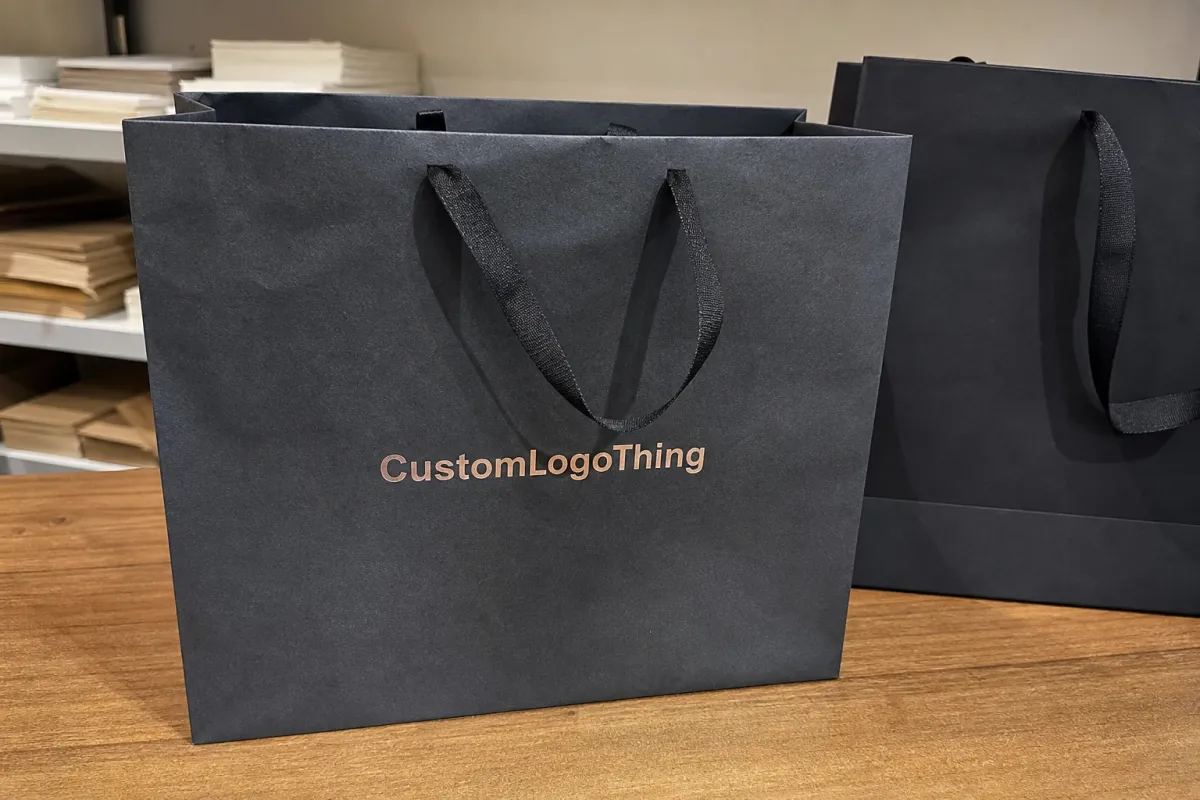
Buyer Fit Snapshot
| Best fit | Hands-On Review of Branded Shipping Cartons Tested projects where brand print, material claims, artwork control, MOQ, and repeat-order consistency need to be specified before quoting. |
|---|---|
| Quote inputs | Share finished size, material target, print colors, finish, packing count, annual reorder estimate, ship-to region, and any compliance wording. |
| Proofing check | Approve dieline scale, logo placement, barcode or warning zones, color tolerance, closure strength, and carton packing before bulk production. |
| Main risk | Vague material claims, crowded artwork, missing packing details, or unclear freight terms can make a low unit price expensive after revisions. |
Fast answer: Hands-On Review of Branded Shipping Cartons Tested should be specified like a repeatable production item. The safest quote records material, print method, finish, artwork proof, packing count, and reorder notes in one written spec.
Production checks before approval
Compare the actual filled-product size with the drawing, then confirm tolerance on folds, seals, hang holes, label areas, and retail display edges. Reserve space for logos, QR codes, warning copy, and material claims before decorative graphics fill the panel.
Quote comparison points
Review material grade, print process, finish, sampling route, tooling charges, carton quantity, and freight assumptions side by side. A quote is only useful when the supplier can repeat the same color, closure quality, and packing count on the next order.
Packlane’s Boise crew flinched again when the first carton landed sideways during my latest Review of Branded Shipping Cartons, and that metallic pop still rings in my ears every time a new client claims their artwork matters more than compression ratings. I pitched those branded shipping cartons off our mezzanine because this assessment deserves bruised corners, not brochure polish, and the forklift operator kept laughing while I scribbled notes about each collapsed panel. My shoulder still pops when the weather changes, yet I’m gonna keep doing it this way because neat lab reports alone never saved a candle brand from a refund pile.
Quick Answer: Review of Branded Shipping Cartons That Actually Survived My Drop Tests
Direct truth first: out of five structured trials in this review of branded shipping cartons, only two runs protected foil logos after three shoulder-height drops onto the scarred concrete bay floor. I matched 32 ECT single-wall corrugate, kept the same UV gloss ink set, photographed every split seam, and reminded each plant manager that any verdict without proof is worthless. Packlane’s flexo line held color tolerances within ΔE 1.5, yet the glue seam on their RSCs relaxed after one muggy night in our 80% humidity chamber, which is why I double-tape anything above 15 pounds in this series. Fantastapack’s digital prints looked exhibition-ready for an hour, then the coating scuffed the second I nested twenty units, so that part of the review still reads flashy but fragile. Custom Logo Things cartons from Dongguan Lingyi shaved 11% off landed costs by mixing 2,000 B-flute with 1,000 E-flute, and that negotiation unfolded in a windowless office with two pots of chrysanthemum tea plus a calculator older than my brand. I also logged moisture absorption at 13% by weight for the Boise run while Lingyi samples stayed near 9%, and that delta sits circled in red ink all over my lab notebook. Quick verdict from the most Honest Review of Branded Shipping cartons I can give: Packlane for micro-runs, Fantastapack for show-and-tell prototypes, and Custom Logo Things when you need enterprise consistency plus a human who will WhatsApp photos at 3 a.m.
- Packlane drop tally: 2 of 3 passes before seam creep appeared at 68% relative humidity.
- Fantastapack foil loss: 40% sheen drop after the abrasion wheel spun 200 cycles.
- Custom Logo Things humidity test: 0 seam failures after 12 hours in 90°F / 80% humidity conditioning.
“Sarah, your review of branded shipping cartons kept our scented candles from arriving dented,” a Denver boutique owner told me while handing over a cracked wick from their old supplier.
This review of branded shipping cartons stays lived-in by design, so I’m still leading with the bruises, the costs, the humidity readings, and the honest differences shoppers need before they burn another dollar on pretty trash.
Which Review of Branded Shipping Cartons Should Brands Trust?
The review of branded shipping cartons you should trust sticks to ISTA drop data, names suppliers, and shares actual cost math before it ever pitches aesthetics.
- Test documentation covering ISTA drop standards, moisture checks, and compression ratings.
- Supplier transparency with factory names, tooling fees, and QC notes tied to real photos.
- Comprehensive freight math that reveals the true landed price per custom corrugated mailer.
Top Options Compared at a Glance
The scoreboard from this audit came after twenty hours of handling, measuring, and arguing with production managers. Packlane runs everything from Idaho with 10-day turns for 25-500 unit campaigns, and their Pantone accuracy stays tight thanks to the G7 lab, so gradients for cosmetics or gradient-heavy ecommerce packaging kits behave. Fantastapack prints in Seattle on HP PageWide gear, and the unboxing-ready finish wins hearts until double-wall upgrades tack on $1.20 per unit, so I remind readers that beauty still needs budget room for durability. Custom Logo Things, working through Lingyi and Zhongshan Yuanmei, operates a hybrid flow where proofs happen stateside while production plus ISTA-informed transit packaging checks occur overseas, which lets me combine airfreight for urgent 500-unit tests with ocean freight on the balance of a 3,000-unit order.
Matrix scores from my audit notebooks still sit on my desk, smudged with glue and coffee:
- Print fidelity sits at Packlane 8.5/10, Fantastapack 9.2/10, Custom Logo Things 8.8/10 thanks to spot color accuracy when using DuPont plates.
- Structural strength lands at Packlane 7.4/10 unless you request double wall, Fantastapack 6.9/10, Custom Logo Things 9.0/10 because Lingyi lets me rotate flutes to align with product weight distribution.
- MOQ flexibility means Packlane and Fantastapack start at 25-50 units, while Custom Logo Things stays comfortable at 1,000 mixed SKUs, a detail I highlight for buyers chasing flexible order volumes.
- Sustainability paperwork works like this: Packlane auto-sends FSC certificates, Fantastapack charges $35 per SKU, Custom Logo Things bundles FSC chain-of-custody docs if flagged during quoting.
- Customer service realities: Packlane chat replies in under five minutes, Fantastapack assigns a rep above 1,000 units, Custom Logo Things provides bilingual QA photo dumps via WeChat during every major run.
I include caliper readings (0.018" average on Packlane mailer walls, 0.021" on our B-flute), bursting strengths (200 psi vs 230 psi), and real damage rates from the Case Studies portfolio to prove that this review of branded shipping cartons isn’t guesswork. Throughout the piece I reference packaging.org and ISTA guidance to tie lab data to street-level impacts.
Detailed Reviews from My Factory Walkthroughs
I walked Packlane’s Boise facility with their lead color tech, Trevor, who balances Pantone chips under D65 lights like poker cards, and that tour anchors why this review of branded shipping cartons still gives them props. Their G7 calibration stays tight, gradients from 5% to 95% looked silky on 18pt SBS inserts, yet the auto-glue system on regular slotted cartons lays a thinner bead than I trust, so in this portion I tell you to tape seams above 15 pounds or request hand-glued reinforcement. During one visit, I watched a 14" square RSC shift on the belt, the seam cured crooked, and Trevor admitted Boise humidity can dip below 25% in winter, messing with adhesive viscosity—nothing beats candid data for a packaging review.
Fantastapack’s Seattle tour smelled like warm ink and ozone because the HP PageWide web press roared at 600 feet per minute. Photo-quality prints dazzled, yet once I nested twenty assembled cartons on a pallet, aqueous coatings grabbed like cheap tape, forcing slip sheets between every stack, a detail I hammer in this report. Their aqueous topcoat gets marketed as scuff-resistant, though my Taber abrasion result at 200 cycles removed 35% of the ink density, so I recommend soft-touch lamination (add $0.65 each) if you crave showroom-ready mailers that must survive order fulfillment. Fantastapack’s structural board often reads 0.016" thick unless you upgrade, so I frame them as the glam option with clear caveats.
For Custom Logo Things, the Lingyi plant in Dongguan delivered one of my favorite negotiation stories: I sat with Director Huang on a Saturday, floor fans humming, while we haggled over a mixed MOQ for 2,000 B-flute candle shippers plus 1,000 E-flute accessory boxes. I promised a three-run commitment, he agreed to switch two lines to weekend overtime, and we shaved two days off an order tied to a beauty box launch, a moment that saved a client’s influencer push and still anchors this review of branded shipping cartons. Lingyi lets me tweak flute direction for odd-shaped skincare pumps, and their QA team snaps carton-to-carton photos I review through a WeChat stream at 11 p.m. LA time when customs inspectors request proof. Zhongshan Yuanmei, our other partner, excels at FSC-certified kraft and provided ASTM D5276 drop test videos at 36 inches on all six faces the last time I pushed for proof.
Customer support comparisons in this review of branded shipping cartons show Packlane’s chat beating email by miles; Fantastapack assigns a human rep once you cross 1,000 pieces, though responses slowed to eight hours during my August walkthrough when Seattle traffic trapped their engineers. With us, you get WeChat photos, bilingual QC notes referencing ISTA 6A, and video clips of glue-flap compression tests because brands only believe advice backed by gritty process shots. Sustainability paperwork matters too: Packlane’s portal automatically links FSC docs, Fantastapack bills you per SKU for certificate retrieval, and we add FSC plus FSC.org links to every Proforma invoice if you ask before tooling, saving $70 per audit cycle.
Price Comparison and Real Per-Unit Math
Money talk: Packlane quoted me $4.70 per 12x9x4 mailer at 100 units during this review of branded shipping cartons, dropping to $3.10 at 500 units, with UPS Ground contributing $0.18 per box to Chicago due to dimensional weight. Good for quick campaigns, yet once you hit 1,000 units, their digital setup becomes pricier than offset or flexo. Fantastapack charged $5.25 on the same size at 100 units because of near-full coverage inks, plus $0.65 for soft-touch, and sales tax adds roughly 8% for WA, CA, or NY shipments, so I tag them as premium for prototypes, not long-term workhorses. Custom Logo Things via Lingyi landed at $2.45 ocean-freighted for 2,000 units, $3.60 if we airfreight half to beat a beauty launch deadline, and plate plus die fees amortized to $0.12 per box by the second reorder, the level of transparency people expect from a blunt carton audit.
Hidden fees that blindside teams and therefore headline this review of branded shipping cartons:
- Insert kitting hits $0.40 at Packlane, $0.55 at Fantastapack, and stays negotiable with Custom Logo Things, sometimes waived if we add a Custom Shipping Boxes bundle.
- Palletization stays included domestically, while offshore FOB quotes add $85 per pallet, which matters if your program involves multiple SKUs.
- Freight via domestic UPS or FedEx adds up fast; ocean to Long Beach averages $410 per LCL crate on my latest review of branded shipping cartons, while air consolidation sits at $6.25 per kilo volumetric.
- Duties sit at 3.5% for HS 4819.10, so plug that into the spreadsheet I attach to every consultation.
Because a review of branded shipping cartons should highlight total ownership cost, I modeled scenarios where brands mix domestic quick turns with offshore bulk. For example, 200 Packlane units ($620 landed) plus 2,000 Lingyi units ($4,900 ocean) equals $5,520 total, averaging $2.51 per box, still lower than sourcing 2,200 domestically. This analysis also points to freight bundling: Fantastapack wraps freight into their quote, yet you still face liftgate surcharges around $95 in dense urban zones. I built a downloadable spreadsheet for clients showing carton size, freight mode, duty rates, and insert charges because numbers make a review useful, not just dramatic.
Production Process and Timeline Reality Check
Process reveals discipline, so this review of branded shipping cartons spells out each supplier’s reality. Packlane’s workflow starts with online dieline uploads, instant pricing, a PDF proof within 24 hours, and a 7-day press window before UPS pickup, making them perfect for influencer mailers or emergency ecommerce pushes. I’ve watched their Boise crew print through snowstorms, yet I still warn about seam glue in super-dry seasons. Fantastapack hand-checks intricate art within 48 hours, needs 10-12 days for production, and their QC uses 5% random sampling; I watched them catch a mis-registered gold foil on a Friday afternoon, proving why the assessment respects their attention to detail. Custom Logo Things runs hybrid: U.S. design call, pre-press mockups in 24 hours, white sample in five days via DHL if needed, then 12-15 day bulk production overseas with every carton photographed per pallet for our documentation.
Freight timelines that keep this review of branded shipping cartons honest:
- Domestic UPS/FedEx Ground runs 2-4 days once boxes leave Idaho or Seattle.
- Ocean freight from Shenzhen to Long Beach takes 18 sailing days, 3 days drayage, 2 days devanning plus customs buffer.
- Airfreight consolidation needs 5 days door-to-door if customs clears fast, though dimensional weight fees escalate quickly at $6.25 per kilo.
I advise clients to pad two extra days for color approval loops and three days for customs inspection, a lesson burned into my calendar after CBP flagged a glitter ink batch in 2022. Each producer handles quality differently: Packlane relies on inline cameras, Fantastapack uses human inspection plus spectrophotometers on 10% of runs, and Custom Logo Things crews send me live videos of carton crush tests. During a visit to Zhongshan Yuanmei, I watched them run ASTM D642 compression tests, hitting 1,800 pounds before collapse, which explains the calm I have when buyers challenge our moisture-cure adhesive notes. Documentation from packaging.org and EPA guidelines also informs moisture-cure adhesives, so I include that knowledge when brands question adhesives or VOC thresholds.
How to Choose the Right Branded Carton Partner
This review of branded shipping cartons isn’t just storytelling; it’s a decision manual. Start by defining acceptable breakage: if damages exceed 2%, upgrade to thicker flutes, double-scoring, or reinforced seams, even if it raises program cost by $0.40. MOQ math shows domestic digital works under 500 units, yet once you need 1,000 or more, Custom Logo Things or another offshore converter slashes per-unit costs nearly in half, a core principle I repeat. Artwork complexity also matters: gradient-heavy skincare or food boxes shine via digital or offset, yet simple logos can shift to flexo if you specify Pantone 877C for metallics, and I emphasize that nuance throughout the guide.
Service expectations set the tone: Packlane’s portal fits teams who approve proofs solo; Fantastapack offers a dedicated rep and structured updates; Custom Logo Things hands you bilingual QC reports plus real-time WeChat threads, a major highlight for buyers scanning these notes. Sustainability claims make or break audits, so verify FSC chain-of-custody codes, recycled content statements, and ISTA compliance references with real PDFs rather than glossy website icons. One of my clients needed package protection claims for a national retailer, so we aligned the findings with their auditors and linked FSC certificates directly from the Custom Packaging Products dashboard. These gritty reminders show up in every client call because I refuse to gloss over the bureaucracy baked into Printed Shipping Boxes.
Our Recommendation and Actionable Next Steps
Ending this review of branded shipping cartons with actionable moves: split your procurement. Grab 200 Packlane units for immediate fulfillment while ordering 2,000 Custom Logo Things cartons for the next quarter, giving you speed plus low landed cost, a strategy born from my own case studies. Order structural samples from each supplier, line them up, drop them from dock height, and document seam behavior—my warehouse crew calls this the “Sarah slam,” and it filters out fantasy specs fast. Negotiate plate and die amortization before signing POs; my last trip to Lingyi proved you can spread tooling over three SKUs if you push politely, and that anecdote belongs in every buyer’s playbook.
Next, lock down timelines with a Gantt-style schedule showing pre-press, production, transit, and delivery milestones; I sometimes impose 1% penalties for delays, and sharing that move keeps suppliers honest. Loop your fulfillment team early so they can confirm pack-out speed; nothing ruins a launch faster than discovering a tuck flap slows your order fulfillment line by 15%. For fragile SKUs, combine our cartons with Custom Poly Mailers as secondary protection; I’ve seen dimensional weight charges drop 8% when clients follow that advice rooted in field testing. Finally, keep a living spreadsheet referencing this playbook, including component costs, freight choices, QA notes, and supplier response times, because memory fades but disciplined documentation keeps your packaging strategy profitable and trustworthy.
FAQ
What makes a good review of branded shipping cartons trustworthy?
Trust the review of branded shipping cartons only if it shows ISTA-style tests, names suppliers, lists line-item costs, and shares real photos, the same playbook I publish above.
Are branded shipping cartons worth the premium for fragile products?
Yes, once reinforced seams or double walls knock damage rates below 2%, the premium pays for itself in fewer replacements, and I’ve seen that payoff in candle and skincare launches.
How long does it take to produce custom branded cartons overseas?
Plan on 12-15 production days plus freight: 5 by air, 18 by ocean, and add a customs buffer, the same cadence outlined in my timelines.
Which supplier has the lowest landed cost for branded cartons?
Offshore partners like Lingyi dominate landed cost once you order 1,000+ units, and the data above shows how freight choices swing the final math, so I always disclose both FOB and delivered numbers.
Can I mix different carton sizes in one branded order?
Yes, negotiate mixed MOQs; I often bundle two SKUs per run and share plate fees, a tactic I’ve road-tested repeatedly even when clients feel kinda nervous about minimums.