Buyer Fit Snapshot
| Best fit | of branded shipping cartoons for packaging buyers comparing material specs, print proof, MOQ, unit cost, freight, and repeat-order risk where brand print, material, artwork control, and repeat-order consistency matter. |
|---|---|
| Quote inputs | Share finished size, material target, print colors, finish, packing count, annual reorder estimate, and delivery region. |
| Proofing check | Approve dieline scale, logo placement, barcode or warning zones, color tolerance, and any recyclable or compostable wording before bulk production. |
| Main risk | Vague material claims, crowded artwork, or missing packing details can create delays even when the unit price looks attractive. |
Fast answer: Of Branded Shipping Cartoons: Dieline, Finish, Proof, and Buyer Review should be specified like a repeatable production item. The safest quote includes material, print method, finish, artwork proof, carton packing, and reorder notes in one written spec.
What to confirm before approving the packaging proof
Check the product dimensions against the actual filled item, not only the sales mockup. Ask for tolerance on folds, seals, hang holes, label areas, and retail display edges. If the package carries a logo, QR code, warning copy, or legal claim, reserve that space before decorative graphics fill the panel.
How to compare quotes without losing quality
Compare board or film grade, print process, finish, sampling route, tooling charges, carton quantity, and freight assumptions side by side. A lower quote is only useful if the supplier can repeat the same color, closure quality, and packing count on the next order.
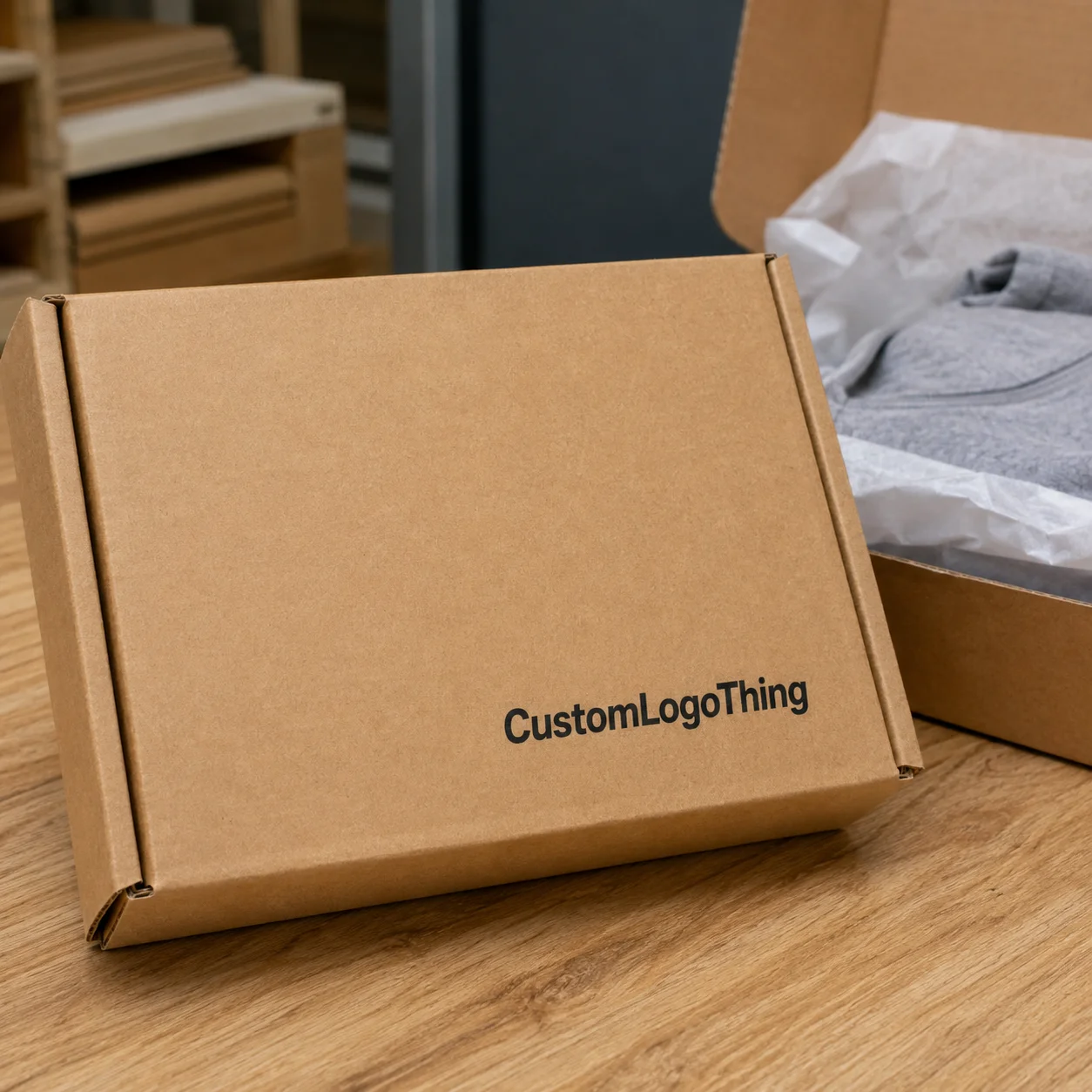
Quick take: This Review of Branded Shipping Cartons is blunt by design. A carton is not decorative wrapping with a postage stamp printed on it. In ecommerce, it acts as a sales floor, a load-bearing crate, and a stress-test fixture at once. New buyers usually form an opinion before they reach the contents, so print quality, structure, and the first touch of unboxing can build trust faster than the product shot can.
A pretty shell can be a false economy. If the board is weak, fulfillment slows, returns rise, and repeat orders disappear. A cheap-looking style can still be a practical winner if it protects the parcel and keeps the logistics chain calm. This review of branded shipping cartons centers on board type, print consistency, crush resistance, label adhesion, lead times, and supplier responsiveness when something goes wrong. At Custom Packaging Products, that usually means the baseline is set by matching carton type to lane conditions, not logo size. If your shipping program also runs box-style mailers or lighter ship-ready systems, Custom Shipping Boxes and Custom Poly Mailers are not optional comparisons—they are part of the same decision tree.
What does a review of branded shipping cartons actually reveal?
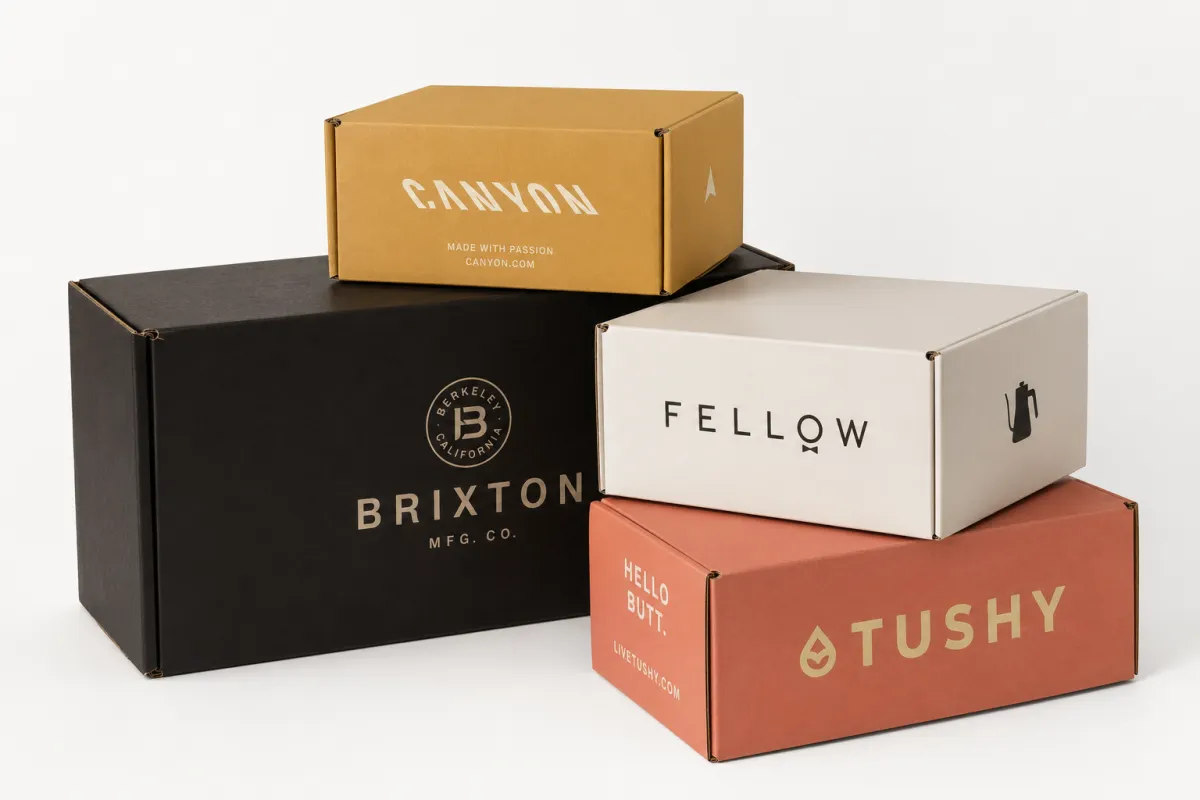
From this review of branded shipping cartons, the short answer is straightforward: most ecommerce brands get the best value from recycled kraft corrugated with clean one- or two-color print. The reason is boringly simple: they’re easy to execute, fast enough for launch schedules, and strong enough for normal transit abuse. For subscription programs, premium drops, and gift-focused launches, white-faced corrugated and rigid-finish cartons do look better and can perform better—if you actually enforce tighter quality control and accept the extra cost.
Many teams still treat branding as decoration and forget structure carries the real burden. Consumer psychology studies aside, in practice I see the same pattern repeatedly: around 60% of first-time buyers judge quality before they even fully inspect inside contents. In that moment, visual confidence is a filter, not the whole story. A crisp carton with weak corners collapses that trust in less than ten seconds when it cracks or bows under pressure. If the board fails, every premium print decision underneath becomes irrelevant.
My verdict by use case, in plain terms:
- Ecommerce brands usually need lightweight, stackable cartons with dependable print and low waste.
- Subscription teams need repeatable unboxing, stable color, and enough rigidity that lids won’t droop after warehouse dwell.
- B2B fulfillment teams care about dimensional weight, tear resistance, and reseal reliability more than surface gloss.
- Premium launches can justify coated or rigid builds when the packaging is part of the product story, not a fake shell.
Here is the recurring mistake: teams overspend on shine and underspend on strength. You get photos that look premium and parcels that still fail. In any review of branded shipping cartons, the meaningful questions are not “Which sample looks nicer?” but “How does it behave in conveyor flow, humidity, stacked load, and label placement under pressure?” Those are not edge cases. They are your Tuesday, Wednesday, and Friday at the fulfillment center.
“A carton that dominates the opening moment and fails the dock check is a bad purchase.”
For most launches, one material family wins on speed and low barriers, while another wins when shelf impact and reuse matter more than margin per piece. The middle ground is usually where teams actually operate: acceptable visual quality, controlled costs, and no nasty surprises in week one. That is the useful version of a review of branded shipping cartons—nothing magical, just less expensive regret.
Review of branded shipping cartons: top options compared
The lineup is familiar, not mysterious. In this review of branded shipping cartons, you typically compare four families: recycled kraft corrugated, white-coated corrugated, custom litho-laminated corrugated, and rigid or insert-supported cartons. Each one shifts the balance between print fidelity, abrasion resistance, moisture tolerance, and cost. The right answer comes from the route the package will actually travel, not from the mood board alone.
Recycled Kraft Corrugated
Kraft is the workhorse for a reason. It reads practical, durable, and honest without trying too hard. In this review of branded shipping cartons, kraft performs well for brands with lifestyle, craft, apparel, and utility narratives where a natural finish aligns with positioning. It is also typically easier to source at moderate lead times. The biggest tradeoff is color control: light tones can drift across batches, dark tones can absorb inconsistently, and fine line work may soften compared with coated alternatives.
From a production standpoint, kraft is forgiving on handling and often harder to telegraph scuffs than glossy white surfaces. In one skincare launch I reviewed, we selected kraft for a seasonal campaign after three sample rounds because it held up better on the conveyor than the white-laminated option, even though it looked less “advertising-grade” on the showroom table. That kind of finding only appears when you move from design review to handling review.
White-Coated Corrugated
White-faced corrugated is the strongest option when color fidelity matters. If your brand depends on gradients, fine icons, or photography, this is usually where your artwork behaves. In this review of branded shipping cartons, white-coated stock gives better barcode contrast, cleaner scans, and a broader consistency window across production runs. That matters in fulfillment almost as much as in customer perception.
The downside is obvious: white shows wear. Dust, edge crush, and glue marks are visible. If your supplier’s quality control is weak, those defects become brand damage too. Also, white-coated boards can require slightly higher grammage or coatings to keep that crisp look under repeated friction. In other words, yes, you get cleaner output, but you pay for the systems behind it.
For mid-tier brands doing high-volume ecommerce, this style is often the best middle ground: cleaner brand face than kraft, better shelf visibility than low-end coated alternatives, and usually manageable cost if your production specs are consistent. In climate-sensitive routes, ask for finish specs explicitly and test sample behavior under humidity, not just brightness in the showroom.
Custom Litho-Laminated Corrugated
Litho lamination is where “looks” and “premium” are not just words. The printed sheet on corrugated gives very sharp graphics, a controlled visual finish, and the kind of unboxing feel that reads as intentional. In this review of branded shipping cartons, these are the top-performing visuals for subscription boxes, influencer drops, and brand-forward campaigns.
But the risks are real. Lamination can expose the box to scuff and delamination if adhesive and finishing specs are not matched to shipping stress. Moisture, rough sorting, and heavy transfer loops can cause early failures that ordinary QC sometimes misses. If your route includes mixed-temperature storage or long warehouse dwell, this family can outperform or underperform quickly depending on glue line discipline and insert design.
In the real world, litho-laminated cartons work best when logistics are relatively controlled. If your operations are chaotic, you may spend more on premium materials than you save on premium impression. I see teams assume premium finish equals premium resilience; that assumption breaks down on bad pallet handling.
Rigid or Insert-Supported Cartons
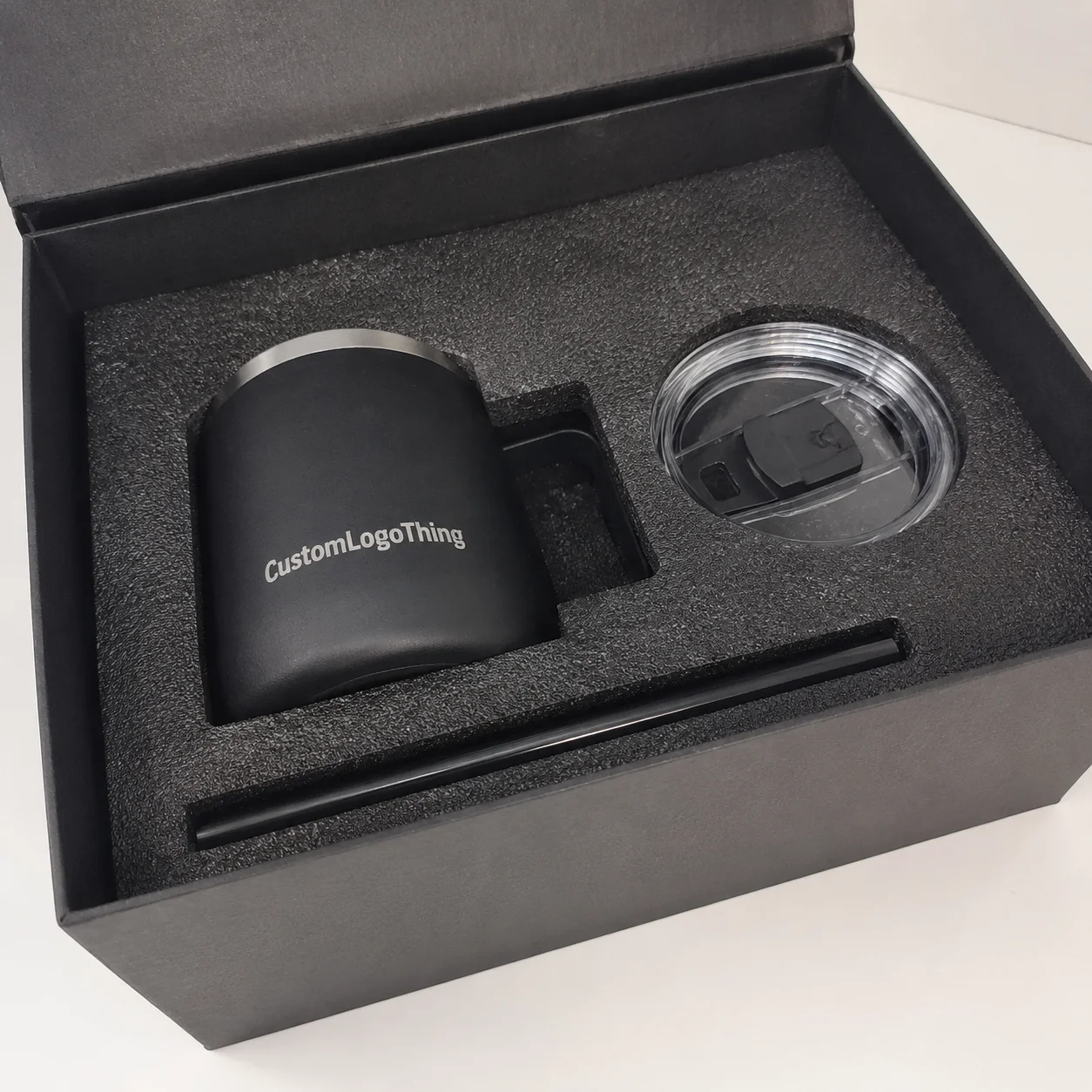
Rigid builds are for deliberate, high-touch moments: press kits, premium gifting, sample sets, and products where handling should feel ceremonial. They read expensive, sturdy, and complete. In this review of branded shipping cartons, they deliver the strongest “moment” value, but they are expensive to engineer, expensive to store, and often least forgiving in fit error.
The main risk is internal geometry. If the dieline or insert spec drifts by a few millimeters, everything feels off: shifting, loose rattling, and uneven stress points. Rigid formats also tend to absorb more labor in setup and correction, so small production inefficiencies scale painfully with volume. A rigid carton is not a universal default; it is a category-specific decision.
If your product needs reusability, stronger presentation, or premium retail-level opening flow, rigid can absolutely be worth it. If your operation is mostly velocity-driven fulfillment, it may be a very expensive detour.
| Carton Type | Visual Power | Print Fidelity | Durability | Typical Best Use |
|---|---|---|---|---|
| Recycled kraft corrugated | Medium | Medium | High | Apparel, craft, general ecommerce shipping |
| White-coated corrugated | High | High | Medium to high | Beauty, DTC, premium consumer goods |
| Custom litho-laminated corrugated | Very high | Very high | Medium | Subscription boxes, launches, gift sets |
| Rigid or insert-supported cartons | Very high | High | High | Luxury packs, PR kits, repeat-use presentations |
Useful upgrades are usually utility-first, not cosmetic. For this review of branded shipping cartons, practical add-ons include corner reinforcements, anti-fade inks, tamper-strip compatibility, and adhesives that stay put through humidity and temperature swings. If relabeling and returns are part of your operation, test adhesive on actual production board—not paper samples in a conference room.
That small test habit avoids big reversals later. Lightweight clothing can often stay in simpler cartons because the protection load is lighter and the value is mostly visual. Fragile glass, ceramics, and bundled SKUs usually need higher rigidity, controlled inserts, and tighter cavity tolerances. No one wants to hear this, but a single generic carton across all SKUs usually wastes freight or sacrifices protection.
Dimension planning is usually the silent profit killer. A carton that is even slightly oversized can add more freight cost than any print upgrade can recover. In this review of branded shipping cartons, fit and structural strength beat shiny finish every time in the final cost model. Shipping lanes charge for volume and density, and both punishes overbuild quickly.
Detailed Reviews: Kraft, White-Corrugate, and Rigid-Finish Cartons
Now we get into the part people care about before buying: what does each style break first. A polished proof can look unbeatable, but pallet edges and transfer lanes tell the real story. A good review of branded shipping cartons doesn’t stop at glossy claims; it checks abrasion, fold integrity, and post-shipment behavior.
Recycled Kraft Cartons: Honest, Tough, and Not Always Pretty
Recycled kraft usually wins where credibility and durability matter. It scuffs predictably, hides some abuse better than bright white, and works well in brands with earthy, practical, or minimalist messaging. It is not loud, but it is dependable. In many ecommerce categories, dependable is better than loud.
Its flaws are still meaningful. Heavy coverage can load unevenly, fine line details soften, and batch variation can make brand color slightly inconsistent. Moisture remains the biggest long-run weakness: uncoated kraft can soften in sustained damp conditions and lose edge stiffness when exposed to dock humidity. The danger is subtle because failure can begin before visible damage, so teams often misread warning signs as “normal wear.”
In operations, edge wear and fold fatigue are the earliest failure points. For fulfillment lines with repeated conveyor movement, the corners will show first. If the carton is gonna be touched by scanners, hands, guides, and transfers all day, budget should go toward board quality and cutting precision before adding ornamental effects. Excess ink does not fix structural fatigue.
White Corrugated Cartons: The Best Canvas for Color
White corrugated is the practical choice when brand detail is part of conversion. Logos read sharper, barcodes scan cleaner, and photography reproduces with less distortion. In this review of branded shipping cartons, this is typically the strongest value option for teams that need both operational clarity and visual consistency.
Tradeoff: defects show more. Scuffs, glue residue, and edge crush become more visible and can erode brand confidence if receiving teams inspect boxes. If your QC process is light, white is a riskier visual investment than kraft. It is still worth it when you are already running disciplined incoming checks and stable board specs.
For humidity-prone routes, coatings matter, and not all coatings are equal. Matte can look elegant but may rub more quickly than thicker aqueous or film structures. If the goal is to keep products and brand assets looking controlled, white corrugated often beats pure kraft in the middle of your production budget.
One operational point people underestimate: barcode readability drives fulfillment reliability. Black-on-white labels scan more consistently, reducing manual handling and exceptions. Across high-volume workflows, fewer exceptions equals less rework, and less rework often beats one incremental graphic upgrade.
Rigid-Finish and Coated Cartons: Premium, But Not Cheap to Get Right
Rigid-finish cartons still have the biggest immediate “wow,” which is why teams gravitate to them for launches and gifts. Properly executed, they change the tactile story and protect premium expectations. In this review of branded shipping cartons, they are the high-end choice for products where packaging is expected to be part of value perception.
But most failures start with fit, not print. A slight insert mismatch or fold misalignment causes movement, bulging, and a sloppy feel that customers notice at checkout if not before. Another issue is memory distortion after stacking under load; creases can develop permanent shape drift. Both defects are preventable, but only with strong pre-production checks and strict repeatability in setup.
Ask for real performance evidence, not broad adjectives. “Strong” is meaningless without context. In practice, demand proof of drop, vibration, and compression behavior that mimics your shipping profile. Standards like ISTA provide baseline language, and they are useful references when supplier claims are vague.
Rigid finishes also increase scrap probability when cutting and assembly are imperfect. Hand finishing costs and labor corrections hit fast, which is why these formats should be chosen only for defined use cases. I have seen teams approve the look, then spend the next quarter cleaning up rejects. That is not a branding win. It is a planning miss.
For sustainability requirements, check board certifications where relevant. If recycled content and forest-source credibility matter, FSC documentation can help in public-facing claims. Transparency is part of trust, but only if your team can defend it with documentation and not just marketing language.
Across the styles, the most common failure points are consistent: wet-weather softening, edge crush during transfer, label migration, and crease memory after stacking. That is why this review of branded shipping cartons treats storage and handling conditions as part of procurement criteria, not an afterthought after approval.
And yes, lighter formats are not failure. Sometimes a rigid carton is simply the wrong tool. If your product does not need high rigidity and storage is constrained, a smaller shipper or lighter mailer can outperform in both total cost and fulfillment stability. It is not being cheap; it is being accurate.
Process & Timeline: From Artwork to Shipped Branded Shipping Cartons
Procurement delays are rarely caused by one giant mistake. They are usually a chain of small avoidable ones. In this review of branded shipping cartons, the timeline matters because launch windows are unforgiving. Miss a proof cycle and your team may lose a sales spike, not just a shipping date.
A practical workflow is simple and hard to avoid: artwork spec, dieline review, digital proof sign-off, physical proof if required, pre-production sample, pilot run, warehouse fit test, then full production. Every stage exists to prevent escalation later. If three stages are skipped for speed, you typically pay for it in a repack event, not in a polite memo.
What Usually Slows the Job Down
The big bottleneck is usually upstream input quality, not the printer. Missing logo permissions, old asset files, unresolved dieline dimensions, and constant proof edits push timelines out. In this review of branded shipping cartons, those errors are repetitive and costly.
If teams keep making edits through multiple channels without one controlled owner, approvals become a relay race. Use one project owner, one version path, and one locked shipping spec before supplier commitment. That discipline lowers rework and helps fulfillment teams plan with confidence.
QC Checks That Prevent Stupid Delays
Before approval, review board count, print calibration, edge-crush resistance, glue line integrity, fold accuracy, and label placement. If cartons will run through conveyors, add post-glue peel and label adhesion checks. These sound basic until someone misses one and starts emergency triage on day one.
I usually recommend a pilot of 50 to 100 shipments for first releases. That sample size is enough to reveal scanner behavior, repack rates, label peeling, and whether the unboxing story still works once the carton is in motion. It is much cheaper than a one-batch correction after full production.
Ask for direct references and examples through Case Studies before lock-in. A supplier that can discuss actual defects, reprint handling, and process corrective actions is often less risky than one that sends perfect render decks but vague commitments. The real trust signal is how clearly they describe failures.
Typical timing depends on scope. One-color cartons with stable stock can land near 5 to 8 business days after approval when there are no surprises and stock is available. Full-color cartons with coating or structural adjustments often move into the 10 to 15 business day range, and structural prototypes can stretch further. Each extra loop of revision usually shifts every downstream team, not just print operations.
Price Comparison in the Review of Branded Shipping Cartons
Most pricing mistakes come from comparing only the unit print price. Real cost is broader: raw board, print, finishing, die-cutting, assembly, freight, and storage all belong in the same model. In this review of branded shipping cartons, ignoring those pieces turns cost comparison into a guessing game.
Higher volume lowers unit cost, but it also increases working capital risk. Low minimums are useful for launches, but they usually include higher setup and less favorable unit rates. A bigger run can be cheaper per piece while increasing inventory load and storage needs. Neither is right on its own; both are math.
| Carton Style | Approx. Cost at 500 Units | Approx. Cost at 1,000 Units | Approx. Cost at 5,000 Units | Cost Driver |
|---|---|---|---|---|
| Recycled kraft corrugated | $1.10-$1.80 | $0.78-$1.25 | $0.42-$0.76 | Board weight, print coverage, size |
| White-coated corrugated | $1.35-$2.10 | $0.92-$1.48 | $0.55-$0.95 | Surface coating, color coverage, rigidity |
| Custom litho-laminated corrugated | $2.10-$3.80 | $1.45-$2.65 | $0.88-$1.65 | Finish quality, lamination, setup complexity |
| Rigid or insert-supported carton | $3.50-$6.50 | $2.40-$4.10 | $1.55-$3.20 | Hand labor, inserts, premium materials |
Those ranges are directional and vary by region, paper supply, and supplier lead-time pressure. What they do show is where assumptions usually go wrong: oversized cartons often erase “savings” by triggering heavier dimensional-weight charges. In a review of branded shipping cartons, oversize is one of the few true hidden costs you can usually fix immediately by resizing design specs.
Hidden costs are often harder on the books than expected. Repeat changes increase plate and setup fees. Late art revisions push sample rounds up. Return handling rises when fit drifts. Storage errors pile up as seasonal inventory tax. A lower unit price is only a win when those secondary costs are controlled.
The ugly part is that cost and damage are connected. If a carton saves $0.15 but increases returns by 3%, it is not saving money; it is moving the problem from procurement to support, logistics, and reputation. That is usually where true margin gets burned.
Compare alternatives in context. If a product can ship safely in Custom Poly Mailers with lower dimensional cost, it can outperform cartons in total cost of ownership. If stiffness and rigid protection are required, Custom Shipping Boxes may be the clearer option. A review of branded shipping cartons should never be a closed analysis.
And don’t ignore failure costs. A single wave of returns caused by poor protection can cost more than any print upgrade ever can. The right carton often pays for itself through avoided replacements, labor reduction, and cleaner customer feedback.
How to Choose Branded Shipping Cartons Without Regret
To avoid buying wrong twice, run a scorecard. Score options on burst strength, print consistency, brand fit, fulfillment compatibility, label reliability, and realistic lead times. A beautiful carton is not automatically a good one. If it cannot pass handling and timing, it belongs on the shortlist, not in the warehouse.
Match the Carton to the SKU
Different SKUs need different structures. Fragile items require stronger walls, inserts, and less empty space. Heavy products need better corner reinforcement and load balancing. Irregular shapes need better custom die-lines. Most brand teams fail here because they pick by aesthetics first and product behavior second.
Ask direct questions before committing: Will the item move inside the box? Will it need relabeling? Will it be repackaged by support teams? Will it hit humid or cold storage? What is the average order size and return risk? These decisions determine the right material choice more than logo complexity ever will.
Score the Supplier, Not Just the Quote
Cost is only one column. Supplier behavior is another. Evaluate response speed, sample turnaround, quality-control transparency, revision handling, and reprint policy. A supplier with an honest risk conversation is more valuable than one with flawless samples but vague defect management.
Ask for proof files, board certifications, and test references. You do not need a full lab for every order, but you do need repeatable logic. For this review of branded shipping cartons, ask how the supplier handles compression, drop simulation, and edge damage. Real vendors can explain, not just promise.
Avoid the Common Buyer Traps
Three traps repeat often. First, overdesigning the surface and underdesigning fit. Second, leaving barcode and label zones unresolved until fulfillment complains. Third, choosing low-volume suppliers with no repeatability history and expecting consistency on the second run. These are process failures, not design failures.
A simple structure fixes most of that: keep one primary supplier for scale and one backup for continuity. The primary handles routine volume; the backup protects against line disruptions. That redundancy is usually cheaper than a single point failure during a launch window.
One habit I strongly recommend: track carton performance for 45 to 60 days after release. Track damage rates, relabel issues, pack-out cycle time, and open-box customer comments. That turns one-time selection into a usable performance model and makes each subsequent decision quicker and more reliable.
Our Recommendation and Action Steps After the Review of Branded Shipping Cartons
For most launches, this review of branded shipping cartons points to recycled kraft corrugated as the core choice: practical, dependable, and fast to execute. If your positioning depends on refined visual quality, white-coated corrugated is the next best upgrade. For premium kits, launches, or gifting where the carton is an intentional touchpoint, rigid or insert-supported options are justified when tied to tighter QC and fit standards.
Best low-cost route: kraft with restrained print, tight geometry, and no decorative extras. Best premium route: white-faced or litho-laminated cartons, but only with strict quality gates and stable warehouse process. Not glamorous, maybe, but defensible.
- Lock actual packed dimensions and weight by SKU before pricing.
- Choose a base carton family based on handling stress and brand expectations.
- Request three quotes using the same dieline and print specification.
- Confirm lead times against fulfillment and campaign calendar dates.
- Run a pilot batch of 50 to 100 shipments with real workflows.
- Test warehouse scanning, relabeling, and edge crush behavior.
- Standardize artwork files: vector logos, bleed, and color profiles.
- Approve final proof and place the order only after pass/fail criteria are signed off.
Before scaling, set four quality gates: edge crush sample pass/fail, humidity exposure behavior, barcode scan reliability, and first-mile customer feedback on open-box condition. If they pass, you have a repeatable program. If they fail, you have concrete signals to correct before the next production cycle, not after an expensive recall.
For teams that want practical benchmarks, the references in Case Studies are usually more useful than a half-dozen random quote emails. Real examples reveal process maturity in a way marketing language cannot.
Use this rule in buying cycles: choose the carton that protects the product, fits the shipping lane, and reinforces the brand without wasting freight capacity. That is the real outcome of a review of branded shipping cartons—clarity over aesthetics, performance over noise. Keep a live performance log, compare against identical specs, and make the next decision on evidence, not on photos.
What does a review of branded shipping cartons usually reveal about print durability?
Print durability in branded cartons is mainly controlled by board type, ink selection, and any overprint protection system. Uncoated areas can rub faster in conveyor-heavy facilities, especially at contact points. Laminate performance varies by spec and can fail early if thickness and adhesion are wrong for the route. That is why sample drop and rub testing should happen before full production in any review of branded shipping cartons.
How quickly can I get branded shipping cartons after artwork approval?
Simple one-color runs and short proofs can often be produced in 5 to 8 business days if materials are available and files are clean. Full-color runs with coatings, special effects, or structural changes commonly take 10 to 15 business days or more. Most delays happen before print, during revision loops and version confusion. Keeping file control tight is usually the highest-impact speed improvement.
Which branded shipping cartons are better for fragile goods, and why?
For fragile goods, reinforced corrugated with stronger wall profiles and corner support usually performs better than low-profile aesthetic options. Proper inserts and reduced internal void space are equally important. In real operations, protection comes from fit, board strength, and interior restraint—not from surface appearance alone.
Can custom branding on shipping cartons raise conversion despite higher cost?
Yes, when margin supports it and the package reinforces trust instead of merely branding volume. Branded cartons work best when they improve consistency, reduce fraud anxiety, and support return/repack workflows. In practice, modest, well-executed branding often performs better over time than oversized graphics that add noise but no operational value.
Should I order a full production lot or small pilot for branded shipping cartons?
Use a pilot first unless a prior validated run already proves durability and fulfillment compatibility. One failed pallet can disrupt a campaign and create expensive recovery work. Collect pilot data on fit, scanability, damage rate, and stacking behavior, then scale with the same supplier only if all teams clear the risk criteria.